Kansas Dove Numbers in September
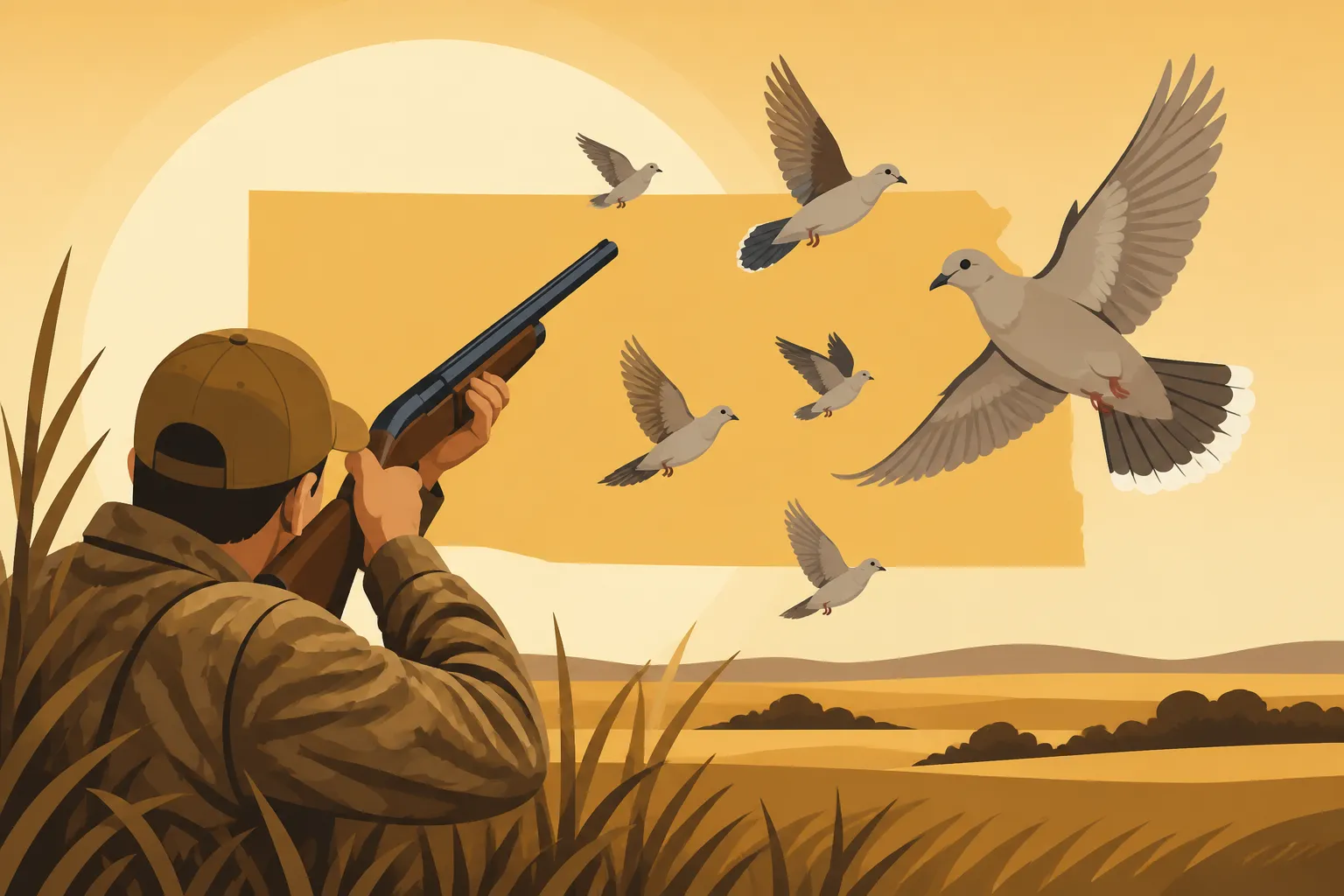
The sun-drenched fields of Kansas in September hold a promise for many hunters, but if you've ever shown up to your favorite dove spot only to find it eerily quiet, you know the frustration. Dove numbers can feel like a riddle wrapped in an enigma, with one day being a flurry of wings and the next a barren landscape. This guide is here to unravel some of that mystery, helping you understand the factors that truly influence how many doves you'll see on opening day and beyond, and how you can put yourself in the best position for success.
Understanding Kansas Dove Populations
Kansas is a fantastic state for dove hunting, largely thanks to its expansive agricultural landscape and diverse habitats. However, the term "dove numbers" isn't a single, static figure. It's a dynamic mix of different species, local breeding success, and, perhaps most crucially, migratory movements. Getting a handle on these nuances is your first step to a more consistent September hunt.
Mourning Dove Abundance and Distribution
When most folks talk about dove hunting in Kansas, they're referring to the ubiquitous mourning dove. These swift-flying birds are the backbone of our early-season hunting, and for good reason: they are incredibly abundant. You'll find mourning doves pretty much everywhere in the state, from the eastern timbered river bottoms and suburban backyards to the vast agricultural plains of western Kansas. They thrive where there's a good mix of open ground for feeding, scattered trees or power lines for perching, and accessible water sources.
Their numbers are consistently high because Kansas offers everything a mourning dove needs: ample nesting sites throughout the summer and a buffet of seeds from our agricultural bounty. Driving down a county road in late August, you'll often see power lines sagging under the weight of dozens, if not hundreds, of doves gathered before sunset. This widespread distribution means that while specific concentrations might shift, the overall population provides fantastic opportunities across the state. They're a true hunter's bird, offering challenging shots and a delicious reward. For general information on their season, check out Kansas Dove and Early Season Birds.
Eurasian Collared-Dove Presence
A relative newcomer to the Kansas scene, the Eurasian collared-dove has rapidly expanded its range and population across North America, including our state. These birds are noticeably larger and somewhat stockier than mourning doves, with a distinct black half-collar on their neck. While they don't migrate in the same dramatic fashion as mourning doves, their numbers are certainly part of the September dove picture.
You'll often find Eurasian collared-doves in different habitats than their mourning dove cousins. They seem to prefer areas closer to human habitation, such as farmsteads, grain elevators, feedlots, and even suburban areas. This means if you're hunting near a small town or working farm, you might encounter a good number of these birds alongside mourning doves. One of the appealing aspects for hunters is that in Kansas, there are no closed seasons or bag limits on Eurasian collared-doves, as they are considered an invasive species. This provides a great opportunity to extend your hunt or add some extra birds to the cooler. Understanding their unique characteristics is key, and you can learn more about them in Eurasian Collared Doves in Kansas.
White-Winged Dove Sightings
While not nearly as common as mourning doves or even the increasing Eurasian collared-doves, white-winged doves are occasionally spotted, primarily in the southern reaches of Kansas. These birds are slightly larger than mourning doves and are distinguished by a prominent white patch on their wings, which is quite visible in flight. They are, however, native migratory birds and are therefore subject to the same regulations as mourning doves.
It's crucial to be able to identify white-winged doves, especially if you're hunting in an area where their range might overlap with mourning doves. Mistaking one for the other could lead to inadvertently exceeding bag limits if you're not careful. Their presence, while generally small, adds another layer to the diversity of dove hunting in Kansas and highlights the importance of knowing your target species and checking current regulations before you head to the field.
Factors Influencing September Dove Numbers
The sheer number of doves you encounter in September isn't just about how many were born in Kansas this year. It's a complex interplay of local conditions, migratory impulses, and the availability of essential resources. Experienced dove hunters know that what was a hotspot last year might be barren this season, and understanding why can help you adapt.
Local Nesting Success and Brood Production
The foundation of strong early-season dove numbers in any given area is robust local nesting success and brood production throughout the spring and summer. Doves are prolific breeders, often raising multiple broods in a season. However, this reproductive success is heavily influenced by weather patterns and environmental conditions.
A mild spring with adequate, but not excessive, rainfall can lead to an abundance of natural food sources like insects and early weed seeds, which are vital for young doves. Conversely, a prolonged period of severe weather, such as intense hailstorms, extended cold snaps, or torrential rains, can decimate nests and young birds. Extreme heat and drought can also stress birds and reduce available water, impacting survival rates. If an area experienced a really tough summer for young birds, you'll naturally see fewer locally hatched doves when September rolls around. It’s always a good idea to pay attention to your local conditions, as these can tell you a lot about the initial numbers you might encounter.
Early Migratory Movements and Cold Fronts
This is arguably the most significant factor impacting September dove hunting in Kansas, and it's the one that causes the most head-scratching for hunters. Mourning doves are migratory birds, and while a good portion of them breed in Kansas, they will eventually head south. A strong cold front that pushes down from the north in late August or early September can trigger a massive southward exodus of doves almost overnight.
You might have scouting reports of hundreds of birds in a field one day, and after a big cold front rolls through with blustery north winds, the field could be nearly empty the next. This phenomenon is a source of both excitement and disappointment for dove hunters. It means timing is everything. If you hit it right before a major push, you can experience incredible shooting. If you're a few days late, you might find yourself hunting the tail end of the local birds and waiting for new ones to arrive. This early migratory movement isn't just about doves; many species on the Kansas Waterfowl on the Central Flyway begin to feel these changes.
Habitat Availability: Food and Water
Doves are creatures of habit when it comes to their daily routines: feed, water, grit, loaf, roost. The availability and quality of their preferred food and water sources dictate where they will concentrate. In September, agricultural fields are king. Doves are primarily seed-eaters, and they absolutely flock to fields of cut wheat, harvested milo, sunflowers, and even silage fields where grains have been spilled. They also readily feed on various weed seeds like croton, ragweed, and pigweed.
Beyond food, water is absolutely critical, especially in the often-warm Kansas September. Doves typically need to water at least once, if not multiple times, a day. Ponds, creeks, river edges, and even small livestock tanks become magnets for birds. The presence of these vital resources, especially if they are close together, will hold doves in an area. Conversely, a severe drought might dry up traditional water holes, forcing birds to seek out new locations, or a lack of harvested fields might scatter them. For a deeper look at important water sources, consider reviewing topics like Early-Season Bowhunting Over Water or Early-Season Bowhunting Over a Pond. These principles of water location are surprisingly similar across various early season hunts.
Where to Find Doves in Early Season
Finding doves in September isn't just about knowing they're there; it's about knowing where they'll be and why. It comes down to understanding their daily needs: food, water, and shelter. When these elements align, you've found your spot.
Key Foraging Areas: Agricultural Fields
For any seasoned Kansas dove hunter, agricultural fields are the ultimate early-season hotspots. Doves are primarily ground-feeding birds, and they are especially drawn to fields where grain has been harvested and left scattered.
- Cut Wheat Fields: These are often the first major draw for doves after the wheat harvest wraps up in late spring and early summer. The spilled grains are a consistent food source throughout August and into September. A recently cut wheat field with some stubble can hold birds for weeks.
- Milo (Grain Sorghum) Fields: As milo fields begin to mature and are harvested later in the summer and early fall, they become prime dove real estate. The small, round grains are perfect for doves, and the fields offer both food and some residual cover. Milo and Corn Stubble Deer Patterns illustrates how important these fields are to many game animals.
- Sunflower Fields: If you can find a sunflower field that's been harvested, or even one that's gone to seed and has some knocked-down heads, you've likely hit the jackpot. Doves absolutely gorge themselves on sunflower seeds.
- Weedy Fields/Edges: Don't overlook fields that have a good population of native weeds like croton (dove weed), ragweed, or pigweed. These natural food sources can be just as attractive, if not more so, than cultivated grains, especially if agricultural fields are scarce or have been picked clean.
When scouting, look for fresh stubble, spilled grain, and signs of dove activity like whitewash on fences or power lines nearby. These fields act as giant bird feeders and are where doves will spend most of their feeding time.
Water Sources and Roosting Cover
Doves, particularly in the warm Kansas September, are slaves to their thirst. They need to drink, often several times a day, making water sources absolute magnets. Ponds, creek beds, river bends, and even small cattle tanks can concentrate birds, especially during mid-morning and late afternoon. Look for areas where the ground slopes gently to the water's edge, offering doves a clear approach and an easy place to land. Jump Shooting Kansas Farm Ponds and Hunting Terrain Funnels in Flat Country offer insights into how game animals utilize such features.
Beyond feeding and watering, doves also need places to rest and digest (loafing areas) and safe spots to spend the night (roosting cover). Tall trees, shelterbelts, power lines, and even dead snags in the middle of a field serve as excellent loafing perches. For roosting, they'll typically seek out denser tree lines, shelterbelts, or even brushy creek bottoms where they feel secure from predators. The key is to find these three elements – food, water, and cover – in close proximity. A field full of food might not hold doves if the nearest water or roosting cover is miles away.
Public Land Hotspots
Access to private land is often the best-case scenario for dove hunting, but Kansas offers fantastic public opportunities through its Walk-In Hunting Access (WIHA) program and various State Wildlife Areas. Navigating these options is made significantly easier with resources like GoHunt, which allows hunters to scout digitally and identify open areas.
The WIHA program enrolls private land for public hunting access, and many of these tracts are prime dove habitat, especially those with agricultural fields or good water sources. It's crucial to obtain and study the annual WIHA Atlas, either in print or digitally through the KDWP website or tools like GoHunt. This atlas details specific tracts, what's available for hunting, and important regulations. For more on the WIHA program, look at Kansas Walk-In Hunting Access Explained and Kansas WIHA Acres and Enrollment. Checking Reading the Kansas WIHA Atlas can further refine your strategy.
State Wildlife Areas, managed by KDWP, also offer numerous dove hunting opportunities. Many of these areas actively manage fields with sunflowers or milo specifically for doves and other upland birds. These spots can experience significant hunting pressure, especially on opening weekend, but often hold good numbers of birds throughout September. The trick is to scout these areas ahead of time, using digital tools and physical visits, to understand where the birds are concentrating and how to access those areas safely and respectfully. Remember, always check the specific rules for any public land tract you plan to hunt, as some areas may have unique regulations.
Forecasting Your September Dove Hunt
Successfully hunting doves in September is less about luck and more about preparation and adaptation. Since dove numbers can fluctuate so dramatically, having a strategy for forecasting where the birds might be is essential for maximizing your time in the field.
Monitoring Local Conditions
The best "forecasting tool" you have is often your own two eyes and ears, combined with an understanding of local weather. Start driving the backroads and rural routes in your target hunting areas a couple of weeks before opening day. Look for obvious signs of dove activity:
- Power Lines: Are there doves perched on power lines near agricultural fields, especially in the mornings or evenings? Packed lines are a great sign.
- Flight Paths: Observe doves flying into specific fields or heading towards water sources. This tells you where they're feeding and watering.
- Watering Holes: Pay attention to ponds and creeks. Are birds consistently flying in to drink? Look for whitewash on rocks or around the edges.
Beyond visual scouting, keep a close eye on the weather forecast. As we discussed, cold fronts are game-changers. If a strong cold front with north winds is predicted for late August or early September, understand that a significant portion of your local birds might be pushed south. If you can hunt before that front, you might have incredible action. If the front has already passed, you might need to find new concentrations of birds or focus on fields that have just been harvested, attracting any remaining or newly arrived doves. This constant monitoring and flexibility are key to success.
Using Online Resources and Scouting Tools
In today's hunting world, digital tools have become indispensable for forecasting and planning. The Kansas Department of Wildlife, Parks and Tourism (KDWP) website is your first stop for official regulations, season dates, and maps of public hunting lands. This is where you'll find the most up-to-date information on WIHA tracts and State Wildlife Areas. Also, don't forget that migratory bird hunters must register with the Harvest Information Program (HIP), a simple, free requirement that helps track harvest data, as outlined in Kansas HIP Registration.
Beyond government resources, private scouting apps like GoHunt have revolutionized how hunters approach their planning. These platforms offer detailed aerial imagery, overlay maps showing public and private land boundaries, and often include features that allow you to identify recent agricultural activity. You can often see which fields have been harvested, locate potential water sources, and identify good roosting or loafing trees—all from the comfort of your home. This digital "e-scouting" is a powerful way to narrow down potential spots before you ever step foot in the field, making your physical scouting much more efficient. For a broader understanding of how this digital reconnaissance works, check out E-Scouting Kansas Farm Country From Home. Remember, securing your hunting permission and understanding licensing, like Kansas Small Game Licence Requirements, are crucial steps before you even think about stepping out into a field.
| Habitat Element | Description | Importance for Doves in September |
|---|---|---|
| Food Sources | Cut wheat, milo, sunflower, silage, native weed seeds (croton, ragweed) | Absolutely critical for daily feeding; attracts and holds birds. |
| Water | Ponds, creeks, rivers, livestock tanks, wet spots in ditches | Essential for hydration in warm weather; daily congregation points. |
| Grit | Gravel roads, bare soil, dusty areas, sandy spots | Aids digestion of seeds; birds will seek this out. |
| Roosting Cover | Tall trees, shelterbelts, dense tree lines, brushy creek bottoms | Safe, elevated places for overnight rest and protection. |
| Loafing Areas | Isolated trees, dead snags, power lines, bare branches near food/water | Mid-day resting spots where birds digest and sun themselves. |
| Low Pressure | Areas away from high human activity and excessive hunting pressure | Doves are sensitive; less pressure keeps them in an area longer. |
Disclaimer
This article is for general informational purposes only and does not constitute professional advice. Laws, prices and regulations vary by location and change over time. Consult a qualified professional for guidance on your specific situation.