Eurasian Collared Doves in Kansas
For many Kansas hunters, the sight of a dove fluttering across a sunflower field brings thoughts of fast-paced action and delicious grilled breasts. But increasingly, alongside our beloved native mourning doves, we're seeing another species: the Eurasian Collared Dove. These newcomers are everywhere, often baffling hunters who wonder about their legal status or how to tell them apart, leading to missed opportunities or understandable confusion. This guide is here to unravel the mystery of the Eurasian Collared Dove in Kansas, covering everything from identification to ethical hunting strategies, so you can confidently add this abundant bird to your hunting pursuits.
The Rise of the Eurasian Collared Dove in Kansas
It feels like they just appeared out of nowhere, doesn't it? One day you're seeing only mourning doves, and the next, there are these bigger, paler doves hanging out on power lines and around grain bins. The story of the Eurasian Collared Dove in Kansas is actually part of a much larger, continent-wide saga of a species that just keeps expanding its territory. They are truly an opportunistic bird, and Kansas, with its vast agricultural lands, has provided a perfect buffet for their expansion.
Origin and Rapid Expansion
The Eurasian Collared Dove isn't native to North America, as their name clearly implies. Their journey across the globe is quite remarkable, starting from their original range in Asia, spreading through Europe, and eventually making their way to the Caribbean in the 1970s. From there, it was only a matter of time before they hopped over to Florida and began their incredible northward and westward expansion across the United States. Kansas, being right in the heart of the country, became a prime destination.
Their spread has been incredibly swift, largely due to their adaptability. They thrive in areas with human habitation, particularly where food sources are readily available. Think grain elevators, cattle feedlots, and of course, our endless fields of wheat, milo, and corn. They don't seem to be particularly shy, often nesting in suburban areas and farmsteads, making them a common sight even if you're not actively looking for them. This rapid colonization has made them a permanent fixture in our Kansas landscape, from the eastern timber to the western plains.
Identifying Eurasian Collared Doves
This is probably the biggest question on every hunter's mind: how do I tell them apart from a mourning dove? It's crucial for legal and ethical hunting. While they share some similarities, there are distinct features that, once you learn them, make identification pretty straightforward. It just takes a keen eye and a bit of practice.
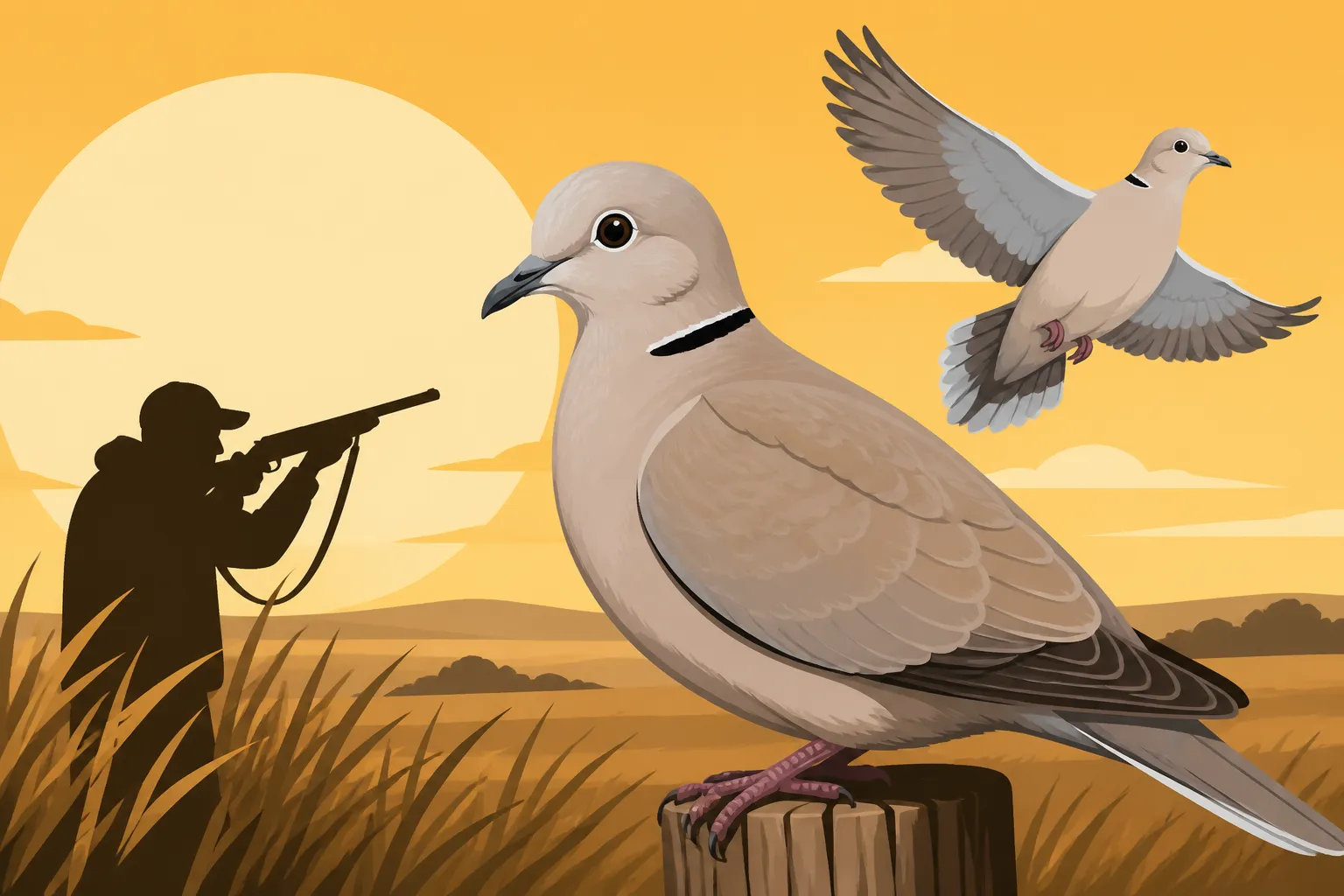
The most obvious difference is size. Eurasian Collared Doves are noticeably larger and stockier than mourning doves, often described as about the size of a pigeon but with a more graceful dove-like shape. Their overall coloration is a pale grayish-buff, lacking the iridescent neck patches or speckled wings sometimes seen on mourning doves. The key identifier, and where they get their name, is the distinct black half-collar or nape band on the back of their neck. This prominent marking is absent on mourning doves.
Another good indicator is their tail. Mourning doves have a long, pointed tail with white outer feathers that are very noticeable in flight. Eurasian Collared Doves, on the other hand, have a squared-off tail that is typically darker underneath with a broad, pale band. Their call is also different; while mourning doves have that classic, mournful coo, collared doves have a repetitive, three-syllable "coo-COO-coo" that's often described as quite monotonous. Learning these visual and auditory cues will make a world of difference when you're in the field, especially if you're using a tool like GoHunt to scout and understand regional bird activity.
Here's a quick comparison table to help you keep them straight:
| Feature | Eurasian Collared Dove | Mourning Dove |
|---|---|---|
| Size | Larger, stockier (pigeon-sized) | Smaller, more slender |
| Coloration | Pale grayish-buff | Tan/grayish-brown, often with speckles |
| Neck Marking | Distinct black half-collar on nape | No collar, sometimes iridescent patch |
| Tail Shape | Squared-off, darker base | Long, pointed, white outer feathers |
| Call | Repetitive "coo-COO-coo" | Classic, mournful "cooo-woo-woo-woo" |
| Habitat Focus | Urban, suburban, agricultural | Widespread, open fields, timber edges |
The Impact and Opportunities They Bring
While their arrival has raised some ecological questions, for hunters, Eurasian Collared Doves represent a fantastic, underutilized opportunity. They're abundant, widespread, and generally present very few regulatory hurdles, making them an accessible target for anyone looking to extend their time in the field or simply enjoy more wingshooting action.
Ecological and Agricultural Considerations
Whenever a non-native species establishes itself so rapidly, there are always concerns about what impact it might have on the local ecosystem. For Eurasian Collared Doves, the primary worry often revolves around competition with native species, particularly our beloved mourning doves. They share similar diets and habitat preferences, leading some to fear that the larger, more aggressive collared doves could outcompete their smaller cousins for food and nesting sites.
However, research into their ecological impact is still ongoing, and so far, there hasn't been widespread evidence of severe negative consequences for mourning dove populations. Their diets are fairly broad, and while they might overlap, the sheer abundance of resources in Kansas's agricultural landscape seems to support both species. They are also highly adaptable and reproduce quickly, which helps them capitalize on available resources. From an agricultural standpoint, like any abundant bird species, they can contribute to crop damage, especially in areas with high concentrations around grain storage or freshly planted fields, though the overall economic impact is typically localized rather than widespread.
Year-Round Hunting Opportunities
This is where the Eurasian Collared Dove truly shines for Kansas hunters. Unlike mourning doves, which are regulated with specific seasons and bag limits, collared doves are generally considered an unprotected, non-native species in Kansas. This means that, for the most part, you can hunt them year-round, without a daily bag limit, and often outside of traditional hunting seasons. This opens up incredible flexibility for wingshooting.
Imagine having the ability to hone your shotgunning skills in the summer, or to fill a lull between deer and turkey seasons with some fast-flying action. It's a fantastic way to spend more time outdoors, whether you're taking a youth hunter out for their first wingshoot, or just enjoying a casual afternoon hunt with friends. Always, always check the current Kansas Department of Wildlife and Parks (KDWP) regulations each year, as rules can change, but traditionally, collared doves have offered this fantastic freedom. They're a great target for those days when you just want to get out and shoot, providing an exciting challenge and putting delicious meat on the table.
Hunting Eurasian Collared Doves in Kansas
So, you're ready to chase these plentiful birds? Excellent! Hunting Eurasian Collared Doves in Kansas isn't much different than hunting mourning doves in many respects, but understanding their habits and some key tactical adjustments can greatly improve your success. The beauty is in their accessibility and the sheer volume of opportunities they present.
General Regulations and Licensing
Even though Eurasian Collared Doves are largely unregulated regarding seasons and bag limits, you still need to adhere to general hunting regulations. This means possessing a valid Kansas hunting license, and if you're hunting migratory birds (which doves are, even non-native ones), you'll likely need the proper state and federal migratory bird stamps (like the HIP stamp). Think of it like this: while the specific limits on collared doves are wide open, the act of hunting still requires you to be legally licensed.
It's absolutely critical to consult the most current KDWP hunting regulations for the year you plan to hunt. Rules can and do change, and it's your responsibility to know them. You can usually find these online or pick up a physical copy wherever hunting licenses are sold. Additionally, remember that general hunting rules, such as legal hunting hours, trespassing laws, and firearm safety, still apply. For instance, Hunter Orange Rules During Firearm Season might not directly apply to dove hunting outside of firearm season, but general safety considerations are always paramount. Don't forget, if you're under a certain age, Kansas Hunter Education Age Requirement might be in effect for you.
Effective Hunting Tactics
Hunting collared doves often mirrors mourning dove tactics, focusing on food sources, water, and roosting areas. They tend to be creatures of habit, making them somewhat predictable if you put in the scouting time.
- Food Sources: Like all doves, collared doves are huge fans of seeds. They will flock to cut wheat fields, milo and corn stubble, and especially sunflower fields. Look for areas where grain has spilled or where seeds are easily accessible on the ground. A field that has just been harvested can be a hotspot, as they'll pick through the leavings. Pay attention to how the birds enter and exit these fields; they often follow specific flight paths or funnels, which can be ideal ambush points.
- Watering Holes: In dry Kansas, any reliable water source is a magnet for doves, especially in the afternoon. Farm ponds, creek edges, or even cattle tanks can draw large numbers of birds looking for a drink. Setting up along a flight path leading to water, or concealed near the edge, can be highly effective. This is a classic dove hunting scenario and works just as well for collared doves. You might find success Early-Season Bowhunting Over Water for doves as well if you're a bowhunter.
- Roosting Areas: Doves will often congregate in trees or on power lines before heading to feed or water, and again before settling down for the night. Identifying these staging or roosting areas can provide opportunities, particularly in the late afternoon. They prefer open perches where they can survey their surroundings.
Gear and Shotgun Selection
For hunting Eurasian Collared Doves, your standard dove hunting setup will work perfectly. A lightweight 12- or 20-gauge shotgun is ideal, allowing for quick swings on fast-flying birds. Open chokes like Improved Cylinder or Modified are usually sufficient, as doves can present a variety of shots from close flushes to longer passes.
A good supply of light field loads, typically 7 ½ or 8 shot, is perfect for these birds. You don't need heavy loads; doves are relatively fragile, and the key is a dense pattern. Camouflage isn't strictly necessary but wearing drab colors that blend into the background certainly helps break up your outline. Comfort is key, so a small stool or bucket to sit on, plenty of water, and bug spray (depending on the season) will make your hunt much more enjoyable. Don't forget to bring plenty of shells – when the doves are flying, it's easy to go through a box or two!
Tips for a Successful Collared Dove Hunt
Getting out there and actually putting these tactics into practice is the real fun. Eurasian Collared Doves offer a fantastic opportunity to sharpen your skills and fill your freezer with some tasty meat, but a few extra considerations can make your hunting efforts even more rewarding.
Scouting and Location
Just like hunting any other game species in Kansas, pre-season scouting or even mid-season observation is invaluable. Eurasian Collared Doves are often found around human activity, so start by looking for them in areas you might not typically associate with traditional "wild" hunting. Grain elevators, feedlots, and farmsteads are all prime locations, often with power lines and scattered trees nearby that doves use as perches. Of course, agricultural fields, especially those recently harvested or those with standing grain like milo or sunflowers, are always worth investigating.
Using digital scouting tools can be a huge advantage here. Platforms like GoHunt can help you identify public hunting lands or pinpoint agricultural patterns from aerial imagery, giving you a head start before you even step foot in the field. Look for areas where multiple food sources converge, or where a water source is close to heavy cover. Even small patches of trees or fence lines in otherwise open country can become significant travel corridors. Remember, collared doves are not particularly wary, so finding where they congregate is often the biggest challenge.
Calling and Decoys
While not as critical as for turkeys or waterfowl, calling and decoying can definitely enhance your collared dove hunting experience, especially if the birds are a bit more scattered or cautious. There are specific collared dove calls available, which mimic their distinctive "coo-COO-coo" sound. These can be effective for drawing in curious birds or pinpointing their location.
Decoys, particularly silhouette or full-body dove decoys, can work wonders. Set up a small spread (3-6 decoys) on a fence line, in a dead tree, or even on the ground in a field. Doves are highly social birds and are often attracted to the sight of others. A common setup is to place a few decoys on the ground and one or two on elevated perches to simulate landing birds. Motion decoys, like spinning wing doves, can also be incredibly effective, as that movement catches their eye from a distance, drawing them into your shooting lane.
Handling and Processing Your Harvest
The best part about hunting Eurasian Collared Doves, beyond the thrilling wingshooting, is the delicious meat they provide. They are excellent table fare, with lean, dark breast meat that's versatile in the kitchen. Once you've harvested a bird, cooling it down quickly is important, especially on warm Kansas days. A cooler with ice will do the trick.
Field dressing doves is incredibly simple. Most hunters just remove the breast meat, discarding the rest of the carcass. A quick incision down the breastbone, and then peeling the skin back to expose the two breast halves, is all it takes. You can then cook them whole or butterfly them for faster cooking. From grilling to pan-frying, doves are a gourmet treat. Given their lack of bag limits, you can often accumulate a significant amount of meat quickly, perfect for larger meals or freezing for later. Enjoying the fruits of your labor is truly one of the greatest satisfactions of hunting, and these doves provide plenty of opportunity for that.
Disclaimer
This article is for general informational purposes only and does not constitute professional advice. Laws, prices and regulations vary by location and change over time. Consult a qualified professional for guidance on your specific situation.