Mule Deer in Western Kansas
The thought of hunting mule deer often conjures images of towering mountains or vast desert landscapes. But in the heart of the Midwest, Kansas offers a unique, albeit challenging, opportunity to pursue these majestic animals. Many hunters, especially those new to the Sunflower State or primarily focused on whitetails, might not realize that a small, dedicated herd of mule deer calls the rugged western plains home. This comprehensive guide will peel back the layers of hunting mule deer in Western Kansas, exploring their distinct habitat, current population status, the intricate permit system, and the specialized tactics required to successfully pursue them.
Understanding the Mule Deer's Kingdom in Kansas
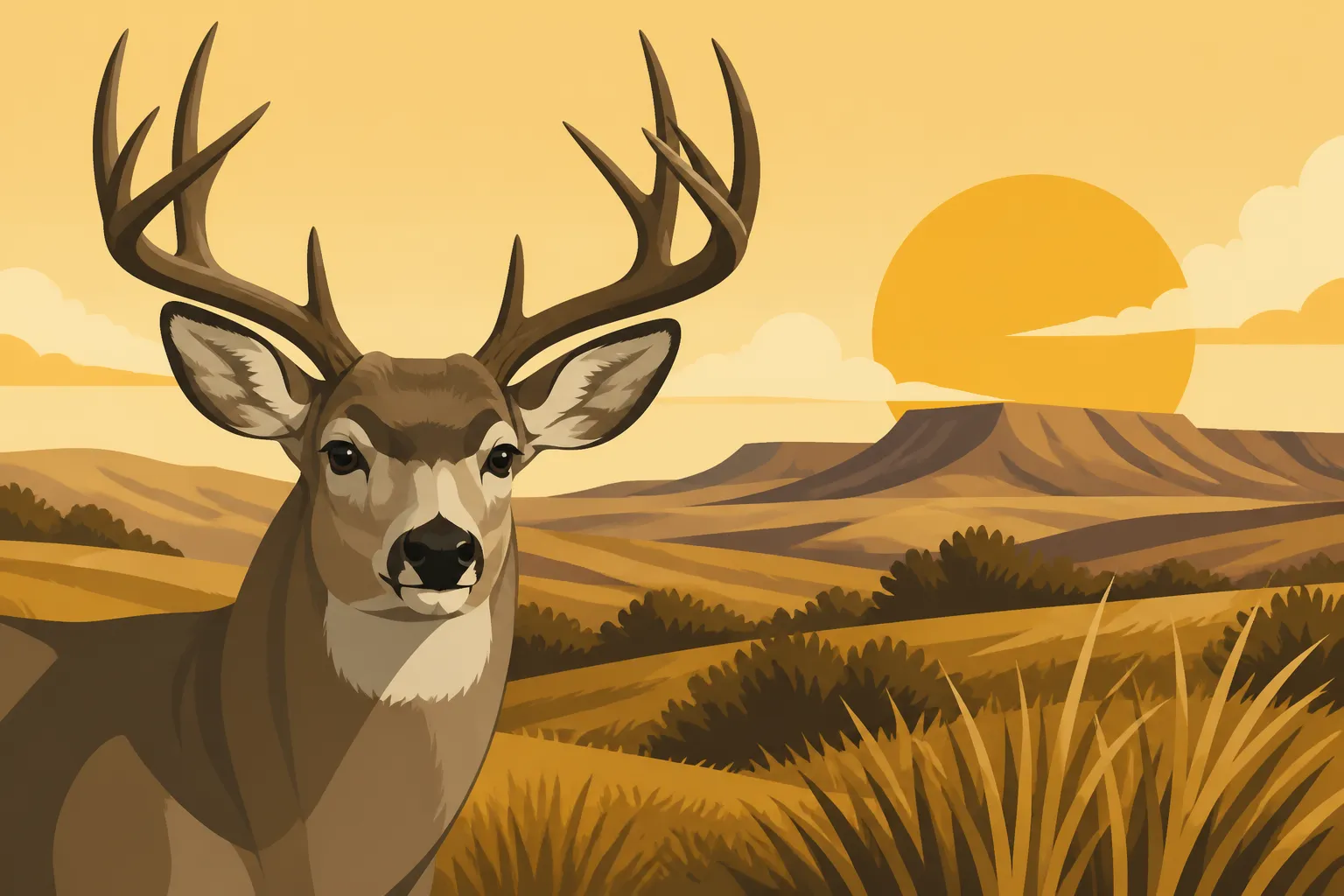
Western Kansas is a world apart from the eastern, timber-rich river bottoms that many associate with trophy whitetail deer. Here, the landscape transforms into expansive prairies, rolling sandhills, and subtle breaks that provide sanctuary for a truly adaptable creature: the mule deer. Successfully hunting these animals begins with a deep appreciation for the unique environment they inhabit.
Geographic Strongholds: Where Western Kansas Mule Deer Roam
When you think of mule deer in Kansas, your focus needs to shift decisively to the western third of the state. While there might be occasional sightings further east, the true strongholds, where populations are most viable and hunting opportunities exist, are concentrated in the far western tier of counties. We're talking about places like Morton, Stanton, Hamilton, Wallace, Sherman, Cheyenne, Rawlins, Thomas, Logan, Greeley, Wichita, Kearny, Grant, and Stevens counties. These aren't the postcard-perfect images of mule deer country you might see out West, but they possess a subtle beauty and toughness that perfectly suits these animals.
The terrain here is primarily shortgrass prairie, punctuated by dramatic elevation changes in the form of canyons, deep draws, and "breaks" that lead down to ephemeral creeks or riverbeds. You’ll find vast expanses of yucca, often referred to as soapweed, providing dense, prickly cover that deer can melt into. Sandhills, particularly in counties like Grant and Stevens, create rolling, uneven ground that breaks up the horizon and offers both thermal and visual cover. Unlike the eastern part of the state where timber often dictates deer movement, in Western Kansas, trees are few and far between. They're typically confined to the narrow riparian corridors along the few permanent water sources, making these areas absolute magnets for deer activity. Understanding this stark difference from eastern Kansas whitetail habitat is your first step in even thinking about mule deer.
Preferred Habitats and Cover Types
Mule deer in Western Kansas have adapted to survive and thrive in an environment that would seem impossibly open to many other deer species. Their survival hinges on their ability to use sparse, almost imperceptible cover to their advantage. They don't seek out dense timber blocks in the way whitetails do. Instead, they favor isolated breaks and the rugged terrain associated with draws and the scattered badlands that appear in certain areas. These areas provide vertical relief and visual obstruction, allowing them to bed down and feel secure even when surrounded by seemingly open plains.
CRP (Conservation Reserve Program) fields are also incredibly vital, especially for mule deer fawns and as bedding cover for adults. These large blocks of native grasses, sometimes mixed with legumes, offer not only concealment but also crucial forage. Mule deer will often use the thickest, tallest patches of CRP to bed during the day, relying on their eyesight and the wind to detect danger. Sagebrush, while not as prevalent as in some western states, and the ever-present yucca plants, create dense, thorny islands of cover that mule deer will duck into. During harsh weather, especially cold winds, they'll seek the leeward side of these breaks or small patches of cedars, if available, for thermal cover. Water sources, as you can imagine in an arid environment, are critical. Even small, isolated farm ponds or trickling springs can become hubs of activity, particularly during dry periods. Learning how to identify these subtle habitat nuances on a map, and then on the ground, is key to locating mule deer in this unique landscape.
Distinguishing Kansas Mule Deer from Whitetails
One of the most common challenges for hunters new to Western Kansas, or even experienced whitetail hunters venturing west, is correctly identifying a mule deer from a whitetail, especially at a distance or in low light. While both species share the "deer" moniker, they are distinct in many crucial ways, from their physical attributes to their behavior.
Key Physical Characteristics and Antler Differences
The most obvious difference, and often the first thing hunters look for, is the ears. Mule deer have significantly larger ears, often described as "mule-like," which are proportionally much bigger than those of a whitetail. These large ears are constantly swiveling, helping them pick up the faintest sounds in the open country. Whitetail ears, by contrast, are more compact and rounded. The tail is another dead giveaway. A mule deer's tail is typically rope-like, relatively narrow, white with a distinct black tip, and usually hangs down, rarely flagging unless alarmed. Whitetail deer, on the other hand, boast that iconic broad, flat tail—the "flag"—which they raise high and wave vigorously when startled, revealing the pure white underside. This flagging behavior is a clear signal of a whitetail.
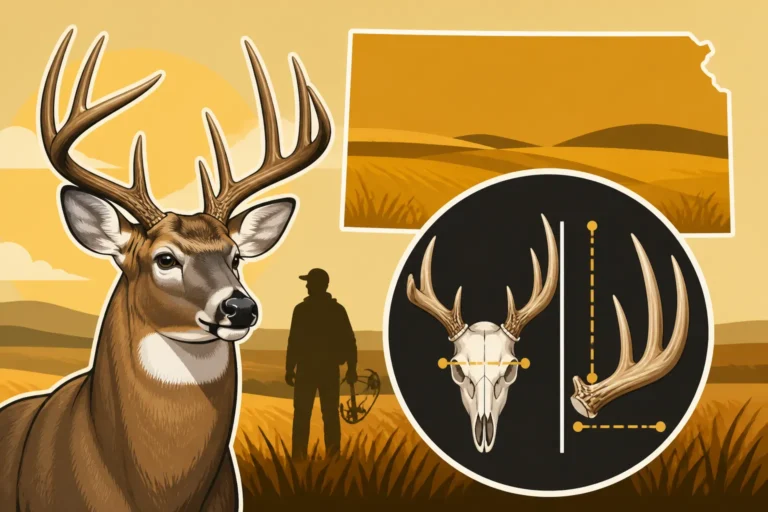
When it comes to antlers, the difference is usually quite pronounced, especially in typical bucks. Whitetail antlers characteristically have a main beam from which individual tines (points) branch off, typically growing upwards. Mule deer antlers, however, tend to bifurcate or "fork." The main beam splits into two, and each of those splits again, creating a distinctive double-forked appearance. While non-typical antlers can blur these lines for both species, most mature mule deer bucks will display this bifurcated pattern. Body size can also be a hint, with mature mule deer often appearing stockier and heavier-bodied than comparably aged whitetails, though this can be harder to judge without a direct comparison. Their coats also tend to be a more uniform grayish-brown compared to the often reddish-brown hue of whitetails, particularly in summer. For a more detailed look at the visual cues, check out Telling Mule Deer From Whitetails at Distance.
Behavioral Patterns and Movement
Beyond their looks, mule deer behave quite differently from whitetails, a distinction that is critical for hunters. Perhaps the most famous behavioral trait of a mule deer is its distinctive gait, often called "pronking" or "stotting." When alarmed or moving rapidly across open terrain, a mule deer will bound, springing all four feet off the ground simultaneously, often in an almost bouncy, stiff-legged manner. This allows them to quickly clear obstacles and keep an eye on their surroundings. Whitetails, conversely, exhibit a more fluid, bounding run, alternating their leg movements and usually displaying that characteristic tail flag.
Mule deer in open country are often perceived as less "jumpy" than whitetails. While still alert, they sometimes display a curious nature, standing and staring at a perceived threat rather than immediately bolting. This can provide a critical few extra seconds for a hunter to assess the situation or make a shot. Their larger home ranges, necessitated by the vast and sometimes less nutrient-rich landscape of Western Kansas, mean they might cover more ground in a day than a whitetail. They also tend to react to hunting pressure differently; instead of disappearing into dense cover, they might simply move further into the expansive, open landscape, relying on distance and their keen eyesight to evade hunters. Understanding these behavioral patterns is paramount to developing successful hunting strategies that diverge from traditional whitetail methods.
The State of the Kansas Mule Deer Population
The mule deer population in Kansas is a fascinating, if sometimes concerning, story of resilience in a fringe environment. It's a herd that exists on the very eastern edge of the species' North American range, facing unique pressures that differ from those in the core western states.
Historical Context and Current Population Trends
Historically, mule deer were more widespread across the western half of Kansas, though never in the densities found further west. Over the decades, their numbers have seen fluctuations, largely influenced by habitat changes and, in more recent times, competition with expanding whitetail populations. The conversion of native rangeland to agricultural production, especially for row crops, significantly reduced the continuous tracts of shortgrass prairie and rugged breaks that mule deer prefer. This habitat fragmentation made it harder for mule deer to find secure bedding areas and travel corridors.
Today, the Kansas Department of Wildlife, Parks and Tourism (KDWP) closely monitors the mule deer population. While precise statewide numbers are difficult to obtain for such a geographically restricted species, the general consensus is that the population is stable, if not slightly declining in some areas, and certainly not expanding significantly. The core of the herd remains concentrated in those far western counties, where suitable habitat persists. Any slight increase in habitat quality or reduction in competition can have a noticeable impact on these smaller, more localized populations. You can delve deeper into the challenges this population faces by looking at Mule Deer Decline in Kansas.
Challenges to Mule Deer Management and Growth
The management and growth of Kansas's mule deer population face several significant challenges. Perhaps one of the most prominent is the ongoing expansion of whitetail deer. Whitetails are incredibly adaptable and thrive in disturbed habitats, including agricultural landscapes. As whitetails push further west into traditional mule deer range, they compete for resources – food, water, and cover. This competition can be detrimental to mule deer, which are often less aggressive and less tolerant of human disturbance than their whitetail counterparts.
Disease is another looming threat. Chronic Wasting Disease (CWD) is present in Kansas, and while its impact on mule deer specifically is still being studied, any disease outbreak in a small, concentrated population can have disproportionately severe effects. Epizootic Hemorrhagic Disease (EHD) outbreaks, which are often triggered by drought conditions, can also hit deer populations hard, and mule deer are not immune. Prolonged drought, a recurring feature of Western Kansas, further exacerbates these challenges. Drought reduces forage quality and quantity, strains water resources, and can lead to poorer fawn survival rates. When fawns struggle to survive their first year, the long-term health and growth of the herd are significantly hampered. Managing these factors is a delicate balancing act for KDWP, requiring careful monitoring and adaptive strategies to ensure the continued presence of mule deer in the state.
Navigating the Kansas Mule Deer Permit System
For many hunters, the permit system for Kansas mule deer is a source of confusion and, at times, frustration. Unlike whitetail tags, which are more readily available, securing a mule deer permit in Kansas is a specialized process that requires careful planning and a bit of luck. It’s not just about drawing a general deer permit; there's an additional hurdle to clear.
The Elusive Mule Deer Stamp Draw
This is the critical piece of information for anyone dreaming of a Kansas mule deer. You cannot simply apply for a "mule deer permit." Instead, you must first successfully draw an "Either-Species/Either-Sex" deer permit in one of the specific western units where mule deer exist. Once you have this permit, you then apply for a separate, highly limited "Mule Deer Stamp." This stamp, if drawn, converts your general "Either-Species/Either-Sex" permit into an "Either-Sex Mule Deer" permit, allowing you to legally harvest a mule deer in the unit for which your primary permit was issued. Without this stamp, even if you draw a deer permit in a mule deer unit, you are restricted to hunting whitetails.
The mule deer stamp draw is notoriously difficult. KDWP issues a very limited number of these stamps each year, often in the single or low double digits per unit, reflecting the small and delicate nature of the herd. Preference points, which are so crucial for drawing coveted whitetail permits in some units, do not apply to the mule deer stamp draw. It is a pure lottery, giving every applicant an equal chance each year, regardless of how many points they've accumulated for deer permits. This means even a first-time applicant has the same shot as someone who has been applying for a decade. The cost of this stamp, while not astronomical, is an additional expense to factor in. For precise details on the fees, refer to Kansas Mule Deer Stamp Cost. Because of the extreme difficulty in drawing a mule deer stamp, many hunters consider themselves fortunate just to be able to apply, let alone draw. Utilizing tools like GoHunt can provide crucial insights into historical draw odds, helping you strategize which units might offer the least impossible odds.
Application Process and Season Dates
The application window for Kansas deer permits, including the opportunity to apply for the mule deer stamp, typically opens in April. This is a critical timeframe that you absolutely cannot miss. Non-resident hunters, in particular, face more competition and higher costs, making proper application even more important. You'll need to purchase a non-resident hunting license and then apply for your deer permit. During this process, you will select your primary deer management unit and an adjacent unit. It’s vital that you choose a unit (or units) in Western Kansas known to have mule deer and where mule deer stamps are issued if that's your target species. Your choice here directly impacts your eligibility to even apply for the mule deer stamp. For a full breakdown of the general application process and non-resident considerations, consult Kansas Deer Permits and the Nonresident Draw.
Once you've successfully navigated the permit draw and hopefully secured a mule deer stamp, the actual hunting season dates align with the general Kansas deer seasons. There isn't a separate, exclusive mule deer season. This means you'll be hunting during the statewide archery season (typically September to December), the muzzleloader season (usually a short window in September), or the regular firearm season (primarily December). Each weapon choice has its own permit requirements and challenges in the open, often windy conditions of Western Kansas. Early archery season can be brutally hot, while the firearm season in December can bring frigid temperatures and snow. Understanding these nuances and planning your hunt around the specific season you've drawn is crucial for success. Keep in mind that pressure on public lands, especially during firearm season, can significantly alter deer movement.
Strategic Hunting for Western Kansas Mule Deer
Hunting mule deer in Western Kansas is a fundamentally different experience than chasing whitetails in timbered river bottoms. It demands patience, keen eyesight, and a willingness to cover vast distances on foot. Forget sitting in a treestand all day; this is a spot-and-stalk game played out on a grand scale.
Scouting the Vast Western Landscape
E-scouting is your absolute best friend when preparing for a Western Kansas mule deer hunt. Before you ever set foot in the field, you should be spending countless hours pouring over satellite imagery and topo maps. Tools like those offered by GoHunt, or other online mapping platforms, are invaluable. Look for subtle changes in elevation – even a five-foot drop can offer enough cover to hide a deer. Identify drainage systems, isolated patches of cover like yucca thickets or small cedar groves, and any visible water sources like ponds or irrigation pivots. Pinpoint potential bedding areas on the leeward sides of ridges and draws. This meticulous pre-hunt research can save you days of aimless wandering once you're on the ground. For more on digital scouting, consider reading E-Scouting Kansas Farm Country From Home.
Once you're in the field, your scouting approach shifts. This isn't about finding rubs and scrapes in a dense woodlot. It's about glassing. Find the highest point you can access – a hill, a rise, or even the top of your vehicle – and spend hours, sometimes entire mornings or afternoons, systematically glassing the landscape with high-quality binoculars or a spotting scope. Pay close attention to shaded areas on hillsides, the edges of CRP fields, and the bottoms of draws where deer might be bedded. Mule deer often bed down in plain sight, but their natural camouflage makes them incredibly difficult to spot until they move or you catch a subtle outline. Look for ears, patches of tan hide, or the tell-tale glint of antlers. Identify subtle terrain features that might act as travel corridors or funnel points, even in what appears to be flat country; for instance, Terrain Funnels That Work Without Hills can provide useful context here.
Effective Tactics for Open Country Muleys
When you've located a mule deer buck you want to pursue, the real challenge begins: the spot-and-stalk. This tactic is the cornerstone of western mule deer hunting. It requires immense patience, careful planning, and an understanding of wind, thermals, and topography. Once a buck is spotted, meticulously plan your approach, using every available piece of cover – even a small rise, a few yucca plants, or a fence line – to stay out of sight. A good pair of knee pads can be your best friend, as you'll often be crawling or hunching over for long distances. Always be mindful of the wind direction. Mule deer have incredible noses, and a swirling wind can bust your stalk instantly.
Proficiency with long-range shooting is almost a necessity for Western Kansas mule deer. Shots over 200 yards are common, and often significantly further, given the open nature of the terrain. Practice regularly at extended distances and be comfortable with your rifle and ballistics. Shooting sticks are an absolute must-have for providing a stable platform in windy conditions. Another tactic, particularly during dry periods in early season or warm firearm seasons, is waterhole hunting. Deer, especially mule deer in arid regions, need water. Finding a secluded pond or cattle tank can be a high-percentage spot, especially if you set up for an evening ambush. Information on Finding Water in Dry Western Kansas can offer more insights into this strategy. Remember, this isn't a quick hunt; it's a marathon of glassing, stalking, and mental fortitude.
Gear Essentials for a Kansas Mule Deer Hunt
A successful mule deer hunt in Western Kansas hinges not just on strategy and skill, but also on having the right gear. The open, often unpredictable environment demands equipment that can withstand the elements and enhance your ability to spot and stalk. Skimping on essentials can quickly turn a dream hunt into a miserable experience.
Optics: Your Most Critical Tool
When hunting in vast, open country, your eyes are your greatest asset, and quality optics are an extension of those eyes. This cannot be overstated. A good pair of binoculars, ideally 10×42, 12×50, or even 15×56 for extended glassing, is paramount. You'll spend hours behind them, systematically dissecting distant hillsides, draws, and CRP fields. Investing in top-tier glass from brands like Swarovski, Zeiss, or Vortex can make the difference between spotting a bedded buck and walking right past him.
Beyond binoculars, a high-magnification spotting scope (20-60x or higher) mounted on a sturdy tripod is indispensable. This allows you to confirm antlers at extreme distances, determine if a patch of brown is a deer or a rock, and evaluate a buck's size and quality without spooking him. A rangefinder is also non-negotiable. Knowing the exact distance to your target is crucial for making accurate shots at longer ranges, especially when factoring in bullet drop and wind drift. You might even consider a range-finding binocular to streamline your glassing and ranging process.
Clothing, Footwear, and Other Necessities
The weather in Western Kansas can be notoriously fickle, sometimes experiencing all four seasons in a single day. Layering is key to staying comfortable and adaptable. Start with a good moisture-wicking base layer, add insulating layers (fleece or down), and top it off with a windproof and waterproof outer shell. Even if the forecast predicts warmth, pack for cold, windy conditions. Early morning and late evening temperatures can plunge dramatically, and a strong prairie wind can cut right through inadequate clothing.
Your footwear is equally important. You'll be covering miles over uneven terrain, through tall grass, and potentially across rocky stretches. Invest in durable, comfortable, broken-in hiking boots with good ankle support. Waterproofing is a huge plus, even in dry conditions, as morning dew or an unexpected rain shower can quickly soak your feet. A reliable backpack, capable of carrying water, food, extra layers, a first-aid kit, emergency communication, and most importantly, game bags for quartering out a deer, is essential. Given the potential for long shots and windy conditions, shooting sticks (bipod or tripod style) provide crucial stability for your rifle. Finally, always carry a GPS device or a reliable mapping app (like GoHunt's mapping features) on your phone, along with a physical map and compass as a backup, to ensure you can navigate the vast landscape and find your way back to your vehicle, especially if you're venturing into areas like the Cimarron National Grassland. Cimarron National Grassland Hunting can be a huge area to cover, so navigation is key.
Premier Western Kansas Mule Deer Units
While mule deer are found in varying densities across the western third of Kansas, some units consistently offer better opportunities for drawing a tag and encountering the species. Understanding which units hold the highest potential is vital for anyone applying for the elusive mule deer stamp.
Identifying Key Units and Their Potential
When KDWP allocates mule deer stamps, they are typically concentrated in the extreme western tier of units. The units you should be focusing on are primarily Units 1, 2, 17, and 18. These units encompass the true mule deer country of Kansas, characterized by large expanses of shortgrass prairie, rugged breaks, and minimal timber. Unit 1, for example, covers the northwestern corner, bordering Nebraska and Colorado, and offers a mix of agricultural land and native rangeland. Unit 2, just south of Unit 1, is similar in character. Units 17 and 18 further south, bordering Colorado and Oklahoma, include the famous Cimarron National Grassland, which provides a significant amount of public hunting access.
These units are preferred not just because they hold mule deer, but because they contain the most suitable habitat. They generally have less human population density and larger tracts of contiguous land, including public ground like Walk-In Hunting Access (WIHA) tracts and the aforementioned Cimarron National Grassland. While these aren't high-density mule deer units by western state standards, they are where your best chances lie for encountering and successfully harvesting a mule deer in Kansas. Understanding the specific nuances of these units, from terrain to land ownership, is paramount.
Success Rates and Drawing Odds for Each Unit
As previously mentioned, drawing a Kansas mule deer stamp is incredibly challenging due to the limited number issued. The drawing odds vary slightly by unit and year, but generally remain in the low single digits percentage-wise. It's truly a lottery. While KDWP provides some data on the number of mule deer stamps issued per unit, and how many applications were received, it's rare to see a unit with more than a handful of tags available for non-residents, if any. Residents also face steep odds.
Below is a general overview of characteristics and opportunities in the top mule deer units. Remember, actual draw odds for the Mule Deer Stamp are extremely low for all units and fluctuate annually. Always consult the current KDWP regulations and draw reports for the most up-to-date information. Utilizing a platform like GoHunt can provide you with detailed draw statistics and application strategies based on historical data, helping you make an informed decision when applying.
| Characteristic / Unit | Unit 1 (NW Kansas) | Unit 2 (West Central NW) | Unit 17 (SW Kansas) | Unit 18 (West Central SW) |
|---|---|---|---|---|
| Primary Counties | Cheyenne, Sherman, Rawlins, Thomas | Wallace, Logan, Greeley, Wichita | Morton, Stanton, Hamilton, Kearny | Grant, Stevens, Haskell, Finney |
| Habitat Type | Mixed grass prairie, breaks, agriculture | Shortgrass prairie, draws, limited breaks, CRP | Sandhills, shortgrass prairie, Cimarron NG | Mixed agriculture, CRP, some sandhills |
| Public Land Availability | Moderate (WIHA) | Moderate (WIHA) | High (Cimarron National Grassland, WIHA) | Moderate (WIHA) |
| Mule Deer Population Trend | Stable but low density | Stable but low density | Stable but low density | Stable but low density |
| Competition with Whitetails | Present, increasing in riparian areas | Present, increasing | Present, but mule deer thrive in open areas | Present, significant in agricultural areas |
| Draw Difficulty (Mule Deer Stamp) | Extremely High (Lottery) | Extremely High (Lottery) | Extremely High (Lottery) | Extremely High (Lottery) |
| Hunting Strategy Focus | Spot-and-stalk, glassing vast areas | Extensive glassing, long stalks, utilizing CRP | Large-scale glassing, navigation of federal land | Spot-and-stalk, focus on remote cover & water |
It's critical to note that while some units might theoretically offer slightly better odds due to fewer applicants, the difference is often negligible. The most important factor is selecting a unit you are genuinely willing to hunt for mule deer and dedicating yourself to scouting and effective tactics if you are one of the fortunate few to draw a stamp. Even with a successful draw, actually harvesting a Kansas mule deer is a hard-earned trophy, representing a true testament to a hunter's skill and perseverance.
Disclaimer
Hunting in Kansas involves inherent risks, including but not limited to, those associated with wildlife, terrain, weather, and the use of firearms or archery equipment. Always prioritize safety, adhere to all Kansas Department of Wildlife, Parks and Tourism (KDWP) regulations, and respect private property. The information provided in this guide is for informational purposes only and does not constitute professional advice. Consult official KDWP publications and regulations for the most current and accurate hunting laws and season dates.