Mule Deer Decline in Kansas
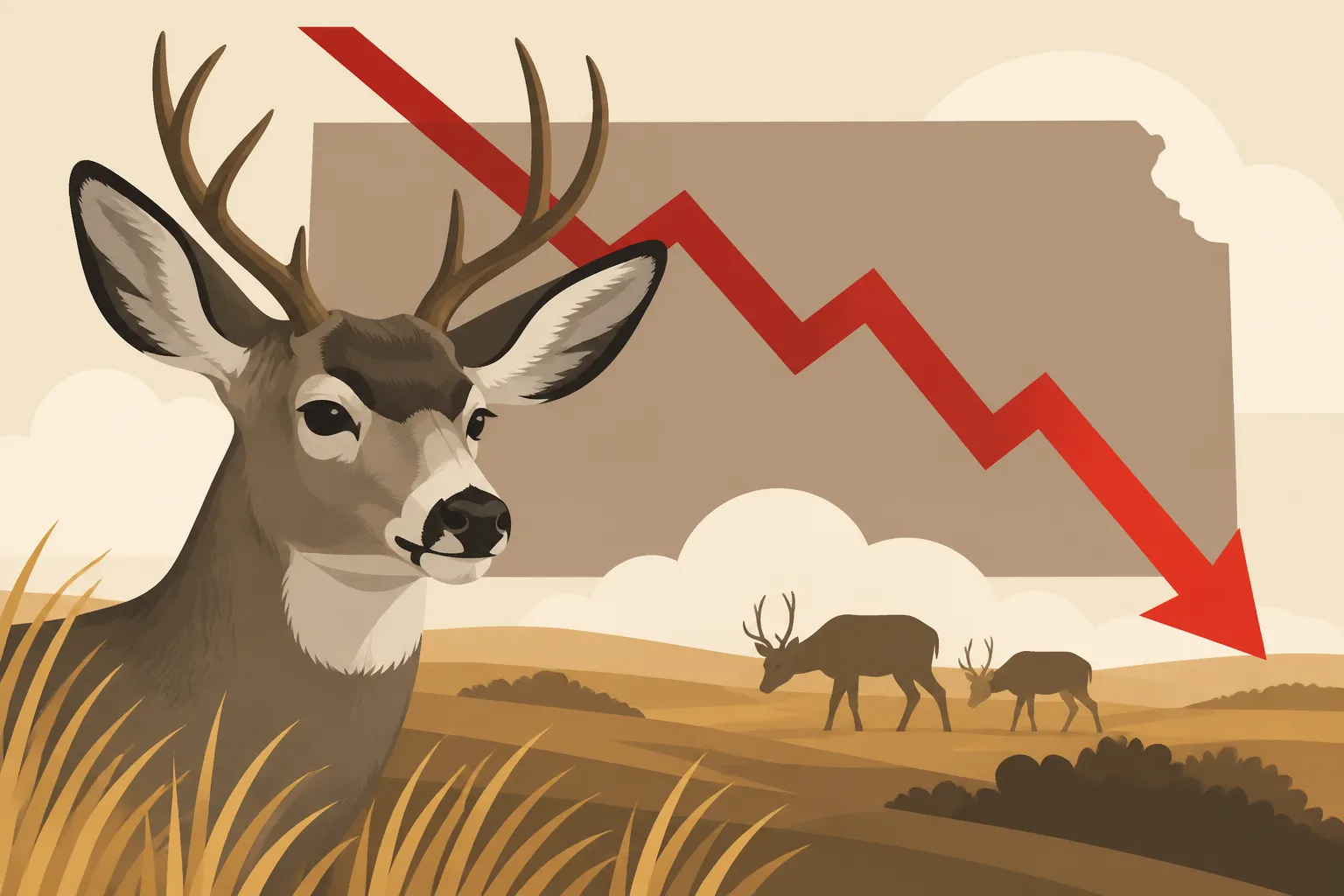
For those of us who cherish the vast, open spaces of western Kansas, the sight of a magnificent mule deer buck is a truly special experience. But there's a growing concern whispered among hunters and conservationists alike: the mule deer population in Kansas isn't what it used to be. Many of us have seen fewer "mulies" than in years past, and that observation is backed by data. This guide aims to thoroughly explore the factors contributing to the decline of mule deer numbers in our state, offering insights into why these iconic animals are struggling and what that means for their future here.
Understanding the Historical Presence of Mule Deer in Kansas
While Kansas is often synonymous with whitetails, mule deer have a long, albeit more localized, history within the state. They represent a unique part of our hunting heritage, deeply tied to the rugged and less-tamed landscapes of the High Plains. Understanding their historical foothold is crucial to grasping the significance of their current struggles.
Initial Range and Population Dynamics
Historically, mule deer were never as widespread across Kansas as their whitetail cousins. Their primary stronghold has always been the western third of the state, particularly the high plains and breaks west of the 100th meridian. This region, characterized by its arid climate, extensive grasslands, and broken canyon country, provided the ideal habitat for these larger-bodied deer. Early accounts and even older harvest records suggest that while numbers fluctuated with environmental conditions, mule deer were a consistent presence in suitable western Kansas areas. They were never found in the dense timber and river bottoms of eastern Kansas; their physiology and behavior simply aren't geared for that kind of environment.
In those earlier days, mule deer populations likely ebbed and flowed with factors like severe winters, prolonged droughts, and market hunting pressures that eventually led to conservation efforts. However, they maintained a resilient presence, navigating the challenges of a wilder Kansas. Hunters who recall the mid-to-late 20th century often speak of seeing mule deer in greater numbers in counties like Morton, Hamilton, and Wallace, areas where finding them today can be a much more significant challenge. This shift is what truly highlights the ongoing decline, marking a departure from what was once considered a relatively stable, if limited, population.
The Habitat Niche They Occupied
Mule deer are creatures of open, broken country. They thrive in rugged terrain that offers a mix of grasslands for foraging, scattered brush or cedars for cover, and distinct elevation changes that allow them to use their keen eyesight and bounding gait to evade predators. In Kansas, this meant areas like the Cimarron National Grassland, the Smoky Hill River breaks, and the many smaller canyons and draws found across the far western counties. They prefer expanses where they can see danger coming from a distance, rather than relying on dense cover for concealment like whitetails do.
Their diet is also adapted to these environments, often including a higher proportion of browse—shrubs and woody plants—than whitetails, alongside forbs and grasses. This reliance on specific types of forage means they are more sensitive to changes in native rangeland health. The vast, open nature of these habitats historically kept them somewhat separate from whitetail deer, which prefer more agricultural interfaces and dense timber. This spatial separation played a critical role in maintaining distinct populations, allowing each species to flourish in its preferred niche.
Key Factors Contributing to the Decline
The decline of mule deer in Kansas isn't due to a single cause but rather a complex interplay of environmental shifts, disease, competition, and human land use. It's a challenging puzzle to solve, and each piece contributes to the overall picture of a shrinking population.
Habitat Loss and Fragmentation
One of the most significant pressures on mule deer populations in Kansas, and across their range, is the continued loss and fragmentation of their preferred habitat. As agricultural practices become more intensive and land use changes, the open, uncultivated rangelands, and breaks that mule deer rely on are steadily being converted or altered. Vast tracts of native prairie, once prime mule deer country, have been plowed under for row crops. This not only removes their forage but also eliminates crucial cover and movement corridors.
Furthermore, the remaining patches of suitable habitat become isolated, making it harder for mule deer to move freely, find mates, and establish new territories. Fences, roads, and human development act as barriers, preventing the natural dispersal that helps maintain healthy genetic diversity and allows populations to recover. While programs like the Conservation Reserve Program (CRP) have provided some beneficial cover, even CRP often lacks the structural diversity and rugged terrain features that mule deer truly need. You can see how CRP Acres and Kansas Deer Numbers are linked, but the benefit is often greater for whitetails.
Disease and Predation Pressures
Disease, particularly Chronic Wasting Disease (CWD) and epizootic hemorrhagic disease (EHD), also plays a role in the health and numbers of mule deer. While EHD tends to affect whitetails more visibly, mule deer are not immune, and outbreaks can certainly depress local populations. CWD, on the other hand, is a persistent and fatal neurological disease that has been detected in Kansas deer herds, and mule deer appear to be particularly susceptible to its long-term effects. The slow but steady march of CWD through deer populations is a serious concern for their future.
Predation, especially on fawns, also impacts mule deer recruitment rates. Coyotes and other predators, which may have stable or increasing populations due to abundant whitetail numbers and available prey, can have a disproportionate impact on a struggling mule deer population with fewer fawns being born or surviving. When combined with other stressors, even typical predation can tip the balance against a struggling herd. Understanding EHD Effects on Kansas Deer Herds and Chronic Wasting Disease in Kansas is vital for appreciating these biological pressures.
Competition with Whitetail Deer
Perhaps one of the most insidious factors in the mule deer decline is direct competition with whitetail deer. Whitetails are incredibly adaptable and thrive in a wider array of habitats, including those heavily influenced by agriculture. As whitetails expand their range westward into what was traditionally mule deer country, they often outcompete mule deer for resources. Whitetails tend to have higher reproductive rates, are more tolerant of human disturbance, and can utilize a broader diet, giving them a distinct advantage.
This competition is more than just about food; it's about space and disease. Whitetails can carry diseases that may not affect them as severely but can be devastating to mule deer, acting as vectors. Furthermore, there's evidence of Mule Deer and Whitetail Hybridisation occurring where their ranges overlap, which can dilute the genetic purity of mule deer populations. This phenomenon, while fascinating from a biological standpoint, is a serious long-term threat to the distinct species in areas where mule deer are already under pressure. Hunters who spend time in the transitional zones will often remark on the challenge of Telling a Mule Deer From a Whitetail when they see both species in close proximity.
Environmental Shifts and Drought
The climate of western Kansas has always been characterized by its variability, but recent trends in environmental shifts, particularly prolonged or intensified droughts, pose a significant challenge to mule deer. Mule deer are heavily reliant on native forage and water sources in their arid environments. Extended dry periods lead to a reduction in high-quality forage, stressed vegetation, and diminished water holes, all of which can severely impact deer health, fawn survival, and overall population vigor.
Drought conditions force deer to expend more energy to find food and water, making them more susceptible to disease and predation. It can also reduce the nutritional plane of does, leading to fewer fawns, or fawns that are weaker and less likely to survive their first year. The delicate balance of the prairie ecosystem is easily disrupted by these extreme weather events, and mule deer, being specialists in this environment, feel the impact acutely. Hunters using tools like GoHunt to analyze historical weather patterns or habitat maps can sometimes correlate these environmental stressors with changes in deer distribution or density over time.
The Current State of Kansas Mule Deer Populations
The picture of mule deer in Kansas today is one of concern, but not entirely without hope. While their numbers are diminished from historical highs, dedicated efforts are being made to understand and address the challenges they face. Hunters who apply for Kansas Deer Permits and the Nonresident Draw for western units, especially those interested in The Kansas Mule Deer Stamp Draw, are keenly aware of the rarity and value of these animals.
Current Range and Population Estimates
Today, the core range of Kansas mule deer remains confined almost exclusively to the westernmost tier of counties, with scattered populations extending slightly eastward in certain areas. Their numbers are relatively small compared to whitetails, and their distribution is patchy, often concentrated in the most rugged and least disturbed landscapes. While precise, real-time population figures are difficult to obtain for any wild species, survey data and hunter harvest reports consistently indicate a low and potentially declining trend.
The Kansas Department of Wildlife, Parks and Tourism (KDWPT) monitors these populations closely through various surveys and harvest data collection. These efforts help wildlife managers understand where the remaining strongholds are and how various factors might be influencing localized herds. For instance, data might show Mule Deer Numbers in Western Kansas are particularly low in areas with high agricultural conversion, while remaining relatively stable in more protected, traditional habitats. Anyone looking to hunt Mule Deer in Western Kansas knows this is a true trophy hunt, far from a given.
Here's a simplified look at key differences between Mule Deer and Whitetail Deer in Kansas, highlighting why mule deer are more vulnerable:
| Feature | Mule Deer | Whitetail Deer |
|---|---|---|
| Primary Habitat | Open plains, rugged breaks, sparse cover | Timbered river bottoms, agricultural edges, dense cover |
| Preferred Forage | Browse (shrubs), forbs, some grasses | Forbs, agricultural crops, browse, grasses |
| Movement | Stotting/bounding, open country travel | Running, utilizing cover, sneaking |
| Reproduction | Generally lower fawn survival rates | Higher fawn survival rates, adaptable |
| Disease Susceptibility | Higher CWD susceptibility, EHD impact | Lower CWD susceptibility, EHD more visible |
| Human Tolerance | Less tolerant, prefer isolation | More tolerant, adapt to human presence |
This table really drives home why mule deer struggle more in a changing landscape compared to their whitetail counterparts.
Management Strategies and Conservation Efforts
Recognizing the challenges, KDWPT implements various management strategies aimed at supporting mule deer populations. These efforts often focus on habitat enhancement in key mule deer areas, working with landowners to preserve and improve native rangeland. This might include prescribed grazing, brush control where appropriate, and maintaining water sources. Because Where Kansas Mule Deer Live is so specific, these targeted efforts are crucial.
Additionally, regulations for mule deer hunting are often more conservative than for whitetails, with limited tag availability to protect the breeding population. The Kansas Mule Deer Stamp Cost and its associated draw are designed to manage harvest carefully and direct attention to this species. While the overall goal is to stabilize and ideally increase numbers, the reality is that such efforts are long-term commitments requiring significant resources and cooperation. Hunters using digital mapping tools like GoHunt can often see areas designated for habitat work or conservation easements, providing clues to where these efforts are concentrated and potentially where mule deer might persist.
What This Means for Hunters and the Future
For hunters who dream of a Kansas mule deer, the current situation presents a blend of challenge and opportunity. While the decline is a stark reality, it also underscores the importance of every successful management effort and the value of each animal encountered.
Hunting Opportunities and Permit Considerations
Hunting mule deer in Kansas has always been a coveted experience, and with declining numbers, it's become even more so. The Kansas draw system for mule deer is highly competitive, and acquiring a permit often requires accumulating several Kansas Preference Points Explained or being very lucky in the draw. Nonresident hunters, in particular, face steep odds. This is not a hunt to be taken lightly, and detailed planning, often spanning several years, is essential. Many use platforms like GoHunt to research draw odds, unit information, and historical harvest data to maximize their chances.
When you do draw a tag, the hunt itself demands a different approach than typical whitetail hunting. It often involves extensive glassing in open country, long walks, and adapting to the deer's tendency to cover ground. Patience and persistence are paramount. Hunters must carefully consider their Kansas Weapon Choice on a Deer Application, as archery, muzzleloader, and firearm seasons each offer a unique experience and set of challenges in pursuit of these elusive plains dwellers. Success is measured not just in a harvested animal but in the experience of hunting such a magnificent and rare creature in the vast Kansas landscape.
The Role of Hunter Education and Reporting
As stewards of the land and its wildlife, hunters play a vital role in the future of Kansas mule deer. This includes not only ethical hunting practices but also active participation in conservation efforts. Understanding and adhering to regulations, ensuring proper Kansas Deer Tagging Requirements, and accurately reporting harvests are all crucial contributions. Responsible hunting ensures that the limited harvest quota is respected and contributes valuable data to wildlife managers.
Beyond the hunt, reporting observations of mule deer, especially in areas where they are rarely seen or if you encounter sick animals, can provide critical information to KDWPT. This citizen science aspect is invaluable for monitoring populations and identifying potential new threats or disease outbreaks. Engaging with local conservation groups, participating in habitat improvement projects, and educating others about the plight of the mule deer also contribute significantly. By being informed and proactive, hunters can help ensure that future generations will still have the chance to witness the majestic Mule Deer in Western Kansas for themselves.
Disclaimer
This article is for general informational purposes only and does not constitute professional advice. Laws, prices and regulations vary by location and change over time. Consult a qualified professional for guidance on your specific situation.