CRP Acres and Kansas Deer Numbers
It’s no secret that Kansas offers some incredible deer hunting, and if you’ve spent any time looking at aerial maps or driving through the countryside, you’ve undoubtedly seen those vast, often un-farmed fields. These are often CRP acres, and understanding how these Conservation Reserve Program lands influence deer numbers and behavior is absolutely crucial for any hunter. This guide will dive deep into what CRP means for Kansas deer, from providing critical habitat to shaping how you approach your hunt, helping you make sense of this vital landscape feature.
Understanding the CRP Landscape in Kansas
For many hunters, the term "CRP" is almost synonymous with "good deer cover," and there's a lot of truth to that. But what exactly is CRP, and why is it so prevalent in a state like Kansas, famous for its agriculture? CRP is a federal program that pays landowners to take environmentally sensitive land out of agricultural production and plant it with species that improve environmental health and quality. Think native grasses, wildflowers, or sometimes even small stands of trees. For wildlife, especially deer, it's a game-changer because it takes marginal cropland and converts it into vital habitat.
Historically, Kansas has seen significant portions of its landscape enrolled in CRP. This isn't just a random act of kindness; it's a strategic effort to reduce soil erosion, improve water quality, and, importantly for us hunters, provide robust habitat for various wildlife species. When you see those tall, waving fields of grass, often next to active crop fields, that's usually CRP. It breaks up the monotony of row crops and provides a refuge that simply wouldn't exist otherwise.
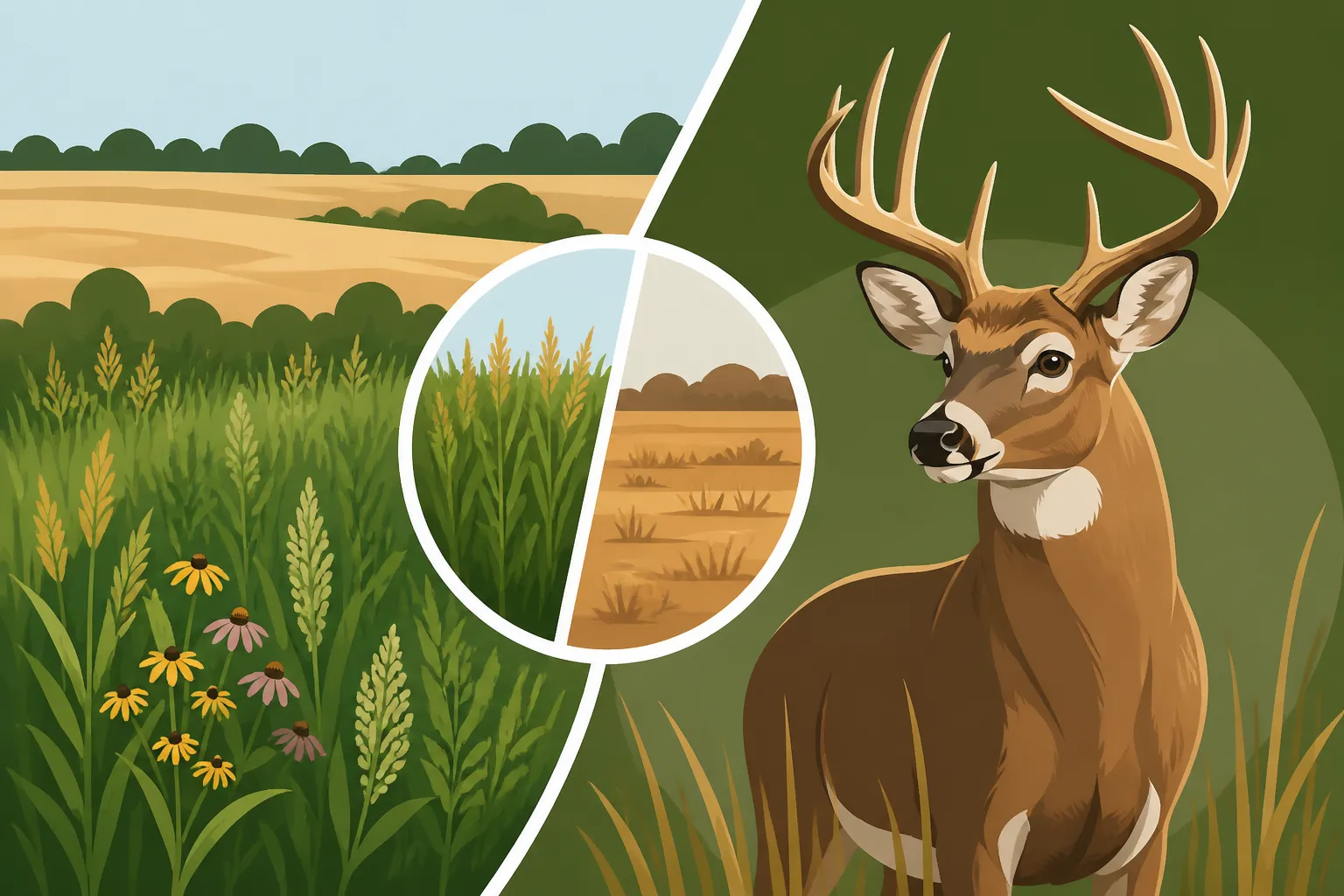
There are different types of CRP contracts, too, which is something many hunters don't fully grasp. Some fields might be planted with native warm-season grasses like switchgrass, big bluestem, and Indiangrass, which grow incredibly tall and dense. Others might have cool-season grasses, or even specific mixes designed for pollinator habitat, which includes a lot of flowering forbs. Each of these types offers slightly different benefits and challenges for deer and, by extension, for hunters. Knowing what kind of CRP you're looking at, even if it's just by observing the plant structure, can tell you a lot about how deer are using it. You can often see these distinctions when you're using aerial imagery, which can be immensely helpful when you’re E-Scouting Kansas Farm Country From Home.
Why CRP is a Deer Magnet in Farm Country
In a state dominated by agriculture, where vast fields of corn, milo, and wheat stretch for miles, CRP stands out as an oasis. Deer, particularly whitetails, need three main things to thrive: food, water, and cover. While crop fields often provide abundant food for much of the year, and creek bottoms offer water, consistent, dense cover can be scarce. That's where CRP truly shines. It provides the thick, undisturbed bedding areas that deer crave, especially mature bucks looking for sanctuary.
Imagine a section of Kansas farmland: a block of timber along a river, surrounded by corn and beans, with a large CRP field tucked in between. Where do you think the deer will spend their daylight hours resting and feeling secure? More often than not, they'll gravitate towards that CRP. It offers excellent thermal cover during cold winter winds, concealment during the summer fawning season, and a safe travel corridor between food sources and water. This consistent security cover allows deer to feel less pressured, leading to more natural movement patterns and often, older age structures within the herd. This is one of the key reasons Why Kansas Grows Trophy Whitetails.
The Benefits of CRP for Kansas Deer Populations
CRP isn't just a nice-to-have; it's a foundational element for healthy deer populations across much of Kansas. Without these enrolled acres, many areas would be far less hospitable for whitetails, potentially leading to lower deer numbers and reduced hunting opportunities. The program offers multifaceted benefits that impact everything from fawn survival to the overall health and size of mature bucks.
Providing Critical Bedding and Fawning Cover
One of the most significant contributions of CRP is the dense cover it provides. In areas where natural timber or thickets are sparse, CRP fields become prime bedding locations. Tall, warm-season grasses can reach heights of 6-8 feet, creating an impenetrable wall that offers both visual and physical security for deer. Bucks will often bed down deep inside these fields, especially during daylight hours, making them feel safe from disturbance.
This dense cover is also absolutely vital for fawning. A doe will seek out the thickest vegetation she can find to hide her newborn fawns. CRP fields offer excellent concealment from predators like coyotes and provide a safe nursery for young deer. Increased fawn survival directly contributes to higher deer numbers in the long run. The undisturbed nature of many CRP tracts means fawns can grow larger and stronger before facing the challenges of predation or dispersal. Think about CRP Grass and Where Bucks Bed – it’s not just a daytime hideout, but a nursery.
Enhancing Forage and Nutritional Resources
While CRP is primarily known for cover, many plantings also contribute to the deer's diet, especially those with diverse mixes of grasses and forbs. While a pure stand of switchgrass might not offer much in terms of food, CRP contracts that include legumes, wildflowers, and other broadleaf plants provide excellent browse throughout the spring and summer. These native forbs offer essential nutrients that complement the high-carbohydrate diet deer get from agricultural crops.
Furthermore, some CRP contracts incorporate food plots or areas specifically managed for wildlife forage. Even fields that aren't primarily food-focused can still provide valuable resources. Deer will browse on young shoots, seeds, and various weeds that grow within the CRP. This diversity in diet helps to ensure healthier deer, which can translate to better antler growth and overall body condition. During the late season, when standing crops might be gone, these CRP fields can also hold pockets of browse or residual seeds, becoming important secondary food sources for Late-Season Food Source Hunting.
Creating Travel Corridors and Sanctuaries
In fragmented agricultural landscapes, deer need safe ways to move between bedding areas, food sources, and water. CRP fields often act as critical travel corridors, especially when they connect different blocks of timber, creek bottoms, or distant crop fields. Deer will use the cover of tall grasses to move unseen, reducing their exposure to predators and human disturbance.
These areas also serve as important sanctuaries. While some public CRP lands see hunting pressure, large private CRP fields often remain relatively undisturbed. This creates pockets where deer feel consistently safe, allowing them to follow more natural patterns and reducing stress. Having these undisturbed zones nearby can make deer more predictable when they do move into more open areas or crop fields, ultimately benefiting hunters who have done their homework. Understanding these patterns is key to Kansas Whitetail Hunting Tactics Through the Rut.
Here’s a quick overview of how different CRP plantings can benefit deer:
| CRP Planting Type | Primary Benefits for Deer | Hunting Considerations |
|---|---|---|
| Warm-Season Grass (WSG) | Dense bedding, fawning cover, thermal protection, travel corridors | Extremely thick, difficult to move through, great for drives, requires precise access |
| Cool-Season Grass (CSG) | Early green-up forage, bedding, less dense than WSG | Easier to walk, deer may bed along edges or in taller patches, less thermal cover |
| Pollinator/Forb Mix | Diverse forage, insect production (fawn food), moderate cover | Excellent late-season browse, good for small game, deer use for feeding and bedding |
| Tree/Shrub Establishment | Long-term cover, hard mast (oaks), browse, thermal protection | Provides diverse cover over time, creates permanent travel routes, difficult to hunt |
Challenges and Considerations for Deer in CRP
While CRP is overwhelmingly beneficial for Kansas deer, it's not without its nuances and challenges. Hunters need to understand these factors to truly maximize their success and ensure they're interacting with the landscape in a responsible and effective way. Just like any habitat, there are pros and cons to consider.
Overgrown or Monoculture CRP Fields
Not all CRP is created equal. Some fields, particularly those enrolled in older contracts or managed less actively, can become overgrown and less beneficial over time. Dense, unbroken stands of a single grass species, while offering incredible cover, can sometimes lack the diversity of forage that deer need. If there's no edge habitat, no interspersed forbs, or no nearby food sources, deer might use these fields strictly for bedding but move out immediately to feed elsewhere. This means they are only half of the equation, providing refuge but not sustenance.
Furthermore, extremely dense, mature CRP can be incredibly difficult for deer to navigate, especially fawns. While thick is good, too thick can sometimes reduce its utility for daily movement. The best CRP for deer often has some level of managed disturbance, whether through periodic burning, light disking, or diverse plantings, to maintain a mosaic of cover and forage. If you’re just seeing massive, unbroken blocks of single-species grass, you might need to adjust your expectations about how deer are using the interior.
Hunting Pressure on Public CRP Tracts
Kansas is famous for its Walk-In Hunting Access (WIHA) program, which includes many CRP tracts. This is fantastic for public land hunters, but it also means that these easily accessible CRP fields can experience significant hunting pressure. Deer learn quickly, and public CRP, especially during opening weekends or the peak of the rut, can become a human highway. The very security that CRP offers can be negated if deer are constantly bumped and harassed.
For hunters, this means adapting your approach. You can't always assume deer are bedding in the most obvious public CRP fields if those fields see a lot of foot traffic. Often, the deer will gravitate towards the less accessible corners, the edges closest to private land, or the smaller, overlooked CRP patches. Understanding Hunting Pressure Patterns on Kansas Public Land is key to finding success on these tracts. Using tools like GoHunt, you can often identify those less obvious, harder-to-reach pockets of CRP that might just hold undisturbed deer.
Accessing Private Land CRP
While public CRP offers opportunity, the vast majority of CRP in Kansas is on private land. Gaining access to these prime habitat areas can be a challenge. Landowners are often protective of their enrolled ground, knowing its value for wildlife or simply preferring to keep it undisturbed. This means hunters need to be diligent, respectful, and persistent in seeking permission.
When approaching landowners about hunting private CRP, emphasize your commitment to ethical hunting, leaving no trace, and respecting their property. Highlight that you understand the value of their CRP to the deer herd and that you are willing to work with their specific rules and restrictions. Building a good relationship with a landowner can open up incredible hunting opportunities, as private CRP often holds less pressured deer. This takes effort, but the rewards can be substantial.
Hunting CRP Acres Effectively
Knowing that CRP is good for deer is one thing, but actually hunting it successfully is another. CRP presents unique opportunities and challenges that require specific tactics, and often, a lot of patience. It's not like hunting timber or a crop field; it's a beast all its own.
Scouting and Understanding Deer Movement in CRP
Effective CRP hunting starts with thorough scouting. Before the season, or even during the off-season, spend time walking the edges of CRP fields you plan to hunt. Look for entrance and exit points where deer are moving in and out, trails within the thicker grass (though these can be hard to follow), and signs of bedding areas like flattened grass. Pay close attention to wind direction in relation to these trails and bedding areas. A portable scouting camera can also be invaluable for confirming deer presence and patterns along CRP edges.
During the season, observation is paramount. Watch CRP fields from a distance, especially at dawn and dusk, to see where deer are entering and exiting. Look for terrain funnels or pinch points that force deer to move predictably through or around CRP. Even in flat country, a slight elevation change, a subtle drainage, or a narrow strip of timber connecting to CRP can become a natural funnel that concentrates deer movement. You might find a good setup on a Terrain Funnels That Work Without Hills if you study the landscape carefully.
Strategic Stand and Blind Placement
Placing your stand or blind strategically around CRP is critical. Deer will often stage in the edges of CRP before moving into crop fields, or they might browse along the perimeter. Look for points, inside corners of crop fields, or areas where the CRP narrows. These are all natural travel zones. When possible, set up on the downwind side of known travel routes or bedding areas to catch deer moving out to feed.
Ground blinds can be incredibly effective when hunting CRP. They offer excellent concealment within the tall grasses, allowing you to get close to bedding areas without being detected. However, brushing in your blind is crucial to make it disappear into the surroundings. If you're planning on Ground Blinds in Open Country, CRP is often the perfect place. For treestands, focus on mature trees on the edge of the CRP that offer a good vantage point into the field or overlooking trails leading out of it. Consider how you will get to and from your stand without bumping deer, especially if you’re hunting early morning or late evening. Ensure your Access Routes That Do Not Bump Deer are well-planned.
Driving and Still-Hunting CRP
For larger CRP fields, especially public ones, organized drives can be a highly effective way to push deer out of thick cover. This often requires multiple hunters, with some acting as "pushers" walking through the CRP and others positioned as "blockers" on the downwind side, covering escape routes. Communication and safety are paramount in any deer drive. It’s also a tactic often used during the Kansas December firearm season for Firearm Season Drives on Small Timber, but can be adapted for CRP.
Still-hunting or slowly slipping through CRP can also be successful, but it demands extreme stealth and a keen understanding of wind direction. This is often best done on windy days when the rustling grass helps to mask your movement and sound. Move slowly, stopping frequently to scan for movement. This tactic is particularly effective in smaller, less dense CRP fields or along the edges of larger ones. Be prepared for close-range encounters, as visibility can be very limited. Remember, Hunting Kansas Walk-In Land Without Burning It Out often means not over-pressuring these prime areas.
Maximizing Your Chances in CRP Country
Hunting CRP is not just about the act of hunting; it's about understanding the entire ecosystem that these acres create. It’s a dynamic environment where deer behavior is heavily influenced by cover, food sources, and pressure. By taking a thoughtful and adaptive approach, you can significantly increase your odds of success.
Leverage Technology for CRP Scouting
In today's hunting world, using mapping applications like GoHunt is almost non-negotiable for CRP country. These tools allow you to identify CRP tracts, analyze their proximity to food sources and water, and pinpoint potential bedding areas or travel corridors, all from your home. You can often discern different types of vegetation, property lines, and topographic features that impact deer movement.
Overlaying public land boundaries with CRP layers is essential for planning hunts on WIHA tracts. You can identify those overlooked corners or less accessible areas that other hunters might pass by. These tools also allow you to mark potential stand locations, entry and exit routes, and even track observed deer movement. This kind of detailed planning helps you create a strategy before you ever set foot in the field, making your time hunting more efficient and productive. Using these modern tools is a vital part of Scouting Kansas Walk-In Tracts Before the Opener.
Adapt Your Strategy to Deer Density and Pressure
The impact of CRP on deer numbers and hunting success is often directly proportional to the amount of CRP in an area and the hunting pressure it receives. In units with high deer density and extensive CRP, deer might be more accustomed to using these fields broadly. In areas with less CRP or higher pressure, deer might be more selective, sticking to the densest parts or moving primarily at night. For more information on local populations, check out Deer Density by Kansas Unit.
Always be willing to adapt your strategy. If a public CRP field is being hammered, consider looking for smaller, less obvious patches, or focus on hunting the access routes leading to and from private land. During the rut, bucks might cruise the edges of CRP, scent-checking for does, making those perimeter stands particularly effective. Later in the season, if heavy snow pushes deer to seek thermal cover, dense CRP can become a critical holding area.
Consider Seasonal Changes and CRP Management
Deer use CRP differently throughout the year. In spring, it's a fawning nursery and early browse. Summer sees it as a deep, secure bedding area. Fall brings increased movement as deer transition between bedding and crop field food sources, and the rut can turn CRP edges into cruising highways. In winter, it offers crucial thermal protection from harsh Kansas winds.
Also, be aware of CRP management practices. Many contracts include prescribed burns or haying/grazing schedules. While these are designed to maintain the health of the CRP, they can temporarily displace deer or alter their patterns. If you know a particular CRP field is scheduled for a burn or harvest, plan your hunting around it. This information can sometimes be found by asking local landowners or by observing changes in the landscape. A well-managed CRP field is a continuous asset to Public Land Deer Hunting in Kansas, providing consistent, high-quality habitat.
CRP is more than just a federal program; it's a lifeline for Kansas deer and a cornerstone for many hunting opportunities. By understanding its role in providing cover, food, and security, and by adapting your hunting tactics accordingly, you can unlock its full potential.
Disclaimer
This article is for general informational purposes only and does not constitute professional advice. Laws, prices and regulations vary by location and change over time. Consult a qualified professional for guidance on your specific situation.