Whitetail Home Range Size in Farm Country
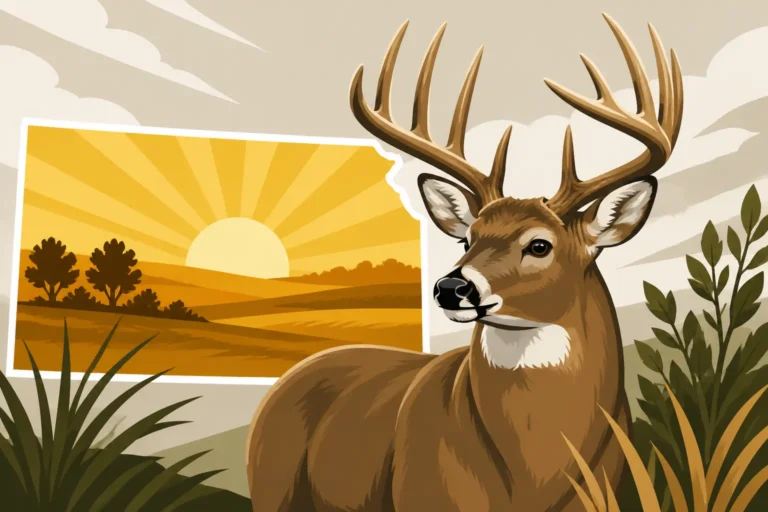
One of the biggest frustrations for deer hunters in Kansas farm country is trying to figure out where the deer actually live. It's not like the big timber states where deer roam for miles; in our agricultural landscape, a whitetail's world can be surprisingly compact. This guide is here to help you understand the concept of whitetail home range in Kansas farm country, and how that knowledge can drastically improve your hunting success by showing you exactly where to focus your efforts.
Understanding the Core Concept of a Whitetail Home Range
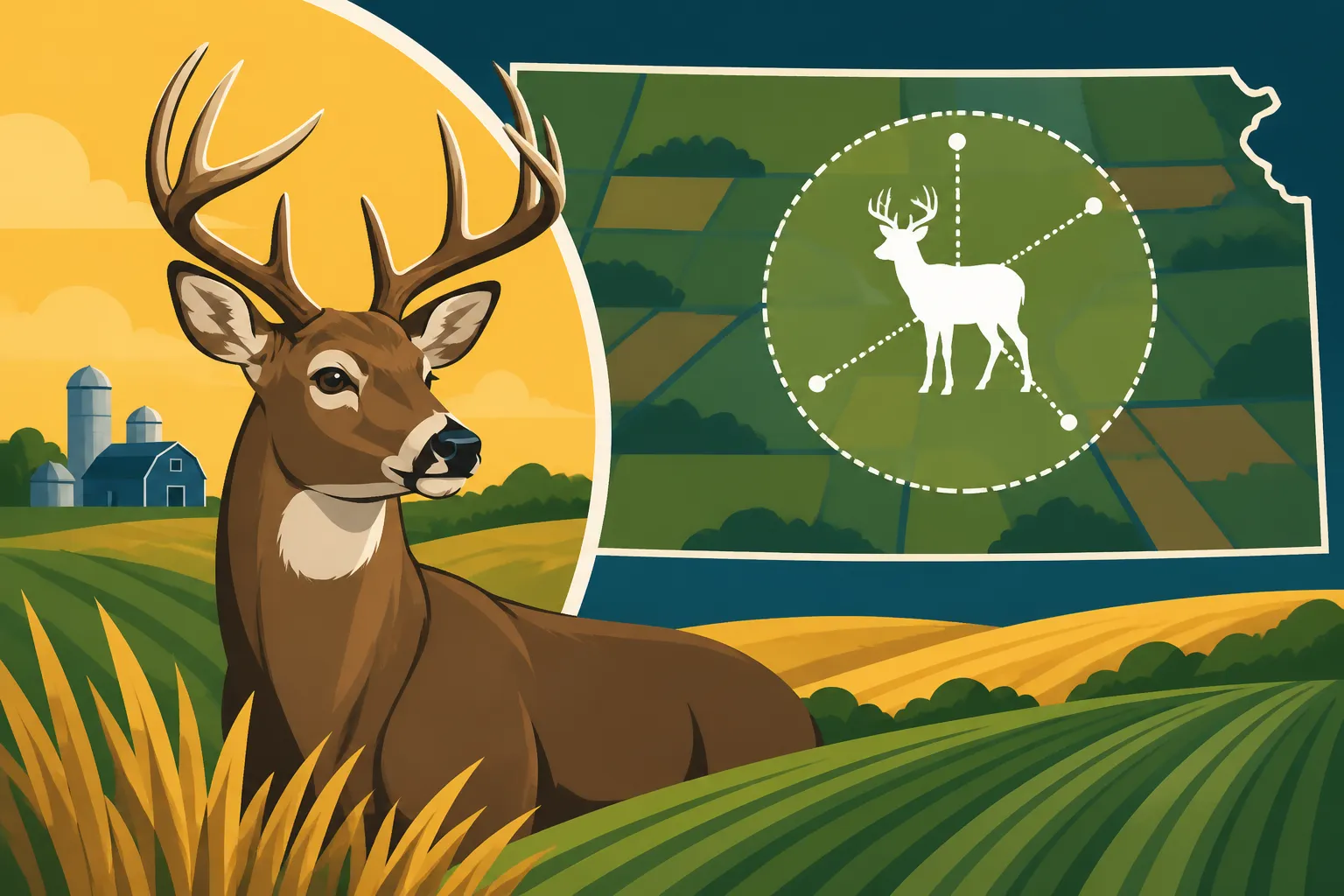
When we talk about a whitetail's home range, we're not just talking about where you see them occasionally. We're referring to the entire area an individual deer utilizes for its daily, seasonal, and annual activities, encompassing everything from feeding to bedding to breeding. Think of it as their personal territory, though not fiercely defended in the same way a wolf's territory might be. In the vast, open, yet surprisingly segmented world of Kansas farm country, understanding these ranges is crucial.
Unlike deer in vast forests or mountainous regions that might travel many miles, whitetails in an agricultural setting often have surprisingly tight home ranges. This is largely due to the unique distribution of resources. If a deer has everything it needs – food, water, and secure cover – within a relatively small footprint, why would it risk expending more energy or encountering predators by traveling farther? This concept becomes the foundation of effective hunting in a state like Kansas. If you can pinpoint a buck's home range, you’re no longer just hoping he walks by; you’re hunting the specific plot of land where he spends the majority of his time. It's about shifting your mindset from hunting a property to hunting an individual deer's world.
Within this broader home range, there's also often a "core area." This is the smaller, most intensely used portion of the home range, where the deer spends the majority of its time bedding and feeling safe. For a hunter, identifying this core area is like finding the holy grail. It’s the spot they retreat to when pressured, the place they feel most secure, and often where they'll spend daylight hours during hunting season. Understanding the nuances of these concepts—both the broad home range and the tight core area—is critical for anyone looking to consistently tag mature deer in the diverse landscapes of Kansas.
Key Factors Shaping Whitetail Home Ranges in Kansas Farm Country
The size and shape of a whitetail's home range in Kansas are not random; they're dictated by a complex interplay of environmental factors and the deer's individual needs. In our agricultural mosaic, these factors are often intensely localized, meaning a buck might live an entirely different lifestyle just a few miles down the road.
Food Availability and Seasonal Changes
In farm country, food is rarely the limiting factor in terms of sheer quantity, but its distribution and quality through the seasons heavily influence deer movement. Think about a typical year in Kansas. In late summer and early fall, fields are bursting with standing corn, soybeans, and milo, providing an endless buffet. During this time, a deer might have an incredibly small home range because everything it needs is right there, often within the same field or adjacent timber.
However, as harvest progresses and crops come out, the game changes. That once-dense cover and abundant food disappear. Deer then have to adjust, often shifting their focus to glean fields, winter wheat, or browse remaining in creek bottoms and CRP. These changes force them to expand their search, or move to areas where food, even if less appealing, is still present and accessible. Understanding these shifts is vital. A buck that had a 100-acre home range in September might find himself needing to traverse 300 acres by December to find consistent sustenance. This is why paying attention to Milo and Corn Stubble Deer Patterns and how they change throughout the fall is so important. Similarly, understanding Crop Rotation and Deer Nutrition can give you insights into where the most palatable food sources will be at any given time.
Water Sources and Their Importance
While Kansas often appears dry, especially in the western half, water is always a non-negotiable requirement for deer. In farm country, water can come from various sources: intermittent creeks, permanent rivers, farm ponds, irrigation ditches, or even temporary puddles after a rain. The proximity and reliability of these water sources directly impact how far a deer needs to travel.
In areas with abundant ponds and flowing creeks, deer might have easy access to water within their small range. But during dry spells, or in regions where water is scarcer, they might have to make regular, longer treks to a dependable source. A buck living along a dry creek bed might routinely travel a mile or more to reach the nearest permanent river or stock pond. This creates predictable travel corridors that savvy hunters can exploit. Scouting these water sources, especially during dry periods, can reveal critical points of deer movement that might otherwise go unnoticed. For instance, knowing how deer utilize River Oxbows and Deer Movement can be a game-changer when water levels are low or high.
Cover and Bedding Areas
Perhaps the most critical factor influencing a whitetail's home range in Kansas farm country is the availability of secure cover. Deer, especially mature bucks, need places where they feel safe from predators (including humans) and the elements. In many parts of Kansas, this secure cover is at a premium.
This cover might take the form of dense timber patches along creek draws, thick cedar thickets, large blocks of CRP (Conservation Reserve Program) grass, or even standing crops like corn during certain times of the year. The denser and more contiguous these cover types are, the smaller a deer's perceived need to travel will be. If a buck has a secure bedding area, ample food nearby, and water within easy reach, his home range can be incredibly tight. Conversely, if quality bedding is scarce and fragmented, a deer might have to travel further between isolated patches of security, thereby expanding its overall range. Learn to identify CRP Grass and Where Bucks Bed or Cedar Thickets as Bedding Cover to understand where deer feel safest in their home ranges.
Human Pressure and Landscape Features
Beyond the natural resources, human activity plays a massive role in shaping deer home ranges. Hunting pressure, farming operations, road traffic, and even residential development can significantly impact how far and where deer move. Highly pressured deer tend to have smaller home ranges in thicker cover, often becoming nocturnal to avoid human contact. They might restrict their movements to tiny pockets of security, only venturing out after dark. This is a common challenge for hunters on public lands or areas with heavy hunting pressure.
Conversely, a deer living on land with minimal pressure, or in areas where agricultural activity is consistent but not overtly threatening, might have a larger, more relaxed home range and be more visible during daylight hours. Features like isolated timber points, shelterbelts, and fence lines also act as natural funnels and boundaries that influence movement. A strong understanding of these landscape features can help you anticipate deer travel within their established ranges. By carefully considering Hunting Pressure Patterns on Kansas Public Land, you can often predict how deer will adjust their home range usage.
Typical Home Range Sizes: Bucks Versus Does
Understanding the typical home range sizes of whitetails in Kansas farm country isn't just academic; it directly informs how you scout, how you set your stands, and ultimately, how you hunt. There are distinct differences between does and bucks, and even between different age classes of bucks.
Does and Young Deer
For does and younger deer (fawns and yearlings), home ranges tend to be relatively small and stable. A doe's home range might average anywhere from 100 to 300 acres in typical Kansas farm country. This is because their primary drivers are food, water, and secure bedding for themselves and their fawns. They are less prone to extensive travel unless resources become incredibly scarce or pressure forces them out. These ranges are often passed down matrilineally, meaning fawns often establish their own home ranges adjacent to or overlapping with their mother's.
Consider a doe family group living near a pivot irrigated cornfield that backs up to a dense creek bottom. Their entire world might exist within a few hundred acres, moving from the corn to the creek for bedding and water. This compact existence makes them predictable once you've identified their patterns.
Mature Bucks
Mature bucks, on the other hand, generally have significantly larger home ranges than does, often averaging 400 to 800 acres, and sometimes even pushing over 1,000 acres, especially during certain times of the year. Their priorities shift, particularly as they age. While food, water, and cover are still essential, the drive to breed adds a whole new dimension to their movements.
Here's a breakdown of how buck home ranges typically fluctuate:
- Early Season (September/Early October): Bucks are still largely focused on food and building up reserves after antler growth. Their home ranges might be slightly larger than does but are generally quite stable as they stick to familiar food and cover sources. They might still be found in bachelor groups.
- Pre-Rut (Late October/Early November): This is when things start to expand. Bucks begin to disperse from their summer ranges, searching for does and establishing dominance. They will cover more ground, scent-checking scrapes and rubs, and cruising through known doe bedding areas. This expansion can dramatically increase their home range size as they become more active in their search. You'll want to be familiar with tactics like Rattling and Grunting During the Kansas Rut during this period.
- Peak Rut (Mid-November): During the intense breeding phase, a buck's home range can reach its maximum. He might chase does for miles, leading to movements far outside his typical core area. These movements can be sporadic and unpredictable, making him harder to pinpoint to a specific location. However, even during the rut, bucks will often cycle back through their established core areas, especially when needing to rest or feeling pressured. Understanding When the Kansas Rut Peaks is vital for anticipating these extended movements.
- Late Season (December/January): After the rut, bucks are often exhausted and have lost significant body weight. Their home ranges tend to shrink again, driven almost solely by the need for high-calorie food sources and thermal cover to survive winter. They'll often focus on late-season standing crops or specific browse, making their movements more predictable once again, albeit in a different area than their early-season haunts.
Here's a simple comparison of general home range characteristics:
| Factor | Does & Young Deer | Mature Bucks (excluding peak rut) |
|---|---|---|
| Typical Size | 100-300 acres | 400-800 acres |
| Stability | High; often stable year-round | Variable; expands during pre-rut/rut |
| Primary Drives | Food, water, bedding, fawn safety | Food, water, bedding, breeding (rut) |
| Travel | Less extensive; predictable patterns | More extensive; can be unpredictable |
| Response to Pressure | May become nocturnal or shift cover | Often shifts cover, becomes nocturnal |
GoHunt's mapping tools can overlay public and private land boundaries, topography, and aerial imagery, helping you visualize these potential home ranges and corridors based on available resources. This kind of detailed information is invaluable for drawing the imaginary lines of a deer's world.
Applying This Knowledge to Your Hunting Strategy in Kansas
Knowing the theoretical home range size is one thing, but actually putting that knowledge to work in the field is where the real hunting begins. In Kansas farm country, this means meticulous scouting and a strategic approach.
Enhanced E-Scouting and Ground Scouting
The first step in leveraging home range knowledge is through smart scouting, both from your computer and on foot. Before you even set foot on a property, use tools like GoHunt to intensely E-Scout. Look for the "trifecta" of food, water, and cover that could support a whitetail's entire life cycle within a manageable area. Identify areas where these three elements converge within a 400-800 acre footprint (for bucks) or a 100-300 acre footprint (for does). Pay close attention to transition zones between crop fields and timber, or CRP and creek beds.
When you hit the ground, confirm what you saw online. Look for consistent sign: well-used trails, concentrated rubs and scrapes, and fresh droppings. If you're finding these indicators consistently within a relatively small area, you're likely within a deer's core home range. This is often where a buck spends his daylight hours, and knowing this helps you avoid spooking him out of his sanctuary. Remember to be mindful of your approach; proper Access Routes That Do Not Bump Deer are paramount when you're trying to sneak into a deer's safe zone without alerting them. You can learn more about how to systematically approach this by reading about Scouting Kansas Walk-In Tracts Before the Opener or mastering E-Scouting Kansas Farm Country From Home to identify these potential hotspots.
Strategic Stand Placement and Hunting Pressure Management
Once you've identified likely home ranges and core areas, your stand placement becomes incredibly strategic. Instead of haphazardly hanging stands, you're now focusing on pinch points, funnels, and transition areas within that known range. Consider where a buck might travel from his bedding cover to a primary food source, or where he might cruise looking for does during the rut. These routes are often short, well-defined, and offer your best chance for an encounter.
For example, if you've identified a dense cedar thicket as a bedding area within a buck's home range, you wouldn't necessarily hunt in the thicket, but rather on the downwind edge, or along a subtle trail leading from it to a nearby food plot or water source. Understanding terrain funnels, even in flat country, is crucial. A subtle ditch, a line of trees, or an inside corner of a crop field can act as a travel corridor that deer use consistently. Focus your efforts on these micro-features that connect the key elements within a deer's world. Hunting Inside Corners of Crop Fields is a classic example of this strategic placement.
Furthermore, knowing a deer's home range helps you manage your hunting pressure. If you understand the boundaries of a buck's comfort zone, you can avoid encroaching on his core bedding area and pushing him out of his preferred habitat. This might mean adjusting your entry and exit routes, limiting your time in certain areas, or even giving a spot a rest after a sit. Your goal isn't just to intercept a deer, but to become a predictable, non-threatening part of its environment, or at least one it can adapt to. Tools like GoHunt can help you map out your stands and access routes, allowing you to visualize and minimize your footprint within that critical home range.
Ultimately, hunting Kansas whitetails in farm country is about working smarter, not necessarily harder. By deeply understanding the relatively compact world a deer lives in, you can narrow down your search, increase your efficiency, and significantly boost your chances of success. It’s about becoming a student of their home, knowing their habits, and then placing yourself in the perfect position to intercept them within that familiar landscape.
Disclaimer
This article is for general informational purposes only and does not constitute professional advice. Laws, prices and regulations vary by location and change over time. Consult a qualified professional for guidance on your specific situation.