Greater Prairie Chicken Numbers in Kansas
It can be incredibly disheartening to hear whispers about declining game populations, especially for a unique and iconic bird like the greater prairie chicken here in Kansas. Many of us remember tales, or even experienced ourselves, times when their booming grounds echoed across wide-open prairies more readily. You might be wondering, "Are the numbers really that low? Is it even worth planning a hunt anymore?" This guide will dive deep into the current status of greater prairie chicken numbers across Kansas, explore the complex factors influencing their populations, and shed light on what hunters can realistically expect, as well as the crucial conservation efforts underway to protect these remarkable birds.
The Evolving Landscape of Kansas Prairie Chicken Populations
The Flint Hills and western Kansas grasslands are synonymous with the greater prairie chicken, a truly wild bird whose existence is inextricably linked to vast expanses of native prairie. However, like many grassland species, they've faced significant challenges over the decades. Understanding where we've been, where we are now, and how we measure these populations is key to appreciating the current situation.
A Look Back: Historical Abundance and Early Challenges
Historically, Kansas was a stronghold for greater prairie chickens. Before extensive agricultural conversion and settlement, the state was a sea of tallgrass and mixed-grass prairie, offering ideal habitat for these birds to thrive. Early accounts speak of immense booming grounds, sometimes with hundreds of birds, and populations that seemed limitless. Hunters often encountered large coveys, and the distinct booming call was a common sound across the prairie in spring.
However, the relentless march of agricultural expansion, particularly the plowing of native prairie for crops, began to fragment and reduce their habitat dramatically. What once was contiguous grassland became a patchwork of farms, towns, and roads. This habitat loss wasn't a sudden event but a gradual erosion that started over a century ago and continued steadily, pushing prairie chicken populations into increasingly isolated pockets, primarily in the Flint Hills and certain western counties where the land was less suitable for cultivation. This historical context is vital because it sets the stage for the challenges we see today; their numbers have been on a downward trend for a very long time, with brief resurgences only occurring under very specific, favorable conditions.
The Current Reality: Numbers Today and Recent Trends
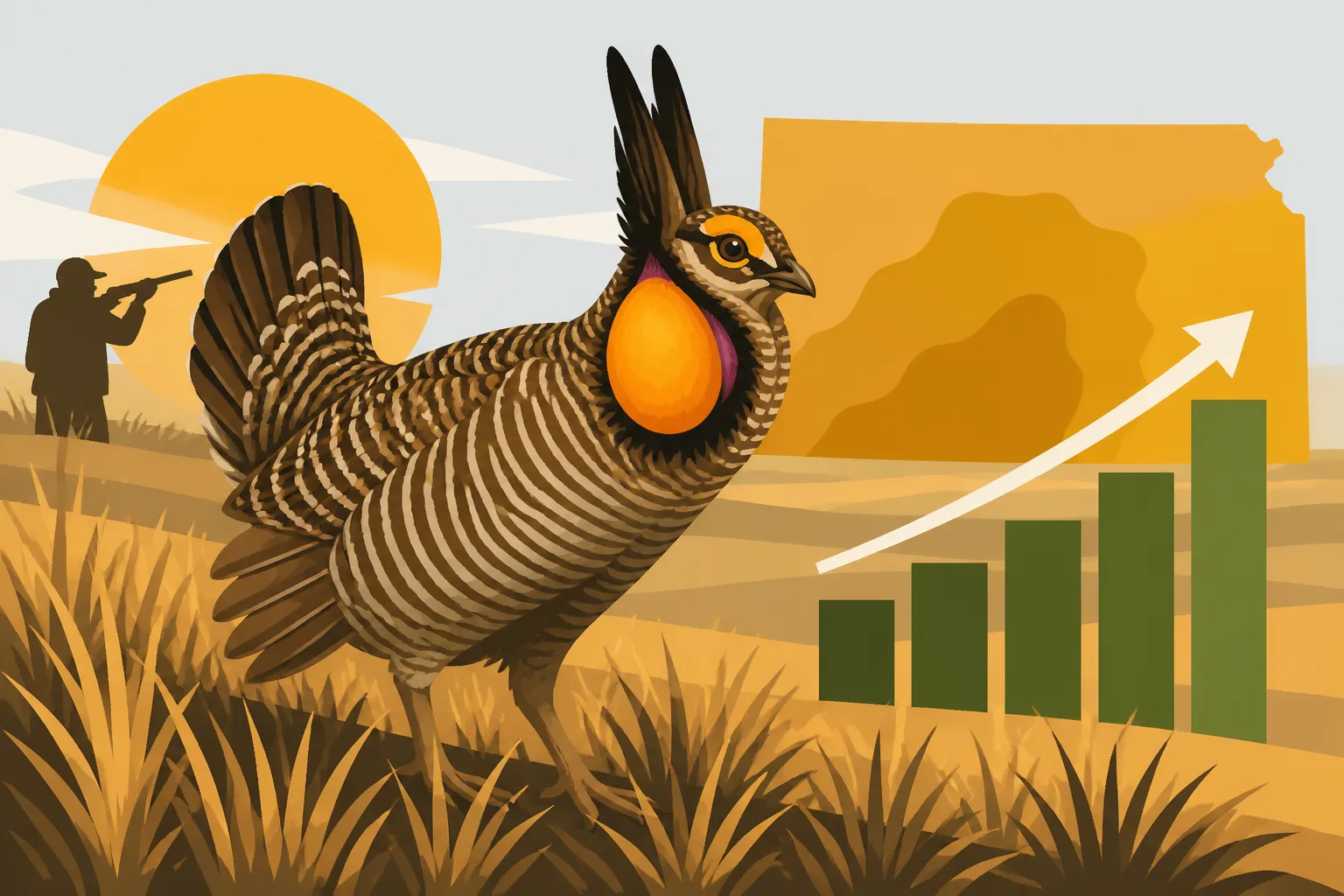
Fast forward to today, and the picture for greater prairie chickens in Kansas is one of ongoing concern, though not without hope. While you won't find the massive flocks of yesteryear, the birds still persist in significant numbers in their core ranges. The Kansas Department of Wildlife and Parks (KDWP) diligently monitors these populations through various surveys, primarily focusing on lek (booming ground) counts in the spring. These counts give biologists a snapshot of breeding male abundance, which is a good indicator of the overall health of the population.
Recent trends have shown fluctuations, often tied to environmental factors like rainfall and nesting success. Generally, populations have experienced a slow decline in many areas, punctuated by years where conditions were favorable, leading to slight bumps, only to dip again. It's not a uniform decline across the entire state; some areas, particularly within the central and northern Flint Hills, maintain more stable numbers compared to peripheral or highly fragmented regions. Hunters who spend time in prime habitat, perhaps using a tool like GoHunt to scout areas known for prairie chickens, will tell you that while they aren't as prevalent as pheasants or quail, the birds are still there for those willing to put in the effort. For a deeper understanding of their habitat, you might find Prairie Chicken Range and Leks helpful.
Understanding the Data: How KDWP Tracks Populations
The KDWP employs several methods to keep tabs on greater prairie chicken numbers, ensuring management decisions are based on the best available science. The primary method, as mentioned, is the spring lek count. This involves volunteers and biologists driving established routes before sunrise, listening for the distinctive booming calls of male prairie chickens, and then visually counting the number of males present on the lek. This annual effort provides crucial data on the number of active booming grounds and the density of males per lek.
In addition to lek counts, biologists also conduct brood surveys in the summer to assess nesting success and chick survival. These surveys involve driving specific routes at dawn or dusk, looking for hens with broods, which helps determine the recruitment rate for the year. This data is invaluable for understanding the cause of population changes, whether it's poor nesting conditions, low chick survival, or other factors. Harvest data, collected through hunter surveys and permit sales for Kansas Prairie Chicken Permit Requirement, also contributes to the overall picture, providing insight into hunter effort and success rates. All these pieces of information are then compiled and analyzed to generate population estimates and inform season setting, aiming for sustainable hunting opportunities while prioritizing the long-term health of the species.
Key Factors Driving Prairie Chicken Population Dynamics
The health and numbers of greater prairie chickens are not just random occurrences; they are a direct reflection of a complex interplay of environmental factors and human land use. Understanding these drivers is crucial for both conservation and for hunters hoping to find these unique birds.
Habitat Fragmentation: The Biggest Threat to Prairie Chickens
Without a doubt, habitat fragmentation stands as the most significant long-term threat to greater prairie chickens. These birds are obligate grassland species, meaning they absolutely require large, contiguous tracts of native prairie for all stages of their life cycle – booming, nesting, brooding, and winter cover. When vast prairies are broken up by cropland, roads, power lines, and human development, it creates smaller, isolated patches of habitat.
This fragmentation has several negative impacts. Firstly, it reduces the sheer amount of suitable space, directly limiting the number of birds an area can support. Secondly, it creates "edge effects," where the interface between prairie and other land uses (like row crops or timber) allows predators more access to nests and vulnerable chicks. Thirdly, it impedes gene flow between populations. When booming grounds become too isolated, it can lead to reduced genetic diversity and make populations more vulnerable to disease or environmental changes. Imagine a prairie chicken trying to find a mate when the nearest booming ground is miles away, separated by a highway and cornfields – it's a monumental task. This is why areas like the Flint Hills, with their largely unplowed native tallgrass prairie, remain the core stronghold for these birds; they offer the vast, unbroken habitat prairie chickens need to survive and thrive. Many of these areas are also managed with controlled burns, which are critical for maintaining healthy grassland, a topic you can learn more about in Flint Hills Burning and Prairie Chickens.
Climate and Weather: Boom and Bust Cycles
While habitat is the foundation, weather acts as the annual accelerator or brake on prairie chicken populations. These birds, especially their delicate chicks, are highly susceptible to variations in climate. A mild winter with good snow cover can protect birds, but the real impact comes during the nesting and brooding season in spring and early summer.
Ideal conditions involve a moderate, well-distributed rainfall that promotes lush grass growth for nesting cover and insect production (a vital food source for chicks), followed by warm, dry periods during the actual hatch. Conversely, cold, wet springs can decimate poult (chick) survival. Prolonged cold rain can lead to hypothermia in young chicks, and it also reduces insect availability, leaving them without adequate protein. Severe droughts can reduce cover and food, making adult birds more vulnerable and impacting overall health, leading to lower reproductive success in subsequent years. This creates what biologists often refer to as "boom and bust" cycles: a few good years with favorable weather can see numbers rise, followed by a few bad years where populations dip significantly. Hunters looking to gauge potential success often pay close attention to spring and summer weather reports, knowing that a tough nesting season will likely mean fewer birds come fall.
Land Use Practices: Grazing, Burning, and Agriculture's Role
Beyond outright habitat destruction, the way remaining grasslands are managed profoundly affects prairie chicken numbers. Traditional cattle grazing, when done thoughtfully, can actually benefit prairie chickens by creating a mosaic of grass heights and structures. Light to moderate grazing can prevent grasslands from becoming too rank and dense, opening up areas for easier movement and foraging. However, overgrazing can destroy critical nesting cover and expose nests and broods to predators and the elements.
Prescribed burning is another critical management tool, particularly in the tallgrass prairie of the Flint Hills. Fire rejuvenates the prairie, removes old, dead grass, controls woody encroachment, and promotes new, nutritious growth. For prairie chickens, a mosaic of recently burned and unburned areas is ideal. They need the fresh growth for foraging and displaying on booming grounds in the newly burned areas, but also dense, undisturbed cover in unburned patches for nesting and brooding. A system that burns too much of the landscape at once, or burns too frequently, can remove all available nesting cover, severely impacting reproductive success for that year. Agriculture's role, particularly in the mixed-grass prairie, can be a double-edged sword. While converting prairie to row crops is devastating, some well-managed Conservation Reserve Program (CRP) lands, left undisturbed for years, can provide valuable nesting and escape cover, offering a glimmer of hope in otherwise fragmented landscapes. Checking the specific rules for CRP hunting can be done with resources like GoHunt, which often integrates land ownership and program details.
| Factor | Impact on Prairie Chicken Numbers | Management Implications |
|---|---|---|
| Habitat Fragmentation | Direct loss of space, isolation, increased predation. | Protect and connect large grassland tracts. |
| Cold, Wet Springs | High chick mortality, reduced insect food sources. | No direct management, but influences population trends. |
| Drought | Reduced cover, food, and overall bird health. | Range management, water source provision (indirect). |
| Overgrazing | Loss of nesting cover, increased exposure to predators. | Implement rotational or deferred grazing systems. |
| Too Frequent Burning | Removal of nesting/brooding cover, disrupts breeding cycles. | Burn only a portion of the landscape annually (patch-burn grazing). |
| Lack of Fire/Grazing | Grass becomes too rank, woody encroachment, poor booming ground. | Prescribed fire and managed grazing to maintain diverse structure. |
| Predation | Direct impact on nests and young, especially in fragmented areas. | Habitat improvement to provide better cover. |
Conservation Efforts and the Future of Hunting
The challenges facing greater prairie chickens are significant, but they are not insurmountable. Dedicated individuals, state agencies, and conservation organizations are working tirelessly to secure a future for these iconic birds, which in turn helps ensure there will be hunting opportunities for generations to come.
Collaborative Conservation: Working Towards Recovery
The good news is that the plight of the greater prairie chicken is well-recognized, and numerous conservation initiatives are underway across Kansas and the broader prairie landscape. These efforts are rarely undertaken by a single entity; rather, they involve a collaborative approach between the KDWP, private landowners, conservation groups like The Nature Conservancy, Audubon Kansas, and local conservation districts.
Many programs focus on incentivizing private landowners, who control the vast majority of prairie chicken habitat, to adopt management practices that benefit the birds. These might include cost-share programs for implementing rotational grazing, patch-burn grazing (where only a portion of a pasture is burned annually to create diverse habitat), or enrolling marginal cropland back into native grass through programs like CRP. There are also efforts to protect and restore critical grassland corridors to help reduce the effects of Prairie Chicken Range Loss and connect isolated populations. Biologists and researchers are constantly studying prairie chicken ecology to refine these strategies, ensuring that limited resources are directed toward the most effective interventions. The future of these birds hinges on continued cooperation and investment in restoring and managing healthy, diverse prairie ecosystems.
The Hunter's Role in Prairie Chicken Management
Hunters play a far more significant role in prairie chicken conservation than many realize. First and foremost, hunter dollars, through the sale of hunting licenses, permits like the Kansas Prairie Chicken Permit Requirement, and federal excise taxes on hunting equipment (Pittman-Robertson Act), provide a substantial portion of the funding for wildlife research, habitat acquisition, and management programs conducted by the KDWP. Without this funding, many of the conservation efforts wouldn't be possible.
Beyond financial contributions, hunters are often keen observers of wildlife populations and habitat conditions. Their reports from the field, whether anecdotal or through official surveys, can provide valuable insights to wildlife managers. Ethical hunting practices are also crucial. By adhering to regulations, respecting private land, and striving for clean harvests, hunters contribute to the public perception and acceptance of hunting as a valid and necessary conservation tool. Furthermore, many hunters become passionate advocates for grassland conservation, participating in habitat projects or educating others about the importance of prairie ecosystems. Hunting prairie chickens is a challenging pursuit, often involving covering vast distances on foot, similar to strategies for Working Pheasant Fields Without a Dog or Dogless Quail Hunting Tactics, but the experience connects hunters deeply to the landscape and its conservation needs.
Navigating Hunting Opportunities: What to Expect Each Season
For those drawn to the unique challenge and reward of hunting greater prairie chickens, Kansas offers opportunities, but it requires realistic expectations and thorough preparation. Unlike pheasant or quail, prairie chicken seasons are generally shorter, bag limits are lower, and opportunities are often restricted to specific units or require a special permit. This conservative approach is a direct reflection of their vulnerable population status and the KDWP's commitment to sustainable management.
Before you even think about heading out, make sure you understand the current regulations, season dates, and permit requirements, which can change annually based on population assessments. Resources like the official KDWP website or an integrated platform like GoHunt are indispensable for up-to-date information. While you might not find the sheer numbers you'd encounter with other upland birds, success in prairie chicken hunting often comes down to finding undisturbed areas with good habitat structure, often in the heart of the Flint Hills or certain western counties. Patience, stamina, and good optics for scouting Prairie Chicken Range and Leks are key. A great starting point for season specifics is Kansas Upland Bird Season Dates and Limits. Expect to cover a lot of ground, and cherish every flush and every booming ground encounter, as these are truly special moments on the Kansas prairie.
Disclaimer
This article is for general informational purposes only and does not constitute professional advice. Laws, prices and regulations vary by location and change over time. Consult a qualified professional for guidance on your specific situation.