Prairie Chicken Range and Leks
It's incredibly frustrating, isn't it? You hear whispers of these magnificent prairie chickens in Kansas, these truly wild birds, but actually finding them, let alone understanding where they live and how they behave, feels like looking for a needle in a vast, grassy haystack. The endless plains and rolling hills can be daunting, and it's easy to feel lost trying to decipher what makes for good prairie chicken country. This guide is going to strip away the mystery, giving you a deep dive into the range, habitat, and fascinating lekking behavior of Kansas's prairie chickens, helping you understand exactly where these iconic birds thrive and how to find them.
The Elusive Prairie Chickens of Kansas
Kansas is a state synonymous with vast grasslands, and for many generations, these prairies were home to abundant populations of prairie chickens. These unique game birds are an integral part of the prairie ecosystem, and understanding them is the first step toward appreciating the challenge and reward of encountering them in their native habitat. They’re not your average pheasant or quail; they have a distinct biology and a very specific set of habitat needs that dictate where they can be found.
Distinguishing Greater and Lesser Prairie Chickens
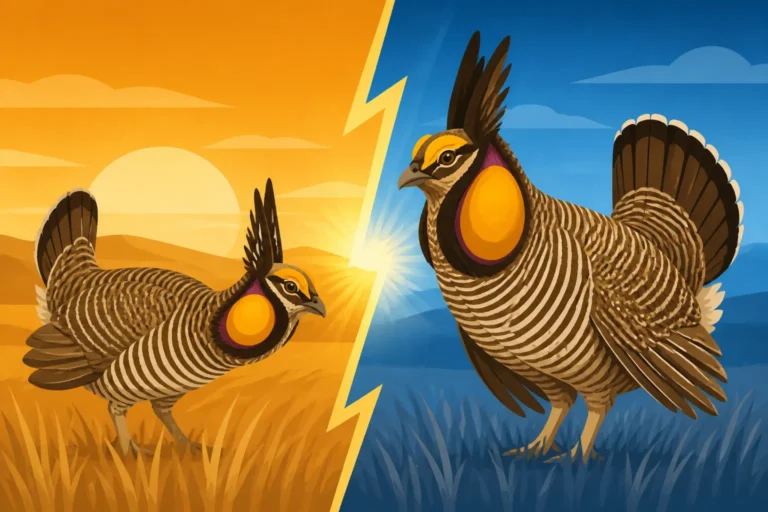
Kansas is, or was, home to two distinct species of prairie chickens: the Greater Prairie Chicken and the Lesser Prairie Chicken. While they might look similar to the untrained eye, there are crucial differences in their physical characteristics, vocalizations, and, perhaps most importantly for hunters and conservationists, their current population status and legal protections. Knowing which is which is paramount.
Historically, Greater Prairie Chickens were widespread across the eastern and central parts of Kansas, thriving in the tallgrass and mixed-grass prairies. They are the larger of the two species, with males weighing around 2.5 pounds and standing about 18 inches tall. Their plumage is a beautiful barred brown and white, providing excellent camouflage in the grasses. During their courtship displays, the males inflate bright orange-yellow air sacs on their necks and produce a deep, resonant "booming" sound that can carry for miles across the prairie. It’s a sound that truly defines the spring awakening of the Flint Hills. The Lesser Prairie Chicken, on the other hand, is smaller, typically weighing around 1.5 to 2 pounds, and has a paler, more buff-colored plumage. Their air sacs are reddish-orange, and their booming call is higher-pitched and less resonant, often described as a "gobble" or "cackle." Their historical range was confined to the drier, shortgrass and shinnery oak prairies of southwestern Kansas, Oklahoma, Texas, and New Mexico.
Here’s where it gets really critical: while the Greater Prairie Chicken is a huntable species in Kansas with proper permits, the Lesser Prairie Chicken is not. Due to drastic population declines, the U.S. Fish and Wildlife Service listed the Lesser Prairie Chicken as endangered under the Endangered Species Act as of 2023. This means it is illegal to hunt, harass, or disturb them. Conservation efforts are intensely focused on their survival, and recognizing them in the field is not just good practice, it's a legal necessity. Their endangered status means that hunters must be absolutely certain of their identification before pursuing any prairie chicken in areas where both species could potentially overlap, although their core ranges are quite distinct. If you're hunting in eastern or central Kansas, it's almost certainly a Greater Prairie Chicken. If you're in the far southwest, extreme caution and identification are essential.
Where Kansas's Prairie Chickens Still Roam
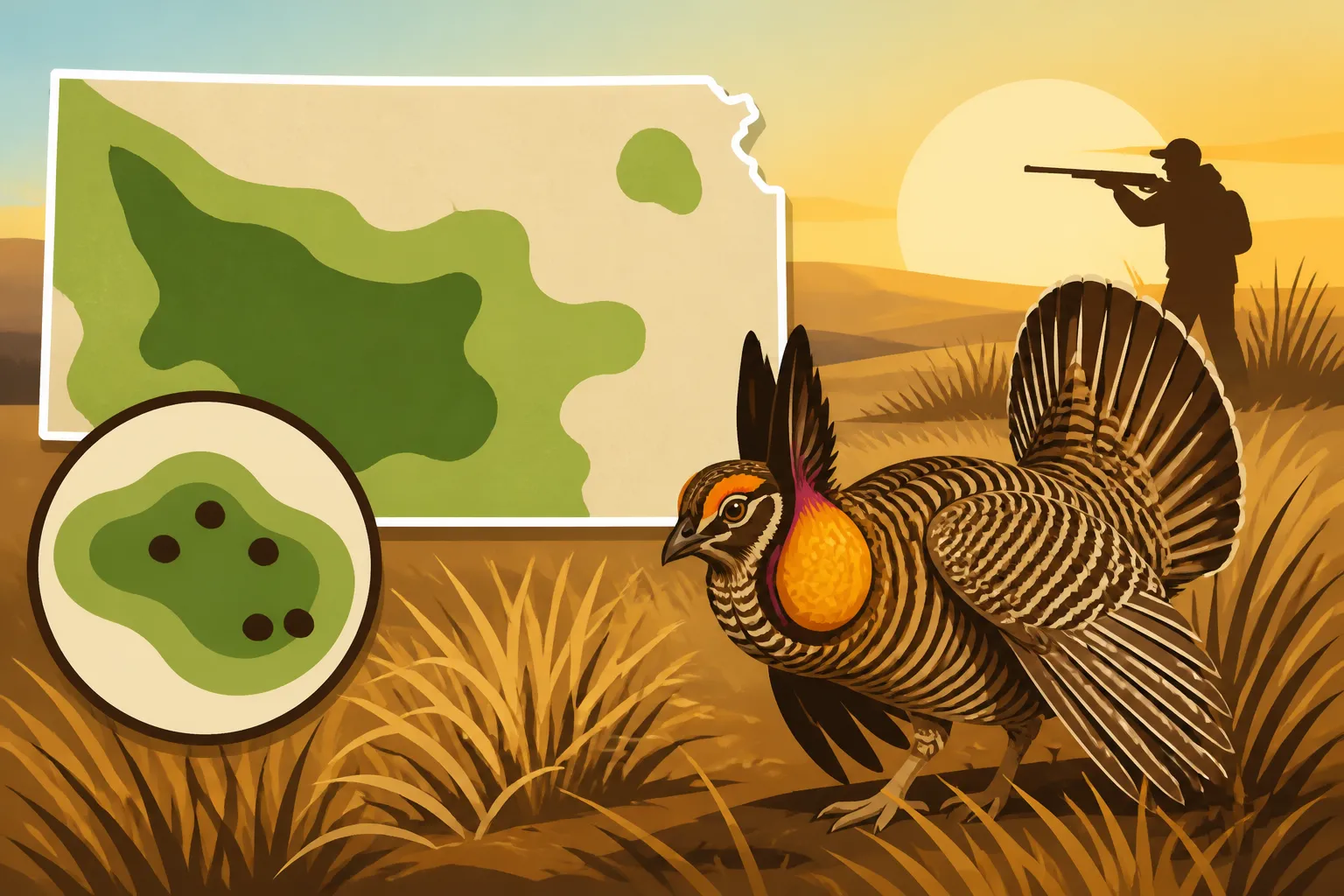
The distribution of prairie chickens in Kansas has shrunk dramatically from historical levels, primarily due to habitat loss and fragmentation. While they once blanketed much of the state, their populations are now concentrated in specific regions where suitable grassland habitats still persist. For the Greater Prairie Chicken, the heart of their range lies within the iconic Flint Hills, a vast expanse of tallgrass prairie that largely escaped the plow due to its rocky soils. This region, stretching from near the Nebraska border south into Oklahoma, represents one of the last remaining large tracts of tallgrass prairie in North America and is a stronghold for Greater Prairie Chickens. You can find them in counties like Chase, Morris, Wabaunsee, and Geary, where cattle ranching and prescribed burning maintain the habitat they need.
Beyond the Flint Hills, Greater Prairie Chickens also inhabit portions of the Smoky Hills region in central Kansas, particularly in counties like Russell, Ellis, and Trego. Here, the landscape transitions to mixed-grass prairie, interspersed with agricultural fields. These areas often present a mosaic of grasslands, CRP (Conservation Reserve Program) fields, and crop ground, which the birds utilize. However, their numbers tend to be more scattered and less dense than in the core Flint Hills.
The Lesser Prairie Chicken's range is much more restricted and precarious. They are found almost exclusively in the extreme southwestern counties of Kansas, such as Morton, Stanton, and Hamilton. This region is characterized by shortgrass prairie and sand sagebrush, a distinct habitat from the taller grasses further east. Unfortunately, the conversion of native prairie to agriculture, especially for irrigated crops, has severely fragmented their habitat, pushing their populations to critical levels. While there might be some overlap in marginal areas between the Greater and Lesser species, generally speaking, if you're in the vast tallgrass and mixed-grass regions, you're looking at Greater Prairie Chickens. If you venture into the arid, shortgrass plains of the extreme southwest, you're entering Lesser Prairie Chicken territory, and remembering their endangered status is vital.
The Phenomenon of the Lek: A Springtime Spectacle
One of the most captivating and unique aspects of prairie chicken biology is their lekking behavior. A lek is essentially a communal display ground where male prairie chickens gather during the breeding season to perform elaborate courtship rituals, vying for the attention of visiting hens. It's a truly wild and ancient spectacle that captures the raw essence of the prairie. If you’ve never witnessed a lek, it’s an experience that will stay with you forever.
What is a Lek and Why is it Important?
Imagine a natural arena, a stage set in the vastness of the prairie. That's essentially what a lek is. It's a traditional site, often a slightly elevated ridge, a short-grass knoll, or a bare patch of ground, where male prairie chickens congregate each spring. These sites are used year after year, sometimes for decades, because they offer good visibility for both the displaying males and the observing hens, and often provide good acoustics for their booming calls to travel. The specific location of a lek is critical; it’s a spot chosen over generations for its strategic advantages in attracting mates. These aren't random gatherings; they are highly ritualized events at established locations.
The importance of the lek extends far beyond a simple gathering. It's the central hub for prairie chicken reproduction. Without successful lekking, the species cannot propagate. The communal display system, where males compete directly in front of females, is a form of sexual selection that ensures only the fittest and most vigorous males pass on their genes. This process helps maintain the genetic health and vitality of the population. For conservation, understanding and protecting active lek sites is paramount, as their disturbance can have devastating effects on a year's breeding success. These sites are also crucial indicators of population health and distribution. If a traditional lek goes quiet, it's a clear signal that something is amiss in that local population.
The Intricate Dance and Booming Display
The action on a prairie chicken lek is nothing short of incredible. As dawn breaks across the Kansas prairie in early spring, usually from March through May, male Greater Prairie Chickens begin to arrive, often before there's even a hint of sunlight. They take up their individual display territories, often just a few square yards each, and the show begins. The males inflate those brilliant orange air sacs on the sides of their necks, reminiscent of tiny, vibrant balloons. Simultaneously, they raise their long, stiff pinnae feathers on their heads, creating a striking "horn" effect.
Then comes the "booming." They stomp their feet rapidly, creating a drumming sound, and force air through their vocalizations to produce that deep, resonating ooo-loo-woo call. It's a sound that seems to vibrate through the ground itself, carrying for miles on the still morning air. This combined display of visual splendor and auditory power is designed to attract hens. Males will often perform a "dance," circling, bowing, and jumping, sometimes engaging in aggressive sparring matches with neighboring males. These confrontations, though rarely resulting in serious injury, are crucial for establishing dominance and defending display territories within the lek. For more on this captivating behavior, you can learn all about Booming Ground Behaviour in Spring. Witnessing this ritual is like stepping back in time to a wilder Kansas, a true testament to the resilience of these birds.
Female Choice and Reproductive Success
While the males put on the spectacular show, the ultimate decision-makers on the lek are the hens. They arrive somewhat later than the males, often in small groups, observing the displays from the perimeter of the lek. The hens are incredibly discerning, carefully watching the energy, vigor, and dominance displayed by each booming male. It's a rigorous selection process, and surprisingly, only a few dominant males, often those holding the most central or advantageous territories on the lek, will achieve most of the matings. These "alpha" males are the ones that hens consistently choose, proving the theory of sexual selection in action.
Once a hen makes her choice, she will approach the selected male, and mating occurs quickly. After mating, the hens typically leave the lek to find suitable nesting cover in nearby taller grass or dense cover, often within a mile or two. The success of a lek, therefore, isn't just about the number of males displaying, but the number of successful matings that occur and the subsequent nesting success of the hens. Disturbance during this critical period can be incredibly detrimental. If hunters, photographers, or curious onlookers get too close or visit too frequently, they can cause the birds to abandon the lek or reduce breeding activity, directly impacting the number of chicks produced that year. Protecting these sacred grounds and allowing the birds to complete their natural breeding cycle undisturbed is paramount for the long-term health of the species.
Locating Prairie Chicken Range in Kansas
Finding prairie chickens isn't like finding a covey of quail by listening for their whistle or spotting a pheasant burst from a ditch. Their habitat is vast, and their cryptic nature means you need a strategic approach to pinpoint where they truly live. It's about understanding the landscape, reading the topography, and utilizing the right tools to narrow down those wide-open spaces.
E-Scouting for Prime Prairie Chicken Country
The first step in finding prairie chickens in Kansas, especially the Greater Prairie Chicken in its core range, starts long before you ever set foot on the prairie. E-scouting is your best friend. You're looking for large, contiguous blocks of native grassland. Prairie chickens avoid heavily timbered areas and dense human development. They need space—lots of it.
Start by looking at aerial imagery and topographical maps. You're searching for sprawling areas of unbroken grass, ideally with rolling terrain. Slight elevation changes, wide open vistas, and the absence of row crops or dense timber in large sections are key indicators. Areas with historical data of prescribed burning are also excellent signs, as controlled burns are vital for maintaining the health and structure of prairie chicken habitat. Tools like GoHunt are invaluable here. You can layer satellite imagery with public land boundaries, property ownership lines, and topographic maps to identify potential areas. Look for vast stretches of the Flint Hills or large Wildlife Areas and Walk-In Hunting Access (WIHA) tracts that are primarily grassland. Pay attention to the subtle color changes in satellite imagery that might indicate different types of vegetation or recent burns, which can be fantastic habitat. Understanding the lay of the land from afar can save you countless hours of driving and walking. While E-scouting for prairie chickens isn't the same as E-Scouting Kansas Farm Country From Home for deer, the principles of using satellite imagery to identify habitat remain incredibly useful for these grassland birds.
Using Public Land Resources for Scouting
Once you've identified promising regions through e-scouting, it's time to leverage public land resources. Kansas offers a fantastic system of Walk-In Hunting Access (WIHA) tracts and State Wildlife Areas that provide opportunities for prairie chicken hunting and scouting. The Kansas Department of Wildlife, Parks and Tourism (KDWP) publishes an annual WIHA Atlas, available both digitally and in print, which is essential reading. This atlas highlights all the private land enrolled in the WIHA program, allowing public access for hunting. Look for WIHA tracts specifically designated for "upland birds" and located within the known Greater Prairie Chicken range (primarily the Flint Hills and Smoky Hills).
Beyond WIHA, State Wildlife Areas managed by KDWP also offer crucial access. Large areas like the Cheyenne Bottoms Wildlife Area, although primarily known for waterfowl, often have extensive grassland uplands that can hold prairie chickens. Similarly, portions of the Cimarron National Grassland in southwestern Kansas (though this would be Lesser Prairie Chicken range, with no hunting) offer vast expanses of the kind of habitat these birds prefer, making it an interesting area for observation. While hunting Lesser Prairie Chickens is prohibited, understanding their habitat helps us appreciate the challenges facing both species. For hunting Greater Prairie Chickens, areas like those within the Flint Hills often have scattered WIHA tracts. Scouting these specific tracts in late summer or early fall can give you a feel for bird numbers before the season opens. Remember, always consult the current KDWP regulations and maps, as boundaries and access rules can change. If you're looking for specific areas for these birds, learning about Prairie Chicken Hunting in the Flint Hills will give you excellent insights into where to focus your efforts.
The Impact of Agriculture and Habitat Fragmentation
The biggest challenge facing prairie chickens, both Greater and Lesser, is habitat loss and fragmentation. Historically, Kansas was a sea of prairie, an unbroken continuum of native grasses. However, the vast majority of this prairie has been converted to agriculture, primarily row crops like corn, soybeans, and wheat. This transformation has left prairie chickens isolated in smaller, disconnected pockets of grassland. Prairie chickens are not edge-habitat birds; they are creatures of the deep prairie. They need large, unbroken tracts of grassland to thrive, for lekking, nesting, brood-rearing, and winter survival.
When native prairie is broken up by agricultural fields, roads, and human development, it creates "habitat islands." These islands are often too small to support viable, genetically diverse populations of prairie chickens. The edges created by crop fields also expose nests and chicks to increased predation from animals like raccoons and coyotes, which thrive in agricultural landscapes. Furthermore, energy development, such as oil and gas wells and wind farms, can also fragment habitat and introduce disturbance, negatively impacting these sensitive birds. Conservation easements and programs like the Conservation Reserve Program (CRP) attempt to mitigate this by incentivizing landowners to convert marginal cropland back to grassland, providing crucial connectivity and additional habitat. However, the sheer scale of agricultural conversion means that the remaining prairie chicken habitat is constantly under pressure, underscoring the vital importance of protecting every acre of intact grassland.
Finding and Scouting Active Leks
Knowing the general range of prairie chickens is one thing; finding an active lek is another entirely. Leks are the pulse points of the prairie chicken population, and locating them offers a unique window into their world, whether you're a hunter, photographer, or just a passionate wildlife observer. It requires specific timing, patience, and a respect for the birds.
Best Times and Methods for Scouting Leks
The absolute best time to scout for active prairie chicken leks is during the spring breeding season, typically from mid-March through early May. This is when the males are most vocal and active on their booming grounds. The prime window of opportunity each day is at dawn, roughly 30 minutes before sunrise to about an hour or two after. This is when the booming is most intense, and the birds are most predictably on the lek. As the sun gets higher and the air warms, activity typically tapers off, though some birds may linger.
The method involves quiet observation and listening. You'll need to drive or walk established roads that traverse large grassland areas, ideally within known prairie chicken range like the Flint Hills. Find a vantage point, park your vehicle a good distance from any potential lek site (hundreds of yards, if not a half-mile), and simply listen as the sky begins to lighten. You're listening for that unmistakable, low-pitched ooo-loo-woo booming call. It’s a sound that travels surprisingly far on still mornings. Binoculars and a spotting scope are essential so you can observe from a respectful distance without disturbing the birds. Once you hear booming, you can use your optics to try and pinpoint the location. It's often a gradual process of triangulation, listening to the direction and strength of the calls. Don’t rush in; patience is key. For a deeper understanding of these vital displays, reading about Booming Ground Behaviour in Spring can give you an edge.
Characteristics of an Ideal Lek Site
Prairie chickens don't choose their lek sites at random; they are highly selective, favoring specific landscape features that offer optimal conditions for their elaborate displays. Understanding these characteristics can significantly improve your chances of finding an active lek. An ideal lek site is typically located on a short-grass knoll, a slight rise in the terrain, or a relatively flat, open area that provides excellent visibility in all directions. These birds are wary, and having an unobstructed view allows them to spot predators from a distance, giving them ample time to react. The grass on the lek itself is often shorter than the surrounding areas, sometimes even worn down to bare earth, due to years of constant activity from the stomping and dancing males.
Beyond the immediate lek site, the surrounding habitat is also crucial. Leks are often situated adjacent to areas of slightly taller or denser cover, such as robust native grasses or even CRP fields. This taller cover provides crucial nesting habitat for the hens after mating and also serves as escape cover for the birds should a predator approach the lek. Think of it as a stage (the lek) surrounded by a backstage area (the nesting and escape cover). When e-scouting with tools like GoHunt, look for these subtle elevation changes, areas of shorter vegetation visible in satellite imagery, and the presence of extensive unbroken grassland in the vicinity. Such topographical features, combined with the right vegetation, are strong indicators of potential lek locations. They often occur in areas where the terrain offers natural sound amplification and visibility.
Ethical Scouting and Minimizing Disturbance
When scouting for prairie chicken leks, ethics and minimizing disturbance are paramount. These birds are extremely sensitive, especially during the breeding season. Approaching too closely or causing repeated interruptions can disrupt their vital courtship rituals, potentially leading to reduced breeding success or even abandonment of a traditional lek site. Remember, the goal is to observe, not to interfere.
Always maintain a respectful distance. A good rule of thumb is to remain several hundred yards, ideally even a half-mile, from an active lek. Use powerful binoculars or a spotting scope for observation. If the birds become agitated, stop booming, or fly off, you're too close. Pull back and find a more distant vantage point. Avoid driving directly onto or near a lek. Park on existing roads or two-tracks and walk in only if absolutely necessary and you can do so undetected. Never approach a lek in the dark or during low light, as this can cause panic and spook the birds. Furthermore, always respect private property boundaries. Obtaining landowner permission is essential before accessing any private land, even for observation. The continued existence of these magnificent birds depends on our responsible behavior. Leaving no trace on Leaving No Trace on Walk-In Ground is always a good practice, but for these sensitive birds, leaving no disturbance is even more important.
Hunting Opportunities and Regulations (Greater Prairie Chickens Only)
Hunting prairie chickens in Kansas is a truly unique experience, offering a glimpse into the state's wild heritage. However, it's crucial to remember that hunting opportunities are restricted solely to the Greater Prairie Chicken, and specific regulations must be followed meticulously.
Navigating Seasons and Permit Requirements
Let’s be crystal clear right from the start: only the Greater Prairie Chicken is a legal game bird in Kansas. The Lesser Prairie Chicken is endangered and cannot be hunted. When planning a hunt, ensure you are in the correct range for Greater Prairie Chickens, predominantly the Flint Hills and Smoky Hills regions. Kansas has specific seasons for Greater Prairie Chickens, which typically run in segments during the fall. These seasons are generally quite short, reflecting the conservative management approach taken by the KDWP to ensure sustainable populations. It’s absolutely vital to check the current year’s Kansas Hunting & Trapping Regulations Summary, as season dates and specific unit boundaries can change.
Unlike some other upland birds, hunting Greater Prairie Chickens in Kansas usually requires a special permit in addition to a valid Kansas hunting license. This is not simply a small game license; there's a specific Kansas Prairie Chicken Permit Requirement. These permits are typically sold over-the-counter but are often unit-specific and may have quotas or purchase deadlines. The KDWP divides the state into different prairie chicken units, and you must possess the correct permit for the unit you intend to hunt. For instance, Unit 1 might encompass the core Flint Hills, while Unit 2 covers parts of the Smoky Hills. The number of permits and the specific units can vary year to year, so do your homework well in advance of the season opener. Don't show up in Kansas thinking you can just buy a general small game license and go; prairie chickens are managed very precisely. Furthermore, knowing that Kansas Greater Prairie Chicken Only Rule exists is critical for ethical and legal hunting.
Ethical Hunting Practices and Public Land Access
Hunting prairie chickens ethically means respecting the bird, its habitat, and other hunters and landowners. Given the sensitivity of these birds and the vastness of their habitat, responsible behavior is paramount. This includes proper identification of your target, using appropriate firearms (shotguns are generally preferred, with smaller shot sizes like 6 or 7.5), and only taking clean, ethical shots within range. Waste not, want not – make every effort to recover any downed bird. These birds are truly special, and their conservation depends on hunters acting as stewards of the resource.
Accessing prime prairie chicken habitat often involves a mix of private and public lands. Many public hunting opportunities exist on State Wildlife Areas or through the Walk-In Hunting Access (WIHA) program. As discussed earlier, the WIHA program enrolls private lands for public hunting, offering incredible opportunities across the state. However, it's crucial to understand the specific rules for each WIHA tract. Some may have restrictions on vehicle access, overnight camping, or the use of specific blinds. Always check the WIHA atlas and respect all posted rules. When hunting private land not enrolled in WIHA, written permission from the landowner is legally required. Simply asking for permission face-to-face is always best. Regardless of where you hunt, practice good field etiquette, leave no trash, and minimize your impact on the landscape. For hunters new to these birds, getting into Prairie Chicken Hunting in the Flint Hills might seem daunting, but with the right preparation and respect, it's an incredibly rewarding pursuit. General upland bird strategies can be adapted, and even Working Pheasant Fields Without a Dog can provide a foundational understanding of traversing large fields, though prairie chickens require a much grander scale.
Tactics for Successful Prairie Chicken Hunts
Hunting Greater Prairie Chickens effectively often involves a combination of scouting, understanding their behavior, and being prepared for extensive walking. These are not static birds; they cover large amounts of ground, and their excellent camouflage makes them incredibly hard to spot until they flush.
Many hunters use a "run-and-gun" approach, particularly if hunting alone or with a small group without dogs. This involves driving grassland roads, stopping frequently, and using binoculars to scan vast expanses. Sometimes, you might spot birds feeding in short stubble fields adjacent to grasslands, or loafing on a distant ridge. Another common tactic, especially in areas with expansive grass, is to walk in long lines, sometimes referred to as "blocking" or "driving." This works best with a group of hunters spaced out to cover a wide swath of prairie. Walk slowly and deliberately, paying attention to any subtle movement in the grass. Prairie chickens hold extremely tight, sometimes flushing at your feet, other times holding until you're past them, then flushing behind you with a startling burst of wings. Dogs, particularly wide-ranging pointing breeds, can be a huge asset in locating and flushing these birds, as well as in retrieving downed birds from dense cover.
The best time to hunt is often early morning, shortly after sunup, when birds may still be moving from their roosts or spending time near lek sites. As the day progresses, they often move into denser cover for loafing. Pay attention to wind direction, as birds tend to flush into the wind. Be prepared for a lot of walking over uneven terrain, and carry plenty of water. Success often comes down to covering ground efficiently and being ready for a quick shot when the opportunity finally arises. Learning to identify good cover and anticipating where birds might be feeding or resting is key, much like understanding Prairie Chicken Tactics in Flint Hills Grass.
Conservation and the Future of Kansas Prairie Chickens
The future of prairie chickens in Kansas is a story intertwined with conservation efforts. While the Greater Prairie Chicken still offers hunting opportunities, both species face significant challenges. Understanding these threats and the ongoing work to mitigate them is essential for anyone interested in these iconic birds.
Threats to Prairie Chicken Populations
The primary and most pervasive threat to both Greater and Lesser Prairie Chicken populations is habitat loss and fragmentation. As mentioned earlier, the conversion of native grasslands to agriculture, urban development, and energy infrastructure has drastically reduced and broken up the contiguous prairie ecosystems these birds depend on. This isn't just about losing acres; it's about losing connectivity between populations, leading to smaller, isolated groups that are more vulnerable to genetic bottlenecks and local extinctions. Prairie Chicken Range Loss is a documented reality.
Beyond direct habitat destruction, climate change poses an increasing threat. Extended droughts can impact food availability and nesting success, while extreme weather events, like late spring blizzards or intense summer heatwaves, can decimate poult (chick) survival. Predation also becomes a more significant factor in fragmented landscapes, as generalist predators like raccoons, skunks, and coyotes often thrive near human development and agricultural edges, increasing pressure on nests and young birds. Additionally, diseases, though less understood in prairie chickens, could also play a role in population dynamics, a broader concern monitored through efforts like Kansas Wildlife Disease Monitoring. The cumulative effect of these threats paints a challenging picture for the long-term viability of prairie chicken populations.
Ongoing Conservation Initiatives
Fortunately, numerous conservation initiatives are underway in Kansas and across the prairie chicken's range to combat these threats. The Kansas Department of Wildlife, Parks and Tourism (KDWP) plays a crucial role, not only through habitat management on State Wildlife Areas but also by working with private landowners through incentive programs. Programs like the Conservation Reserve Program (CRP) pay landowners to convert marginal cropland back into native grass, creating vital nesting and brooding cover. The Environmental Quality Incentives Program (EQIP) provides financial and technical assistance to implement conservation practices, including prescribed grazing and habitat restoration.
For the endangered Lesser Prairie Chicken, broader, multi-state initiatives like the Lesser Prairie Chicken Range-wide Plan engage private landowners in voluntary conservation agreements to protect and restore habitat, especially focusing on areas of shinnery oak and shortgrass prairie. One of the most critical tools for grassland health and prairie chicken habitat is prescribed burning. Controlled burns, particularly in the Flint Hills, are essential for removing encroaching woody vegetation, stimulating new grass growth, and preventing the accumulation of dense, matted thatch that makes nesting difficult. Understanding Flint Hills Burning and Prairie Chickens reveals how vital this practice is to maintaining the ecosystem these birds need. These combined efforts, driven by dedicated conservationists and landowners, are the best hope for ensuring a future for Kansas's prairie chickens.
The Role of Hunters in Conservation
Hunters have historically been, and continue to be, some of the most dedicated and significant conservationists for prairie chickens and all wildlife. The North American Model of Wildlife Conservation, funded largely by hunters, ensures that wildlife is managed for the benefit of all, and that funding is generated through user fees. When you purchase a Kansas hunting license or a special prairie chicken permit, a portion of that money directly funds KDWP's research, habitat restoration, law enforcement, and management programs—all of which benefit prairie chickens.
Beyond financial contributions, ethical hunters serve as crucial advocates for grassland conservation. Their direct experience in the field gives them a unique perspective and a vested interest in protecting the landscapes these birds call home. By adhering to regulations, practicing responsible hunting, and reporting any illegal activities, hunters actively contribute to sustainable populations. They also serve as powerful voices in advocating for policies that support grassland ecosystems, such as continued funding for CRP and other landowner incentive programs. In essence, the passion of hunters for pursuing these challenging birds directly translates into vital support for their conservation, ensuring that future generations can also experience the magic of a booming prairie chicken lek or the thrill of a covey flush on the vast Kansas prairie.
Prairie Chicken Species & Lek Characteristics
| Characteristic | Greater Prairie Chicken (GPC) | Lesser Prairie Chicken (LPC) |
|---|---|---|
| Status in Kansas | Huntable (with special permit) | Endangered (federally protected, no hunting) |
| Primary Range | Flint Hills, Smoky Hills (East/Central KS) | Southwestern Kansas (Morton, Stanton, Hamilton counties) |
| Preferred Habitat | Tallgrass and Mixed-grass Prairie | Shortgrass Prairie, Sand Sagebrush, Shinnery Oak |
| Size | Larger (Avg. 2.5 lbs) | Smaller (Avg. 1.5-2 lbs) |
| Booming Sac Color | Bright Orange-Yellow | Reddish-Orange |
| Vocalization | Deep, Resonant "Ooo-loo-woo" booming | Higher-pitched "Gobble" or "Cackle" |
| Lek Location | Open knolls, ridges, short-grass areas within prairies | Open, slightly elevated areas within shortgrass or sagebrush |
| Lek Activity Period | March – May (Peak at dawn) | March – May (Peak at dawn) |
| Legal Protection | State game bird (managed for hunting) | Federal endangered species (strict protections) |
Disclaimer
The information provided in this article is for general guidance and informational purposes only. Hunting regulations, season dates, and permit requirements are subject to change by the Kansas Department of Wildlife, Parks and Tourism (KDWP). Always consult the most current KDWP hunting and trapping regulations summary before planning any hunt. It is the hunter's responsibility to know and obey all applicable laws and regulations.