Bobcat Range Across Kansas
Trying to understand the movements and strongholds of a creature as secretive as the bobcat across Kansas can feel like trying to solve a puzzle with half the pieces missing. These elusive furbearers are present throughout our state, but knowing where they truly thrive and why those areas are so attractive to them is key for anyone interested in observing, studying, or even responsibly trapping them. This guide aims to demystify the bobcat's range, diving deep into their preferred habitats, geographic distribution, and the environmental factors that shape their existence from the dense timber of eastern Kansas to the wide-open plains of the west.
Understanding Bobcat Habitat Preferences in Kansas
Bobcats are incredibly adaptable animals, but like all wildlife, they have specific needs when it comes to their home. They aren't going to set up shop just anywhere; they seek out places that offer the perfect blend of cover, food, and water. This isn't just about survival; it's about making a living, raising their young, and maintaining that elusive existence we often admire.
Preferred Cover Types
For a bobcat, cover isn't just a place to hide; it's a strategic necessity. They are ambush predators, so dense vegetation allows them to stalk prey undetected and provides escape routes from larger predators or humans. In Kansas, this translates into a few key landscapes. Think about the thickets of plum and Bois d'Arc found along fence lines and creek bottoms, or the almost impenetrable cedar breaks that dot the central and western parts of the state. These areas offer thermal cover in winter, shade in summer, and a labyrinth of trails only a small, agile predator can navigate effectively.
Furthermore, dense timber stands, especially those with significant undergrowth, offer prime real estate. River bottoms lined with mature trees, fallen logs, and brush piles are like superhighways for bobcats. These linear features provide endless opportunities for travel and hunting, often connecting larger blocks of habitat. Even in areas dominated by agriculture, a small patch of ungrazed CRP grass or a brushy drainage can serve as a crucial refuge, allowing bobcats to persist in seemingly less hospitable environments.
Ideal Food Sources
A bobcat's diet is incredibly varied, reflecting its opportunistic nature, but it consistently revolves around readily available small and medium-sized prey. Rabbits, particularly cottontails, are often a staple, and their abundance directly correlates with bobcat presence. A healthy rabbit population, often found in those very same plum thickets and brushy draws mentioned earlier, means a reliable food source for a bobcat family.
Beyond rabbits, bobcats readily prey on rodents like mice, voles, and even muskrats, especially near water sources. Opportunistically, they will also take squirrels, opossums, raccoons, and even wild turkeys or pheasants if the chance arises. Deer fawns, particularly during the spring fawning season, can also become targets. This diverse diet means bobcats can adapt to different regions of Kansas as long as there's a good density of prey animals. If you're scouting for bobcats, understanding what their dinner menu looks like in a particular area is just as important as finding their bedding cover.
Reliable Water Access
While bobcats are known for their ability to thrive in dry conditions, having access to water is still vital for their survival and that of their prey. In eastern Kansas, this is rarely an issue, with numerous rivers, creeks, and farm ponds dotting the landscape. These constant water sources allow bobcats to stay hydrated without having to travel far, consolidating their activity within a smaller home range.
As you move west, water becomes a more critical limiting factor. Here, bobcats will gravitate toward permanent water features like playas, large stock ponds, or the few perennial streams that flow through the arid landscape. These water sources not only provide drinking opportunities for the bobcat but also attract the very prey they depend on. During dry periods, these isolated water holes become magnets for all sorts of wildlife, including the bobcat, making them key areas to observe for signs of their presence. For detailed mapping of these crucial water points, especially on public ground, services like GoHunt offer valuable overlay information.
Geographic Distribution and Population Strongholds in Kansas
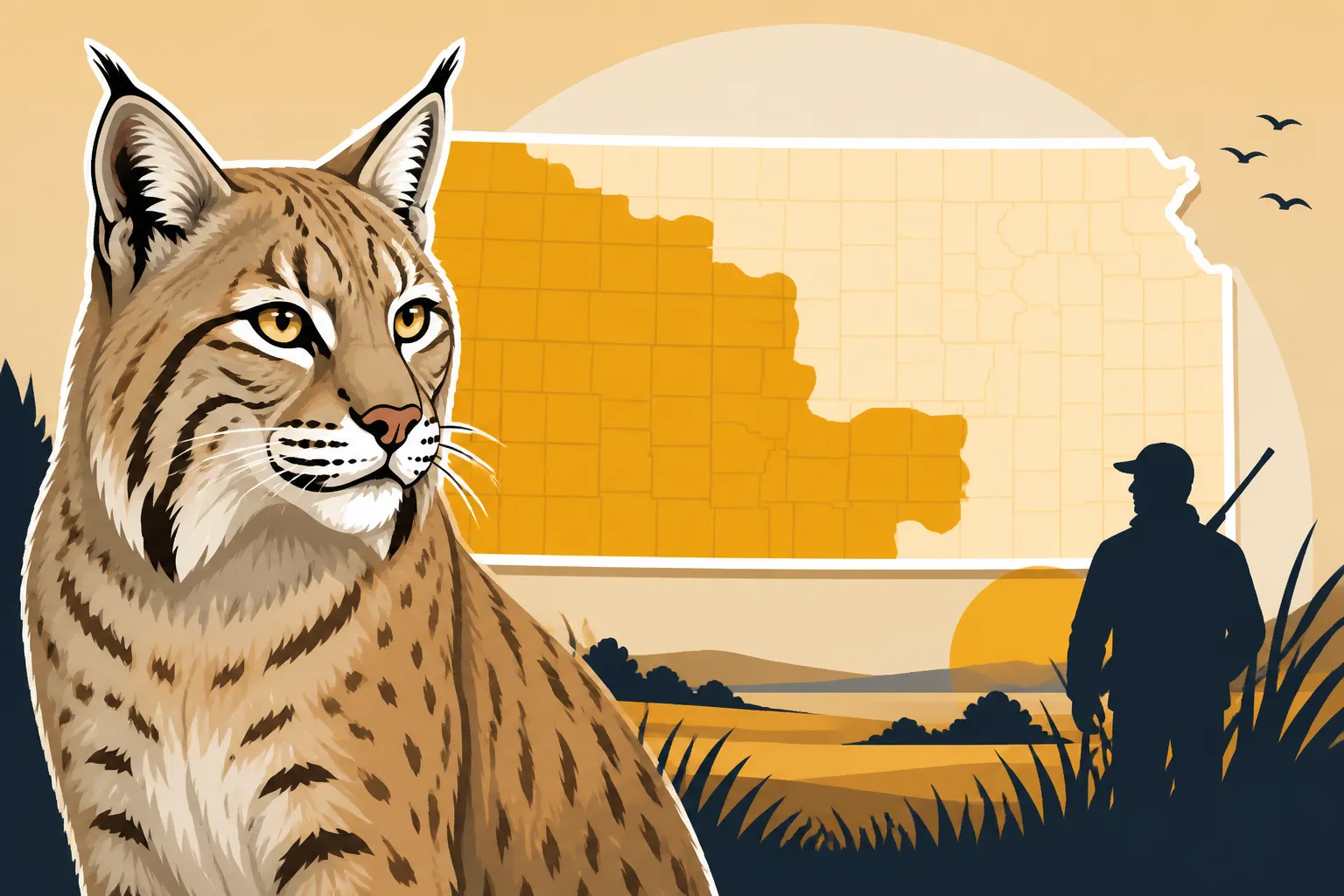
Kansas is a big state with vastly different landscapes from east to west. While bobcats are found in all 105 counties, their density and distribution vary considerably. Understanding these regional differences can help hunters and trappers focus their efforts and appreciate the unique challenges and opportunities each area presents.
Eastern Kansas: Timbered River Systems and Agricultural Edge
Eastern Kansas, with its higher rainfall, more abundant timber, and extensive river systems like the Marais des Cygnes, Neosho, and Kansas Rivers, represents a true stronghold for bobcats. The patchwork of dense woodlands, riparian corridors, and agricultural fields provides an almost perfect environment. Here, bobcats benefit from consistent cover and a diverse prey base that includes cottontails, squirrels, rodents, and even a higher density of furbearers like raccoons and opossums.
These timbered river bottoms and associated creek draws act as natural highways for bobcats, allowing them to travel safely and efficiently between larger habitat blocks. The edges where timber meets crop fields are particularly productive, offering both cover and access to food sources from the fields. It’s not uncommon to find bobcat sign along the fringes of these areas, even within relatively close proximity to human activity, as long as sufficient cover remains. Hunters pursuing deer in these eastern timber tracts often report bobcat sightings, showcasing their strong presence. Consider exploring Eastern Kansas Timber and River Bottoms for more details on these prime habitats.
Western Kansas: Breaks, Canyons, and Irrigated Cropland
As you move west into the drier, more open landscapes, the bobcat's habitat preferences become more pronounced. While the dense, continuous timber blocks of the east are less common, western Kansas offers its own unique set of prime bobcat habitat: steep, rocky breaks, canyons, and deep draws. Areas like the Cimarron National Grassland, or the rugged canyons in the extreme southwest, offer significant elevation changes, rock formations, and dense cedar or plum thickets that provide essential cover and den sites.
Here, bobcats often adapt to a more spread-out existence, using the limited but crucial cover to their advantage. Prey might be slightly less dense than in the east, but cottontails and jackrabbits are still present, along with rodents that thrive in the more arid environment. Irrigated croplands, especially those with pivot corners left to grow wild or abandoned farmsteads, can create isolated pockets of excellent bobcat habitat, drawing them in for water and prey that congregate there. Public land hunters exploring Western Kansas Plains Hunting Country should keep an eye out for these unique habitat features.
Central Kansas: Transition Zones and Isolated Cover
Central Kansas often acts as a transition zone, blending elements of both eastern timber and western plains. This region, characterized by rolling hills, expansive grasslands like the Flint Hills, and significant agricultural production, still offers good bobcat habitat, but often in more isolated or linear forms. River systems like the Smoky Hill and Solomon, and their associated tributaries, are critical, providing ribbons of timber and brush that cut through the open country.
In these areas, dense shelterbelts, large CRP fields with significant woody cover, and rocky outcrops become extremely important. Bobcats here are highly dependent on these "habitat islands" and the travel corridors that connect them. It’s a landscape where their adaptability shines, as they must often navigate more open terrain to move between prime hunting grounds. Understanding Shelterbelts and Timber Points in Kansas Farm Country is crucial for pinpointing potential bobcat activity in this central region.
Factors Influencing Bobcat Range and Population Dynamics
Bobcats aren't static creatures; their populations and the extent of their range are always shifting, influenced by a complex interplay of environmental and anthropogenic factors. Being aware of these dynamics helps us better appreciate their resilience and the conservation challenges they might face.
Prey Availability and Habitat Quality
The single most significant factor influencing where bobcats establish themselves and how dense their populations become is the availability of prey. As mentioned earlier, a healthy population of rabbits, rodents, and other small game translates directly into a robust bobcat presence. Factors that affect these prey species, such as drought, severe winters, or disease outbreaks, can have a ripple effect on bobcat numbers. If the dinner table is bare, bobcats will either move on or their numbers will decline.
Furthermore, the quality of the habitat plays a huge role. It’s not just about having some trees or some grass; it's about having diverse, interconnected cover that provides safe travel, denning sites, and ample hunting opportunities. Habitat fragmentation, where large blocks of suitable land are broken up by development or intense agricultural practices, can limit bobcat populations even if prey is present. A bobcat might avoid an area if it feels too exposed or if its ability to move freely is compromised.
Human Interaction and Landscape Changes
Bobcats, despite their wild nature, are often more tolerant of human presence than many other predators, though there are limits. They will generally avoid densely populated areas, but they can and do thrive on the fringes of rural communities and in agricultural landscapes. Human activities like farming, ranching, and even recreational hunting and trapping (which is regulated to ensure sustainable populations) can all influence their distribution.
Changes in land use are particularly impactful. The conversion of native grasslands or woodlands to row crops, the construction of new roads, or the encroachment of urban sprawl all reduce the available habitat for bobcats. However, certain human-made features, like large culverts under roads or unmaintained areas around older farmsteads, can sometimes inadvertently create new, isolated pockets of suitable habitat. Trappers utilizing detailed mapping resources available through platforms like GoHunt can often identify these smaller, overlooked areas that might hold a bobcat. For those interested in the management of these furbearers, understanding Kansas Furbearer Harvest Numbers provides insight into how human activities are monitored.
Competition with Other Predators
Bobcats aren't the only apex predators roaming the Kansas landscape. They share their territory with a variety of other carnivores, most notably coyotes. Coyotes are larger, more numerous, and often more aggressive than bobcats, and direct competition for food and territory can occur. While bobcats are adept at avoiding conflict, a high coyote density can sometimes push bobcats into more marginal habitats or alter their activity patterns.
Other predators like foxes, owls, and even raptors will also compete for some of the same small prey species. However, it's the larger predators, particularly coyotes, that have the most significant influence on bobcat behavior and spatial distribution. Bobcats often select habitats that offer dense cover specifically because it gives them an advantage over larger, less agile competitors when pursuing prey or escaping danger. This delicate balance of predator-prey and predator-predator relationships constantly shapes the specific areas where bobcats feel most secure and productive. The state monitors these various populations to ensure healthy ecosystems for all. Learn more about their behavior in general with Kansas Predators and Furbearers.
Locating and Identifying Bobcat Sign in the Field
Finding a bobcat can feel like winning the lottery, given their secretive nature. However, by understanding what to look for and where to look, you can significantly increase your chances of confirming their presence, whether you're a nature observer, a trapper, or a hunter looking to learn more about your local wildlife.
Tracks and Other Physical Sign
The most common way to confirm a bobcat's presence is through its tracks. Bobcat tracks are generally rounder than a coyote or dog print, typically showing four toes with no claw marks (their claws are retractable, much like a domestic cat's). The front foot is slightly larger than the hind foot. Look for these tracks in soft mud along creek beds, sandy edges of fields, or dusty trails. Learning to distinguish them from other canine tracks is a critical skill for any aspiring furbearer enthusiast.
Beyond tracks, look for scat. Bobcat scat often resembles segmented, blunt-ended ropes, usually dark in color and containing visible fur or bone fragments from their prey. They often deposit scat in prominent locations, like on logs or rocks, likely as a form of territorial marking. Additionally, look for "scrapes" – small piles of dirt or leaves scraped over urine or scat, another common marking behavior. You might also find kill sites, often evidenced by scattered fur or feathers, particularly in dense cover. A fresh kill site often indicates a bobcat is still in the vicinity.
Trail Camera Strategies and Visual Identification
Trail cameras have revolutionized wildlife monitoring, offering an invaluable tool for confirming bobcat presence without needing to be physically present. Deploying cameras along known game trails, near pinch points in cover, or around consistent water sources can yield surprising results. Place cameras where you’ve found tracks or other sign, focusing on areas with dense cover and good visibility for the camera. Using a scent lure designed for felines can sometimes entice a bobcat to investigate, increasing your chances of a photo.
Visually identifying a bobcat is a thrill. They are relatively small, stocky cats, typically larger than a house cat but smaller than a mountain lion (which are exceedingly rare in Kansas). Their most distinctive features are their short, "bobbed" tail, usually with a black tip and often white underneath, and prominent ear tufts. Their fur is typically tan to reddish-brown, often with spots or streaks, providing excellent camouflage in the varied Kansas landscape. Seeing one is a rare privilege, a testament to their stealth and the wildness of our state. If you are fortunate enough to spot one, knowing the general Bobcat Range Across Kansas will help confirm the sighting.
Legal Considerations for Trapping and Hunting
For those interested in actively pursuing bobcats through trapping or hunting, it's absolutely crucial to be aware of and strictly adhere to all Kansas Department of Wildlife, Parks and Tourism (KDWP) regulations. Bobcats are a managed furbearer species, and there are specific seasons, licensing requirements, and often reporting mandates. You'll need a current Kansas hunting license and a furharvester license. Regulations dictate legal methods, checking requirements for traps, and possession limits.
Always consult the most recent KDWP hunting and furbearer regulations summary. These regulations are in place to ensure sustainable populations and ethical practices. Ignorance of the law is never an excuse. Understanding the biology and range of bobcats, as covered in this guide, is a fantastic starting point, but always pair that knowledge with a thorough understanding of current legal frameworks before venturing into the field to harvest a furbearer. For more detailed information on specific regulations, refer to resources like Bobcat Season and Fur Handling and Kansas Furharvester Licence.
| Region | Typical Habitat Features | Primary Prey Examples | Notes on Density |
|---|---|---|---|
| Eastern Kansas | Dense timber, riparian zones, plum thickets, brushy draws | Cottontails, squirrels, rodents, raccoons, turkeys | Higher density |
| Central Kansas | River bottoms, shelterbelts, CRP, isolated timber blocks | Cottontails, rodents, pheasants, smaller furbearers | Moderate density |
| Western Kansas | Rocky breaks, canyons, cedar thickets, large playas | Cottontails, jackrabbits, rodents, occasional mule deer fawns | Lower density |
This article is for general informational purposes only and does not constitute professional advice. Laws, prices and regulations vary by location and change over time. Consult a qualified professional for guidance on your specific situation.