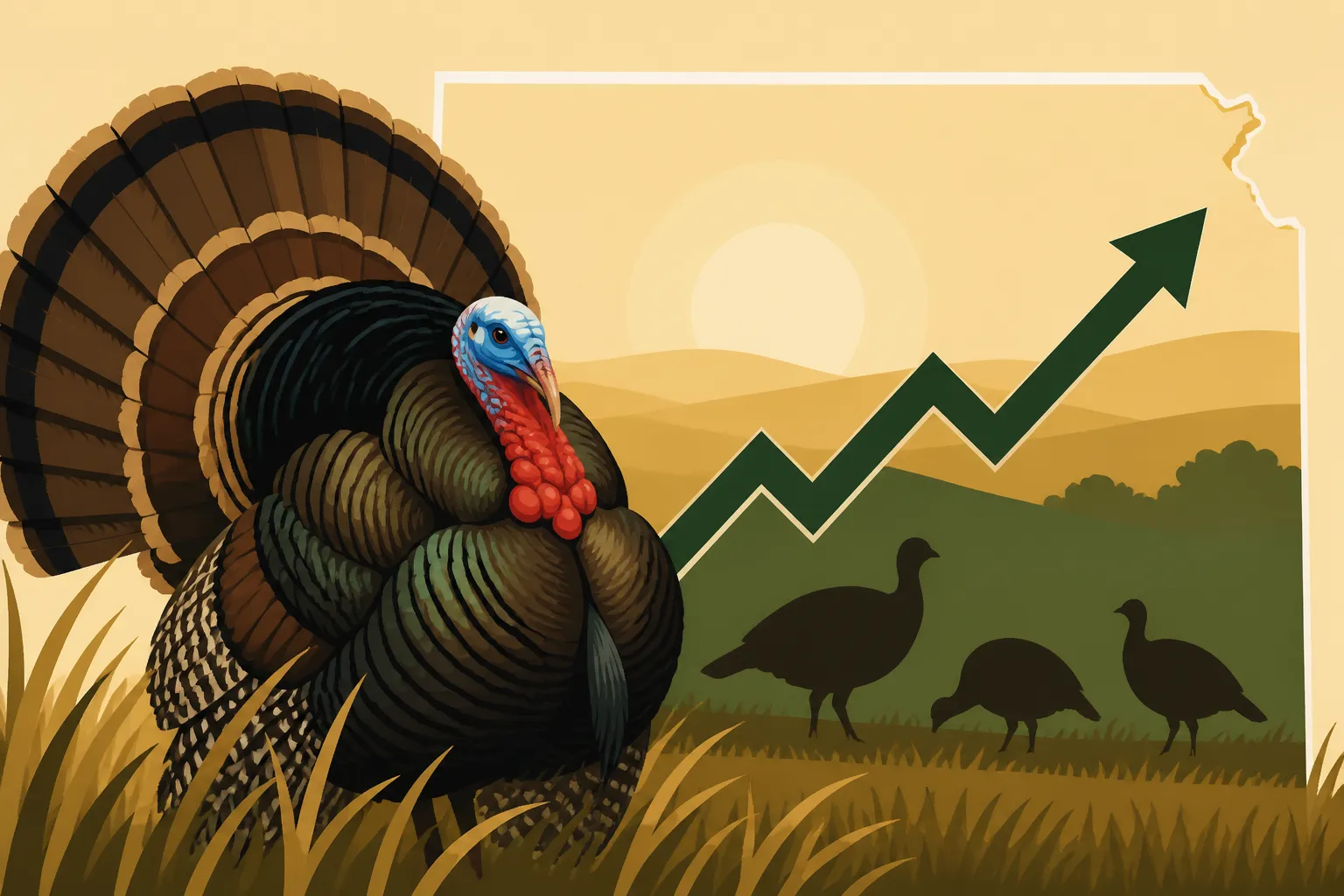
Kansas Turkey Population Trends
It's no secret that many of us, as turkey hunters in Kansas, have felt a palpable shift in the woods lately. That once booming chorus at dawn seems a little quieter, and those strutting gobblers can feel harder to come by than in years past. It's frustrating to invest time and effort, only to find the turkey numbers aren't what they once were. This comprehensive guide is here to shed light on the real story behind Kansas turkey population trends, diving deep into the factors influencing these changes and what they mean for hunters like us.
The Rollercoaster Ride of Kansas Turkeys
For many years, Kansas was considered a turkey hunting paradise, a hidden gem often overshadowed by other states, but consistently delivering phenomenal opportunities, especially for Rio Grande turkeys. We saw boom years where flocks seemed to be everywhere, and the spring woods echoed with gobblers. But like any wildlife population, it's never a straight line, and recently, that line has been trending downwards, leaving many of us scratching our heads and wondering what changed.
Historical Highs and lows of Kansas Turkey Numbers
If you've been hunting turkeys in Kansas for a while, you'll remember the good old days when seeing dozens of birds wasn't uncommon. Kansas saw a significant increase in its wild turkey population, particularly the Rio Grande subspecies, through the late 20th and early 21st centuries. This growth was largely due to successful reintroduction programs and favorable habitat conditions, especially in the central and western parts of the state. These birds thrive in the fragmented timber and riparian corridors found along our major river systems and creeks, often interspersed with agricultural fields. We felt like we could almost guarantee a gobble in the morning, making it a bucket list destination for many.
However, around 2010-2012, many states in the Midwest and Great Plains began to notice a downturn, and Kansas was no exception. What started as a subtle dip soon became a more pronounced trend, particularly after 2015. Hunters reported fewer birds, quieter mornings, and a general decline in sightings across various units. This isn't just anecdotal; the harvest data and poult survival surveys conducted by the Kansas Department of Wildlife and Parks (KDWP) clearly illustrate this decline. It’s a tough pill to swallow when you've grown accustomed to strong populations, and it forces us to adapt our expectations and tactics. Understanding these long-term shifts is key to becoming a more effective and adaptable hunter.
Understanding the Different Subspecies in Kansas
Kansas is a unique state in that it hosts not one, but three subspecies of wild turkeys, adding a layer of complexity to population discussions. Knowing which bird you're after and its typical habitat can really help when trying to understand local trends.
- Rio Grande Turkeys: These are the most common and widespread turkeys in Kansas, primarily found in the central and western two-thirds of the state. They prefer the open country with scattered timber, brush, and agricultural fields. Their numbers have historically been the backbone of Kansas turkey hunting, and their health is often the primary concern when discussing statewide trends. They are known for their strong gobbling and often travel in large flocks, making them a favorite target for hunters. You can often find them roosting in shelterbelts and creek bottom timbers, then flying down into nearby agricultural fields.
- Eastern Turkeys: Found predominantly in the heavily timbered, eastern third of Kansas, these birds prefer dense hardwood forests. Their numbers are generally more stable but often lower in density compared to Rio Grandes due to habitat constraints. Hunters pursuing Easterns often find themselves in thicker cover, requiring different calling and setup strategies. Understanding the distinct habitats of Eastern and Hybrid Turkeys in Kansas is crucial for success.
- Hybrid Turkeys: In the transition zones where the ranges of Rio Grandes and Easterns overlap, you'll find hybrid birds. These turkeys exhibit characteristics of both subspecies, both in appearance and behavior. Their populations can be a mix of the two, often influenced by the dominant habitat features of that particular region. Hunting these areas can be an interesting challenge, as you might encounter birds displaying traits of either type.
Unpacking the Decline: What's Going On?
The question on every turkey hunter's mind is, "Why?" Why are Kansas turkey numbers falling? It's a complex puzzle with no single, easy answer. Instead, it’s a combination of environmental pressures, habitat changes, and biological factors that have created a perfect storm for our feathered friends. It’s not just a Kansas problem; many states in the Midwest are grappling with similar issues, highlighting widespread ecological shifts.
The Impact of Changing Agricultural Practices
Kansas is an agricultural state, and farming practices directly influence turkey habitat. While turkeys have historically adapted well to a mix of agriculture and timber, certain modern changes have put pressure on populations.
- Loss of Diverse Crop Rotations: In many areas, the trend has been toward monoculture farming, focusing on just one or two major crops like corn or soybeans. This reduces the diversity of food sources available to turkeys throughout the year. Fewer small grain fields like wheat, or fewer fallow fields, mean less reliable foraging opportunities and less bug protein for poults. Turkeys thrive on variety, and a less diverse agricultural landscape means less consistent nutrition.
- Increased Tillage and Less No-Till: While no-till farming has become more popular in some regions, traditional tillage practices are still widespread. Tilling disrupts nests, destroys important invertebrate food sources for young poults, and removes residual cover that turkeys rely on for nesting and concealment. The bare ground left after tillage can expose young birds to predators and the elements.
- Removal of Hedgerows and Timber Stands: Modern farming often favors larger, unbroken fields for efficiency. This has led to the removal of shelterbelts, fencerows, and small timber pockets that once served as crucial travel corridors, roosting sites, and nesting cover for turkeys. These isolated patches of cover are vital, especially for Rio Grandes in more open country, providing security and connectivity across vast landscapes. When these are gone, turkeys become more vulnerable and their home ranges are compressed.
Predation and Its Role in Poult Survival
Predation is a natural part of the ecosystem, but an imbalance can significantly impact turkey populations, especially vulnerable poults. This is often one of the first things hunters point to when numbers are down, and there's certainly some truth to it, though it's rarely the sole cause.
- Increased Predator Populations: In many parts of Kansas, predator populations, including raccoons, opossums, skunks, and coyotes, have remained stable or even increased in certain areas. These generalist predators are highly efficient nest robbers and can prey on young poults. The reduction of suitable nesting cover due to habitat changes can concentrate nesting turkeys, making them easier targets for predators.
- Nest Predation and Poult Mortality: The survival of young turkeys, or poults, is the most critical factor in population growth. If hens can't successfully hatch a clutch and a significant number of poults don't survive to maturity, the population will inevitably decline. Nest Predation and Turkey Numbers are closely linked, and understanding this relationship is key. During the first few weeks of life, poults are extremely susceptible to predation from hawks, owls, foxes, bobcats, and even large snakes. If hens lose their first nest, they may attempt a second clutch, but these re-nests often have fewer eggs and lower success rates.
- Weather as an Amplifier: While predation is always present, severe weather events, which we'll discuss next, can make poults even more vulnerable. Cold, wet springs can weaken young birds, making them slower and more susceptible to predators, turning an already challenging situation into a dire one.
Habitat's Role: More Than Just Roost Trees
When we think of turkey habitat, our minds often jump to towering roost trees. While critical, true turkey habitat is far more nuanced, encompassing everything from nesting cover to insect-rich foraging areas. Any change in these interconnected elements can have a ripple effect on the entire population.
Loss of Quality Nesting and Brood-Rearing Habitat
This is arguably one of the most significant factors impacting Kansas turkey populations. Hens need safe, dense cover to lay their eggs and raise their young.
- Shrinking CRP Acres: The Conservation Reserve Program (CRP) has been a boon for wildlife, including turkeys, by providing vast acres of undisturbed grassland. These fields are ideal for nesting and offer excellent bugging grounds for poults. However, as CRP contracts expire, some landowners choose to return these acres to crop production, leading to a net loss of vital nesting habitat. This conversion can be detrimental, removing vast swathes of safe haven that turkeys relied upon.
- Declining Quality of Existing Cover: Even where cover exists, its quality can degrade. Overgrazing can reduce the height and density of grasses, making them less suitable for nesting hens. Invasive species can choke out native plants, altering the structure of the understory and making it less appealing for turkeys seeking cover. Hens need substantial overhead and lateral cover to hide their nests from avian and ground predators. Without it, nest success plummets.
- Lack of Diverse Foraging Opportunities for Poults: Young poults primarily feed on insects during their first few weeks of life, which are crucial for rapid growth and feather development. Areas rich in insects, often found in diverse grasslands, weedy field edges, and riparian zones, are essential. If these areas are reduced or degraded, poult survival rates suffer. A hunter using a scouting tool like GoHunt might notice the reduction of these crucial habitat types over time when comparing historical aerial imagery, indicating a tougher time for hens to raise a brood.
Importance of Riparian Corridors and Shelterbelts
In a state known for its open landscapes, these linear features are lifelines for Kansas turkeys. They are far more than just travel lanes; they are complete mini-ecosystems.
- Critical Roosting and Travel Corridors: River bottoms, creek draws, and shelterbelts provide the necessary tall trees for turkeys to roost safely at night. In open country, these are often the only significant timber features available. Without these secure roosting sites, turkeys are exposed to increased predation at night. Furthermore, these corridors act as natural highways, allowing turkeys to move safely between feeding, nesting, and watering areas without being exposed in vast open fields. Understanding how to Read a Kansas Creek Bottom for Deer Sign can also apply to turkeys, as both species utilize these areas extensively for cover and travel.
- Winter Survival and Thermal Cover: During harsh Kansas winters, riparian timber and dense shelterbelts offer crucial thermal cover, protecting turkeys from bitter winds, ice, and heavy snow. The dense canopy and understory help moderate temperatures, reducing the energy expenditure birds need to stay warm. Without adequate winter cover, turkeys can suffer from cold stress, leading to weakened immune systems and increased mortality.
- Water Sources and Food Diversity: These linear habitats often contain a greater diversity of plant life, providing year-round food sources such as mast crops (acorns, hackberries), wild berries, and seeds that supplement agricultural forage. They also provide reliable water sources, which are essential for turkeys, especially during dry periods. Healthy riparian zones support a more robust insect population, vital for poult survival. Losing these vital areas can severely impact the overall health and distribution of turkey flocks.
Weather's Impact on Poults and Production
If you've spent any time in Kansas, you know our weather is anything but predictable. We can swing from bone-dry heat to torrential downpours in a matter of days. For wild turkeys, especially the vulnerable young, these weather extremes aren't just an inconvenience; they can be devastating.
Cold, Wet Springs and Poult Mortality
This is perhaps the single biggest natural factor often cited for recent turkey population struggles across the Midwest, and Kansas is no exception.
- Hypothermia and Disease Vulnerability: Young turkey poults are incredibly fragile. Their feathers don't fully waterproof until they're several weeks old, making them highly susceptible to hypothermia during cold, wet spring weather. Prolonged periods of rain and low temperatures can decimate entire broods. Chilling rains and cold snaps reduce their activity, making them less likely to forage for vital insects and more prone to succumbing to the elements. These conditions also increase the risk of disease, as damp environments are breeding grounds for pathogens that can weaken or kill young birds. The link between Turkey Poult Survival and Rainfall is undeniable and often a primary driver of yearly population fluctuations.
- Reduced Insect Availability: Cold, wet conditions also suppress insect activity. As mentioned, insects are the primary food source for poults, providing essential protein for rapid growth. If insects aren't readily available, poults struggle to get the nutrition they need, leading to stunted growth, weakness, and increased vulnerability to disease and predation. A lack of this critical early-life nutrition can have long-lasting effects on a generation of birds.
- Impact on Hen Health and Renesting: Hens expending significant energy trying to keep poults warm and dry during inclement weather can become stressed and lose condition. If a brood is lost, the hen may attempt to re-nest, but these subsequent clutches are typically smaller and less successful, further reducing the overall reproductive output for the year. This cycle can severely limit a population's ability to rebound.
Drought Conditions and Their Lingering Effects
On the flip side, prolonged drought, especially during critical nesting and brooding periods, can also negatively impact turkey populations. While not as immediately catastrophic as cold, wet springs, droughts have a insidious, long-term effect.
- Reduced Forage and Water Sources: During drought, natural vegetation dries up, and critical food sources like wild berries and seeds become scarce. Water sources, vital for all wildlife, can disappear or become stagnant. Turkeys must travel further to find food and water, expending more energy and increasing their exposure to predators. This added stress can reduce overall health and reproductive success.
- Impact on Insect Populations: Just as cold, wet weather reduces insects, so too can extreme drought. The lack of moisture can significantly decrease the abundance of the invertebrates that poults rely on for food. Dry conditions make the ground harder, making it more difficult for poults to scratch and peck for insects, further exacerbating nutritional deficiencies.
- Increased Predation Risk: Drought conditions often lead to a concentration of wildlife around remaining water sources. This can bring turkeys into closer contact with predators, increasing their vulnerability. Additionally, dried-out vegetation offers less effective cover for nesting hens and poults, making them easier to spot and ambush. Hunters scouting with platforms like GoHunt might observe changes in vegetation greenness or water availability in certain units, which can hint at the challenges turkeys might be facing.
Conservation Efforts and What's Being Done
Despite the challenges, many dedicated individuals and organizations are working tirelessly to support Kansas turkey populations. The KDWP, alongside private landowners and conservation groups, is implementing strategies aimed at bolstering numbers and ensuring future hunting opportunities. While we might not see immediate, dramatic turnarounds, these efforts are crucial for the long-term health of our wild turkey resource.
KDWP Management Strategies and Regulations
The Kansas Department of Wildlife and Parks continuously monitors turkey populations and adjusts management strategies based on scientific data.
- Population Surveys and Research: KDWP conducts annual surveys, including brood counts and harvest reports, to track population trends and poult survival rates. This data is critical for understanding the current health of the turkey population. Researchers also study factors like habitat use, disease prevalence, and predator impacts to develop targeted conservation plans. These efforts provide the crucial information needed to make informed management decisions, helping us understand the nuances of Kansas Turkey Population Estimate.
- Adjusting Hunting Regulations: One of the most direct tools KDWP has is adjusting hunting regulations. In response to declining numbers, we've seen changes like reduced bag limits, shorter seasons, and restricted permit sales for non-residents in certain areas. For example, some units may have tighter quotas, while others, like Kansas Unit 4 Turkey Permit Eligibility, might become resident-only to manage hunting pressure. These measures are designed to reduce harvest pressure, especially on gobblers, and allow the population more opportunity to recover and grow. It's a tough call for hunters, but necessary to ensure the future of the sport.
- Habitat Improvement Programs: KDWP also works to implement habitat improvement projects on public lands and encourages private landowners to do the same through various programs. This includes prescribed burning to improve grassland health, planting native vegetation for food and cover, and restoring riparian zones. These efforts focus on creating and enhancing the diverse habitats turkeys need for nesting, brood-rearing, and winter survival.
The Role of Landowners and Conservation Groups
Private landowners are the backbone of wildlife conservation in Kansas, owning the vast majority of the land. Their efforts, combined with those of conservation groups, are indispensable for turkey recovery.
- Private Land Habitat Initiatives: Many landowners are actively managing their properties for wildlife, often utilizing programs from the Natural Resources Conservation Service (NRCS) or Pheasants Forever/Quail Forever to improve habitat. This can involve establishing native grass buffers, planting shelterbelts, creating diverse food plots, and implementing rotational grazing practices that benefit turkeys. These private initiatives, often done without public fanfare, are critical because they occur on such a large scale across the state. They ensure that essential habitat mosaics are maintained, providing crucial spaces for turkeys to thrive.
- Conservation Group Advocacy and Funding: Organizations like the National Wild Turkey Federation (NWTF) play a vital role in advocating for sound turkey management policies, raising awareness about population declines, and funding habitat restoration projects. They often partner with KDWP and private landowners to implement on-the-ground conservation efforts, such as prescribed fire workshops, tree planting, and invasive species removal. Their lobbying efforts also help secure funding for essential research and land acquisition for public hunting.
- Responsible Hunting Practices: Hunters themselves have a crucial role. Practicing ethical hunting, abiding by regulations, and reporting violations helps ensure a sustainable turkey population. Many hunters also contribute financially to conservation through license sales and excise taxes on hunting equipment, which directly fund wildlife management programs. By understanding the challenges, adapting our hunting strategies, and supporting conservation efforts, we can all contribute to healthier turkey populations. If you’re planning a trip, make sure to review Kansas Spring Turkey Permits and Units well in advance.
Here’s a snapshot of KDWP’s Spring Turkey Harvest data over recent years, illustrating the general downward trend many hunters have observed:
| Year | Total Spring Harvest (Estimated) | Permits Sold (Estimated) | Harvest Per Permit | Key Factors Mentioned |
|---|---|---|---|---|
| 2018 | 28,500 | 23,000 | 1.24 | Good poult production prior year |
| 2019 | 24,000 | 22,500 | 1.07 | Below average poult production |
| 2020 | 18,500 | 21,500 | 0.86 | Significant decline, poor poult survival |
| 2021 | 16,500 | 20,000 | 0.83 | Continued decline, wet spring |
| 2022 | 12,000 | 19,000 | 0.63 | Record low, widespread poor conditions |
| 2023 | 10,500 | 18,000 | 0.58 | Persisting poor poult survival, drought |
Note: These numbers are estimates and can fluctuate based on KDWP reporting methods and hunter participation.
Adapting as Hunters: What We Can Do
When turkey numbers are down, it naturally changes the hunting experience. The loud, aggressive gobblers might be fewer, and the overall action can feel slower. It’s disheartening, but it’s also an opportunity to hone our skills, learn new tactics, and become more patient and resilient hunters. We can’t control the weather or large-scale habitat shifts, but we can certainly control our approach to the hunt.
Changing Tactics for Lower Density Populations
The run-and-gun tactics that worked so well in high-density areas might need a rethink when birds are scarce. You might not hear gobbling from a quarter-mile away, or you might not get a response to every call.
- Increased Scouting and Patience: More than ever, scouting becomes paramount. Instead of relying solely on hearing a bird gobble from the truck, you need to put boots on the ground, long before the season. Look for tracks, droppings, scratch marks, and dusting areas. Identify roosting locations like those in Where Turkeys Roost in Farm Country and potential strut zones. When you do locate birds, be patient. Lower density often means turkeys are more spread out and might move less predictably. A tool like GoHunt can be invaluable for e-scouting and finding areas with good cover and potential food sources. Sitting quietly and observing can often yield more results than running from ridge to ridge.
- Subtle Calling and Decoy Use: Aggressive calling can sometimes spook pressured or sparse birds. Try more subtle approaches: soft yelps, clucks, and purrs that imitate a contented hen. Don’t overcall. Listen carefully for soft responses. When using decoys, consider a single hen or a jake and a hen rather than a full strutting tom spread, which can be intimidating to lone gobblers. Placement is also key, ensuring your decoy is visible but not in an unnatural position.
- Focusing on Known Holdouts: In tougher years, concentrating on areas that consistently hold birds, even if only a few, can be more productive. This might be a secluded creek bottom, a forgotten shelterbelt, or a remote corner of a public land tract. These "honey holes" often have the necessary cover, food, and water to sustain a small flock. Don't be afraid to hunt areas that might require more effort to access; less pressure often means more relaxed birds.
Ethical Considerations and Contributing to Conservation
As hunters, we are often the first to notice changes in wildlife populations, and we have a responsibility to act as stewards of the resource.
- Self-Imposed Limits: While KDWP sets legal bag limits, individual hunters can choose to exercise self-imposed limits, especially during years of significant decline. Perhaps you decide to only harvest one gobbler instead of the legal two, or you pass on marginal birds in hopes they will contribute to the breeding population. This personal choice, multiplied across the hunting community, can have a cumulative positive effect, helping to ensure the future of the sport.
- Supporting Habitat Initiatives: Contribute to conservation organizations like the National Wild Turkey Federation (NWTF) or local conservation efforts. Your membership dollars and donations go directly towards habitat improvement projects, research, and advocacy that benefit turkeys. Consider volunteering your time for habitat workdays on public lands or assisting private landowners with projects. You can learn more about how to Leave No Trace on Walk-In Ground to keep hunting areas pristine.
- Advocacy for Wildlife Management: Stay informed about KDWP's management plans and proposed regulation changes. Participate in public comment periods, attend commission meetings, or contact your local wildlife biologists to share your observations and support science-based wildlife management. Being an active voice for conservation is crucial to ensuring that our wild turkey populations, and hunting opportunities, are sustained for generations to come.
Disclaimer
Please be aware that hunting regulations and wildlife populations are subject to change based on scientific data and conservation needs. Always consult the latest Kansas Department of Wildlife and Parks (KDWP) regulations before planning any hunting activity. This guide is for informational purposes only and does not constitute legal advice.