Where Turkeys Roost in Farm Country
Hunting turkeys in vast Kansas farm country can feel like searching for a needle in a haystack, especially when you're trying to pinpoint exactly where those elusive gobblers are spending the night. It's a frustrating dance trying to anticipate their morning movements when the landscape often lacks the dramatic elevation changes and dense, continuous timber found elsewhere. This guide is here to shed light on exactly where turkeys choose to roost in this unique environment, and how you can use that knowledge to put yourself in the best position for a successful spring hunt.
Understanding Turkey Roosting Behavior in Flat Kansas Landscapes
Turkeys, regardless of their subspecies, are creatures of habit and survival. They seek high ground or dense cover to escape nocturnal predators like coyotes, bobcats, and owls. In Kansas farm country, where sprawling fields dominate, this behavior takes on a specific, often challenging, form for hunters. They're looking for safety and a vantage point, even if that vantage point is just a few feet higher than the surrounding milo stubble.
Why Roosting is Critical for Turkeys (and Hunters)
For turkeys, roosting is their primary defense mechanism against night predators. They fly up into trees just before dark, using their keen eyesight to scan for threats as they ascend. Once settled, they often remain motionless, blending into the branches. This ritual isn't just about safety; it's also a social event, especially for gobblers looking to assert dominance or hens gathering before the morning's activities. Understanding this nightly routine is gold for hunters. If you know where they're roosting, you know where they'll be at first light. This eliminates a huge chunk of uncertainty in a hunt, especially when you're trying to intercept them as they fly down. Without knowing the roost, you're essentially blind in the pre-dawn darkness, hoping to stumble upon them or call one in from a great distance. Knowing the roost gives you an undeniable advantage, allowing you to plan your approach and setup for that critical first hour of daylight.
Key Factors Influencing Roost Tree Selection
In traditional timbered areas, turkeys have an abundance of choices, but in Kansas farm country, their options are often limited, making them somewhat predictable if you know what to look for. They prioritize safety, certainly, but also comfort and convenience.
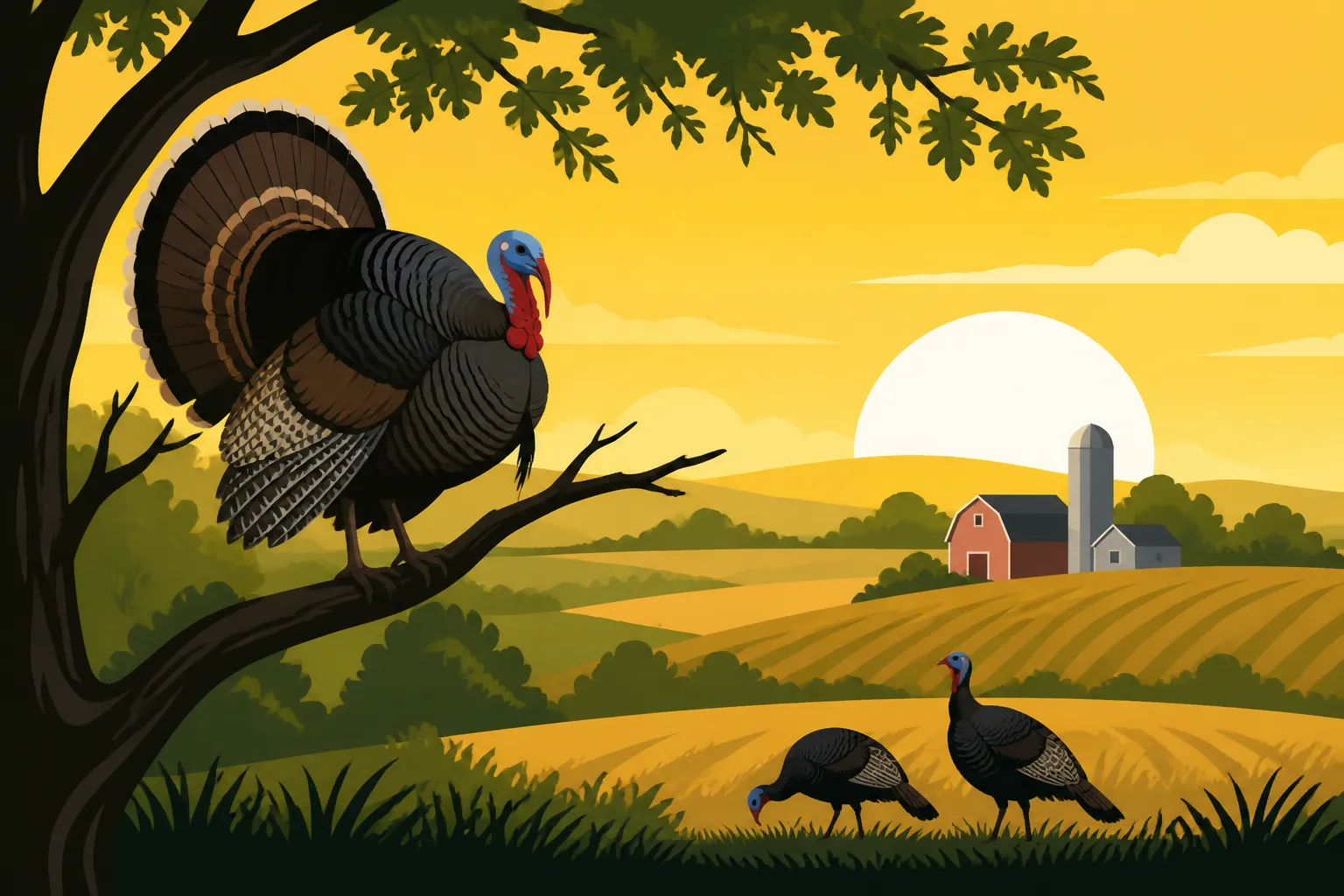
First and foremost is height. Turkeys want to be as high off the ground as possible. This means the tallest trees available in a given area. In Kansas, these might be mature cottonwoods along a river, stately oaks on an old farmstead, or even tall utility poles if natural trees are scarce.
Second is structure. They prefer trees with strong, horizontal limbs that can comfortably support their weight. Think large, mature trees with ample branching, not young, spindly saplings. These limbs also provide good cover from above.
Third is isolation or proximity to travel corridors. Often, the best roost trees are those that offer a clear fly-down path into a nearby field for feeding or adjacent cover for security. An isolated group of trees in the middle of a large field might be perfect, as it offers protection and easy access to food once they hit the ground. Conversely, a long, linear patch of timber along a creek might see birds roosting on the edges, ready to pitch down into a field. The key is often finding that sweet spot where safety meets convenience for their morning routine.
Identifying Prime Roosting Locations in Kansas Farm Country
While Kansas might not have endless national forests, it certainly has pockets of timber and structures that turkeys utilize for roosting. The trick is to shift your mindset from looking for "forests" to looking for "isolated cover" within the agricultural landscape.
Isolated Timber Patches and Woodlots
Picture a vast expanse of corn or wheat stubble, stretching for miles, then suddenly, a small, dark island of trees breaks the horizon. These isolated timber patches, or woodlots, are absolute magnets for roosting turkeys in farm country. They provide the necessary height and cover in an otherwise open landscape. These aren't just random trees; often, they're older, more mature stands that have been left undisturbed for decades, perhaps around an old farm pond, a forgotten cemetery, or a small, rocky outcropping that was too difficult to farm.
These woodlots offer turkeys a sense of security and a clear view of their surroundings as they fly up. When scouting, pay close attention to the tallest trees within these patches. Look for mature cottonwoods, oaks, or even sycamores. These trees usually have robust horizontal limbs perfect for multiple birds. You might even find tell-tale signs like droppings on the ground directly beneath a favored limb, or even shed feathers. A good tactic is to approach these areas carefully in the late afternoon, just before dark, and listen for the distinct "tree yelp" or wing beats as they fly up. It's a dead giveaway.
River Bottoms and Creek Draws
Ah, the lifeblood of many a Kansas hunt! River bottoms and creek draws are arguably the most consistent roosting locations for turkeys across the state. These natural travel corridors provide a linear strip of timber that offers both roosting opportunities and a path for birds to move across the landscape safely. The larger the river or creek, the more substantial the timber, and often, the more turkeys you'll find.
These areas often boast the largest, most mature trees in the vicinity, particularly towering cottonwoods and robust oaks that line the banks. The dense canopy and often thicker undergrowth offer excellent concealment. Turkeys will often roost right along the main channel or in the larger oxbows where old-growth trees are most prevalent. The meandering nature of these waterways also creates natural funnels and breaks in the terrain, which birds use for travel and feeding. When you're Reading a Kansas Creek Bottom for Deer Sign, you're often looking at the same features that attract turkeys. Scout for areas where the timber is widest or where several draws converge, as these often concentrate birds. Listen for those last-light clucks and putts; they'll often give away a general roosting area, allowing you to fine-tune your approach in the morning.
Shelterbelts and Old Homestead Trees
Don't underestimate the power of a good shelterbelt or the sentinel trees around an abandoned homestead. These linear plantings, initially designed to break the wind for crops or protect farmhouses, can be prime turkey roosting spots, especially in the western parts of Kansas where significant timber blocks are rare. A shelterbelt, often composed of various species like cedar, honey locust, or Siberian elm, might have a few mature cottonwoods or pines mixed in that tower above the rest. Turkeys will use these taller trees, sometimes flying up into them from surprising distances.
Similarly, the ancient oaks or stately maples that once shaded a farmhouse or barn, even if the structures themselves are long gone, can serve as excellent roost trees. These trees have often grown unimpeded for decades, developing large, sprawling limbs perfect for accommodating a flock. The advantage of these locations is that they are often well-defined and relatively easy to spot on aerial maps. While they might not hold massive numbers of birds consistently, they can be excellent spots for a single gobbler or a smaller group, especially when other options are limited. Always check these isolated stands, particularly those with good access to a food source or thicker CRP cover nearby. This is a common pattern for many game species in the state, as highlighted in "Shelterbelts and Timber Points in Kansas Farm Country".
Power Lines and Man-Made Structures
While not ideal and certainly not their first choice, turkeys are adaptable. In areas where natural timber is extremely scarce, like parts of the high plains, turkeys have been observed roosting on power line towers or even in old grain elevators or abandoned buildings. These are extreme cases, but they highlight how desperate turkeys can be for elevation and security.
Power line towers, especially larger transmission towers, offer significant height and sometimes enough structural elements for a bird to perch. This is less common for an entire flock but might be used by individual birds. Similarly, the highest points of old, derelict farm buildings can occasionally serve as a temporary roost. While you wouldn't necessarily "scout" for these spots first, it's worth keeping in mind as a possibility if traditional roosting cover is completely absent in an area you're exploring. Always prioritize natural timber, but don't completely discount the ingenuity of a survival-minded turkey.
Scouting for Turkey Roosts: A Hunter's Approach
Finding a turkey roost is one of the most exciting parts of spring turkey hunting. It gives you a tactical advantage that few other scouting efforts can match. It requires a combination of technology and old-fashioned legwork.
E-Scouting Before You Go
Before you ever set foot in the field, fire up your mapping apps. This is where modern technology really shines. Platforms like GoHunt, for example, offer incredibly detailed aerial imagery that can help you identify potential roosting areas from your living room. Look for those dark green splotches indicating timber in a sea of agricultural fields. Pay close attention to river and creek drainages, looking for the widest, most mature timber stands. Circle potential isolated woodlots, shelterbelts, and old homesteads.
Think about elevation changes, even subtle ones. Turkeys often prefer roosting on the highest ground available, even if it's just a slight rise. E-Scouting Kansas Farm Country From Home is a skill you absolutely must develop. GoHunt's mapping tools can help you mark these spots, plan your access routes, and identify potential setup locations for the morning. You can even use different satellite views to distinguish between young, sparse timber and mature, dense canopy. Don't just look for trees; look for the right kinds of trees in the right kinds of places – those isolated stands, the thickest parts of creek bottoms, or the tallest trees within a shelterbelt.
Boots-on-the-Ground Reconnaissance
Once you've identified potential roosting spots on your map, it's time to hit the field. This is where you confirm your e-scouting suspicions. Your goal is to locate actual roost trees and determine the best approach for a morning hunt.
Start by visiting these spots in the afternoon, well before dark, or during the middle of the day. Look for physical signs:
- Droppings: Turkey droppings are distinct. Look for them on the ground directly under potential roost trees. They'll often be concentrated in specific spots, indicating a favored limb.
- Feathers: You might find primary wing feathers or smaller body feathers around the base of a roost tree, especially after birds have preened or had a restless night.
- Scratched Bark: Sometimes, though less common, you might see faint claw marks on the bark where a turkey has climbed up.
- Dusting Bowls: While not directly related to roosting, finding dusting bowls nearby confirms turkeys are in the area.
In the hour or two before dark, position yourself a good distance away from a suspected roosting area, preferably where you have a good view but won't disturb the birds. Listen intently. As the sun begins to dip, you'll often hear "tree yelps," soft clucks, and the unmistakable sound of powerful wing beats as turkeys fly up to their chosen limbs. This is called Roosting Kansas Turkeys the Night Before, and it's the most effective way to pinpoint their exact location for the next morning. Make a note of the exact tree or cluster of trees. Remember, silence is key during this phase; any disturbance could make them choose a different roost.
Using Owl Hoots and Locator Calls
Another fantastic tool in your scouting arsenal, especially at dawn and dusk, is the locator call. While a sharp crow call can often elicit a shock gobble, an owl hoot is particularly effective when birds are on the roost. Turkeys are naturally wary of owls, and a hoot from a barred owl or great horned owl often makes a gobbler sound off from his limb.
The best times to use these calls are just before fly-up in the evening or just before fly-down in the morning. Position yourself within hearing distance of suspected roosting cover, but far enough away not to alarm the birds. Give a realistic owl hoot. If a gobbler is on a limb, he'll often "shock gobble" in response, giving away his precise location. You can then use your GoHunt app or a simple map to mark the spot. This strategy is less about calling birds in and more about confirming their presence and location. It's an invaluable technique for narrowing down vast areas of potential habitat.
Setting Up for Success: Morning Fly-Down Tactics
Once you've identified a roost, the next step is planning your morning setup. This is the moment of truth, where all your scouting pays off. Approaching incorrectly or setting up in the wrong spot can ruin the hunt before it even begins.
Approaching the Roost Quietly
The pre-dawn approach to a turkey roost is one of the most critical and delicate parts of the hunt. Turkeys have exceptional hearing and eyesight, even in low light. You need to be as stealthy as a ghost. Plan your route in daylight, noting any obstacles like fences, ditches, or noisy leaf litter. Use the GoHunt app to mark your exact path.
Start your approach very early, well before legal shooting light. This gives you ample time to move slowly and deliberately. If hunting Public Land Turkey Safety is a concern, make sure you're aware of other potential hunters, especially on popular Walk-In Hunting Access (WIHA) tracts. Use the cover of darkness to your advantage, but always know exactly where you're going. Avoid using a flashlight unless absolutely necessary, and if you do, keep the beam pointed at the ground, never towards the roost. The goal is to get into your setup location without making a sound or being detected. Any rustle, snap, or visible movement can send those birds flying off in the wrong direction, or worse, make them hold tight on the limb until well after legal light.
Optimal Setup Locations
Choosing your setup location is paramount to success. You want to be close enough to the roost for the birds to hear your calls and see your decoys, but far enough away not to spook them. A good rule of thumb is to set up 75 to 150 yards from the roost tree, if possible.
Consider the terrain. Turkeys prefer to fly down to open ground where they can strut, feed, and feel safe. Look for small clearings, field edges, or open timber where they are likely to land. Always position yourself with natural cover behind you – a thick tree trunk, a brush pile, or even a small rise in the ground. This breaks up your outline.
Crucially, think about the turkey's likely fly-down path. They will almost always fly away from the roost tree towards more open ground, especially if they are looking to land with hens or strut. Avoid setting up directly under the roost tree, as they will almost never land there. Instead, find a spot between the roost and their likely morning travel route. This often means setting up on the edge of a field adjacent to the roost, or in a more open area within the timber where they can easily pitch down. If you're using decoys, set them up in an open spot where they are clearly visible from the roost, preferably 15-20 yards in front of your position, as highlighted in Turkey Decoy Spreads That Work.
Calling Strategies at Dawn
Once you're set up, silence is golden until the first signs of dawn. As the sky begins to lighten, you'll start to hear the turkeys stirring on their roosts – soft clucks, tree yelps, and perhaps a distant gobble. This is your cue to begin calling.
Start with very soft, subtle tree yelps and clucks. Mimic a hen waking up on the roost. You're not trying to bring them in yet; you're just letting them know you're there and sounding natural. Resist the urge to hit them with a loud, aggressive gobble at first light. Gobblers will often sound off on their own, asserting their dominance. Once you hear a gobble, you can respond with a few more soft hen yelps, perhaps a purr or two. The goal is to sound enticing but not desperate. The key is to make that gobbler believe that there's a hen waiting for him when he flies down, a hen that's too lazy or too comfortable to fly to him. Sometimes, a quiet subtle approach is best, letting them come to you rather than over-calling. The goal is to draw them down and towards your position once they hit the ground. For more insights on this, check out Calling a Gobbler Off the Roost.
Here's a quick summary of roosting features in Kansas farm country:
| Roosting Location Type | Typical Tree Species | Advantages for Turkeys | Challenges for Hunters | Hunting Strategy |
|---|---|---|---|---|
| Isolated Woodlots | Cottonwood, Oak, Cedar | Elevation, clear fly-down path | Limited cover for approach, exposed setup | Early, quiet approach; set up on field edge with decoys |
| River/Creek Bottoms | Cottonwood, Oak, Sycamore | Dense timber, consistent cover, travel | Thick undergrowth, difficult movement | Locate primary flight path, use terrain for cover |
| Shelterbelts/Homesteads | Cottonwood, Pine, Elm | Windbreak, consistent landmark | Often linear, limited setup angles | Focus on ends or wider sections, scout for specific trees |
| Man-Made Structures | (Rare) Power lines, silos | Extreme height in open country | Highly exposed, difficult to predict fly-down | Not a primary target; observe for patterns if present |
Remember, understanding where turkeys roost in farm country isn't just about finding trees; it's about understanding the unique challenges and opportunities that the Kansas landscape presents. It takes patience, good scouting, and a willingness to adapt your tactics to what the birds are doing on a given day. By honing these skills, you'll dramatically increase your chances of putting a long beard on the ground.
Disclaimer
This article is for general informational purposes only and does not constitute professional advice. Laws, prices and regulations vary by location and change over time. Consult a qualified professional for guidance on your specific situation.