Wheat Stubble and Pheasant Nesting
It's a common sight across our beautiful state: vast fields of wheat, golden and swaying in the Kansas breeze. After harvest, you're left with that tell-tale stubble, and while to many it might just look like leftover crop residue, for our beloved pheasants, it's nothing short of a lifesaver. This guide will dive deep into why wheat stubble is absolutely crucial for pheasant nesting success in Kansas and what it means for bird numbers come hunting season.
The Critical Role of Wheat Stubble for Kansas Pheasants
You see, out here in Kansas, where agriculture dominates so much of our landscape, wild birds like pheasants have had to adapt. And adapt they have, often finding refuge and rearing their young in the very fields that feed our nation. Among these, wheat stubble stands out as a particular beacon of hope and productivity for nesting pheasants, offering a unique combination of cover and protection that few other habitats can match.
Why Wheat Stubble is More Than Just Field Trash
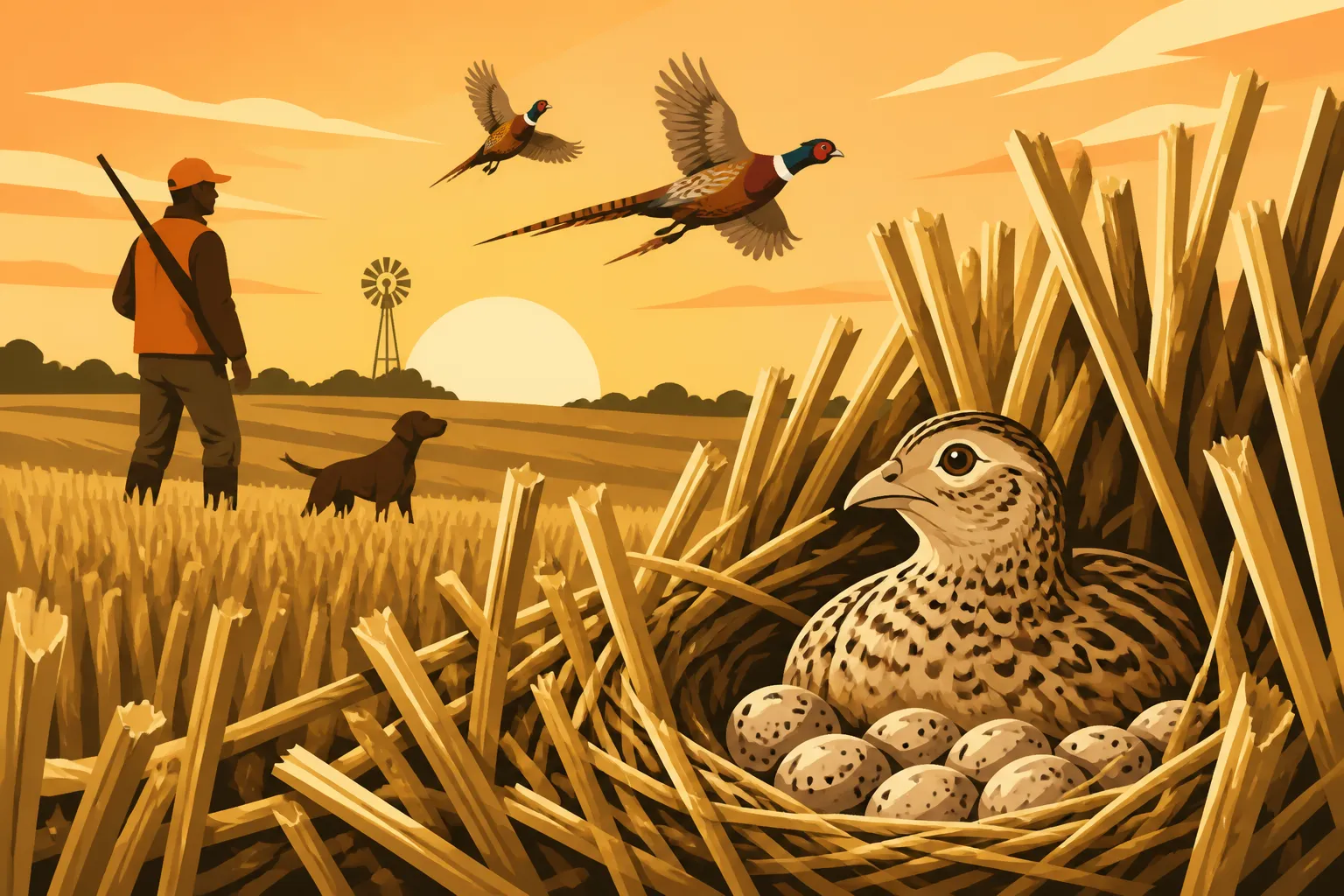
It's easy to look at a cut wheat field and dismiss it as "cleaned up." But for a hen pheasant, those remaining stalks are gold. First, they provide incredible visual obstruction, camouflaging her and her clutch from the sharp eyes of aerial predators like hawks and owls, and even ground predators like coyotes and skunks. Imagine trying to spot a camouflaged bird sitting tight among a sea of golden, straw-like stems – it's tough! This physical barrier offers a critical first line of defense during the vulnerable nesting period.
Beyond just hiding them, wheat stubble offers crucial thermal regulation. Kansas summers can be brutal, with scorching sun beating down. The stubble creates a microclimate at ground level, shading the eggs and young chicks from direct sun, preventing overheating. Conversely, those same stubble fields can offer some protection from chilling winds or sudden cold snaps, which are not uncommon during spring and early summer nesting seasons. It's an all-weather nursery, really, designed by happenstance. The dense, upright nature of the stubble also helps to hold moisture, which is vital for egg viability and provides a slightly cooler, more humid environment for the young poults.
The Lifecycle of a Kansas Wheat Field and Pheasant Needs
The timing of wheat harvest is incredibly fortuitous for pheasants. Wheat typically ripens and is harvested in late spring to early summer, often coinciding perfectly with the peak of the pheasant nesting season. Many hens will have already made their first nesting attempt in other available cover, like hay fields or CRP grass, but these initial attempts can often fail due to predation, farming operations, or weather. When those initial nests are lost, hens will often attempt a second, or even third, nest. And guess where they often turn? Freshly harvested wheat stubble.
The standing stubble provides immediate, dense cover right when these re-nesting hens desperately need it. Unlike other crops that might be planted later or harvested earlier, leaving a gap in suitable nesting sites, wheat offers a stable, reliable option during this critical window. Think about it: a cornfield is often still small or hasn't even emerged when pheasants are first looking to nest, and soybean fields are similar. Milo and corn stubble might offer some cover after their respective harvests, but that’s much later in the year, long after the primary nesting and re-nesting phases for pheasants. The unique timing of wheat cultivation and harvest, therefore, makes its stubble an indispensable part of the pheasant's annual reproductive cycle in agricultural landscapes. This is one of the key reasons why Kansas Ring-Necked Pheasants thrive in certain regions.
Challenges and Solutions for Stubble Management and Nesting Success
While wheat stubble is a boon for pheasants, the reality of modern farming means that this crucial habitat isn't always left undisturbed. Farmers face a complex array of economic, agronomic, and logistical pressures that influence how quickly and thoroughly stubble fields are managed after harvest. Understanding these challenges is the first step toward finding solutions that benefit both agriculture and wildlife.
The Pressures on Modern Farming and Pheasant Habitat
Let's be real: farmers aren't intentionally trying to reduce pheasant numbers. They're running a business, often on razor-thin margins, and every decision about their land is weighed against profitability, efficiency, and sustainability. After wheat harvest, some farmers might opt for immediate tillage to prepare the ground for a double-crop (like soybeans) or to control weeds and disease, believing it sets them up for a better yield in the next planting season. This early tillage, however necessary it might seem for the farmer, unfortunately spells doom for any pheasant nests or young broods still utilizing that stubble.
Changing farming practices also play a role. While no-till and minimum-till practices are gaining traction for their soil health benefits, which can sometimes leave more residue, there are still many conventional tillage operations. The economic pressures can be immense, forcing farmers to maximize every acre and minimize fallow periods. It's a tough balance between putting food on our tables and providing a safe nursery for wildlife, and it's a frustration that both farmers and conservationists grapple with daily. We've seen how Kansas Pheasant Population Cycles are intrinsically linked to these land use decisions.
Strategies for Enhancing Nesting in Wheat Stubble
Despite the challenges, there are viable strategies to encourage landowners to retain wheat stubble and enhance its value for nesting pheasants. One of the most impactful strategies is simply delaying tillage. If farmers can postpone their post-harvest field work for even a few extra weeks, it can significantly increase the chances of a late-season pheasant nest successfully hatching. This slight delay often has minimal impact on the next crop rotation, especially if there isn't an immediate double-crop planned.
Another approach gaining traction is strip-tilling or leaving buffer strips around field edges. Instead of tilling the entire field, farmers might only work the narrow strips where the next crop will be planted, leaving the majority of the stubble intact. These untouched margins or strips can become vital corridors and nesting pockets. Government programs often offer incentives for these kinds of conservation-friendly practices, like leaving cover crops or delaying haying, and similar incentives could be applied more broadly to wheat stubble retention. Tools like GoHunt can even help landowners visualize how these strips might connect to other habitats, maximizing their benefit. By carefully managing these areas, we can see improved Rainfall and Pheasant Numbers in subsequent years.
Hunting Implications: Connecting Stubble Fields to Bird Numbers
For us hunters, understanding the relationship between wheat stubble and pheasant nesting isn't just academic; it directly influences where we find birds and how successful our hunts might be. Those fields that looked so unassuming after harvest can turn into prime hunting grounds months later, all because they provided critical nesting habitat.
Reading the Landscape: How Stubble Predicts Bird Hotspots
It’s simple math, really: more successful nests mean more pheasants. If a particular area, or even specific fields, had excellent wheat stubble cover during the nesting season, and environmental factors like weather and predation were favorable, you can bet that the local pheasant population will be healthier. This translates directly to more birds on the ground when hunting season rolls around. When you're E-Scouting Kansas Farm Country From Home, pay close attention to historical wheat ground. If those fields were harvested and left with stubble through the summer, they're definitely worth a look.
Savvy hunters use this knowledge to their advantage. As you're scouting in late summer or early fall, look for areas where you know there was extensive wheat acreage. Then, use aerial imagery on platforms like GoHunt to see which fields appear to have substantial residue remaining. If you can identify fields that likely offered good nesting cover, you’re often identifying future pheasant hotspots. These areas will have a higher concentration of young birds, and the remaining stubble can still provide cover even after other crops like corn are harvested or beans are cut low. This is part of how you figure out Where Kansas Pheasants Concentrate.
Timing Your Hunt: Stubble's Influence on Early and Late Season
The influence of wheat stubble on pheasant numbers extends throughout the hunting season, but its role can shift depending on the time of year. In the early part of the Kansas Upland Bird Season Dates and Limits, when standing crops like corn and milo are still abundant, pheasants might disperse into those dense fields for cover and food. However, as those crops are harvested later in the fall, the wheat stubble fields, especially those with some weed growth or volunteer wheat, can become critical secondary cover.
Later in the season, when temperatures drop and winter conditions set in, the thermal cover provided by robust wheat stubble, particularly if snow is light, can still be valuable. Pheasants will often seek out areas that offer both food and protection from the elements. Fields that retained good stubble and have some waste grain, or which abut thicker cover like CRP grass or shelterbelts, become magnets for birds. This makes understanding the nuances of how to approach these fields vital for any hunter. Whether you're Working Pheasant Fields Without a Dog or even trying a small scale Firearm Season Drives on Small Timber, knowing where the birds should be due to nesting success is half the battle.
| Field Type | Primary Benefit for Pheasants | Nesting Suitability | Cover Value (Post-Harvest) | Food Source Value (Post-Harvest) |
|---|---|---|---|---|
| Wheat Stubble | Excellent nesting and early brood cover | High | High | Moderate (waste grain) |
| CRP Grassland | Primary nesting and winter cover | High | High | Low |
| Standing Corn | Winter cover, escape from predators | Low (too dense) | High | High (waste grain) |
| Harvested Corn | Winter food source, limited cover | Very Low | Low | High |
| Standing Milo | Winter cover, escape from predators | Low (too dense) | High | High (waste grain) |
| Harvested Milo | Winter food source, limited cover | Very Low | Low | High |
| Soybean Stubble | Limited cover, some food | Very Low | Very Low | Low |
| Hay Fields (Alfalfa) | Early nesting cover (often cut early) | Moderate | Low (after cutting) | Low |
The importance of wheat stubble to Kansas pheasants cannot be overstated. It's a testament to the resilience of these birds and their ability to adapt to our agricultural landscape. For conservationists, farmers, and hunters alike, recognizing the value of this often-overlooked habitat is key to ensuring healthy pheasant populations for generations to come. By understanding the role of stubble and advocating for practices that preserve it, we're not just supporting pheasants; we're embracing a vital part of the Kansas hunting heritage.
Disclaimer
This article is for general informational purposes only and does not constitute professional advice. Laws, prices and regulations vary by location and change over time. Consult a qualified professional for guidance on your specific situation.