Mule Deer Range in Western Kansas
Hunting mule deer in Kansas can feel like chasing a ghost if you're not intimately familiar with their specific haunts. While whitetails seem to be everywhere, their larger-eared cousins prefer a much more specialized, and often overlooked, corner of our state. This guide aims to pull back the curtain on where exactly these magnificent animals roam in Kansas, helping you pinpoint their elusive range and understand the unique challenges and rewards of pursuing them.
Understanding the Kansas Mule Deer Landscape
Kansas is overwhelmingly known for its incredible whitetail deer hunting, but for those willing to venture west, a different, equally captivating quarry awaits: the mule deer. These iconic western deer exist within a very specific geographic footprint here in Kansas, a footprint defined by geology, vegetation, and climate that stands in stark contrast to the timbered river bottoms and agricultural fields of the eastern half of the state. It's a landscape that demands a different approach, a different eye, and a different understanding of deer behavior.
The Distinctive Western Kansas Environment
When you drive west past, say, Salina, you start to notice a subtle shift, and by the time you hit counties like Logan, Wallace, or Sherman, you’re undeniably in a different world. This is the High Plains region of Kansas, characterized by vast expanses of shortgrass prairie, rugged breaks, and a semi-arid climate. The terrain here isn't flat in the monotonous way some might imagine; rather, it's often gently rolling, punctuated by dry washes, draws, and occasional sandstone outcroppings that provide crucial relief and cover. This open country, with its consistent wind and fewer tall timber blocks, shapes everything about how mule deer live. They've evolved to thrive in this environment, relying on their keen eyesight, incredible hearing, and ability to cover vast distances. The sheer scale of this landscape is often the first challenge for hunters accustomed to smaller, more defined whitetail woodlots, and it's essential to appreciate how different this truly is.
Historical Distribution and Current Strongholds
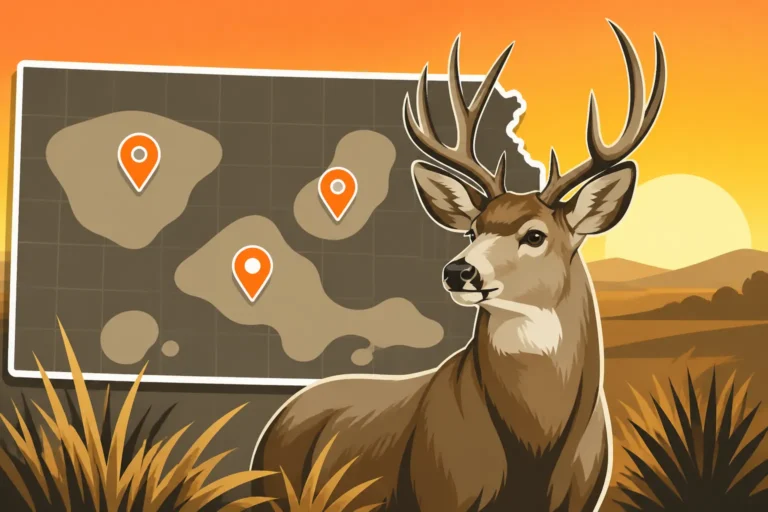
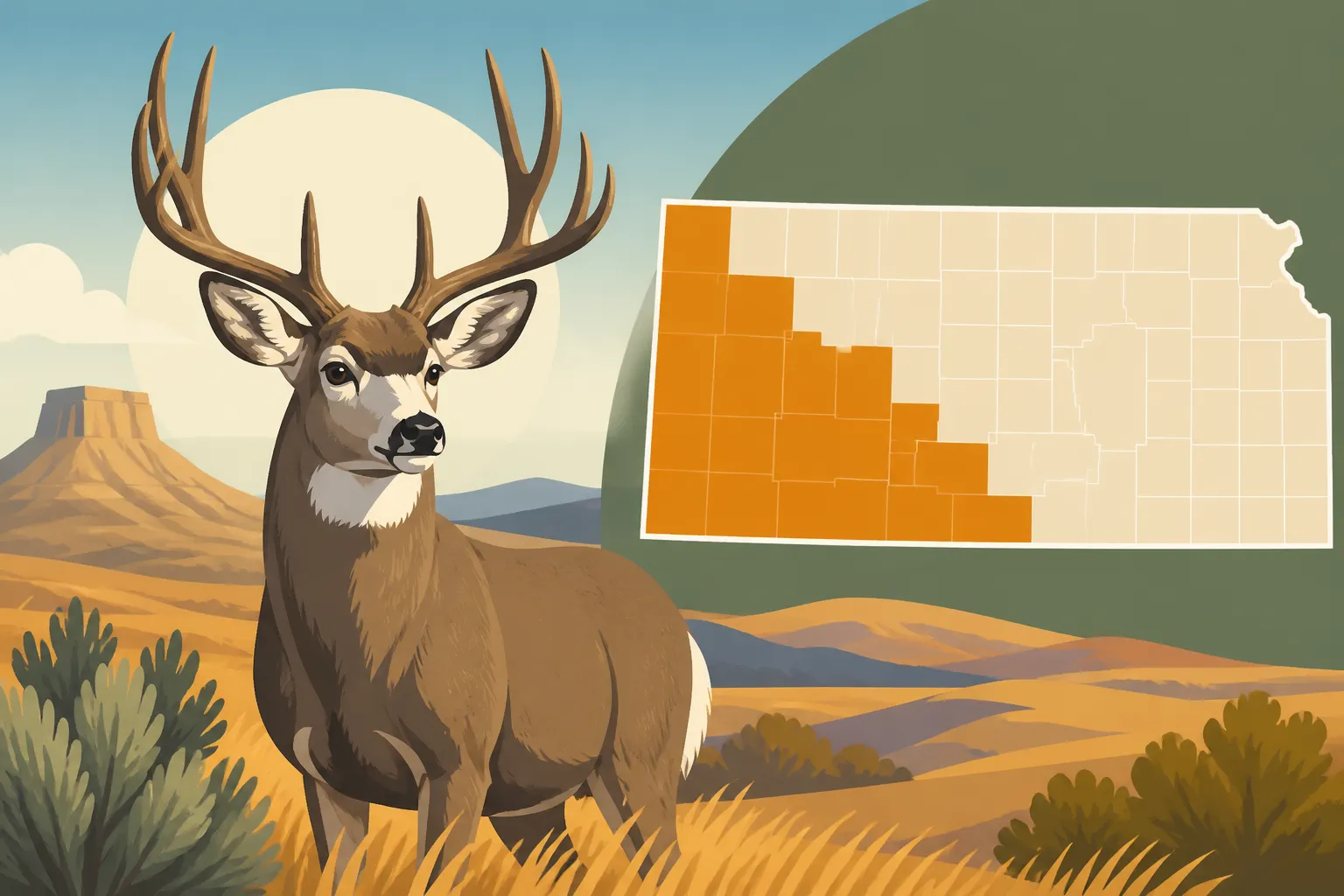
Historically, mule deer were more widespread in the western third of Kansas, with their populations naturally fluctuating alongside habitat changes and human activity. However, over time, as agricultural practices intensified and whitetail populations expanded eastward, mule deer became increasingly concentrated in the most suitable pockets. Today, their presence is primarily confined to the extreme western tier of counties. You’ll find the highest densities and best opportunities in units that hug the Colorado border, specifically Units 1, 2, 17, and 18. Areas like the Cimarron National Grassland Hunting in Morton County represent a significant public land stronghold for these deer, offering unique opportunities that are rare elsewhere in the state. While isolated pockets might exist further east, these westernmost units are where you truly need to focus your efforts if a Kansas mule deer is your goal. Understanding these strongholds is the first step in successful planning for a hunt here; it’s not a species you’ll stumble upon just anywhere in Kansas. For a more comprehensive overview of what each hunting area holds, take a look at our guide on Kansas Deer Units and What Each Holds.
Key Habitat Components for Kansas Mule Deer
Unlike whitetails that thrive in the dense timber and edge cover prevalent across much of Kansas, mule deer have a distinct preference for open, rugged country. Their survival hinges on specific habitat elements that provide food, water, and security cover in a landscape that, to the uninitiated, might appear barren. Understanding these components is paramount to locating and patterning Kansas mule deer.
Sagebrush, Grasslands, and Agricultural Interfaces
The cornerstone of mule deer habitat in western Kansas is the vast shortgrass prairie, often intermixed with areas of sagebrush. These native grasslands, particularly those that haven't been heavily tilled, provide a diverse array of forbs and grasses that mule deer browse throughout the year. Sagebrush itself is incredibly important, offering both sustenance and low-level cover. Deer will feed on sagebrush, especially during leaner periods. Beyond the native rangeland, mule deer in Kansas have also adapted to utilizing agricultural areas, though perhaps differently than whitetails. They often feed in stubble fields, particularly after wheat or milo harvests, finding waste grain or new growth. However, they rarely bed within these fields like whitetails might. Instead, they'll move from feeding areas in the agricultural fields to nearby rough country for bedding, creating distinct travel corridors. The interface where these traditional native habitats meet cultivated fields is often a high-activity zone for mule deer, especially during the low light hours of dawn and dusk. Our article on Milo and Corn Stubble Deer Patterns provides more insight into how deer use these crop fields.
Water Sources and Topographical Features
In the semi-arid environment of western Kansas, reliable water sources are critical, especially during the hotter months. Mule deer will gravitate towards any available water, be it stock tanks, windmills, playa lakes after rain, or even ephemeral pools in deep draws. Identifying these water points on a map is a powerful scouting tool. Beyond water, the topographical nuances of the land are equally vital. While not mountainous, western Kansas still offers significant "breaks" – areas where erosion has created steep-sided draws, canyons, and rugged rangeland. These breaks provide essential thermal cover, protection from the relentless prairie winds, and visual concealment that mule deer depend on. They will bed on leeward slopes, often just below the crest of a ridge, allowing them to survey their surroundings. Understanding how to read these subtle changes in elevation and contour is crucial for finding bedding areas and predicting travel routes. For more specific advice on locating water, check out Finding Water in Dry Western Kansas.
Cover Types and Bedding Preferences
Unlike the dense timber stands that whitetails call home, mule deer in western Kansas utilize more open, sparse cover. Their primary bedding areas are typically found in those aforementioned draws and breaks, often characterized by taller, thicker clumps of native grass, patches of yucca, or scattered brush like sand sage, sumac, or even a few scattered cedars. These spots offer just enough visual obstruction to make a deer feel secure, while still allowing them to maintain their advantage of elevated observation. They are masters of using minimal cover to disappear into the landscape. You'll rarely find mule deer seeking deep, dark woods for bedding; their strategy is often to find a slight depression or rise that offers a commanding view, then melt into the sparse vegetation. Their brownish-gray coats blend seamlessly with the dry grasses and exposed earth, making them incredibly difficult to spot, even in seemingly open country. This requires hunters to utilize optics extensively and to glass vast areas methodically.
Differentiating Mule Deer from Whitetails in Kansas
Kansas offers the unique opportunity to hunt both whitetail and mule deer, but success often hinges on being able to tell them apart, not just visually, but also by understanding their distinct behaviors and habitat preferences. It's not uncommon for hunters, especially those new to western Kansas, to mistakenly identify one for the other, which can impact hunting strategies and even permit regulations.
Physical Characteristics and Movement Patterns
Mule deer are generally larger-bodied than whitetails, with broader chests and more robust frames. Their most distinguishing feature, however, is their ears – noticeably larger, often described as "mule-like," giving them their name. Their antlers typically fork equally (bifurcate) rather than having tines stemming from a main beam, though this isn't always a foolproof identifier. The most consistent visual cue is their tail: mule deer have a relatively short, rope-like tail that is white with a black tip, and they typically hold it down when running. Whitetails, of course, flash that big, bushy white flag.
Beyond looks, their movement is a dead giveaway. When startled, a mule deer will often perform a distinctive "stot" or "pronk," bounding away with all four feet hitting the ground simultaneously. This is an efficient way to cover broken, uneven terrain while maintaining a good view of their surroundings. Whitetails, on the other hand, run with a more traditional fluid gait, often holding their tails high. Mule deer are also known to cover vast distances, moving between feeding and bedding areas that might be miles apart, in contrast to the often smaller, more defined home ranges of whitetails in timbered areas. This difference in movement dictates how you scout and hunt, often requiring more patience and long-range glassing for mule deer. If you want to dive deeper into the differences, take a look at Telling a Mule Deer From a Whitetail.
Habitat Overlap and Segregation
While mule deer prefer the open, rugged rangelands of western Kansas, there are areas where their range can overlap with whitetail deer, particularly in transition zones or where river and creek bottoms introduce more timber into traditionally open country. In these shared environments, you might find whitetails sticking closer to the denser cover along the watercourses, while mule deer utilize the adjacent, more open uplands and draws.
However, even with overlap, there's often a subtle but clear segregation in their micro-habitat use. A whitetail might bed in a cedar thicket right on the edge of a field, while a mule deer would prefer a slightly elevated position in the tall grass on a nearby ridge, observing the field from a distance. Understanding these subtle preferences is key. For example, if you're scouting a creek bottom with some sparse timber and surrounding open prairie, chances are the whitetails will be concentrated in the timber and dense brush, while the mule deer will be utilizing the draws and breaks leading to that timber, or feeding in the open ground away from it. This distinct habitat partitioning, even when ranges coincide, is an important concept detailed further in our article on Mule Deer and Whitetail Overlap. Knowing which species prefers which terrain feature will help you focus your efforts where they're most likely to pay off.
| Characteristic | Mule Deer | Whitetail Deer |
|---|---|---|
| Ears | Large, "mule-like" | Smaller, proportionate to head |
| Tail | Short, rope-like, white with black tip; held down when running | Long, broad, white underside; "flags" when running |
| Antlers | Typically bifurcated (forking equally) | Tines grow off a single main beam |
| Gait | Stotting/Pronking (all four feet land simultaneously) | Fluid, bounding run |
| Size | Generally larger and stockier | Typically more slender |
| Habitat | Open rangeland, breaks, sagebrush | Timbered areas, dense cover, agricultural edges |
| Behavior | Relies on sight/hearing, covers vast open ground | Relies on scent, uses dense cover for escape |
Effective Scouting and Hunting Strategies in Mule Deer Country
Hunting mule deer in western Kansas is an exercise in patience, meticulous observation, and often, long-distance tactics. Unlike still-hunting dense timber for whitetails, pursuing mule deer typically involves extensive glassing and strategic movements across vast, open landscapes. To succeed, you need to leverage modern tools and traditional hunting skills.
Utilizing E-Scouting Tools and Aerial Imagery
Before you ever set foot in the field, modern e-scouting tools can give you a significant advantage when locating potential mule deer habitat. Platforms like GoHunt provide incredibly detailed satellite imagery that allows you to analyze topography, identify changes in vegetation, pinpoint water sources, and discern bedding areas from feeding grounds. Look for those subtle draws, isolated clumps of brush, and breaks in the terrain that offer concealment in an otherwise open landscape. Zoom in and identify patterns of deer movement, especially trails leading from potential bedding cover to agricultural fields or watering holes.
You can also use these tools to mark potential access points, anticipate wind directions for specific spots, and even find areas that might offer a slight elevation advantage for glassing. For instance, you can use the contour lines to find benches or plateaus that aren't obvious from the road, but which might serve as ideal glassing vantage points or overlooked bedding areas. E-scouting can drastically reduce the amount of unproductive walking you do, allowing you to focus your precious time on the most promising areas. It's an invaluable first step in E-Scouting Kansas Farm Country From Home, even if you're targeting prairie muleys instead of farm country whitetails. GoHunt's detailed maps can even show property boundaries, helping you identify public access or plan where to seek permission on private ground, which is often a critical factor in western Kansas.
Ground Scouting and Identifying Key Areas
Once you've done your homework with e-scouting, it’s time to hit the ground. Ground scouting for mule deer is less about finding rubs and scrapes and more about identifying actual deer. Start by driving county roads and two-tracks, using good optics to glass large swaths of land, especially during early mornings and late evenings. Look for deer moving between feed and cover. Once you spot deer, or identify highly promising habitat, plan your approach on foot.
When you're walking, focus on finding actual deer sign – fresh tracks, droppings, and well-worn trails, particularly leading into and out of those draws, over ridges, and towards water. Pay close attention to subtle terrain features that offer bedding cover. Mule deer are experts at using minimal cover, so a slight depression with tall grass or a few scattered shrubs can be a prime spot. Don't be afraid to walk out to those locations you marked on your GoHunt app and visually confirm what the satellite imagery suggested. This hands-on confirmation is vital to understanding the scale and nuances of the actual terrain. You'll often find that the terrain features that offer the best cover or vantage points are also the ones deer utilize. For deeper insights into on-the-ground assessment, refer to our article on Reading Aerial Imagery for Bedding Cover.
Hunting Tactics for Open and Broken Terrain
Hunting mule deer in western Kansas is primarily a spot-and-stalk game. This means you’ll spend a significant amount of time glassing from elevated positions, often using powerful binoculars or a spotting scope. Set up in a location that gives you a commanding view of vast areas, looking for deer feeding, moving, or bedded down. Patience is key; it can take hours of methodical glassing to pick out a deer that blends perfectly into the landscape.
Once you spot a buck you want to pursue, the real challenge begins: planning your stalk. Mule deer, with their keen eyesight, are incredibly difficult to approach in open country. You'll need to use every piece of available cover – washes, dips, brush lines, or even just the undulations of the prairie – to keep yourself concealed. Pay extreme attention to the wind, as scent control is always important. Long-range shooting skills are often a necessity, as a 300-400 yard shot might be the only opportunity you get. If a stalk isn’t feasible, sometimes backing off and trying to anticipate their movement to another location, or waiting for them to move into a more stalkable position, is the best strategy. Remember, you're often hunting the wind and thermals on a much larger scale than in traditional timber hunts. This type of hunting is exhilarating, but demands precision, stealth, and a deep understanding of the landscape. It's vastly different from Rifle Hunting the Kansas December Firearm Season in more timbered regions.
Challenges and Conservation of Kansas Mule Deer
While the pursuit of a Kansas mule deer offers an incredible hunting experience, it's essential to understand the unique challenges facing these populations. Their future in the state is a complex issue, influenced by environmental factors, habitat changes, and management decisions. Hunters have a vital role to play in supporting conservation efforts.
Population Trends and Limiting Factors
Kansas mule deer populations have faced a decline over recent decades, a trend that mirrors patterns seen in other parts of their broader range. Several factors contribute to this. Habitat fragmentation and loss due to continued agricultural conversion can reduce the amount of suitable rangeland mule deer rely on. Drought conditions, which are common in western Kansas, can severely impact forage quality and water availability, leading to reduced fawn survival and overall herd health. Disease outbreaks, such as epizootic hemorrhagic disease (EHD) and Chronic Wasting Disease (CWD), also pose ongoing threats, though CWD testing and carcass rules are in place to monitor and mitigate their spread.
Furthermore, competition and hybridization with whitetail deer can also impact mule deer numbers. As whitetails expand their range westward, they can sometimes outcompete mule deer for resources or, in rarer cases, interbreed, which can dilute the genetic purity of mule deer herds. Understanding these challenges is crucial for hunters and conservationists alike, and explains why mule deer permits are often more restricted and harder to draw than whitetail tags in Kansas. Our article on the Mule Deer Decline in Kansas provides more detailed information on this concerning trend.
Management Efforts and Hunter's Role
The Kansas Department of Wildlife and Parks (KDWP) actively manages mule deer populations through a controlled permit system. Nonresident hunters typically apply for a combined whitetail/mule deer tag in the draw, and drawing a mule deer stamp is highly competitive, especially for non-residents. This restricted access reflects the KDWP's efforts to maintain healthy mule deer numbers and ensure sustainable hunting opportunities. The number of mule deer permits in specific units is carefully regulated to prevent overharvest and allow populations to recover or stabilize.
As hunters, our role extends beyond simply harvesting an animal. Ethical hunting practices, adhering strictly to regulations, and participating in harvest reporting are fundamental. Supporting conservation organizations and purchasing hunting licenses and stamps directly contributes to KDWP's management programs. Furthermore, being mindful of our impact on the habitat, respecting private landowners, and advocating for sustainable land use practices are all critical components of ensuring that mule deer continue to be a part of the Kansas hunting landscape for generations to come. Staying informed about current population estimates and management strategies, which can be found in our Mule Deer Numbers in Western Kansas article, is part of being a responsible hunter.
Disclaimer
The information provided in this guide is for general informational purposes only and is not intended as legal advice. Hunting regulations, seasons, and permit requirements in Kansas can change. Always consult the official Kansas Department of Wildlife and Parks (KDWP) regulations and publications before planning any hunting trip.