Kansas Deer Units and What Each Holds
Navigating the Kansas deer hunting landscape can feel like trying to solve a complex puzzle, especially when you're faced with an array of deer management units, each with its own unique characteristics, draw odds, and hunting experiences. It's easy to get overwhelmed trying to figure out where to focus your efforts, whether you're a seasoned resident hunter or planning a nonresident adventure. This comprehensive guide will break down the Kansas deer unit system, revealing what each region holds and helping you make informed decisions for your next hunt.
Understanding the Kansas Deer Unit System
Kansas is renowned for its incredible whitetail deer hunting, and a big part of that success comes from how the state manages its deer herd. The Kansas Department of Wildlife and Parks (KDWP) has carved the state into distinct deer management units, each with specific regulations, permit allocations, and habitat types. This system is designed to manage deer populations effectively, balance hunter opportunity with herd health, and address varying habitat conditions across the state. Without these units, managing such a diverse and productive deer population would be nearly impossible, leading to either overpopulation in some areas or underutilization in others.
Why Kansas Divides into Units: Management Goals
The primary goal behind dividing Kansas into deer units is precise wildlife management. Deer populations and their habitats aren't uniform across the state. Eastern Kansas, for instance, boasts dense timber and river bottoms, while the western part is characterized by vast open plains and significant agricultural operations. These different environments support different deer densities and dictate specific management strategies. By creating distinct units, the KDWP can set appropriate harvest quotas, manage antlerless permits to control population growth, and ensure sustainable hunting opportunities for both residents and nonresidents. It's a localized approach to a statewide resource, making sure that hunting pressure and biological capacity are in sync.
Furthermore, the unit system helps address local concerns, such as crop damage in agricultural areas or deer-vehicle collisions near urban centers. If a specific unit experiences an explosion in deer numbers, the KDWP can increase antlerless permit allocations for that unit to bring the population back to a healthier level. Conversely, if a unit's herd is struggling, permit numbers can be reduced to allow for recovery. This flexibility is crucial for adaptive management and ensures that the long-term health of the Kansas deer herd remains a top priority, which in turn benefits every hunter who steps foot in the field.
How Unit Boundaries Are Determined: Geographic and Administrative
Deer unit boundaries in Kansas are typically drawn along established geographic features or administrative lines to make them easily identifiable and enforceable. These often include major highways, county lines, and significant rivers. This pragmatic approach helps hunters know exactly which unit they are in and ensures that regulations are applied consistently. Imagine trying to hunt if the boundaries were arbitrary lines drawn across fields; it would be a nightmare for compliance and enforcement!
While these lines provide clarity, they also reflect genuine differences in habitat and land use. For example, a major river might separate a unit dominated by dense timber on one side from a unit characterized by more open agricultural fields on the other. These aren't just lines on a map; they often represent real ecological transitions that influence deer movement, bedding, and feeding patterns. Understanding these underlying ecological distinctions, rather than just memorizing numbers, is key to comprehending why a unit functions the way it does for deer hunting.
The Impact of Units on Nonresident Hunters: Draw and Availability
For nonresident hunters, the unit system takes on particular significance because it directly impacts their ability to obtain a coveted Kansas deer permit. Unlike residents, nonresidents must apply through a lottery draw system for a limited number of permits, and these permits are specific to a primary unit and an adjacent unit. This means you can't just buy a permit and hunt anywhere in the state; you have to choose your battleground carefully, sometimes years in advance, by accumulating Kansas Preference Points Explained. The draw system can be a source of frustration for many, as highly sought-after units with a reputation for producing monster bucks often require multiple preference points to draw.
This creates a strategic layer for nonresident planning. Hunters must research not only the general quality of a unit but also its historical draw odds and the number of preference points required. Tools like GoHunt can be incredibly valuable for analyzing these trends and deciding whether to apply for a trophy unit that might take several years to draw, or a more accessible unit that offers a higher chance of drawing in the current year. It's a balance between aspiration and practicality, and the unit system is at the heart of that decision-making process.
The Eastern Kansas Units: Timber, Rivers, and Agriculture
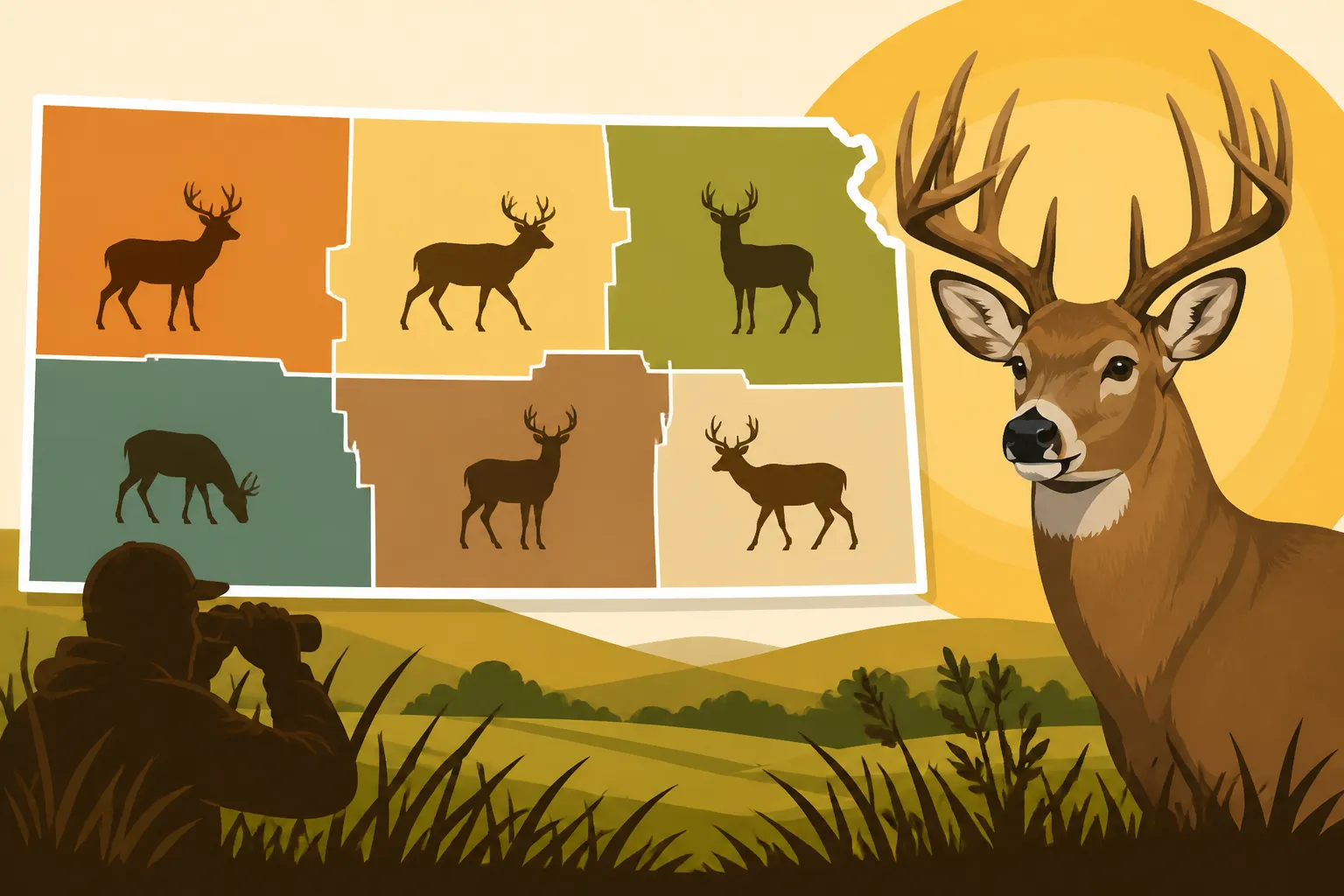
Eastern Kansas units (generally units 1-6, 10, 11, 14, 16, though it's always wise to check the most current KDWP Kansas Deer Unit Map) offer a different hunting experience compared to the central and western parts of the state. This region is characterized by a denser mosaic of timber, winding river bottoms, and fertile agricultural fields. Whitetail deer here often have more cover, both for bedding and travel, making them a bit more elusive but also offering classic timber hunting opportunities. The landscape provides excellent nutrition, contributing to the state's reputation for producing big-bodied, heavy-antlered bucks.
Characteristics of Eastern Habitat: River Bottoms and Hardwood Timber
The eastern third of Kansas is defined by its substantial timber corridors, particularly along major river systems like the Missouri, Kansas, and Neosho Rivers. These river bottoms are often choked with mature hardwoods, thick brush, and dense undergrowth, providing ideal bedding and security cover for whitetails. These areas act as natural highways for deer, connecting larger timber blocks and offering refuge from human disturbance. When Scouting Kansas River Bottoms and Creek Draws, you'll often find concentrated deer sign, rubs, and scrapes, especially during the pre-rut and rut. These areas are magnets for mature bucks moving between bedding and feeding areas.
Beyond the river systems, you'll find significant pockets of timber interspersed with agricultural fields. Whether it's small woodlots, cedar thickets, or larger blocks of oak and hickory, these timbered areas are vital. Deer use them not just for cover but also for food, browsing on acorns, tender shoots, and various forbs. The combination of dense cover and abundant food sources makes these eastern units prime whitetail habitat. Understanding how deer utilize these timber-to-ag edges, particularly Hunting Inside Corners of Crop Fields, is crucial for successful stand placement.
Hunting Pressure and Public Land in the East: Pockets of Opportunity
Due to the higher population density in eastern Kansas, especially around urban centers like Kansas City and Topeka, hunting pressure can be more intense than in other parts of the state. Many residents hunt close to home, and public lands in this region, such as State Wildlife Areas and Corps of Engineers land around reservoirs, often see significant activity, particularly on weekends and during the firearm season. This pressure can push deer into thicker cover or onto private land.
However, opportunities still abound. The Kansas Walk-In Hunting Access Explained (WIHA) program is a lifesaver for public land hunters, and eastern units often have good numbers of these tracts. While some WIHA parcels might be smaller or see more pressure, diligent scouting and a willingness to walk can lead to overlooked pockets. Focusing on weekdays, hunting during less popular seasons (like early archery or late antlerless), and utilizing mobile hunting tactics can help mitigate pressure. Always check the iWIHA system for daily capacity limits on certain tracts to avoid overcrowding.
Whitetail Behavior in Eastern Ag and Timber Mix: Patterns and Cover
Whitetail behavior in eastern Kansas is largely influenced by the close proximity of dense cover and rich food sources. Deer here often establish distinct patterns, moving from thick timber bedding areas to adjacent crop fields (corn, soybeans, alfalfa) to feed, especially during low light hours. Understanding these movement corridors and pinch points is essential for setting up ambush locations. During the rut, bucks will actively cruise these timber edges and creek bottoms, scent-checking for does and responding to calls.
The abundance of natural browse and acorn crops means deer aren't always solely reliant on agricultural fields, especially in years of good mast production. Hunters need to be flexible and observe what food sources are most attractive at a given time. Heavy cover, particularly cedar thickets or dense riparian zones, provides sanctuary. Bucks often feel secure in these areas, even when close to human activity. Learning to read the subtle nuances of deer sign in these diverse environments is a skill that pays dividends in eastern Kansas.
Central Kansas Units: Transitional Zones and Bigger Fields
Moving into central Kansas, the landscape begins to transition. While still rich in agriculture, the extensive timber blocks seen in the east give way to more fragmented timber stands, shelterbelts, and larger, more expansive crop fields. This region offers a unique blend of hunting challenges and opportunities, appealing to hunters who enjoy a mix of timber hunting and open-country tactics. You'll find a good balance of whitetails, and in the westernmost parts of central Kansas, a hint of mule deer influence starts to appear.
The Blend of Agriculture and River Corridors: Deer Movement
Central Kansas units (including 7, 8, 9, 13, 15) are characterized by vast stretches of prime agricultural land — think massive corn and milo fields, soybean plots, and winter wheat. These fields are often broken up by major river systems like the Smoky Hill, Republican, and Arkansas, as well as their tributaries. These river corridors, though perhaps not as continuously timbered as those in the east, still provide crucial cover and travel routes for deer. They act as "green arteries" through a sea of agriculture, funneling deer movement and offering shelter.
Deer in these units often utilize standing crops for bedding and security cover, making them disappear into a sea of green or brown. Understanding Milo and Corn Stubble Deer Patterns is critical here. When crops are harvested, deer become more exposed and often shift to remaining timber, creek bottoms, or CRP grass for cover. This dynamic creates seasonal shifts in deer behavior that hunters must adapt to. Bucks will use these natural funnels and isolated timber points as primary travel routes, especially when searching for does during the rut.
Public Access Opportunities in Central Kansas: WIHA and Reservoirs
Public land in central Kansas is generally more widespread and often less pressured than in the eastern units, though this can vary greatly by specific location and unit. The Kansas Walk-In Hunting Access Explained program is particularly robust in central Kansas, providing hunters with access to thousands of acres of private land for various seasons. Many of these WIHA tracts are agricultural fields, CRP grasslands, or small timber blocks, offering diverse hunting scenarios. Smart use of the Kansas Online Hunting Atlas is crucial for identifying these parcels and planning your approach.
Additionally, central Kansas is home to several large reservoirs managed by the Corps of Engineers and the KDWP. These lakes, such as Cheney, Wilson, and Waconda (Glen Elder), are surrounded by significant tracts of public land. While often known for waterfowl hunting, these areas also hold excellent deer populations, particularly in the timbered draws and creek drainages leading to the main bodies of water. These reservoir lands can be goldmines for public land deer hunting, though they may require more extensive scouting to locate deer patterns away from common access points.
Adapting Strategies for Mixed Cover and Openness: Stand Placement
Hunting in central Kansas demands a flexible approach, as you'll encounter a mix of timber and very open country. Treestands remain effective in the timbered river bottoms, creek draws, and shelterbelts, offering an elevated advantage for patterning deer movement. However, for the more open areas, ground blinds become incredibly valuable. Brushing in a ground blind strategically along a field edge, near a hedgerow, or at the end of a timber point can provide excellent concealment in a landscape where natural cover is at a premium. Ground Blinds in Open Country can give you the edge you need when deer are using the vast fields.
Mobile hunting strategies, such as using a saddle or lightweight climbing stand, are also highly effective here. The ability to quickly adapt your setup based on changing deer patterns or wind direction is invaluable in a transitional landscape. Whether you're targeting a creek crossing, a Shelterbelt Ends and Buck Travel route, or a specific pinch point in a field, being able to move quietly and efficiently will greatly increase your odds of success in these varied central Kansas units.
Western Kansas Units: Plains, Mule Deer, and Limited Cover
The western units of Kansas (primarily 2, 3, 17, 18, and the western portions of 1) present a dramatic shift in landscape and hunting style. Here, the rolling Flint Hills give way to the high plains, characterized by vast expanses of shortgrass prairie, immense crop fields, and significantly less natural timber. This is big, open country, demanding different tactics and offering a unique hunting experience. While whitetails are still present, this is also the primary domain of the Kansas mule deer.
Dominant Landscape: Crop Fields, Grasslands, and Sparse Timber
Western Kansas is defined by its sweeping vistas. Large-scale agriculture dominates, with immense wheat, corn, and milo fields stretching for miles. Interspersed are vast tracts of native grasslands, sometimes grazed by cattle, and CRP (Conservation Reserve Program) fields that offer crucial bedding and fawning cover. True timber is sparse, generally confined to isolated shelterbelts, narrow creek beds, or around farmsteads. This means deer, particularly whitetails, often rely heavily on these limited cover types or standing/harvested crops for concealment.
The sheer scale of the landscape can be daunting, but it also creates predictable patterns. Deer will travel long distances between the sparse bedding cover and prime feeding areas. Spot and stalk hunting becomes a much more viable and often necessary tactic in this environment. Understanding how deer utilize the subtle contours of the land, the isolated pockets of brush, and the vast fields is key to success. A good mapping application like onX Hunt is indispensable here, helping you identify these key features in an otherwise monotonous landscape.
The Appeal of Mule Deer in Western Kansas: Permit Specifics
For many nonresident hunters, western Kansas units hold a special allure: the chance to hunt mule deer. Kansas is one of the few states where you can draw an either-sex, either-species permit (meaning you can harvest a whitetail or a mule deer buck, provided you also have a separate Mule Deer Stamp). However, the Kansas Mule Deer Stamp Draw is extremely difficult to obtain, making mule deer a truly trophy animal in the state. Mule deer are concentrated primarily in the far western and northwestern units, particularly Units 1 and 2, with smaller populations spilling into adjacent units.
Mule deer require different hunting tactics than whitetails. Their natural tendency to "mulie bounce" when spooked and their preference for open, broken terrain make spot and stalk the go-to method. Identifying good mule deer habitat involves looking for rougher terrain, breaks in the prairie, and areas with good visibility where you can glass for long periods. If you're fortunate enough to draw a mule deer stamp, dedicate significant time to scouting and glassing vast areas; patience and good optics are your best friends. Knowing the Mule Deer Range in Western Kansas is critical before you even consider applying.
Challenges and Rewards of Hunting Open Country Whitetails: Spot and Stalk
Even if mule deer aren't your primary target, hunting whitetails in western Kansas offers its own set of challenges and rewards. Whitetails here are incredibly resilient and adapted to the open environment. They use the available cover masterfully, often bedding in CRP fields, plum thickets, or the most subtle folds in the terrain. You'll often find them utilizing shelterbelts, which are rows of trees planted to protect fields from wind, as both bedding and travel corridors. Shelterbelts and Timber Points in Kansas Farm Country are often hotspots for activity.
Spot and stalk hunting for whitetails is a thrilling experience in western Kansas. It requires keen eyesight, patience, and a deep understanding of wind and terrain. Glassing from elevated positions, identifying deer at long distances, and then planning a methodical stalk using every bit of available cover is the essence of hunting here. The reward is often a truly wild, hard-earned buck from an unforgettable landscape. Don't underestimate these western whitetails; they are survivors and can be just as challenging as their timber-dwelling cousins.
Special Considerations for Specific Units
While general characteristics apply to eastern, central, and western regions, certain Kansas units have unique attributes or challenges that warrant special attention. These units might be exceptional for a particular species, have unique draw dynamics, or present specific hunting scenarios due to their geography or proximity to population centers. Understanding these nuances can give you an edge in your planning.
Unit 1: The Far Northwest and Mule Deer Focus
Unit 1, located in the extreme northwest corner of Kansas, holds a special place for many hunters. It's often considered the heart of Kansas's limited mule deer range. For those dedicated to pursuing a Kansas mule deer, this unit is frequently on their radar, despite the incredibly tough draw odds for the mule deer stamp. The landscape here is classic high plains – vast wheat fields, CRP, and some of the state's most rugged breaks and canyon country, particularly along the Arikaree River drainage.
Whitetail deer are also present and can be found in the sparse timber along creeks and in larger shelterbelts. Hunting in Unit 1 demands extensive glassing, long-distance spotting, and patient stalking. Public access through the WIHA program is often available, but these tracts can be isolated and require significant travel between them. Hunters targeting Unit 1 should be prepared for cold, windy conditions and a truly wild, open-country experience. The challenge of the draw and the vastness of the landscape make a Unit 1 mule deer a truly prized trophy.
Unit 19: Urban Edge and Antlerless Opportunities
Unit 19, encompassing the area around Wichita, offers a completely different dynamic. While it might not be the first unit that comes to mind for trophy whitetails, it presents unique opportunities, especially for antlerless deer. Due to its proximity to a major metropolitan area, deer populations in Unit 19 can be quite high in certain pockets, leading to increased crop damage and deer-vehicle collisions. This often results in more generous antlerless permit allocations and extended seasons.
Hunting in Unit 19 requires careful attention to local regulations, particularly regarding firearm discharge and safety zones near residential areas. Archery hunting is a popular and often effective method here, as it allows hunters to pursue deer in areas where firearm use might be restricted. For hunters looking to fill the freezer, especially during the later Kansas Extended Antlerless Seasons by Unit or Kansas Antlerless-Only Permit Cost opportunities, Unit 19 can be an excellent choice. It’s a prime example of how units adapt to local population and land-use dynamics, offering a different kind of challenge and reward than the more remote units.
Navigating the Draw and Permit Allocation by Unit
For many, especially nonresidents, understanding the permit draw process is just as important as knowing the habitat characteristics of each unit. Kansas uses a preference point system for its nonresident deer draw, which can be both a blessing and a curse. It allows dedicated hunters to eventually draw a permit in their desired unit, but it also means patience is a virtue, and some units will require a significant wait.
Understanding the Nonresident Draw Process: Preference Points
Nonresident deer permits in Kansas are allocated through a lottery system, with applicants applying for a specific primary unit and an adjacent unit as a backup. The key to this system is the preference point. Each year you apply for a permit and are unsuccessful, you accrue one preference point. These points accumulate, and the more points you have, the better your chances of drawing in a future year. It essentially moves you up in line. This system rewards persistence but can be frustrating if you're hoping to hunt a top-tier unit immediately.
It's crucial to understand that preference points apply to the whitetail permit draw. The separate Kansas Mule Deer Stamp Draw does not utilize preference points, making it a true lottery each year, regardless of how many points you've accumulated. This distinction is vital for those with specific species goals. The KDWP website publishes information on draw odds, and external services like GoHunt also provide detailed analyses, helping you determine how many points are typically needed for your chosen unit.
Permit Quotas and Draw Odds: How Units Differ
Each Kansas deer unit has a specific quota of nonresident permits allocated to it annually. These quotas are determined by the KDWP based on deer population objectives, habitat conditions, and harvest data. Units with historically high deer densities or a reputation for producing large bucks often have fierce competition and significantly lower draw odds. Conversely, units with fewer deer or less renowned trophy potential might have higher quotas or less demand, making them easier to draw with fewer preference points.
The draw odds can fluctuate from year to year based on applicant numbers and quota adjustments, so staying updated on the latest data is important. This is where researching How Many Points to Draw a Kansas Unit becomes critical. A unit that might have required 3 points last year could require 4 this year, or vice versa, depending on the applicant pool. Strategic planning, sometimes involving sacrificing a year of hunting to build points for a dream unit, is a common approach for nonresidents.
Applying Strategically: Primary and Adjacent Choices
When you apply for a Kansas nonresident deer permit, you'll choose a primary unit and an adjacent unit. Your primary unit is your first choice. If you don't draw in your primary unit, your application is then considered for your adjacent unit. This gives you a backup option, but it also highlights the importance of thoughtful planning. You want your adjacent unit to be a viable hunting option that you'd be happy to hunt, not just a throwaway choice.
Many hunters will pick a highly desired, tough-to-draw unit as their primary choice, knowing they might not draw but wanting to accumulate a point. Then, they'll pick an adjacent unit that has historically easier draw odds, hoping to still get a permit to hunt that year. This strategy allows you to build points while still getting to experience Kansas hunting. Ensure you understand the Kansas Deer Application Window in April and all requirements to avoid missing out on this critical process.
| Unit Type | General Characteristics | Whitetail Potential | Mule Deer Potential | Public Land Access (WIHA) | Draw Difficulty (Nonresident) | Typical Hunting Style |
|---|---|---|---|---|---|---|
| Eastern | Dense timber, river bottoms, mixed agriculture | Excellent | None | Moderate (pockets) | Moderate to High | Treestand, Still Hunt |
| Central | Large ag fields, fragmented timber, major river corridors | Very Good | Low | Good | Moderate | Treestand, Ground Blind |
| **** | Spot & Stalk | |||||
| Western | Vast plains, immense crop fields, sparse timber, grasslands | Good | Excellent (Unit 1,2) | Good (scattered) | High (for Mule Deer Stamp) | Spot & Stalk, Ground Blind |
Choosing Your Unit: Factors Beyond Just Antlers
Selecting the right Kansas deer unit involves more than just looking at trophy potential. While everyone dreams of a wall-hanger, considering your personal hunting style, preferred level of solitude, and logistical capabilities will ensure a more enjoyable and successful hunt. It’s about matching the unit to your hunting preferences, not just chasing a number.
Evaluating Public Land Availability and Pressure: Walk-In Opportunities
If you're a public land hunter, the amount and type of public access in a unit will heavily influence your decision. Some units, particularly in central and western Kansas, boast extensive WIHA acreage. This means more ground to explore, potentially spreading out pressure. However, even within a unit, WIHA tracts can vary significantly in size, habitat, and how much pressure they receive. Some might be small, brushy draws that get pounded, while others are large, open CRP fields that require more effort to hunt effectively. You need to identify Best Kansas Units for Public Land Deer based on your research.
It's also crucial to consider pressure. Even if a unit has ample public land, if it's heavily hunted, deer behavior will change. They'll become more nocturnal, utilize thicker cover, and avoid common access points. Hunting Pressure Patterns on Kansas Public Land are real, and recognizing them is key. Are you willing to walk further, hunt weekdays, or adapt your tactics to find unpressured pockets? Your answer to these questions should guide your unit selection.
Considering Habitat and Hunting Style Preferences: Treestand vs. Spot and Stalk
Your preferred hunting style should play a major role in unit selection. If you love sitting in a treestand overlooking a timbered creek bottom, then eastern Kansas units with their abundant hardwoods and river systems will likely be a better fit. Here, you can focus on reading rub lines, scrape areas, and natural funnels. The dense cover allows for more traditional ambush hunting.
Conversely, if you thrive on covering miles with binoculars, glassing vast landscapes, and executing strategic stalks, then the open country of western Kansas is your arena. Here, your success will hinge on your ability to spot deer at long distances and navigate the terrain quietly. Understanding this fundamental difference between Kansas Whitetail Hunting Tactics Through the Rut and western hunting techniques is paramount. Don't force a square peg into a round hole; choose a unit that complements how you love to hunt.
Logistics and Travel: Accessibility from Home
Finally, consider the practicalities of your hunt. How far are you willing to travel? What kind of lodging options are available in or near your chosen unit? Are there local services like deer processors or taxidermists? While a specific unit might have exceptional potential, if it's a 10-hour drive and lacks basic amenities, it might detract from the overall experience. This is especially true if you are traveling from out of state.
Research the local towns, road conditions, and how easy it will be to access your chosen hunting grounds. Some public land tracts might be deep within remote areas, requiring a four-wheel-drive vehicle, while others are easily accessible from paved roads. Plan your Access Routes That Do Not Bump Deer well in advance. Consider the total cost, including fuel, lodging, and food, in addition to your permit fees. A well-planned, logistically sound hunt in a slightly "lesser" unit can often be more enjoyable and successful than a poorly planned trip to a "premier" unit.
Tools and Resources for In-Depth Unit Research
Once you've grasped the basics of the Kansas deer unit system, it's time to dive into the nitty-gritty of research. Modern technology and readily available data have revolutionized how hunters can scout and plan their hunts, even from afar. Leveraging these tools will give you a significant advantage in making an informed unit choice and preparing for your hunt.
Using Digital Mapping Apps for Scouting: onX Hunt Example
Digital mapping applications like onX Hunt have become indispensable for serious deer hunters. These apps overlay property lines, public/private land ownership, and topographic features onto satellite imagery, allowing you to "e-scout" a unit from the comfort of your home. You can identify potential bedding areas (thick timber, CRP fields, cedar thickets), likely travel corridors (creek bottoms, fence lines, shelterbelts), and key feeding areas (crop fields).
With onX Hunt, you can mark potential stand locations, measure distances, and even identify access points. This is particularly valuable when Scouting Kansas Walk-In Tracts Before the Opener or exploring large tracts of public land. You can identify pinch points, isolated cover, and water sources that might concentrate deer. While digital scouting can't replace boots on the ground, it significantly streamlines the process, allowing you to focus your physical scouting efforts on the most promising areas.
Consulting KDWP Resources: Harvest Reports and Regulations
The Kansas Department of Wildlife and Parks (KDWP) website is a treasure trove of information that every hunter should consult. They publish annual harvest reports that break down deer harvest data by unit, including buck and antlerless harvest numbers, hunter success rates, and even age data for harvested bucks. This information can give you a clear picture of deer densities and trophy potential within each unit. While past data doesn't guarantee future results, it provides a strong baseline.
Additionally, the KDWP provides detailed hunting regulations, season dates, and information on specific unit rules. Always download and review the most current regulations summary for your chosen unit and season. Regulations can change, and ignorance is no excuse. Pay close attention to specifics like Kansas Deer Tagging Requirements, Kansas Electronic Deer Check-In, and Kansas Deer Harvest Reporting Deadline.
Leveraging Community Insights and Draw Data: GoHunt, Forums
Beyond official sources and mapping apps, online hunting communities and specialized platforms can offer valuable insights. Websites like GoHunt specialize in analyzing draw odds and harvest data across multiple states, including Kansas. They can provide detailed breakdowns of preference point requirements, success rates, and even predictions for future draws, which is invaluable for nonresident hunters planning their strategy for Kansas Deer Permits and the Nonresident Draw.
Hunting forums and social media groups dedicated to Kansas hunting can also provide anecdotal information and firsthand experiences. While it's important to sift through opinions and focus on verifiable information, these platforms can offer glimpses into specific unit conditions, hunting pressure, and general sentiment that might not be found elsewhere. Just remember to take everything with a grain of salt and cross-reference information with official sources.
Disclaimer
This article is for general informational purposes only and does not constitute professional advice. Laws, prices and regulations vary by location and change over time. Consult a qualified professional for guidance on your specific situation.