The Kansas Mule Deer Stamp Draw
The dream of spotting a trophy mule deer across the vast plains of Western Kansas is something many hunters share, but the reality of drawing one of those coveted mule deer stamps can feel like winning the lottery – because, in many ways, it is. It's a process shrouded in a bit of mystery and often a lot of frustration for those trying to understand how to even get a chance. This comprehensive guide is here to unravel the intricacies of the Kansas Mule Deer Stamp draw, explaining exactly how it works, what it costs, and how you can position yourself for that once-in-a-lifetime opportunity.
Understanding Kansas Mule Deer Permits
Hunting mule deer in Kansas is a truly unique experience, quite different from the whitetail pursuits most people associate with the state. These majestic animals primarily inhabit the western third of Kansas, offering a different landscape and a distinct challenge.
The Uniqueness of Kansas Mule Deer Hunting
When most folks think about deer hunting in Kansas, their minds immediately jump to big whitetail bucks skulking in creek bottoms and timber patches, often near endless corn and soybean fields. And don't get me wrong, Kansas is absolutely renowned for its incredible whitetail hunting opportunities. But out west, where the prairie stretches vast and the timber thins out dramatically, a different kind of deer thrives: the mule deer. These are often the true prizes for nonresident hunters, representing a bucket-list animal in a state not typically associated with them on a large scale.
The limited range of mule deer in Kansas makes their hunting even more exclusive and sought after. They are primarily found in the westernmost units, areas characterized by rugged breaks, CRP fields, and wide-open rangeland. This habitat is a stark contrast to the dense river bottom cover of Eastern Kansas, and it demands a completely different hunting approach. Successfully drawing a mule deer stamp means earning the right to pursue a trophy that combines the challenge of wide-open country with the thrill of chasing a genuinely majestic species. For many, the idea of bagging a big muley in a state known for its whitetails is the ultimate hunting brag.
The Primary Whitetail Permit Connection
One of the most crucial things to understand about the Kansas mule deer hunt is that it’s not a standalone permit. You don't just apply for a "mule deer tag." Instead, the mule deer stamp functions as an add-on to your regular nonresident Kansas whitetail permit. This is a common point of confusion that trips up a lot of hopeful applicants. What this means is that if you're a nonresident, your first step is always to apply for the annual Kansas Deer Permits and the Nonresident Draw. When you fill out that application, you'll be given the option to indicate your interest in the mule deer stamp draw.
If you are successful in drawing the mule deer stamp, your standard whitetail deer permit then converts into an "either-species/either-sex" deer permit. This is where the magic happens! With this special conversion, you can then legally harvest either a whitetail deer or a mule deer, and it can be either a buck or a doe, within the specific unit or units you were drawn for, provided they are mule deer units. However, if you apply for the stamp and don't draw it, your permit simply remains a standard whitetail permit for the unit you applied in. So, you're not out a deer hunt altogether, just the chance at a muley. It's a high-stakes gamble with a solid consolation prize if you play your cards right.
Navigating the Mule Deer Stamp Draw Process
The process for applying for the Kansas Mule Deer Stamp is integrated directly into the general nonresident deer permit application. Understanding the timing and specific unit requirements is paramount to even having a chance.
Application Requirements and Timing
Getting your foot in the door for a Kansas mule deer stamp begins long before hunting season opens. As a nonresident, your primary goal first and foremost is to secure a Kansas whitetail permit. The application period for these permits typically opens in early April and usually runs through late April or early May, so marking your calendar for the Kansas Deer Application Window in April is absolutely essential. If you miss this window, you miss your shot at a mule deer stamp for that year.
When you go through the application process on the Kansas Department of Wildlife and Parks (KDWP) website, you’ll be asked to choose your primary and adjacent hunting units. This is also where you’ll indicate your weapon choice – whether you plan on Bowhunting Kansas Deer From September to December, using a muzzleloader, or waiting for the rifle season. Crucially, during this same application, you’ll see the option to add the mule deer stamp. You simply check a box expressing your interest in the draw. If you don't check that box, you're automatically out of the running for a mule deer. The system is designed to bundle this special opportunity within the broader whitetail draw, making it convenient but also very competitive. Make sure all your information is accurate, because any errors could invalidate your application. Many hunters use platforms like GoHunt to help track application deadlines and manage their draw odds expectations, even though for mule deer, it's mostly a lottery.
Identifying Mule Deer Units
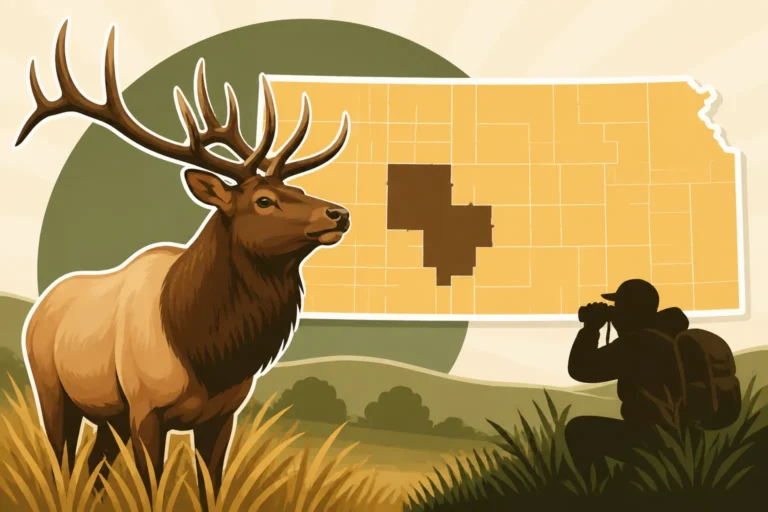
Not all Kansas deer units hold mule deer. In fact, their population is quite localized. To even be eligible for the mule deer stamp draw, you must select a primary or adjacent hunting unit that falls within the designated mule deer range. Currently, the primary units where mule deer are consistently found and where the stamp is valid are Units 1, 2, 3, 17, and 18. These are all located in the western reaches of the state. If you apply for a whitetail permit in, say, Unit 10 in Eastern Kansas and opt for the mule deer stamp, your mule deer stamp application will be immediately invalid because mule deer simply don't inhabit that area.
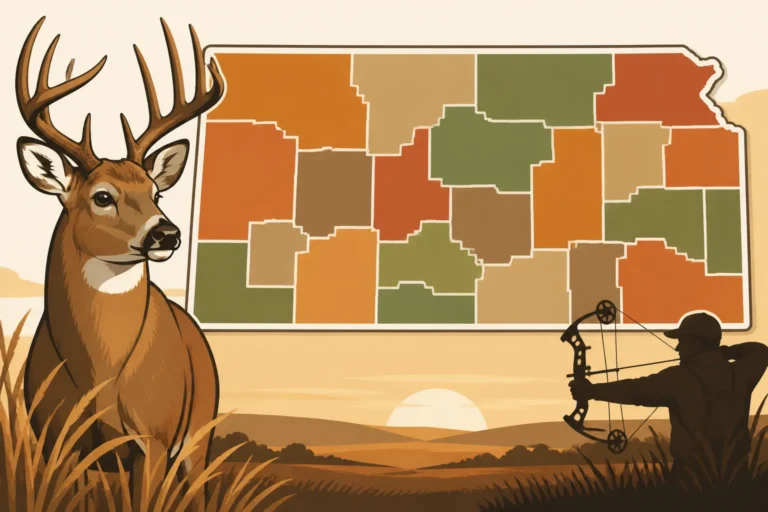
It's critical to review the Kansas Deer Unit Map provided by KDWP to ensure your chosen units align with the mule deer zones. While you might have a favorite whitetail unit elsewhere, if mule deer are your target, your application must center around one of these western units. The density of mule deer varies even within these units, with some areas having more consistent populations than others. Understanding the specific characteristics of Which Kansas Units Allow a Mule Deer Stamp is a key part of your application strategy. Choosing a unit that aligns with where you genuinely want to hunt mule deer, or where you believe your draw odds might be marginally better, is part of the strategic guesswork involved.
Deconstructing Draw Odds and Preference Points
This is where the Kansas Mule Deer Stamp draw truly deviates from many other Western state draw systems, and it's often the source of significant confusion and frustration for hopeful hunters.
Why Preference Points Don't Apply to Mule Deer Stamps
Let's get this straight right off the bat because it's arguably the most important distinction: preference points do not factor into the Kansas Mule Deer Stamp draw. This can be a bitter pill to swallow for hunters who have been faithfully building preference points for years in other states, or even for the Kansas whitetail draw, only to learn they count for absolutely nothing here when it comes to mule deer. The Kansas Department of Wildlife and Parks explicitly states that the mule deer stamp draw is a pure lottery. Every applicant, whether it's their first time applying or their tenth, has the same exact statistical chance of drawing a mule deer stamp in a given year.
This means that all those points you might have accumulated to increase your odds for a desirable whitetail unit in Kansas are completely irrelevant for the mule deer add-on. For many, this feels counterintuitive and can be incredibly frustrating. You put in the time, you pay for the points, and then for this one specific opportunity, it's all down to the luck of the draw. This system is a core reason why drawing a mule deer stamp can be such a long-term endeavor for some and a surprising first-year success for others. It truly levels the playing field in a way that’s both equitable and, for long-term applicants, a bit disheartening.
Understanding the True Lottery System
Since preference points are out of the equation, the Kansas Mule Deer Stamp draw is, by definition, a true lottery. Imagine every eligible applicant's name being thrown into a hat, and a limited number of names being pulled out. That's essentially what happens. Each year, KDWP issues a very small, fixed number of mule deer stamps. These numbers are often in the low hundreds, making the demand far outweigh the supply. For instance, in a recent year, only about 250 nonresident mule deer stamps were available across all eligible units. When you consider the thousands of nonresident hunters who apply for Kansas deer permits annually, and a good portion of them checking that mule deer stamp box, you quickly realize just how steep the odds are.
The random nature means there's no secret formula, no specific unit to apply in that guarantees a better chance, and no way to "game the system" by accumulating points. Your best strategy, and indeed, your only strategy, is consistent annual application. Every year you apply, you get another ticket in that lottery. While the odds are long, someone does win every year. It’s a testament to perseverance and the enduring allure of these magnificent animals that hunters continue to apply year after year, hoping their number will finally come up. Platforms like GoHunt provide data on draw statistics, but even they will confirm the essentially random nature of this particular stamp draw.
Costs and Fees Associated with the Mule Deer Stamp
Applying for a Kansas Mule Deer Stamp isn't just about luck; it also comes with a financial commitment. Understanding the full cost breakdown is important before you commit to the application.
The Stamp Fee and Associated Costs
Let's break down the financial picture. First and foremost, you'll need a nonresident hunting license, which is a prerequisite for any nonresident hunting in Kansas. This fee is typically around $127.50. On top of that, you apply for your nonresident either-sex whitetail permit, which is a substantial fee, usually in the neighborhood of $442.50. Then comes the specific fee for the Mule Deer Stamp itself. This stamp typically costs an additional $102.50. Finally, there's a non-refundable application fee, usually around $27.50, that you pay when you submit your deer permit application, regardless of whether you draw.
So, when you add it all up, to even apply for a mule deer stamp, you're looking at an upfront cost well over $600 (approximately $127.50 + $442.50 + $102.50 + $27.50 = $700.00). It’s a significant investment just for the chance to draw. The good news is that if you are unsuccessful in the mule deer stamp draw, the $102.50 stamp fee itself is refunded to you. However, you will not get back the nonresident hunting license fee or the application fee, as these are processed regardless of your draw success. This table gives you a clear overview:
| Item | Approximate Cost (Nonresident) | Notes |
|---|---|---|
| Nonresident Hunting License | $127.50 | Required for all nonresident hunting. Non-refundable. |
| Nonresident Either-Sex Whitetail Permit | $442.50 | Your base deer permit. Refunded if you don't draw any deer permit. |
| Mule Deer Stamp | $102.50 | Refunded if you are not drawn for the stamp. |
| Application Fee | $27.50 | Non-refundable processing fee for your application. |
| Total Upfront Cost for Application | ~$700.00 | If drawn for stamp, total is ~$700. If not drawn for stamp but drawn for whitetail, total is ~$597.50 |
Financial Implications of Not Drawing
As mentioned, one of the more hunter-friendly aspects of the Kansas mule deer stamp draw is that the specific stamp fee of $102.50 is refunded if your application for the mule deer stamp is unsuccessful. This mitigates some of the financial sting of the lottery system. However, it's crucial to remember that you'll still be out the initial nonresident hunting license fee and the application fee. These funds are used to cover administrative costs and support statewide wildlife conservation efforts.
The more significant financial implication lies in what happens with your primary whitetail permit. If you applied for both the whitetail permit and the mule deer stamp, and you don't draw the mule deer stamp, your permit reverts to a standard whitetail-only tag for the unit you were drawn in. This means you still have a valuable deer hunting opportunity in Kansas. You've paid for that whitetail permit, and it's yours to use. So, while the sting of missing out on a muley is real, you still have a fantastic chance to hunt a Kansas whitetail, which, let's be honest, is an incredible hunt in its own right. Managing your expectations and understanding these financial nuances can help you approach the draw with a clear head, knowing that even without the mule deer stamp, a great hunt could still be on the horizon.
Strategic Application for the Mule Deer Stamp
Even with the lottery system in place, there are still ways to be smart about your application, along with having a clear plan for what to do if the mule deer stamp eludes you this year.
Maximizing Your Chances (Within the Lottery System)
Since the Kansas Mule Deer Stamp draw is a pure lottery, the concept of "maximizing your chances" isn't about points or complex strategies to outsmart the system. It boils down to one fundamental principle: consistent annual application. Every year that you submit an application with the mule deer stamp option checked, you are effectively buying a ticket in that year's lottery. The more tickets you have over time, the more opportunities you've given yourself. It's a game of patience and persistence.
While specific unit data for mule deer draw odds isn't typically as granular or influential as it is for whitetail permits, some hunters theorize that certain eligible mule deer units might see slightly less demand. However, with such a limited number of stamps issued across the board, any perceived advantage is likely negligible. The best approach is to apply for a unit where you also wouldn't mind hunting whitetails, should you not draw the mule deer stamp. This way, if you are successful in drawing your whitetail permit but not the stamp, you still have a desirable hunt in a unit you've researched. Using resources like the Kansas Online Hunting Atlas can help you scout potential units from home, identifying areas that hold both species. While a group application doesn't increase individual odds, some hunting groups coordinate their applications to ensure at least one member might draw the coveted stamp, making the trip a combined effort.
What to Do If You Don't Draw a Mule Deer Stamp
Let's face it, the odds are always against you in a draw with such limited tags. If you apply for the Kansas Mule Deer Stamp and the draw results come out showing you weren't successful, it can certainly be a letdown. However, remember the silver lining: if you were drawn for your whitetail permit in your chosen unit, you still have a fantastic hunting trip ahead of you. This is where your backup plan comes into play. You'll now be focused entirely on Kansas Whitetail Hunting Tactics Through the Rut (if you applied for November) or other seasonal strategies.
Consider this an opportunity to fully immerse yourself in the excellent whitetail hunting Kansas offers. You might even find yourself hunting in areas where Mule Deer and Whitetail Overlap. While you can't legally harvest a mule deer without the stamp, you might still get to observe them and appreciate their beauty in their natural habitat. Many hunters embrace the whitetail hunt with renewed focus, knowing they still have a chance at a true Kansas giant. Use online mapping tools and even go back and review your initial E-Scouting Kansas Farm Country From Home to identify prime whitetail bedding areas, food sources, and travel corridors within your unit. The key is to shift your mindset and make the most of the permit you did draw.
Post-Draw: Hunting with a Mule Deer Stamp
Congratulations! If you're one of the lucky few who drew a Kansas Mule Deer Stamp, the real planning begins. It's time to understand the nuances of your special permit and prepare for a challenging but incredibly rewarding hunt.
Validating Your Permit and Regulations
Drawing a mule deer stamp is fantastic, but it's only the first step. Once the draw results are announced, and you see that coveted "Mule Deer Stamp" next to your name, your standard whitetail permit officially converts to an "either-species, either-sex" deer permit. This means you can now legally harvest either a whitetail or a mule deer, buck or doe, within your drawn unit. However, with this expanded opportunity comes the critical responsibility of thoroughly understanding the regulations. Kansas deer regulations can be quite specific, especially concerning antlerless harvests in certain units or seasons.
Always consult the most current Kansas hunting regulations summary. Pay close attention to any unit-specific rules that might apply to your area, as well as general tagging and reporting requirements. For instance, promptly completing your Kansas Electronic Deer Check-In after a successful harvest is mandatory. You’ll also need to be aware of the Kansas Deer Harvest Reporting Deadline. There might not be specific mule deer antler restrictions in Kansas, but confirming this is always a good practice. Knowing these rules inside and out ensures a legal, ethical, and stress-free hunt, allowing you to fully appreciate the unique opportunity you've been granted.
Hunting Tactics for Western Kansas Mule Deer
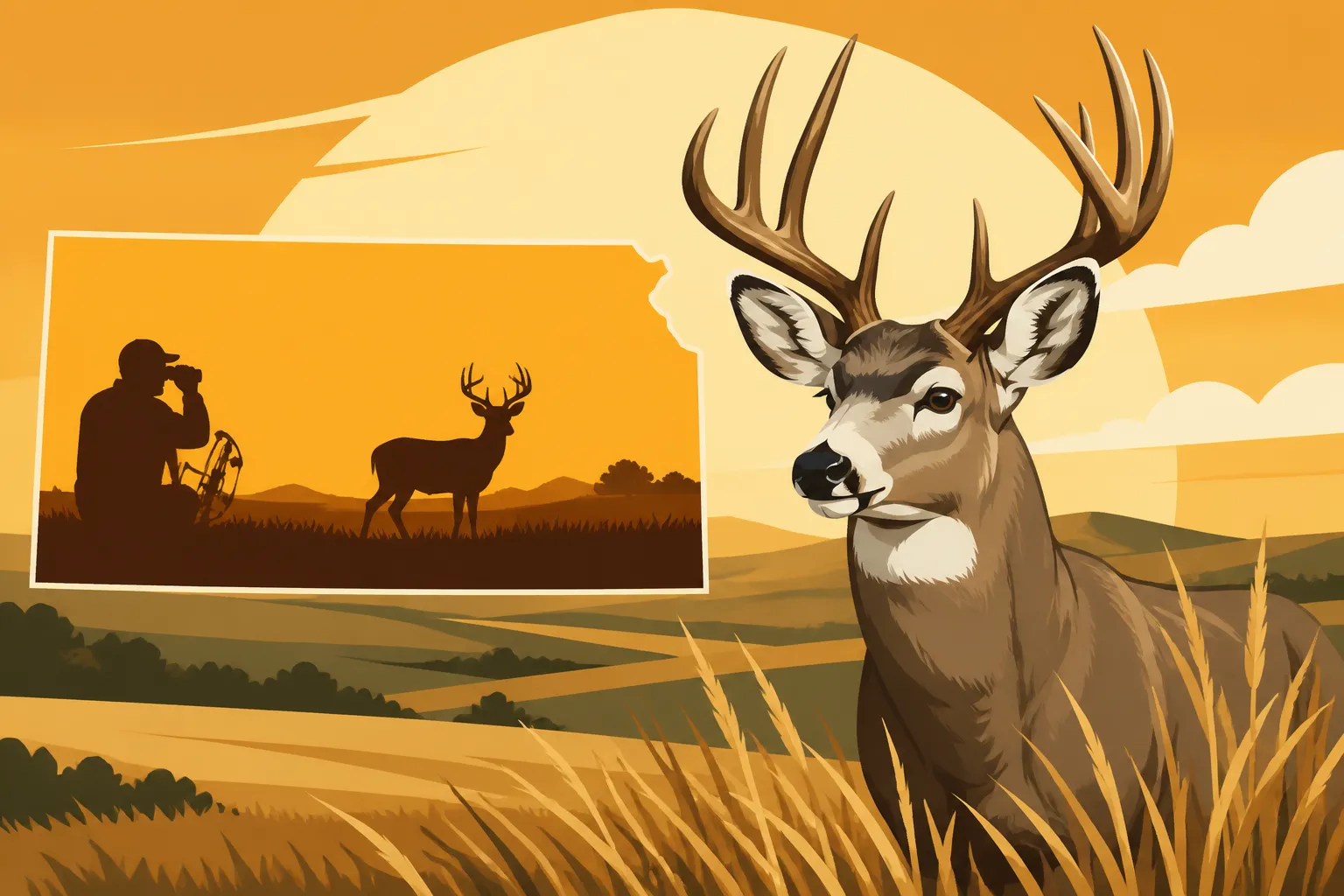
Hunting mule deer in Western Kansas is a vastly different ballgame than chasing whitetails in the eastern timber. The habitat dictates a completely different set of strategies. Forget treestands overlooking pinch points; think vast landscapes, endless glassing, and strategic spot-and-stalk approaches. The Mule Deer in Western Kansas tend to inhabit areas with less timber, often preferring CRP fields, sparse creek beds, and broken badlands topography for cover. This open country means your eyes are your most valuable tool.
Long-range glassing is king out here. A good pair of binoculars (10×42 or 12×50) and a spotting scope on a sturdy tripod are indispensable. You'll spend hours perched on high points, meticulously picking apart distant hillsides and draws, looking for the tell-tale wide racks or distinctive bounding gait of a mule deer. Once a buck is spotted, the real work begins: planning a successful stalk. This involves using the terrain to your advantage, keeping the wind in your face, and moving slowly and deliberately to close the distance without being seen. Consider spending time researching the specific unit you drew, utilizing aerial maps to identify potential bedding areas, water sources, and travel routes. Don't underestimate the physical demands; a successful mule deer hunt often involves a lot of walking, climbing, and strategic crawling, all to get within shooting range of one of these magnificent prairie ghosts.
Disclaimer
Please note: Hunting regulations and fees in Kansas are subject to change. Always consult the official Kansas Department of Wildlife and Parks (KDWP) website or their current hunting regulations summary for the most up-to-date and accurate information before planning any hunt or submitting an application.