Bowhunting Kansas Deer From September to December
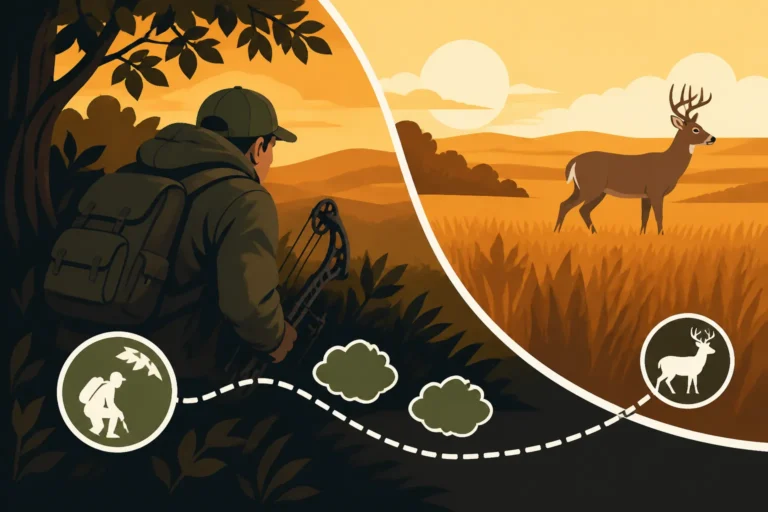
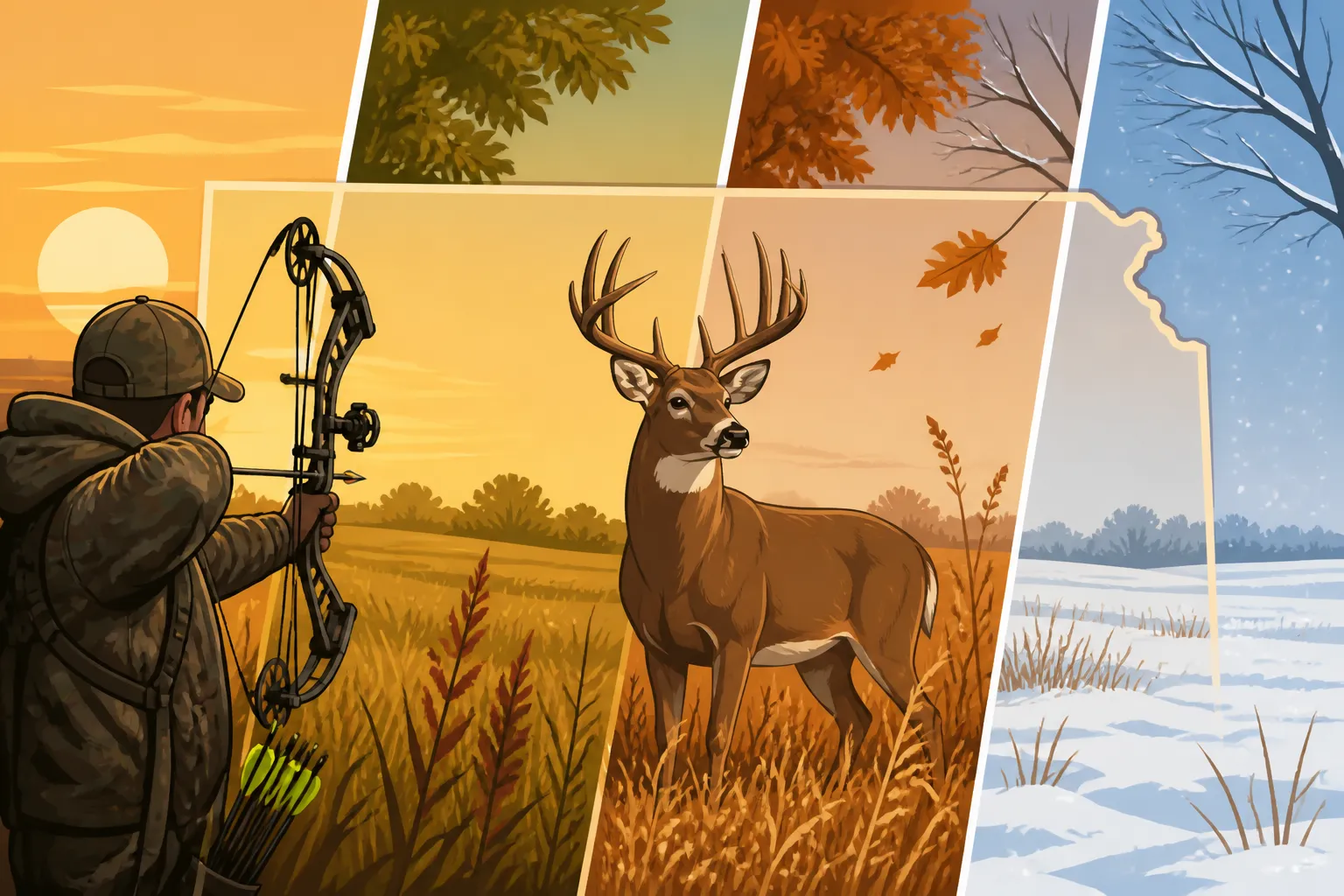
Bowhunting for deer in Kansas from September through December can feel like chasing a different animal every month. The frustration of trying to pattern bucks when temperatures soar in early fall, only to have them vanish with the first cold snap, is real. Then comes the craziness of the rut, followed by the silent, challenging hunts of late season. This comprehensive guide will walk you through the distinct strategies you need to master each phase of the Kansas bowhunting season, helping you adapt and find success from velvet bucks to winter survival mode.
The Early Bow Season – September Strategies
September in Kansas can be a real curveball for bowhunters. You've been dreaming of crisp fall mornings, but often, you're greeted with oppressive heat and deer still clinging to their summer routines. This initial period requires a delicate touch, focusing on predictability and minimizing disturbance before the hunting pressure ramps up.
Adapting to Warm Weather and Summer Patterns
When that September sun beats down, deer behavior is heavily dictated by heat and humidity. Forget about those midday sits; the action is almost exclusively concentrated during the first and last hours of daylight. Your primary focus should be on finding predictable patterns around water and specific, high-quality food sources. Think about those hidden ponds or creeks nestled within timber blocks, especially in the more open farm country. Deer need to drink frequently in warm weather, and these water sources become natural magnets. Bucks, still often in their bachelor groups, will follow established trails to and from these spots.
You might also find success by keying in on early-ripening soft mast, like persimmons or wild plums, if you're lucky enough to have them on your hunting ground. Acorns are a huge draw when they start falling, but early September might be a bit premature for a heavy drop in most areas. Instead, look for isolated soybean fields that are still green or small alfalfa plots that offer palatable forage. The deer aren't moving far or fast in the heat, so finding their preferred bedding cover close to these food and water sources is critical. A gentle breeze is your best friend for scent control, but beware of swirling thermals near creek bottoms or elevation changes, especially as the air cools slightly in the evening. Remember, less is more in September. Overhunting a spot, or pushing deer in the heat, can blow them out quickly, and they'll remember that disturbance. For a deeper dive into capitalizing on these resources, check out our guide on Early-Season Bowhunting Over Water.
E-Scouting and Boots-on-the-Ground Recon for Early Season
Before you even step foot in the woods, thorough e-scouting can give you a massive advantage for September bowhunting. Utilizing tools like GoHunt's mapping features can help you pinpoint potential water sources, dense bedding cover, and isolated food plots that might not be obvious from the road. Look for subtle changes in topography, even slight depressions or drainage ditches that provide thermal cover or funnel deer movement. Identify those hidden corners of CRP fields that offer security, or small timber stands tucked away from main roads. The key is finding areas that offer both sanctuary and sustenance for deer during the warmer months.
Once you have some promising spots marked on your digital map, it’s time for some cautious boots-on-the-ground recon. Since deer are relatively unpressured at this time, you can often find fresh sign like tracks leading to water, or early rubs and scrapes that indicate bucks are beginning to mark their territory, even if their antlers are still in velvet. Set up trail cameras on key travel corridors, especially those leading to water or secluded food sources. Pay attention to what time deer are frequenting these areas. Early season trail camera intel is invaluable; it tells you who's around, when they're moving, and helps confirm the patterns you're trying to exploit. Just be mindful of your scent and disturbance when checking cameras. Go in, get out, and leave as little trace as possible. To truly master the art of finding those hidden gems from your couch, explore our guide on E-Scouting Kansas Farm Country From Home.
October's Shifting Landscape – Pre-Rut Excitement
October is a month of transition in Kansas, often bringing cooler temperatures and significant changes in deer behavior as the landscape shifts from summer abundance to the pre-rut frenzy. This is when bucks start feeling their oats, becoming more visible and less predictable, making it an incredibly exciting but challenging time to be in a treestand.
Understanding Early October Movement and Food Sources
The first half of October usually sees a significant shift in food availability. Farmers across Kansas are busy harvesting corn and milo, dramatically altering the deer's preferred dining options and bedding areas. What was once a secure, food-filled sanctuary quickly becomes an open, noisy landscape. Deer are forced to relocate, often seeking out remaining standing crops, newly cut fields with dropped grain, or transitioning to natural food sources like acorns. If you have access to areas with oak timber, especially white oaks that drop early and have higher palatability, these can become absolute hotspots.
During this period, deer are still largely focused on feeding, but bucks are starting to increase their daylight movement. They’re recovering from the summer, putting on fat for the upcoming rut, and beginning to establish their dominance hierarchies. Don't be surprised to see them still in loosely knit bachelor groups, though these groups will soon dissolve. Focus your efforts on the fringes of remaining cover near food, paying close attention to travel corridors between bedding areas and these changing food sources. Look for fresh tracks and droppings to confirm where deer are transitioning. Understanding these shifts is paramount, as deer will move quickly to new reliable food as old ones disappear. Our article on Milo and Corn Stubble Deer Patterns provides excellent insight into these agricultural shifts.
The Build-Up to the Rut – Cruisers and Scrapes
As October progresses, especially into the latter half, you'll start to feel the undeniable pull of the pre-rut. Bucks, now completely shed of their velvet, are becoming increasingly antsy. Their testosterone levels are rising, and they’re starting to cover more ground, not just for food, but in search of the first receptive does. This is when you'll see a dramatic increase in rub lines and active scrapes. Rubs tell you a buck's travel route and attitude, while scrapes are communication hubs, telling you who's in the area.
Targeting these scrape lines, particularly those primary scrapes under low-hanging branches in high-traffic areas, can be incredibly productive. Bucks will routinely check them, sometimes in daylight. However, don't just sit directly on a scrape; often, the buck will approach from downwind. Instead, set up 20-30 yards downwind of the scrape, watching both the scrape itself and the likely approach trails. Scent control becomes even more critical now as bucks are constantly scent-checking and are highly alert. While aggressive calling and rattling might be a bit premature, subtle grunts and doe bleats can sometimes pique a cruising buck's curiosity. This is the time to be in your stand during midday, as mature bucks often use these quieter hours to move between bedding and scrape checking. For more detailed strategies on capitalizing on this exciting phase, refer to Hunting the Kansas Pre-Rut in Late October.
The Peak of the Rut – November's Best Opportunities
November in Kansas is what most bowhunters dream about. The whitetail rut is in full swing, turning once-reclusive bucks into reckless, lovesick individuals. This is the window where patience, persistence, and aggressive tactics can pay off with the buck of a lifetime.
Locating High-Traffic Rut Funnels
During the peak of the rut, bucks are constantly on the move, chasing does. They're less concerned with food and more with finding receptive females, which means they'll use the path of least resistance. This is where identifying and hunting terrain funnels becomes absolutely critical. In Kansas's often flat, agricultural landscape, these funnels might not be obvious elevation changes but rather subtle features that channel deer movement. Think about narrow strips of timber connecting larger woodlots, creek bottoms, drainages, or even fence lines and shelterbelts that dictate how deer travel from one block of cover to another.
Analyze your hunting maps, especially using detailed aerial imagery from resources like GoHunt. Look for pinch points where cover narrows, forcing deer into a smaller area. River bottoms and creek draws, with their dense vegetation and natural barriers, often create fantastic funnels. Bucks will cruise these corridors, scent-checking for does. Setting up a stand or ground blind on the downwind side of such a funnel, especially where multiple trails converge, can put you in a prime position. Don't forget about inside corners of crop fields or odd-shaped timber points that act as natural travel routes. The more you can narrow down where a buck has to travel, the better your odds. Our guide on Terrain Funnels That Work Without Hills offers even more strategies for pinpointing these crucial spots.
Aggressive Tactics – Calling, Rattling, and Decoys
The peak rut is the one time of year when aggressive calling and rattling can be incredibly effective in Kansas. Bucks are feeling dominant and competitive, and they’re often willing to investigate sounds that suggest another buck is in their territory or with a hot doe. Start with a series of grunt calls, varying the intensity, to mimic a buck cruising or trailing a doe. If you see a buck at a distance that's not responding, or if you're in an area you know holds mature deer, consider a rattling sequence. Start soft, then escalate to more aggressive clashing and grinding, pausing for 30-60 seconds, then repeating. Always be ready with an arrow nocked, as bucks often come in fast and from unexpected directions, trying to circle downwind.
Decoys can also be highly effective during the rut, especially in open Kansas country where deer can see them from a distance. A standing buck decoy, often paired with a feeding or bedded doe, can draw an approaching buck into bow range. Position your decoy so that the approaching buck will naturally circle downwind, bringing him past your stand for a shot. Be mindful of wind direction; you want the deer to approach facing into the wind, but you need your scent to be blowing away from their expected approach. Always be cautious when using decoys on public land, and always use hunter orange when walking in or out with one. To hone your calling and decoying skills, delve into Rattling and Grunting During the Kansas Rut and Decoying a Kansas Whitetail Buck.
Late Season Challenges – December's Chill
As November fades into December, a new chapter begins for Kansas bowhunters. The rut is largely over, and the temperatures plummet. This transition brings a completely different set of challenges and opportunities, requiring a shift in strategy from rut-driven aggression to a focus on survival and warmth.
Targeting Prime Food Sources
With the breeding frenzy behind them, bucks are now exhausted and focused almost entirely on recouping lost energy. This means food, and specifically, high-calorie food, becomes the absolute number one draw. In December, standing crops are gold. While many fields have been harvested, those scattered patches of standing corn or soybeans become critical sanctuaries, offering both high-energy food and thermal cover. Deer will bed in these fields and feed throughout the day, especially during brutal cold fronts. Winter wheat fields are another late-season magnet, providing green forage when most other plants are dormant.
Beyond agricultural fields, look for any remaining food plots that offer brassicas, turnips, or late-season beans. Deer will concentrate heavily on these areas, often moving very little between their bedding and feeding sites. Your scouting should revolve around identifying these prime late-season food sources and then locating the heaviest, warmest cover nearby. Creek bottoms with dense cedar thickets, large patches of CRP grass, or even river bottom timber with thick underbrush will serve as crucial bedding areas, particularly on cold, windy days. Expect deer to be moving primarily during the last hour or two of daylight, making evening hunts over food sources your best bet. Our comprehensive guide on Late-Season Food Source Hunting provides even more detailed tactics for this challenging period.
Cold Weather Hunting Comfort and Strategy
December bowhunting in Kansas isn't for the faint of heart; it demands serious attention to staying warm and comfortable. Without proper layering and gear, your hunt will be short-lived and miserable, leading to missed opportunities. Start with a good base layer that wicks moisture away from your skin, followed by insulating mid-layers, and a windproof, waterproof outer shell. Investing in quality hand warmers, insulated boots, and a warm hat or hood is non-negotiable. Consider a heated vest or muff for those truly bitter days. Remember, shivering not only makes you uncomfortable but also makes it nearly impossible to hold a steady bow shot.
Your strategy needs to adapt to the cold as well. Deer will often move later in the morning and earlier in the afternoon, maximizing their time during the warmest parts of the day. They'll also move slower and be more focused on feeding. This means afternoon sits over a known food source are often more productive than frosty morning hunts. Pay extra attention to scent control, as cold air can carry scent further, but also realize that extremely cold temperatures can sometimes suppress an animal's sense of smell slightly. If snow is on the ground, use it to your advantage for tracking fresh sign and confirming deer movement patterns. Just remember that snow can also make blood trailing more challenging if you don't find a deer quickly. For tips on battling the elements, our article on Staying Warm on a December Sit is an essential read.
Essential Gear and Setup for Kansas Bowhunters
Bowhunting success in Kansas isn't just about understanding deer behavior; it's also about having the right tools for the job and knowing how to use them effectively. From your treestand setup to your optics, every piece of gear plays a crucial role in your overall strategy and comfort.
Mobile Hunting vs. Set Stands on Public and Private Land
Deciding between a mobile hunting setup and pre-set stands is a critical choice for Kansas bowhunters, especially when considering the varied terrain and access types. On public lands, particularly those Walk-In Hunting Access (WIHA) tracts or state wildlife areas, mobile hunting with a saddle or lightweight climbing treestand and sticks can be a game-changer. This approach allows you to scout quickly, adapt to changing deer patterns, and move your setup to where the deer are right now, rather than being confined to a static spot that might have gone cold. Mobility is key on pressured public ground, enabling you to get into hard-to-reach areas that others avoid. The one-stick method, combined with a tree saddle, offers unparalleled stealth and flexibility, allowing you to get high in the canopy without much bulk.
For private land, or less pressured public areas, strategically placed, pre-set ladder stands or hang-on stands can be incredibly effective, especially if you have long-term intelligence on deer movement. These stands can be brushed in more thoroughly, left in place for extended periods, and allow for quicker, quieter access to your hunting spot. However, even with set stands, having a mobile option as a backup for specific conditions or new intel is always smart. Remember to always check regulations for portable stand rules on public land, as some areas have restrictions on leaving stands overnight or using screw-in steps. For those interested in ultimate adaptability, explore Mobile Hunting With a Saddle in Kansas and understand the Portable Stand Rules on Kansas Public Land.
Scent Control, Optics, and Trail Camera Usage
In bowhunting, scent control isn't just a suggestion; it's a non-negotiable part of your strategy. Deer possess an incredible sense of smell, and a single whiff of human odor can ruin an entire hunt. Start with a thorough scent-elimination wash of all your hunting clothes, store them in airtight containers, and dress in the field to minimize contamination. Utilize scent-eliminating sprays, especially on your boots and outer layers, and always play the wind. While some swear by ozone-generating devices, remember that playing the wind is your ultimate scent control. For more on this, delve into Ozone and Scent Control Claims.
Quality optics are another cornerstone of success, particularly in the vast, open landscapes of Kansas. A good pair of binoculars (10×42 or 12×50 are popular choices) will help you spot distant deer, analyze their behavior, and identify potential targets without unnecessary movement. A reliable rangefinder is absolutely essential for bowhunting; knowing your exact yardage is critical for ethical shot placement. Practice with your rangefinder frequently so it becomes second nature. To improve your ranging skills, check out Rangefinding in Flat Country.
Trail cameras, used responsibly, are invaluable scouting tools. They provide 24/7 intel on deer movement patterns, helping you identify active scrapes, preferred food sources, and the caliber of bucks in your area. Place cameras on funnel points, near water, and over food plots. Just be cautious about over-checking them, as too much human presence can educate deer. Review your photos and videos regularly to piece together the deer's routine and adjust your hunting strategy accordingly.
Navigating Kansas Public and Walk-In Lands
Kansas offers some fantastic public land opportunities, but successfully hunting these areas requires a clear understanding of the rules, regulations, and an appreciation for the unique challenges they present. It's not always easy, but the rewards can be incredible.
Understanding WIHA and Public Access Rules
Kansas is famous for its Walk-In Hunting Access (WIHA) program, which opens up hundreds of thousands of acres of private land to public hunting. However, simply knowing about WIHA isn't enough; you need to understand how it works. The Kansas Department of Wildlife, Parks and Tourism (KDWP) publishes an annual WIHA Atlas, which is your bible for finding these tracts. Get a copy, study it meticulously, and cross-reference it with your mapping apps like GoHunt. Pay attention to the specific dates each tract is open, as they vary widely, with some opening in September and others not until later in the fall.
Beyond the dates, know the rules for each tract. Some WIHA parcels are designated as iWIHA (internet WIHA), which require you to check in and out daily via the Go Outdoors Kansas app or website, often limiting the number of hunters per day. This can be frustrating if you arrive to a full tract, but it also helps manage pressure. Other general WIHA rules typically prohibit vehicles off designated roads, limit stand types (often no screw-in steps), and require that all equipment be removed daily. Understanding these nuances is key to staying legal and respectful. Familiarize yourself with all the specifics by reading Kansas Walk-In Hunting Access Explained and learn the best tactics for Hunting Kansas Walk-In Land Without Burning It Out.
Minimizing Pressure and Ethical Considerations
Hunting public land, especially WIHA, means sharing the resource, and minimizing your impact is paramount. One of the biggest mistakes hunters make is creating too much pressure, which quickly makes deer nocturnal or pushes them off the property entirely. Focus on smart access routes that avoid known bedding areas. Walk along field edges, ditches, or through open timber, keeping the wind in your favor and moving as quietly as possible. Parking your vehicle well away from your intended stand location can also help deter other hunters and avoid alerting deer to your presence. The goal is to be a ghost, entering and exiting without leaving a trace. Our guide on Access Routes That Do Not Bump Deer is a great resource here.
Ethical considerations extend beyond simply following the law. It means respecting fellow hunters, even if you don't see them. If you arrive at a spot only to find another vehicle, consider moving on to another area. It also means committing to a thorough blood trail and recovery effort if you shoot a deer. On public land, you might be tracking into an area with other hunters, so be prepared to communicate respectfully. And always, always pack out everything you pack in – spent broadheads, empty food wrappers, old flagging tape, everything. Leave the land cleaner than you found it. This commitment to stewardship not only ensures future access but also enhances the quality of the hunting experience for everyone. A deeper look at this topic can be found in Leaving No Trace on Walk-In Ground.
| Season Phase | Key Deer Behavior | Primary Hunting Strategy | Essential Gear Considerations |
|---|---|---|---|
| September (Early) | Summer patterns, heat-driven, bachelor groups | Focus on water & isolated green food, low impact morning/evening sits | Lightweight mobile setup, good hydration, scent control, trail cams |
| October (Pre-Rut) | Crop transition, increased movement, rubs/scrapes | Target new food sources, scrape lines, midday sits, subtle calling | E-scouting maps (GoHunt), scent control, grunt call, rattling bag (late Oct) |
| November (Rut Peak) | Bucks chasing does, reckless, aggressive | Hunt funnels, pinch points, aggressive calling & rattling, decoys | Mobile or set stands, full calling arsenal, buck/doe decoys, rangefinder |
| December (Late) | Post-rut recovery, cold-driven, food-focused | Hunt standing crops, winter wheat, thick thermal cover, evening hunts | Warm layering system, insulated boots, hand warmers, quality binoculars |
Disclaimer
Hunting is an inherently dangerous activity. This guide provides general information and recommendations. Always consult the official Kansas Department of Wildlife, Parks and Tourism (KDWPT) regulations before hunting to ensure compliance with all current laws and safety guidelines. Local conditions, regulations, and animal behavior can vary. The author and publisher are not responsible for any accidents, injuries, or legal violations that may occur from following this information. Hunt safely and ethically.