Portable Stand Rules on Kansas Public Land
It can be incredibly frustrating trying to figure out the exact rules for using portable stands on public land in Kansas. You're trying to do everything right, follow the letter of the law, and still, the regulations can feel like a tangled mess of "do's" and "don'ts" that leave you second-guessing every choice. This guide is here to untangle that knot, walking you through the ins and outs of portable stand rules so you can hunt with confidence and stay on the right side of Kansas wildlife law.
Understanding the Landscape of Kansas Public Hunting Ground
Kansas offers a fantastic array of public hunting opportunities, from the expansive Walk-In Hunting Access (WIHA) lands to dedicated State Wildlife Areas and Corps of Engineers properties. However, a common misconception is that all "public land" operates under the same set of rules, especially when it comes to something as specific as tree stands. This simply isn't the case, and understanding these distinctions is your first, crucial step toward ethical and legal stand usage.
Different Public Land Types, Different Rules
Imagine showing up to a prime hunting spot, only to realize the rules you studied for WIHA land don't apply to the State Wildlife Area you're actually on. It happens more often than you'd think, and it can lead to hefty fines or, worse, losing your hunting privileges. Each category of public hunting ground in Kansas has its own nuances, often set by different managing authorities or programs.
- Walk-In Hunting Access (WIHA) Lands: These are privately owned lands leased by the Kansas Department of Wildlife, Parks and Tourism (KDWP) for public hunting. Because they're private lands opened temporarily, the rules tend to be more restrictive to protect landowner property and minimize impact. Generally, on WIHA tracts, any portable stand or blind must be removed daily. You cannot leave anything overnight, and certainly no permanent structures are allowed. The whole idea is "leave no trace." Many hunters appreciate the opportunity, but it demands a different approach than, say, a vast national forest. To truly understand these areas, you should definitely check out our guide on Kansas Walk-In Hunting Access Explained.
- State Wildlife Areas (SWAs): These lands are owned and managed directly by the KDWP. While they are still public, they often have slightly different rules than WIHA. Some SWAs might allow stands to be left overnight for a short period, provided they are properly marked. However, this is never a blanket rule and varies significantly from one SWA to another. It’s critical to check the specific regulations for the individual State Wildlife Area you plan to hunt. These regulations can usually be found on the KDWP website or at kiosks located at the SWA entrance. Our article on Kansas State Wildlife Areas provides a broader overview.
- Corps of Engineers Lands: These areas surround many of Kansas's major reservoirs and are managed by the U.S. Army Corps of Engineers, often in cooperation with KDWP. Here, the rules can be another layer of complexity. While KDWP regulations often apply, the Corps can have additional stipulations, especially regarding tree alteration or leaving property on site. It's not uncommon for these areas to have very strict "no damage to trees" policies and specific rules about marking or removing stands. For more detailed information, consider reading our post on Corps of Engineers Land Around Kansas Lakes.
The Core Principle: Minimizing Impact
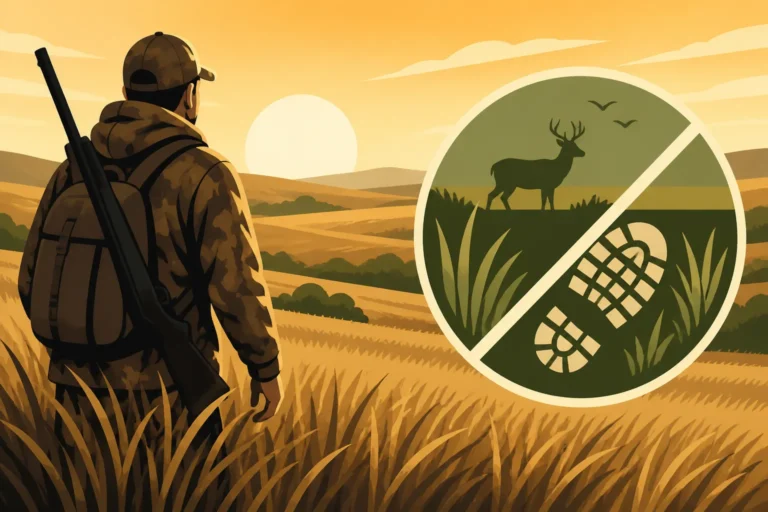
No matter which type of public land you're on, the overarching principle in Kansas, and really in most responsible hunting scenarios, is to minimize your impact on the natural environment. This means leaving no lasting trace of your presence and certainly no damage to trees, vegetation, or the ground itself. This principle informs nearly every rule regarding portable tree stands. You’re a guest in these areas, and the goal is to ensure they remain pristine for future hunters and wildlife alike. This philosophy is deeply ingrained in the concept of Leaving No Trace on Walk-In Ground.
It’s about being a good steward of the land. If everyone left stands, screw-in steps, or trash behind, these invaluable public hunting opportunities would quickly deteriorate or even be lost. The KDWP works hard to provide diverse hunting options, and part of that commitment involves managing these lands sustainably. Your role as a hunter is to uphold that standard.
Navigating Specific Portable Stand Regulations in Kansas
Once you understand the general differences between public land types, it's time to dive into the specifics of what's allowed and what's strictly forbidden when it comes to your portable stand. This is where most hunters get tripped up, especially with seemingly small details like screw-in steps or how long a stand can stay up.
The "No Damage" Mandate and What It Means for Your Stand
The "no damage to trees" rule is perhaps the most fundamental and universally applied regulation across nearly all Kansas public hunting lands. It's not just a suggestion; it's a hard and fast rule designed to protect the very habitat that supports the wildlife we pursue. What exactly does "no damage" mean in practical terms for your portable stand setup?
Essentially, it means you cannot use any method of attachment that penetrates the bark or wood of a tree. This immediately rules out common methods like screw-in steps, nails, bolts, or any kind of lag screw device. The intent is to prevent permanent injury to the tree, which can lead to disease, structural weakness, or even death. For example, using screw-in steps might seem convenient for climbing, but each hole creates an entry point for pathogens and can eventually girdle or weaken the tree.
Instead, you'll need to rely on attachment methods that use straps, chains, ropes, or other non-invasive fasteners. This applies to your stand itself, any climbing aids like sections of ladder sticks, and even your safety lines. Many modern portable stands are designed with this in mind, utilizing cam-buckle straps or silent ratchet straps that secure the stand to the tree without causing any harm. When choosing your equipment, prioritize those that explicitly state they are "tree-friendly" or "non-marring."
Identification, Setup, and Removal Requirements
Beyond how you attach your stand, there are important rules about identifying your stand, how it's set up, and when it needs to be removed. These rules are in place for accountability and to ensure that public lands remain free of abandoned equipment.
- Identification: On any public land where a stand might be left overnight (primarily some State Wildlife Areas, if permitted), it's generally required that the stand be clearly marked with the hunter's name and address, or their KDWP customer identification number. This allows wildlife officers to identify the owner and ensures compliance with regulations. Imagine finding an unmarked stand; it's hard to tell if it's abandoned, illegal, or simply forgotten. The identification requirement removes that ambiguity.
- Setup: The stand itself must be truly "portable." This means no building permanent structures, no cutting branches to clear shooting lanes, and no altering the natural environment around your stand. You're allowed to position your stand, but you're not allowed to modify the tree or surrounding vegetation in any significant way. Trimming a few small twigs for a clear shot might be overlooked if done minimally, but taking a chainsaw to a limb is a definite no-go. This is part of the Public Land Deer Hunting in Kansas ethos.
- Removal: This is often the biggest point of confusion.
- WIHA Lands: As mentioned, any portable stand or blind on WIHA ground must be removed daily. You can't leave it in the woods overnight. This means packing in and packing out everything, every single hunt. It can be a pain, especially for early morning or late evening hunts, but it's the rule. This is why mobile hunting with a saddle or lightweight climbing system is gaining popularity among hunters hitting these areas.
- State Wildlife Areas and Corps Lands: Some, but not all, SWAs and Corps lands may permit stands to be left overnight. However, there are usually strict time limits (e.g., no more than 7-14 days), and the stand must be identified with your information. These rules can change, so always double-check the specific area's current regulations. For instance, the Perry Wildlife Area might have different rules than Cheney Wildlife Area. Our guide on Overnight Stand Storage on Public Ground delves deeper into this.
The Nitty-Gritty of Screw-In Steps and Other Attachments
Let's talk specifically about screw-in steps, because they are a huge point of contention and confusion for many hunters. The simple answer for Kansas public land is: no. Screw-in steps are generally prohibited on KDWP-managed public lands and WIHA because they violate the "no damage to trees" rule. Each step requires screwing a metal shaft into the tree trunk, puncturing the bark and creating a wound. While seemingly small, these wounds add up and can compromise the health of the tree.
This is a specific point that often catches hunters unaware, especially if they've hunted in other states with different regulations. Many hunters wonder, "Are Screw-In Steps Legal in Kansas?" and the answer is almost universally no for public access.
So, if screw-in steps are out, what are your options for climbing?
- Climbing Sticks: These modular sections strap to the tree and provide a ladder-like ascent. They are incredibly popular and effective. Look for sticks with silent, non-marring attachment straps. Brands like Lone Wolf, Hawk, or XOP make excellent climbing sticks that are public-land friendly.
- Climbing Stands: If you're hunting a tree with a straight trunk and no low limbs, a climbing stand is an all-in-one solution that allows you to ascend and descend efficiently without leaving anything behind. Summit and Ol' Man are well-known for their robust climbing stand designs.
- Saddle Hunting: This increasingly popular method uses a climbing saddle worn by the hunter, along with a rope or strap system and minimal climbing aids (often a single stick or a set of shorter steps). It's incredibly mobile and leaves minimal impact, making it ideal for daily pack-in, pack-out scenarios on WIHA ground. You can learn more about this in Mobile Hunting With a Saddle in Kansas.
- Ladder Stands (Portable): Some lightweight ladder stands are designed to be moved, but their bulk makes daily removal impractical for most. They are usually designed for semi-permanent placement where allowed.
The key takeaway here is to ensure all your climbing methods and stand attachments comply with the "no damage" rule. If it penetrates the bark, it's probably illegal on Kansas public land.
Here’s a quick overview of stand rules by public land type:
| Feature | WIHA Lands | State Wildlife Areas (SWAs) | Corps of Engineers Lands |
|---|---|---|---|
| Stand Removal | Daily | Check specific SWA; some allow overnight | Check specific Corps area; some allow overnight |
| Screw-In Steps | Prohibited | Prohibited | Prohibited |
| Tree Damage | Prohibited (no nails, bolts, etc.) | Prohibited | Prohibited |
| Stand Marking | Not applicable (removed daily) | Required if left overnight (KDWP #) | Required if left overnight (KDWP #) |
| Permanent Structures | Prohibited | Prohibited | Prohibited |
| Vegetation Alteration | Minimal/Prohibited | Minimal/Prohibited | Minimal/Prohibited |
| E-Scouting Resource | KDWP WIHA Atlas, GoHunt | KDWP Public Lands Atlas, GoHunt | KDWP Public Lands Atlas, GoHunt |
Note: Always consult current KDWP regulations for the most up-to-date and specific rules for your intended hunting area.
Strategies for Responsible Stand Use and Avoiding Violations
Navigating the rules for portable stands on Kansas public land doesn't have to be a source of anxiety. With a little proactive research and adherence to best practices, you can enjoy your hunt knowing you're fully compliant. The last thing any of us wants is to be interrupted by a wildlife enforcement officer because of a simple misunderstanding.
Deciphering Overnight Storage Rules
The rule about leaving stands overnight is a frequent point of confusion and one that often leads to violations. As we've discussed, WIHA lands are strictly "pack in, pack out" daily. No exceptions. This means if you hunt a WIHA tract in the evening, your stand needs to come down with you. If you're planning an early morning hunt, you'll be setting it up in the dark. This is a common frustration, especially when trying to maintain silence and efficiency. This is where products from companies like GoHunt can be invaluable, as their mapping tools often highlight different public land types, helping you plan accordingly.
For State Wildlife Areas and Corps of Engineers lands, the situation is more nuanced. Some areas do permit stands to be left for a specified period (e.g., 7 days or 14 days), but this is always contingent on several factors:
- Specific Area Regulations: You absolutely must check the individual SWA or Corps area rules. What's allowed at Milford SWA might be forbidden at Melvern SWA. These are often posted at access points or available on the KDWP website.
- Proper Identification: If you leave a stand overnight, it must be clearly marked with your KDWP customer identification number or your name and address. This ensures ownership can be verified.
- No Permanent Attachment: Even if allowed overnight, the stand still cannot be permanently affixed or damage the tree in any way.
The best strategy is to assume daily removal unless you have explicitly verified otherwise for your specific hunting area. When in doubt, take it down. It's a hassle, yes, but it's far better than having your stand confiscated or facing a citation.
Verifying Regulations and Staying Informed
Regulations are not static; they can change from year to year, or even mid-season if specific issues arise. Relying on old knowledge or hearsay is a recipe for trouble. The best way to stay informed and verify current rules is directly through official KDWP channels.
- KDWP Website: The Kansas Department of Wildlife, Parks and Tourism website (www.ksoutdoors.com) is your primary and most reliable source. Look for the current year's hunting regulations summary, specific public land rules, and any special announcements. They often have interactive maps and PDF documents that detail specific property regulations.
- KDWP Offices: Don't hesitate to call or visit a local KDWP office. The staff there are often hunters themselves and are incredibly knowledgeable. They can clarify confusing regulations and provide insights into specific public land tracts.
- GoHunt Maps and Apps: Digital mapping platforms like GoHunt can be incredibly useful for e-scouting and understanding land boundaries, but always cross-reference their general information with official KDWP sources for the most up-to-date regulatory details, especially on specific rules like stand placement. While these apps excel at showing you where public land is, the fine print of how you can use it is best confirmed directly from the source. This is crucial for planning your hunting trip, as discussed in E-Scouting Kansas Farm Country From Home.
- On-Site Signage: Many public hunting areas, particularly State Wildlife Areas, have kiosks or signs at parking areas that outline specific rules for that property. Always take a moment to read these.
Make it a habit to check the regulations annually before the season begins. A quick review of the Kansas Regulation Summary Release Date can help you anticipate when new rules might drop.
Common Pitfalls and How to Steer Clear
Many hunters inadvertently violate portable stand rules not out of malice, but out of misunderstanding or convenience. Being aware of these common pitfalls can help you avoid them.
- The "One More Day" Trap: You're tired after a long evening hunt on WIHA ground, and you think, "I'll just leave the stand and grab it first thing in the morning before anyone's out." This is a quick way to lose your stand to confiscation or receive a ticket. The rule is daily removal, no exceptions for WIHA.
- Assuming All Public Land is the Same: As we covered, the rules for a State Park might be vastly different from a WIHA tract or a National Grassland. Always identify the specific type of public land you're on and look up its distinct regulations.
- Over-Trimming or Cutting Shooting Lanes: While minimal trimming of small twigs might be tolerated on private land with permission, on public land, any significant cutting of branches or vegetation can be considered habitat destruction and lead to serious penalties. Keep your modifications to the absolute minimum, ideally none at all. This is a critical point when you're trying to avoid problems, as highlighted in Hanging Stands on Public Land Without Getting Burned.
- Using Prohibited Attachment Methods: Screw-in steps, nails, or any device that penetrates the tree bark is a non-starter. Invest in modern, tree-friendly stands and climbing sticks that use straps or chains.
- Not Marking Your Stand: If you are on public land where overnight storage is permitted, failing to mark your stand with your KDWP ID is a direct violation. It makes it impossible for wildlife officials to contact you if there's an issue and can lead to confiscation.
By being diligent, informed, and always prioritizing the "leave no trace" ethic, you can ensure your portable stand use on Kansas public land is both effective for your hunting and compliant with all regulations. It truly enhances the experience when you know you're doing things the right way.
Disclaimer
The information provided in this guide is for general informational purposes only and does not constitute legal advice. Hunting regulations in Kansas are subject to change, and it is the hunter's responsibility to consult the current official Kansas Department of Wildlife, Parks and Tourism (KDWP) regulations and statutes before engaging in any hunting activities. Always refer to the latest KDWP hunting proclamations and specific area rules for the most accurate and up-to-date information.