Staying Warm on a December Sit
The biting winds and plummeting temperatures of a Kansas December can quickly turn an anticipated deer hunt into a shivering endurance test, often forcing us off the stand long before prime time. There's nothing worse than having that perfect buck walk by just as your fingers go numb, or you can no longer feel your trigger finger. This comprehensive guide will equip you with the knowledge and strategies to not just survive, but truly thrive in the cold, extending your sits and increasing your chances of success during the late season.
The Unique Chill of a Kansas December
Kansas in December isn't just "cold"; it's a special kind of cold that seems to find its way into your bones no matter how many layers you pile on. The wide-open spaces, often devoid of dense timber to break the wind, mean that what might be a mild breeze elsewhere becomes a relentless, face-numbing assault here. It's a challenging time to be in the woods or a blind, but it's also when some of the biggest bucks are on the move, desperate for calories before the harshest part of winter sets in.
Understanding Kansas Winter Weather Patterns
Typically, December in Kansas brings a mix of cold fronts, occasional snow, and often, persistent wind. Average temperatures can hover around freezing during the day, but those single-digit wind chills are what truly steal your warmth. We're not talking about deep timber hunting where you might get some natural shelter; here, whether you're tucked into a shelterbelt, overlooking a cut milo field, or perched in a treestand along a creek bottom, you're exposed. The sun, even on a clear day, often feels more like a tease than a source of warmth. You need to be prepared for drastic temperature swings. A morning that starts at 10 degrees can warm up to 30 by midday, only to drop back down with a passing cloud cover or a shift in wind direction. This variability demands a layering system that can be adjusted on the fly, otherwise, you'll find yourself sweating out, only to freeze when the wind picks up. Effective Late-Season Food Source Hunting often means sitting for extended periods in these conditions.
The Impact of Cold on Hunter Performance
Beyond the obvious discomfort, cold significantly degrades your hunting performance. First and foremost, it saps your patience. Every minute feels like an hour when your toes are numb, and your fingers are aching. This can lead to fidgeting, checking your watch too often, and ultimately, cutting your hunt short. Secondly, it impairs your dexterity and fine motor skills. Trying to draw a bow smoothly or squeeze a rifle trigger precisely with stiff, cold fingers is incredibly difficult and can lead to missed opportunities or, worse, a poorly placed shot. Your reaction time slows, your vision can be affected by watering eyes, and your overall focus diminishes. Imagine trying to use your rangefinder or adjust your scope when you can barely feel your hands; it’s a recipe for frustration. Even tasks like Field Dressing in Warm Kansas Weather require dexterity, but doing so in freezing conditions adds another layer of challenge. When you're cold, your body's primary mission becomes generating and conserving heat, diverting energy from critical thinking and keen observation – exactly what you need for a successful hunt.
Layering for Success: The Foundation of Warmth
Forget trying to wear one giant, bulky coat. The key to staying warm on a December sit in Kansas is a well-thought-out layering system. Each layer serves a specific purpose, working together to trap warmth, wick away moisture, and protect you from the elements. This isn't just about throwing on more clothes; it's about strategic apparel choices.
Base Layers: Wicking Away the Chill
Your base layer is arguably the most crucial component because it manages moisture. When you walk to your stand, you're likely to generate some body heat and sweat, even in freezing temperatures. If that sweat stays against your skin, it will quickly cool down once you stop moving, leading to a rapid loss of body heat.
- Material Matters: The best base layers are made from merino wool or high-quality synthetic fabrics. Merino wool is a fantastic natural fiber that excels at regulating temperature; it wicks moisture away, but more importantly, it retains warmth even when damp. It's also naturally odor-resistant, which is a huge bonus on multi-day hunts. Synthetics like polyester are also excellent at wicking, dry quickly, and are often more durable and budget-friendly. Avoid cotton at all costs—it absorbs moisture and holds it against your skin, turning you into a walking ice pack.
- Fit is Key: Your base layer should be snug against your skin, but not so tight that it restricts movement or circulation. This allows it to effectively wick moisture and create an initial layer of trapped air for insulation. Companies like Kuiu and Sitka offer excellent merino and synthetic base layer options designed specifically for hunters. GoHunt offers great resources and gear reviews that often highlight top-performing base layers, helping you make an informed choice for your specific hunting conditions.
- Weight for the Weather: Base layers come in different weights (light, mid, heavy). For a Kansas December, a mid to heavy-weight base layer is usually appropriate, possibly even two lighter base layers if conditions are extremely cold.
Mid-Layers: Trapping the Heat
The mid-layer's primary job is insulation – to trap the warm air your body generates and prevent it from escaping. This is where you really build up your thermal protection.
- Insulation Types:
- Fleece: A popular and versatile choice. Fleece is lightweight, dries relatively quickly, and provides good warmth for its bulk. It's great for active hunts or as an intermediate layer.
- Down: Down insulation (duck or goose feathers) offers incredible warmth-to-weight ratio and compresses well. The downside is that it loses its insulating properties when wet, so it needs to be protected by a waterproof outer layer. Brands like Patagonia and Outdoor Research make excellent down layers that can be integrated into a hunting system.
- Synthetic Fill: Modern synthetic insulations (e.g., PrimaLoft, Thinsulate) mimic down's warmth and compressibility but perform much better when wet. They are often the preferred choice for hunters operating in potentially damp or snowy conditions.
- Strategic Stacking: You might use multiple mid-layers. For example, a thinner fleece over your base, followed by a heavier synthetic insulated vest or jacket. This allows for excellent versatility. If you're hiking to your stand, you might shed the outer mid-layer to avoid overheating, then put it back on once you're settled. This strategy is vital for controlling your core temperature and preventing sweat buildup, especially when you're considering Access Routes That Do Not Bump Deer. Remember, it’s easier to add a layer than to take one off silently while on stand.
Outer Layers: Battling Wind and Wet
Your outer layer is your shield against the elements – primarily wind and precipitation. In Kansas, wind is the silent killer of warmth, so a truly windproof outer layer is non-negotiable.
- Windproof is Paramount: Even on a "dry" day, a biting wind can penetrate lesser fabrics and strip away your precious body heat. Look for jackets and pants specifically advertised as windproof. Many modern hunting apparel lines, like Sitka Gear's Fanatic series or Kuiu's Super Down Pro, are designed with advanced wind-blocking membranes.
- Water Resistance/Proofing: While December in Kansas might not always mean heavy rain, sleet or wet snow are common. A water-resistant or waterproof outer layer will keep you dry, which is essential for maintaining warmth. Look for materials with a Durable Water Repellent (DWR) finish or a fully waterproof membrane like GORE-TEX.
- Silence is Golden: Critically, your outer layer must also be quiet. Rustling fabrics will spook deer faster than anything. Choose materials that are soft, brushed, or have a silent face fabric.
- Accessibility and Storage: Think about pockets for hand warmers, optics, and other essentials. An outer layer with strategic pockets can reduce the need to rummage through a pack, minimizing movement and heat loss. When Public Land Deer Hunting in Kansas, a good outer layer can be the difference between a productive day and an early retreat.
Essential Accessories for Extreme Cold
Even the best layered clothing system won't keep you warm if your extremities aren't properly protected. Our bodies naturally prioritize sending warm blood to our core, often at the expense of our fingers, toes, and ears. Ignoring these areas is a common mistake that quickly leads to discomfort and cutting your hunt short.
Head, Hands, and Feet: The Coldest Extremities
These are the first parts of your body to feel the cold, and for good reason—they have a high surface area-to-volume ratio and are often exposed.
- Head Protection: You lose a significant amount of heat through your head. A quality beanie, trapper hat, or balaclava made from wool or fleece is essential. For extreme cold, consider a full face mask or balaclava that can be pulled up to cover your nose and mouth, protecting against windburn and allowing you to breathe warm, humid air, which helps retain core heat. Keep an extra one in your pack; a dry hat is a lifesaver.
- Hand Systems: A single pair of heavy gloves is rarely sufficient or practical. The best approach is a "system":
- Thin Liner Gloves: Worn directly on your hands, these provide a thin layer of warmth and dexterity for tasks like operating your phone or rangefinder.
- Insulated Mittens or Flip-Mittens: These go over your liner gloves. Mittens are warmer than gloves because they allow your fingers to share warmth. Flip-mittens (or "shooters mittens") are excellent for hunting, as they allow you to quickly expose your fingers for shooting without taking off the entire mitten. Brands like First Lite and Icebreaker offer great options here. Keep hand warmers in these larger mittens or in separate muff pockets.
- Hand Muffs: A hand muff is a game-changer for prolonged sits. Worn around your waist, it's a fleece-lined tunnel for your hands, often with a pouch for hand warmers. This is where you can truly keep your hands toasty, even with thin gloves on. GoHunt community discussions often recommend specific brands of hand muffs for different hunting styles.
- Foot Warmth: Cold feet are miserable.
- Socks: Start with a thin liner sock made of merino wool or a synthetic blend to wick moisture. Over that, wear a thick, high-quality merino wool sock. Avoid cotton. Ensure your socks aren't so thick that they constrict circulation in your boots.
- Boots: Invest in insulated hunting boots. Look for boots with at least 800-1200 grams of Thinsulate or similar insulation for stationary December sits. Make sure they are waterproof. Crucially, your boots should be a half to full size larger than your street shoes to accommodate thick socks and allow for air circulation. Tight boots restrict blood flow, leading to cold feet. Before heading out for Rifle Hunting the Kansas December Firearm Season, make sure your boots are ready.
Chemical and Electric Warmers: Boosting Core Temperature
Sometimes, layers just aren't enough, especially on those truly frigid days. This is where supplemental heat sources become invaluable.
- Chemical Warmers: These single-use packets are filled with iron powder, salt, activated charcoal, and other ingredients that react with oxygen to produce heat. They are inexpensive and reliable.
- Hand Warmers: Tuck these into your gloves, mittens, or hand muff.
- Foot Warmers: Designed to be placed on top or bottom of your socks (check product instructions carefully).
- Body Warmers: Larger adhesive patches that can be stuck to your base layer on your back, chest, or lower abdomen. These can make a huge difference in keeping your core warm.
- Rechargeable Electric Warmers: More of an investment upfront, but they are reusable and often offer adjustable heat settings. Some double as power banks for charging phones or other electronics. These are excellent for gloves, boots, or even small pads for your back. Ensure they have good battery life for extended sits. Check their performance in extremely cold temperatures, as battery efficiency can decrease. While scouting or E-Scouting Kansas Farm Country From Home, it's easy to forget about power needs, but in the field, it's critical.
Strategic Considerations Beyond Clothing
Staying warm isn't just about what you wear; it's also about how you hunt. Smart tactics can complement your layering system, helping you maximize your time in the stand and improve your overall comfort.
Nutrition and Hydration: Fueling Your Inner Furnace
Your body is a remarkable heat-generating machine, but it needs fuel. Just like a furnace, it can't create warmth from nothing.
- Calorie-Rich Foods: Pack snacks that are high in calories and fat to provide sustained energy. Nuts, trail mix, chocolate bars, jerky, and energy bars are excellent choices. Eat small, frequent snacks to keep your metabolism humming and generating heat.
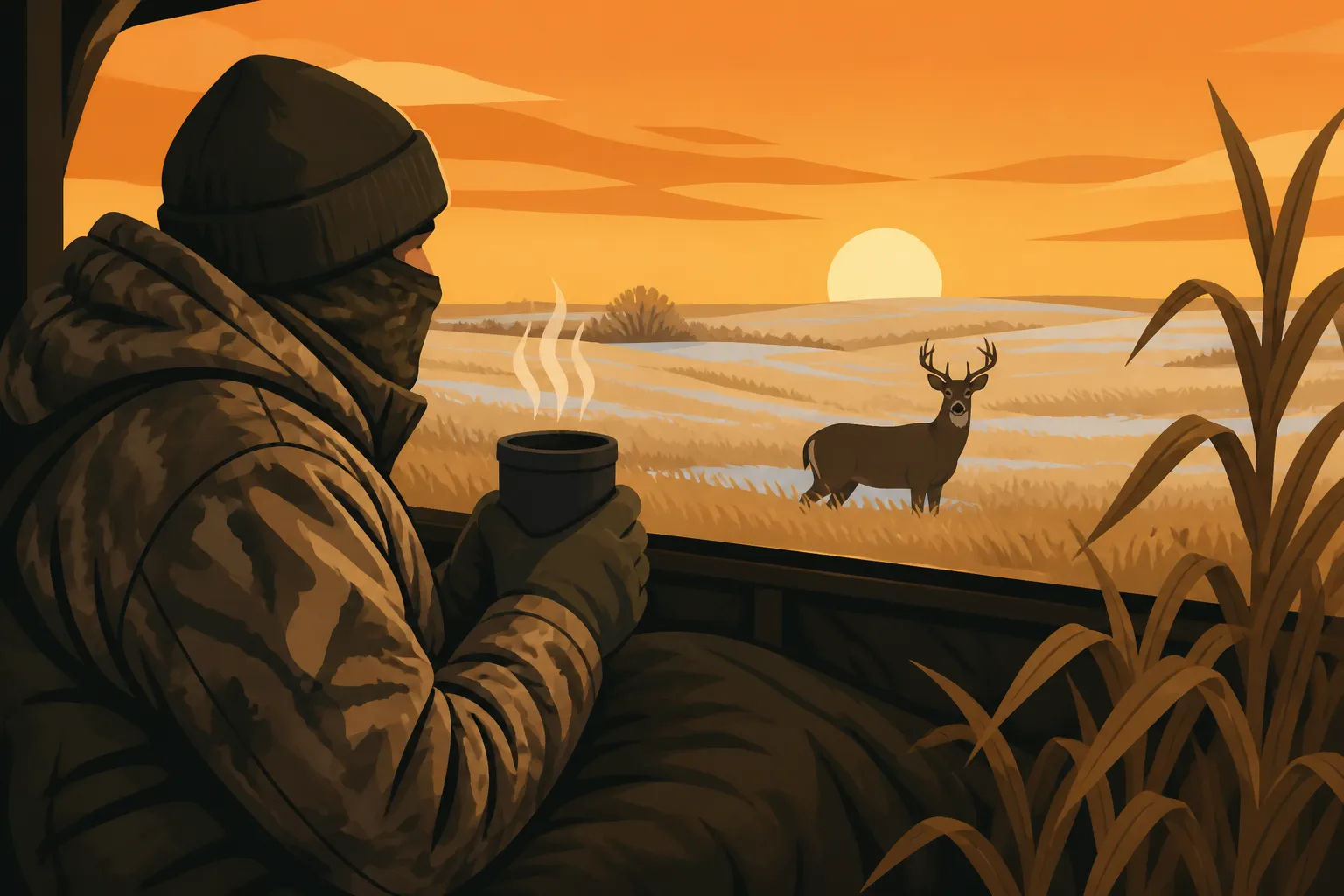
- Warm Beverages: A thermos filled with hot coffee, tea, or cocoa is a morale booster and provides internal warmth. Sip on it slowly throughout your sit. The act of drinking something warm can significantly improve your perceived comfort.
- Stay Hydrated: Even in cold weather, it's easy to become dehydrated, especially if you're drinking caffeinated beverages. Dehydration can impair your body's ability to regulate temperature. Bring water and make sure you're drinking it throughout the day. Consider bringing an insulated water bottle to prevent it from freezing.
Smart Stand Selection and Movement
Where and how you position yourself can drastically affect your warmth.
- Sun Exposure: On clear days, positioning your stand or blind to catch the morning or afternoon sun can provide a surprising amount of warmth. Even a little direct sunlight can make a huge difference. Consider a stand that allows for sun exposure without compromising your concealment.
- Wind Breaks: Whenever possible, choose a stand location that offers a natural windbreak. A thick cedar clump, a dense shelterbelt, or the leeward side of a hill or timber edge can dramatically reduce the wind chill factor. A strategically placed Ground Blind Brushing In can also offer substantial wind protection. Even subtle terrain features can funnel wind, so understanding Wind and Thermals on a River Bank is critical for both deer movement and hunter comfort.
- Controlled Movement: While minimizing movement is crucial for stealth, strategic, controlled movements can help keep blood flowing. Wiggle your toes, flex your fingers, gently stretch your legs, or do small isometric exercises. Just enough to generate a little heat without creating excessive noise or movement that spooks deer. Avoid large, jerky movements.
Managing Your Scent with Warmth in Mind
It's a common misconception that more layers mean more scent. While heavy, non-breathable layers can trap sweat and odor, proper layering, as discussed, actually helps manage moisture, which is key to scent control.
- Breathability and Wicking: Your base layers and mid-layers are designed to wick moisture away from your body. This not only keeps you warm but also reduces the moisture that feeds scent-causing bacteria.
- Scent-Eliminating Layers: Many hunting apparel brands incorporate scent-reducing technologies (like silver-based treatments or activated carbon) into their layers. These can be particularly effective in your base and mid-layers. Brands like ScentLok and Ozonics focus specifically on this.
- Pre-Hunt Prep: Always shower with scent-free soap before your hunt and use scent-free deodorant. Store your hunting clothes in airtight containers or bags with natural scent absorbers like cedar or earth wafers. The goal is to minimize human odor from the start. GoHunt forums are full of scent control debates and tips; checking those out can provide extra insights. This attention to detail is just as important as Shot Placement on a Whitetail at Twenty Yards.
Preparing Your Gear for the Cold Hunt
Your personal comfort isn't the only thing affected by the cold; your gear needs attention too. Freezing temperatures can wreak havoc on batteries, optics, and even the structural integrity of your stand. Pre-hunt checks are non-negotiable.
Battery Management in Freezing Temperatures
Modern hunting relies heavily on electronics: rangefinders, GPS devices, two-way radios, heated vests, and smartphones. Batteries, especially lithium-ion, lose efficiency rapidly in the cold.
- Keep Batteries Close: The best defense is to keep spare batteries (or the devices themselves) in an inside pocket, close to your body heat. This includes your phone, headlamp, and any electric hand warmers.
- Insulate Battery Compartments: For devices that stay exposed, like a rangefinder or trail camera, consider insulating their battery compartments with a small piece of foam or cloth.
- Charge Fully: Always start with fully charged batteries.
- Power Banks: Carry a robust power bank, ideally one with good cold-weather performance, to recharge devices on the go. Again, keep it insulated. Many experienced hunters use their GoHunt app extensively in the field for mapping and scouting, so keeping their phone charged is crucial.
- Test Gear: Test all battery-powered devices in cold conditions before you head out. Don't find out your rangefinder dies after two hours when that trophy buck steps out.
Maintaining Your Hunting Blind or Stand
Your chosen hunting setup also needs to be winter-ready.
- Ground Blinds: If you're using a ground blind for extended sits, ensure it's properly brushed in and anchored to withstand Kansas winds. Check for any rips or tears that could allow drafts. Consider adding a small propane heater (with proper ventilation and safety precautions) for extreme cold. Portable blinds, especially when considering Hunting Pressure Patterns on Kansas Public Land, can be easily moved, but their cold-weather preparedness is vital.
- Treestands: For treestands, check all straps and cables for wear and tear. Cold weather can make materials brittle. Ensure your safety harness is easily accessible and correctly fitted over all your layers. Consider adding foam padding to your stand seat and platform for insulation against the cold metal or plastic. Having a well-maintained stand, whether you're Hanging Stands on Public Land Without Getting Burned or on private ground, is crucial for both safety and comfort.
Disclaimer
Please note: Hunting regulations, season dates, and permit requirements in Kansas are subject to change. Always consult the latest official Kansas Department of Wildlife, Parks and Tourism (KDWPT) regulations before planning any hunt. This guide is for informational purposes only and should not replace official sources or professional guidance.