Early-Season Bowhunting Over Water
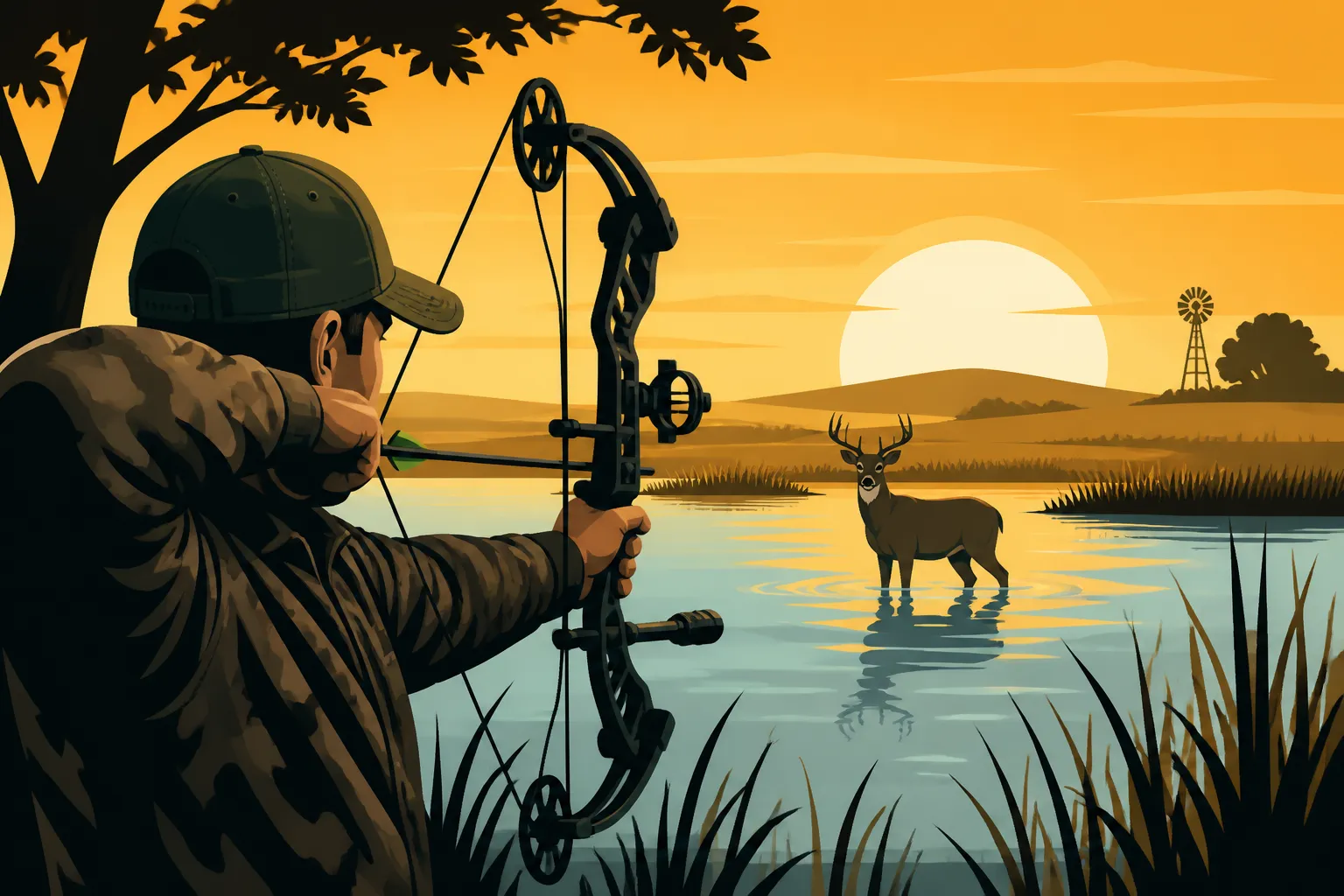
The early bow season in Kansas can be a real struggle, can't it? You've waited all year, the velvet is off, and you're finally out there, but those scorching September temperatures often push deer movement almost entirely into the nighttime hours. It's frustrating to sit patiently for hours only to see trail camera pictures of big bucks slipping into your favorite food plots long after dark. This comprehensive guide is all about tackling that common early-season challenge by focusing on one of the most consistent draws for whitetails when the mercury rises: water. We'll explore how to find prime water sources, set up effectively, and employ stealth tactics to capitalize on deer needing a drink.
Understanding Early Season Deer Behavior and Hydration Needs
Kansas summers, and even early fall, can be brutally hot and dry. This intense heat fundamentally changes how whitetail deer move and survive, making water a non-negotiable part of their daily routine. If you want to connect with a buck when temperatures are high, you need to think like a deer and prioritize their most basic needs.
The Impact of Heat and Humidity on Whitetails
When August melts into September, and the thermometer routinely creeps into the 80s or even 90s, whitetails aren't exactly frolicking in open fields. Just like us, they seek relief from the oppressive heat and humidity. Their metabolic rate increases, and they expend more energy just trying to stay cool. This physiological stress drives them to become largely nocturnal, moving minimally during daylight hours to conserve energy and avoid overheating. They'll spend the warmest parts of the day bedded down in the thickest cover they can find, often near shaded creek bottoms or timber points that offer a slight breeze.
This is where the frustration often sets in for bowhunters. You've hung stands over lush alfalfa fields or freshly cut bean stubble, full of hope, only to be met with empty woods and scorching sun. The deer are simply not on their feet during daylight like they will be once the first crisp cold front arrives. However, even if they're not feeding actively, they still need to hydrate. A mature buck, especially one still recovering from velvet shedding and growing his muscles for the upcoming rut, needs a consistent water intake to maintain his health and antler development. If you can intercept him when he's at his most vulnerable – needing a drink – you're already ahead of the game.
Identifying Primary Water Sources
Not all water is created equal in the eyes of a whitetail. While they will drink from almost any available source in a pinch, certain water features become magnets during dry, hot periods. Your job is to identify these high-priority spots. Think about natural sources first: small ponds, shallow creek bends, seeps, and spring-fed trickles. These are often tucked away in timber, offering both water and cover. Larger rivers, like the Neosho River or the Kansas River, also have areas where deer can easily access the water without exposing themselves too much.
Don't overlook man-made sources, especially in agricultural areas. Cattle tanks, irrigation ditches, and even temporary puddles in field depressions after a rain can be hotspots, especially if they are the only reliable water source for miles. The key is consistency. A puddle that dries up in a day isn't as good as a spring that never stops flowing. Look for locations that offer a combination of water, cover for approach and escape, and are relatively undisturbed. Deer are creatures of habit, and during the early season, their habits are largely dictated by safety and survival in the heat.
Scouting and Locating Key Water Sources for Bowhunting
Finding the perfect water source isn't always as simple as glancing at a map. It requires a combination of modern e-scouting techniques and good old-fashioned boots-on-the-ground reconnaissance to confirm your suspicions and pinpoint the exact best locations.
E-Scouting for Water Features
Before you even step foot in the woods, the internet can be your best friend. Start by leveraging powerful tools like Google Earth or mapping apps such as GoHunt and OnX Hunt. These platforms offer detailed satellite imagery that allows you to scan vast tracts of land from the comfort of your home. Zoom in on areas with timbered creek bottoms, draws, or shelterbelts. Look for tell-tale blue spots indicating ponds or areas where the vegetation is noticeably greener, often signaling a seep or a small spring.
When using these tools, pay close attention to areas where timbered cover connects to these water sources. Deer rarely cross wide-open spaces during daylight, especially in the early season heat. They'll hug the edges of timber, use fencelines, and navigate via brushy draws. Look for natural travel corridors that lead directly to the water. You can also cross-reference these findings with the Kansas Department of Wildlife, Parks and Tourism (KDWP) public land maps, or specific Walk-In Hunting Access (WIHA) maps to identify accessible properties. Sometimes, the most promising water source might be on a small, overlooked WIHA tract. Consider how to apply for a Kansas nonresident deer permit if you're coming from out of state, and make sure your chosen unit offers ample water opportunities.
Boots-on-the-Ground Reconnaissance
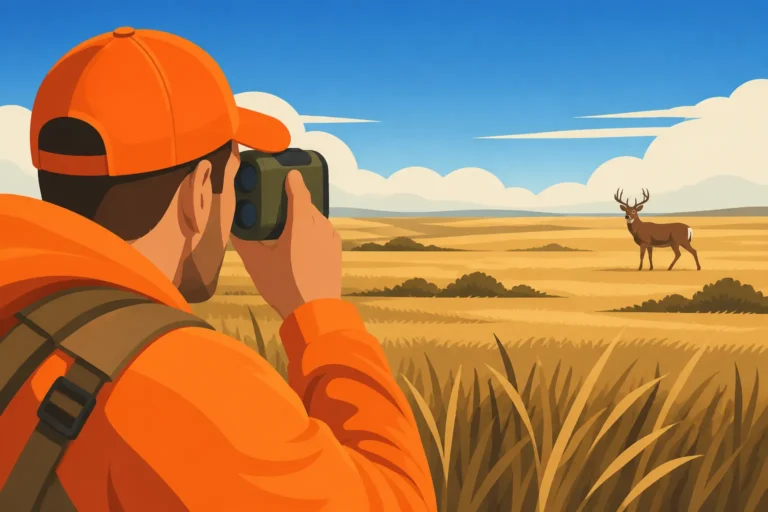
E-scouting is an excellent starting point, but nothing beats verifying your suspicions with a physical scout. Once you've identified a few potential water holes on your map, it's time to put boots on the ground. This is where you'll confirm whether that "blue spot" is actually a pond or just a shaded area. Look for fresh deer tracks leading directly to and from the water's edge. Pay attention to the size and frequency of these tracks – heavy traffic indicates a primary water source. You'll also want to look for droppings, rub lines (though these will be minimal in early September), and most importantly, the condition of the water. Is it fresh, or is it stagnant and foul? Deer prefer clean water if available.
Examine the surrounding terrain carefully. Are there gentle slopes that provide easy access for deer, or are the banks steep and difficult? How much cover is around the water? This cover will be crucial for deer to feel safe approaching during daylight. Also, look for potential stand or blind locations that offer good visibility of the water, while also providing concealment and a favorable wind direction. Remember, deer are inherently wary at water sources, as they are exposed. Your goal is to find a spot that offers them a sense of security even when they are vulnerable.
Optimal Stand and Blind Placement Near Water
Setting up your hunting location near a water source is an art form. It's not just about being close to the water; it's about being in the right spot to intercept deer that are coming in to drink, all while remaining undetected.
Reading Wind and Thermals Around Water
Scent control is always paramount in bowhunting, but it takes on an almost mythical importance when hunting over water, especially in the early season heat. Wind and thermals behave uniquely around water, and failing to account for them will bust you quicker than anything. In the mornings, cooler air sinks and often carries scent downhill towards the lowest points, which is frequently where your water source is. As the sun rises and heats the ground, thermals reverse, and air begins to rise, potentially carrying your scent up and out.
This means you need to be incredibly strategic with your stand placement. You want the prevailing wind, and any expected thermal drafts, to carry your scent away from the deer's approach and away from the water itself. For example, if deer typically approach a pond from a timbered ridge to the north, and the wind is generally out of the south, placing your stand on the south side of the pond might seem good. However, if thermals in the morning pull your scent north and across their travel path, you're busted. Always have a plan for how you will approach and exit your stand or blind, ensuring your scent cone never crosses where deer are likely to be. Think about a stand location that allows you to hunt specific wind directions, even if it means having multiple options for different days. This is a critical factor for success.
Treestand vs. Ground Blind Considerations
When it comes to hunting over water, you've generally got two main options: a treestand or a ground blind. Each has its advantages and disadvantages, and the "best" choice often depends on the specific location and your personal hunting style.
- Treestands: A well-placed treestand offers excellent elevation, which helps with scent dispersal and provides a better vantage point for spotting approaching deer. It also allows for more forgiving shot angles into the vitals of a deer. If you're hunting river bottoms or areas with mature trees, a treestand can be incredibly effective. Make sure to consider Saddle Hunting With a Saddle in Kansas if you prefer a mobile approach, or if you're hunting public land, be aware of Kansas's Portable Stand Rules on Kansas Public Land. The main downsides are the effort of hanging a stand in the early season heat and the limited setup options if good trees aren't available directly downwind of the water.
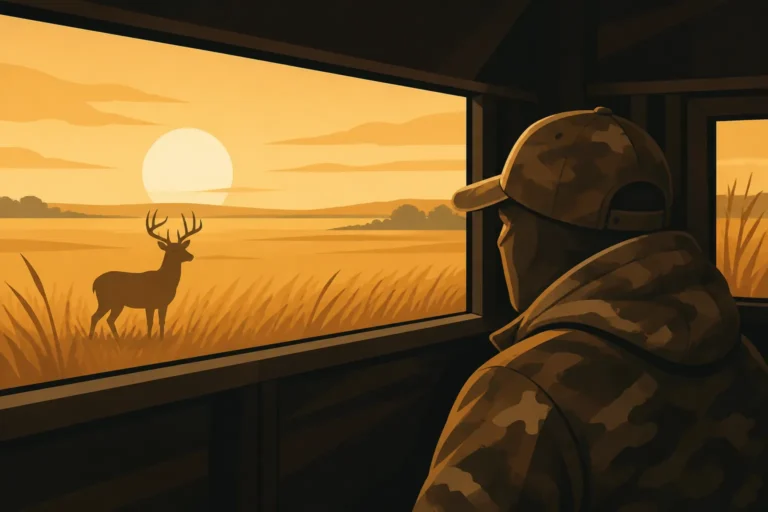
- Ground Blinds: Ground blinds excel in open country or areas with sparse trees, which is common in many parts of Kansas. They offer incredible concealment and protection from the elements. A pop-up blind brushed in meticulously can become almost invisible. This is especially good for early-season hunts when you need to minimize movement and remain cool. For example, if you're hunting a cattle tank on the edge of a CRP field, a well-brushed ground blind might be your only viable option. However, ground blinds can limit your visibility and shot opportunities if deer approach from unexpected angles. They also require more attention to your immediate surroundings for scent control, as you're closer to the ground.
The key is to match your setup to the terrain and the deer's likely travel patterns. Sometimes, a combination approach, with a treestand for certain wind directions and a ground blind for others, provides the most flexibility.
Scent Control and Stealth Tactics for Water Hole Hunts
No matter how perfect your scouting or stand placement, if you aren't meticulous with scent control and stealth, your early-season water hole hunt is likely doomed. Whitetails, especially mature bucks, have an incredible sense of smell, and they are on high alert when they come to water.
The Critical Role of Scent Elimination
Let's be blunt: if you're not taking scent control seriously, you're just scouting for deer. For early-season water hunts, it's non-negotiable. Start with your personal hygiene. Shower with scent-eliminating soap, use scent-free shampoo, and even scent-free deodorant. All of your hunting clothes should be washed in scent-free detergent and stored in airtight containers or bags until you put them on at the truck. Brands like ScentLok and Scent Killer are popular choices for this reason. Don't forget your boots! Your footwear picks up ground-level scent that deer will encounter directly. Spray them down, or even better, wear rubber boots, and store them separately.
Think of it as a layered approach. The goal isn't just to cover your scent, but to eliminate it as much as possible. Why are deer extra wary near water, especially during dry times? Because they know predators might be waiting. Any foreign odor, no matter how faint, will send them into high alert and likely send them off in another direction. Avoid walking directly to the water's edge unless absolutely necessary, and if you do, wear gloves and minimize contact with vegetation. Every leaf, every blade of grass you touch can leave a trace. Remember, your ultimate success hinges on going undetected.
Minimizing Disturbance During Entry and Exit
Even if you're completely scent-free, if you disturb the area around the water hole, deer will know something is amiss. Your entry and exit routes are just as important as your stand placement. Always park your vehicle as far away from your intended hunting area as possible. Nothing screams "hunter!" more than a truck parked right next to a public land access point or a secluded farm pond. When walking in, choose a route that avoids known bedding areas and main travel corridors. Deer often bed in thick cover near water during hot days, so you want to avoid bumping them on your way in. This is why understanding Access Routes That Do Not Bump Deer is so vital.
Walk in well before legal shooting light, allowing yourself ample time to get settled and for the woods to calm down around you. Use the dim light to your advantage, moving slowly and quietly. If you're hunting a ground blind, ensure it's set up and brushed in days, or even weeks, before your hunt. The same goes for treestands. The less disturbance you create on the day of the hunt, the better. When exiting, wait until it's completely dark or until deer have cleared the area. If you bump deer on your way out, you've effectively educated them about your presence, making future hunts much harder. For public land hunting, be mindful of Hunting Pressure Patterns on Kansas Public Land and how your actions contribute to it. If you successfully harvest a deer, having a plan to get it out without causing excessive disturbance, possibly using a Deer Carts on Walk-In Ground, is also important.
Effective Calling and Decoy Strategies Near Water
While early season water hole hunting relies heavily on stealth and good placement, there are times when a little extra encouragement can seal the deal. Understanding how and when to use calls and decoys can be the difference between a sighting and a shot opportunity.
Soft Calling to Attract Thirsty Deer
During the early season, deer behavior is far less aggressive than during the rut. Therefore, aggressive calling tactics like rattling or snort-wheezes are likely to be counterproductive. Instead, focus on soft, social calls that mimic the sounds of deer simply going about their daily business. Fawn bleats are excellent for piquing the curiosity of does and even some younger bucks. A soft grunt call, mimicking a contented deer or a social greeting, can also work.
The key is subtlety. You're not trying to challenge a buck or pull him from a long distance. You're trying to gently draw in a deer that might be on the fence about coming to water, or one that's cautiously approaching. Use these calls sparingly and softly. If you see a deer at a distance that seems to be hesitating, a single, soft bleat might just be enough to turn its head and convince it to commit. Overcalling will only make deer suspicious. The goal is to make it sound like other deer are already at ease around the water source, making it safer for new arrivals.
Utilizing Decoys in Open Water Scenarios
Decoys can be a powerful tool, especially in more open Kansas landscapes where visual cues play a larger role. Imagine a buck cautiously approaching a pond across an open field. If he sees a realistic deer decoy already at the water's edge, it can act as a natural magnet, signaling that the coast is clear and other deer are already enjoying a drink.
- Doe Decoys: In the early season, a single doe decoy is generally your best bet. It conveys a sense of calm and safety. Position it quartering away from your stand, as if it's just finished drinking or is about to. This also presents a broadside or quartering-away shot opportunity for any buck approaching to check her out.
- Buck Decoys: While a buck decoy can sometimes work, it's a higher-risk, higher-reward strategy in the early season. A younger buck might be intimidated, and a mature buck might see it as a challenge, but without the full intensity of the rut, his reaction might be cautious or simply disinterested. If you do use a buck decoy, keep it small, like a 1.5-year-old buck, to avoid intimidating bigger bucks.
- Placement: Place your decoy where it's visible but not overly exposed. Ensure it's downwind of your stand so any approaching deer will come into your shooting lane before winding your position. Always consider Decoy Placement and Wind Direction to maximize your chances and avoid spooking deer. The visual reassurance of a deer at the water can often override a deer's natural caution, especially when they are driven by thirst.
Timing Your Hunts and Adapting to Conditions
Successfully bowhunting over water in the early season isn't just about finding the spot and setting up; it's also about timing your hunts perfectly and being flexible enough to adapt to ever-changing weather patterns.
Best Time of Day for Water Hole Action
During the heat of early bow season, deer activity, particularly for mature bucks, tends to be greatly suppressed during the middle of the day. You might assume dawn and dusk are your only options, but for water hole hunting, this isn't always the case. Yes, deer will hit water in the mornings and evenings as they transition between bedding and feeding, but often their primary need for hydration peaks during the warmest parts of the day.
This means that late morning through early afternoon, when temperatures are at their highest, can be surprisingly productive for a water hole sit. While other hunters might be heading out of the woods, you could be setting up for a midday encounter. Deer are bedded and trying to stay cool, but that constant need for water will eventually drive them to their feet. A quick trip to a nearby water source can be less energy-intensive than moving to a distant food plot. So, don't write off those midday hours. Patience during this time is key, as deer often move in short bursts from dense cover to the water and back.
Adjusting for Weather Changes
Kansas weather is notoriously unpredictable. One day it's scorching, the next a cold front sweeps through, dropping temperatures by 20 degrees. These changes, especially early in the season, profoundly impact deer behavior.
- The Role of Cold Fronts: A significant cold front is a deer hunter's best friend. As temperatures drop and atmospheric pressure changes, deer often become more active during daylight hours. They'll extend their movements and might visit water sources more casually, or even browse on the way. If a cold front is expected, plan your hunts for the days immediately following the temperature drop.
- Rainfall Impact: Rainfall directly influences the effectiveness of water hole hunting. A heavy rain can fill every ditch and low spot, creating countless temporary water sources. This disperses deer and makes your concentrated water hole less appealing. However, a light, passing shower can actually increase deer movement without saturating the landscape, making them more likely to visit established water. The best water hole hunting is typically during dry spells, especially after several days without rain, when deer must visit consistent sources. Pay attention to the forecast, and if it's been bone dry for a while, double down on those water hole sits. A prolonged dry spell will make Early-Season Bowhunting Over a Pond incredibly effective.
By understanding these nuances, you can time your hunts more effectively, increasing your odds of encountering deer during legal shooting hours.
Early Season Water Hole Hunting Strategies for Success
To truly maximize your chances when bowhunting over water, you need to combine all these elements into a cohesive strategy. It’s about more than just finding a pond; it’s about a comprehensive approach to outsmarting wary whitetails.
Prioritizing Undisturbed Access
We've talked about it, but it bears repeating: disturbance is the enemy of early season success. Deer, especially mature bucks, are exquisitely sensitive to human intrusion. If you leave a trail of scent, make excessive noise, or spook deer during your approach, you’ve likely ruined that spot for the day, if not for longer. This means walking further, sometimes much further, to get to your stand. Utilize natural terrain features, such as creek draws or the backside of ridges, to shield your approach. For example, if you're scouting Kansas River Bottoms and Creek Draws, identify paths that keep you out of sight and scent of bedding areas.
Consider utilizing a mapping app like GoHunt to mark out silent, concealed travel routes. A quiet approach isn't just about sound; it's about minimizing visual impact as well. Avoid skylining yourself on ridges, and use dense cover to your advantage. Your goal is to be a ghost in the woods, arriving at your stand or blind without any deer in the area knowing you're there. This commitment to silent and undetected access is arguably the most crucial factor in early season water hole hunting.
Utilizing Trail Cameras Effectively
Trail cameras are invaluable tools for early season water hole hunting. They provide objective data on deer movement patterns, helping you confirm if a particular water source is being used during daylight hours. Place your cameras on established deer trails leading to the water, or directly overlooking the water itself. Don't put them too close to the water, though, as frequent visits to check cards can create too much disturbance.
Pay close attention to the time stamps on your photos. Are bucks hitting the water at 10 AM, 1 PM, or closer to last light? This will help you fine-tune your hunting times. Also, look for specific bucks – do you have a target buck showing up consistently? If a big buck is only showing up at midnight, it might be worth focusing your efforts elsewhere or waiting for a cold front. Trail cameras can also help you identify preferred entry and exit points for deer, allowing you to position your stand or blind for optimal wind direction and shot opportunities. Tools like GoHunt can integrate trail camera data with maps, providing a powerful scouting overview. For more insights on this, read up on Reading Aerial Imagery for Bedding Cover.
Patience and Adaptability
Early season bowhunting over water demands a significant amount of patience. Deer aren't going to be on a consistent, predictable schedule. You might sit for hours and see nothing, only to have a mature buck suddenly appear out of nowhere. The heat and the general lack of aggressive movement mean you'll likely have fewer encounters than later in the season. Don't get discouraged.
Equally important is adaptability. If the wind shifts unexpectedly, or a pop-up shower creates puddles everywhere, be ready to change your plans. Having a backup stand or blind location for different wind directions is smart. If one water hole dries up, know where your next best option is. The most successful early season hunters are the ones who can read the conditions and adjust their strategy on the fly. This might mean having a completely different setup for a Wind and Thermals on a River Bank scenario compared to a small isolated pond.
When the rut hits and deer are moving more freely, your tactics will naturally shift. You might be more focused on Kansas Whitetail Hunting Tactics Through the Rut or Rattling and Grunting During the Kansas Rut, but for now, remember that water is king. Embrace the challenge, stay disciplined with your scent control and stealth, and those early season water hole hunts can be incredibly rewarding.
| Feature | Treestand | Ground Blind |
|---|---|---|
| Pros | Elevated position, good scent dispersal. | Excellent concealment, easy setup (pre-set). |
| Better visibility, forgiving shot angles. | Protection from elements, good for kids/groups. | |
| Less ground disturbance upon setup. | Can be moved easily if not brushed in. | |
| Cons | Limited by suitable trees, higher visibility. | Limited visibility, scent can pool at ground level. |
| Requires climbing, can be hot to set up. | Can be seen by deer if not brushed in perfectly. | |
| Can be noisy during setup. | Potential for limited shot angles. | |
| Best For | Timbered creek bottoms, river banks. | Open fields, sparse cover, fencelines, plum thickets. |
| Early Season | Good for elevation, but can be hot/exposed. | Great for concealment, temperature control. |
Disclaimer
Hunting is a challenging and inherently unpredictable endeavor. While this guide provides strategies and insights based on common deer behavior and hunting practices in Kansas, success is never guaranteed. Always prioritize safety, adhere to all Kansas hunting regulations and licensing requirements, and respect private property. Weather conditions, deer populations, and individual deer behavior can vary significantly. Stay informed, be flexible, and enjoy your time in the field.