Waterfowl Hunting Kansas Reservoirs and Playas
Trying to pin down waterfowl in Kansas can feel like chasing ghosts sometimes, especially when you're dealing with the vastness of a major reservoir or the fickle nature of a drought-prone playa lake. It's a game of ever-shifting patterns, water levels, and bird movements that can leave even seasoned hunters scratching their heads. This guide is all about equipping you with the knowledge and tactics to consistently find and pursue ducks and geese across these wonderfully challenging Kansas landscapes.
Understanding Kansas Reservoirs for Waterfowl
Kansas boasts numerous large reservoirs that can hold incredible numbers of ducks and geese throughout the season. However, their sheer size can be daunting. You can't just pick a spot and expect birds to show up; you need to understand how waterfowl use these immense bodies of water.
Reading the Reservoir Landscape
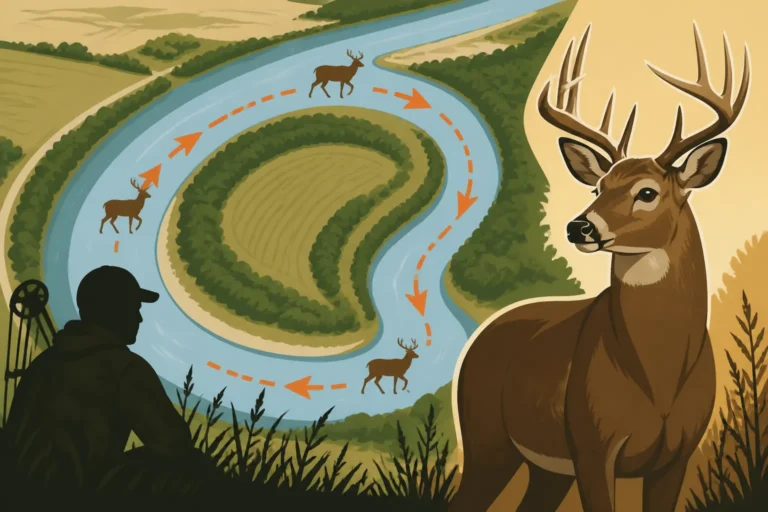
When you look at a big Kansas reservoir, it's easy to get overwhelmed by all that open water. But for ducks and geese, certain features stand out. They're looking for safety, food, and shelter from the wind. Start by studying aerial maps, both before the season and in real-time using tools like GoHunt's mapping features. Look for long points that jut out into the lake, especially those with some timber or brush cover on the tip. These points act as natural travel corridors and often concentrate birds. Shallow coves, particularly those with submerged vegetation or standing timber, are prime feeding and resting areas for puddle ducks.
Water levels are a massive factor here. A reservoir can look completely different from one month to the next. What was a deep-water channel in September might be a mud flat in November, exposing new food sources like smartweed seeds or aquatic invertebrates. Conversely, rising water can flood adjacent crop fields or timber, creating fresh feeding grounds in what was previously dry land. Understanding how wind direction pushes water and creates wave action is also critical. Ducks often raft up on the lee side of points or islands to escape heavy chop, or they'll feed in shallower, calmer water where the wind is less impactful. Knowing these dynamics can help you pinpoint where birds will be loafing or feeding. Think about how a place like Milford Wildlife Area Hunting changes with varying water levels – a spot that's fantastic one week might be dry land the next.
Targeting Specific Species on Reservoirs
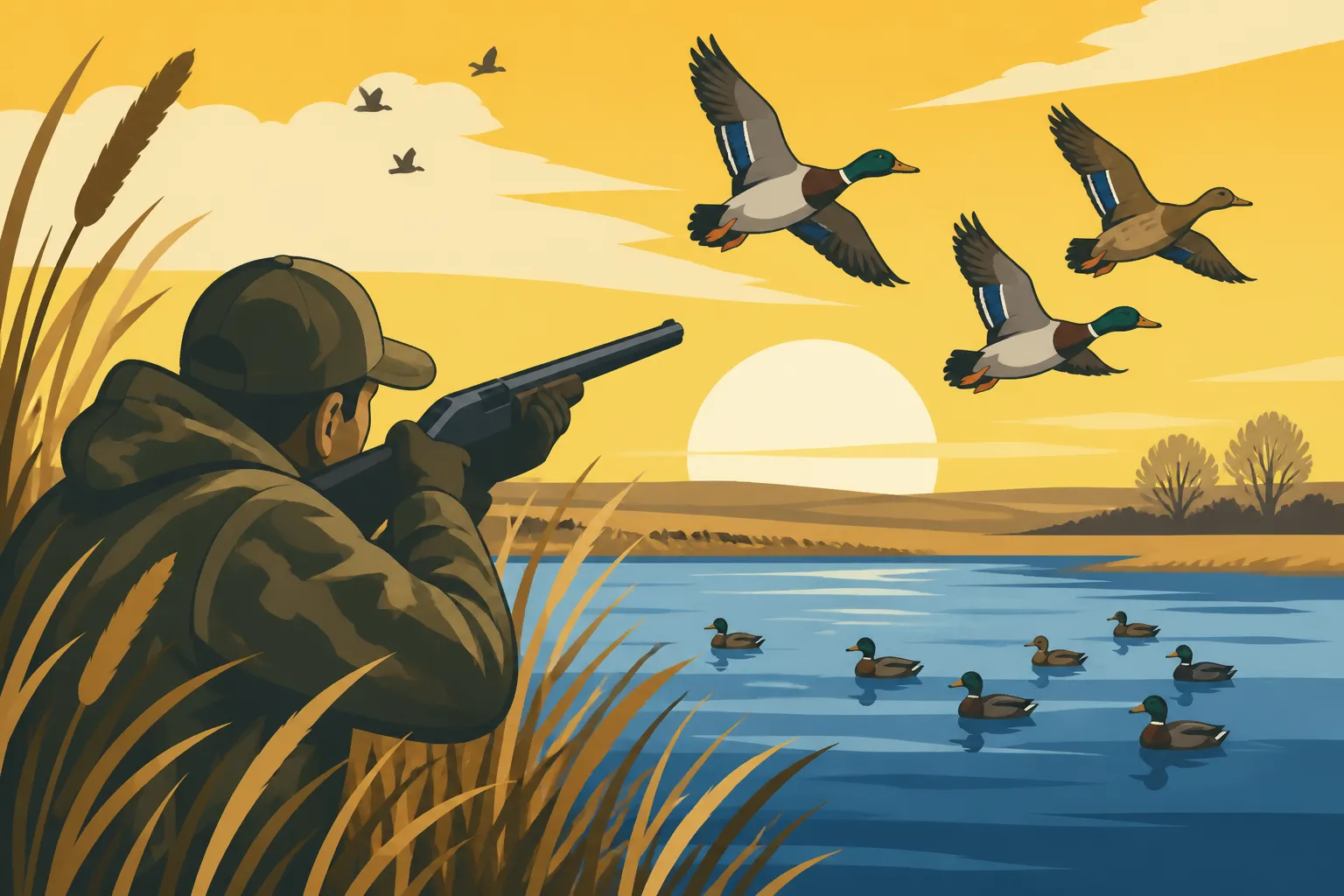
Different waterfowl species have their own preferences when it comes to reservoir habitat, and knowing these can significantly narrow down your search. Puddle ducks, like mallards, pintails, and gadwalls, generally prefer shallower water where they can dabble for food. This means you'll often find them tucked into protected coves, along vegetated shorelines, or in flooded timber and agricultural fields adjacent to the main lake. They're often found in areas that have some emergent vegetation or access to muddy flats.
On the other hand, diving ducks, such as canvasbacks, bluebills, and redheads, are built for deeper water. They'll often be found further out on the main lake, congregating over submerged aquatic vegetation beds or on deep-water points where they can dive for food. If you're specifically targeting divers, you'll need to focus your efforts on these more open-water locations and deploy decoy spreads that are visible from a distance. Geese, whether Canada or Snows, will use the open water of reservoirs primarily as a safe roosting area. They'll spend the night out on the big water, then fly to nearby agricultural fields to feed at first light. So, while you might see them on the reservoir, your best chance to harvest them is often when they're flying to or from their feeding grounds.
Impact of Water Levels and Fluctuations
Kansas reservoirs are often managed for flood control, irrigation, and power generation, which means water levels can fluctuate dramatically throughout the hunting season. These changes aren't just minor inconveniences; they directly dictate where and how waterfowl will use the reservoir. A receding water line can expose vast mud flats, rich with seeds and invertebrates, turning a previously barren area into a duck buffet. This is often when you'll see a surge of puddle ducks moving into these newly accessible feeding grounds.
Conversely, a sudden rise in water level can flood standing corn, milo, or natural timber, creating new, temporary cover and food sources that birds will quickly exploit. What was once dry land can become prime hunting real estate overnight. It's crucial to stay informed about reservoir conditions by checking resources from the Kansas Department of Wildlife and Parks (KDWP) or the Army Corps of Engineers websites, which often provide real-time water level data. Being able to adapt your scouting and setup based on these dynamic changes is paramount. Ignoring these fluctuations means you might be hunting where the birds were last week, not where they are today.
Mastering the Art of Playa Lake Hunting
While reservoirs offer big water, the western half of Kansas is dotted with thousands of unique, temporary wetlands known as playa lakes. These often-overlooked gems can be absolute waterfowl magnets, but hunting them requires a completely different approach due to their ephemeral nature.
The Ephemeral Nature of Playas
Playa lakes are nature's temporary oases, especially prevalent in the high plains of western Kansas. Unlike reservoirs, they don't have permanent water sources; they fill up exclusively from rainfall and snowmelt, and they can disappear just as quickly through evaporation or percolation. This means that a playa that was bone dry in early September could be brimming with water and teeming with ducks after a series of heavy autumn rains. The challenge, and the beauty, of playa hunting lies in this unpredictability.
You can't rely on a fixed hunting spot on a playa; it's a constant game of scouting and adaptation. Hunters often use tools like GoHunt's satellite imagery, combined with real-time precipitation maps and even local landowner insights, to track which playas have water. A playa with water is not just a body of water; it's a critical stopover for migrating birds down the Central Flyway, providing essential resting and feeding grounds in an otherwise arid landscape. Because they are so transient, birds often feel a strong pull to any newly flooded area, making them less wary initially, but just as quick to abandon a spot once the water starts to recede. It's truly a "here today, gone tomorrow" scenario that keeps you on your toes.
Identifying Productive Playas
Not all playas are created equal, even when they're holding water. The most productive playas for waterfowl hunting are typically those that are relatively shallow and feature a good mix of emergent vegetation. Look for playas that have an abundance of smartweed, sedges, or various grasses that become flooded. This vegetation provides both food (seeds) and crucial concealment for resting birds. Playas that are too deep and lack this emergent growth tend to be less attractive to dabbling ducks, although geese might still use them for roosting.
Another key indicator of a productive playa is its surrounding landscape. Waterfowl, particularly mallards and pintails, will often feed in nearby agricultural fields (corn, milo, wheat stubble) during the day or evening, then fly to the safety of a water-filled playa for roosting. Therefore, a playa located amidst a patchwork of feeding fields is often a goldmine. Using resources like the Kansas Online Hunting Atlas or detailed satellite maps can help you identify these patterns. Don't overlook the smaller, less obvious playas, either. Sometimes, a tiny, overlooked basin can hold just as many birds as a large one, especially if it offers seclusion and the right food sources. Remember, the birds are looking for undisturbed areas with easy access to food.
Setting Up for Success on Playas
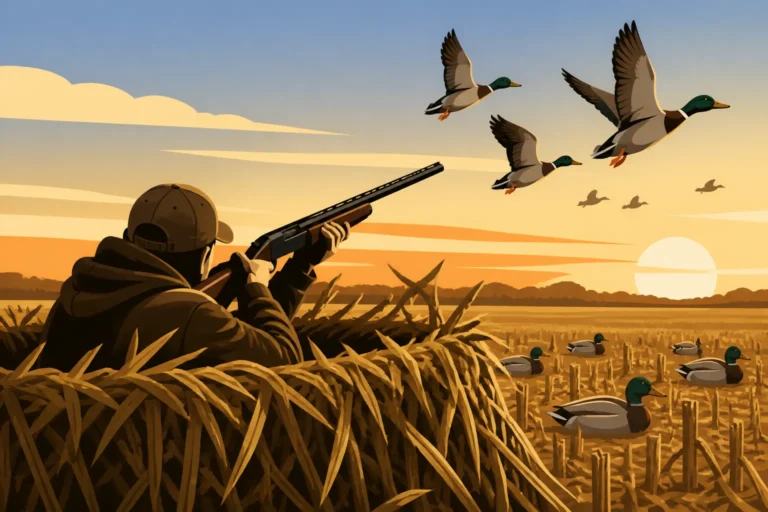
Hunting playas often means hunting in open country with minimal natural cover, which makes concealment absolutely critical. Layout blinds are the go-to choice for playa hunting, as they allow you to disappear into the stubble or mud around the water's edge. However, simply setting up a blind isn't enough; you need to meticulously brush it in with local vegetation, whether it's dry grass, crop stubble, or even mud. The goal is to make your blind look like a natural part of the landscape. Any unnatural lumps or shadows will be easily spotted by wary ducks circling overhead.
Decoy spreads on playas tend to be smaller and more realistic than those used on vast reservoirs. You're often dealing with shallower water, so a handful of high-quality puddle duck decoys, perhaps with a few full-body field goose decoys on the bank, can be highly effective. Creating a natural-looking landing zone directly in front of your blind is essential. Access to playas can be another significant challenge. When they're full of water, the surrounding ground is often soft, muddy, and treacherous. A reliable 4×4 vehicle, an ATV, or a UTV can be invaluable for transporting gear and getting in and out, but sometimes, the only way in is to pack light and commit to a long, muddy walk. Always scout your access route before daylight on hunt day, especially when the ground is wet, to avoid getting stuck. Consider checking the latest information on Playa Lake Hunting After Rain to get a sense of local conditions.
Decoy Spreads and Calling Strategies for Kansas Waterfowl
Successfully bringing ducks and geese into range demands more than just finding birds; it requires smart decoy placement and realistic calling. The tactics you employ will vary significantly between a sprawling reservoir and an intimate playa lake.
Adaptable Decoy Spreads for Varied Conditions
When hunting expansive Kansas reservoirs, visibility is often your primary concern, especially for diving ducks that might be flying high and wide. Larger decoy spreads, sometimes numbering dozens or even hundreds of decoys, are often necessary to grab the attention of passing flocks. For open water situations targeting divers, use sturdy decoys with heavy keels that can handle waves, and spread them out in large "rafts" that mimic natural congregations. Motion decoys, like spinning-wing decoys or jerk strings, can be incredibly effective on reservoirs to add realism and flash, drawing birds from a distance. However, remember that overusing motion on pressured birds can sometimes have the opposite effect.
Conversely, playa lakes and smaller, more confined wetland areas usually call for a more intimate approach. Here, a smaller, more realistic spread of a dozen to two dozen high-quality puddle duck decoys often outperforms a massive, unnatural spread. The focus should be on creating a relaxed, feeding scenario. Often, a combination of floating duck decoys on the water and a few full-body goose decoys on the nearby bank can be deadly, making the area look safe and inviting. When setting up in open country, utilizing layout blinds with natural brushing is key. The goal isn't just to attract birds but to make them feel comfortable enough to commit to landing right in your kill hole. This strategy is also effective if you're Decoying a Kansas Whitetail Buck from a treestand, although the species are vastly different, the concept of natural attraction remains.
Mastering the Call for Kansas Ducks and Geese
Calling waterfowl isn't about calling to every bird you see; it's about communicating with them and knowing when to talk, and more importantly, when to shut up. For ducks, especially mallards, a range of calls is essential. Start with a loud hail call to get their attention from a distance, but as they get closer, transition to more contented quacks, feeding chuckles, and greeting calls. The key is realism and varying your cadence. Listen to real ducks; they aren't machines. There are many great calls out there, such as those from Zink Calls, or Rich-N-Tone, but the call is only as good as the caller.
For geese, calling tends to be more about short, sharp clucks and moans, punctuated by the occasional loud honk. Canada geese are highly social birds, and their calling reflects this. A series of short, confident clucks can often pull a wary flock in. Snow geese, on the other hand, require a cacophony of high-pitched, often frantic-sounding calls to replicate their massive flocks. Remember, if birds are locked up and committed to your spread, stop calling. Let the decoys do the work. Overcalling can quickly flare educated birds. Practice your calling often, both at home and in the field, to develop confidence and realism.
Decoy Placement and Wind Direction
Understanding wind direction is perhaps the most crucial element in effective decoy placement. Waterfowl, much like aircraft, always land and take off into the wind. This fundamental principle should dictate how you set up your decoys relative to your blind. You want the birds to finish their approach directly in front of you, giving you the best possible shot. Therefore, your blind should ideally be positioned with the wind at your back, or slightly quartering from one side, creating a natural landing strip directly into the wind, in front of your hidden position. This concept is thoroughly explored in tactics like Reading a Kansas Wind for Waterfowl.
Within your spread, create a clear "landing zone" or "kill hole" – an open pocket of water where you want the birds to land. This can be a "J" or "U" shape in your decoy spread, with the open end facing into the wind. For ducks, keep your decoys relatively close to your blind, perhaps 15-30 yards out, to ensure clean shots. For geese, especially Canada geese, a more spread-out, natural-looking spread is often better, mimicking their tendency to graze loosely in a field. Full-body goose decoys placed on dry ground near the water's edge can add significant realism. Pay attention to the sun's position as well; you generally want the sun at your back, shining into the birds' eyes as they approach, making it harder for them to spot your blind.
| Feature | Reservoir Hunting | Playa Lake Hunting |
|---|---|---|
| Water Body | Large, permanent, managed water bodies. | Small, temporary, rain-fed basins. |
| Predictability | More stable water levels (though still dynamic). | Highly unpredictable; water appears and disappears. |
| Visibility | Often wide open, requires large spreads to be seen. | Can be open, but often smaller, intimate settings. |
| Species | Attracts puddle ducks, divers, and geese (roosting). | Primarily puddle ducks and feeding geese. |
| Access | Often boat-dependent; ramps, public access points. | Can be challenging; muddy, off-road vehicle often needed. |
| Concealment | Boat blinds, bank blinds, natural vegetation. | Layout blinds, extreme brushing-in. |
| Scouting | Aerial maps, water level reports, boat scouting. | Satellite imagery (GoHunt), precipitation tracking, driving roads. |
| Decoys | Large, varied spreads, motion decoys prominent. | Smaller, realistic spreads; focus on feeding scenario. |
| Pressure | Can be high, especially on popular public spots. | Varies; can be very low if remote, but quickly attracts hunters. |
Scouting and Adaptability: The Key to Success in Kansas
Waterfowl hunting in Kansas is rarely about finding a "secret spot" and hunting it all season. It's about constant scouting, understanding bird behavior, and being willing to adapt your plans on the fly. Kansas weather and bird movements are too dynamic for a static approach.
Pre-Season and In-Season Scouting
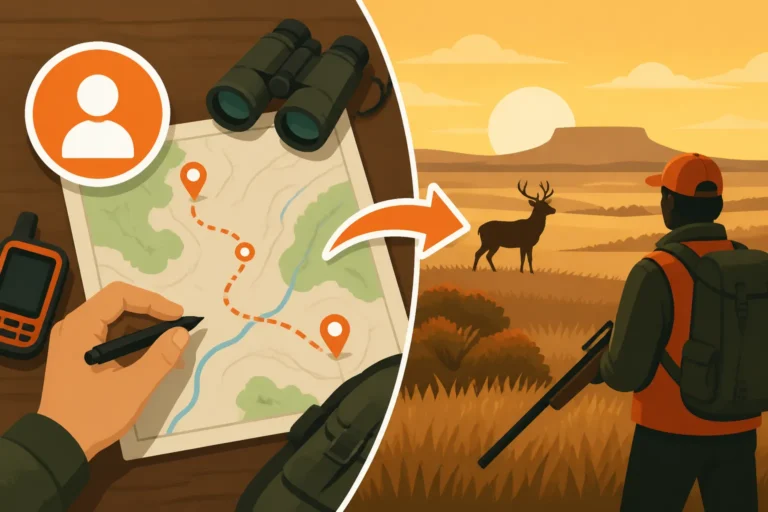
Your waterfowl season success begins long before opening day with thorough pre-season scouting. Start by using digital mapping tools like GoHunt or Google Earth to identify potential hunting areas on reservoirs, state wildlife areas, or even private playas (with permission). Look for key features like shallow flats, timbered coves, pinch points, and agricultural fields adjacent to water. Pay attention to historical aerial imagery to see how water levels have changed over time and where vegetation growth typically occurs. This helps you build a mental map of potential hotspots.
Once the season opens, in-season scouting becomes a daily ritual, especially for playa lakes. Drive country roads at dawn and dusk, watching for birds flying to and from feeding and roosting areas. Bring good binoculars or a spotting scope and spend time glassing fields and water bodies from a distance, noting where birds are landing, what they're feeding on, and how they're reacting to pressure. Remember, what was hot yesterday might be cold today. Don't be afraid to pull up stakes and move to a new location if your initial spot isn't producing. Being mobile and willing to put in the windshield time is often the difference between success and frustration. This dedication to on-the-ground intelligence is a key takeaway from strategies for Public Land Deer Hunting in Kansas.
Understanding Weather and Migration Patterns
Kansas lies directly in the heart of the Central Flyway, making it a critical stopover for millions of migrating waterfowl. Understanding weather patterns is paramount because weather dictates migration. Cold fronts, particularly those sweeping down from the north with strong winds and dropping temperatures, are often signals for new waves of birds to push into Kansas. Keep a close eye on long-range forecasts and radar; a major weather event hundreds of miles north of you could mean fresh ducks and geese arriving on your hunting grounds in a few days.
Conversely, prolonged periods of warm, stable weather can stall migration, meaning birds might linger further north or simply become less active. In these conditions, your tactics might need to shift from intercepting migrating birds to focusing on local birds that are loafing or seeking midday food sources. Different species also have different migration timelines. Early season often sees teal, wood ducks, and early-arriving pintails, while the late season is dominated by mallards, larger Canada geese, and snow geese. Knowing these general timelines, combined with real-time weather, helps you anticipate what birds you might encounter and adjust your calling and decoy spreads accordingly. Information from Duck and Goose Migration Timing can be incredibly helpful here.
Adapt Your Tactics to Pressure
Waterfowl are intelligent and learn quickly, especially when subjected to consistent hunting pressure. On popular public land, like many of Kansas's state wildlife areas or Corps of Engineers reservoirs, birds can become incredibly wary after just a few days of hunting. They'll flare at the slightest hint of an exposed hunter, a poorly brushed blind, or unrealistic calling. This is where adaptability truly shines.
When hunting pressured birds, consider scaling back your approach. Smaller, more realistic decoy spreads, minimal calling, and absolute concealment become even more critical. Look for less accessible areas that other hunters might overlook, or consider hunting mid-week when pressure is typically lower. Sometimes, moving away from the main concentrations of hunters to a smaller, more secluded pothole or a less obvious corner of a reservoir can yield better results. Birds will often seek out these quieter refuges. Being aware of Hunting Pressure Patterns on Kansas Public Land can give you an edge, helping you predict how birds will react and adjust your strategy to stay one step ahead. If birds are flaring at long range, it’s a clear sign you need to re-evaluate your concealment or adjust your setup.
Gear Essentials for Kansas Waterfowl Hunters
Being properly equipped for Kansas waterfowl hunting isn't just about comfort; it's about safety, efficiency, and ultimately, success. The varied terrain and conditions, from reservoir depths to muddy playas, demand specific gear.
Blinds and Concealment
Effective concealment is non-negotiable for successful waterfowl hunting in Kansas. Without it, even the best calling and decoy spread will fail to fool wary birds. For open-field or playa hunting scenarios, a high-quality layout blind is your best friend. These low-profile blinds allow you to lie down and disappear into the surrounding stubble or grass. However, the blind itself is only half the battle; meticulous brushing-in with natural vegetation from your immediate surroundings is crucial. If you're hunting a corn field, use corn stalks. If it's a grassy playa, use dried grasses and weeds. The goal is to break up your outline and blend seamlessly with the environment.
For reservoir hunting, especially if you're targeting open-water divers or hunting from a boat, a boat blind is essential. These can be custom-built or manufactured systems that attach to your boat, allowing you to hide inside while on the water. On the shoreline, you might need to construct a temporary bank blind using natural cover like cattails, brush, or whatever is available. Always wear camouflage clothing that matches your blind and the predominant colors of your hunting environment. A good face mask or face paint is also critical, as a shiny face is easily spotted by overhead birds.
Waders, Boats, and Transportation
Kansas waterfowl hunting often involves water, mud, and sometimes significant distances, making proper footwear and transportation critical. Neoprene or breathable chest waders are an absolute must. They allow you to set decoys, retrieve downed birds, and navigate shallow, mucky areas without getting soaked. Choose a pair that is durable and fits well, as you'll be spending a lot of time moving in them.
For reservoir hunting, especially on larger lakes like Wilson, Cheney, or Perry, a reliable boat is often necessary. A sturdy jon boat, equipped with a shallow-water motor, is a popular choice for accessing remote coves, setting large decoy spreads, and retrieving birds quickly. Even a canoe or kayak can be useful for smaller water bodies or accessing quiet backwaters. If you're venturing out on larger, open water, ensure your boat is sea-worthy and you have all required safety gear, including life jackets. For playa lakes and other remote spots, a tough 4×4 truck or an ATV/UTV can be invaluable for navigating deep mud, crossing rough terrain, and hauling decoys and blinds into position. Always scout your access routes beforehand to avoid getting stuck – a common plight when hunting Playa Lake Hunting After Rain.
Firearms, Ammunition, and Safety
A reliable 12-gauge shotgun is the standard firearm for waterfowl hunting, though 10-gauge and 20-gauge options are also popular. Pump-action or semi-automatic shotguns are preferred by many for their capacity and quick follow-up shots. The most critical aspect of ammunition is ensuring you are using non-toxic shot, as required by federal law for waterfowl. Steel shot is the most common and affordable option, but higher-performing alternatives like bismuth and tungsten alloy offer better density and knock-down power.
Choose shot sizes appropriate for the birds you're targeting: smaller shot (e.g., #2, #3, #4 steel) is typically used for ducks, while larger shot (e.g., BB, BBB, T steel) is better suited for geese. Always pattern your shotgun with your chosen ammunition to understand its effective range and shot spread. Safety should always be your top priority. Familiarize yourself with and follow all firearm safety rules. When hunting from a boat, always wear a U.S. Coast Guard-approved personal flotation device (PFD). Be aware of your surroundings, other hunters, and ensure you have a safe shooting lane, especially on public land. It's a fundamental part of the overall hunting experience, similar to ensuring Shot Placement on a Whitetail at Twenty Yards during deer season.
Navigating Regulations and Public Access
Hunting waterfowl in Kansas means playing by the rules, both federal and state. Understanding the ever-changing regulations and knowing how to access public hunting grounds are crucial for a legal and successful hunt.
Kansas Waterfowl Regulations and Permits
Before you even step foot in the field, you need to ensure all your paperwork is in order. For waterfowl hunting in Kansas, you'll need a valid Kansas hunting license, which varies in cost for residents and non-residents. Additionally, all waterfowl hunters 16 years of age and older must possess a federal duck stamp, signed across the face. This stamp is vital for funding wetland conservation efforts. A less commonly known, but equally important, requirement is the Kansas Harvest Information Program (HIP) registration. This registers you with the U.S. Fish and Wildlife Service, allowing them to collect harvest data to manage waterfowl populations. Getting your Kansas HIP Registration is a simple, often free, process when you buy your license.
Beyond these basic permits, it's absolutely critical to stay up-to-date on specific season dates, daily bag limits, and possession limits for various species. These regulations can change year to year and are often species-specific (e.g., mallards, pintails, canvasbacks have different bag limits than teal or gadwalls). Shooting hours, which are typically from one-half hour before sunrise to sunset, must also be strictly adhered to. Always consult the most current Kansas Hunting & Trapping Regulations Summary, published annually by the KDWP, as rules can vary by zone, as discussed in Kansas Waterfowl Season Zones, or specific public areas.
Public Hunting Opportunities
Kansas offers a wealth of public hunting opportunities for waterfowl, primarily through its extensive system of reservoirs and State Wildlife Areas (SWAs). Many of the large reservoirs, often managed by the U.S. Army Corps of Engineers, have designated public hunting zones. These areas can provide excellent hunting, especially during peak migration. Kansas Reservoirs and Corps of Engineers Land can provide more detail on these accessible areas. State Wildlife Areas, such as Cheyenne Bottoms, Quivira National Wildlife Refuge (with specific rules), or Jamestown, are managed by KDWP specifically for wildlife and often feature prime wetland habitat. However, many SWAs may have additional, site-specific regulations, such as draw systems for certain pools, restrictions on boat motors, or designated refuge areas where hunting is prohibited.
While less common for direct waterfowling, the Kansas Walk-In Hunting Access (WIHA) program also includes some wetland tracts, though these are typically smaller and more focused on upland birds or deer. For playas, public access is less common, and most productive playa hunting occurs on private land with landowner permission. Regardless of where you hunt, it's your responsibility to know where you are at all times. Use mapping apps like GoHunt or onX Hunt to clearly identify property lines and public land boundaries. The onX Layers for Kansas Land Status can be a game-changer for navigating these complex boundaries and ensuring you’re hunting legally.
Respecting Landowners and Hunting Ethics
Even when hunting public land, it's vital to maintain a high standard of hunting ethics and respect for private property, especially in Kansas where public and private lands often intermingle. If you're hunting near private land, always be mindful of property lines. If a bird falls on private property, you generally need the landowner's permission to retrieve it. Crossing property lines without permission, even to retrieve game, is trespassing and can lead to legal issues and damage the reputation of all hunters.
Leave no trace. Pack out everything you pack in, including all spent shotgun shells, empty calls, food wrappers, and any trash. Remove all your decoys and blinds at the end of your hunt. Nothing sours a landowner or public land manager more than finding litter or abandoned gear. Be courteous to other hunters on public land. Give them ample space and avoid setting up too close to another hunting party. Waterfowl hunting can be a social activity, but respecting each other's space ensures a positive experience for everyone. A simple wave or friendly greeting goes a long way. Ultimately, responsible hunting practices ensure that these amazing waterfowl opportunities remain available for generations to come.
Disclaimer
Please remember that hunting regulations and season dates can change. Always consult the latest official Kansas Hunting & Trapping Regulations Summary from the Kansas Department of Wildlife and Parks (KDWP) before heading into the field. This guide is for informational purposes only and should not replace official sources.