Layout Blinds in Cut Fields
Hunting ducks and geese in the wide-open expanse of Kansas cut fields presents a unique challenge: how do you disappear when there's nowhere to hide? Many hunters struggle with birds flaring at the last second, spooked by unnatural lumps or shadows in what should be a seamless landscape. This guide will walk you through everything you need to know about effectively using layout blinds in Kansas cut fields, transforming you from a visible target into an invisible predator.
The Necessity of Layout Blinds for Field Hunting in Kansas
Trying to hide a group of hunters in a vast, flat stubble field using anything other than a layout blind is an exercise in futility. Kansas's agricultural landscapes, while incredible for attracting waterfowl, offer precious little natural cover, and birds are notoriously wary.
The Open Field Challenge
Imagine a flock of hundreds of snow geese, or a tight bunch of mallards, circling high above a newly cut milo or cornfield. From their vantage point, often hundreds of feet in the air, they have an unobstructed view for miles. Any anomaly – a pop-up blind sticking up, a vehicle, or even hunters trying to huddle behind a few stalks of corn – stands out like a sore thumb. These birds have seen it all, especially by mid-season, and they're quick to recognize anything that doesn't belong. The problem is exacerbated when hunting public ground, where birds are constantly educated. You're not just trying to fool one flock; you're trying to fool birds that have been pressured across multiple states along the Central Flyway. This is where the low profile of a layout blind becomes not just an advantage, but an absolute necessity.
Why Traditional Blinds Fall Short
You might consider a traditional A-frame blind or a panel blind, thinking it'll provide enough concealment. While these can work well in timber lines, brushy fence rows, or along dense creek bottoms for deer, they are almost universally ineffective in a wide-open cut field for waterfowl. The sheer height and distinct shape of these blinds break the natural horizon and create hard, unnatural lines against the flat stubble. Ducks and geese, especially those that have been hunted hard, will pinpoint these blinds instantly. Even with a heroic effort to brush them in, it's incredibly difficult to make them truly disappear into a flat field, particularly when viewed from directly overhead or against a low sun angle. The whole idea is to present an inviting, natural-looking spread of decoys, and a big, boxy blind just throws off the entire illusion, sending those wary birds sailing off into the next county.
Selecting and Camouflaging Your Layout Blind for Kansas Terrain
Once you understand why layout blinds are critical, the next step is choosing the right one and making it invisible. The market is flooded with options, but not all are created equal for the specific demands of Kansas field hunting.
Key Features to Look For
When you're shopping for a layout blind, don't just grab the first one on sale. Think about the conditions you'll face in Kansas. First and foremost, consider comfort. You'll be lying in this thing for hours, often in cold, damp, or even frozen conditions. Look for blinds with ample padding, a comfortable headrest, and enough room for you and your gear. Brands like Avery, Final Approach, and Rogers Sporting Goods offer models known for their comfort and durability. Secondly, portability is huge. You might be walking a good distance into a field, or moving your setup multiple times to chase the birds. A lightweight design, often with backpack straps, will be a lifesaver. Thirdly, durability is paramount. These blinds take a beating from mud, stubble, and repeated setups and tear-downs. Look for robust fabrics, strong frames, and quality zippers. Finally, consider the low profile and ease of entry/exit. The lower the profile, the better the concealment. A blind that's easy to get into and out of quickly is vital when birds are dropping in fast.
Blending into the Kansas Landscape
The best layout blind in the world is useless if it sticks out like a black blob in a tan field. Camouflage isn't just about the fabric pattern; it's about making your blind completely disappear. Kansas fields are a mosaic of colors throughout the seasons: golden wheat stubble, tan corn stalks, dark brown milo, and sometimes patches of green winter wheat. You'll want a blind that comes with a stubble strap system that allows you to integrate natural vegetation directly onto the blind.
Start by matching the base color of your blind to the predominant field color. For most cut corn and milo fields, a drab tan or brown pattern is excellent. If you're hunting winter wheat, a more greenish-brown might be better. Then, and this is the crucial part, take the time to brush your blind in with the surrounding vegetation. Grab handfuls of the actual crop stubble, weeds, or whatever is growing in the field and weave it into the stubble straps. Don't be shy; over-brushing is always better than under-brushing. Break up the outline of the blind. Even the smallest piece of a blind's fabric showing can catch a bird's eye. Think about the contrast; if your blind is dark and the stubble is light, even a small patch will be visible. This step takes time, but it's arguably the most important part of field hunting success.
Here's a quick comparison of common layout blind types:
| Blind Type | Key Features | Pros | Cons | Ideal for |
|---|---|---|---|---|
| Standard Layout | Low profile, simple design, often lightweight. | Excellent concealment, highly portable, generally affordable. | Can be less comfortable, limited space. | Solo hunters, highly mobile setups. |
| Backpack Layout | Similar to standard but with built-in shoulder straps for easy transport. | Ultimate portability for long walks into fields. | Often prioritize weight over extreme comfort. | Hunters covering long distances, public land. |
| Extended/Oversized | Larger dimensions, more internal room, thicker padding, often more features. | Maximum comfort, space for gear, good for long waits. | Heavier, larger footprint to brush in, can be bulkier to transport. | All-day hunts, colder weather, larger hunters. |
| Dog Blinds | Designed to conceal a dog, often integrates into a layout blind spread. | Keeps canine hunting partners hidden and warm. | Another item to transport and brush in. | Hunts with retrievers. |
Strategic Deployment: Setting Up Your Layout Blind for Success
Getting your blind to the field is only half the battle. How and where you position it, along with your decoys, determines whether those birds commit or peel off.
Decoy Spreads and Blind Placement
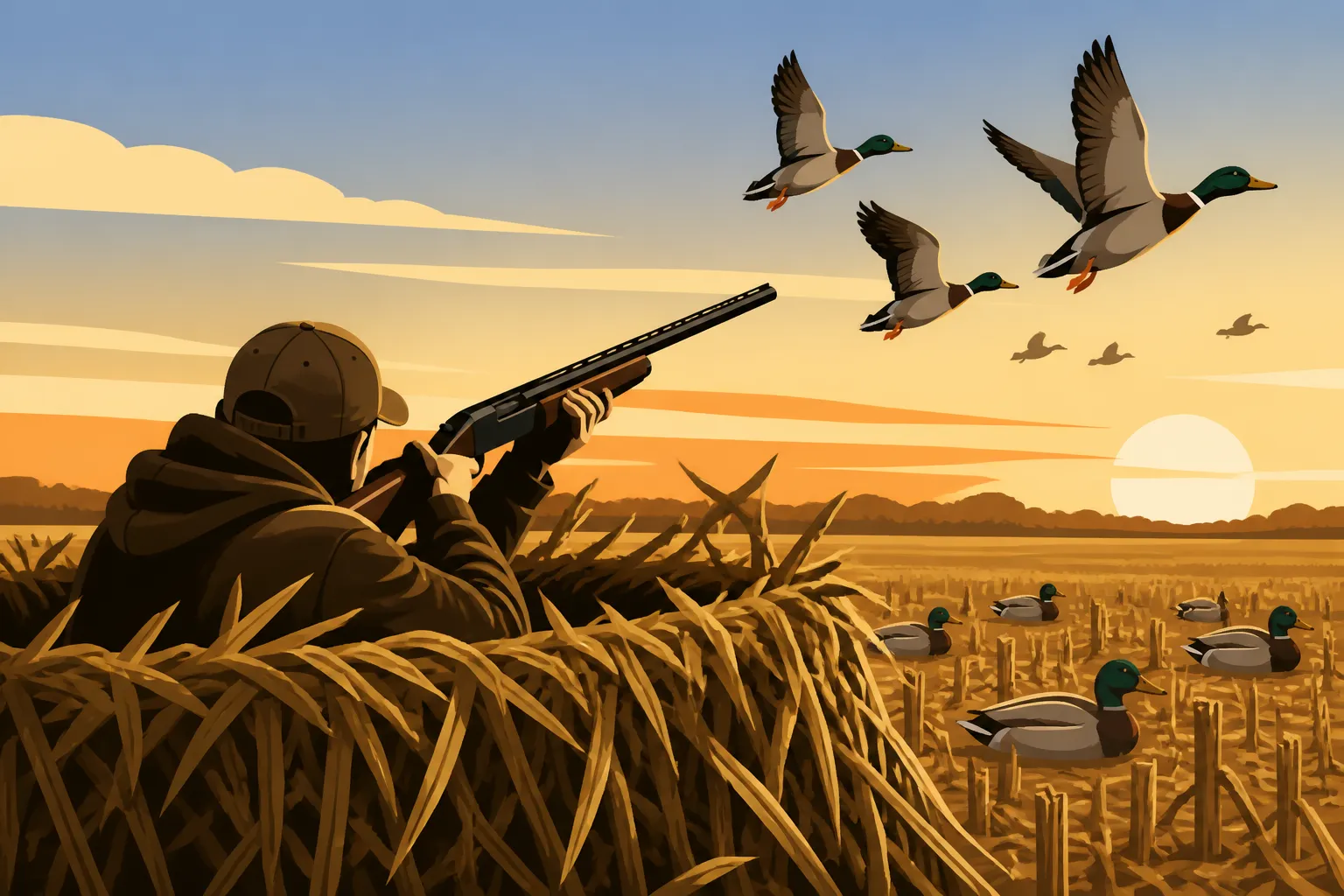
The classic mistake many new field hunters make is simply dumping decoys in a random pile and placing blinds nearby. Waterfowl, especially geese, fly into feeding areas with a certain natural flow. Your decoy spread should mimic this. A common and effective setup is a "J" hook or a "U" shape, with the open end of the shape facing into the prevailing wind (this is often referred to as the "landing zone"). Your layout blinds should be positioned at the back of this "U" or "J," within shooting range of where you expect birds to land.
Don't place your blinds in the landing zone itself; birds will spot them instantly. Instead, place them approximately 15-25 yards upwind or crosswind from the ideal landing spot. This gives birds space to finish their approach without flying directly over your blinds. For geese, closer to 15-20 yards is often ideal, as their large bodies offer a good target. For ducks, which are smaller and faster, 20-25 yards might be better to give them a bit more time to settle. When you're thinking about the spread, imagine how natural birds would set up in a field. Are they scattered randomly, or are they somewhat grouped? A mix often works best. For a detailed look at how to arrange your spread, consider researching different decoy spreads that work for Field Hunting Geese in Stubble.
Reading the Wind and Sun
Wind direction is paramount in waterfowl hunting. Birds almost always land and take off into the wind. This means your landing zone needs to be positioned directly into the wind, giving them an easy approach. Your blinds should then be placed downwind of this landing zone, allowing you to shoot at birds as they cup their wings and commit. Pay close attention to subtle shifts in the wind throughout the day; what was a perfect setup at sunrise might need adjustments by noon.
The sun can also be your best friend or worst enemy. Always try to position your blinds so the sun is at your back, shining into the faces of approaching birds. This makes it harder for them to see you and your blinds, while giving you a clear, glare-free view of the birds. Nothing is more frustrating than having a beautiful flock of birds come in perfectly, only to have them silhouette against the sky, making identification and shot placement incredibly difficult. Use tools like GoHunt or other reliable weather apps to check wind direction and sun position for your specific location and time of day. This foresight allows you to plan your setup before you even step foot in the field, saving you precious hunting time. Also, understanding Wind and Thermals on a River Bank for deer can give you insights into how wind affects all wildlife movement.
Maximizing Your Hunt: Comfort, Safety, and Scouting
Successfully using layout blinds isn't just about hiding; it's about enduring the elements, staying safe, and continually putting yourself in the right spot.
Staying Warm and Concealed
Kansas weather can be notoriously unpredictable. A mild September morning can give way to a frigid December afternoon. Staying warm in a layout blind is crucial for comfort and focus. Layering is key, with moisture-wicking base layers, insulating mid-layers, and a waterproof/windproof outer shell. Hand warmers and toe warmers are absolute essentials. Many hunters also bring a small ground pad or foam mat to put under their blind for added insulation from the cold, damp ground. Remember, a comfortable hunter is a patient and effective hunter.
Concealment isn't just about brushing in; it's also about minimizing movement. Once birds are working your spread, even a slight shift of your head or the rustle of your jacket can send them flaring. Practice getting into a comfortable shooting position before birds arrive. Keep your calls close at hand and minimize reaching for anything. If you're hunting with multiple people, communicate non-verbally as much as possible, using subtle hand signals to indicate incoming birds or when to call the shot.
Safety First in the Field
Hunting in layout blinds, especially with multiple hunters, requires strict adherence to safety protocols. A primary concern is swinging on birds and ensuring you have a clear zone of fire. Before the hunt begins, establish clear shooting lanes and zones for each hunter. Designate a "shot caller" who will communicate when it's safe to engage birds. Always know where your hunting partners are. It's often recommended to wear some form of hunter orange when walking into and out of fields, and to remove it once you are in your blind and fully concealed. During the firearm season, Kansas requires hunter orange to be worn on the upper half of the body. Even if it's not strictly required for waterfowl in layout blinds, it's a good practice to be visible when not actively hunting. Knowing Hunter Orange Rules During Firearm Season is critical for deer hunting and general safety.
Another safety aspect is having a clear understanding of your surroundings. While focused on incoming birds, be aware of any farm equipment, power lines, or other obstacles that might be in or near your shooting area. Always confirm your target and what's beyond it before taking a shot.
Utilizing Scouting Tools
The best layout blind setup won't help if you're in the wrong field. Scouting is perhaps the single most important factor for consistent waterfowl success in Kansas. This means more than just driving by fields; it means active, persistent searching for where birds are currently feeding and loafing.
Tools like GoHunt are invaluable for e-scouting. You can use their mapping features to identify potential cut fields, water sources, and access points. Satellite imagery can show you existing stubble patterns, potential hidden sloughs, and even past feeding activity. Cross-reference this with local knowledge and current aerial reconnaissance (driving around or using a drone if legally permitted for scouting purposes) to pinpoint hot spots. The pattern of geese and ducks in Kansas fields can change daily, sometimes hourly, due to pressure, weather fronts, and available food.
Don't just look for birds in the morning; scout midday and in the evenings to see where they are going to roost or loaf between feeding periods. This can give you clues for the next day's hunt. Also, check for fresh sign like droppings and feathers to confirm recent activity. Understanding Late-Season Food Source Hunting for deer can apply here too – birds gravitate to the best food, and knowing how to identify it is key. Furthermore, utilizing techniques like E-Scouting Kansas Farm Country From Home will drastically increase your odds of locating prime hunting spots, as will learning how to read Milo and Corn Stubble Deer Patterns, which often correlate with good waterfowl feeding areas. If you're looking for Waterfowl Hunting Kansas Reservoirs and Playas, your scouting strategy will shift slightly, but the core principle of finding current bird activity remains.
Disclaimer
Please remember that hunting regulations and land access rules can change frequently. Always consult the latest Kansas Department of Wildlife, Parks and Tourism (KDWP) regulations before heading afield. This guide provides general advice and should not be considered a substitute for official state regulations or responsible hunting practices.