Rattling Volume for Open Country
It’s a scenario every Kansas whitetail hunter knows all too well: you’re sitting in your stand, rattling antlers together, trying to mimic a fight, and you can’t shake the feeling that your efforts are simply vanishing into the vast, open plains. How loud is too loud? How quiet is too quiet? The wind seems to eat your calls, and you’re left wondering if any buck within a mile even heard you. This guide is all about cutting through that uncertainty, helping you master rattling volume specifically for the unique, often expansive, open country of Kansas, so you can draw in those elusive big bucks.
Understanding the Acoustic Challenges of Open Kansas Country
Hunting whitetails in Kansas often means dealing with wide-open spaces, whether it's vast crop fields, sprawling CRP grasslands, or thinly timbered creek bottoms that don't offer much in the way of natural sound dampening. This environment presents some serious acoustic challenges that can make rattling feel like an exercise in futility if you don't adjust your approach.
Wind as Your Primary Adversary
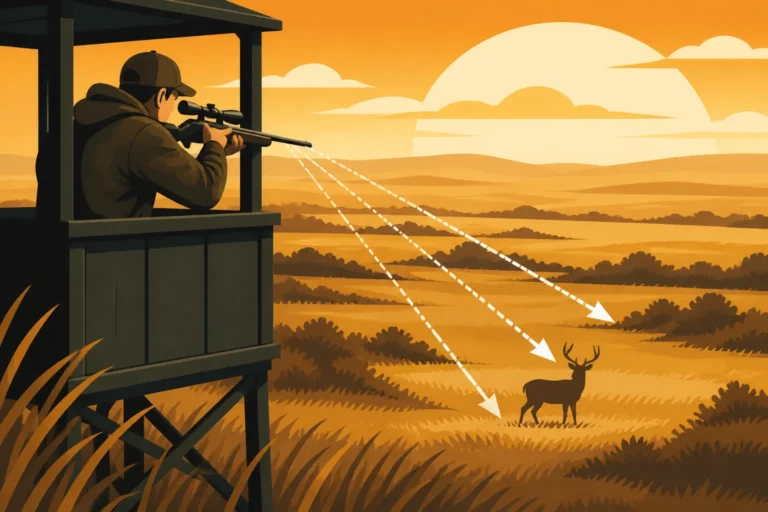
If there's one constant in Kansas, it's the wind. It’s a powerful force that can be both your friend and your foe when it comes to rattling. When the wind is blowing, it’s not just carrying your scent away; it's also dictating how far and how clearly your rattling sounds will travel. A strong headwind will absolutely gobble up your calls, making them sound weak and distant even to a nearby deer. Conversely, a favorable tailwind can carry your sounds much further than you might expect, but then you have to contend with your scent blowing straight to where you expect the buck to come from.
Think about it from a buck's perspective: he's evolved to use his ears to detect danger and opportunity. If a fight breaks out, he wants to know where it is. But if the wind is swirling or consistently blowing, that sound can be distorted, muffled, or simply lost in the ambient noise of the prairie. You might be making a furious racket, but 300 yards downwind, it could sound like a couple of squirrels rustling in the leaves. This is why paying close attention to the wind, not just for scent control but for sound propagation, is absolutely crucial. You have to consider how much energy to put into your rattling to punch through that wind and carry the sound effectively.
Lack of Natural Sound Barriers
Unlike dense, mountainous regions or heavily forested areas, much of Kansas's hunting landscape lacks significant natural sound barriers. We don't have towering rock faces to echo sound or thick, contiguous timber blocks to muffle it. Even our shelterbelts and creek draws, while offering cover, often consist of thinner tree lines or cedars that don't absorb sound as effectively as, say, an old-growth oak forest. This means two things: first, your sound can travel further in some directions, but second, it can also dissipate quickly without anything to reflect or concentrate it.
Imagine standing in a wide-open field and yelling. Your voice carries, but it doesn't bounce back or get amplified. Rattling works similarly. While you want your sound to carry, you also need to ensure it has enough "body" to sound convincing rather than just a faint clinking. This lack of barriers also means bucks in open country are often more attuned to subtle changes in sound, and a poorly executed or unrealistic rattling sequence can be quickly dismissed. You're trying to create an auditory illusion of a fight, and if the environment isn't helping to sell that illusion, you've got to work harder with your technique.
Deer Behavior and Caution in Exposed Areas
Whitetail bucks, especially mature ones, are incredibly cautious creatures. In open country, where cover is often sparse or broken, they are even more so. They know they're exposed, and they rely heavily on their senses – sight, smell, and hearing – to detect threats before they become problems. When they hear a rattling sequence, their first instinct might not be to charge in, but rather to circle downwind, approach cautiously, and try to get a visual or a scent of what's happening.
This inherent caution means your rattling has to be not only audible but also believable. A buck that senses something is off – perhaps the sounds are too weak, too artificial, or seem to come from an exposed area with no logical cover for a fight – is far less likely to commit. They might hold up at the edge of a Cedar Thickets as Bedding Cover or a milo field, trying to pinpoint the source without fully exposing themselves. You need to consider their wary nature when choosing your rattling volume and duration, aiming for a convincing portrayal of a real interaction, not just noise.
Matching Rattling Volume to Specific Scenarios
The idea that there's one "perfect" rattling volume for all situations is a myth, especially in the diverse open country of Kansas. A good hunter adapts, and that means adjusting your rattling volume based on a myriad of factors: the time of year, weather conditions, the specific terrain, and your proximity to known deer hangouts. Think of your rattling antlers as an instrument, capable of a range of dynamics, from a soft whisper to a thunderous crescendo.
The Soft Rattle: Subtle Invitations
Sometimes, less is more. The soft rattle, characterized by gentle clicks, light rubbing, and minimal impact, is your go-to when you're trying to coax a buck into a close encounter. This approach is particularly effective during the early pre-rut or when hunting pressured public land where deer are on high alert. You’re not trying to simulate an all-out brawl; you’re hinting at a mild dispute or some sparring.
When to use it:
- Early Season/Pre-Rut: Bucks are still establishing pecking orders, and aggressive fights are less common. Soft sparring sounds are more natural. This works well before the main event, when you're still doing some Scouting Kansas Walk-In Tracts Before the Opener.
- Close Quarters: If you're tucked into a small timber patch, a brushy fence line, or a dense plum thicket, a soft rattle can be incredibly effective at drawing in bucks that are already nearby. You don't want to blow them out by sounding like a freight train.
- Pressured Areas: On heavily hunted public land or even small private parcels where deer have encountered human presence, a subtle approach can be more inviting and less alarming. Deer in these areas are often wary of anything too loud or out of place.
- Light Wind: When the wind is barely a whisper, even soft sounds can carry surprisingly well, and you want to avoid making too much noise that might alert every animal in the zip code.
How to execute: Instead of crashing the antlers together, gently tickle them, rub them, and tap them together. Incorporate a few light grunts. The goal is to make it sound like two young bucks testing each other, or a mature buck rubbing a tree and then lightly clicking antlers. This method is about piquing curiosity, not challenging dominance.
The Moderate Rattle: Drawing Them In
The moderate rattle is your workhorse, the most versatile volume for many Kansas hunting scenarios. It strikes a balance between being audible enough to travel a good distance and not so aggressive that it scares off cautious deer. This is often the sweet spot during the heart of the pre-rut and early rut phases, or when you have a light-to-moderate wind that requires a bit more punch.
When to use it:
- Peak Pre-Rut/Early Rut: This is when bucks are starting to get serious. They're cruising, scent-checking, and more willing to investigate a mid-level challenge. You can find out more about When the Kansas Rut Peaks to time this perfectly.
- Mid-Range Distances: When you suspect deer are 200-400 yards away, maybe holding in a distant CRP field or coming out of a distant Milo and Corn Stubble Deer Patterns. You need your sound to cut through the air without sounding fake.
- Light to Moderate Wind: A bit of wind requires a bit more volume to ensure your calls reach their intended audience. The moderate rattle gives you that boost without overdoing it.
- Mixed Terrain: If you're hunting areas with a mix of open fields and scattered timber, a moderate rattle can penetrate the edges of cover and still carry across more open stretches.
How to execute: This involves more forceful clashing and grinding of antlers, simulating two bucks really getting into it. Create pauses, allowing for the "fight" to ebb and flow, and definitely add some Rattling and Grunting During the Kansas Rut in between sequences. The key is realism – imagine how a real buck fight sounds, with moments of intensity and brief lulls.
The Aggressive Rattle: High-Stakes Confrontations
This is your Hail Mary, your "go big or go home" strategy. The aggressive rattle is loud, frantic, and intense, designed to carry over long distances and mimic a full-blown, knock-down-drag-out fight between mature bucks. It’s a high-reward, potentially high-risk tactic, best reserved for specific conditions and the absolute peak of the rut.
When to use it:
- Peak Rut: During the short, intense window when bucks are actively seeking does and are most competitive, an aggressive fight might just be the trigger they need to come barreling in. This is when Kansas Whitetail Hunting Tactics Through the Rut really pay off.
- Long Distances/Heavy Wind: When you need your calls to travel 500+ yards or penetrate a strong Kansas wind. You're trying to create a disturbance that's too significant for a dominant buck to ignore.
- Open, Flat Country: In truly expansive landscapes where sound dissipates rapidly, you need maximum volume to cover ground. Think about hunting a huge section of Walk-In Hunting Access (WIHA) that's mostly grassland or stubble fields.
- Known Big Buck Areas: If you know there’s a dominant buck in the area, a loud, challenging fight might be just what it takes to bring him in, either to break up the fight or assert his dominance.
How to execute: Crash the antlers together forcefully, grind them hard, and maintain a high level of intensity throughout the sequence. Make it sound like pure chaos. Follow with loud, guttural grunts and a Snort-Wheeze on a Cruising Buck if you see a buck heading your way or hear one respond. Remember to watch your surroundings carefully; a buck coming to an aggressive rattle might come in fast and hot. Don't be afraid to put your back into it – really smash those antlers together!
| Rattling Volume | When to Use It | Characteristics | Expected Buck Reaction |
|---|---|---|---|
| Soft Rattle | Early Season, Pressured Land, Close In | Gentle clicks, rubs, light taps, short sequences | Curious, cautious approach; younger bucks |
| Moderate Rattle | Pre-Rut/Early Rut, Mid-Range, Light Wind | Forceful clashes, grinding, realistic fight sequences | Investigates, circles downwind, approaches steadily |
| Aggressive Rattle | Peak Rut, Long Distance, Heavy Wind | Loud crashes, frantic grinding, sustained intensity | Charges in, circles widely, dominant bucks seeking fight |
Mastering Rattling Techniques for Kansas's Expansive Landscapes
Simply smashing antlers together isn't enough to consistently draw in mature whitetails, especially in Kansas's wide-open spaces. You need a nuanced approach that combines sound, location, and visual cues to create a convincing illusion. This is where truly mastering your technique comes into play, turning mere noise into an irresistible invitation.
Incorporating Grunts and Snort-Wheezes
Rattling alone can be effective, but when you combine it with vocalizations, you create a much more realistic and compelling scenario. Deer communicate through a range of sounds, and adding these into your rattling sequence can make the difference between a buck just hearing noise and truly believing a fight is happening.
Grunt Calls That Work in the Pre-Rut and throughout the rut are essential. Think about how a real buck fight sounds: it's rarely just antler-on-antler contact. There are snorts, grunts, heavy breathing, and even the sounds of hooves scuffing the ground. When you're rattling, intersperse your clashing with a few assertive grunts. These can signify a buck asserting dominance, challenging another, or simply expressing agitation. A short, sharp grunt can often seal the deal, convincing a hesitant buck that it's worth investigating.
The snort-wheeze is a powerful, aggressive vocalization that signals a buck's readiness to fight. It's often used by dominant bucks to intimidate rivals or clear out younger bucks. Using a Snort-Wheeze on a Cruising Buck is a high-impact move. When you spot a buck responding to your rattling but holding up, or if you see a non-committal buck walking by at a distance, a snort-wheeze can be the ultimate challenge that pushes him over the edge. It says, "Come here and fight, if you dare!" Be ready for a rapid response when you deploy this.
Remember, the goal is to paint a complete picture with sound. A realistic rattling sequence isn't just a burst of noise; it's a dynamic story told through antler clashes, rubs, grunts, and wheezes, all perfectly timed and delivered.
Strategic Stand Placement for Optimal Sound Carry
In flat country, where every little rise or dip in the landscape can influence sound, your stand placement becomes even more critical. You can have the best rattling sequence in the world, but if you're in a spot where the sound is immediately absorbed or deflected, it won't matter.
When choosing your stand location, especially for rattling, consider these points:
- Elevation: Even a slight rise can help your sound carry further. Look for subtle high points in a field edge, a small knoll in a creek bottom, or the highest point on a Hunting a Single Timber Point. Every foot of elevation helps.
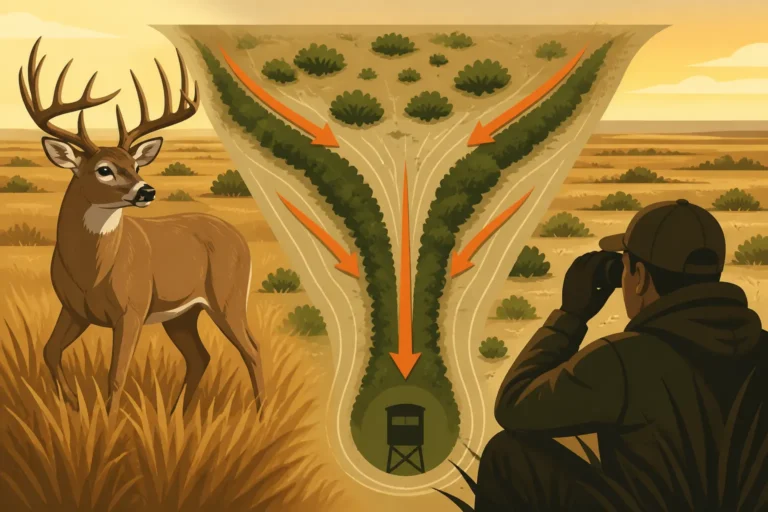
- Natural Funnels: While open country might seem devoid of funnels, deer still use them. Look for areas where different cover types pinch down, like the end of a shelterbelt meeting a creek, or a small patch of timber in a vast field. These funnels concentrate deer movement and can also help channel your sound. A great resource for this is Hunting Terrain Funnels in Flat Country.
- Wind Direction: Always position yourself so the wind is carrying your scent away from where you expect a buck to approach. Simultaneously, consider if that same wind is helping or hindering your sound propagation. Sometimes, you might need to use a slightly higher volume to punch through a crosswind.
- Background Cover: If possible, have some natural cover behind you to help diffuse your silhouette and absorb any stray sounds you make that aren't part of the sequence. This also provides a visual backdrop that can make a decoy more convincing.
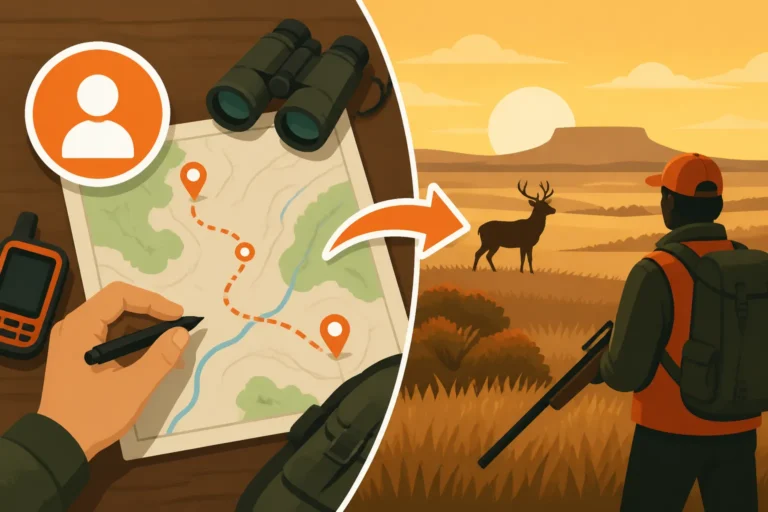
Tools like GoHunt's mapping features can be incredibly useful here. You can identify subtle elevation changes, analyze cover types, and pinpoint potential funnels and bedding areas before you even step foot in the field. This E-Scouting capability helps you select the Best Stand Locations in Flat Farm Country that maximize both your visibility and your rattling reach.
The Power of Visuals: Decoys and Movement
In open country, where deer can see for long distances, adding a visual component to your rattling can drastically increase your success rate. A well-placed decoy acts as a magnet, giving approaching bucks a focal point and convincing them that what they heard is indeed real.
When setting up your Decoying a Kansas Whitetail Buck, consider these factors:
- Buck Decoy vs. Doe Decoy: A buck decoy with a dominant posture can amplify the message of your aggressive rattling, especially during the peak rut. A doe decoy, particularly in combination with a soft rattle or grunt, can appeal to bucks looking for receptive does. Sometimes a combination of both can be lethal.
- Placement and Wind: Always set your decoy upwind or crosswind from your position, so that any buck approaching the decoy will be downwind of it, but not necessarily downwind of you. This allows you to catch the buck before he scents you. Make sure the decoy is visible from a distance but also positioned where a buck can approach it naturally, perhaps along a field edge or a slight rise.
- Minimal Movement: While you might be tempted to rattle vigorously, avoid excessive movement that could spook a cautious buck. Let the decoy do the visual work, and your rattling do the auditory work. However, if you're using a full-sized decoy, a slight rocking motion with a string can add a lot of realism, making it appear as if the deer is alive and moving.
By pairing your expertly crafted rattling sequences with a convincing visual, you create a powerful one-two punch that can draw in even the wariest of Kansas whitetails from vast distances. The combination addresses multiple senses, which is crucial when hunting in environments where deer rely heavily on seeing what they're hearing.
Common Rattling Mistakes and How to Avoid Them
Even seasoned hunters can fall into common traps when rattling, especially in the unique context of open Kansas landscapes. Avoiding these pitfalls can significantly increase your odds of success and prevent you from educating the very deer you're trying to attract.
Over-Calling and Under-Calling
Finding the "Goldilocks zone" for rattling — not too much, not too little — is one of the hardest things to master.
- Over-Calling: This is a frequent mistake. Hunters get excited and keep rattling for too long or too frequently. Imagine two bucks fighting non-stop for ten minutes; it's unrealistic and can make a real buck suspicious. Excessive calling, especially an aggressive sequence, can also spook a deer that’s already close but still trying to pinpoint the source. They might decide it’s too much trouble or simply unnatural and bolt. It’s also important to remember that too much aggressive noise can sometimes deter younger, less dominant bucks who want to avoid a confrontation with bigger deer.
- Under-Calling: On the flip side, some hunters are too timid. They might make a quick, soft rattle and then immediately give up. In open country, where sound dissipates quickly and wind is a factor, an under-called sequence might simply never be heard by the deer you're trying to attract. If a buck is 500 yards away in a stubble field, a gentle tickle of antlers won't even register. You need enough volume and duration to grab attention and carry the sound.
The Balance: The key is to mimic realism. Bucks fight in bursts, with periods of intensity, pauses, and then more intensity. A good sequence usually lasts 30-60 seconds, followed by 15-30 minutes of listening and scanning before another sequence. Adjust based on deer behavior. If you see a buck coming, stop and let him commit. If you don't see anything, wait it out. Sometimes silence after a call is what ultimately brings a curious buck in, as he feels safe to investigate a fight that seems to have just ended. You need to be patient, especially when dealing with Hunting Pressure Patterns on Kansas Public Land where bucks are extra cagey.
Ignoring Wind Direction and Thermals
We've touched on wind for sound, but it's even more critical for scent. Failing to account for wind and thermals is perhaps the single biggest reason why rattling attempts fail. Bucks almost invariably try to circle downwind to get a scent of the "fight" before committing.
- Wind Direction: Always set up so the prevailing wind carries your scent away from where you expect bucks to approach. If the wind is inconsistent or swirling, rattling might not be the best strategy, or you might need to adjust your position frequently. A slight shift in wind can blow your human odor right to an approaching buck, causing him to instantly shut down and vanish. Use apps like GoHunt that integrate real-time wind data and allow you to predict thermals.
- Thermals: In the morning, thermals rise as the ground heats up, carrying scent upwards. In the evening, as the ground cools, thermals fall, carrying scent downwards into creek bottoms and draws. If you're rattling from an elevated position in the evening, your scent might be dropping into a travel corridor below you, busting any approaching deer. Conversely, in the morning, your rising scent might be less of an issue, but a buck could still circle to get your ground-level scent. Always be aware of how the air is moving at different times of the day, especially along river banks. You can learn more about Wind and Thermals on a River Bank to fine-tune your approach.
Your setup should always prioritize scent control first, then optimize for sound. It's better to have your sound slightly hampered but your scent undetectable than to have perfect sound but have a buck wind you at 100 yards.
Static Calling Positions
Staying rooted to one spot while rattling, especially in expansive areas, limits your reach and your ability to adapt. Kansas hunting often calls for mobility.
- Move and Re-position: If you've rattled a few sequences from one spot with no response, don't be afraid to move to another strategic location 100-200 yards away and try again. This allows you to cover more ground, send your sound into different areas, and potentially intercept bucks moving through different travel corridors. When you’re thinking about First Week of November Stand Choice, considering multiple spots for rattling could be key.
- Utilize Terrain Features: Instead of just rattling from an open field edge, try rattling from inside a small timber block, then move to a point where two fence lines intersect, or to the edge of a new crop field. Each spot will offer different sightlines and sound propagation.
- Mobile Hunting: For truly mobile hunters, techniques like Mobile Hunting With a Saddle in Kansas can be extremely effective for covering ground and rattling different areas. You can quickly set up, call a few times, pack up, and move to the next promising location, maximizing your chances across a wide area.
By being dynamic with your calling positions, you're not only increasing the odds of a buck hearing you but also presenting a more varied and less predictable challenge, which can sometimes be the key to bringing in a cagey old whitetail in the vastness of Kansas.
Disclaimer
Hunting is an activity with inherent risks. This guide provides general information and recommendations. Always consult the latest Kansas Department of Wildlife, Parks and Tourism (KDWPT) regulations and obtain necessary licenses and permits before hunting. Stay safe, be ethical, and respect wildlife and private property.