When the Kansas Rut Peaks
Every Kansas deer hunter has felt that gnawing uncertainty: when is the rut actually going to hit its peak this year? It's the golden window we all dream of, the few magical days when big bucks drop their guard and become visible, chasing does across fields and through timber. But trying to nail down that exact timing can feel like trying to catch smoke, leaving us wondering if we're in the right stand at the right time. This comprehensive guide is here to cut through the guesswork and give you a realistic, experience-based understanding of when the Kansas whitetail rut truly peaks, helping you plan your precious hunting days for maximum success.
Understanding the Annual Whitetail Rut Cycle in Kansas
The whitetail rut isn't a single event; it's a dynamic, multi-stage process that plays out over several weeks. Many hunters mistakenly think of "the rut" as only the intense chasing, but that's just one piece of a much larger, more predictable puzzle. In Kansas, with our vast agricultural landscapes and broken timber, understanding each phase helps tremendously in predicting what deer will be doing.
The Predictable Progression of Rut Phases
Before we talk about the peak, it's crucial to understand the phases that lead up to it and follow it. The rut begins with the "early pre-rut," typically in late September to mid-October. During this time, testosterone levels in bucks are on the rise. They start to become more aggressive, laying down rubs and scrapes, which are essentially their calling cards and territorial markers. While you might see some sparring, deer are still largely adhering to their early-season patterns, often hitting reliable food sources. This is a great time for scouting and pinpointing consistent buck travel.
As October progresses into what many call the "main pre-rut," usually from mid-October to early November, things really start to heat up. Bucks are actively seeking out does, but most does aren't quite ready to breed yet. This leads to what's often termed the "chasing phase" or "seeking phase," where bucks are covering serious ground, scent-checking, grunting, and chasing does that aren't receptive. You'll see increased daylight activity as bucks become less nocturnal. This is a high-energy phase for bucks, and their guard can drop significantly as their focus shifts almost entirely to finding a hot doe. Finally, you hit the "peak breeding" or "lockdown" phase, followed by the "post-rut," where bucks are exhausted but still looking for any remaining unbred does.
Distinguishing Kansas's Rut from General Deer Knowledge
While the biological triggers for the rut are universal for whitetails, how the rut appears on the ground can vary based on geography and habitat. In Kansas, unlike dense timber states, our open country, vast croplands, and scattered woodlots mean that deer movement during the rut can be incredibly visible. You might see a buck chasing a doe across a mile-long milo field or cruising the edge of a vast CRP field in broad daylight. This visibility can sometimes make the rut feel more intense than it might in a heavily wooded area where deer activity is naturally more concealed.
Our state's renowned for its trophy whitetails, and healthy populations with a good Buck Age Structure in Kansas can lead to a more drawn-out and competitive rut. Older, more dominant bucks will be actively participating, and the presence of multiple mature bucks ensures constant pressure on does. This widespread visibility of buck movement during the peak is a defining characteristic of hunting the Kansas rut. For bowhunters especially, knowing when to shift from early-season food plots to rut-specific travel corridors is paramount. If you're planning your hunt for September through December, knowing what to expect in each phase will be key to success, as detailed in guides like Bowhunting Kansas Deer From September to December.
Pinpointing the Core Peak Breeding Window
The age-old question, "When does the rut actually peak?" is one that fuels countless hunting camp debates. While anecdotal evidence and personal experiences vary, the biological science points to a surprisingly consistent window for the primary breeding activity in Kansas.
The Power of Photoperiod: Nature's Time Clock
Let's settle one of the biggest misconceptions right away: the rut is not triggered by cold weather or a full moon. Those things can influence how much deer move during daylight, but they don't kick off the breeding cycle. The primary, undeniable trigger for the whitetail rut is photoperiod – the decreasing amount of daylight hours as we move through fall. This biological clock is remarkably consistent year after year, ensuring that fawns are born at an optimal time in the spring.
Because photoperiod is the dominant factor, the window for peak breeding in Kansas whitetails rarely shifts by more than a few days from one year to the next. This is a crucial piece of information for planning your hunts, especially if you're traveling a long distance or have limited time off. You can pretty confidently mark your calendar for the primary breeding window, knowing that nature's alarm clock will go off at roughly the same time every year.
Early November: The True Peak for Kansas Whitetails
Based on decades of biological research and hunter harvest data, the undeniable peak of the whitetail rut in Kansas consistently falls within the first two weeks of November. More specifically, you can typically expect the most intense primary breeding activity to occur from approximately November 5th to November 18th. This is the period when the highest percentage of does come into estrus, and bucks are completely committed to finding and breeding them.
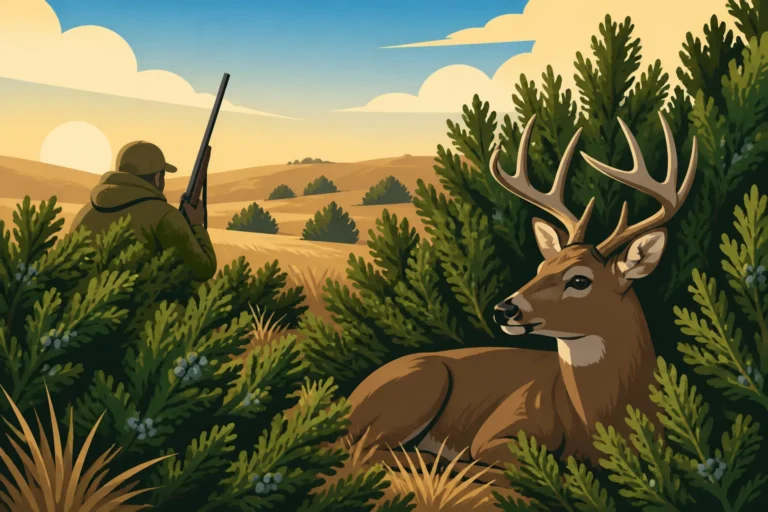
During these approximately two weeks, bucks are often "locked down" with does, meaning they'll stay with a single receptive doe for 24-48 hours, often in dense cover. While this can sometimes make bucks harder to see if they're holed up, the sheer volume of bucks constantly cruising and chasing to find these does means you're far more likely to encounter mature animals on their feet throughout the day. This window is what most hunters are truly referring to when they talk about "the peak of the rut." Analyzing harvest data through resources like GoHunt often confirms these trends, showing increased buck activity and success rates during this period.
Visual and Behavioral Cues of Peak Activity
So, how do you know you're in the peak? It’s not just about the calendar date; it's about what you're seeing in the field. During the peak breeding window, you'll observe pervasive, high-energy activity. Instead of just a single buck following a doe, you might see multiple bucks vying for a single doe's attention. Chasing will be more aggressive, and often less hesitant. Bucks that might have been nocturnal just a week prior will be moving freely in daylight, sometimes even in open fields during the middle of the day.
Scrapes and rubs will be abundant, often refreshed daily, indicating constant buck presence and communication. You might also notice bucks that appear more disheveled, their antlers and bodies scraped from fighting or busting through thickets. Don't be surprised to see bucks actively grunting and rattling even without seeing another deer, hoping to draw in a competitor or a hot doe. If you're witnessing frantic, almost desperate buck movement at all hours, congratulations, you're right in the thick of the Kansas rut.
Factors That Seem to Influence, But Don't Shift, the Peak
It's easy to get caught up in the idea that specific environmental factors drastically change the timing of the rut. We all want a simple explanation for what we observe. While certain conditions can certainly make the rut appear more intense or visible, they don't actually move the biological peak.
Weather's Role: Enhancing Activity, Not Changing Timing
This is perhaps the biggest misconception in deer hunting. Many hunters firmly believe that the first hard cold front of fall "kicks off the rut." I've heard it a thousand times, and honestly, it feels true sometimes. You get a sudden drop in temperature, and suddenly, bucks are everywhere! But what's really happening is that the cold snap isn't starting the rut; it's making the deer more comfortable to move during daylight hours, thereby increasing the observable activity.
Think about it: in warm weather, deer, especially mature bucks, often conserve energy during the day and move more at night. When temperatures drop, especially after a prolonged warm spell, deer can move more freely without overheating. This increased comfort translates to more bucks on their feet during hunting hours, which gives the illusion that the rut has just begun. The does are still entering estrus when their biological clock tells them to, but cool, crisp mornings simply amplify the action you get to witness. So, if your hunt falls during a warm early November, don't despair – the rut is still happening, you just might need to adjust your tactics, perhaps focusing on shade and water sources.
Herd Dynamics and Age Structure's Impact on Observable Rut
The overall health and composition of the deer herd in your specific hunting unit can significantly impact how the rut feels and how spread out the breeding activity appears. In areas with a balanced buck-to-doe ratio and a healthy population of mature bucks, the rut often seems more intense and drawn out. Why? Because there are more bucks of all ages to pursue a limited number of does, leading to more competition and thus more visible activity over a longer period. This is where researching Kansas Deer Harvest Survey Data or reports from Kansas Department of Wildlife, Parks and Tourism (KDWPT) can give you insights into your unit's dynamics.
Conversely, in areas with a skewed ratio (too many does, too few mature bucks), the rut might appear less dramatic or "flashy." A few dominant bucks can breed many does quickly, and with less competition, there's less frantic chasing or fighting to observe. This can make hunters think the rut "was a bust" or "never really happened," when in reality, the breeding still occurred, just with less visible fanfare. This is why consistent management practices and understanding the Buck Age Structure in Kansas are vital for a vibrant hunting experience.
Optimizing Your Hunt During the Kansas Peak Rut
Knowing when the rut peaks is only half the battle. The real challenge, and the true art of hunting, lies in knowing how to capitalize on that intense, yet often chaotic, period. This is where your preparations, scouting, and adaptability truly pay off.
Aggressive Tactics for High-Action Encounters
During the peak rut, bucks are often singularly focused on breeding, which can make them less cautious and more susceptible to aggressive tactics. This is the prime time to embrace calling and decoying. Loud, aggressive rattling sequences, combined with assertive grunt calls and snort-wheezes, can bring a cruising buck on a string. Bucks are actively looking for other deer, whether it's a receptive doe or a challenging rival, so a well-executed calling sequence can imitate precisely what they're searching for. You can learn more about how to make these effective in our guide on Rattling and Grunting During the Kansas Rut.
Furthermore, deploying a deer decoy can be incredibly effective. A buck decoy can challenge a dominant buck or attract a subordinate looking for a fight. A doe decoy, especially when paired with calling, can lure in cruising bucks thinking they've found a hot opportunity. Remember, Decoy Placement and Wind Direction are critical for realism and to ensure a safe shot. Position your decoy quartering away from your stand, and ensure the wind carries your scent away from where the buck will approach the decoy. Don't be afraid to try a "snort-wheeze on a cruising buck" if you see one actively moving through open country—it can often stop them in their tracks or even draw them in for a closer look.
Strategic Stand Placement for Maximum Coverage
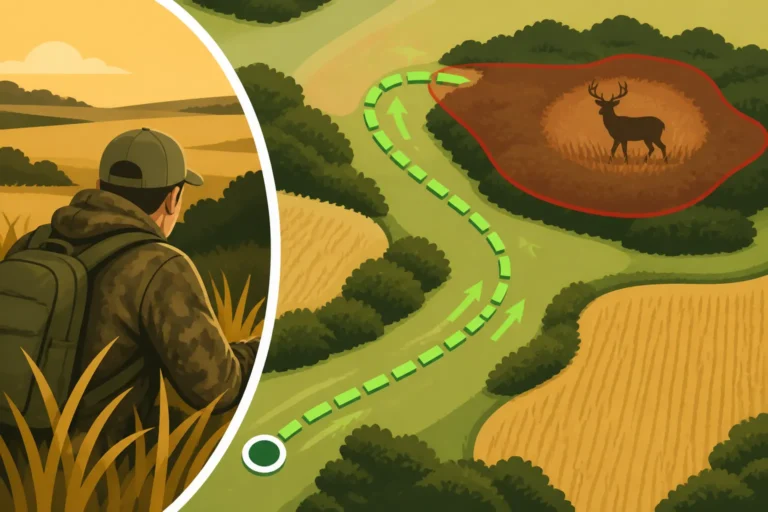
When bucks are actively seeking and chasing, they're often using predictable travel corridors. Forget about hunting specific food sources exclusively; during the peak rut, bucks are moving between bedding areas, checking traditional scrape lines, and cruising through pinch points and funnels, searching for does. This means setting up stands or ground blinds in strategic locations that intercept these movements is crucial.
Focus on terrain features that naturally concentrate deer movement, even in flat Kansas farm country. Look for narrow timber strips, creek bottoms, shelterbelts, fence lines, and areas where cover meets open fields. These "highways" for deer become superhighways during the rut. Inside corners of crop fields, especially where standing cover like CRP Grass and Where Bucks Bed meets an open expanse, are absolute gold mines. Also, consider areas where different types of cover converge, creating a bottleneck. Our article on Hunting Terrain Funnels in Flat Country provides excellent details on identifying these critical spots. During this time, it's often best to be in your stand from dawn until dusk because you just never know when that trophy buck will walk by. This is exactly why your First Week of November Stand Choice needs to be well-considered for maximum visibility and coverage.
Understanding Buck Movement and Responsiveness
During the peak rut, bucks are expending an incredible amount of energy. They're not just moving; they're on a mission. This intense drive means they are often less wary and more forgiving of minor mistakes than at other times of the season. A buck that would typically skirt a field edge wide might now march right down the middle, hot on the scent of a doe.
However, their focus can also be a double-edged sword. If a buck is actively locked onto a hot doe, he might ignore your calls completely, as his attention is entirely consumed. Don't take it personally. But if he's cruising, looking for that next receptive female, he's far more likely to investigate any sound or sight that suggests another deer. Patience and persistence are key. Being ready to adapt your calling or decoying strategy based on the buck's immediate reaction is critical. This relentless pursuit during the first two weeks of November is why many hunters consider Kansas Whitetail Hunting Tactics Through the Rut to be the most exciting and productive time to be in the woods.
| Rut Phase | Typical Dates (Kansas) | Primary Buck Behavior | Recommended Tactics |
|---|---|---|---|
| Early Pre-Rut | Late Sept – Mid Oct | Rubs/scrapes appear, increasing testosterone, sparring, early seeking | Scouting, pattern feeding/bedding, subtle grunt calls |
| Main Pre-Rut | Mid Oct – Early Nov | Seeking, chasing, covering ground, does not yet receptive, aggressive rubs | Aggressive calling, decoying, hunting funnels and travel corridors, all-day sits |
| Peak Breeding | Nov 5 – Nov 18 | Intense chasing, breeding, "lockdown" with does, high daylight movement, frantic seeking | All-day sits, aggressive calling/decoying, hunting dense cover and pinch points, be patient |
| Post-Rut | Late Nov – Early Dec | Bucks recovering, feeding heavily, seeking late-breeding does, less aggressive | Focus on high-calorie food sources, subtle calls for late-estrus does, hunt bedding close to food |
Disclaimer
Hunting is an inherently unpredictable activity, and while this guide provides general insights based on biological data and extensive experience, individual results may vary. Always consult the latest Kansas Department of Wildlife, Parks and Tourism (KDWPT) regulations before heading afield, as rules and seasons can change. Stay safe, be ethical, and respect the land and wildlife.