CRP Grass and Where Bucks Bed
It’s a frustrating scenario many Kansas deer hunters know all too well: you’re looking at an aerial map, and all you see is a vast, homogenous sea of green or brown marked "CRP." It can feel like finding a needle in a haystack trying to figure out where a big buck might choose to bed in what looks like endless grass. This guide is here to break down the mysteries of Conservation Reserve Program (CRP) fields, helping you understand exactly why and where whitetail bucks bed within these crucial habitats, and how you can use that knowledge to your advantage.
The Unseen Sanctuary: Why CRP is Prime Whitetail Bedding
For hunters accustomed to timbered ridges or brushy creek bottoms, a CRP field can seem like an enigma. It’s just… grass, right? But for a whitetail buck, especially a mature one looking for security, thermal regulation, and a vantage point without being seen, CRP fields are far from featureless. These areas, often planted with native grasses like switchgrass, bluestem, and indiangrass, or sometimes introduced species like tall fescue, provide critical cover that's becoming increasingly important across the agricultural landscape of Kansas.
The primary purpose of CRP is conservation – preventing soil erosion, improving water quality, and providing habitat for wildlife. For deer, especially during harsh winters or scorching summers, the dense, tall stands of grass offer incredible thermal cover. In winter, the thick grass acts like a blanket, trapping warm air and shielding deer from biting winds and snow. During the heat of early archery season in Kansas, these same dense stands can provide crucial shade and a cooler microclimate, particularly in low-lying areas or depressions. This ability to regulate body temperature without expending much energy is a huge draw for deer, making CRP much more than just "grass."
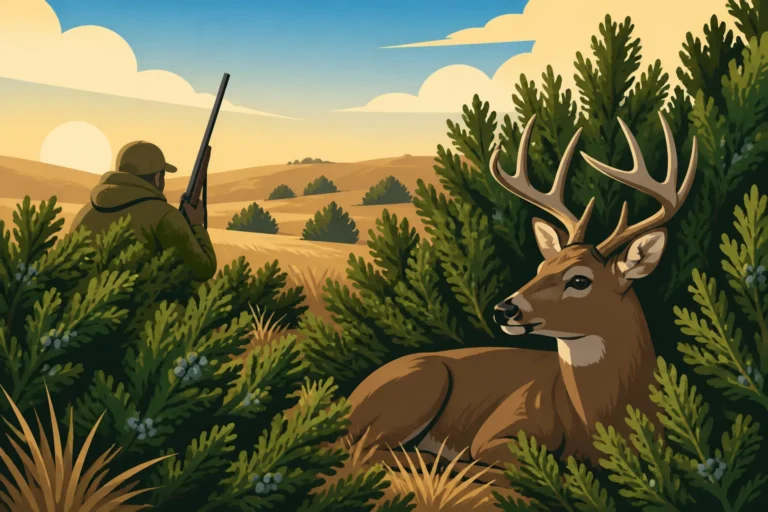
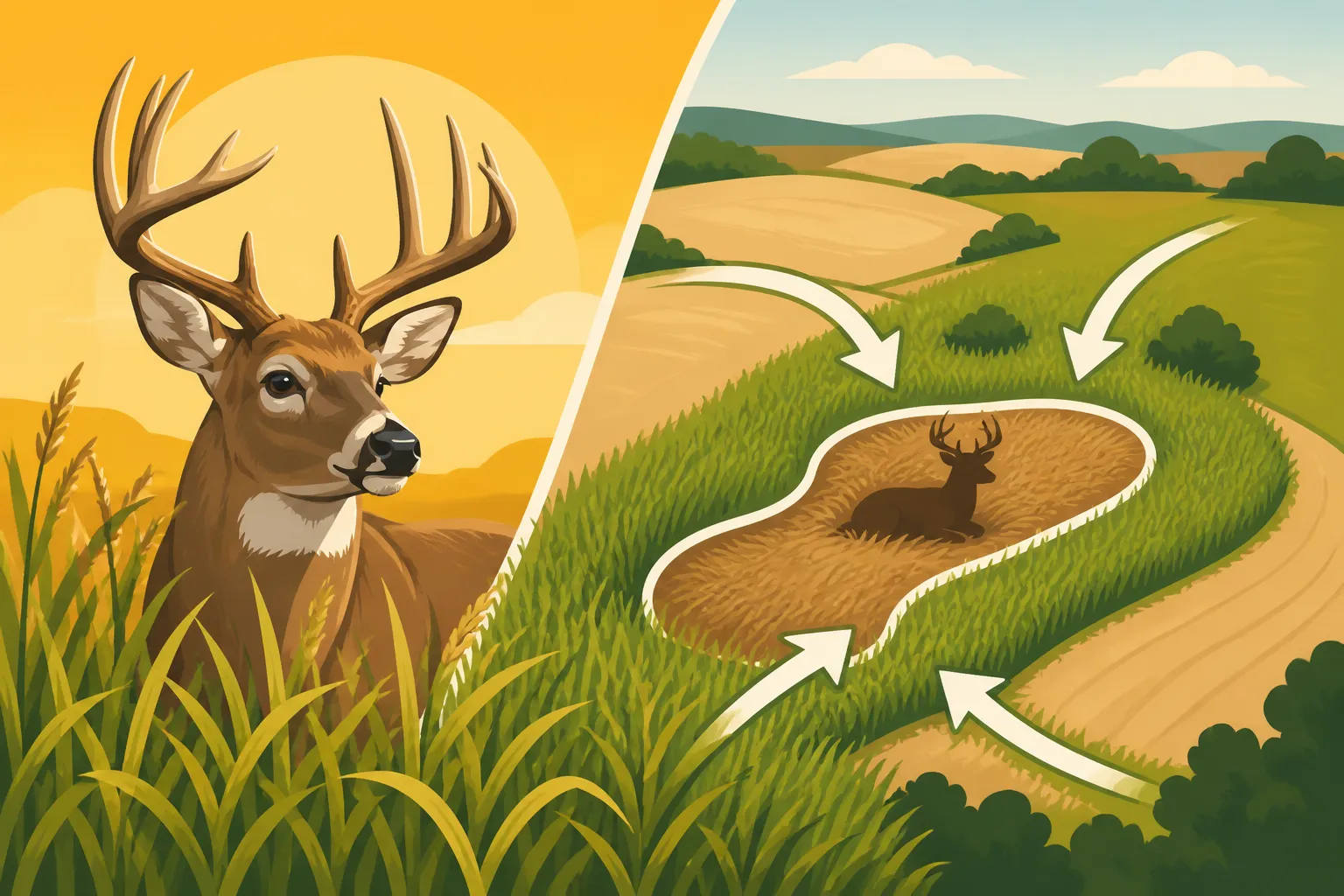
Beyond thermal cover, CRP offers unparalleled security. A mature buck, wary of human presence and predation, instinctively seeks places where it can disappear. The height and density of CRP grasses allow a deer to bed down and be virtually invisible from any distance, even to a hunter walking just yards away. This allows bucks to feel safe during daylight hours, often bedding surprisingly close to roads or human activity if they feel adequately concealed. Furthermore, a buck often chooses a bed that provides a good scent-check of downwind approaches and a visual check of upwind intrusions. They’re masters of using whatever terrain is available, no matter how subtle, to give them the advantage, and CRP offers plenty of subtle advantages.
Decoding CRP: Identifying Key Bedding Characteristics
While CRP can look uniform to the untrained eye, whitetail bucks are experts at finding the subtle nuances that create ideal bedding locations. It’s not just about finding the tallest grass; it’s about understanding how a buck leverages wind, sun, and micro-terrain within that grass to maximize its safety and comfort.
The Role of Micro-Topography and Wind Direction
Even in seemingly flat Kansas farm country, CRP fields often contain subtle elevation changes, depressions, or old terracing. These minute topographical features are goldmines for bedding bucks. A slight rise can offer a buck a visual advantage, allowing it to see over the grass while remaining hidden. Conversely, a depression or gully provides even deeper concealment, offering a tucked-away feel. Bucks will often bed on the downwind side of a slight hump or ridge within the CRP, allowing the wind to carry scent from potential threats directly to them, while still being able to see anything approaching from the upwind side. When Wind and Thermals on a River Bank are crucial, imagine how much more critical subtle air currents are in open CRP.
Wind direction is paramount. On cold, windy days, bucks will seek out the thickest, tallest grass and bed on the leeward side of any available cover – a slight rise, a treeline edge, or even just the densest part of the CRP. This allows them to stay out of the direct wind and conserve energy. Conversely, on warmer days, they might seek a slight elevation to catch a cooling breeze or bed in a low, shaded depression. The type of grass can also play a role; taller, stiffer native grasses like switchgrass offer more substantial protection than shorter, finer cool-season varieties, though both can hold deer. A hunter using tools like GoHunt or other detailed mapping apps can often pick out these subtle changes in elevation, which are nearly impossible to discern from the ground.
Security and Proximity to Resources
Bucks don't just pick random spots in CRP. Their bedding decisions are heavily influenced by the feeling of security and their proximity to essential resources like food and water. They want a bed where they can relax, knowing they have a clear escape route if disturbed. This often means bedding near the edge of a timber patch, a creek bottom, or a ditch that provides an immediate, concealed exit corridor. Understanding Reading a Kansas Creek Bottom for Deer Sign can give you clues about how deer transition from CRP to more traditional cover.
While CRP provides excellent bedding, it’s rarely the primary food source itself, especially for a mature buck trying to pack on weight. Therefore, you'll often find bucks bedding in CRP that is adjacent to agricultural fields – think standing corn, milo, or even cut wheat fields with good stubble. They’re looking to minimize travel distance between their secure daytime bedding and their nighttime feeding grounds. If you're studying Milo and Corn Stubble Deer Patterns, you'll see how closely these food sources dictate where deer spend their day. Water sources, even small ones like a hidden pond or a wet ditch, will also influence bedding locations, especially during warm weather.
Here's a quick overview of common CRP grasses in Kansas and their bedding appeal:
| Grass Type (Common in Kansas CRP) | Key Characteristics for Bedding | Advantages for Deer | Hunter Challenges |
|---|---|---|---|
| Switchgrass | Very tall (5-8 ft), stiff stems, clump-forming, holds snow well. | Excellent thermal and visual cover, especially in winter. | Extremely dense, difficult to walk through silently, very hard to spot deer. |
| Big Bluestem / Indiangrass | Tall (5-7 ft), dense, often mixed, good upright structure. | Great year-round cover, good wind break, offers some shade. | Similar to switchgrass, but can be slightly less dense, still very thick. |
| Tall Fescue | Medium height (2-4 ft), sod-forming, stays green longer into winter. | Decent year-round cover, good for early season, stays green. | Not as tall or dense as native grasses, can become matted down, less thermal benefit. |
| Mixed Native Grasses (e.g., Little Bluestem, Side-oats Grama) | Varies in height (2-5 ft), forms diverse habitat, less uniform. | Good diverse cover, offers various degrees of concealment and thermal protection. | Less predictable bedding patterns, can be easier to walk through depending on mix. |
Effective Strategies for Scouting CRP Bucks
Scouting CRP efficiently can feel daunting, but with the right approach and tools, you can pinpoint high-potential bedding areas without endlessly tramping through thick grass and potentially blowing out every deer in the county.
E-Scouting and Aerial Imagery Analysis
Your scouting mission truly begins from home, long before you ever set foot in the field. Using digital mapping platforms like GoHunt or other sophisticated tools is absolutely essential for CRP. Start by identifying the CRP tracts on your chosen hunting area, especially on public land where you might be Hunting Kansas Walk-In Land Without Burning It Out. Look for any anomalies:
- Subtle elevation changes: Zoom in close and use topographic overlays to find slight rises, dips, or old terraces within the CRP. These are prime candidates for bedding.
- Water features: Identify any ponds, sloughs, ditches, or even faint drainages that might hold water or offer slightly different vegetation.
- Edges and transitions: Pay close attention to where the CRP meets timber, creek draws, crop fields, or brushy fence lines. Bucks often bed very close to these hard edges for quick escape.
- Changes in vegetation color/texture: Sometimes, differences in grass species or density can show up on satellite imagery, indicating wetter areas, older growth, or patches of different cover.
- Access points: Note roads, trails, or property lines that might influence deer movement and human pressure. This ties directly into topics like E-Scouting Kansas Farm Country From Home to maximize your time.
When scouting specific Kansas Walk-In Hunting Access Explained (WIHA) tracts, especially those with CRP, understand that deer quickly learn human patterns. Use your e-scouting to identify potential low-pressure access points or areas that are harder for other hunters to reach.
Boots-on-the-Ground Reconnaissance (with Caution)
While e-scouting is crucial, nothing beats boots on the ground for confirmation. However, scouting CRP during hunting season needs extreme caution. The goal is to gather information without alerting deer to your presence.
- Optimal timing: Late winter or early spring, after deer season has closed and before new growth explodes, is often the best time. The grass is usually laid down, making sign more visible, and you're less likely to disturb deer you plan to hunt.
- Look for well-defined trails: Don't just look for subtle trails; look for actual deer highways leading into and out of the CRP. These will often connect bedding areas to food sources like nearby Standing Corn Late in the Season.
- Bedding circles: Once you find a well-used trail leading into the CRP, follow it cautiously. You'll eventually find distinct "beds" – flattened circular areas where deer have lain. These are often located in strategic spots, offering good wind advantage and visibility.
- Rub lines and scrapes: While less common deep within CRP, rubs on small saplings or brush within the grass, or scrapes along edges, indicate buck presence.
- Utilize the wind: Always scout with the wind in your face, or crosswind, to minimize scent contamination. If you find a promising area, circle it rather than walking directly through the heart of it. This strategy is similar to advice for Scouting Kansas Walk-In Tracts Before the Opener, where minimizing impact is key.
Remember, the denser the CRP, the more difficult it will be to find these signs. Sometimes, you'll need to confirm your e-scouting suspicions with observation during hunting season, perhaps from a distant vantage point.
Hunting the Grass: Tactics for Success in CRP
Once you’ve identified potential CRP bedding areas, the real challenge begins: how do you effectively hunt them? It requires stealth, patience, and a deep understanding of deer behavior within these unique habitats.
Strategic Access and Stand Placement
Accessing CRP bedding areas without alerting deer is paramount. Deer in CRP are often hypersensitive to intrusion because their cover can be quickly compromised. Utilize natural features like field edges, ditches, or even the slight depressions you identified during e-scouting to make a silent approach. For more on this, consider reading up on Access Routes That Do Not Bump Deer.
For stand placement, you have a few options:
- Edge hunting: Often the safest bet. Set up a treestand or ground blind on the downwind edge of the CRP where it meets a timber line, a crop field, or a travel corridor. You’re catching bucks as they move to or from bedding. This is a classic tactic, especially for bowhunters during the Kansas rut when bucks are cruising.
- Inside corner setups: If a CRP field has an "inside corner" (where two edges meet at an acute angle, creating a pocket), this can be a natural funnel for deer moving within or along the edge of the grass.
- Ground blinds within the CRP: For deep bedding areas, a well-brushed-in ground blind can be incredibly effective. Deploy it well in advance if possible to allow deer to habituate to its presence. This is a tactic explored more in Ground Blinds in Open Country. The key here is to set it up where you have good shooting lanes and can monitor the wind.
- Mobile hunting: For the adventurous, Mobile Hunting With a Saddle in Kansas or using a lightweight climber can allow you to get deeper into the CRP, setting up on lone trees or small brush clumps that offer just enough elevation for a shot. This requires careful, quiet entry and exit.
Wind, Timing, and Pressure Management
Wind direction is not just important for scouting; it's absolutely critical for hunting CRP. Always hunt with a favorable wind, ensuring your scent is blowing away from the expected travel and bedding areas. A shifting wind can ruin an entire hunt in open country like a CRP field.
Timing is also key. While bucks bed in CRP during the day, the best hunting opportunities often occur during the last hour or two of daylight as they stage up before heading to food, or the first hour of light as they return from feeding. Midday hunts can be productive if you know a buck is bedded deep within the CRP and you have an extremely stealthy approach plan, but the risk of bumping deer is high.
Managing hunting pressure is vital, especially on public land. CRP can absorb a lot of pressure because of its dense cover, but over-hunting a specific bedding area will make deer nocturnal or push them off the property entirely. If hunting a walk-in area, be mindful of Hunting Pressure Patterns on Kansas Public Land. Rotate your spots, give areas a rest, and avoid walking through bedding areas unless you are absolutely confident the deer are not there.
During firearm season, driving CRP can be an effective tactic, especially if you have a group of hunters. This is similar to Firearm Season Drives on Small Timber, but with distinct differences. Drivers move slowly through the thick grass, pushing deer towards standers positioned on the downwind side of the CRP or along escape routes. This can be exhilarating, but requires careful planning and communication for safety and effectiveness. Just be prepared for deer to burst out quickly and erratically from the dense cover.
Disclaimer
Hunting is an inherently dangerous activity. Always prioritize safety, follow all Kansas Department of Wildlife, Parks and Tourism regulations, and obtain appropriate licenses and permits. The information provided in this guide is for educational purposes only and should not replace professional guidance or personal experience. Respect private property and always ask permission before entering private land.