Kansas Waterfowl Season Zones
Hunting waterfowl in Kansas can be an incredibly rewarding experience, but for many, the seemingly simple act of knowing when and where you can hunt often feels like navigating a labyrinth. You scout all summer, check your gear, and then realize Kansas isn't just one big hunting ground with uniform dates for ducks and geese. The reality of different season zones can be a real headache, leading to confusion, frustration, and even accidental violations if you're not careful. This guide is here to untangle the complexities of Kansas's waterfowl season zones, helping you understand their boundaries, their purpose, and how to effectively plan your hunts to stay legal and maximize your chances of success.
Why Kansas Needs Waterfowl Season Zones
Kansas, sitting squarely in the heart of the Central Flyway, is a major stopover for millions of ducks and geese migrating south each year. But this isn't a static event; birds arrive and depart at different times, and weather patterns across the state vary wildly from east to west and north to south. Trying to manage waterfowl seasons with a single, statewide opening and closing date would either mean hunters in one part of the state miss out on peak migration, or birds are over-pressured too early or too late in another. The Kansas Department of Wildlife and Parks (KDWP) implements these zones to better align hunting opportunities with the actual presence and migration patterns of waterfowl, ensuring fairer opportunities and sustainable harvest.
These zones aren't arbitrary lines on a map; they are carefully considered divisions based on years of migration data, biological surveys, and hunter feedback. They're designed to accommodate the varied waterfowl populations, habitat types, and weather conditions that exist across our diverse state. Without them, you'd find hunters in the High Plains freezing their waders off waiting for birds that have already passed through the Low Plains, or vice-versa. Understanding the "why" behind these zones makes navigating the "what" and "where" a little less daunting.
Decoding Kansas Duck Zones
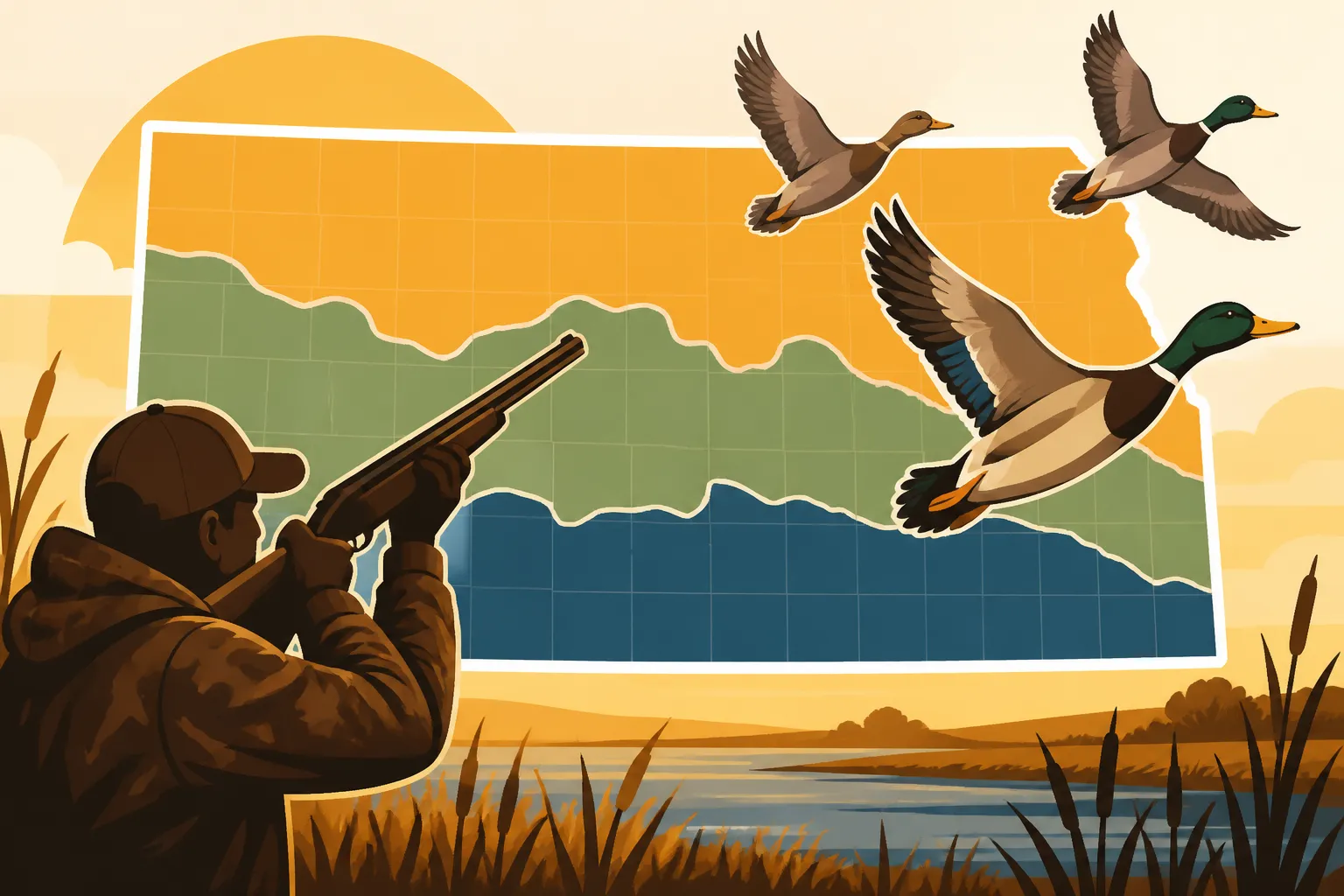
When it comes to duck season, Kansas divides the state into three distinct zones: the High Plains Zone, the Low Plains Early Zone, and the Low Plains Late Zone. Each of these zones has its own specific season dates, though bag limits generally remain consistent statewide for most species. It's crucial to know which zone you're hunting in, as being even a mile over a county line can put you on the wrong side of the law.
The High Plains Zone Boundaries
The High Plains Zone covers the westernmost portion of Kansas. This area typically experiences colder weather earlier in the fall, which pushes ducks further south more quickly than in the eastern parts of the state. Because of this, the season in the High Plains Zone often opens and closes earlier than in the Low Plains zones. The boundary for the High Plains Zone is essentially defined by a line running north and south through the state.
Specifically, the High Plains Zone includes all counties west of a line beginning at the Oklahoma-Kansas border, then north along US Highway 183 to US Highway 36, then east along US Highway 36 to State Highway 1, then north along State Highway 1 to the Nebraska-Kansas border. This encompasses a vast amount of open country, often characterized by playa lakes and agricultural fields that offer key feeding and resting areas for migrating waterfowl. If you're planning a hunt out near towns like Liberal, Garden City, or Goodland, you'll almost certainly be in the High Plains Zone. This zone is fantastic for hunters who want to hit the early pushes of birds or target species like pintails and wigeon that often arrive before the full mallard migration. For those who enjoy Playa Lake Hunting After Rain, this zone is often the prime target.
Low Plains Early Zone Details
Moving eastward from the High Plains, you'll encounter the Low Plains Early Zone. This zone generally experiences a milder fall, allowing for a slightly later duck season compared to the High Plains, but still earlier than the far eastern Low Plains Late Zone. The Low Plains Early Zone is a massive area, encompassing much of central Kansas.
The eastern boundary of the Low Plains Early Zone is defined by a line starting at the Oklahoma-Kansas border and running north along US Highway 81 to the Nebraska-Kansas border. This means the Low Plains Early Zone includes all counties east of the High Plains Zone line (US-183/US-36/K-1) and west of the US Highway 81 line. Think of cities like Salina, Great Bend, and Hutchinson as being firmly within this zone. The habitat here is a mix of reservoirs, managed wetlands, and abundant agricultural fields, making it a critical area for many duck species. Hunters often find excellent opportunities on managed areas like Cheyenne Bottoms Wildlife Area or Quivira National Wildlife Refuge, both of which fall within this expansive zone. The diversity of wetlands here also makes it a great spot for Decoying Ducks on a Kansas Reservoir.
Low Plains Late Zone Characteristics
Finally, the Low Plains Late Zone covers the easternmost counties of Kansas. This zone typically sees the latest duck migration and experiences milder conditions later into the season. As such, the duck season here often extends further into winter, providing opportunities when other zones may have already closed or frozen over.
The Low Plains Late Zone includes all counties east of US Highway 81, extending all the way to the Missouri border. Major cities like Wichita, Topeka, and Kansas City are within this zone. This area is characterized by large river systems like the Missouri, Kansas, and Neosho rivers, as well as numerous large reservoirs and smaller farm ponds. The later season dates can be particularly appealing for hunters targeting large numbers of mallards that stage in these eastern regions as winter progresses. It's also the zone where you might find more success with Late-Season Food Source Hunting as colder weather pushes birds to specific feeding patterns.
Goose Season: Often a Statewide Affair
While duck seasons are meticulously split into three zones, goose seasons in Kansas (for Canada geese, light geese like snows and Ross's, and specklebellies) are usually simpler. For the most part, Kansas operates on a statewide general goose season, meaning the dates are uniform across all counties. However, there can be specific nuances, such as special early goose seasons or youth seasons that might have different structures or limitations. It's always, always, always essential to check the official KDWP hunting regulations for the current year, because these details can change.
Even though the dates might be statewide, goose hunting strategies certainly aren't uniform. Hunters targeting Canada geese in the eastern river bottoms will employ different tactics than those Field Hunting Geese in Stubble in the western ag fields. Understanding the overall migration for geese through the Kansas Waterfowl on the Central Flyway is key, regardless of zones.
Navigating Regulations and Staying Informed
The biggest frustration for any waterfowl hunter in Kansas is often the fear of misinterpreting regulations or missing a critical update. With zones, specific species limits, and ever-changing dates, it's a lot to keep straight. Thankfully, there are tools and habits you can adopt to ensure you're always legal and informed.
Accessing Official KDWP Resources
The Kansas Department of Wildlife and Parks website (ksoutdoors.com) is your ultimate, authoritative source for all regulations. They publish an annual Waterfowl Regulations Summary that details all season dates, bag limits, shooting hours, and other crucial rules. You can find digital versions online, or pick up a physical copy wherever hunting licenses are sold. I can't stress this enough: read the full regulations summary every single year. Don't rely on what you remember from last year, or what your buddy heard. Changes happen, and ignorance is no excuse.
Using the KDWP's online interactive hunting atlas is also invaluable. It often shows public land boundaries, Walk-In Hunting Access (WIHA) tracts, and sometimes even the waterfowl zone boundaries clearly laid out. This visual aid is incredibly helpful when you're scouting a new area or double-checking an existing spot.
Utilizing Mapping and Scouting Apps
In today's hunting world, mapping apps have become indispensable, especially when dealing with complex boundaries like waterfowl zones. Many popular hunting apps, such as GoHunt, allow you to overlay state-specific regulation maps onto your aerial imagery. This means you can drop a pin on your potential hunting spot and immediately see which waterfowl zone it falls within. This functionality is a game-changer for avoiding accidental violations due to crossing an invisible line.
Beyond just identifying zones, these apps are fantastic for E-Scouting Kansas Farm Country From Home, identifying potential public land access points, locating standing water, and marking blind locations. When combined with real-time weather data and migration reports, a good mapping app becomes your digital hunting partner. Just remember to always verify any digital map data with the official KDWP regulations before heading out.
The Importance of Hunter Education and Licensing
Before you even think about zones, ensure you have your basic licensing in order. This includes your annual Kansas Hunting License, a Kansas Migratory Waterfowl Habitat Stamp (the "Kansas Duck Stamp"), and the federal Migratory Bird Hunting and Conservation Stamp (the "Federal Duck Stamp"). You also need to register with the Harvest Information Program (HIP). You can learn more about specific requirements by checking articles like Kansas Duck Stamp Requirements and Kansas HIP Registration. These are foundational requirements for anyone hunting migratory birds in Kansas. Without them, even if you're in the right zone on the right day, you're not legal.
Practical Tips for Hunting Across Zones
While it's important to understand each zone individually, many waterfowl hunters find themselves crossing zone boundaries throughout the season, or even within a single trip, to chase birds.
Planning Multi-Zone Hunts
If you plan to hunt in multiple zones, meticulous planning is key. Let's say you start your season in the High Plains Zone to take advantage of the early teal and pintail migration, but then shift to the Low Plains Late Zone in December for mallards. You need to be intimately familiar with the specific season dates for each zone. It sounds obvious, but it's easy to get dates mixed up, especially when one zone might be closed while another is wide open. Keep a laminated copy of the regulations summary in your truck or boat, and use a reliable app like GoHunt to confirm your location.
Think about the travel involved. If you're driving across the state, you might pass through multiple zones. Always keep your waterfowl fully feathered or transport them according to KDWP regulations to avoid issues if you're checked near a zone boundary.
Monitoring Migration and Weather
Waterfowl zones are set with general migration patterns in mind, but ducks and geese don't read maps. Real-time weather and migration conditions will often dictate where the birds are, regardless of the zone. A sudden cold front can push birds from the Low Plains Early Zone into the Late Zone much earlier than anticipated. Conversely, a prolonged warm spell might hold birds further north, making early season hunting tough in even the High Plains.
Stay tuned to weather forecasts, check local scouting reports, and use resources that track bird movements. Understanding Duck and Goose Migration Timing is more art than science, but combining it with zone knowledge will put you in the best position. Don't be afraid to adjust your plans if the birds aren't where the calendar says they should be. Sometimes, scouting an hour or two east or west can make all the difference.
The Role of Public and Private Lands
Kansas offers a wealth of public hunting opportunities, especially through its Walk-In Hunting Access (WIHA) program and various State Wildlife Areas. Many of these public lands are scattered across all three duck zones. However, hunting pressure can vary significantly, especially on public ground. Knowing how to adapt your tactics, such as learning about Hunting Pressure Patterns on Kansas Public Land or how to set up Ground Blinds in Open Country, can be crucial for success.
For those with access to private land, coordinating with landowners is essential. They might have valuable insights into local bird movements that complement your zone knowledge. Just remember, regardless of private or public land, the zone regulations still apply universally.
Key Takeaways for Kansas Waterfowlers
Navigating Kansas waterfowl season zones requires attention to detail, proactive planning, and a commitment to staying informed. It might seem like a lot to juggle, but with a clear understanding of the zones and the right tools, you can ensure a successful and legal hunting season.
| Kansas Duck Zone | General Location | Typical Season Timing | Key Features & Considerations |
|---|---|---|---|
| High Plains Zone | Western Kansas (west of US-183/US-36/K-1) | Earliest Opening | Colder weather, playa lakes, early migration pushes, often shorter season. |
| Low Plains Early Zone | Central Kansas (east of High Plains, west of US-81) | Mid-Season Opening | Diverse habitats, major reservoirs, consistent migration, standard season length. |
| Low Plains Late Zone | Eastern Kansas (east of US-81) | Latest Opening | Mildest weather, large river systems, late-season mallards, longest season. |
| Geese (Statewide) | All of Kansas | Statewide Dates | Generally uniform dates, but always verify for specific early/late seasons. |
Always remember to check the official KDWP regulations annually, as dates and boundaries can sometimes be adjusted. A tool like GoHunt can be invaluable for real-time zone verification and scouting, but it's the official KDWP word that counts. Happy hunting, and may your decoys be flocked and your shots be true! You can also check out our comprehensive guide on Kansas Waterfowl Season Dates and Limits for a detailed breakdown.
Disclaimer
The information provided in this article is for general guidance and educational purposes only. Waterfowl hunting regulations, season dates, and zone boundaries are subject to change annually by the Kansas Department of Wildlife and Parks (KDWP). It is the hunter's sole responsibility to consult and comply with the most current official KDWP hunting regulations before participating in any hunting activity. Failure to do so may result in legal penalties.