Decoying Ducks on a Kansas Reservoir
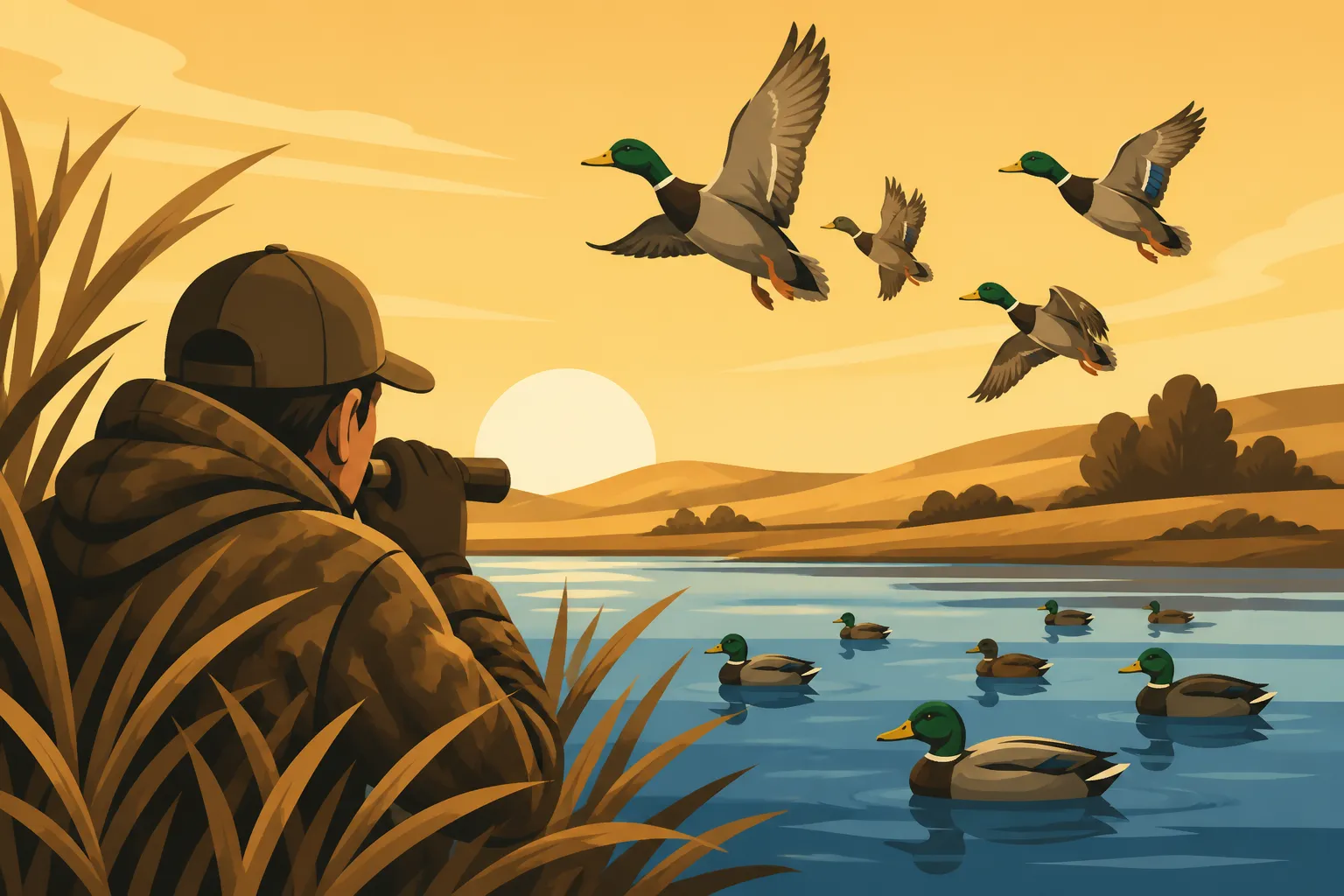
That moment when ducks cup their wings, locked on your spread, is pure magic. But too often, especially on a vast Kansas reservoir, you watch them work hard, circling wide, and then suddenly flare, leaving you scratching your head about why they wouldn't commit. This guide is all about dissecting the art and science of decoying ducks on these big water impoundments, helping you understand their movements and set up a spread that pulls them right into your zone, minimizing those frustrating fly-bys.
Understanding Kansas Reservoir Dynamics for Duck Decoying
Hunting ducks on Kansas reservoirs is a whole different ballgame compared to a small timber hole or a river slough. These are expansive bodies of water, often subject to strong winds, changing water levels, and significant hunting pressure. To consistently decoy ducks, you first have to grasp how these unique dynamics influence waterfowl behavior. It's not just about tossing out a dozen mallard decoys; it's about creating a believable, inviting scene in a constantly shifting environment.
Reading Reservoir Conditions and Duck Behavior
Ducks are creatures of habit and opportunity, but their habits are deeply influenced by the conditions around them. On a big Kansas reservoir, wind is king. A strong north wind can completely change where ducks will loaf, feed, and travel. They'll seek shelter in protected coves or behind points, often moving less and feeding more intensely when conditions are calm. Conversely, a stiff breeze can scatter birds and make them more visible as they work across open water, but it also creates chop that adds realism to your decoys. You need to pay attention to these subtle cues. Are the ducks flying high and fast, or are they low and looking to drop in quickly? This will often dictate your spread size and how aggressive you are with your calling. Water levels, which can fluctuate dramatically on reservoirs like Cheney or Wilson, also play a huge role. Ducks that were feeding in a shallow bay last week might be pushed out to deeper water or entirely new areas if the water drops several feet. Using tools like the Kansas Hunting Atlas Online or apps like GoHunt can provide crucial, real-time data on water levels and recent hunting activity in specific areas. Keep an eye on the weather forecast not just for temperature but for wind direction and speed, as this dictates everything from your blind location to your decoy anchor weights.
Key Locations on Kansas Reservoirs for Decoy Spreads
Finding the right spot on a sprawling reservoir is paramount. Ducks aren't just everywhere; they concentrate in specific areas that offer food, rest, and safety. Points of land that jut out into the main body of water are often travel corridors and loafing areas, especially if they have some emergent vegetation or rocks for birds to perch on. Long, sweeping points can be excellent ambush spots if you can set up a spread that allows ducks to approach with the wind and land just off the tip. Protected coves, particularly those with muddy bottoms or submerged vegetation, are prime feeding grounds for dabbling ducks like mallards and pintails. These spots offer shelter from the wind and often hold food sources they seek. Don't overlook old river channels or submerged creek beds if you're targeting diving ducks, as these provide deeper water for them to forage. Islands, even small ones, can serve as natural refuges and loafing areas, especially if they are far from shore and offer a sense of security. Identifying these features, often best done by E-Scouting Kansas Farm Country From Home with detailed aerial imagery, is the first step. Look for areas where different habitat types converge – a rocky point meeting a marshy cove, or an area with standing timber on one side that offers a windbreak. These transitional zones often concentrate bird activity.
Crafting Your Decoy Spreads for Kansas Reservoirs
Once you've identified a promising location, the real artistry begins: setting up your decoy spread. On large bodies of water, visibility, realism, and motion are your best friends. You're not just trying to attract a few birds; you're trying to convince entire flocks that your little piece of water is the safest, most appealing spot around. This requires careful consideration of decoy types, numbers, and placement, all while ensuring your own concealment.
Species-Specific Decoy Choices and Numbers
Kansas reservoirs host a variety of duck species throughout the fall and winter, and tailoring your decoy spread to what's in the area can dramatically increase your success. For dabbling ducks like mallards, pintails, and wigeon, a spread primarily composed of these species is usually effective. Mallards are often the backbone of any spread, as their green heads and prominent white speculums are universally recognized by other ducks. However, don't underestimate the power of adding a few pintails for their elegance or wigeon for their distinct calls; these "confidence decoys" can make your spread look more natural and diverse. You might want to consider magnum-sized decoys for increased visibility on vast waters, especially on cloudy days or when ducks are flying high.
When targeting diving ducks like bluebills, redheads, or canvasbacks, a separate or mixed spread works best. Divers typically prefer deeper water and often raft up in large groups. Using a separate pod of diver decoys, often in an "X" or "V" shape in deeper water, can be very effective. The numbers game is crucial on reservoirs. While a dozen decoys might suffice in a small pond, you'll generally need more on big water. A good starting point for a general duck hunt might be 2-3 dozen, but don't hesitate to deploy 50-100+ decoys, especially if you're trying to pull birds from a distance or compete with other hunters. More decoys mean more visibility and a more convincing impression of a large, happy flock.
Spreading Strategies for Different Scenarios
The layout of your decoys isn't random; it's designed to funnel birds into your shooting lane. The most common and effective spreads mimic natural duck behavior.
- J-Hook or C-Hook Spread: This is a classic for a reason. Imagine the hook of a 'J' or 'C' formed by your decoys, with the bend of the hook creating an open landing zone directly in front of your blind. Ducks will naturally want to land in this open water, allowing them to approach from upwind and settle in without feeling crowded. This works well with a strong, consistent wind.
- U-Shape or V-Shape Spread: Similar to the J-hook, these shapes also create an inviting landing hole. The arms of the 'U' or 'V' extend upwind, guiding birds into the open water between them. This is excellent for creating a large, visible landing zone that allows for multiple birds to approach comfortably.
- T-Shape Spread: If you have an island or a prominent point, a 'T' spread can work well. The crossbar of the 'T' runs parallel to the shore or island, with the stem extending out into open water. Your blind would be at the base of the 'T', allowing ducks to land in the open water along the crossbar.
- Open Water vs. Shallow Water: For open water, larger, more spread-out patterns are often preferred to maximize visibility. In shallower coves, a tighter, more concentrated spread might mimic feeding ducks more accurately.
Always position your decoys so that ducks will approach and land into the wind, as this is how they naturally do it. Ensure your landing zone is clean and free of decoys, giving them a clear path to commit. Don't forget motion decoys! Something like a Mojo duck, or a spinning wing decoy, can be incredibly effective on large reservoirs, adding movement that can be seen from great distances and really grab the attention of high-flying birds. Even a jerk string rig can add subtle, realistic movement to stationary decoys, making your spread come alive. Knowing how to adapt to the Wind and Thermals on a River Bank is a skill that transfers directly to reservoir hunting, where shifting breezes can demand quick adjustments to your spread.
Here's a quick comparison of common decoy spread types:
| Spread Type | Best Wind Conditions | Ideal Location | Primary Advantage | Considerations |
|---|---|---|---|---|
| J-Hook / C-Hook | Steady, moderate wind | Points, shorelines | Funnels ducks directly into a landing zone. | Requires predictable wind; can be spread-intensive. |
| U-Shape / V-Shape | Steady, light to moderate | Open water, large coves | Large, inviting landing zone; good visibility. | Needs ample space; ensure clear center. |
| T-Shape | Steady, light to moderate | Near islands, prominent points | Good for multiple approach angles; looks natural. | Requires a central feature for the "bar." |
| Loafing Pod | Calm to light breeze | Shallow bars, protected coves | Mimics contented, resting ducks; confidence. | May not attract high-flying birds as effectively. |
| Feeder Pod | Light to moderate | Shallow water, mud flats | Realistic feeding action; works well with motion. | Requires decoys with realistic feeding postures. |
Incorporating Blinds and Concealment
Even the most perfect decoy spread is useless if you're silhouetted against the horizon. On big, open Kansas reservoirs, concealment is perhaps the toughest challenge. Ducks have incredible eyesight, and they've learned to associate unnatural shapes or movements with danger.
- Layout Blinds: These low-profile blinds are a duck hunter's best friend on flat, open shorelines. They allow you to lie down, disappearing into the stubble or mud. The key is to brush them in thoroughly with natural vegetation from the immediate area. Don't just throw a few weeds on top; make it look like a natural clump of grass or debris.
- Natural Cover: Whenever possible, use existing natural cover. A small rise in the terrain, a patch of standing cattails, or a clump of cedar trees can offer excellent concealment. Enhance this cover with additional vegetation to break up your outline. Remember that on Corps of Engineers land around reservoirs, rules can vary, so always check Kansas Wildlife Area Special Regulations for specific locations.
- Boat Blinds: If you're hunting from a boat in deeper water or open coves, a well-brushed boat blind is essential. Camouflage netting, natural grasses, and even artificial materials can transform your boat into a floating patch of cover. Ensure your blind is sturdy enough to withstand reservoir winds and that you can shoot safely and effectively from it.
- The Element of Surprise: Sometimes, the best blind is no blind at all. If you can approach a situation from a direction where ducks simply won't see you until it's too late, you might not need elaborate cover. However, this is rare on reservoirs and usually involves extreme caution and a deep understanding of duck approach patterns and Access Routes That Do Not Bump Deer, which applies to not bumping ducks, too. The golden rule: if you can see out clearly, they can probably see in.
Advanced Tactics and Common Pitfalls
Consistently decoying ducks on Kansas reservoirs means constantly learning and adapting. What worked yesterday might not work today, and what works on one reservoir might be a bust on another. It's about becoming a student of the game, paying attention to details, and being willing to adjust on the fly.
Adapting to Changing Weather and Pressure
Kansas weather is famously unpredictable, and those rapid shifts directly impact duck behavior and your decoying success. On bright, clear, calm days, ducks can be notoriously spooky. They'll circle higher, study your spread longer, and often flare at the slightest imperfection. On these days, a smaller, more realistic spread with less aggressive calling might be more effective. Focus on ultra-realistic decoys, minimal motion, and absolute concealment. Sometimes, even adding a few Canada goose decoys can add a "confidence" factor, making the spread seem safer.
Conversely, stormy, high-wind days can be a duck hunter's dream. Ducks fly lower, often seeking refuge, and strong winds add incredible realism to your decoys, making them bob and weave naturally. On these days, a larger spread with plenty of motion decoys can really pull birds in from a distance. Don't be afraid to add extra weights to your decoy lines to prevent them from being blown away.
Hunting pressure is another huge factor, especially on popular Public Hunting Land in Kansas like many reservoir areas. Ducks quickly learn where hunting occurs and will avoid those areas or only fly through at extreme altitudes. If the pressure is high, consider moving to less accessible areas, even if it means a longer walk or boat ride. Hunting Pressure Patterns on Kansas Public Land analysis can show you where to avoid the crowds. Try hunting midday when many hunters have left, or focusing on evening flights. Sometimes, just having a lone spinning-wing decoy far from your spread can act as a beacon, drawing attention away from your hiding spot. Using "sleeper" shell decoys on a nearby bank can make it look like ducks are resting and secure, adding another layer of confidence to your spread.
Troubleshooting Decoy Setup Issues
Even with the best planning, things can go wrong. Ducks might consistently flare at a certain point, or they might just fly by without even looking. It's crucial to troubleshoot these issues in real-time.
- Ducks Flaring: If ducks are flaring consistently, it's almost always a visibility or concealment issue. Check your blind setup again. Are you silhouetted? Is there movement? Is there glare off your gun barrel or face? If your concealment is perfect, then look at your decoys. Are they swimming unnaturally due to current or wind? Are they too close to your blind, making the landing zone seem small? Sometimes, a spread that's too dense can make birds nervous. Try spreading them out more or creating a larger, more defined landing zone.
- Ducks Flying By: If birds aren't even acknowledging your spread, the problem is usually visibility or location. Is your spread large enough to be seen from a distance on a big reservoir? Are you in a location that ducks are actually using as a travel or feeding corridor? You might need to adjust your setup to be more visible, add more decoys, or move to a more active flight path. Sometimes, just shifting your decoys 20-30 yards can make all the difference. Also, consider the species you're targeting. Are you setting up for mallards when the bulk of the birds are divers? Or vice-versa?
- Glare and Unnatural Shine: Decoys can get shiny, especially on sunny days, creating an unnatural glare that spooks ducks. Give your decoys a quick rough-up with a Scotch-Brite pad or fine sandpaper to dull the plastic. A quick spray with a matte-finish paint can also work wonders. Pay attention to how the sun hits your decoys throughout the day and make adjustments as needed.
- The "Hole" is Too Small or Too Far: The landing zone is critical. It needs to be big enough for ducks to feel comfortable dropping in, but not so big that they land out of range. If they're consistently landing too far out, you might need to extend the arms of your spread or shift your entire setup closer. Conversely, if they're landing too close and flaring, they might feel cramped. Adjust your "kill hole" to be a comfortable 25-35 yards from your blind. Consider using aerial imagery via GoHunt to mark your intended landing zone and visualize the spread before you even leave home. This type of detailed Reading Aerial Imagery for Bedding Cover (or, in this case, duck loafing/landing cover) can save you a lot of time and frustration on the water.
Decoying ducks on a Kansas reservoir is a rewarding challenge. It combines biology, weather knowledge, scouting, and a healthy dose of artistic flair. By understanding the unique demands of these vast waters and applying these proven strategies, you'll be well on your way to more ducks cupped over your blocks and fewer frustrating flares.
Disclaimer
Hunting is an inherently dangerous activity. Always prioritize safety, including firearm safety, boating safety, and awareness of weather conditions. Always consult the most current Kansas Department of Wildlife, Parks and Tourism regulations before any hunting activity, as rules and seasons can change. This guide is for informational purposes only and does not supersede official regulations.