Walking In Before Legal Light
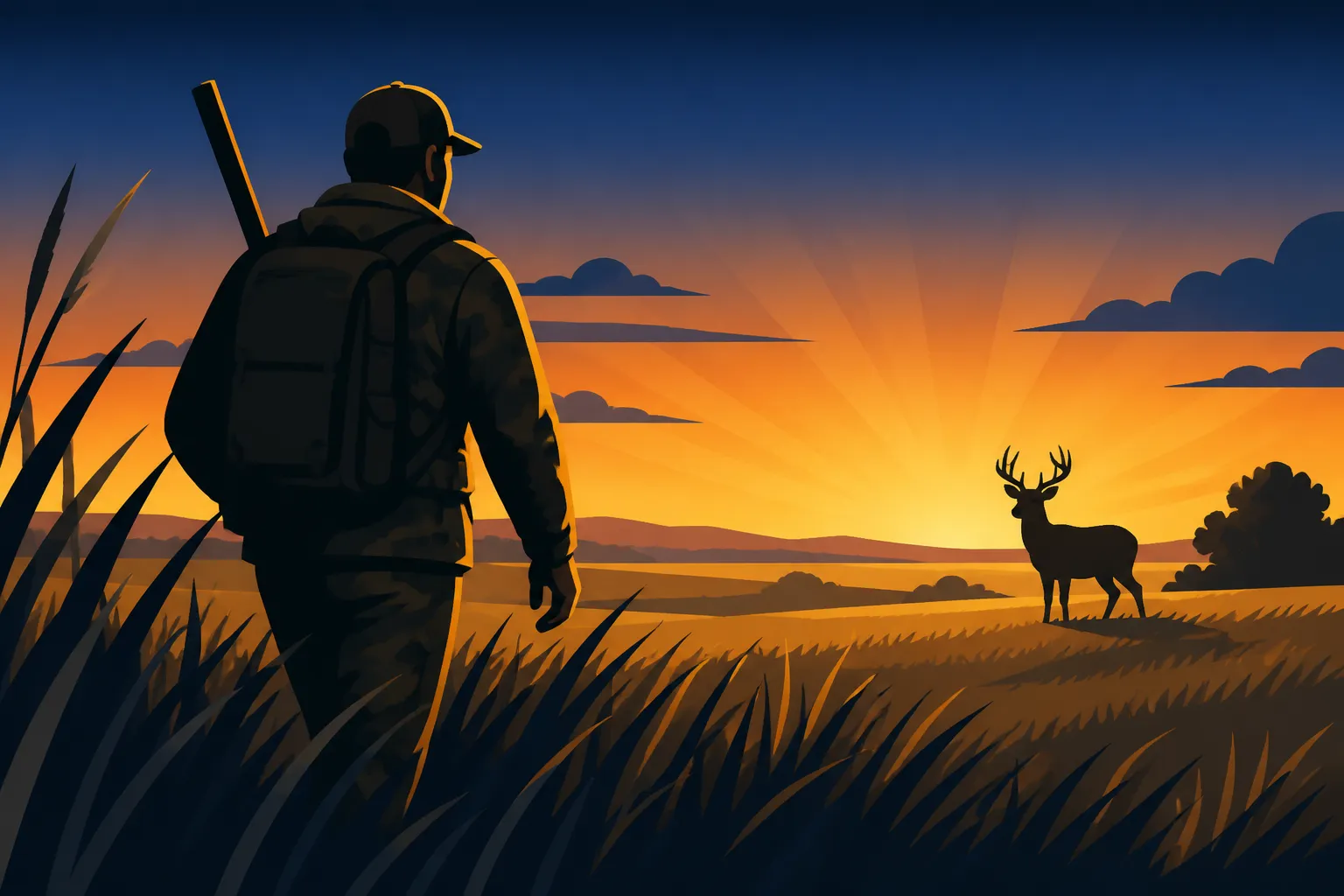
There are few things more frustrating in Kansas deer hunting than having your carefully planned morning hunt ruined before it even officially starts. You've woken up hours before dawn, bundled up in the cold, and quietly made your way to your stand, only to hear that tell-tale snort or crashing through the timber as deer you unknowingly spooked blow out of the area. This comprehensive guide is all about mastering the art of walking in before legal light, ensuring your early morning approach is as silent and scent-free as possible, setting you up for success instead of frustration.
The Critical Importance of Stealthy Access
Getting to your hunting spot in the dark without alerting every deer in the county feels like a monumental task, especially in wide-open Kansas country. But it's not just about avoiding immediate detection; it's about not "educating" those mature whitetails and mule deer that call these plains and timbered river bottoms home.
Why Deer Spook So Easily in the Dark
Deer aren't just nocturnal; they're crepuscular, meaning they're most active during twilight hours—dawn and dusk. This means that as you're making your silent, stealthy approach in the pre-dawn gloom, they're often already up, moving, and keenly aware of their surroundings. Their senses, particularly hearing and smell, are incredibly heightened in low light. What might seem like a quiet rustle of leaves to you can sound like a freight train to a deer whose ears swivel independently, pinpointing even the faintest disturbance.
Imagine you're trying to sneak through a field of dry corn stubble or across a patch of brittle CRP grass. Every single step creates noise. And if there's even a whisper of wind, your scent cone is spreading, potentially alerting deer hundreds of yards away before they ever see or hear you. We've all been there, convinced we were practically floating, only to have a deer miraculously appear out of nowhere, stomp, snort, and bolt, leaving you wondering how they knew. It’s because their sensory perception in those quiet, dark hours is simply on another level compared to ours. They rely on those senses for survival, and we, as hunters, are the ultimate predators they're trying to avoid.
The Downsides of Bumping Deer Before First Light
The immediate consequence of bumping deer on your walk-in is obvious: your hunt is likely ruined. The deer you intended to target are now gone, probably running a good distance before they feel safe again. But the impact extends far beyond just that single morning. When deer are repeatedly pressured and spooked from their bedding or feeding areas during the early morning hours, they quickly adapt. They might change their travel routes, become entirely nocturnal, or even abandon that particular area altogether.
This can create significant pressure patterns on public land or even small private tracts. Deer learn to associate human presence, smells, and sounds with danger during those critical twilight times. This makes them much harder to hunt later in the season. You might find that once-productive stands suddenly become dead zones because the deer have shifted their routines. For instance, if you consistently bump a mature buck from a timber point while trying to get to your stand, he might start using a more secure, thicker bedding area that's harder to access, or he might only move after full dark. It's about educating them to your presence, which makes your job exponentially harder in the long run. No one wants to spend all that time and effort just to make the deer smarter, right?
Strategic Planning for Your Dark Approach
Success in the pre-dawn darkness isn't just about how you walk; it's about how you plan your walk. Proper scouting and route selection are paramount, laying the groundwork for a silent and effective entry.
E-Scouting and Pre-Season Reconnaissance
Before you ever set foot in the field in the dark, you need to know the terrain like the back of your hand. This is where modern technology really shines. High-quality mapping applications, like those found with GoHunt or similar services, allow you to e-scout from the comfort of your home. You can pour over satellite imagery, identifying potential bedding areas, probable travel corridors, and, most importantly, the quietest, most concealed routes to your stand. Look for natural funnels, creek beds, or lines of timber that offer cover and minimal noise.
During the off-season or even a few days before your hunt, take the time to physically walk these routes in daylight. This will help you spot hidden obstacles like fences, deep ditches, or thick briar patches that might show up as benign lines on a map but can be surprisingly loud or difficult to navigate in the dark. Mark waypoints on your GPS for your vehicle, your stand, and any critical turns or landmarks along your chosen path. The more familiar you are with your route, the less you'll have to rely on a bright headlamp, which helps maintain your stealth. For more detailed advice on this, check out our guide on E-Scouting Kansas Farm Country From Home.
Choosing the Right Entry and Exit Routes
This is arguably the most critical aspect of your pre-dawn approach. The wind direction is the absolute primary factor in determining your route. You must approach your stand or target area with the wind in your face or quartering to you, ensuring your scent is blowing away from where you expect deer to be. This is non-negotiable. Even a slight shift can ruin your hunt. In Kansas, where winds can be notoriously shifty, especially around topographical features like creek draws or river bottoms, understanding how air currents behave is crucial. Thermals can also play a role, particularly in hilly or riverine terrain, causing air to flow downhill in the mornings and uphill in the evenings.
Beyond the wind, consider routes that offer natural cover. Walking along the edge of a standing cornfield, through a dry creek bed, or within a dense timber line will be inherently quieter and offer more concealment than trying to cross an open CRP field or a mowed pasture. Think about the types of noise each route will generate. Dry leaves can be incredibly noisy, but sometimes a light rain or morning dew can make them surprisingly quiet. Planning multiple routes for different wind directions is smart, giving you options. The goal is always to minimize your human footprint and scent. We dive deeper into selecting optimal paths in Access Routes That Do Not Bump Deer and understanding air currents in Wind and Thermals on a River Bank.
Timing Your Arrival Perfectly
Finding the sweet spot for your arrival time is a delicate balance. Arriving too early means a longer, colder, potentially more uncomfortable wait, and more time for anything to go wrong, or for a deer to wander into your quiet zone. Arriving too late, however, significantly increases your chances of bumping deer that are already up and on the move, heading to or from their bedding areas.
A good rule of thumb is to aim to be settled in your stand 45 to 60 minutes before legal shooting light. This gives you ample time to walk in slowly and deliberately, get all your gear organized, and allow the woods to settle down after your disturbance. For longer or more difficult treks, you might need to adjust this earlier. Consider the actual distance to your stand, the type of terrain you'll be covering, and any potential obstacles. Use a reliable weather app or a hunting app like GoHunt that provides precise sunrise and legal shooting light times for your specific location. Knowing these times allows you to reverse-engineer your wake-up call and departure from the truck, ensuring you're never rushing but also not sitting there for two hours shivering in the dark.
Gear and Techniques for a Silent Ingress
The equipment you choose and how you use it can make all the difference in achieving a silent approach. It’s not just about being quiet; it’s about controlling your scent and movement effectively.
Footwear and Clothing Choices for Stealth
Your footwear is paramount for a quiet walk-in. Forget heavy, stiff leather boots that crunch and clomp with every step. Opt for soft-soled, flexible boots, ideally rubber boots. Rubber not only helps minimize the scent you leave on the ground but is also much quieter on various surfaces like wet leaves, grass, or even gravel. Ensure your boots are comfortable and well-broken in to avoid any unexpected trips or stumbles in the dark.
For clothing, layering is key, not just for warmth but for managing scent and noise. Choose soft, silent fabrics like fleece, wool, or brushed cotton. Avoid anything that makes a swishing sound as you walk, which can be amplified in the quiet pre-dawn hours. Start with lighter layers for your walk-in to prevent overheating and sweating. Sweating creates scent, and it also makes you cold once you stop moving. Once you reach your stand, you can quietly add those heavier, insulating layers. Think about every piece of clothing—even a loose drawstring on a jacket or a zipper pull can make noise.
Minimizing Noise and Scent Signature
Beyond your clothes, every piece of gear needs to be secured and silent. Before you leave the truck, give your pack a good shake. Are your grunt calls rattling against your rangefinder? Is your thermos clanking against your water bottle? Use foam, cloth, or even old socks to cushion items in your pack. Secure any loose straps, buckles, or zipper pulls. Many hunters even tape down zipper pulls or use elastic bands to keep things from swinging. Your bow or rifle should be carried in a way that prevents it from bumping against you or making noise. A soft sling for a rifle or a quiet bow case can be invaluable.
Scent control, while often debated, plays a crucial role, especially on those calm, still mornings or when you're navigating variable thermals. Showering with scent-eliminating soap, washing your hunting clothes in scent-free detergent, and storing them in airtight bags are good practices. Applying a scent-eliminating spray before you head out is also a common tactic. While nothing makes you completely scent-free, every little bit helps to reduce your odor footprint. Remember, a deer's nose is thousands of times more sensitive than a human's, so even residual scent can be an issue in close quarters. For more on the effectiveness of these products, check out Ozone and Scent Control Claims.
Navigational Aids and Low-Impact Lighting
Navigating in pitch black, especially in unfamiliar territory, can be disorienting and noisy if you're constantly fumbling or getting lost. A reliable GPS unit or a smartphone with a hunting app like GoHunt, where you've pre-downloaded offline maps, is essential. Mark your stand location and your truck, and any key turns or landmarks you identified during your scouting. This allows you to walk with confidence, focusing on stealth rather than navigation.
When it comes to lighting, ditch the bright white beam unless absolutely necessary for safety. Red light headlamps are your best friend. Red light disrupts a deer's vision much less than white light, allowing you to see enough to navigate without painting a giant "human here!" sign on yourself. Use it sparingly, only when needed to check your footing or adjust gear. Practice walking with minimal light in your yard at home to get accustomed to it. Relying on natural landmarks you scouted during the day, even subtle ones like a specific tree shape or a bend in a creek, will allow you to keep your headlamp off for longer stretches. If you need a refresher on scouting techniques, take a look at Scouting Kansas Walk-In Tracts on Foot.
| Terrain Type | Best Footwear | Key Stealth Tactic | Scent Control Importance | Notes |
|---|---|---|---|---|
| Dry Grass/Stubble | Soft-soled Rubber | Small, slow heel-to-toe steps; avoid crunchy patches | High | Can be surprisingly loud. Walk where dew has fallen. |
| Wet Leaves/Mud | Rubber Boots (Waterproof) | Deliberate, firm steps; avoid splashing in mud | Medium | Often quieter than dry conditions. |
| Hard Dirt/Gravel | Flexible Rubber | Avoid sliding; pick up feet fully; stick to soft edges | Medium | Very hard to be silent. Consider detours. |
| Dense Timber | Stiff-soled Rubber | Clear path of branches; go around obstacles | High | Watch for overhead branches and snags. |
| Creek Beds | Rubber Boots (Waterproof) | Walk in water if possible; use soft banks | High | Often good cover and quietest route. |
| Snow/Frozen Ground | Insulated Rubber | Slow, shuffling steps; can be very quiet but also loud | Medium | Listen for cracking ice underfoot. |
Execution: The Walk-In Strategy
Even with the best planning and gear, the actual walk-in demands focus, patience, and adaptability. It's an active process that requires constant awareness of your surroundings.
Slow and Deliberate Movement
This isn't a race. The faster you move, the more noise you'll make and the more scent you'll generate. Adopt a "stop, look, listen" approach. Take a few slow, deliberate steps, then pause. Listen intently for any sounds – a twig snap, a deer blowing, or the rustle of leaves that isn't your own. Look for movement, even though it's dark. Let your eyes adjust to the low light. This pausing also allows the woods to "settle" after your movement, giving any nearby deer a chance to resume their activity if they were momentarily alert.
When walking, focus on placing your feet. Roll your foot from heel to toe, distributing your weight to minimize crunching. Avoid dragging your feet. Try to pick out spots for your next step that are less likely to make noise – a patch of bare earth, a clump of soft grass, or a wet area. In crunchy conditions, sometimes it's better to step firmly and quietly rather than trying to tiptoe and risk a louder, uncontrolled crunch. Remember, deer on public land are often accustomed to some human activity, but sudden, unnatural sounds are what send them running. For more on how deer react to pressure, read up on Hunting Pressure Patterns on Kansas Public Land.
Adapting to Conditions
Kansas weather, as we all know, can be unpredictable. You might plan your perfect walk-in route, only for the wind to shift unexpectedly as you're halfway to your stand. Or perhaps a cold front rolls in, freezing the ground solid and making every step sound like you're stomping on potato chips. Being able to adapt on the fly is crucial.
If the wind shifts, do not push on if it's now blowing your scent toward where you expect deer. Sometimes, this means biting the bullet and finding an alternative route, even if it adds time. Other times, it means backing out completely and trying a different spot for the morning. It's frustrating, but it's better than educating deer and ruining multiple hunts. If you encounter deer on your walk-in—and it happens—freeze. Become a statue. Wait for them to move off or for you to discern their activity. If you can, slowly back out the way you came. Sometimes a rain shower or fresh snow can be a blessing in disguise, dramatically quieting your footsteps. Take advantage of these conditions, but always remain vigilant. Understanding how deer react to Cold Front Movement in December can help you predict their behavior during these changes.
Final Approach and Stand Setup
The last 100 yards to your stand or blind are often the most critical. This is where deer are most likely to be at their most relaxed, perhaps browsing or moving slowly. Slow down even more. Make every step count. Before you climb into your stand or enter your blind, take a few minutes to survey the area one last time. Listen for any deer sounds, look for silhouettes.
When setting up, minimize all noise. If you're using a treestand, have all your climbing sticks or ladder sections organized to prevent fumbling. Hang your bow or position your rifle quietly. If you're using a ground blind, ensure it's brushed in thoroughly and the windows are opened or closed without noisy zippers or velcro. Your goal is to be completely settled and ready, with all your gear positioned for a shot, well before legal shooting light arrives. The more prepared you are, the less movement you'll make when a deer finally steps out into the early morning light. For optimal results, ensure your Ground Blind Brushing In is thorough, and always review your Best Stand Locations in Flat Farm Country to choose a spot that inherently offers stealthy access.
Disclaimer
Hunting is an inherently dangerous activity. Always prioritize safety, understand and follow all Kansas hunting regulations, and ensure you have the necessary licenses and permits. This guide offers general advice, but local conditions can vary greatly. Stay aware of your surroundings and hunt responsibly.