Parking Away From Your Stand
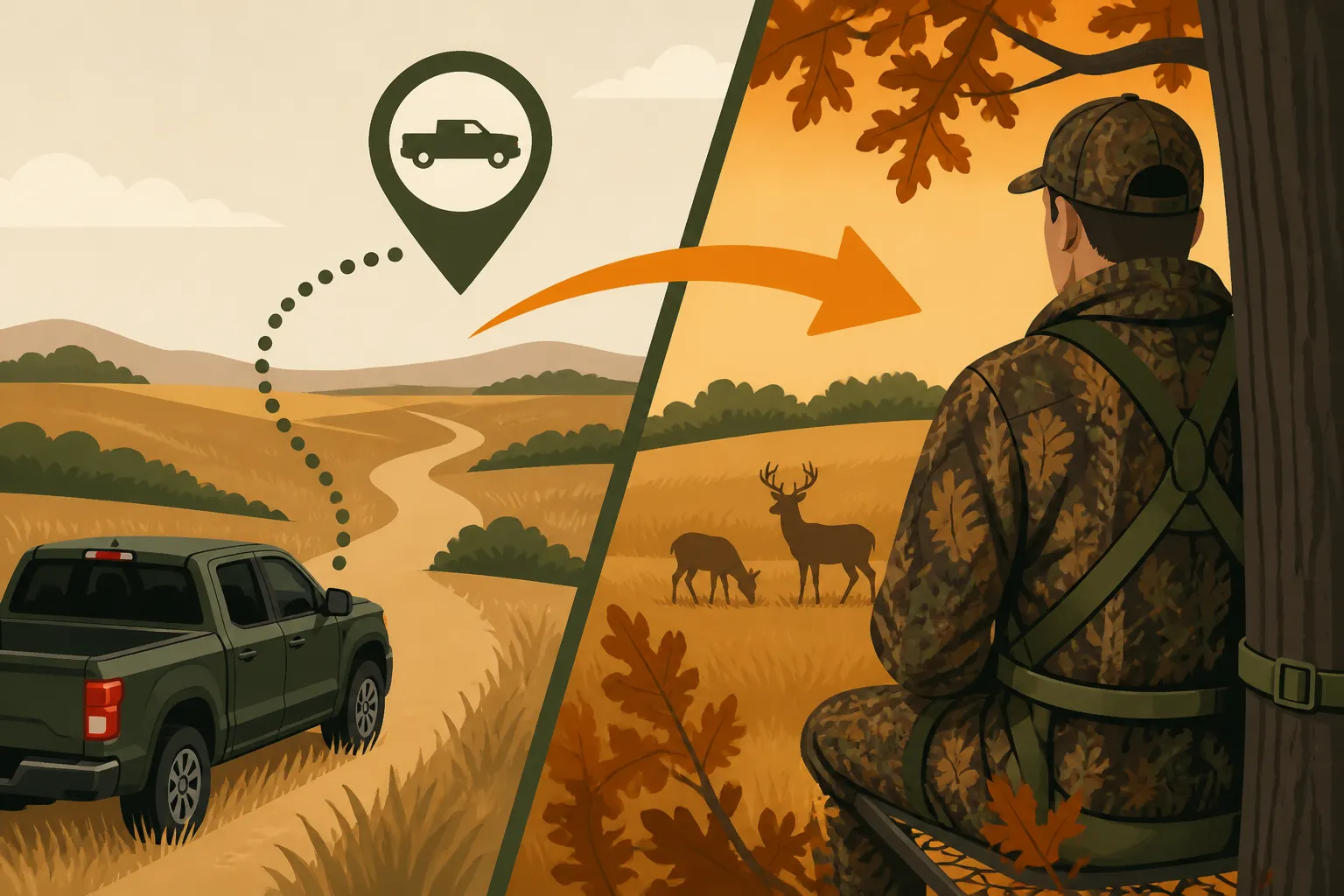
One of the most common mistakes hunters make, especially on public land or new private ground, is pulling their vehicle up too close to their intended hunting spot. The smell of gasoline, the sound of an opening door, and the sight of a truck parked right on a field edge can blow out every deer in the area before you even step foot in the woods. This guide is all about developing smarter, stealthier parking habits to ensure your hunt starts quietly and effectively.
The Subtle Art of Stealthy Arrival
Getting to your stand or blind without alerting every animal in the vicinity is truly an art form. It's not just about being quiet on your walk in; it begins the moment you decide where to park your truck. Deer, and most other game animals, are incredibly tuned into their environment, and anything out of the ordinary sticks out like a sore thumb.
Understanding Deer's Senses and Reactions
Deer possess a trifecta of senses that make them incredibly wary and difficult to approach undetected. Ignoring these senses when choosing your parking spot and access route is a surefire way to educate the deer in your area, making them even harder to hunt.
First and foremost is their sense of smell. A deer's nose is legendary, capable of detecting human odor for incredible distances, especially when the wind is right (or wrong, depending on your perspective). Your truck, even if it's not running, carries a cocktail of scents: fuel, exhaust residue, oil, and the ever-present human odor from you and your gear inside. Imagine pulling up to a remote field edge you've e-scouted, confident you're hidden, only to have the wind shift just slightly, carrying the distinct smell of your parking spot right into a bedding area. Those deer might not spook and bolt, but they'll know something isn't right. They'll adjust their movements, become more nocturnal, or simply move to another area. This silent alarm is often the most detrimental, as you might never even know you triggered it. That's why considering the prevailing wind direction before you ever leave your vehicle is paramount.
Next is their hearing. While perhaps not as acute as their sense of smell, deer can pinpoint sounds with remarkable accuracy. The metallic clang of a truck door, the crunch of gravel under tires, or the distinct whine of an engine can carry a surprising distance on a still morning. I've had countless experiences where a distant door slam, barely audible to me, has sent deer scattering from a far-off draw. We become desensitized to these everyday noises, but to a deer in a quiet environment, they are glaring anomalies. Even a slight sound can cause a deer to freeze, scan, and pinpoint the origin of the disturbance. You might think opening your tailgate quietly doesn't matter, but if a mature buck is on alert within earshot, it absolutely does.
Finally, their sight. While often associated with movement, deer can also pick up on static visual disturbances. The silhouette of a vehicle against a skyline, the glint of sunlight off chrome, or even the subtle difference a parked truck makes in a familiar landscape can be enough to raise an alarm. Deer are creatures of habit, and they know their home range intimately. Any new, stationary object in their routine travel path or near a bedding area will be noticed. A common scenario is parking on an open county road near a prime timber block. Even if you walk a quarter-mile to your stand, that visible truck can signal danger to deer using that timber, particularly during daylight hours. They might see it, mark it as a potential threat, and simply skirt that entire area until darkness falls.
The Impact of Parking Location on Deer Behavior
Your parking spot isn't just a temporary place to leave your vehicle; it's the opening act of your hunt. A poorly chosen spot can have ripple effects that last for days, or even weeks. When you park too close or in a conspicuous location, you're essentially sending a blaring signal to every deer within eyeshot and earshot that a human is in the area.
This immediate disturbance can directly impact natural travel corridors. Deer often use subtle trails, drainage ditches, or brush lines to move between bedding and feeding areas. If your vehicle is parked right on or near one of these critical pathways, you've effectively blocked it off for the time being. Deer will either hold up in their bedding area until dark, or they'll find an alternate, less efficient route, wasting valuable hunting time for you. They’ll remember that spot as a "danger zone" for a while, potentially altering their patterns for future hunts.
Beyond the immediate effect, consistently poor parking habits can "educate" the deer in a particular area. Animals learn quickly. If they regularly encounter human scent, hear vehicles, or see cars parked in specific places around a hunting area, they will adapt. They might start moving strictly at night, using thicker cover, or completely abandoning that part of their home range during daylight hours. This is particularly true on public lands where hunter pressure is higher. You might not be the only one making these mistakes, and the cumulative effect of multiple hunters doing so can turn a promising area into a ghost town during hunting season. Remember, you're trying to outsmart a wild animal, and your arrival is the first test of that challenge.
Crafting Your Parking Strategy for Minimal Disturbance
The best parking strategy starts long before you ever pull up to the hunting spot. It's about combining intelligent pre-hunt planning with on-the-ground execution.
E-Scouting and Pre-Season Reconnaissance
In today's hunting world, e-scouting is an indispensable tool. Before you ever leave your house, spend significant time poring over aerial maps, topography, and public land boundaries. Tools like GoHunt's mapping layers or other similar applications are invaluable for this. Look for key features that influence deer movement and, by extension, your parking and access.
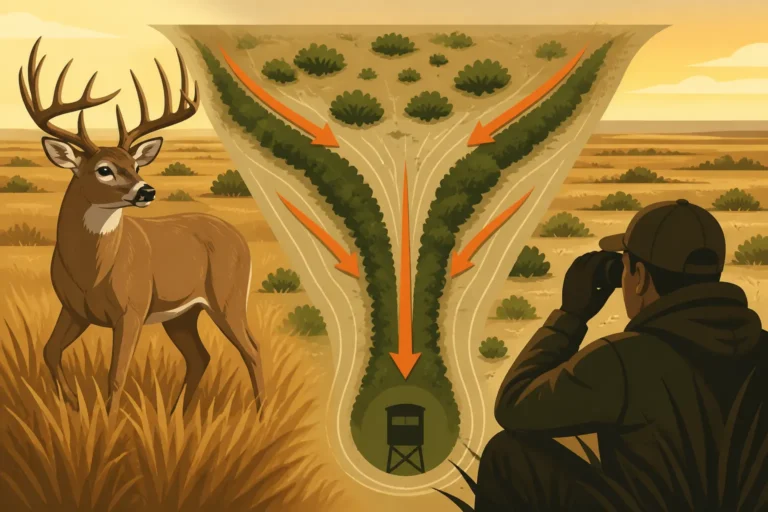
When you're looking at an aerial image, identify areas of dense cover that might serve as bedding areas. These are zones you want to give a wide berth. Locate natural funnels – creek draws, fence lines, timber points, or pinch points between open fields – that deer are likely to use. Your goal is to identify parking spots that allow you to approach these features without crossing them or placing your scent cone over them. Think about how the deer would naturally move through the landscape and then plan your approach to avoid intersecting those natural movements until you're in your stand.
Pay close attention to property lines, especially if you're hunting smaller public parcels or Kansas Walk-In Hunting Access Explained (WIHA) ground. You need to ensure your vehicle is legally parked on public access or within designated parking areas. GoHunt's mapping features can show property boundaries and public land tracts with great clarity, helping you avoid accidental trespass, which is a whole other headache. Identify roads or established trails that run adjacent to your hunting area but aren't heavily used by game. These can often be ideal parking points. For detailed prep, check out Scouting Kansas Walk-In Tracts Before the Opener to learn more about identifying these key features beforehand.
Wind, Thermals, and Scent Management from Your Vehicle
Understanding wind and thermals isn't just for choosing your stand location; it's critical for your parking strategy as well. Your vehicle, even when off, creates a scent plume. This plume carries odors that can spook deer just as effectively as your personal scent.
Always try to park downwind of your intended hunting area and your access route. This means if your stand is to the north, and the wind is from the west, parking to the west of your route might seem logical, but the wind could carry vehicle scent east across your path or into your hunting area. Instead, consider parking to the south or east, creating a buffer. This isn't always possible in flat farm country, but the principle remains: keep the wind carrying your vehicle's scent away from where you expect deer to be.
Thermals are another often-overlooked factor. These are air currents created by temperature changes. In the morning, as the sun warms the earth, thermals rise. In the evening, as the air cools, thermals fall. In areas with topography, like creek bottoms or hilly terrain, these can be very pronounced. If you're parking in a low-lying area, your vehicle's scent, combined with your own, might be pulled up into a bedding area on the ridge above as the morning thermals rise. Conversely, an evening park on a ridge might send scent down into a feeding area. For a deeper dive into this, read up on Wind and Thermals on a River Bank. It's a complex dynamic, but being aware of it can significantly improve your stealth.
Think about overall scent management not just for your body, but for your vehicle too. While you can't douse your truck in scent killer, keeping it clean, airing it out, and trying to park it where its scent is less likely to reach game animals is part of the overall strategy. The goal is to minimize any foreign scent intrusion. While no product can completely eliminate human scent, understanding the core principles discussed in Scent Control Claims can extend to how you manage your vehicle's impact.
Identifying Ideal Parking Locations
Finding that "perfect" parking spot is a blend of science and art. It requires observation, foresight, and a willingness to walk a little further.
- Natural Cover: Look for places where your vehicle can be naturally concealed. This could be behind a dense tree line, tucked into a deep drainage ditch, or simply a spot where the topography hides it from view. The goal isn't just to hide from other hunters, but to hide from deer. A spot that breaks up the vehicle's outline and keeps it from being silhouetted against the sky is ideal.
- Distance is Your Friend: This is probably the most crucial piece of advice. Park further away than you think you need to. A 10-minute walk versus a 5-minute walk can make all the difference in the world. That extra quarter-mile might mean the difference between deer knowing you're there and being completely oblivious. It gives the area time to "settle" after your arrival, and your human scent has more time to dissipate before you reach your stand.
- Existing Access, Not Deer Highways: Utilize existing county roads, two-track farm lanes, or public access points that aren't also primary deer travel corridors. Avoid parking directly on field edges where deer often enter or exit, or at the mouth of a timber block that serves as a bedding area. If you've been doing your e-scouting with GoHunt, you should have a good idea of where deer are likely to move. Choose a spot that allows you to walk around these areas rather than through them. For more on stand placement, which directly impacts parking decisions, consider reading Best Stand Locations in Flat Farm Country.
Executing Your Walk-In and Mitigating Your Presence
Once you’ve nailed down the perfect parking spot, the next critical phase is your walk to the stand. This is where many hunts are won or lost. Even the best parking strategy can be undone by a noisy, careless walk.
Planning Your Access Routes That Do Not Bump Deer
Think of your walk-in as a strategic infiltration. Just as you wouldn't charge into a military zone, you shouldn't blindly trek to your stand. Your access route needs to be as carefully planned as your stand location itself.
The primary goal is to choose a path that avoids bedding areas and high-traffic deer zones. This means taking the long way around if necessary. Deer, especially mature bucks, often bed in the densest cover available, whether that's a thick cedar thicket, a dense CRP field, or a tangled river bottom. Your walk-in route should skirt these areas, keeping you on the downwind side and out of their immediate line of sight. Utilizing terrain features like drainage ditches, creek beds, or natural depressions can offer fantastic concealment. Even in relatively flat Kansas farm country, a subtle change in elevation or a row of mature trees can provide enough cover to shield your approach.
If you’re hunting a particular crop field, rather than walking straight across it, hug the edge of the field, using the standing crops or an adjacent tree line for cover. In an ideal world, your access route should allow you to enter your stand location without ever crossing a major deer trail that’s actively being used. This often requires you to think creatively and embrace a longer, less direct path. For more on this critical topic, refer to Access Routes That Do Not Bump Deer. Remember, during early morning or late evening, deer are often on the move, making a stealthy approach even more challenging. Being aware of Walking In Before Legal Light tactics is essential for an undisturbed morning hunt.
Minimizing Noise and Visual Signatures
Even if you’ve parked perfectly and chosen an ideal route, a noisy or visually conspicuous walk-in can ruin everything. Every step, every rustle, every flicker of light needs to be considered.
When it comes to noise, slow down. Rushing through the woods inevitably leads to snapping twigs, crunching leaves, and bumping into branches. Move deliberately, placing each foot carefully. Choose footwear that is quiet; stiff, new boots can be surprisingly loud. If hunting in crunchy, dry conditions, consider walking in stream beds (if legal and safe) or along damp, grassy edges if available. Pay attention to your gear as well. Ensure buckles aren't clanking, calls aren't rattling, and your bow or rifle isn't making noise as you walk. Secure everything tightly.
For visual signatures, minimize the use of bright lights. If you must use a headlamp before legal light, use a red light setting if available, as it's less disruptive to wildlife and your own night vision. Keep the beam pointed down at your feet, not scanning the horizon. Break up your silhouette; don't walk directly on top of a ridge line where you'll be visible for miles. Utilize the cover you’ve identified during e-scouting—staying in shadows, behind brush, or within the confines of a draw. Wear camouflage that blends with the surroundings, even on your walk-in. The goal is to become part of the environment, not an obvious intruder.
Gear for a Stealthy Approach
The right gear can make a significant difference in your ability to move quietly and efficiently from your parking spot to your stand.
Your boots are paramount. Comfortable, well-fitting boots are essential for those longer walks. Choose boots with good ankle support to prevent injuries on uneven terrain and soles that offer grip without being excessively loud. Many hunters prefer soft-soled boots for silent stalking, but balance this with the need for durability and protection in varied Kansas terrain.
If you have a significant distance to cover, particularly with heavy gear, a deer cart can be a godsend. However, be mindful of the noise they can create. If you use a cart, choose one with pneumatic tires that roll quietly, and ensure all your gear is securely strapped down to prevent rattling. In some areas, deer carts might not be practical due to thick brush or muddy conditions, so assess the terrain before committing to one. For heavier loads and long hauls, quartering a deer in the field might be a better option than trying to drag it back intact, especially if your parking is far.
For hunters who like to stay mobile, lightweight and compact setups are key. A climbing stick and saddle system are excellent examples. As discussed in Mobile Hunting With a Saddle in Kansas, these setups allow you to move quickly and quietly, adapting your stand location based on real-time scouting or changing conditions. The less bulky and noisy your gear is, the easier it will be to execute a silent walk-in and avoid spooking deer. The goal is to be self-sufficient, stealthy, and ready to adapt.
Adaptability and Situational Awareness
No matter how well you plan, hunting is unpredictable. The ability to adapt your parking and access strategy on the fly is a hallmark of an experienced hunter.
Adjusting for Changing Conditions
Nature rarely cooperates perfectly with our plans. You might arrive at your carefully chosen parking spot only to find the wind has completely shifted, rendering your entire access route a "scent bomb" into the bedding area. This is where adaptability shines.
Have backup parking plans. During your e-scouting phase, identify two or three potential parking spots and corresponding access routes for each stand location, covering different wind directions. If the wind unexpectedly shifts from a north wind to an east wind, you should have an alternative parking spot and path that keeps your scent out of the primary deer movement zones. This might mean adding an extra half-mile to your walk, but it's far better than contaminating your hunting area.
Consider the impact of hunting pressure. On public lands or WIHA tracts, you might arrive to find another hunter already parked in your intended spot, or worse, set up along your planned access route. This is where the information in Hunting Pressure Patterns on Kansas Public Land becomes invaluable. Being able to quickly assess the situation and pivot to a less-pressured area, even if it's not your first choice, is critical. This might involve parking even further away and using an entirely different, more circuitous route.
Weather changes also demand flexibility. Rain can dampen leaves, making for a quieter walk, but it also amplifies ground scent. Snow cover can reveal fresh tracks, helping confirm deer movement, but it can also make your footsteps louder if it's crusty. Muddy conditions can increase noise and fatigue. Always take a moment before you exit your vehicle to assess the current conditions and make any necessary adjustments to your walk-in plan.
Learning from Each Hunt
Every hunt, successful or not, offers valuable lessons. Don't just pack up and leave; take time to analyze your approach and exit.
Review your approach after the hunt. As you walk back to your vehicle, mentally (or even physically, if you have time) retrace your steps. Did you notice any fresh deer sign along your route? Did you inadvertently walk through an area that looked like a bedding spot? Did you hear or see any deer react to your presence? If you have trail cameras out, check the footage after you leave. Did deer move differently near your access route than they normally do? Did they appear wary? This feedback is crucial for refining your strategy.
Document successful and unsuccessful parking spots. Use your mapping app (like GoHunt) to drop pins and make notes. Mark down where you parked, the wind direction, your access route, and any observations about deer behavior. Over time, you'll build a valuable personal database of what works and what doesn't for specific locations and conditions. Perhaps parking 800 yards away and using a winding creek bottom for access proved far more effective than parking 300 yards away along an open field edge. These detailed notes are the building blocks of becoming a truly stealthy hunter. Remember the advice from E-Scouting Kansas Farm Country From Home — continuous learning and mapping are your best friends.
| Scenario | Ideal Parking Location | Walk-In Strategy | Key Considerations |
|---|---|---|---|
| Open Crop Field | Behind a distant tree line, in a deep ditch, or off a rarely used county road. | Utilize field edges, drainage ditches, or fencelines for cover. Avoid walking across open ground. | Wind direction is paramount for scent. Minimize visual profile against the sky. |
| River Bottom/Timber | On higher ground away from the bottom, or an established road outside primary timber. | Follow contours, use creek banks, stay out of bedding areas. Account for rising and falling thermals. | Thermals can carry scent further than expected. Muddy conditions amplify noise. |
| CRP/Tall Grass | Along a public road or access point, well off the actual hunting area. | Utilize existing trails or walk through the densest cover. Consider walking crosswind to avoid spreading scent. | Noise from walking through tall grass can be significant. Scent lingers in thick cover. |
| Public Land Adjacent to Private | At designated public access points, always confirming you're on public land. | Be mindful of property lines. Use mapping tools to confirm boundaries and avoid accidental trespass. | Neighboring pressure is common. Always have a backup plan for occupied spots. |
| Steep Terrain/Draws | On the ridge top or at the base, depending on wind and thermal patterns, out of sight. | Stay on the downwind side of the draw. Use the draw itself for concealment when thermals are stable. | Thermals are very active in draws. Consider your exit to avoid pushing deer up or down. |
Disclaimer
Hunting is an inherently dangerous activity. Always prioritize safety, follow all local, state, and federal hunting regulations, and be aware of your surroundings. The information provided in this guide is for informational purposes only and should not replace proper hunter education or professional guidance. Always obtain landowner permission before hunting on private land.