Run-and-Gun Turkey Tactics on Kansas Walk-In Ground
Have you ever spent hours hunkered down in a blind or camouflaged against a tree on a vast piece of public land, just to hear distant gobblers sound off in every direction but yours? It's incredibly frustrating when you know birds are around, but they seem to be playing keep-away. Traditional, static turkey hunting can feel like trying to catch smoke in Kansas's expansive walk-in hunting areas, leaving you feeling defeated. This guide is all about embracing a more dynamic approach: run-and-gun tactics specifically tailored for finding and engaging those elusive longbeards on Kansas's public ground.
Understanding the "Run-and-Gun" Philosophy for Kansas Turkeys
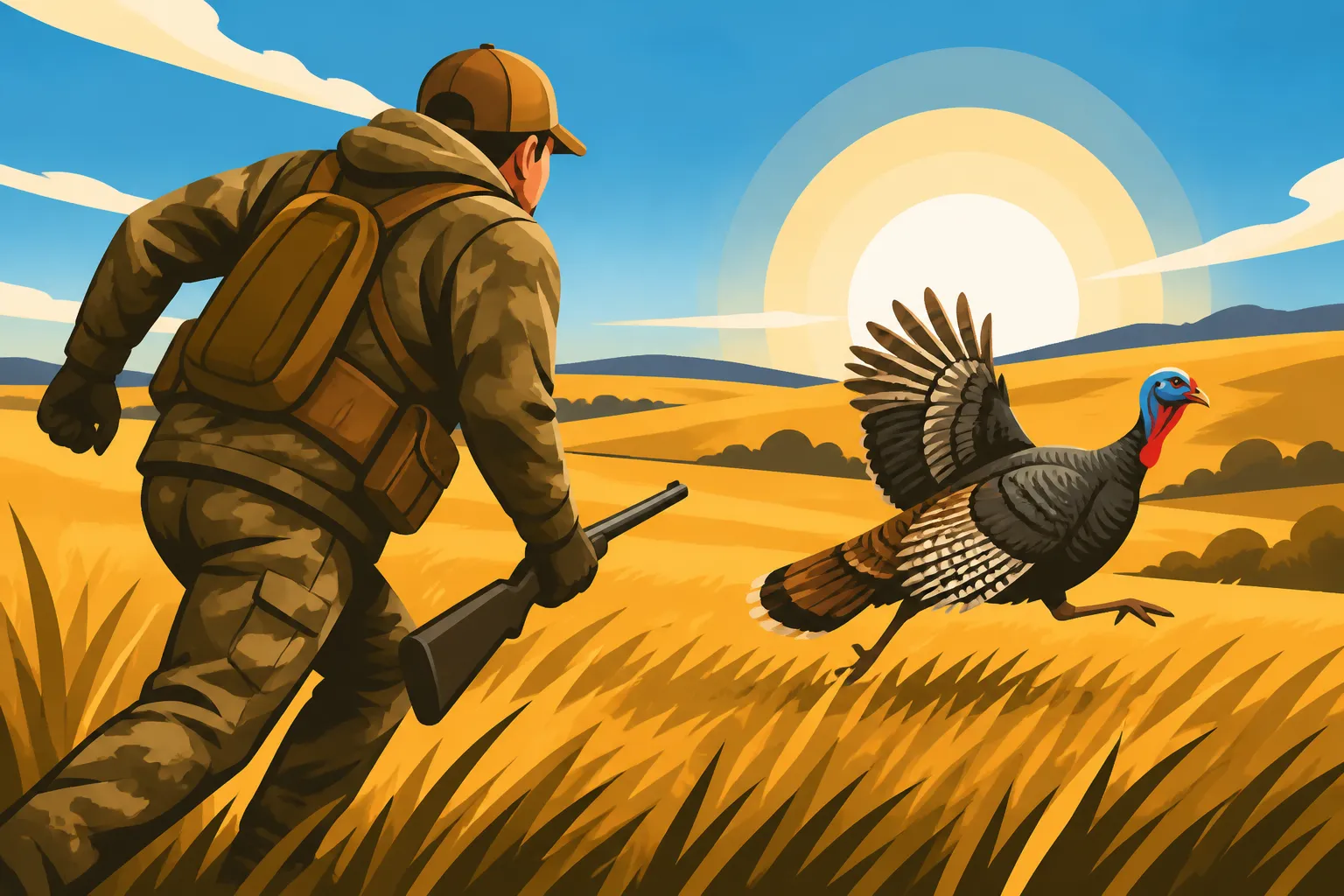
When you're dealing with big tracts of Kansas Walk-In Hunting Access (WIHA) land, where birds can range freely and pressure can change their patterns quickly, sitting still and waiting for them to come to you often isn't the most effective strategy. The run-and-gun philosophy is all about active pursuit, covering ground, and forcing a reaction from the turkeys. It’s a physical style of hunting, but when done right, it can be incredibly rewarding, especially on property where you don't know every nook and cranny.
Why Static Hunting Fails on WIHA
Imagine a sprawling WIHA property in central Kansas, perhaps a mix of CRP grass, crop fields, and a scattered timber strip along a creek. If you set up in one spot, even if it looks "turkey-ish," you're banking on a gobbler moving into your small calling zone by chance. This might work on private land where you know specific roosts and travel routes, but on public ground, turkeys are often more spread out and wary. They might hit a different part of the timber, sneak through a distant milo stubble field, or simply roost a mile away from where you chose to sit. The sheer scale and unpredictability of public land often make a static setup a low-percentage play.
Moreover, other hunters might be putting pressure on birds, pushing them into areas you hadn't anticipated. A gobbler that was heading your way might suddenly turn heel if it bumps into another hunter or hears an unfamiliar call from a different direction. Your static position, which seemed perfect at dawn, can become a lonely waiting game by mid-morning, with the birds long gone to parts unknown, leaving you wondering what went wrong.
The Mindset of Aggressive Pursuit
Adopting a run-and-gun mindset means you’re the predator, not the patient spider. Your goal is to locate birds, assess their position, and then aggressively (but stealthily) close the distance and set up to intercept them. This isn't about aimlessly wandering; it's about making calculated moves based on the terrain, wind, and where you last heard a gobble. You're constantly evaluating, constantly moving, and constantly searching for that slight advantage.
This approach demands quick decision-making and the ability to adapt. If a bird gobbles far off to your left, you immediately start planning your route to get closer, thinking about cover, potential setup locations, and how to use the terrain to mask your movement. It’s a dynamic chess game where you're always trying to anticipate the turkey's next move and position yourself for a shot. This proactive style often gives you a much better chance of putting a tag on a Kansas longbeard, especially when you're working large parcels of land.
Covering Ground Effectively
The key to successful run-and-gun hunting on Kansas walk-in ground is covering ground efficiently and strategically. This means more walking, but smarter walking. Instead of crashing through the woods, you're looking for natural travel lanes, field edges, and timber lines that allow you to move quietly and quickly. You're using locator calls like crow calls or owl hoots every few hundred yards, listening intently for a response.
When you do hear a gobble, you aren't just blindly heading that way. You're pausing, triangulating the sound, and then planning a route that puts you in a position to cut off the bird or set up where it might want to come. This often means using creek bottoms for concealment, skirting the edges of standing corn, or utilizing fence rows as cover. The more ground you can cover intelligently, the higher your chances of striking gold and finding that cooperative gobbler that's ready to talk.
Essential Gear for Mobile Turkey Hunting
When you're planning to cover miles on foot across Kansas WIHA tracts, every ounce in your vest matters. The run-and-gun style prioritizes mobility, so your gear needs to be streamlined, lightweight, and efficient. Forget the bulky blind and the full arsenal of decoys; we’re thinking lean and mean, ready to move at a moment’s notice.
Lightweight Calling and Decoy Setup
Your calling setup should be versatile but not cumbersome. A good pot call or two, a slate, a couple of diaphragm calls, and maybe a box call should be sufficient. These allow you to produce a wide range of turkey vocalizations without adding much weight. For locator calls, a single crow call or an owl hooter is usually enough. The goal is to imitate birds, not carry a full orchestra.
Decoys are where you really need to be selective. Forget the full-strut tom decoy that weighs a ton and takes ages to set up. For run-and-gun, a single collapsible hen decoy, or even just a fan, is often all you need. Brands like Avian-X offer incredibly lightweight and packable options that can be deployed in seconds. Sometimes, simply fanning a gobbler with a real or artificial fan can be incredibly effective, especially if you're stalking in thick cover. The less you have to carry and set up, the faster you can react when a gobbler sounds off close by.
Comfortable and Concealing Clothing
You're going to be walking a lot, often in varied terrain and potentially warm spring Kansas weather. Layered clothing is crucial, allowing you to shed layers as the day warms up or as you exert yourself. Moisture-wicking base layers are a lifesaver. Your outer layers need to be quiet, durable, and offer excellent camouflage. Brands like Sitka Gear or First Lite make high-quality turkey hunting apparel that excels in these areas.
Don't forget good quality knee pads, whether integrated into your pants or worn separately. You’ll be dropping to your knees frequently for setups, and Kansas soil isn’t always soft. A comfortable, supportive pair of hunting boots is perhaps the most important item. Look for boots that are waterproof, offer good ankle support, and have excellent traction, as you might be crossing muddy creek beds or navigating slippery slopes. When you're spending all day on your feet, happy feet make for a much happier hunter.
Navigation Tools and Apps
Navigating large public land tracts effectively is non-negotiable for run-and-gun hunting. Relying solely on paper maps is fine, but digital mapping apps have revolutionized this aspect of hunting. Apps like OnX Hunt and GoHunt provide incredibly detailed satellite imagery, property line overlays, and public land boundaries right on your phone. This information is critical for identifying potential turkey habitat, understanding how to legally access areas, and ensuring you don't accidentally trespass.
Before your hunt, use these apps to E-Scouting Kansas Farm Country From Home. Pin potential roosting areas, water sources, and natural funnels. During the hunt, use the GPS tracking feature to see where you've been and to mark where you hear birds or see fresh sign. This digital breadcrumb trail is invaluable for navigating back to your vehicle or for planning follow-up hunts. Having access to this level of detail on your phone means you can make informed decisions in real-time, greatly increasing your efficiency and success rate on the fly.
| Feature | Traditional Static Hunt Gear | Run-and-Gun Mobile Gear |
|---|---|---|
| Primary Shelter | Large pop-up blind, tree stand | Natural cover, small camouflage net |
| Decoys | Multiple full-body hens and gobblers | Single collapsible hen, fan, or no decoy |
| Calls | Full vest of various calls | Essential few: pot, diaphragm, box, locator |
| Footwear | Any comfortable boots (less walking) | Lightweight, waterproof, supportive hiking boots |
| Navigation | Paper map, compass, general knowledge | GPS-enabled app (e.g., OnX, GoHunt), power bank |
| Pack Weight | Heavier, includes blind/chair | Lighter, minimalist vest or small backpack |
| Movement | Limited, wait for birds | Constant, stealthy, strategic |
| Setup Time | 10-30 minutes for blind/decoys | 30 seconds – 2 minutes, using natural cover |
Scouting and Pre-Season Preparation for Walk-In Ground
The beauty of run-and-gun is its adaptability, but even the most spontaneous hunter benefits immensely from solid pre-season scouting. On Kansas WIHA, where you might not have a long history with a specific property, good reconnaissance can make all the difference between a frustrating bust and a successful hunt.
E-Scouting Kansas Walk-In Tracts Before the Opener
Long before you set foot on a WIHA property, your hunting begins from the comfort of your home. Utilize online resources like the Kansas Department of Wildlife, Parks and Tourism (KDWP) public lands map and digital mapping apps. These tools are invaluable for E-Scouting Kansas Farm Country From Home. Look for distinct features: areas with a mix of timber and open fields, creek drainages, power line cuts, and potential roosting trees (often tall, mature trees near water). Identify areas where different habitat types converge, as these "edge" zones are frequently used by turkeys.
Pay close attention to recent aerial imagery. Look for areas with dense timber that could serve as roosting sites, or open fields where turkeys might feed. Note any changes in agricultural practices that might influence bird movement, such as fields that have been left fallow or new crop rotations. The more you can learn about the landscape from your screen, the less time you'll spend aimlessly wandering in the field. This virtual scouting helps you narrow down vast tracts into manageable, high-potential zones.
Finding Roost Trees and Water Sources
Turkeys are creatures of habit, especially when it comes to roosting. They prefer tall, sturdy trees that offer good visibility and protection from predators. On public land, these might be limited to specific timber blocks along a river or creek, or perhaps a lone mature cottonwood in a field. While you might not be able to pinpoint the exact tree from your couch, e-scouting can highlight potential roosting areas. Once you're on the ground, early morning and late evening drives (from public roads, observing from a distance) can help you confirm active roosts.
Water sources, even small ones like farm ponds, creek puddles, or overflowing stock tanks, are also critical, especially in drier parts of Kansas. Turkeys need water daily, and these spots often concentrate birds, especially during warmer spring days. Mark these potential water sources on your map during your Scouting Kansas Walk-In Tracts Before the Opener. Knowing where turkeys will likely go for water and where they prefer to roost gives you key starting points for your run-and-gun efforts, helping you decide where to begin your day or where to focus your mid-morning hunts.
Understanding Hunting Pressure Patterns on Kansas Public Land
This is perhaps one of the most critical aspects of public land hunting. Hunting Pressure Patterns on Kansas Public Land can drastically alter turkey behavior. On opening weekend, expect high pressure, especially on easily accessible WIHA tracts. Birds that were gobbling freely a week before might suddenly become quiet and skittish. They’ll likely abandon heavily used areas and seek refuge in thicker cover or on less accessible parts of the property.
As the season progresses, pressure might wane during weekdays but pick back up on weekends. Be prepared to adapt. If you find birds are completely shut down near road access points, you’ll need to put in the miles to get to more remote sections of the property. This is where the run-and-gun strategy truly shines: it allows you to quickly relocate and pursue birds that have moved due to pressure. Sometimes, simply walking an extra half-mile into an area others overlook can put you on unpressured birds that are much more willing to respond. Observing other hunters' vehicles and their patterns can give you clues about where the pressure is concentrated.
On-the-Move Calling Strategies
The run-and-gun style isn’t just about covering ground; it's about being actively engaged with your calls while doing so. Your calls are your primary communication tool, designed to locate birds, gauge their interest, and ultimately draw them into range. This requires a dynamic approach to calling, adjusting your volume and intensity based on the situation.
Aggressive Locating Calls
When you're trying to find turkeys on a new piece of Kansas WIHA, your first step is often to "wake them up" or get a reactionary gobble. This is where aggressive locating calls come into play. A loud crow call, an owl hooter, or even a sharp hawk shriek can often provoke a gobble without alerting the birds to your true identity as a hunter. These sounds aren't typically associated with danger by turkeys, but they often get a response.
Vary your calling cadence and volume as you move. A series of loud clucks and yelps from a box call or a sharp cut from a diaphragm call can also work as a locator, especially when you think you might be close to a roosted bird early in the morning. Don't be shy; you need to project sound across open fields or through timber. Once you get a response, then you can start toning it down and becoming more subtle. The goal of the locator call is purely to pinpoint their general location so you can begin your approach.
Soft, Enticing Calls After Contact
Once you've located a gobbler, the game changes. Your objective shifts from finding to enticing. This is when you put away the loud locator calls and transition to softer, more seductive turkey vocalizations. Think subtle hen yelps, purrs, and clucks. A diaphragm call or a soft slate call is excellent for these more intimate sounds. The idea is to sound like a lonely, receptive hen.
Start with a few soft yelps, then listen. If the gobbler responds, try to match his intensity. If he's gobbling aggressively, you can be a bit more assertive with your yelps. If he's soft, keep your calls light and infrequent. Don't overcall; let him wonder where you are. A good rule of thumb is to call, listen, and wait. Let the silence work for you. Often, a gobbler that is "hung up" can be tipped into coming closer by a few soft clucks and purrs that suggest a hen is feeding nearby and isn't too interested in chasing him. For specific tactics on tough birds, check out Calling a Henned-Up Kansas Gobbler.
Dealing with Henned-Up Toms
One of the most common frustrations in turkey hunting, especially on public land, is encountering a "henned-up" tom. This is a gobbler that's with a group of hens and is perfectly content to stay with them, often gobbling at your calls but refusing to break away and come to you. It's a classic scenario that can drive a hunter mad. The run-and-gun strategy offers unique advantages here.
Instead of staying put and trying to out-call real hens (a losing battle), you can use your mobility to your advantage. Try to identify the general direction the flock is moving. Then, make a wide, silent circle to get ahead of them or to cut them off. Once you're ahead, set up quickly and try to pull the gobbler away from his harem with soft, alluring hen calls. Sometimes, aggressive cutting can also make the real hens jealous, causing them to bring the gobbler closer to investigate. If that doesn't work, don't be afraid to keep moving. The beauty of run-and-gun is that you don't invest all your time in one bird; if one isn't cooperating, you move on to find one that is.
Reading the Landscape and Adapting to Pressure
Success in run-and-gun turkey hunting on Kansas walk-in ground isn't just about calling; it's heavily dependent on your ability to interpret the land around you and adapt to the presence of other hunters. Understanding how turkeys use the terrain and how pressure affects them is crucial for setting up successfully.
Identifying Travel Corridors and Openings
Turkeys, like all wildlife, tend to use the path of least resistance when moving. On large, open Kansas properties, this often means following tree lines along fields, creek bottoms, fence rows, or even faint deer trails. These are your primary travel corridors. As you move across a WIHA tract, be constantly looking for these natural highways. Turkeys will often use these to move between feeding areas, roosts, and strutting zones.
Openings, like small clearings in timber or the edges of crop fields, are also key. Gobblers love to strut in open areas where they can be seen by hens. If you locate a bird in timber, try to anticipate where he might move to strut. Positioning yourself near a small opening or along the edge of a field where he might emerge can give you the shot opportunity you're looking for. Use your mapping app to identify these natural funnels and clearings during your e-scouting phase, then confirm them on the ground.
Using Terrain to Your Advantage
The subtle undulations of Kansas's often-flat landscape can be your best friend when running and gunning. Even a slight rise or a shallow ditch can provide critical cover for your approach. When you hear a gobbler, instead of charging straight at him, plan a route that uses any available terrain features to mask your movement. Creek beds, elevated field edges, and even rows of taller crops (like standing corn or milo stubble) can hide your silhouette as you close the distance.
The wind also plays a role, albeit less critically than for deer. However, using a light breeze to carry your calls (but not your scent, as turkeys have an excellent sense of smell) can sometimes help. More importantly, understanding the topography helps you predict where a gobbler might come from. If you're on a slight rise and call, he's more likely to pop up from the nearest high ground to check for a hen. Always try to set up with your back to something wider than your shoulders to break up your outline, even if it's just a single tree or a clump of bushes.
Adapting to Other Hunters
Let's be real: hunting public land, especially WIHA, means you're going to encounter other hunters. It's a part of the game. The run-and-gun style is particularly effective at dealing with this pressure because it allows you to react quickly. If you hear another hunter calling or see their vehicle, you have a few options. First, and most importantly, prioritize Public Land Turkey Safety. Identify yourself if necessary and make sure everyone knows where everyone else is.
Second, if another hunter is working a bird, give them space. There’s enough public land out there for everyone. Instead of crowding in, use your mobility to slip around them and find other birds. Often, birds that have been pressured by a static hunter will move to a different part of the property, providing an opportunity for a mobile hunter who's willing to cover ground. Sometimes, even listening to another hunter's calling can give you clues about where the birds are and how they're reacting. You might even stumble upon a bird that the other hunter pushed your way.
Safety and Ethics on Public Walk-In Ground
Embracing the run-and-gun turkey hunting style on Kansas WIHA means being extra vigilant about safety and adhering to ethical hunting practices. When you're constantly on the move and engaging with birds, it's easy to get tunnel vision. However, maintaining situational awareness and respecting both the wildlife and other hunters is paramount.
Identifying Other Hunters
When you're slipping through the woods and fields, calling aggressively, it's easy to mistake another hunter for a turkey. This is why positive identification is non-negotiable before you even think about raising your shotgun. Never assume a sound or movement is a turkey. If you hear a gobble or see movement and suspect it could be another hunter, stop calling immediately. Make your presence known by speaking loudly or displaying hunter orange (though typically not required for turkey hunting, a piece of orange on your vest while moving can be a good idea, especially in pressured areas).
It's a terrifying thought to be mistaken for game, and it happens every year across the country. Always identify your target beyond any doubt and know what's beyond it. Be especially careful when using decoys or when attempting to "reap" or "fan" a gobbler. In Kansas, while fanning and reaping are legal on private land, they come with significant risks on public property where other hunters might be actively stalking. If you plan to use a decoy, place it in an open area where it can be clearly seen, and always set up behind natural cover so that any incoming hunter would only see your decoy, not you. Familiarize yourself with all Public Land Turkey Safety guidelines.
Respecting Property Lines
Kansas offers a fantastic amount of WIHA land, but these tracts are often interspersed with private property. When you're running and gunning, you need to be acutely aware of boundaries. Your digital mapping app, like GoHunt with its clear property line overlays, is an indispensable tool for this. Always know exactly where you are and where the public ground ends. Crossing a property line, even by accident, can lead to serious legal trouble and damage the reputation of public land hunters.
Before you begin your hunt, take a moment to understand the boundaries of the specific WIHA tract you're on. Note any natural markers like fence lines, changes in vegetation, or roads that indicate a boundary. If a bird flies or runs onto private land, you cannot pursue it without explicit permission from the landowner. While it can be heartbreaking to watch a gobbler disappear onto forbidden ground, respecting private property is a cornerstone of ethical hunting. For more information on retrieving game across property lines, you might find guidance in Retrieving Game From Private Land in Kansas.
Leaving No Trace and WIHA Rules
As a run-and-gun hunter, you are often moving through areas that might be less frequently visited by other hunters. It's crucial to practice Leave No Trace principles. This means packing out everything you pack in, including spent shotgun shells, food wrappers, and any other trash. The goal is to leave the area looking exactly as you found it, or better. Respect the land and the privilege of hunting on it.
Additionally, always be aware of any specific rules pertaining to the WIHA tract you are hunting. While When Kansas WIHA Tracts Open in Fall typically focuses on deer, similar rules often apply to spring turkey season regarding parking, vehicle access, and the placement of temporary blinds or stands. Some WIHA areas might have specific restrictions on certain activities, so it’s always wise to consult the current KDWP hunting atlas or website for any updates. Your mobile, low-impact style already aligns well with these principles, but a conscious effort to minimize your impact helps ensure these crucial public hunting opportunities remain available for years to come.
Disclaimer
Please note that hunting regulations, season dates, and public land access rules can change. Always consult the latest official regulations from the Kansas Department of Wildlife, Parks and Tourism (KDWP) before planning and undertaking any hunting trip. This guide is for informational purposes only and does not supersede official state regulations.