Finding Plum Thickets That Hold Quail
Finding those elusive bobwhite quail in the vast Kansas landscape can feel like searching for a needle in a haystack, especially when you know they're around but just can't pinpoint their hideouts. It's a common frustration, but often, the key lies in understanding one specific, highly productive habitat: the unassuming plum thicket. This guide will dive deep into why these dense patches are quail magnets and how you can become a pro at finding and hunting them.
The Irresistible Appeal of Kansas Plum Thickets for Quail
If you've spent any time chasing bobwhites in Kansas, you know they're masters of concealment. They need dense, protective cover to escape predators and harsh weather, and they need a reliable food source nearby. This is precisely where plum thickets shine, offering a trifecta of benefits that make them prime real estate for quail coveys.
Why Plum Thickets Are Quail Magnets
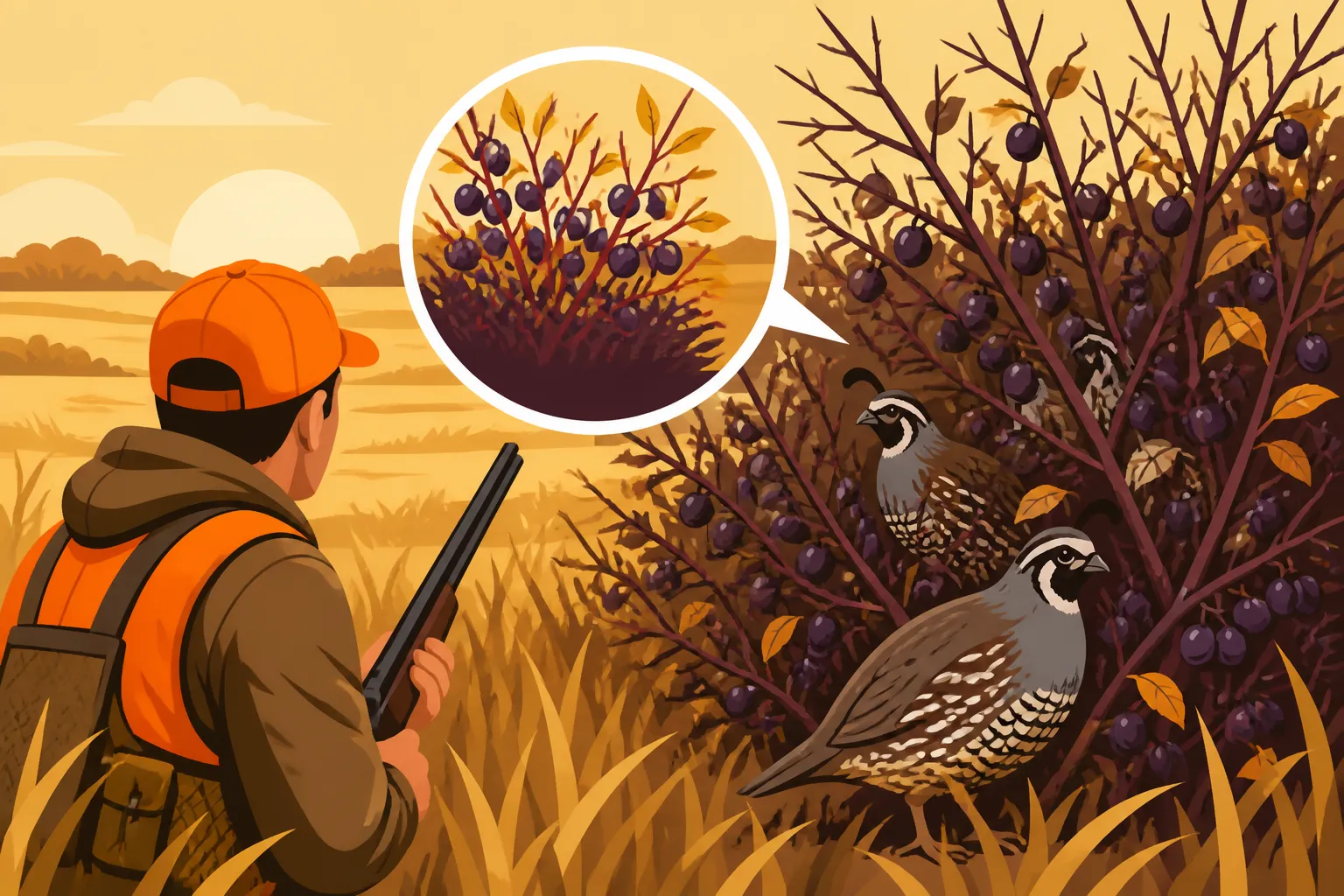
Plum thickets, primarily wild plum (Prunus americana), are more than just a cluster of thorny bushes; they're a mini-ecosystem tailored for bobwhite quail survival. Their dense, interwoven branches, often growing low to the ground, create an impenetrable fortress against aerial predators like hawks and ground predators like coyotes. When a covey flushes, they burst into these thickets, confident they can disappear into the thorny maze. Beyond protection, these thickets offer essential thermal cover, shielding quail from blistering summer sun and biting winter winds, a critical factor for survival during extreme Kansas weather. The thicket's structure provides a microclimate that can be several degrees warmer or cooler than the surrounding open terrain, making it a natural refuge.
Another significant draw is the food source. Wild plums produce a bounty of small, tart fruits that, while perhaps not a primary quail diet component, can be a supplemental food source when ripe. More importantly, the thickets themselves are teeming with insects, which are a vital protein source, especially for growing quail chicks. The leaf litter and undergrowth also host a variety of weed seeds, which quail eagerly scratch for. This combination of robust cover and readily available food makes a plum thicket an almost ideal home for a covey. Understanding why these birds use specific habitats is crucial, and it links directly to understanding Quail Covey Size and Behaviour.
Differentiating Productive Thickets from Sparse Cover
Not all plum thickets are created equal in the eyes of a bobwhite. A truly productive thicket isn't just a few scattered bushes; it's a dense, often circular or oblong island of cover that stands out in the landscape. Look for mature thickets that are at least 20-30 feet in diameter, with a deep, intertwined canopy that reaches to the ground. Sparse, young thickets might offer some escape cover, but they typically lack the long-term protection and consistent food sources that hold a covey day after day.
The best thickets often have a "skirt" of dense, low-hanging branches that prevent easy access from the ground, forcing predators to fight through thorns. These robust thickets often grow on field edges, along fencerows, or in transitional areas between cropland and taller grasses like CRP. Pay attention to the age and density of the thicket. Overgrown, stagnant thickets might be too thick to navigate, while very young ones might not provide sufficient protection. The sweet spot is a dense, mature thicket with plenty of ground-level cover but still enough open space within for quail to move around.
Pinpointing Prime Plum Thicket Locations in Kansas
The vastness of Kansas can be daunting when you're trying to locate specific habitat features like plum thickets. Thankfully, with modern tools and a keen eye for landscape features, you can significantly narrow down your search and find those quail-holding havens.
E-Scouting with Mapping Tools
Before you ever step foot in the field, you can do a tremendous amount of scouting from your computer or phone. Digital mapping applications, like those found on GoHunt, are indispensable for this. Start by looking for areas that fit the general description of good quail country in Kansas: tracts of native grass, CRP, or abandoned farmland, especially where it borders crop fields (like milo or corn stubble) or creek bottoms.
On aerial imagery, plum thickets appear as distinct, dark green, often circular or irregularly shaped patches that stand out from the surrounding lighter green or brown fields. They typically have a very solid, opaque appearance compared to lighter, more open brush. Look for these patches along property lines, old fencerows, corners of fields that might have been difficult to farm, or areas adjacent to waterways. Plum thickets thrive in undisturbed areas, so look for breaks in continuous agricultural use. Many times, you'll find them at the intersection of a fencerow and a grass field, or just inside a timber edge where sunlight still reaches the ground. Identifying Terrain Funnels That Work Without Hills can often lead you to these thicker cover types that concentrate game.
Table 1: Common Quail Cover Types in Kansas and Their Characteristics
| Cover Type | Primary Function | Ideal Location | Density & Accessibility | Food Source Potential |
|---|---|---|---|---|
| Plum Thickets | Escape, Thermal, Nesting | Field edges, Fencerows, Transitions | Very Dense, Difficult to penetrate | Insects, Berries, Weed seeds |
| CRP Grass | Nesting, Roosting, Foraging | Large open fields | Moderate to Dense, Easier to walk | Insects, Grass seeds |
| Shrubby Draws | Escape, Travel, Foraging | Creek bottoms, Breaks in terrain | Variable, often Linear | Insects, Berries, Small shrubs |
| Standing Crops | Foraging, Temporary Cover | Agricultural fields | Open to Dense, Easy to walk | Grain, Insects |
| Timber Edges | Escape, Thermal, Roosting | Transition zones with fields | Variable, depending on undergrowth | Insects, Hard mast (limited) |
This table clearly illustrates why plum thickets are a standout, especially for crucial escape and thermal cover. Many mapping platforms also offer topography layers, which can help identify subtle depressions or rises where water might collect, encouraging denser vegetation growth. Pay attention to changes in vegetation type indicated on these maps. The GoHunt platform's detailed satellite imagery can often resolve individual trees and shrubs, making these thickets easier to spot.
On-the-Ground Scouting for Active Thickets
Once you've identified potential plum thickets via e-scouting, it's time for boots on the ground. This is where you confirm your suspicions and look for undeniable signs of quail activity. Approach thickets cautiously, especially if it's late morning or early afternoon, as quail might be dusting or feeding nearby.
Look for small, distinctive quail droppings, which are often dark and coiled with a white cap. These are a dead giveaway. You might also find dusting bowls – small, shallow depressions in loose soil or sand where quail take dust baths to maintain their feathers and rid themselves of parasites. These are particularly common on the sunny side of a thicket. Tracks are another sign, although they can be harder to spot in dense vegetation. Old feathers caught on thorns or in the grass around the thicket indicate past usage.
Listen carefully. Even if you don't see them, an active thicket might offer subtle clues: the faint "bob-white" call or the soft chirps of a covey moving through cover. The edges of the thicket are often the most telling. Look for evidence of quail scratching for seeds or insects where the dense cover meets more open foraging ground. A good thicket will often be connected to other suitable cover, like tall grass or a grain field, by a natural travel corridor. This allows quail to move safely between feeding and loafing areas. Learning to interpret these ground signs is critical for Working Pheasant Fields Without a Dog or when hunting quail without canine assistance.
Hunting Strategies for Plum Thicket Quail
Once you've done your homework and found those promising plum thickets, it's time to put a plan into action. Hunting these thickets requires a strategic approach, whether you're working with a dog, a partner, or venturing out on your own.
Working Thickets with Dogs and Partners
Hunting plum thickets with well-trained bird dogs is often the most effective method. A good dog will instinctively quarter the ground around the thicket, pick up scent, and hold a point, indicating exactly where the covey is hiding. This allows you to approach confidently and prepare for the flush. When the dog goes on point, position yourself strategically to cut off escape routes and ensure a safe shot.
If you have a hunting partner, coordinate your approach. One hunter can act as a "blocker" on one side of the thicket, while the other works with the dog or walks through the thickest part. Quail often try to run out the back or sides of a thicket before flushing, so having someone covering these escape lanes can be highly effective. The key is to communicate clearly and move systematically, ensuring every part of the thicket is thoroughly covered. Remember, these thickets are often impenetrable, so pushing through the very densest parts might not be feasible; focus on the edges and accessible lanes within. If you're hunting without a dog, this coordinated blocking becomes even more vital, akin to Dogless Quail Hunting Tactics.
Solo Tactics for Flushing Quail from Thickets
Hunting plum thickets solo presents a different challenge but is still very achievable. Without a dog, you become both the "dog" and the "hunter," relying on your senses and knowledge of quail behavior. The most critical aspect is to move slowly and methodically. Don't just charge into the thicket; quail are experts at holding tight. Instead, try to circle the thicket first, looking for fresh tracks or droppings that indicate recent activity.
Then, start working the edges, kicking at the base of the bushes and pausing frequently. Quail often wait until the last possible second to flush. Vary your pace, sometimes walking quickly, sometimes pausing for a full minute, to keep them guessing. Pay close attention to wind direction; quail prefer to flush into the wind. If you can approach from downwind, you might push them towards an open area where you have a better shot. If the thicket is too dense to enter, try to "push" the covey by walking around its perimeter, focusing on areas where the cover thins slightly or where it meets more open ground. This can encourage them to break cover. Sometimes, just sitting quietly for 10-15 minutes near a thicket you suspect holds birds can work, as the quail might eventually move out to feed, giving you an opportunity.
Post-Flush Strategy and Follow-Up
The moment a covey flushes from a plum thicket is often chaotic and exhilarating. The sudden burst of wings and calls can be disorienting. After the initial shots, the real work begins: marking where individual birds peeled off. Quail from a broken covey will often fly a short distance and re-establish cover in the nearest available dense patch. This might be another small plum thicket, a patch of briars, or even a dense stand of grass.
If you harvested a bird, quickly retrieve it. Then, try to mark the general direction the remaining birds flew. Often, they won't fly far. After a few minutes, quietly move to the area where you think they landed and begin a systematic search. This is where a dog truly excels, but even solo, you can often find singles by meticulously grid-searching the suspected area. These scattered birds are often less wary than the full covey, making them easier to approach for a second shot. Persistence is key; a thicket that held a covey in the morning might hold singles or a regrouped covey later in the day, especially if it offers superior protection and Cedar Thickets as Bedding Cover or other similar dense patches are scarce nearby.
The Long-Term Importance of Plum Thickets
In the grand scheme of Kansas hunting, understanding and preserving key habitats like plum thickets is crucial, not just for a single season, but for the long-term health of our quail populations. These natural refuges are more than just hunting spots; they are vital components of a resilient ecosystem.
Habitat Conservation and Quail Numbers
The availability of quality habitat is the number one factor influencing Kansas Bobwhite Quail Numbers. Plum thickets, alongside dense grasses and shrubby draws, provide the foundational elements quail need to survive and reproduce. As agricultural practices become more intensive, and fencerows and odd areas are cleared, these critical habitat patches become even more valuable. Conservation efforts that encourage the retention or establishment of plum thickets directly benefit quail by providing safe nesting sites, thermal protection, and escape cover, especially during harsh weather events.
Landowners who leave or plant plum thickets are doing a great service to wildlife. Programs that incentivize habitat creation and maintenance can make a real difference. For hunters, being aware of these crucial habitats can help inform decisions about where to spend your time and even inspire you to get involved in local conservation groups. We've seen Quail Numbers After a Wet Spring often rebound strongly, but only when quality habitat is there to support that rebound. Without the right places for them to live, even perfect weather can't sustain a healthy population.
Seasonal Patterns and Plum Thicket Usage
Plum thickets aren't just important during hunting season; their utility spans the entire year. In spring, their dense cover offers ideal Quail Nesting Cover for hens to lay eggs and raise their broods, shielding them from predators. In summer, the shade provides relief from the intense Kansas heat, and the abundant insects within are crucial for growing chicks. As fall arrives, the berries might offer some food, but primarily, the thicket becomes a secure roosting and escape cover during the hunting months.
In winter, when most other vegetation has died back, plum thickets truly become life rafts. Their dense, interwoven branches collect snow, insulating the interior and creating relatively snow-free patches on the ground where quail can still find food. This thermal protection is vital during brutal cold snaps, preventing birds from freezing or starving. Understanding these year-round patterns of usage can help you predict where quail will be at different times and adapt your hunting strategy accordingly. For example, during a cold December, those thickest, most impenetrable plum thickets will likely hold birds as they seek refuge from the elements.
Final Thoughts on Plum Thicket Quail Hunting
Hunting quail in plum thickets is a rewarding endeavor that connects you deeply to the land and the habits of these remarkable birds. It's not always easy, and it often involves pushing through dense, thorny cover, but the reward of a covey rise from such a fortress is unforgettable. By understanding the biology of the bobwhite, utilizing modern scouting tools like GoHunt, and applying smart hunting tactics, you can unlock the secrets of these unassuming yet incredibly vital habitats. Preserve them, respect them, and they will continue to provide exciting hunting opportunities for years to come.
Disclaimer
Please remember to always consult the current Kansas Department of Wildlife, Parks, and Tourism (KDWPT) regulations before heading afield. Hunting laws and season dates can change, and it is your responsibility to be informed and comply with all state and local regulations. Stay safe and enjoy your time in the Kansas outdoors.