Kansas Extended Antlerless Seasons by Unit
Many Kansas hunters feel the sting when the general firearm deer season wraps up, leaving them wishing for just a few more days in the woods. It's a common frustration, especially if you haven't managed to fill your freezer or simply crave the crisp quiet of a late-season hunt. Thankfully, the Kansas Department of Wildlife and Parks (KDWP) has a fantastic, often underutilized solution: the extended antlerless seasons. These specialized seasons are a critical tool in managing healthy deer populations across the state, and they offer dedicated hunters a valuable opportunity to extend their time afield and put more venison on the table. This comprehensive guide will walk you through everything you need to know about these extended hunts, from understanding their purpose to identifying the specific units and dates, and even sharing effective tactics to ensure your success.
The Purpose Behind Extended Antlerless Seasons
It’s easy to think of hunting as just a recreational pursuit, but at its heart, it’s a vital component of wildlife management. Extended antlerless seasons are a perfect example of this, serving a crucial role in maintaining ecological balance and promoting a healthy deer herd in Kansas.
Understanding Deer Population Management
Deer populations, particularly whitetails, are incredibly resilient and can reproduce quickly, especially in areas with abundant food sources like the agricultural landscapes of Kansas. When deer numbers grow unchecked, a cascade of problems can arise. For instance, an overpopulation can lead to significant crop damage, creating friction between landowners and the deer herd. It also increases the risk of deer-vehicle collisions, a concern for drivers on rural roads and highways alike. Beyond that, a too-dense deer population can degrade habitat by over-browsing, impacting not just deer but other wildlife species that rely on the same vegetation. Diseases, like Chronic Wasting Disease (CWD) or Epizootic Hemorrhagic Disease (EHD), also spread more readily in concentrated deer populations, threatening the overall health and long-term viability of the herd. KDWP constantly monitors deer density, harvest data, and public input to make informed decisions about herd management, and these extended seasons are a direct response to those findings.
The Role of Antlerless Harvest in Kansas
Antlerless harvest, which means taking a doe or a fawn, is the most effective biological tool wildlife agencies have to control deer population growth. While trophy buck hunting often gets the most attention, targeting does directly impacts the reproductive potential of the herd. Every doe harvested during an antlerless season means fewer fawns born the following spring, which helps stabilize or reduce overall deer numbers where they're too high. By issuing specific Kansas Antlerless-Only Permit Cost, KDWP directs hunter effort to areas where reduction is most needed. This isn't about eradicating deer; it's about balancing the herd with the available habitat and human tolerance levels. These late-season opportunities are particularly effective because they allow hunters to continue reducing numbers after the main seasons, often when deer are more concentrated on specific food sources, making them a little easier to pattern. It’s a win-win: hunters get more time in the field and venison for their families, and the deer population remains healthier and more balanced with its environment.
Navigating Specific Kansas Units and Their Extended Dates
Kansas is a big state, and deer populations and management needs vary significantly from east to west, and even from unit to unit. Understanding these nuances is key to planning a successful extended antlerless hunt.
Identifying Key Units with Extended Opportunities
The availability and length of extended antlerless seasons are determined by KDWP based on localized deer management objectives. Some units consistently have longer or more varied extended seasons because their deer populations require more aggressive management. For example, Unit 19 in the urban and suburban areas around Wichita often sees extended seasons to help manage deer in areas where traditional hunting might be limited. Other units with high deer densities, often in eastern and central Kansas where timber and agriculture provide optimal habitat, will also frequently feature extended opportunities. It’s absolutely essential to consult the most current Kansas Hunting & Trapping Regulations Summary directly from the KDWP website or use a reliable platform like GoHunt, which often provides up-to-date unit-specific information. Relying on outdated information could lead to a violation, and nobody wants that. Always double-check the exact dates and eligible weapons for your chosen unit before you head out.
Let's look at the general structure of these extended seasons based on recent KDWP regulations. Keep in mind these dates can shift slightly year to year, so always confirm:
| Season Type | Units | Dates (Example: 2023-2024 Season) | Weapon |
|---|---|---|---|
| Archery Extended Antlerless | Unit 19 | January 1 – January 31 | Archery |
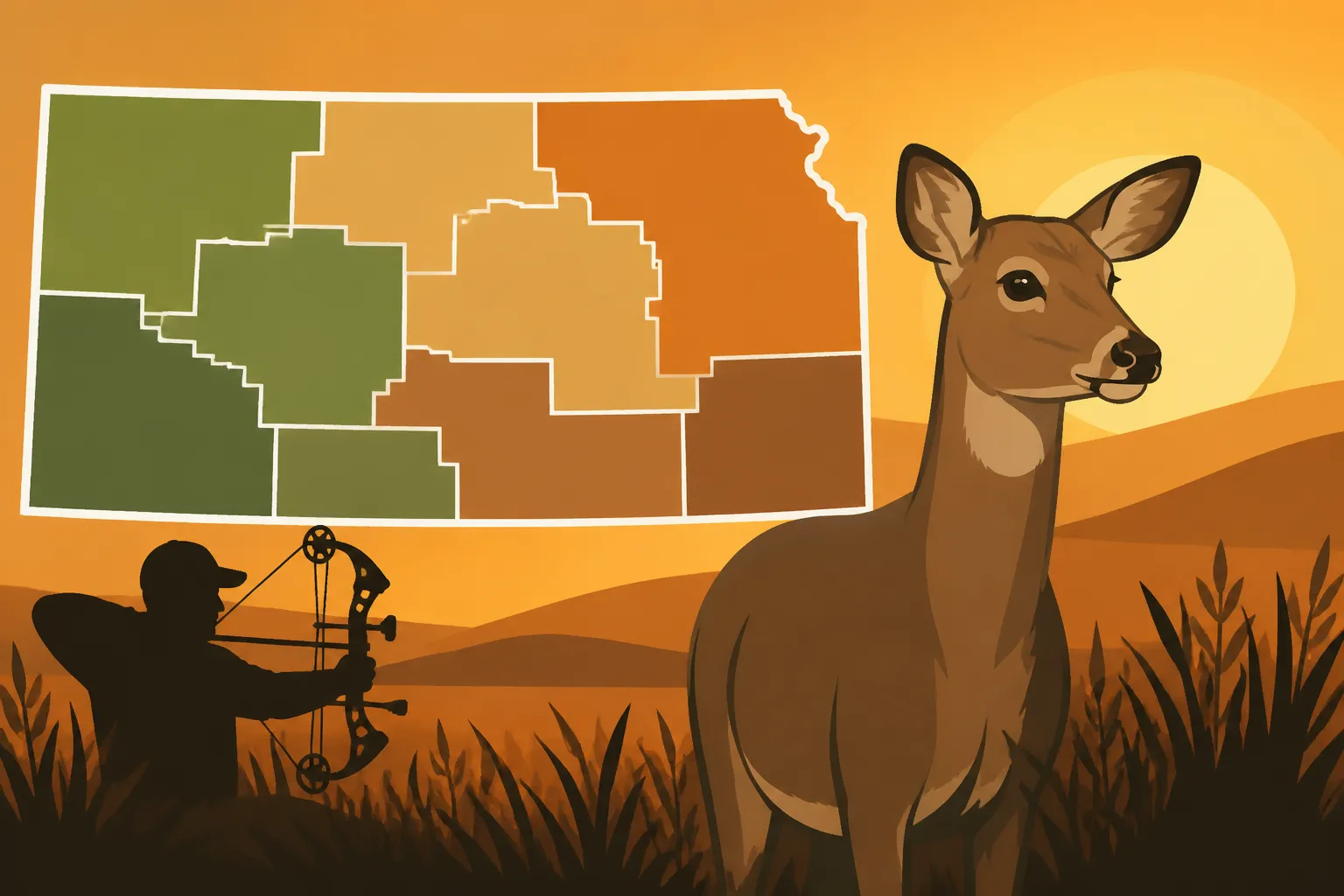
| Firearm Extended Antlerless | Units 1, 2, 3, 4, 5, 7, 8, 9, 10, 11, 13, 14, 15, 16 | January 1 – January 7 | Firearm |
| Firearm Extended Antlerless | Unit 12 | January 1 – January 14 | Firearm |
| Firearm Extended Antlerless | Unit 19 | January 1 – January 21 | Firearm |
Please note: These dates are examples based on recent seasons. Always verify the current year's regulations with KDWP before hunting.
As you can see, Unit 19 stands out with both an extended archery season and a longer firearm extended season, reflecting the particular management challenges in that area. Unit 12 also gets a bit of extra time compared to the majority of western and central units. When you're planning your hunt, think about which of these units is accessible to you and where you might have the best chance of finding willing landowners for private land access, or if there's sufficient public access like Kansas Walk-In Hunting Access Explained (WIHA) that is open during these late dates.
Understanding Weapon-Specific Extended Dates
One of the critical details many hunters overlook when planning an extended antlerless hunt is that the dates and even the availability can be weapon-specific. You can't just assume that because there's an extended firearm season, there's also an extended archery season, or vice-versa. For instance, as noted above, Unit 19 might offer an archery-only extended season for the entire month of January, while other units might only have a short, week-long extended firearm season. This differentiation is usually tied to the specific management goals for that unit, the density of hunters using different weapon types, and safety considerations, especially in more populated areas.
If you’re primarily a bowhunter, you’ll want to pay close attention to the Kansas Archery Season Closing Date and any subsequent extended archery periods. These late archery opportunities can be incredibly rewarding. Deer are often in predictable patterns, trying to pack on calories, and the quiet nature of bowhunting can be less disruptive than firearm hunting. For firearm hunters, understanding the precise dates for the Kansas Firearm Deer Season in December and how that leads into the extended firearm dates is crucial. It’s not just about having a valid permit; it’s about knowing which weapon you’re legally allowed to carry during those specific extended periods. Always check the regulations table carefully, paying close attention to the "weapon" column alongside the unit and date ranges. This level of detail helps ensure you're hunting legally and effectively.
Essential Permits and Licenses for Extended Hunts
Navigating the permit system can sometimes feel like a puzzle, but it’s straightforward once you understand the components required for a Kansas extended antlerless hunt. Without the correct paperwork, your hunt won't be happening, no matter how good the deer sign.
Securing Your Antlerless-Only Permit
The cornerstone of any extended antlerless hunt is, naturally, an antlerless-only permit. These permits are typically available over-the-counter (OTC) after the draw periods for general deer permits have concluded, making them quite accessible. Unlike the often-competitive draw for an either-sex permit, antlerless permits are designed to encourage harvest and are generally available in most units that require population management. You'll need to purchase a specific antlerless-only permit for the unit you intend to hunt, and it will often specify the weapon type (e.g., "Firearm Antlerless-Only" or "Archery Antlerless-Only"). It's crucial to ensure your permit matches the unit and weapon type for the extended season you're targeting.
Kansas offers multiple ways to acquire these permits. You can usually purchase them online through the KDWP website via the Go Outdoors Kansas portal, or in person at licensed vendors across the state. The cost of these permits is generally quite reasonable, especially compared to an either-sex permit, which makes them an economical way to extend your season and fill the freezer. Remember, you can often purchase multiple antlerless permits, allowing you to harvest more deer if your goal is significant meat acquisition. However, always verify the current year's regulations on the exact number of antlerless permits allowed per hunter. KDWP will release its Kansas Antlerless-Only Permit Cost and availability information well in advance of the seasons.
General Hunting License and Hunter Education Requirements
Beyond the specific antlerless-only permit, you'll also need a valid Kansas hunting license. This is your baseline ticket to hunt any game in the state, and it’s always required unless you fall under a specific exemption (like hunting on your own private land as a resident under certain conditions). Non-residents will need to purchase a Kansas Nonresident Hunting Licence Price in addition to their antlerless permit.
Furthermore, if you were born on or after July 1, 1957, you are required to have successfully completed an approved hunter education course before you can purchase a hunting license in Kansas. There are exceptions for those hunting under an apprentice hunter license, which allows individuals to hunt under the direct supervision of an experienced, licensed hunter for a limited time. This is a great program for introducing new hunters to the sport! The KDWP website has all the details on Kansas Hunter Education Age Requirement and how to complete the course, including online options. It’s a safety measure, first and foremost, ensuring that everyone participating in the hunt has a fundamental understanding of firearm safety, wildlife identification, and ethical hunting practices. Don't let these requirements catch you off guard; plan ahead to ensure all your licensing and education is in order before you head out into the field.
Strategic Advantages for Hunters
Extended antlerless seasons aren't just a regulatory tool; they're a golden opportunity for hunters themselves. There are several compelling reasons why you should consider participating in these late-season hunts.
Filling Your Freezer with Quality Protein
Let’s be honest, for many of us, a significant part of why we hunt is to put healthy, organic meat on the dinner table. If you've had a tough general season, maybe passing on smaller bucks hoping for a giant that never showed, or simply missed some opportunities, the extended antlerless season is your chance for redemption. A mature doe or a healthy yearling can provide a substantial amount of lean, delicious venison for your family. This is especially true after the primary rut has passed, and deer are focused on recouping energy. The meat is often in prime condition, having been nourished by Kansas's rich agricultural landscape.
Beyond simply filling the freezer, these hunts are often less pressured, which can make for a more relaxed and enjoyable experience. You’re not typically battling crowds or high-stakes trophy fever; instead, it’s about the pure enjoyment of the hunt and securing a valuable food source. This focus on meat can shift your mindset, making you more successful as you concentrate on ethical shot placement and efficient recovery, rather than antler score. Many hunters specifically target antlerless deer because they are often more predictable in their movements, especially when cold weather forces them to feed heavily, providing excellent Late-Season Food Source Hunting opportunities.
Extended Opportunities with Reduced Pressure
The primary deer seasons, especially the November firearm season, can sometimes feel like a race. Hunting pressure can be intense on both public and private lands, pushing deer into nocturnal patterns or dense cover, making them harder to find. The beauty of the extended antlerless season is that much of that pressure has dissipated. Many hunters have tagged out, others have moved on to other pursuits, and the woods often become much quieter. This can translate into deer that are more relaxed and move more naturally during daylight hours.
This reduced pressure is a significant advantage, particularly on public lands or Walk-in Hunting Access (WIHA) properties. While you should always be mindful of Hunting Pressure Patterns on Kansas Public Land even in late season, the overall intensity is often dramatically lower. This allows you to hunt more openly, perhaps even trying new areas or tactics without immediate competition. It’s a chance to savor the quiet solitude of the late Kansas winter, enjoying the stillness of the landscape and the simple act of hunting without the hustle and bustle of peak season. You might even find that deer are more responsive to calls or less wary of properly set up ground blinds, offering a more forgiving hunting experience.
A Chance for Mentoring New Hunters
If you've been looking for an ideal time to introduce a new hunter – especially a youngster – to the sport, the extended antlerless season is perfect. The pressure is lower, the focus is on a harvest opportunity rather than a specific trophy, and success rates can be higher due to predictable deer patterns. These factors combine to create a much more positive and less intimidating first-time hunting experience.
Youth hunters, or those participating with an Kansas Apprentice Hunting Licence, can learn fundamental hunting skills like scouting, tracking, shot placement, and field dressing without the added stress of crowded woods or the pressure of finding a "big one." It’s an excellent opportunity to teach patience, ethics, and the importance of conservation. Plus, harvesting an antlerless deer can quickly show a new hunter the direct link between hunting and providing food, reinforcing the practical and traditional aspects of the sport. The cooler temperatures of late season also make meat care much easier, which is a great lesson for beginners on how to properly handle game. This time spent together in the field, teaching and sharing, builds lasting memories and fosters a new generation of ethical and responsible hunters.
Effective Tactics for Late-Season Antlerless Success
Hunting in January and early February is a completely different ballgame than hunting in September or November. The landscape has changed, deer priorities have shifted, and you'll need to adjust your tactics accordingly. Success in these extended seasons often comes down to understanding late-season deer behavior.
Pinpointing Prime Late-Season Food Sources
As winter digs its heels in across Kansas, especially after sustained cold fronts, deer become incredibly focused on calorie intake. Their primary goal is survival, and that means finding the most nutritious and accessible food sources available. Gone are the days of lush green browse or acorns scattered everywhere. Now, you need to think about what's left. Standing crops like corn and milo become absolute magnets, offering both food and crucial thermal cover. If you can find fields that haven't been harvested or have significant waste grain, that's where the deer will be. Even cut soybean fields, if enough pods were left behind, can be productive. Winter wheat fields are also a huge draw, providing a green, palatable food source that's easy to digest.
Beyond agricultural fields, look for browse that remains palatable in colder temperatures. Hardwood bottoms might still offer some browse, especially if there's an abundance of honeysuckle or other persistent forbs. Remember, deer will prioritize quality and accessibility, so areas protected from harsh winds or near dense cover will be favored. E-scouting tools like GoHunt, with their detailed satellite imagery, can be invaluable for identifying these late-season food sources and correlating them with nearby cover. Once you've identified potential food sources, focus your scouting on trails leading to and from them, as deer will often use predictable routes, especially in colder weather.
Focusing on Thermal Cover and Bedding Areas
Just as important as food, if not more so in brutally cold weather, is thermal cover. Deer need places to escape the wind, rain, and snow, where they can conserve energy. This is particularly true for does and fawns, which are the targets of these extended seasons. Think dense cedar thickets, thick stands of CRP grass, brushy creek bottoms, and heavy timber pockets, especially those with south-facing slopes that catch the most sunlight. These areas provide both shelter from the elements and a sense of security.
Deer will often bed just off a primary food source, minimizing the distance they have to travel to eat. Look for transitions where dense cover meets an open field or a timber edge. Creek draws, river oxbows, and even abandoned homesteads with overgrown fence rows can offer excellent bedding opportunities. When hunting these areas, approach them carefully, paying close attention to the wind, as deer will often bed with the wind to their back, allowing them to scent anything approaching from behind, and watch for anything in front. Learning to Reading a Kansas Creek Bottom for Deer Sign can be a real game-changer in identifying these critical bedding and travel areas. Don't be afraid to put boots on the ground to confirm bedding locations, but do so strategically to avoid blowing deer out of an area you plan to hunt.
Adapting to Weather Changes and Hunting Pressure
Late-season weather in Kansas can be notoriously unpredictable, swinging from mild, sunny days to bitter cold, ice, and heavy snow in a matter of hours. Your ability to adapt to these changes is paramount. Deer movement will be heavily influenced by weather. During extreme cold snaps, deer will often move more during daylight hours, driven by the intense need for calories. They might hold tight in cover during a blizzard but will likely emerge immediately after for a feeding frenzy. High winds, on the other hand, can make deer hold tight in thick cover, as their sense of hearing is compromised, making them feel vulnerable.
While overall pressure is lower in the extended season, local pressure can still impact deer movement. If a particular public land tract or WIHA property sees a lot of activity, deer will quickly adjust and become more nocturnal or move to less-pressured areas. Pay attention to parking areas and other signs of hunter activity. Consider hunting weekdays instead of weekends if possible, as Weekday Versus Weekend Public Land often yields different results. Your best bet is to be flexible. Don't stick to a plan that isn't producing. If deer aren't moving in your spot, quickly adapt by moving to a different food source, a different bedding area, or even a different property if you have multiple options. Being prepared for Cold Weather Stand Clothing and having contingency plans for extreme temperatures will keep you comfortable and effective in the field.
Planning Your Extended Antlerless Hunt
A successful late-season hunt doesn't happen by accident. It requires careful planning, smart scouting, and being prepared for the unique challenges of hunting in the depths of winter.
E-Scouting and Boots-on-the-Ground Preparation
Before you ever step foot in the woods, the planning begins at home. E-scouting is an invaluable tool for late-season hunts. Using satellite imagery, topographical maps, and public land overlays on platforms like GoHunt or other mapping apps, you can identify potential food sources, bedding areas, and travel corridors. Look for the last remaining standing crops, thick CRP fields (good for CRP Grass and Where Bucks Bed but also does!), creek lines, and timber edges that offer both food and cover. Mark potential stand or blind locations, access routes, and retrieve game paths. This digital legwork saves immense time and effort once you're in the field. Read up on E-Scouting Kansas Farm Country From Home for a deeper dive.
However, e-scouting is only half the battle. Nothing beats boots-on-the-ground scouting, especially during the off-season or just before your hunt. Visit the areas you identified during e-scouting. Look for fresh tracks in the snow or mud, droppings, and browse lines that indicate heavy deer activity. Identify specific entry and exit points for deer on and off food sources. Pay attention to how deer are using the terrain to their advantage for thermal cover. Since the foliage is down, you'll be able to see further and identify pinch points or funnels that might be obscured during the early season. This is also a good time to confirm access routes and identify any unexpected obstacles. If you're hunting public land or WIHA, confirm the boundaries and rules for things like stand placement or vehicle access.
Gear and Logistics for Cold Weather Hunting
Winter hunting demands a different gear setup than your early-season excursions. Staying warm and dry is absolutely non-negotiable for comfort and safety. Layering is key, starting with moisture-wicking base layers, insulating mid-layers, and a waterproof, windproof outer shell. Don't forget insulated boots, thick socks, hand warmers, and a warm hat or facemask. A thermos with hot coffee, tea, or soup can make a world of difference on a long, cold sit.
Logistically, think about how you’ll get a deer out if you’re successful. With colder temperatures, you have a bit more time for field dressing, but it's still best to get the animal cooled down and processed as quickly as possible. A sturdy deer cart can be a lifesaver, especially on larger WIHA tracts or properties with long retrieves. Consider Deer Carts on Walk-In Ground if you anticipate needing to cover significant distance or uneven terrain. If you're traveling a long distance, plan for proper transportation and storage of the meat to prevent spoilage. Have coolers and ice ready, even if the temperatures are cold, as car interiors can warm up.
Finally, always have a contingency plan for unexpected weather or emergencies. Let someone know where you're hunting and when you expect to be back. Carry a fully charged phone, a first-aid kit, and extra supplies. While extended seasons offer great opportunities, the harshness of winter adds an extra layer of challenge that demands respect and thorough preparation. Always be mindful of local conditions and potential wildlife health issues, and report any signs of Kansas Wildlife Disease Monitoring to KDWP.
Disclaimer
Please remember that hunting regulations, season dates, and permit requirements are subject to change. Always consult the most current Kansas Hunting and Trapping Regulations Summary directly from the Kansas Department of Wildlife and Parks (KDWP) or their official website before planning any hunt. This guide is for informational purposes only and should not be considered a substitute for official KDWP regulations.