Shelterbelt Ends and Buck Travel
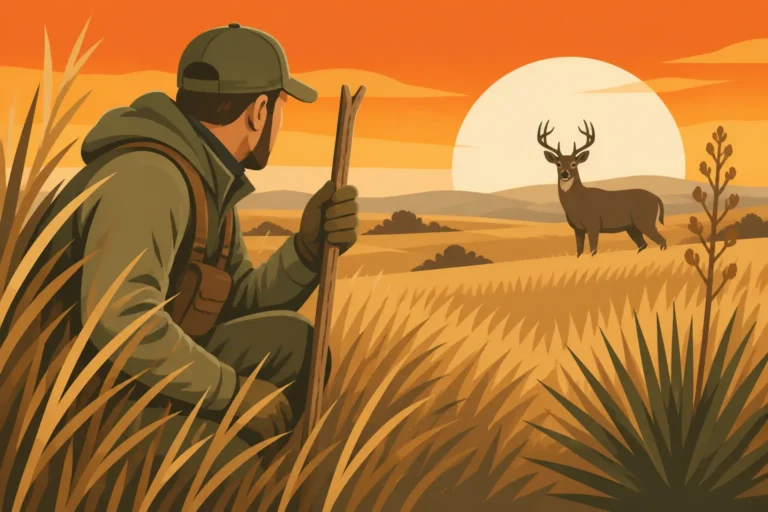
The vast, open landscapes of Kansas, characterized by sprawling agricultural fields and limited timber, can make locating consistent deer movement a real challenge for even seasoned hunters. It’s easy to feel lost in the seemingly endless expanse, wondering where a mature whitetail buck might be moving with purpose. This guide is dedicated to dissecting a critical, yet often overlooked, element in this environment: how deer, especially those elusive big bucks, specifically utilize the ends of shelterbelts as key travel corridors and staging areas, providing practical strategies to help you capitalize on these unique features.
Understanding Shelterbelts as Whitetail Highways
In many parts of Kansas, especially across the central and western regions, large, continuous blocks of timber are a rarity. Instead, what you often find are linear strips of trees and shrubs – shelterbelts – that were originally planted to protect crops and farmsteads from the relentless prairie winds. These man-made features have become indispensable to deer in the flat farm country.
What Defines a Shelterbelt and its Value
A shelterbelt, often referred to as a "tree row" by locals, is essentially a linear planting of trees and sometimes dense shrubs designed to reduce wind erosion and provide protection. You'll typically find them composed of a mix of species like eastern red cedar, honeysuckle, osage orange, Russian olive, and various locust species. While some might view them merely as property lines or field dividers, for a whitetail deer, they represent much-needed cover in an otherwise exposed environment.
These green ribbons offer year-round utility for Kansas deer. During the harsh winter months, they provide crucial thermal cover, protecting deer from bitter winds and snow. In the heat of summer, they offer shade and cooler bedding areas. But perhaps most significantly, shelterbelts act as vital arteries for movement, allowing deer to travel with a sense of security between different areas of their home range, avoiding the wide-open fields where they are most vulnerable to predators and human disturbance. They are, in essence, the hidden highways bucks use to navigate the agricultural maze.
Shelterbelts as Funnel Points
Think of a shelterbelt stretching for a mile or more across a flat field. It's a defined line of cover in an open world. This linear nature inherently creates funnel points for deer movement. Instead of traversing an exposed thousand-acre crop field, a buck will almost always opt to walk along the edge of the shelterbelt, or even within its dense interior, minimizing his exposure.
When two shelterbelts converge, or a single shelterbelt meets a creek bottom or another distinct cover type, you have a classic funnel. However, even the simple end of a shelterbelt, where the linear cover simply stops and opens into a vast field, creates a unique type of funnel. Deer traveling within or along that cover are naturally guided to this termination point. Understanding how deer are funneled by these structures is key to anticipating their movements, and it’s a concept that directly ties into the broader idea of Hunting Terrain Funnels in Flat Country, where even subtle changes in elevation or cover can dictate travel.
Why Buck Deer Focus on Shelterbelt Ends
While shelterbelts offer general travel cover, their ends are often where the magic happens for hunters. These specific locations become natural congregation, staging, and observation points for mature bucks due to a combination of behavioral instincts and landscape features.
The Critical Transition Zone
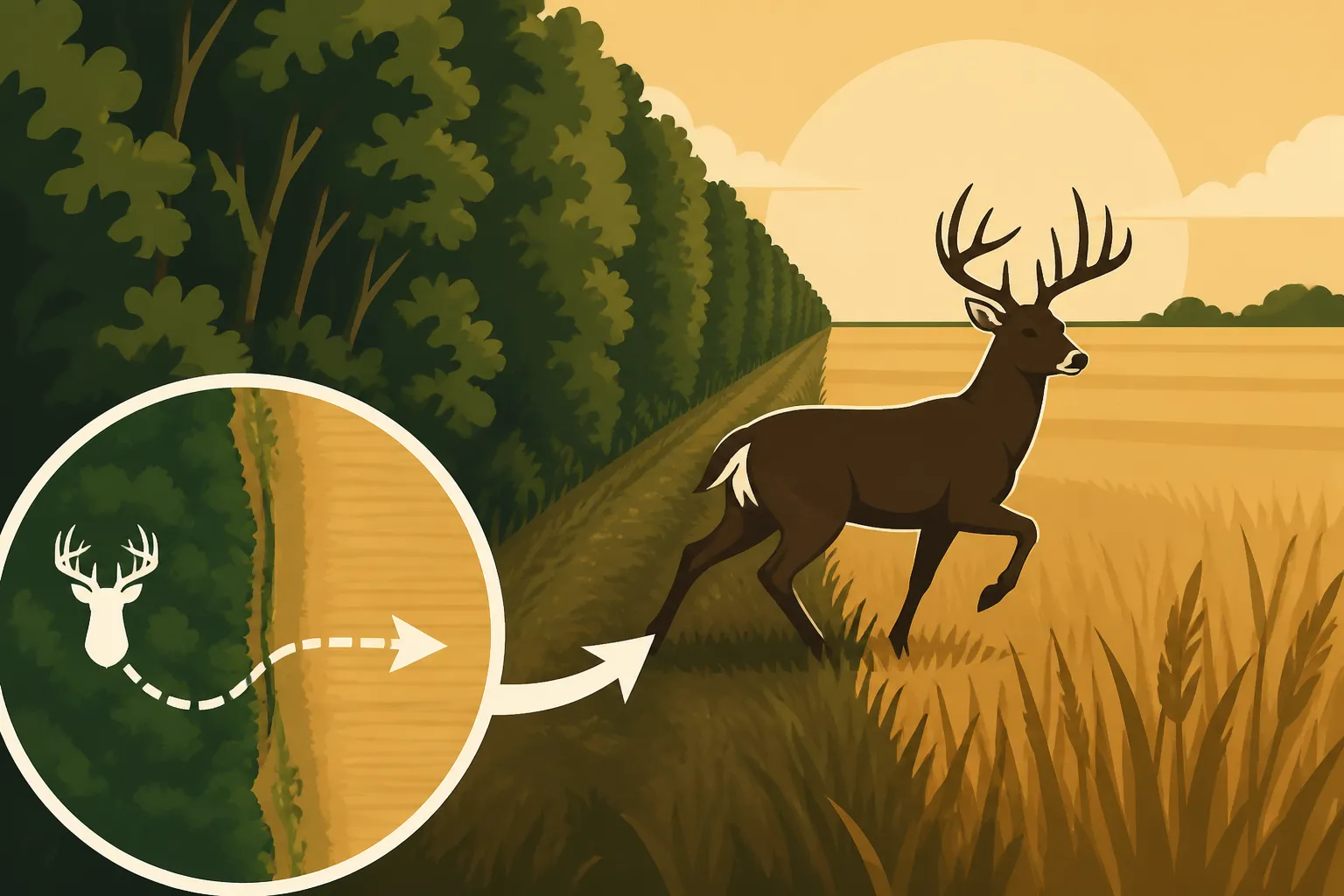
The end of a shelterbelt is, by definition, a transition zone. It’s where dense, secure cover abruptly gives way to wide-open crop fields, pastures, or even different types of scattered timber. Deer are inherently drawn to these edges and transitions because they offer a blend of security and opportunity. A buck can emerge from the relative safety of the tree line, pause at its very edge, and survey the open expanse before committing to crossing it. This brief hesitation makes these spots prime ambush locations.
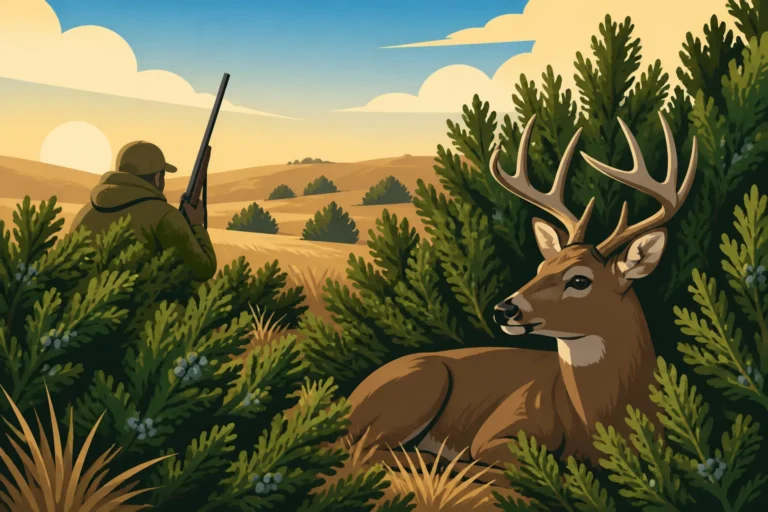
Imagine a mature buck bedded deep within a thick cedar row. As evening approaches, his internal clock tells him it's time to feed. He's not going to just burst out into the middle of a soybean field. Instead, he'll likely creep towards the end of that shelterbelt, where he can use the cover to his advantage, easing into the open field after assessing any potential threats. These transition points are where bucks feel comfortable enough to linger for a moment, making them incredibly valuable for bowhunters and firearms hunters alike.
Scent-Checking and Observation Hubs
One of the most compelling reasons bucks frequent shelterbelt ends is for scent-checking. The wind in Kansas is almost a constant, and bucks utilize it masterfully. As a buck approaches an open area, he'll often stage at the end of a shelterbelt, using the prevailing wind to scent-check for any does that might already be in the field, or for other bucks. This is particularly true during the rut when bucks are actively cruising for receptive does. They’ll often skirt the downwind side of cover, sticking to the very edge of the shelterbelt end to pick up scent before exposing themselves.
These locations also serve as excellent observation hubs. From the cover of a shelterbelt end, a buck can often see a significant portion of the adjacent field without being seen. This allows him to identify potential threats or feeding opportunities before fully committing. Understanding how Wind and Thermals on a River Bank influence deer movement can be adapted here; in flat country, the wind is king, and shelterbelt ends are often chosen precisely because they offer an advantageous position relative to it. Bucks will often approach these ends from the downwind side, giving them the ultimate advantage in detecting danger.
Connecting Bedding and Feeding Areas
In much of Kansas, the primary deer habitat revolves around the cycle of bedding and feeding. Deer will bed in thick cover, which often includes shelterbelts, and then travel to nearby agricultural fields to feed. The ends of these shelterbelts frequently act as the natural gateways between these two critical areas.
For instance, a shelterbelt might run along the edge of a deep creek bottom that offers prime bedding. When deer leave that creek bottom to access a standing corn field, they often follow the path of least resistance and maximum cover, which leads them directly to the end of an adjacent shelterbelt. Similarly, if a shelterbelt itself contains thick bedding cover, the ends are the logical exit points for deer moving towards a nearby milo field. Paying close attention to how deer use these linear features to connect food sources, especially during the Milo and Corn Stubble Deer Patterns season, can provide significant advantages.
Strategic Scouting and Hunting Approaches for Shelterbelt Ends
Successfully hunting shelterbelt ends requires a blend of diligent scouting, smart stand placement, and a keen understanding of deer behavior in varying conditions. It's not enough to simply find a shelterbelt; you need to understand how your target deer are using it.
Advanced E-Scouting and Ground Reconnaissance
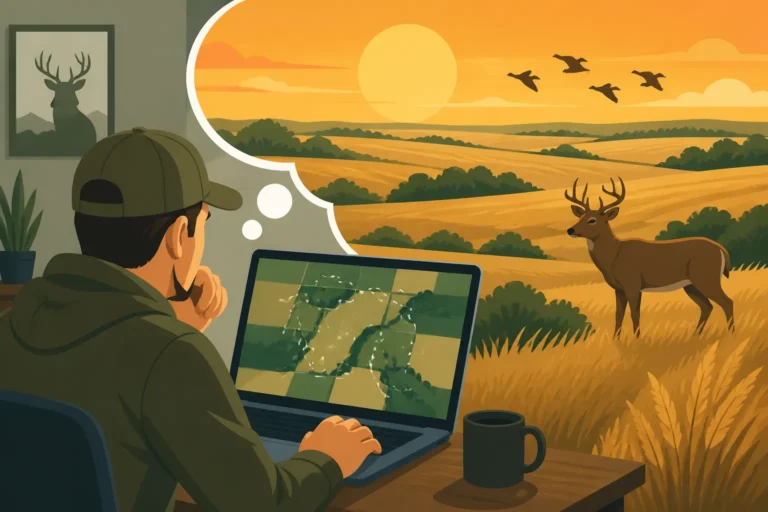
Before you ever set foot on a property, modern mapping tools are your best friend. Services like GoHunt provide invaluable satellite imagery that allows you to identify shelterbelts, analyze their density, and spot adjacent crop fields, waterways, and other subtle terrain features from the comfort of your home. Look for shelterbelts that connect to larger timber blocks, dense CRP (Conservation Reserve Program) fields, or creek draws. Also, pay attention to the shape of the field adjacent to the shelterbelt end – an inside corner or a peninsula of timber extending into a field can amplify its attractiveness to bucks. This detailed digital reconnaissance is a crucial first step, echoing the importance of E-Scouting Kansas Farm Country From Home.
Once you've identified promising locations on a map, it's time for boots-on-the-ground reconnaissance. This is where you confirm your hypotheses. Look for fresh rub lines and scrapes, especially within 50-100 yards of the shelterbelt end. Check for well-used deer trails entering and exiting the timber, and pay close attention to the size and freshness of tracks. Mature bucks often leave distinct, larger tracks. Identify specific entry and exit points into the adjacent fields. Are deer using one particular side of the shelterbelt end more than another? Are there distinct crossings where they navigate fences or ditches? For those hunting public ground, this ground-level assessment is even more critical, tying directly into effective Scouting Kansas Walk-In Tracts Before the Opener.
Optimal Stand Placement Considerations
Placing your stand at a shelterbelt end is a delicate balance between visibility, concealment, and managing your scent cone. The absolute cardinal rule is to hunt with the wind in your favor. A crosswind or a steady wind blowing away from where you expect deer to approach is ideal. Never hunt a shelterbelt end with the wind blowing into the deer's approach path unless you have truly exceptional cover and a very specific strategy. Consider a Best Stand Locations in Flat Farm Country perspective, where understanding these micro-terrain features is paramount.
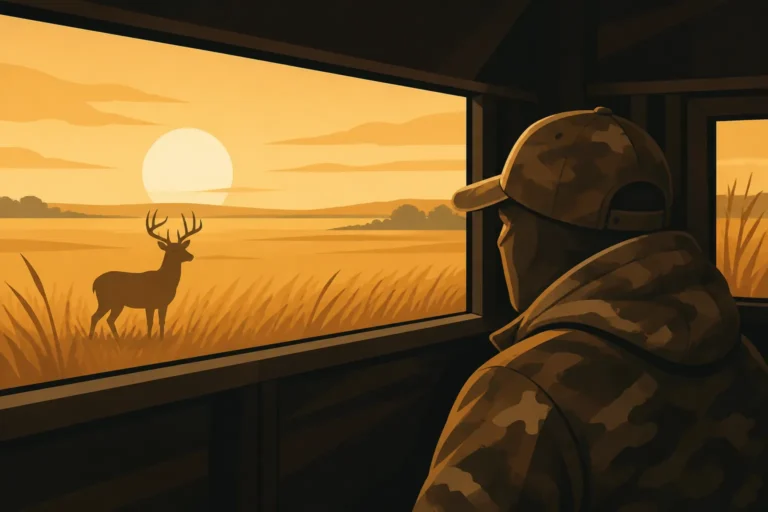
Elevated stands, whether a hang-on, ladder, or climbing stand, generally offer the best vantage point and help keep your scent above the deer. Position your stand slightly inside the shelterbelt, 15-30 yards back from the very end, giving you a wider view of the approach lanes and allowing deer to walk past the absolute termination point before you take a shot. This also helps you maintain cover within the trees themselves. Alternatively, if the cover is dense enough, a well-brushed-in ground blind can be incredibly effective, especially if you can position it to shoot into the field and along the shelterbelt's edge. Always consider your access route; the goal is to get into and out of your stand without alerting any deer in the area, a tactic explored in detail in Access Routes That Do Not Bump Deer.
Hunting the Conditions and Timing
Deer movement, especially buck movement, is heavily influenced by conditions and time of day. Shelterbelt ends are often most productive during the first and last hours of daylight, as deer transition between bedding and feeding areas. However, during the peak of the rut, bucks will often cruise these travel corridors throughout the day. So, knowing When the Kansas Rut Peaks can dramatically increase your chances.
Cold fronts, especially after a period of warm weather, can really get bucks on their feet, moving more frequently along these edges. Similarly, hunting during periods when the moon is overhead or underfoot (based on solunar theories) can sometimes trigger midday activity. Pay close attention to wind direction, not just for stand placement, but for understanding how deer will use the shelterbelt end. A buck might approach from a different direction depending on the wind, using the shelterbelt as a buffer. During the Hunting the Kansas Pre-Rut in Late October, bucks are often testing the waters, and these ends become hotbeds of scent marking and observation.
Here's a quick reference for how buck behavior might shift at shelterbelt ends based on wind conditions:
| Wind Direction Relative to Shelterbelt End | Typical Buck Approach/Behavior | Hunter Strategy |
|---|---|---|
| Directly Into End | Bucks will approach from either side, using crosswind to scent-check the open field. Less likely to walk directly into the wind. | Position downwind of likely approach, aiming for a crosswind shot. |
| Parallel to Shelterbelt (Headwind) | Bucks will often travel within the shelterbelt or very tight to its downwind edge to scent-check ahead. | Set up on the downwind side of the shelterbelt, back from the end. |
| Parallel to Shelterbelt (Tailwind) | Bucks less likely to use this side for approach, may exit into field quickly. Very risky for scent. | Avoid hunting this side. Consider an ambush point further in the shelterbelt or a different end. |
| Crosswind to Shelterbelt End | Bucks often approach from downwind side, staging at the end to survey and scent-check the entire open field. | Ideal for stand placement. Position yourself downwind of where they enter/exit. |
Ultimately, successfully hunting shelterbelt ends comes down to understanding that these are not just lines of trees; they are intricate pieces of a larger puzzle. With careful scouting and strategic planning, these overlooked features can become your most productive spots in the Kansas deer woods.
Disclaimer
Hunting is an inherently dangerous activity. Always prioritize safety, follow all local, state, and federal hunting regulations, and ensure you have the necessary licenses and permits. This guide provides general information and should not replace professional guidance or personal judgment. Be aware of your surroundings, hunt ethically, and respect landowners' rights.