Shelterbelts and Timber Points in Kansas Farm Country
Many hunters coming to Kansas, or even long-time residents, get absolutely stumped by the seemingly flat, open expanses of farm country. Where do the deer hide? How do you even begin to dissect a landscape that looks like an endless checkerboard of crops? The truth is, while it might appear barren, the deer in Kansas farm country rely heavily on crucial linear features like shelterbelts and timber points for cover, travel, and even bedding. This guide is all about peeling back the layers of these vital habitat elements and equipping you with the strategies to hunt them effectively.
Unraveling the Mystery of Kansas Shelterbelts
Hunting in Kansas means learning to speak the language of the land, and few features are as talkative as shelterbelts. These long, narrow strips of trees, often planted to protect crops or farmsteads from the relentless prairie winds, might seem simple, but they are vibrant highways and havens for deer. Ignoring them is like ignoring a major interstate in human travel – you're going to miss a lot of action. The challenge, of course, is knowing how to read them and where to set up.
Defining the "Belt": What Makes Up a Shelterbelt
When you're staring at an aerial map or driving down a county road, a "shelterbelt" might just look like a dark green line running across the landscape. But these aren't just random trees. They were often intentionally planted, sometimes decades ago, with specific purposes in mind. Historically, many were established as part of the Great Plains Shelterbelt Project during the Dust Bowl era, featuring species like red cedar, honeylocust, green ash, and various pines. Newer plantings might include osage orange, Russian olive, or even some faster-growing hardwoods. The density, species composition, and age of these trees directly impact their value to deer. A thick, multi-species belt with good undergrowth provides significantly more thermal cover and security than a sparse row of mature, limbed-up trees. It’s this crucial detail that separates a high-traffic deer corridor from just a pretty line of trees.
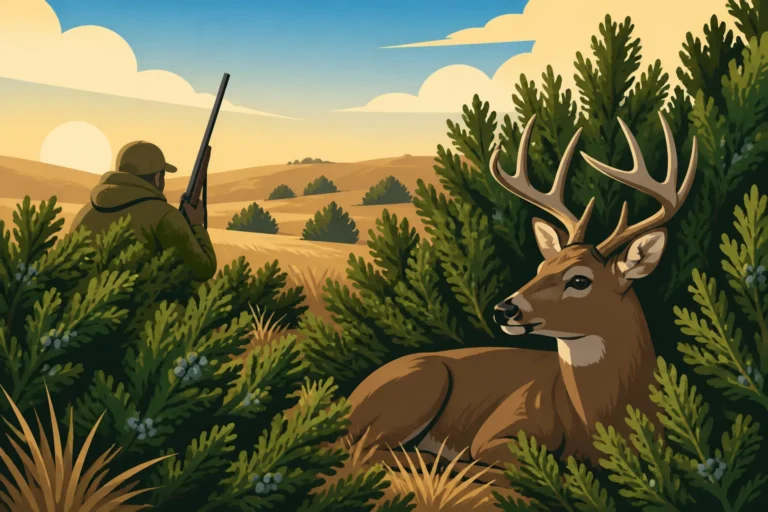
Imagine a classic Kansas winter day, bone-chilling winds whipping across a cut cornfield. Where do you think a deer is going to seek refuge? Not out in the open, that's for sure. A dense shelterbelt, especially one with a good component of evergreens like cedar, acts as a critical windbreak, creating microclimates within its protective embrace. This is where deer will bed during harsh weather, conserving energy and staying out of the elements. It’s not just about hiding; it's about survival. They need that thermal cover, and these belts provide it in spades in an otherwise exposed landscape.
Why Deer Use Shelterbelts: Cover, Travel, and Food
It might seem obvious why deer use a strip of trees in open country, but let's really dig into the specifics. First and foremost, shelterbelts offer security. They provide a visual screen from predators, including us hunters, and a physical barrier from the wind. This means deer can feel safe moving during daylight hours, transitioning between bedding and feeding areas. Think of them as elevated highways for deer, allowing them to traverse vast agricultural fields without feeling fully exposed. Instead of walking across a wide-open wheat stubble field for a quarter-mile, a savvy buck will hug the shelterbelt, using its cover to navigate.
Beyond security, these belts often contain browse and mast crops. Honeylocust pods, wild plums, mulberries, or even the leaves and twigs of various shrubs can provide a supplementary food source. While not usually a primary draw like a destination food plot, this "snack bar" aspect can entice deer to spend more time within the belt. For instance, in an older shelterbelt, you might find thickets of wild rose or sumac growing along the edges, offering both forage and dense hiding spots. This combination of cover, travel route, and occasional food makes a well-established shelterbelt an irresistible magnet for deer.
Variations in Shelterbelt Structure: Old Versus New, Species Differences
Not all shelterbelts are created equal, and understanding their variations is key to effective hunting. An older, mature shelterbelt, perhaps 50-70 years old, might have large, limbed-up trees with less understory. While still providing a windbreak, it might lack the dense bedding cover of a younger, thicker belt. Deer might use these older belts more as travel corridors than primary bedding sites, especially if they are narrow. In contrast, a younger belt, say 10-30 years old, often has a much denser canopy and a thick undergrowth of smaller trees, brush, and briars. These are gold mines for bedding cover, offering incredible concealment and protection.
The specific tree species also make a huge difference. Cedar shelterbelts, for example, are fantastic for thermal cover year-round. Their dense needles hold snow and block wind effectively, making them prime winter bedding areas. Deciduous belts, on the other hand, lose their leaves in fall, reducing their visual screening significantly. However, even these leafless trees still break the wind and offer structure. Often, you'll find mixed belts—a row of cedars on the north side, providing maximum wind protection, flanked by hardwoods. This mix provides varied cover and food throughout the year. Taking the time to observe these details, perhaps using a tool like GoHunt to analyze aerial imagery before your boots hit the dirt, can reveal hidden gems. This type of detailed E-Scouting Kansas Farm Country From Home can save you hours of wasted effort and point you directly to the most productive sections.
Strategic Hunting Within Kansas Shelterbelts
Now that we've dug into what makes shelterbelts tick, let's talk about the nitty-gritty of actually hunting them. It’s not enough to simply know they’re there; you need to understand how deer interact with them and where to intercept those movements. The biggest mistake many hunters make is treating every strip of timber the same. Kansas deer are creatures of habit and efficiency, and their movements in and around shelterbelts are often incredibly predictable once you learn to decipher the clues.
Crafting Stealthy Entry and Exit Routes
This is arguably the most critical aspect of hunting any pressured area, and shelterbelts are no exception. Because they are linear features in open country, deer often have a good vantage point to see, hear, or smell you coming. Your entry and exit routes must be meticulously planned to avoid alerting deer that are already in the belt or moving to it. This often means walking through fields (cut corn, beans, or wheat stubble) when the wind is in your favor, using the terrain features (even subtle ones) for concealment, or arriving well before daylight.
For example, if you're hunting a shelterbelt that runs east-west, and the deer are likely bedding on the north side and feeding in a soybean field to the south, your approach needs to be from the east or west with a north wind. Never, ever walk directly into the wind toward a known bedding area in a shelterbelt. If you're coming in during darkness, prioritize minimizing noise. Crunchy leaves, rattling branches, or even loud footsteps can send deer scattering before you ever get to your stand. Consider using a path that parallels the belt but stays just far enough away that any deer inside won't easily detect you. This often involves planning your access routes through adjacent timber points, or by hugging field edges that offer some visual breakup. Remember, the goal is to be a ghost, leaving no trace of your presence that could educate the local deer herd, especially on public ground. Knowing Access Routes That Do Not Bump Deer is paramount to success here.
Optimal Stand Placement Within Belts: Inside Corners and Intersections
Once you've mastered your approach, the next challenge is choosing the perfect perch. Inside corners and intersections within shelterbelts are absolute magnets for deer activity. An "inside corner" might be where the shelterbelt makes a 90-degree turn, or where a narrower finger of timber juts out into a field. These spots naturally funnel deer movement, forcing them to pass within bow or rifle range. Deer will often pause at these corners, scent-checking the wind before committing to a new direction or an open field.
Another prime location is where two shelterbelts intersect, or where a shelterbelt meets a creek bottom or another significant patch of timber. These intersections become natural crossroads for deer traveling from different bedding or feeding areas. Look for heavy rub lines, multiple trails, and fresh droppings in these areas. The convergence of multiple travel patterns makes these intersections high-percentage setups. When setting a stand, consider the prevailing wind directions for the time of year you're hunting. You want the wind to carry your scent away from where the deer are likely to approach. Don't be afraid to Hanging Stands on Public Land Without Getting Burned by other hunters, but always be mindful of leaving minimal disturbance.
Hunting the Edges: Overlooking Fields and Pinch Points
While hunting inside the shelterbelt offers cover, often the best action occurs on the edges, especially those bordering active crop fields. Deer frequently stage up in the security of the shelterbelt, waiting for dusk to move out into a corn, milo, or soybean field. Setting your stand 10-20 yards inside the edge of the shelterbelt, overlooking the field, can be incredibly effective for catching deer transitioning at last light. This allows you to stay concealed while still having a clear shot at deer entering the field.
Look for "pinch points" along these edges—areas where the shelterbelt narrows, or where a fence line, creek, or ditch pushes deer into a tighter travel corridor. Even a slight dip in the terrain or a solitary cluster of brush can create a subtle pinch point that deer consistently use. Understanding Hunting Inside Corners of Crop Fields is highly relevant here, as these concepts often overlap. These are the spots where you have the highest probability of intercepting a deer that might otherwise skirt your setup. During the rut, these edges become even more critical, as cruising bucks will often scent-check the entire length of a shelterbelt edge, hoping to catch the scent of a hot doe. The visibility from a stand slightly inside the timber provides the best of both worlds: concealment and a good shooting lane into the field.
| Shelterbelt Feature | Primary Deer Use | Ideal Stand Placement | Key Considerations |
|---|---|---|---|
| Dense Evergreen | Bedding, Thermal Cover | Downwind edge, transition zones | Wind direction, minimal entry/exit disturbance |
| Mature Deciduous | Travel Corridor, Staging | Intersections, field edges | Scent control, visibility after leaf drop |
| Inside Corner | Funnel, Security | Corner itself, overlooking adjacent field | Crosswinds, multiple approach angles |
| Intersection | Crossroads, Major Funnel | Junction of two belts/timber | Heavy sign, 360-degree awareness |
| Field Edge | Staging, Feeding Access | 10-20 yds inside, overlooking field | Evening hunts, transition times |
Decoding the Dynamics of Timber Points
Just like shelterbelts, timber points are linear extensions of larger woodlots or, more commonly in Kansas, parts of a shelterbelt that jut out into crop fields. These aren't just random trees; they are strategic features that dictate how deer move and behave across vast agricultural landscapes. They act as critical funnels and staging areas, providing much-needed cover and security in what can otherwise feel like a wide-open world for deer. Ignoring a timber point is like ignoring a deer's doorbell – you're missing an opportunity to see who's coming and going.
Identifying Key Points: Where Timber Extends into Fields
A "timber point" is essentially any finger of trees or brush that protrudes into an open field, creating a distinct edge and breaking up the uniformity of the landscape. These can be short, stubby points, or long, winding fingers that extend hundreds of yards. The key is that they offer a break in the open, allowing deer to travel further into a field under the safety of cover, or providing a staging area before they commit to feeding. Often, these points are part of larger woodlots along creek drainages or bigger blocks of timber that define property lines.
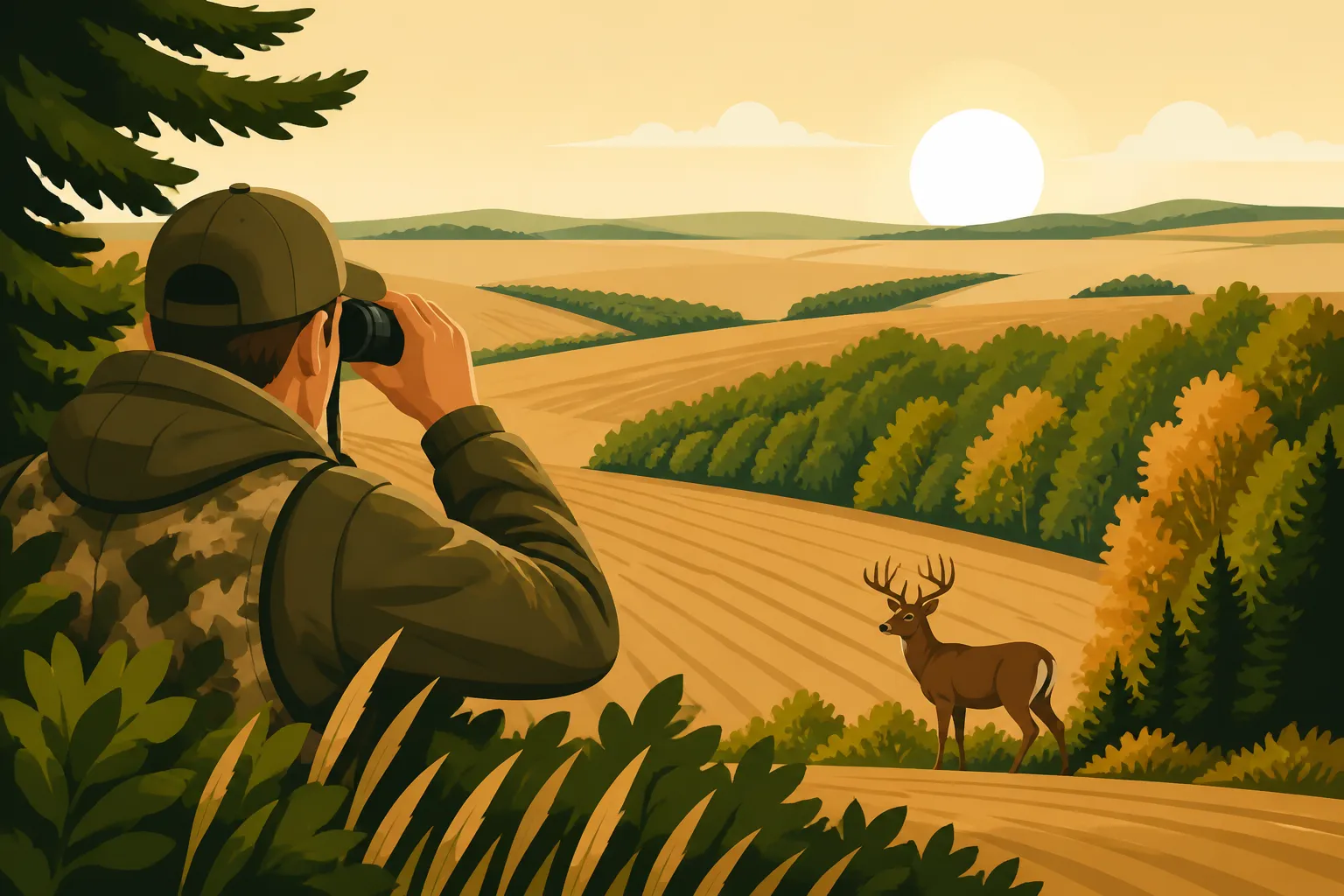
When you're studying your aerial maps, perhaps using the detailed satellite imagery available on GoHunt, these points will jump out at you. Look for the distinct "fingers" of dark green or brown contrasting with the lighter shades of agricultural fields. Pay close attention to their length and how far they extend. A point that pushes 100-200 yards into a field offers significantly more opportunity for deer to travel under cover than a point that barely sticks out. These are often the first places deer will move into an open field, especially in the mornings or evenings, offering the hunter an invaluable bottleneck to exploit.
How Bucks Use Points: Rub Lines, Scrapes, and Funneling
Timber points are prime real estate for bucks, especially during the pre-rut and rut. They serve as natural funnels, directing deer traffic along predictable routes. As bucks cruise for does, they'll often follow these points, scent-checking the edges. This makes them absolute hotspots for rub lines and scrape activity. A consistent rub line running down the length of a timber point, or a series of scrapes along its edge, is a flashing neon sign that mature bucks are using this feature.
Bucks will use these points for several reasons. First, they provide a safe travel corridor, reducing exposure. Second, they act as visual and scent checkpoints. A buck can walk the edge of a timber point, scent-checking the wind for does without fully exposing himself. Third, during the rut, they become staging areas where bucks will wait, spar, and advertise their presence. Setting up on a timber point that is littered with fresh sign—especially big rubs and active scrapes—puts you right in the middle of a buck's travel and communication patterns. It's essentially a deer superhighway intersecting with their personal billboard. This is where mastering Hunting Terrain Funnels in Flat Country becomes highly effective.
Interaction with Crops: How Field Edges Influence Movement
The relationship between timber points and adjacent crop fields is symbiotic and crucial. Deer don't just use the timber; they use the transition between the timber and the crops. Whether it's standing corn, milo, soybeans, or wheat, the type and stage of the crop heavily influence how and when deer use these points. In early season, standing soybeans or corn provide incredible cover and food right up to the edge of the timber point, allowing deer to move into the fields undetected. As crops are harvested, the dynamics shift.
Once crops are cut, especially corn or milo, the field itself becomes a food source, but one that offers minimal cover. This increases the importance of the timber point for safe access. Deer will often hug the very edge of the point, using the remaining cover to stage before venturing out into the stubble fields to feed. During late season, when standing crops are scarce, the residual grain in harvested fields becomes a critical attractant, making those timber points that extend into these fields even more valuable. Learning to read Milo and Corn Stubble Deer Patterns in relation to these points will give you a significant advantage, especially as the season progresses and food sources become scarcer. The edge of a timber point running into a bean field might be a morning bedding-to-feed transition, while the opposite side of the same point, bordering cut corn, could be an evening feeding hotspot.
Tactical Approaches to Hunting Timber Points
With a solid understanding of why timber points are such hotbeds of activity, it's time to zero in on how to actually hunt them. This isn't just about throwing up a stand anywhere. It's about precision, timing, and understanding the subtle nuances of deer behavior in these critical funnels. Getting it right can mean the difference between seeing a parade of deer and staring at an empty field.
Setting Up for Success: Wind, Access, and Vision
The three pillars of successful stand placement on a timber point are wind, access, and vision. You absolutely must have the wind in your favor. In flat Kansas country, deer will often circle downwind of a timber point before entering a field or a denser part of the timber. This means your stand needs to be positioned so your scent is carried away from these likely approach routes. This can be tricky, as wind directions can shift, but having a general understanding of prevailing winds for your hunting dates is essential. Often, a stand positioned on the side of the point where deer are least likely to approach from downwind is a good bet.
Your access route, just like with shelterbelts, is paramount. You need to get to your stand without blowing deer out of the timber point or alerting any deer in the adjacent fields. This might mean making a longer walk around the field edge or slipping in along a ditch line that offers concealment. Secondly, vision. You need to have clear shooting lanes into the areas where deer are most likely to travel, which often means both along the length of the timber point and into the adjacent field. However, don't sacrifice concealment for vision. A well-brushed-in stand that limits your shooting lanes slightly is often better than a wide-open stand that screams "hunter." Use the natural cover of the timber point to your advantage to break up your silhouette. Think about what a deer would see and how to disappear into the background. For more detail, revisit the discussion on Best Stand Locations in Flat Farm Country.
Morning Versus Evening Hunts: Decoding Movement Patterns
Timber points often shine at different times of day depending on their location and the surrounding food sources. Morning hunts on a timber point are typically best when deer are transitioning from nocturnal feeding in open fields back to bedding cover. Your stand should be positioned to intercept deer moving into the timber point, usually from the field side. This requires getting in well before legal light, often an hour or more, to avoid bumping deer that might still be feeding. You want to be set up and still by the time deer start to make their way back.
Evening hunts, conversely, are usually most productive when deer are moving out of bedding cover and into adjacent feeding areas. Here, you'd want your stand to intercept deer moving out of the timber point, into the field. This means positioning yourself on the field edge, or just inside the point, where you can catch deer as they emerge. Knowing when to hunt which side of a timber point is a skill refined through scouting and understanding the local deer patterns. A good strategy might be to hit the field-facing side in the evening and the deep-timber-facing side in the morning, assuming deer are bedding deeper in the timber connected to the point. While we often think about Wind and Thermals on a River Bank, the principles of how air currents affect scent are just as crucial in open farm country, influencing how deer approach and depart these points.
Driving Small Timber Points for Firearm Season
While much of the discussion focuses on stand hunting, small timber points can be incredibly effective for deer drives, especially during the Kansas firearm season. This tactic works best with a small group of hunters – two to four people. The idea is to have one or two "standers" positioned at the end of the timber point where deer are expected to exit, while one or two "drivers" slowly and quietly push through the point. The goal isn't to make a lot of noise and spook deer, but rather to subtly encourage them to move towards the standers.
Safety is absolutely paramount when conducting drives. Everyone involved must know each other's positions, wear hunter orange, and only take safe shots. Communication is key. The standers should be positioned for clear, safe shots, ideally elevated for better visibility and a safer shot angle. The drivers should move slowly, pausing often, and pushing strategically to funnel deer towards the standers. This method can be incredibly productive, especially when bucks are holed up tight in thick cover. It's a great way to harvest deer that might not otherwise offer a shot to a stationary hunter, particularly during the colder, later parts of the season when deer are focused on dense cover for warmth. Make sure to review Firearm Season Drives on Small Timber for best practices.
Reading the Broader Kansas Farm Landscape
Hunting shelterbelts and timber points isn't just about focusing on those individual features; it's about understanding how they fit into the grand tapestry of the Kansas farm landscape. Deer don't live in isolation within a single timber strip. They move between different types of cover, seeking food, water, and security. To truly maximize your success, you need to connect the dots and view these features as part of a larger, interconnected system. This holistic approach is what separates a consistent hunter from someone who just gets lucky now and then.
Connecting the Dots: Linking Shelterbelts and Timber Points
Deer are incredibly efficient in their movements. They will almost always choose the path of least resistance and greatest security. This means they will often link together multiple cover features. A mature buck might bed in a dense cedar shelterbelt, then use a series of timber points and fence lines to travel a mile to a prime feeding field. Your goal as a hunter is to identify these "corridors" that connect these vital pieces of habitat. On an aerial map, these connections might appear as subtle as a brushy fenceline, a drainage ditch, or even a slight elevation change that offers a visual screen.
Consider how a deer might move from a bedding area in one large woodlot to a distant food source. Instead of crossing 800 yards of open crop field, they'll often utilize a string of shelterbelts, transitioning from one to the next, possibly detouring into a timber point along the way for a quick check or to browse. These connection points—where one shelterbelt leads to another, or where a timber point meets a creek bank—are often overlooked but can be incredibly productive for stand placement. Spend time with your mapping tools, tracing potential deer routes between known bedding and feeding areas, always looking for how shelterbelts and timber points facilitate these movements. This is a form of Reading Aerial Imagery for Bedding Cover that really pays dividends.
Considering Adjacent Cover: CRP, Creek Bottoms, and Terraces
Beyond the obvious timber, the surrounding cover plays a massive role in how deer utilize shelterbelts and timber points. Kansas is rich in Conservation Reserve Program (CRP) ground—fields planted with native grasses, offering excellent bedding and fawning cover. Deer will frequently move from a dense CRP field, through a shelterbelt, and into a feeding area. The interface between CRP and a shelterbelt can be a dynamite setup, especially during colder weather when deer appreciate the windbreak of the trees combined with the thick thermal cover of the grass.
Creek bottoms, even dry ones, are also incredibly important. These often feature denser, more varied timber than a typical shelterbelt and provide natural drainages that deer use for travel. A shelterbelt or timber point that intersects with a creek bottom creates a super-funnel, concentrating deer movement from multiple directions. Similarly, even subtle topographical features like terraced fields or shallow draws can offer just enough concealment for a deer to feel comfortable traversing an otherwise open area, leading them directly to the mouth of a timber point or the edge of a shelterbelt. Learning to identify where CRP Grass and Where Bucks Bed in relation to these timber features will give you another layer of insight.
Integrating with Food Sources: Crop Fields and Supplemental Feed
Ultimately, deer need to eat, and in Kansas farm country, that means crop fields are king. Shelterbelts and timber points are almost always located adjacent to, or surrounded by, agricultural fields. Understanding which crops are most attractive at different times of the season is crucial. Early season might see deer in lush soybean fields or standing corn. Later in the season, after harvest, cut corn or milo fields become primary attractants, as deer glean leftover grain. A timber point extending into a freshly cut milo field in late November is an obvious magnet.
Sometimes, especially on private land, supplemental food sources might be present. Food plots, mineral licks, or even feeders (where legal) will significantly impact deer movement patterns in relation to shelterbelts and timber points. If a feeder is placed strategically near the end of a timber point, it will naturally draw deer along that point. Even without artificial attractants, simply understanding the current agricultural cycle—when fields are planted, when they mature, when they are harvested—will help you predict deer movement. A good hunter constantly observes the food situation, knowing that shelterbelts and timber points are the safe havens and travel corridors leading to those crucial caloric hubs. For deep insights on this, you'll want to explore Late-Season Food Source Hunting.
Navigating Practical Considerations and Challenges
Hunting shelterbelts and timber points in Kansas isn't without its challenges. From dealing with other hunters to maintaining a pristine scent profile, there are several practical considerations that can make or break your hunt. It’s about being prepared, adaptable, and respectful of both the land and other hunters. The more you anticipate these factors, the better equipped you'll be to convert your knowledge into success.
Dealing with Hunting Pressure: Public Versus Private Land
Hunting pressure is a universal concern, but it takes on a unique flavor in the linear world of Kansas farm country. On public land, especially Kansas Walk-In Hunting Access (WIHA) tracts, shelterbelts and timber points are often the most obvious and targeted features. This means they can get burned out quickly if not hunted smart. When you’re on WIHA ground, you have to assume other hunters are targeting the same obvious funnels. This might mean adjusting your approach, hunting deeper into a thick shelterbelt, or focusing on less obvious transitions. Remember that Hunting Pressure Patterns on Kansas Public Land are real, and deer will adjust their behavior quickly.
On private land, you might have less direct human pressure, but deer can still be pressured by agricultural activity, dog walkers, or even just distant vehicle traffic. Understanding who else has access to the land and how often they hunt is crucial. Sometimes, a "sleeper" shelterbelt or timber point that looks less appealing on a map but receives very little pressure can be more productive than a seemingly perfect spot that gets hunted every weekend. Always be mindful of your impact, leave no trace, and consider hunting mid-week if possible to avoid peak weekend pressure. It's especially important if you're hunting Kansas Walk-In Land Without Burning It Out.
The Ever-Present Challenge of Scent Control in Open Country
In open Kansas farm country, with its often-strong, swirling winds, scent control isn't just a good idea; it's absolutely non-negotiable. Deer can bust you from hundreds of yards away if your scent is carried downwind. Every precaution you can take—from showering with scent-free soap, washing clothes in scent-free detergent, storing them in airtight bags, to using carbon-lined clothing or ozone treatments—is important. However, it’s also important to be realistic about the claims of various scent control products. While they can help, nothing completely eliminates human odor. The ultimate scent control is always playing the wind correctly.
Beyond your personal scent, consider the scent you leave on the ground. Walking directly through a deer travel corridor, especially without boots cleaned of foreign odors, can leave a lingering human scent trail that deters deer. Always plan your approach and exit routes to avoid contaminating key areas. Even if the wind is perfect for your stand, if you walked directly across a main deer trail to get there, you might have already alerted deer. This is where the old adage "you can't beat a deer's nose" rings true. Prioritize the wind above all else, and use scent control as a backup, not a primary defense. It’s worth checking out articles that discuss Ozone and Scent Control Claims to get a balanced perspective on what these products can realistically achieve.
Leveraging E-Scouting and Mapping Tools for Success
In today's hunting world, digital mapping tools are indispensable, especially in a landscape like Kansas farm country. Services like GoHunt, onX Hunt, or BaseMap allow you to scrutinize aerial imagery, topographical maps, and public land boundaries from the comfort of your home. Before you ever step foot on a property, you can identify potential shelterbelts, timber points, pinch points, bedding areas (like dense CRP or cedar thickets), and travel corridors. You can mark potential stand locations, plan multiple entry/exit routes for varying wind conditions, and identify potential water sources or food plots.
This "e-scouting" is particularly powerful for Kansas WIHA tracts, where you might be hunting unfamiliar ground. You can quickly assess a new area, determine its potential, and create a game plan without wasting precious daylight hours scouting on foot. Use the tools to identify changes in crop types, proximity to water, and connections to other larger timber blocks. Being able to visualize the entire landscape, including surrounding private parcels, helps you understand how deer might be moving to and from the areas you can hunt. It’s about working smarter, not just harder, and leveraging technology to gain a tactical edge. This is the modern hunter's advantage.
Disclaimer
Please remember that hunting regulations and land access rules can change. Always consult the latest Kansas Department of Wildlife, Parks and Tourism (KDWP) regulations and landowner permissions before heading afield. Safety should always be your number one priority.