CRP Loss and Kansas Pheasants
It’s a tough pill to swallow for many upland hunters in Kansas: driving past fields that used to be a thick haven of CRP, teeming with pheasants, only to find them plowed under and planted with crops. This loss of crucial habitat directly impacts pheasant numbers and can make finding birds a real challenge. This guide dives deep into why this is happening and, more importantly, what it means for Kansas pheasants and how hunters can adapt.
The Foundation: Why CRP is a Pheasant's Best Friend in Kansas
For decades, the Conservation Reserve Program (CRP) has been an absolute lifeline for ring-necked pheasants across Kansas. If you've hunted pheasants here for any length of time, you know exactly what I'm talking about. Those vast fields of native grasses, legumes, and even some introduced species weren't just pretty scenery; they were the engine driving our pheasant populations. Without CRP, the upland bird hunting landscape in much of Kansas would look drastically different, and not in a good way.
What is CRP and How Does It Benefit Pheasants?
CRP is a voluntary program where agricultural landowners receive annual rental payments from the federal government to take environmentally sensitive land out of agricultural production and plant it with species that improve environmental health and quality. Think of it as a win-win: landowners get a steady income, and wildlife, especially pheasants, get much-needed habitat.
For Kansas pheasants, CRP fields provide a multi-faceted haven. In spring, these dense grasses offer ideal nesting cover, protecting hens and their clutches from predators and agricultural disturbance. Once the chicks hatch, the rich insect life within CRP fields becomes a critical food source for growing poults. As summer progresses and then turns into fall, CRP provides excellent thermal cover, crucial for young birds and adults alike to escape the heat or find refuge from harsh weather. Finally, during the brutal Kansas winters, the tall, thick cover of CRP acts as a natural insulator, protecting birds from blizzards and extreme cold, which is vital for survival. Without this year-round protection, pheasant survival rates would plummet, making it tough for the population to rebound year after year.
The Lifecycle of a Kansas Pheasant in CRP Country
Imagine a hen pheasant in late March, making her way into a dense CRP field near a creek bottom. She meticulously builds her nest, laying her eggs, knowing the thick cover will hide them from the eyes of a soaring hawk or a hungry coyote. After a successful hatch, her tiny, vulnerable chicks will spend their first weeks gorging on protein-rich insects found among the CRP's diverse plant life, quickly growing strong enough to evade predators.
As hunting season approaches, these fields are where you'll find coveys flushing, holding tight in the grass until you're right on top of them. The birds feel safe and have plenty of forage. When the snow flies and temperatures drop, a robust CRP field becomes a fortress. Birds will congregate in the thickest sections, sometimes even using cattail sloughs or cedar breaks adjacent to the CRP for added protection from the elements. This full-cycle dependency highlights just how integral CRP has been to sustaining healthy Kansas pheasant populations, allowing for successful reproduction, survival through lean times, and providing ample hunting opportunities.
The Unsettling Trend: Causes and Impacts of CRP Loss
While CRP has been a boon, it's not a permanent fixture. The program operates on contracts, typically 10 to 15 years in length, and when those contracts expire, landowners have decisions to make. In recent years, these decisions have unfortunately led to a significant decline in CRP acreage across Kansas, and it's a trend that causes real concern for anyone who loves hunting upland birds.
Economic Realities Driving CRP Out of Production
The primary driver behind CRP land reverting to cropland is simple economics. When commodity prices for crops like corn, wheat, or soybeans are high, the financial incentive for landowners to keep their land in CRP often pales in comparison to the potential profits from planting crops. The annual rental payments from CRP, while stable, can't always compete with the prospect of a bumper crop fetching top dollar.
This creates a dilemma for landowners. They're often juggling land payments, equipment costs, and family livelihoods, and ultimately, they have to make the best financial decision for their operation. It’s not that they don't value wildlife, but farming is a business. We've seen cycles of this before; when crop prices surge, CRP acres tend to decline. This economic tug-of-war is a constant challenge for conservation efforts and directly affects the amount of available pheasant habitat, particularly in prime agricultural areas where the most productive land is also the most valuable for farming. It's a frustrating reality for hunters who remember the "good old days" of abundant CRP.
Direct Impact on Kansas Pheasant Numbers and Distribution
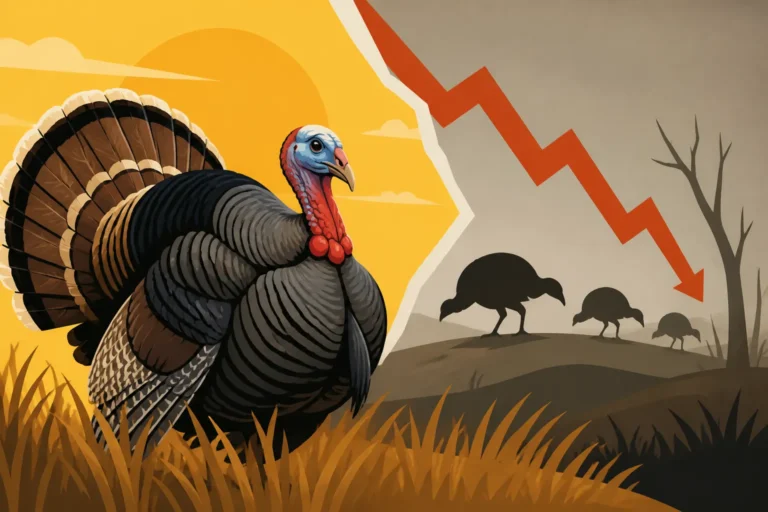
The immediate consequence of CRP loss is a reduction in prime pheasant habitat. Less nesting cover means fewer successful hatches. Less brood-rearing cover impacts chick survival. Less winter cover leads to higher mortality during harsh weather. It's a domino effect that directly contributes to fluctuations and, in many cases, overall declines in Kansas pheasant numbers.
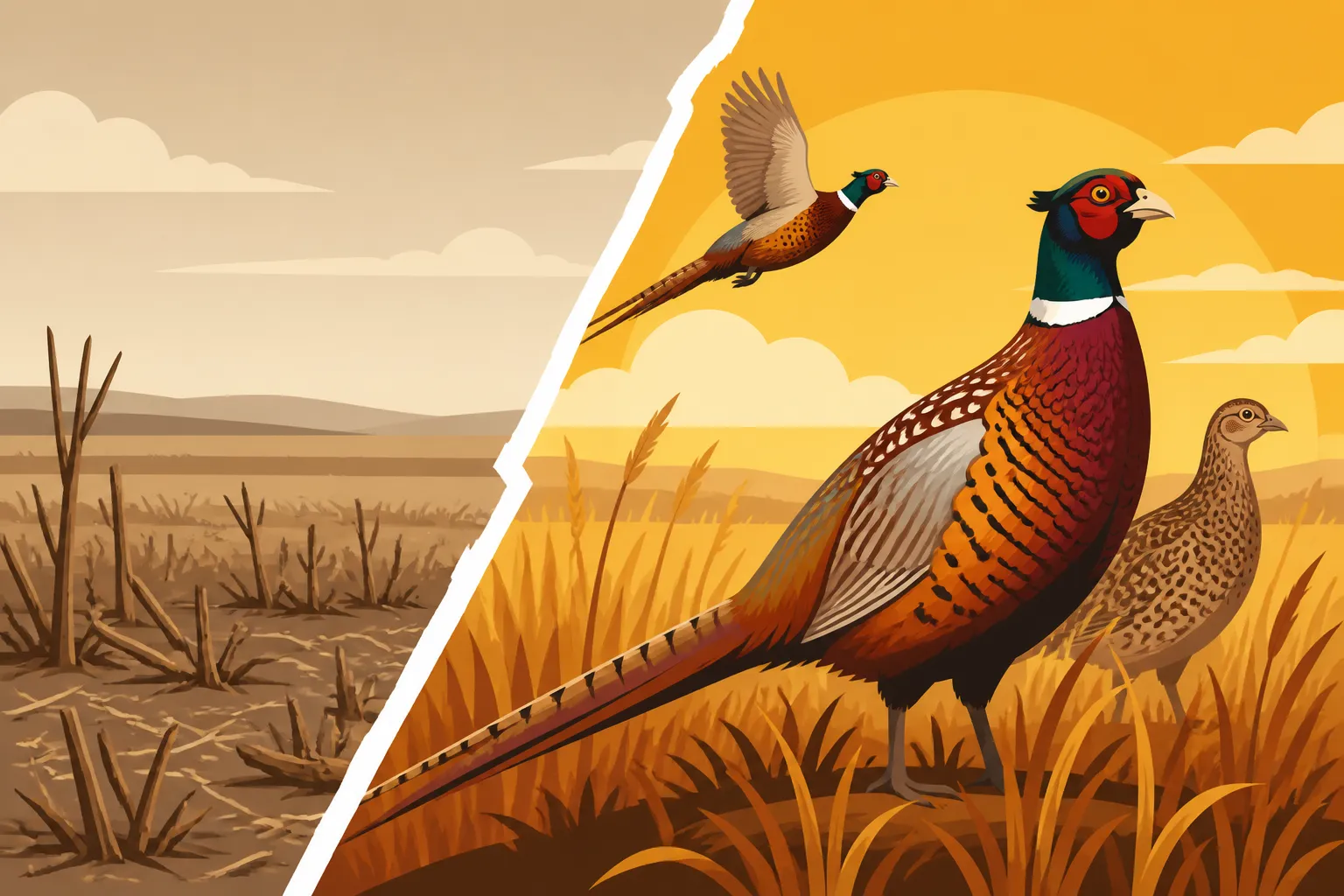
When a large block of CRP is plowed, pheasants in that immediate area are displaced. They either try to crowd into remaining, smaller patches of cover, increasing competition and stress, or they attempt to move to new areas, often exposing them to greater predation or vehicle traffic. This fragmentation of habitat can also isolate populations, making them more vulnerable to localized issues like disease or poor weather events. You can literally see the changes on a map, and a tool like GoHunt can help you visualize these shifts by comparing aerial imagery over time. It shows areas that once held birds now barren, forcing hunters to constantly search for new pockets of cover. This is a critical factor influencing Kansas Pheasant Population Cycles.
Comparison of Pheasant Habitat Types
To understand the scope of CRP loss, it's helpful to compare various habitat types and their role in pheasant survival.
| Habitat Type | Primary Benefit for Pheasants | Susceptibility to Loss (Economic/Agricultural) | Quality as Year-Round Cover |
|---|---|---|---|
| CRP (Grasslands) | Nesting, brood-rearing, winter cover, food | High (due to commodity prices) | Excellent |
| Standing Crops | Temporary escape cover, food (until harvest) | Very Low (primary agricultural purpose) | Poor (after harvest) |
| Crop Stubble (Milo/Corn) | Food source, limited loafing cover | Very Low (post-harvest) | Fair (until tilled) |
| Wheat Stubble | Nesting (early season), limited cover | Very Low (post-harvest) | Fair (early; rapidly degrades) |
| Shelterbelts/Hedgerows | Winter cover, travel corridors, escape cover | Moderate (can be removed for larger fields) | Good |
| Native Grasslands/Pasture | Nesting, brood-rearing, some winter cover | Low (if not suitable for row crops) | Good |
| Plum Thickets/Brush | Escape cover, winter cover | Low (often in marginal areas) | Excellent |
As you can see, CRP offers the most comprehensive, year-round benefits. When this cornerstone habitat disappears, the burden falls more heavily on other, often less reliable, forms of cover.
Adapting Your Approach: Hunting Strategies in a CRP-Scarce Landscape
The shifting habitat landscape means that hunters need to be more strategic than ever. You can't just blindly drive around looking for large blocks of CRP like you might have in decades past. Instead, success now hinges on understanding where birds might concentrate in a mosaic of remaining cover, and being prepared to work harder for fewer flushes.
Focusing on Remaining CRP and Other Grasslands
First and foremost, when CRP is a vanishing resource, the remaining tracts become goldmines. These smaller, often more isolated pieces of CRP will concentrate birds from surrounding areas that have lost their cover. Hunters need to prioritize identifying these parcels. Public access areas, especially those designated as Walk-In Hunting Access (WIHA) or state wildlife areas, might retain some of these crucial grasslands. Using tools like the GoHunt app to scout aerial imagery and identify remaining grass patches, even small ones, is invaluable. Look for fields that haven't been tilled under, especially those with good edge cover or near a reliable water source.
Beyond traditional CRP, pay close attention to other types of native grasslands, even if they aren't part of the federal program. Private pastures that are lightly grazed can still offer good nesting and wintering cover. Even overlooked patches of tall, unmanaged fescue or other dense vegetation can surprise you, especially in river bottoms or along neglected fence lines. Hunters need to be flexible and willing to explore areas that might not have been on their radar before. This could mean Scouting Kansas Walk-In Tracts Before the Opener, spending extra time on satellite imagery, or even just driving backroads to spot new potential hunting spots.
Utilizing Crop Edges and Stubble Fields
In a landscape dominated by agriculture, pheasants learn to adapt, and so must hunters. While standing row crops like corn and milo offer incredible short-term sanctuary and food during the season, they become less effective once harvested. However, the stubble fields that remain after harvest, particularly milo and corn, can still hold birds. These fields provide abundant waste grain for food and some residual cover.
Hunting the inside corners of crop fields, or working the edges where a stubble field meets a shelterbelt, a creek bottom, or a patch of remaining grass, can be highly productive. Pheasants will often feed in the stubble during the day and then retreat to thicker cover for roosting or escaping pressure. Knowing how to interpret these habitat transitions is key to success. For instance, when hunters are Working Pheasant Fields Without a Dog, they often find more success focusing on the dense edges or the unharvested corners of fields rather than simply walking straight lines through the middle. Milo and Corn Stubble Deer Patterns also give us clues about how other game species use these areas, and pheasants are no different in seeking out remnants of cover and food.
Finding Alternative Cover: Shelterbelts, Plum Thickets, and Riparian Areas
With CRP shrinking, other forms of dense cover become disproportionately important. Shelterbelts and hedgerows, often planted for windbreaks, provide excellent linear cover for pheasants, especially in winter. Birds will use them as travel corridors, escape routes, and places to roost, particularly if the undergrowth is thick. These linear features can concentrate birds, making them prime spots for small groups of hunters to work.
Plum thickets and other brushy areas are another fantastic alternative. These dense, thorny havens offer unparalleled protection from predators and severe weather. While they can be notoriously difficult to hunt – think getting scratched to death – the rewards can be significant. Often found in marginal agricultural ground or along creek draws, these thickets will hold birds when other cover is sparse. Riparian zones, the areas along rivers and creeks, frequently offer a mix of timber, brush, and tall grasses that can also serve as critical pheasant habitat. Understanding how to Read a Kansas Creek Bottom for Deer Sign can also help you identify areas that will hold pheasants, as good cover for one species is often good cover for another. These natural features become more important as man-made cover like CRP disappears.
Beyond the Hunt: Conservation and the Future of Kansas Pheasants
The challenges posed by CRP loss are significant, but they aren't insurmountable. The future of Kansas pheasants depends not just on hunting strategies, but on continued conservation efforts, smart land management, and sustained advocacy from the hunting community. It's a long game, but one worth playing.
Advocacy and Support for Conservation Programs
One of the most impactful things hunters and conservationists can do is to advocate for strong federal and state conservation programs. CRP funding and enrollment opportunities need to remain robust to incentivize landowners to keep these vital habitats on the landscape. Support for organizations like Pheasants Forever, Quail Forever, and other wildlife groups directly translates into on-the-ground habitat projects and policy work that benefits upland birds. These organizations often work directly with landowners to implement conservation practices that go beyond federal programs, providing technical and financial assistance.
It's also crucial to stay informed about policy changes and agricultural initiatives. Understanding how farm bills are structured and what incentives are available for conservation practices can empower individuals to speak up and support policies that prioritize wildlife habitat alongside agricultural production. Our collective voice can make a difference in ensuring that programs like CRP continue to be a cornerstone of wildlife management.
Landowner Relationships and Private Land Access
With a significant portion of Kansas being privately owned, fostering positive relationships with landowners is more important than ever. As public CRP acres decline, access to well-managed private land becomes increasingly valuable. Offering to help with chores, respecting property, and leaving gates as you found them can go a long way in securing permission for future hunts.
Some landowners are keenly interested in wildlife and might be open to implementing smaller-scale habitat improvements, even if they aren't enrolling in a large federal program. These could include planting small food plots, leaving standing rows of milo or corn, or maintaining brushy areas. Even just discussing the importance of Wheat Stubble and Pheasant Nesting after harvest can open doors for cooperation. Building trust and demonstrating a commitment to ethical hunting and land stewardship can unlock access to some fantastic hunting opportunities and directly contribute to pheasant conservation on a local level. For those using hunting apps like GoHunt to scout, remember to always seek explicit permission before stepping foot on private ground.
The Enduring Spirit of the Kansas Pheasant Hunter
Despite the challenges, the spirit of the Kansas pheasant hunter remains undeterred. The pursuit of these wily birds through diverse landscapes is a cherished tradition. While CRP loss presents undeniable hurdles, it also pushes us to become more adaptable, more observant, and more appreciative of every flush. It encourages us to understand the land more intimately and to celebrate every small victory.
We've learned to value every remaining strip of grass, every tangled plum thicket, and every stubble field where birds might hold. The hunt isn't just about the bag; it's about the entire experience: the crisp autumn air, the camaraderie, the anticipation of a flush, and the pure joy of a dog working a scent. As we move forward, a deeper understanding of habitat, combined with active participation in conservation, will ensure that future generations can still experience the thrill of hunting Kansas Ring-Necked Pheasants. It's about remembering that even in a changing landscape, the magic of the Kansas pheasant hunt endures.
Disclaimer
This article is for general informational purposes only and does not constitute professional advice. Laws, prices and regulations vary by location and change over time. Consult a qualified professional for guidance on your specific situation.