Rio Grande Turkeys in Kansas
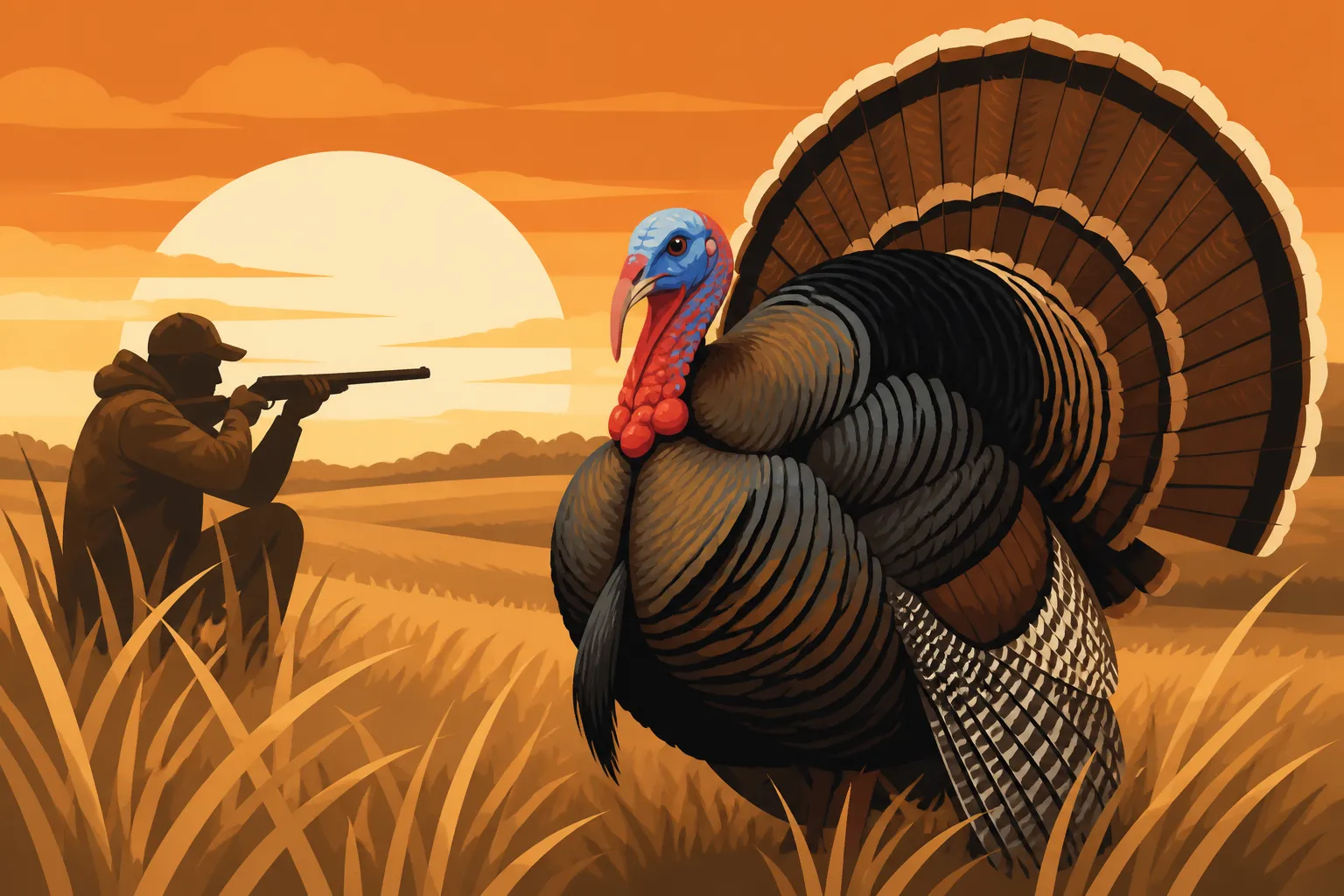
For many hunters, the image of a majestic gobbler strutting across a sun-drenched field in Kansas is a powerful draw. But if you're not from around here, or even if you are, understanding the nuances of hunting the different turkey subspecies, particularly the wily Rio Grande, can feel like trying to solve a puzzle with half the pieces missing. It’s tough to know where to start, what to expect, and how to adapt your tactics to these unique birds. This guide aims to clear up that confusion, offering a deep dive into the world of Rio Grande turkeys in Kansas, helping you understand their habitat, behavior, and how to successfully pursue them.
Understanding Rio Grande Turkeys in Kansas
When you talk about turkey hunting in Kansas, you're primarily talking about Rio Grandes. They're the dominant subspecies across much of the state, especially as you head west. Unlike the Eastern turkeys found in timber-rich areas further east, Rio Grandes have adapted to a more open, agricultural landscape. This adaptation makes them a completely different quarry, demanding different strategies and an intimate understanding of their world. Forget what you know about deep woods Easterns; these birds are a product of the Kansas prairie.
Distinctive Features and Behavior
Rio Grande turkeys, while still undeniably wild turkeys, carry some distinct features. They generally appear a bit lighter in color than their Eastern cousins, with buff-colored tips on their tail feathers and rump, rather than the chestnut brown or dark chocolate of an Eastern. Their bodies often appear sleeker, a testament to their need to traverse open country. Behaviorally, they are incredibly savvy and often more visible than Easterns. You'll see them in large flocks feeding in harvested grain fields, strutting along treelines, or crossing wide-open pastures. This visibility can be a double-edged sword; while easier to locate, their keen eyesight in open terrain makes them incredibly difficult to approach undetected.
Their daily patterns are heavily influenced by the landscape. They'll often roost in scattered timber along creek bottoms or in large cottonwoods, then pitch down into fields to feed shortly after fly-down. Throughout the day, they might move between feeding areas, dust bowls, and loafing cover, always with an eye on the expansive horizon. Understanding these patterns, and how they differ from the dense woods behavior of other subspecies, is crucial. It’s not just about knowing where they are, but how they use that specific Kansas landscape.
Historical Presence and Population Shifts
Rio Grande turkeys aren't native to the entirety of Kansas; their historical range was primarily the central and western parts of the state, extending into Texas and Oklahoma. However, extensive restoration efforts by the Kansas Department of Wildlife and Parks (KDWP) throughout the latter half of the 20th century successfully expanded their footprint. These efforts involved trap-and-transfer programs, taking birds from healthy populations and releasing them into suitable, unpopulated habitats. This proactive management helped establish the robust populations we see today across much of the state.
Despite these successes, like all wild game, their populations aren't static. We've seen some fluctuations over the years, often linked to weather patterns, particularly drought conditions affecting poult survival, and changes in agricultural practices. Kansas has always been prime habitat, and the birds have thrived, but recent years have presented some challenges, contributing to concerns about the overall health of the Kansas Wild Turkeys and the Population Decline. Hunters play a critical role in providing data through harvest reporting, which helps wildlife managers understand these shifts and make informed decisions for future management.
The Role of Agriculture in Their Diet
Kansas is an agricultural powerhouse, and the Rio Grande turkeys here are deeply integrated into this environment. Their diet is heavily influenced by the crops grown in the state. Waste grain from corn, milo, soybeans, and wheat fields provides a readily available and high-energy food source, especially during the lean winter months and early spring. They'll spend hours meticulously gleaning fields, often forming large flocks to do so. This dependence on agriculture means that scouting crop fields, especially after harvest, is absolutely essential.
Beyond grain, they also forage on a variety of native seeds, insects (especially important for growing poults), and green vegetation like clover and winter wheat. The edge habitat created where timber or CRP grass meets a crop field is a natural magnet for these birds, offering both food and escape cover. Understanding this symbiotic relationship between the turkeys and Kansas's agricultural landscape is key to predicting their movements and finding their preferred areas. Knowing what crops are where, and when they were harvested, gives you a significant edge in your scouting efforts.
Where Rio Grandes Roam: Habitat and Range
Pinpointing where Rio Grandes live in Kansas isn't as simple as drawing a line on a map. While they are widespread, their concentrations and preferred hangouts are very much tied to specific features of the Kansas landscape. Unlike the dense, continuous forests often associated with Easterns, Rio Grande country is a mosaic of open fields, scattered timber, and riparian corridors.
Preferred Landscapes and Cover Types
Rio Grandes thrive in the transition zones that define much of central and western Kansas. Think river and creek bottoms lined with cottonwood, sycamore, and hackberry trees, which provide vital roosting and loafing cover. These linear strips of timber, often only a few hundred yards wide, serve as superhighways for turkey travel in otherwise open country. Adjacent to these timbered corridors, you'll find vast expanses of agricultural fields—corn, milo, wheat, and soybeans—that provide abundant food.
Interspersed throughout this landscape are patches of native prairie and Conservation Reserve Program (CRP) grass. These areas offer nesting cover, brooding habitat for poults, and excellent bugging grounds. Plum thickets and hedgerows also act as crucial thermal and security cover, especially on windy days or when birds need to escape the gaze of predators. The key is the diversity of these cover types in close proximity; it allows turkeys to satisfy all their needs within a relatively small home range.
Geographic Distribution Across Kansas
While Rio Grandes are the predominant subspecies across most of Kansas, their concentrations vary. You'll find strong populations throughout central and western Kansas, particularly along the major river systems like the Republican, Smoky Hill, Solomon, Arkansas, and Marais des Cygnes. The further east you go, particularly into the extreme eastern counties, the habitat begins to transition to more contiguous timber, and you start seeing more Eastern wild turkeys.
Many hunters target the central and western units for Rio Grandes, where public land access, particularly through the Kansas Walk-In Hunting Access Explained (WIHA) program, can provide excellent opportunities. Counties rich in creek drainages and large agricultural fields often hold the highest densities. Using resources like the Kansas Deer Unit Map or the Kansas online hunting atlas from KDWP can help identify these prime areas and understand the nuances of each unit, which is particularly helpful if you're looking at Kansas Nonresident Turkey Unit Quotas. GoHunt also offers fantastic digital mapping tools that can help visualize these areas and identify potential hunting spots.
Overlap Zones with Other Turkey Subspecies
It's important to recognize that Kansas isn't entirely cut-and-dry with its turkey subspecies. While Rio Grandes dominate the west and central regions, and Easterns are mostly in the far east, there are significant "hybrid" zones, particularly in central-eastern Kansas. Here, the ranges of the two subspecies meet, and it's not uncommon to find birds that exhibit characteristics of both. These birds might have slightly darker buff tips than a pure Rio, or behavior that's a blend of both subspecies, making them an interesting challenge.
The primary distinction for hunters typically remains habitat-driven: if you're in open, prairie-farm country, you're almost certainly dealing with Rio Grandes. If you're in extensive, unbroken timber, you're more likely encountering Easterns. These overlap zones don't typically change hunting regulations but are a fascinating aspect of Kansas's diverse wildlife. Understanding the typical Rio Grande Turkey Range in Kansas helps hunters focus their efforts on finding the birds they're targeting.
Challenges and Considerations for Hunting Rio Grandes
Hunting Rio Grandes in Kansas is a rewarding experience, but it comes with its own set of challenges that can frustrate even the most seasoned turkey hunter. These aren't your typical sit-and-wait Easterns in dense timber; their environment and their survival instincts demand a different approach.
Navigating Population Trends and Fluctuations
Like all game species, Rio Grande turkey populations in Kansas aren't always stable. We've seen periods of booming numbers, followed by dips, sometimes due to factors largely out of our control. Severe weather events, particularly late spring cold snaps that impact poult survival, or prolonged droughts affecting nesting success and insect availability, can have a noticeable effect on the Kansas Turkey Population Trends. This means that a unit that was hot one year might be a bit slower the next.
It's crucial for hunters to stay informed. KDWP releases annual reports and forecasts, which can give you an idea of what to expect in certain regions. Checking these resources before you apply for your Kansas Spring Turkey Permits and Units can help manage expectations and perhaps even guide your unit choice. Don't go into a season expecting historical highs if the data suggests a down year; adjust your effort and expectations accordingly.
The Impact of Hunting Pressure on Behavior
Kansas offers fantastic public and walk-in hunting opportunities, which is a blessing, but it also means that some accessible areas can experience significant hunting pressure, especially during the opening weeks of the season. Turkeys, particularly Rio Grandes, are incredibly intelligent and quickly adapt to pressure. Heavily hunted birds become "call-shy," meaning they are less likely to respond aggressively to calls, and "hunter-wise," becoming more wary of approaching anything that doesn't look completely natural.
You might find that birds in pressured areas fly down quietly and move away from roosts without a peep, or they'll gobble on the roost but go silent once on the ground. This demands creativity and persistence. Sometimes, the best strategy is to avoid the crowds, even if it means walking further or hunting during weekdays. Understanding Hunting Pressure Patterns on Kansas Public Land can drastically improve your odds. Sometimes, just a quarter-mile further than anyone else will walk can put you on unpressured birds.
Weather's Influence on Turkey Activity
Kansas weather is famously unpredictable and can swing wildly, significantly impacting turkey behavior. A warm, sunny spring day can have gobblers fired up, strutting and calling incessantly. However, a sudden cold front, strong winds, or rain can shut them down almost completely. Rio Grandes, being birds of open country, are particularly sensitive to wind. Strong winds make it difficult for them to hear, and for hunters to hear them, often causing them to seek shelter in timber or deep ravines, or simply go quiet.
Rain can also suppress activity, though a light drizzle might not deter them as much as a torrential downpour. Knowing the forecast and being prepared to adapt is vital. If it's windy, you might need to get much closer before calling, or focus on areas with natural windbreaks. If it's a calm, beautiful morning, use those open country calls to your advantage. Always check the weather for your specific hunting area and plan your approach accordingly.
Effective Tactics for Pursuing Kansas Rio Grandes
Hunting Rio Grande turkeys requires a blend of patience, aggression, and an understanding of their open-country habits. What works for Easterns in dense hardwoods might leave you empty-handed here. It’s all about adapting to their landscape and their keen senses.
Mastering the Art of Calling
Calling is perhaps the most crucial element in Rio Grande turkey hunting. These birds are vocal, but they're also highly aware of their surroundings. You need to be able to make realistic hen and gobbler sounds that draw them in without giving away your position. Locator calls, like owl hoots or crow calls, are excellent for getting a shock gobble from a distant bird, especially when they're on the roost. Once you've located them, the challenge is to entice them.
Light clucks, yelps, and purrs can be effective, mimicking a receptive hen. However, overcalling can quickly turn them off, particularly if they're wary. Sometimes, less is more. For stubborn birds, or when trying to draw a gobbler away from real hens (a common frustration when Calling a Henned-Up Kansas Gobbler), a more aggressive approach with louder, more persistent yelps or even gobbler-specific calls like a snort-wheeze can sometimes pique their interest. Knowing when to be subtle and when to be bold is the key, and it often comes down to reading the bird's response.
Strategic Scouting and Setup Principles
Scouting is paramount for Rio Grandes. You need to know their roost trees, preferred fly-down areas, feeding patterns, and travel corridors. This can involve extensive glassing from a distance with binoculars and spotting scopes, especially at dawn and dusk. E-scouting tools like GoHunt are invaluable for identifying creek bottoms, timbered draws, and agricultural fields that turkeys are likely to use. Once you've identified likely spots, boots on the ground scouting before the season, or even during a lull in hunting, is crucial. Pay attention to droppings, tracks, feather piles, and dusting bowls.
When it comes to setup, concealment is king in open country. Ground blinds are incredibly effective, allowing you to move subtly and offering protection from the elements. If you're not using a blind, natural cover like thick cedars, plum thickets, or deep draws are your best friends. Always ensure you have a clear shooting lane and a solid backdrop to break up your silhouette. Position yourself so the bird has to come into easy shooting range to investigate your calls, often by enticing them around a bend in a creek or over a small rise. Thinking about Turkey Decoy Spreads That Work in open fields can also drastically improve your setup's effectiveness.
Run-and-Gun Approaches and Decoying
Rio Grandes are often on the move, covering significant ground in a day. This makes the "run-and-gun" tactic highly effective. This involves moving quickly through areas you've scouted, making a few calls, and if you get no response after 15-20 minutes, moving to the next spot. This aggressive style of hunting is particularly well-suited for covering large tracts of Run-and-Gun Turkey Tactics on Kansas Walk-In Ground or expansive private land. The goal is to intercept a cruising gobbler or provoke a distant one into revealing his location.
Decoys are incredibly potent for Rio Grandes, especially in open settings where they can be seen from a long distance. A realistic hen decoy, or a combination of hen and jake/gobbler decoys, can draw even wary birds within range. The key is proper placement: put your decoys where they are highly visible, but where you, the hunter, are completely hidden. Always place your decoys a bit closer than your maximum ethical shooting range, as the bird will often stop short to survey the scene. In some scenarios, especially when Roosting Kansas Turkeys the Night Before, setting up quietly in the dark with decoys already deployed can be a deadly effective morning strategy.
| Feature / Subspecies | Rio Grande Turkey | Eastern Turkey |
|---|---|---|
| Primary Range in KS | Central & Western | Eastern |
| Tail Feather Tips | Buff/Tan | Chestnut Brown |
| Rump Feathers | Buff/Tan | Dark Brown/Black |
| Preferred Habitat | Open fields, scattered timber, riparian corridors | Dense, contiguous hardwoods |
| Typical Behavior | Highly visible, often in large flocks, covers ground, wary | More secretive, uses dense cover, responds well to calls in timber |
| Size | Generally smaller/sleeker | Generally larger/stockier |
| Diet Focus | Agricultural grains, insects, native seeds | Acorns, nuts, berries, insects |
Permits, Seasons, and Regulations for Kansas Turkey Hunting
Navigating the rules and regulations for turkey hunting in Kansas can be a bit daunting, especially for nonresident hunters. It's crucial to understand the permit system, season dates, and general regulations to ensure a legal and enjoyable hunt. The KDWP website is your ultimate resource, but here's a breakdown of the key elements.
Understanding Permit Requirements and Draw System
Kansas utilizes a permit system for wild turkey hunting, particularly for nonresidents, to manage harvest and opportunity. Residents generally have more flexible options, often including over-the-counter permits. Nonresidents, however, must typically apply for a limited draw permit during the Kansas Spring Turkey Application Period, usually in February. These permits are unit-specific, meaning you apply for a permit valid only in a particular management unit or combination of units.
The draw can be competitive in some popular units, but generally, nonresident spring turkey permits are easier to acquire than deer permits. It's always a good idea to research the success rates and available permits for your desired unit before applying. If you don't draw, or if you're looking for additional opportunities, Kansas Leftover Turkey Permits are sometimes available for purchase over the counter later in the spring, though these might be for less popular units or later in the season. A valid Kansas hunting license is also required for all hunters.
Key Season Dates and Bag Limits
Kansas offers both a youth/disabled turkey season, typically starting earlier in April, followed by the regular archery-only season, and then the full firearm/archery season, which runs from mid-April through late May. Specific dates can vary slightly year to year, so always check the current KDWP hunting regulations summary. For Rio Grandes, these spring seasons offer the best opportunity, as birds are actively gobbling and breeding.
The bag limit in Kansas is typically one gobbler or bearded hen per permit, with nonresidents generally limited to one spring turkey permit. Residents may have options for additional permits or second birds in certain circumstances. Fall turkey hunting seasons are also available, but these are often less popular for gobblers as the birds are less vocal, and the tactics shift to more traditional flushing and calling. Always tag your bird immediately after harvest and report it through the KDWP electronic check-in system.
Essential Rules for Ethical and Legal Hunting
Beyond permits and seasons, several other regulations ensure ethical and safe turkey hunting. Hunter orange is generally not required for turkey hunting, as it can compromise camouflage, but common sense dictates wearing it while walking to and from your hunting spot, especially on public land. Legal hunting hours typically run from one-half hour before sunrise to sunset. You cannot hunt over bait, and using electronic calls is illegal.
Remember to respect property boundaries. If you're on public land or a WIHA tract, ensure you know the exact borders. If hunting private land, always have written permission from the landowner. Safety is paramount; be sure of your target and what's beyond it, and always consider Public Land Turkey Safety, especially when other hunters might be in the area. Reviewing the annual KDWP regulations summary is not just recommended, it's essential.
Conservation Efforts and the Future of Rio Grandes
The thriving Rio Grande turkey population in Kansas didn't happen by accident. It's the result of dedicated conservation efforts, and hunters play a pivotal role in ensuring these opportunities continue for generations to come.
KDWP Initiatives and Habitat Improvement
The KDWP, through various programs and initiatives, actively manages Kansas's wild turkey populations. This includes continuous monitoring of population health, disease surveillance, and habitat enhancement projects. These projects often focus on improving the quality and quantity of habitat for nesting, brooding, and roosting. For Rio Grandes, this might mean working with private landowners to implement beneficial agricultural practices, restoring native grasslands, or enhancing riparian timber corridors by planting suitable tree species.
They also conduct regular research to better understand turkey ecology, survival rates, and factors affecting their populations. The data collected from hunter harvest reports, observations, and field studies directly informs management decisions, helping to set season dates and permit quotas that ensure sustainable hunting opportunities while protecting the long-term health of the flock.
How Hunters Contribute to Conservation
Hunters are the primary funders of wildlife conservation in Kansas and across the nation. Through the purchase of hunting licenses, permits, and excise taxes on firearms and ammunition (Pittman-Robertson Act), hunters provide millions of dollars annually that go directly to wildlife management and habitat programs. This funding is critical for everything from population surveys to public land acquisition and habitat restoration.
Beyond financial contributions, hunters are often the first line of defense against poaching and illegal activities, serving as eyes and ears on the ground. Ethical hunting practices, adherence to regulations, and participation in harvest surveys are all ways that individual hunters contribute to the broader conservation mission, directly impacting the future of Rio Grande turkeys in Kansas. Without hunters, many of the successful wildlife stories we celebrate today would simply not exist.
The Long-Term Outlook for Kansas Rio Grandes
The future of Rio Grande turkeys in Kansas looks generally positive, though challenges always exist. Habitat loss due to changing land use, disease outbreaks like avian flu or poult enteritis mortality syndrome (PEMS), and persistent drought conditions remain concerns. However, the adaptability of Rio Grandes to agricultural landscapes, combined with proactive management from KDWP and the unwavering support of hunters, provides a strong foundation.
Continuous monitoring, adaptive management strategies, and ongoing habitat work will be key. As hunters, staying engaged with conservation organizations, participating in KDWP surveys, and advocating for sound wildlife management are essential to ensure that the opportunity to chase a strutting Rio Grande gobbler across the Kansas plains remains a vibrant tradition for years to come.
Disclaimer
Please note that hunting regulations, season dates, and permit requirements are subject to change. Always consult the official Kansas Department of Wildlife and Parks (KDWP) website or their most current hunting regulations summary before planning any hunting activity. This guide is for informational purposes only and should not be considered a substitute for official legal guidance.