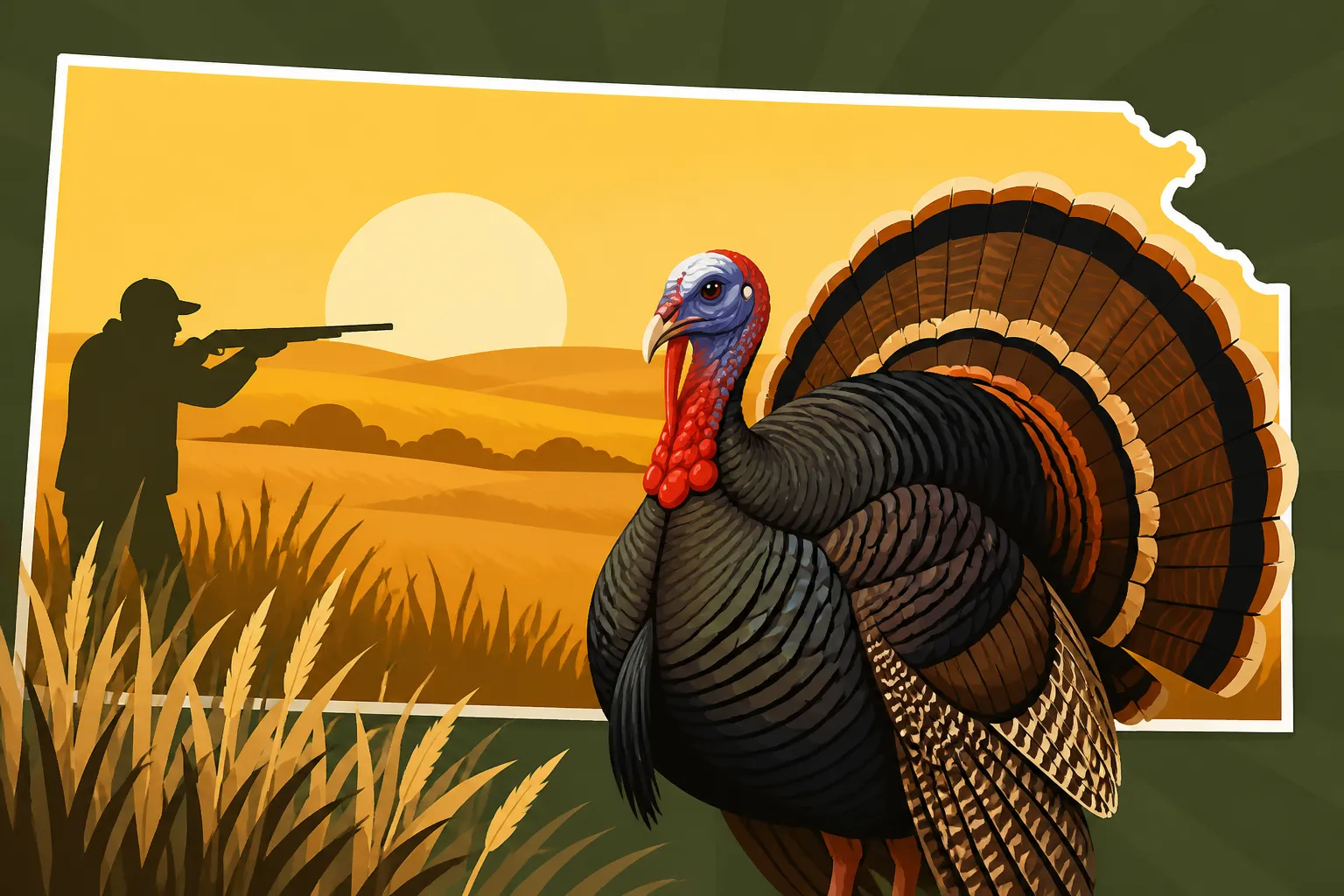
Rio Grande Turkey Range in Kansas
If you've ever found yourself scratching your head wondering what kind of wild turkey you're looking at in Kansas, you're not alone. The Sunflower State is a fascinating crossroads for turkey subspecies, and understanding their distinct ranges is key to successful hunting. This guide will walk you through where the Rio Grande turkeys primarily roam in Kansas, what makes their habitat unique, and how that influences your hunting strategy.
Understanding Kansas Turkey Diversity
Kansas truly offers a unique landscape for wild turkeys, acting as a natural blending zone for different subspecies. While many states might be known for one dominant turkey type, Kansas has a delightful, sometimes confusing, mix. It's this variety that makes hunting here so rewarding, but also requires a bit of homework to know what you're getting into.
The Rio Grande's Unique Place in Kansas
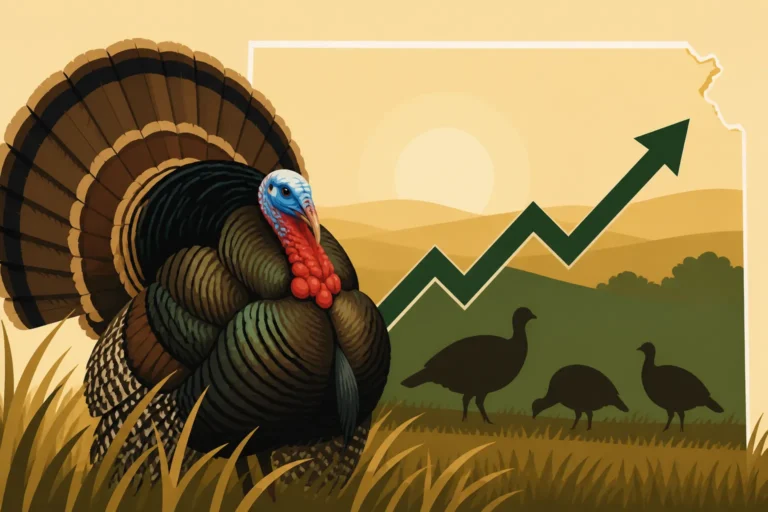
The Rio Grande turkey, often just called a "Rio" by hunters, holds a prominent place in the Kansas wild turkey population. Unlike its Eastern cousin, which prefers dense, unbroken timber, the Rio Grande has a remarkable ability to thrive in more open, agricultural landscapes that characterize much of central and western Kansas. This adaptability allows them to utilize sparse timber along river corridors, scattered shelterbelts, and vast crop fields for their daily needs. They're a hardy bird, well-suited to the sometimes harsh Kansas weather, from scorching summers to brutal winter blizzards. This resilience is a big part of why they've successfully colonized such a large portion of the state, making them the most widespread subspecies here.
Differentiating Rio Grandes from Easterns and Hybrids
Knowing your target species isn't just a matter of curiosity; it can inform your calling and hunting tactics. Rio Grandes have distinct physical characteristics that set them apart. Look for tail fan tips that are typically buff or tan, contrasting with the chestnut-brown tips of Eastern turkeys. Their body feathers often appear a bit more iridescent green and copper compared to the bronze-green hues of Easterns. The primary wing feathers of a Rio Grande will also show more distinct white barring.
Where their ranges meet, usually in the central to eastern part of the state, you might encounter Hybrid Turkeys Where Ranges Meet. These birds can exhibit a mix of characteristics, making identification a fun challenge. Understanding these visual cues, even subtly, can help you confirm you're in true Rio Grande country. The distinct habitat preferences are often the biggest giveaway, long before you get a clear look at their feathers. For those venturing further east, it's a completely different ball game, where the Eastern Turkeys in Eastern Kansas take over, demanding different tactics.
Pinpointing the Core Rio Grande Range
When you think of Rio Grande turkeys in Kansas, picture the vast plains, the winding ribbons of timber along rivers, and the endless agricultural fields that stretch as far as the eye can see. This is their domain, and they've learned to master it.
The Western and Central Kansas Stronghold
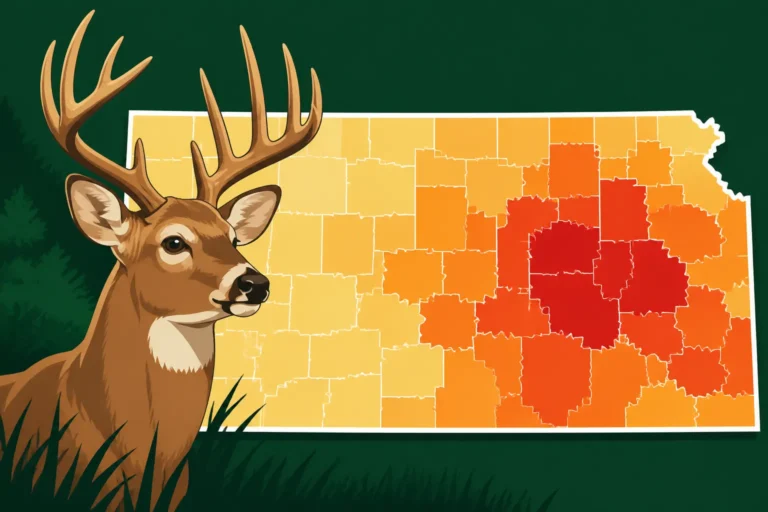
The core range for Rio Grande turkeys firmly resides in western and central Kansas. If you're west of, say, roughly a line drawn from Wichita north to Manhattan, you're generally in prime Rio country. This encompasses a significant portion of the state, extending all the way to the Colorado border. Here, the landscape transitions from rolling hills and mixed grasslands to flatter, more arid plains, punctuated by crucial water sources and timber.
In these regions, turkeys rely heavily on the riparian corridors – the strips of trees and vegetation hugging creeks and rivers. These narrow bands of timber provide essential cover, roosting sites, and travel lanes in an otherwise open environment. When you're Scouting Kansas River Bottoms and Creek Draws in these areas, you'll be looking for signs of these birds just as intently as you would for deer. They're masters at using limited cover to their advantage, making them exciting and challenging to pursue.
Geographic Features Defining the Range
The distribution of Rio Grande turkeys in Kansas is heavily influenced by the state's geography, particularly its major river systems. Rivers like the Arkansas, Smoky Hill, Republican, and Solomon, along with their numerous tributaries, act as lifelines for these birds across the drier western half of the state. These waterways provide the crucial mature cottonwoods and other deciduous trees needed for roosting, as well as dense undergrowth for nesting and escape cover.
As you move east, the landscape gradually becomes more timbered, and the influence of the Eastern turkey subspecies begins to appear. The Flint Hills region, with its vast native tallgrass prairie, also marks a significant ecological boundary. Rio Grandes are less prevalent in the dense, contiguous timber blocks found in the extreme eastern part of the state, preferring the mosaic of open fields, grasslands, and scattered timber. Understanding these subtle shifts in habitat is crucial for planning a hunt. Hunters often use advanced mapping tools, like those offered by GoHunt, to quickly identify these crucial geographic features, from river bends to isolated timber patches, aiding in pre-hunt scouting.
Habitat Preferences and Why Rio Grandes Thrive There
The habitat where Rio Grande turkeys flourish in Kansas is a testament to their adaptability and offers some fantastic insights into how to find them. They aren't forest dwellers in the traditional sense; rather, they're experts at utilizing the resources available in the agricultural heartland.
Adapting to Open Country and Agriculture
Unlike their Eastern counterparts who thrive in vast, unbroken forests, Rio Grandes are perfectly at home in Kansas's signature open country and agricultural landscapes. You'll often find them utilizing shelterbelts – those lines of trees planted by farmers to break the wind – or the edges of crop fields. These areas provide food, cover, and travel corridors. During certain times of the year, especially late season, you might find them focused on Milo and Corn Stubble Deer Patterns, gleaning leftover grains that provide crucial energy.
The relatively sparse timber found along creek bottoms and within Shelterbelts and Timber Points in Kansas Farm Country is enough for these birds. They've learned to navigate large, open fields with remarkable efficiency, often moving quickly from one patch of cover to the next. This means hunters need to be prepared for longer observations and strategic setups that account for wide-open approaches. It's a different game than slipping through dense hardwoods.
Water Sources and Roosting Sites
In the drier western and central parts of Kansas, access to water is paramount for all wildlife, including Rio Grande turkeys. While they can certainly get moisture from dew and food, reliable water sources like ponds, creeks, and stock tanks are magnets, especially during warmer periods. Knowing where these water points are, particularly when Finding Water in Dry Western Kansas, can be a huge advantage for hunters.
For roosting, Rio Grandes are far less particular than some might assume. While they certainly prefer the tallest trees available, often mature cottonwoods or sycamores along river and creek bottoms, they're not above using isolated cedars, large utility poles, or even smaller trees in a shelterbelt if that's the best option available in their travel corridor. Their primary concern is elevation and security from ground predators. When you're trying to Roosting Turkeys on a Kansas Evening, you'll often be looking for these prominent features against the skyline, listening intently for their tell-tale fly-up cackles.
Hunting Strategies Within the Rio Grande Range
Hunting Rio Grande turkeys in Kansas requires a slightly different approach than hunting other subspecies, primarily because of their habitat and the vastness of the landscape. It's an exciting challenge that often rewards patience and strategic movement.
Calling Techniques for Open Country
In the wide-open spaces of central and western Kansas, your calling strategy needs to adapt. Rio Grandes often have to travel further to find mates, and sounds carry much farther across flat fields than through dense timber. This means you can often get away with, and sometimes need, more aggressive and louder calling. Don't be afraid to put some power behind your yelps and cutts, especially if you're trying to reach birds across a large field.
However, once a bird starts responding and closing the distance, it's crucial to tone it down. Just like any turkey, too much calling once they're close can make them wary. Decoys can be incredibly effective in this open environment, giving a visual focal point for incoming birds. Learning to Call a Gobbler Off the Roost is still a critical skill, but be ready for him to cover a lot of ground quickly once his feet hit the dirt. Successful hunters use their mapping tools, like GoHunt, to visualize how their calls might carry and where a gobbler might approach from.
Utilizing Public and Private Access
Kansas offers a fantastic array of public hunting opportunities, especially through its renowned Walk-In Hunting Access (WIHA) program. Many of these WIHA tracts are situated squarely within the prime Rio Grande range, offering incredible access for turkey hunters. Before you head out, familiarize yourself with Kansas Walk-In Hunting Access Explained and remember that regulations can vary. Using tools like the Kansas Hunting Atlas or digital mapping apps from companies like GoHunt can help you locate these tracts, understand their boundaries, and even see which ones might have the habitat you're looking for, such as those crucial creek bottoms.
Pre-season Scouting Kansas Walk-In Tracts Before the Opener is highly recommended, as turkey patterns can shift. Even if you're hunting private land, securing permission well in advance is essential. The vastness of the landscape often means that a "run-and-gun" approach, as detailed in Run-and-Gun Turkey Tactics on Kansas Walk-In Ground, can be highly effective, allowing you to cover more ground and locate more birds.
Season Timing and Behavior
The Kansas Spring Turkey Season generally runs from mid-April through late May, providing ample opportunity to pursue Rio Grandes during their breeding peak. Understanding when the Kansas Spring Turkey Permits and Units are available and applying for them early is vital. During the early part of the season, gobblers are often still with hens, so patience and persistent calling can be key. As the season progresses and hens begin to nest, gobblers become more solitary and responsive to calls, making mid-to-late May a fantastic time to be in the field.
These birds are highly affected by weather, and a sudden cold snap can put them on lock-down, while warm, sunny days often spur increased gobbling activity. Being flexible with your hunting days and having a good understanding of daily weather patterns can significantly impact your success rate.
Turkey Subspecies Comparison in Kansas
Here's a quick look at how the main turkey subspecies in Kansas typically stack up:
| Feature | Rio Grande Turkey | Eastern Turkey |
|---|---|---|
| Primary Range in Kansas | Western and Central Kansas | Eastern Kansas |
| Preferred Habitat | Open agricultural country, riparian corridors, shelterbelts, scattered timber. | Denser, contiguous hardwood forests, large timber blocks. |
| Tail Fan Tips | Buff or Tan | Chestnut Brown |
| Body Iridescence | Often more green/copper | Often more bronze/green |
| Behavior in Open | Very comfortable, often seen crossing large fields. | Prefers to stay within timber, less comfortable in exposed areas. |
| Typical Size | Medium to large | Large |
| Calling Preference | Often respond to louder, more aggressive calling in open country. | Can be more subtle, prefer softer calls in dense woods. |
Disclaimer
This article is for general informational purposes only and does not constitute professional advice. Laws, prices and regulations vary by location and change over time. Consult a qualified professional for guidance on your specific situation.