Why Kansas Turkey Numbers Declined
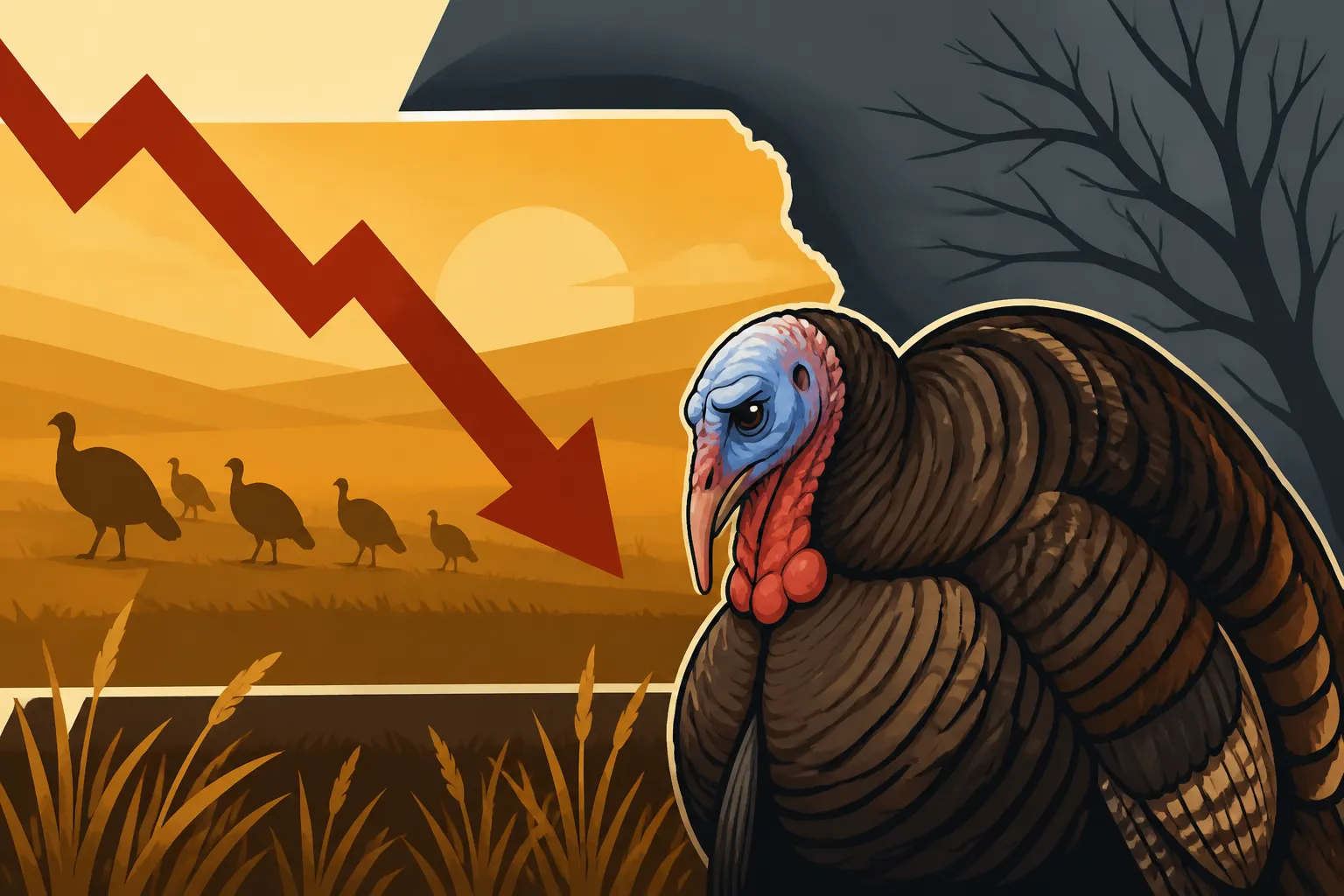
It's no secret that many of us who chase Kansas gobblers have felt a noticeable shift in recent years. Where once you could almost guarantee a booming chorus at dawn, now those woods often feel a little too quiet, and seeing those big, strutting toms or even a healthy flock of hens with poults seems less common than it used to be. This guide dives into the disheartening reality of why Kansas turkey numbers declined, exploring the complex factors at play and what these trends mean for the future of our spring hunts.
The Elephant in the Woods: Acknowledging the Decline
For years, Kansas was a premier destination for turkey hunters, boasting robust populations of Rio Grande and even some Eastern and hybrid turkeys. The sound of a gobbler ringing through a crisp spring morning was almost a given, a symphony that pulled us out of bed long before the sun. But lately, that symphony has quieted, and it's a frustration many hunters across the state share. We’ve noticed it in our favorite creek bottoms, our tried-and-true timber blocks, and even out on those big CRP fields.
Hunters Noticing Fewer Birds
Talk to any seasoned Kansas turkey hunter, and they'll likely tell you a similar story: they're seeing fewer birds. It's not just a bad season here or there; it feels like a sustained trend. That feeling of emptiness in familiar hunting grounds is hard to shake. We scout harder, walk further, and call longer, often to be met with silence. This isn't just anecdotal chatter around the pickup truck after a slow morning; it's a widespread observation that impacts our entire hunting experience. Many of us remember when spring turkey hunting felt almost effortless, with birds around every bend. Now, it's a grind, making us wonder what happened to the once-thriving flocks. The feeling of seeing sparse tracks or hearing distant, infrequent gobblers is a real blow, especially for those who cherish the tradition of Kansas turkey hunting.
The Data Reflects Our Observations
It's one thing for hunters to feel a decline, but the official data from the Kansas Department of Wildlife, Parks and Tourism (KDWPT) has, unfortunately, mirrored these observations. Harvest numbers, population estimates, and poult-to-hen ratios have all shown a downward trend over the past decade or so. This isn't unique to Kansas; many states in the Midwest and Southeast have experienced similar drops in turkey populations. The good news is that wildlife agencies are acutely aware of the situation and are actively studying it. However, it's a complex issue with no single, easy answer, which makes finding a solution incredibly challenging for wildlife managers and frustrating for hunters. The consistent decline in turkey poult survival and rainfall, specifically, is often highlighted as a significant factor in these reports, indicating fewer young birds are making it to adulthood to bolster the population.
Unpacking the "Why": Major Factors Behind the Drop
Understanding why Kansas turkey numbers declined requires a look at several interconnected factors. It's rarely one single cause, but rather a perfect storm of environmental changes, land use practices, and natural pressures that have converged to make it tougher for turkeys to thrive. We’re talking about everything from the places they call home shrinking to the very weather they endure during crucial breeding seasons.
Habitat Loss and Fragmentation
One of the most significant long-term challenges for wild turkeys, and indeed many other wildlife species, is the ongoing loss and fragmentation of their habitat. In Kansas, this often means changes in agricultural practices. Large tracts of timber, riparian corridors, and dense brushy cover that turkeys rely on for nesting, roosting, and protection from predators are being converted or altered. When these crucial habitats are broken up into smaller, isolated patches, it makes it harder for turkeys to move freely, find mates, and avoid danger.
Think about a river bottom that used to stretch for miles, offering continuous cover. Now, imagine that same river bottom with new housing developments, cleared timber for more row crops, or roads cutting through it every few miles. Each of those changes creates a barrier or eliminates a vital piece of the turkey's natural range. This fragmentation also means that when a local population struggles, it's harder for turkeys from other areas to naturally replenish those numbers. The critical need for diverse habitats, including mature timber for roosting and dense undergrowth for nesting, cannot be overstated. Even for those birds that survive, their turkey flock behaviour in winter can be impacted if large, sheltered areas become scarce. A great resource like GoHunt can sometimes help you identify areas with remaining contiguous habitat, especially when e-scouting Kansas farm country from home.
The Impact of Weather Extremes
Weather plays an enormous, often underappreciated, role in turkey populations, especially when it comes to the survival of young poults. Turkeys are pretty resilient birds, but their most vulnerable period is from hatching through their first few weeks of life. Poult survival is highly dependent on favorable weather conditions during late spring and early summer.
- Wet, Cold Springs: A prolonged period of cold, wet weather when poults are just hatching can be devastating. Young poults are susceptible to hypothermia and can literally drown in heavy rains. Their downy feathers don't offer much insulation, and getting soaked and cold can be a death sentence. If multiple nests hatch during a cold, wet snap, the impact on that year's survival rates can be severe.
- Drought Conditions: While too much rain is bad, severe drought can also cause problems. Drought conditions reduce insect populations, which are a critical food source for growing poults. Insects provide essential protein for rapid growth and development. A lack of this vital food can lead to weaker, less resilient poults that are more susceptible to disease and predation.
- Extreme Temperatures: Beyond wetness and drought, unseasonably hot or cold temperatures can stress both hens and poults, impacting their ability to forage, maintain body temperature, and evade predators. These weather fluctuations are becoming more common, creating a challenging environment for young turkeys to get a strong start in life. The yearly fluctuations in turkey poult survival and rainfall are often considered the most significant short-term driver of population trends.
Predation Pressure on Poult Survival
Predation is a natural part of any ecosystem, and turkeys have always faced threats from predators. However, when other factors like habitat loss and poor weather conditions already put stress on turkey populations, increased predation can have a more pronounced negative effect, especially on poult survival and nest success.
- Nest Predation: A huge percentage of turkey nests fail due to predation. Raccoons, skunks, opossums, snakes, coyotes, and even crows are all adept at finding and raiding turkey nests. If hens are forced to nest in less secure or fragmented habitats, their nests become even more vulnerable. When you factor in fewer nesting attempts due to stressed hen populations, higher nest predation rates become even more critical. Understanding nest predation and turkey numbers is key to understanding population dynamics.
- Poult Predation: Even after hatching, poults are extremely vulnerable. Coyotes, bobcats, foxes, owls, and hawks all view young turkeys as easy meals. Dense cover, like tall grasses and brush, helps poults hide, but if that cover is sparse or fragmented, they become easy targets. A single hen might hatch a dozen poults, but if only one or two survive to adulthood, the population struggles to maintain itself.
- Changing Predator Populations: In some areas, populations of generalist predators (like raccoons and coyotes) have thrived due to readily available food sources (often linked to human development) and fewer natural checks on their numbers. This can lead to an increased predation burden on species like wild turkeys, whose numbers might already be struggling from other environmental factors.
Conservation Efforts and Hunter's Role
While the decline in Kansas turkey numbers is concerning, it's not a lost cause. Wildlife agencies, conservation organizations, and hunters all play a vital role in understanding these trends and implementing strategies to help wild turkeys rebound. It takes a concerted effort, patience, and a willingness to adapt our approaches to conservation and hunting.
Current Management Strategies
KDWPT, along with other state agencies, continuously monitors turkey populations through various surveys, including brood counts, harvest data analysis, and long-term research projects. Based on these findings, management strategies are adjusted.
Here's a look at common approaches:
| Strategy | Description | Potential Impact |
|---|---|---|
| Habitat Restoration & Enhancement | This involves working with landowners and on public lands to improve turkey habitat. Efforts include prescribed burning to create mosaics of early successional habitat, planting native grasses and forbs for nesting cover, enhancing timber stands, and establishing riparian buffers. | Provides better nesting, brooding, and roosting cover. Increases insect populations for poults. Offers better escape routes from predators. Crucial for long-term population health by addressing root causes of habitat fragmentation. |
| Season and Bag Limit Adjustments | Based on population data, KDWPT may adjust the length of turkey seasons, the number of birds a hunter can harvest (bag limits), or the type of permits available. These changes aim to reduce harvest pressure, especially on hens, allowing more birds to survive and reproduce. | Direct control over hunting pressure. Can allow populations to stabilize or grow by protecting vulnerable segments of the population. For instance, reducing the number of Kansas antlerless permits or shortening seasons can have a significant effect. |
| Predator Control (Localized) | In some specific instances, localized predator control efforts might be implemented, particularly around key nesting or release sites, to give poults a better chance of survival. This is often a controversial but sometimes necessary short-term measure in targeted areas. | Can temporarily boost poult survival in specific, high-priority areas. Not a widespread, long-term solution due to cost, logistics, and the dynamic nature of predator populations, but can offer immediate relief in critical zones. |
| Research and Monitoring | Ongoing research projects study everything from turkey genetics and disease transmission to the effectiveness of various habitat management techniques. Monitoring involves regular surveys to track population numbers, poult production, and harvest rates. | Provides the scientific basis for all other management decisions. Helps identify specific issues (e.g., a new disease) and ensures that strategies are evidence-based rather than relying on assumptions. Using tools like GoHunt can help hunters understand game movements, but broad research guides state-level actions. |
One recent example of adjustments made due to declining numbers includes changes to the Kansas Spring Turkey Permits and Units, with some units having reduced permit quotas or even being made resident-only to protect populations.
How Hunters Can Help
As hunters, we are often the first to notice changes in wildlife populations, and we also have a responsibility to be part of the solution. Our involvement, beyond simply purchasing licenses, is critical for the future of Kansas turkey hunting.
- Report Observations: Don't keep those observations about fewer birds or poor brood sightings to yourself. KDWPT often has online forms or contact points for reporting wild turkey sightings, especially during summer brood surveys. Your input, combined with thousands of other hunters' observations, helps paint a clearer picture of population trends across the state. Every piece of information helps wildlife biologists make informed decisions about turkey management.
- Support Conservation: The fees from your Kansas hunting licence and permits directly fund wildlife management and habitat programs. Beyond that, consider joining and supporting organizations like the National Wild Turkey Federation (NWTF), which dedicates significant resources to turkey habitat improvement and research. Their work on the ground directly benefits the wild turkeys we all love to pursue.
- Ethical Hunting Practices: Always follow hunting regulations to the letter. Consider passing up on jakes or even taking fewer birds than your legal limit if you notice local populations are particularly low. The idea of taking only mature toms is one many hunters are embracing to help preserve the breeding potential of younger birds. Understanding public land turkey safety and responsible hunting is paramount.
- Practice Habitat Stewardship: If you're a landowner or have access to private land, consider implementing habitat improvements. Even small efforts like leaving some field edges un-mowed, creating brush piles, or planting native cover can provide critical nesting and brooding habitat. You can also educate others in your hunting circles and community about why Kansas turkey numbers declined and what steps can be taken locally. Using mapping tools on platforms like GoHunt can aid in identifying areas for potential habitat enhancement on private land or in selecting public land tracts that offer suitable cover.
By staying informed and actively participating in conservation, we can all contribute to helping Kansas turkey populations recover, ensuring that future generations can still experience the thrill of Calling a Henned-Up Kansas Gobbler or simply enjoying the sight of a healthy flock.
Disclaimer
This article is for general informational purposes only and does not constitute professional advice. Laws, prices and regulations vary by location and change over time. Consult a qualified professional for guidance on your specific situation.