Buck Dispersal in Open Country
It can be incredibly frustrating to scout a promising young buck through the summer, watching him grow, only for him to seemingly vanish from your radar just before hunting season. This phenomenon, known as buck dispersal, is a natural and critical part of a deer herd's health, particularly pronounced in the vast, open landscapes of Kansas. This comprehensive guide will delve into why young bucks leave their birth areas, what factors influence their movements in our unique open country, and how understanding these patterns can help you adapt your hunting strategy for consistent success.
What is Buck Dispersal and Why Does it Happen?
Buck dispersal is a fascinating and often perplexing aspect of deer biology that directly impacts how we, as hunters, perceive deer movement and population dynamics. It's not just a random wander; it's a deeply ingrained behavioral trait with significant evolutionary benefits.
The Biological Imperative for Young Bucks
At its core, buck dispersal is nature's way of preventing inbreeding and ensuring genetic diversity within a deer population. Think about it: if every buck stayed in the small area where he was born and grew up, eventually he'd be breeding with his sisters, daughters, or even his mother. While deer herds are resilient, this kind of close-kin breeding over generations can lead to a decline in genetic fitness, making the herd more susceptible to disease and less adaptable to environmental changes. So, typically, yearling bucks, around 1.5 years old, receive a clear, albeit unspoken, message from their mothers and dominant older bucks: "It's time to move on, son."
This push to disperse usually happens around the time they're becoming sexually mature, often coinciding with late spring or early summer, after the new fawns are born and before the most intense pre-rut activity begins. These young bucks feel a strong urge to strike out and establish their own home range, often many miles from where they took their first steps. It's a tough journey for some, but essential for the long-term health and vigor of the entire deer herd in Kansas.
Distinguishing Dispersal from General Movement
It’s important to differentiate true dispersal from the more routine movements deer make throughout the year. Deer are constantly moving – from bedding to feeding, checking scrapes, chasing does during the rut, or shifting based on weather or hunting pressure. These are often within an established home range. Dispersal, however, is a one-way trip, a permanent shift from a natal range to a new, unfamiliar area where the buck will establish his adult home turf.
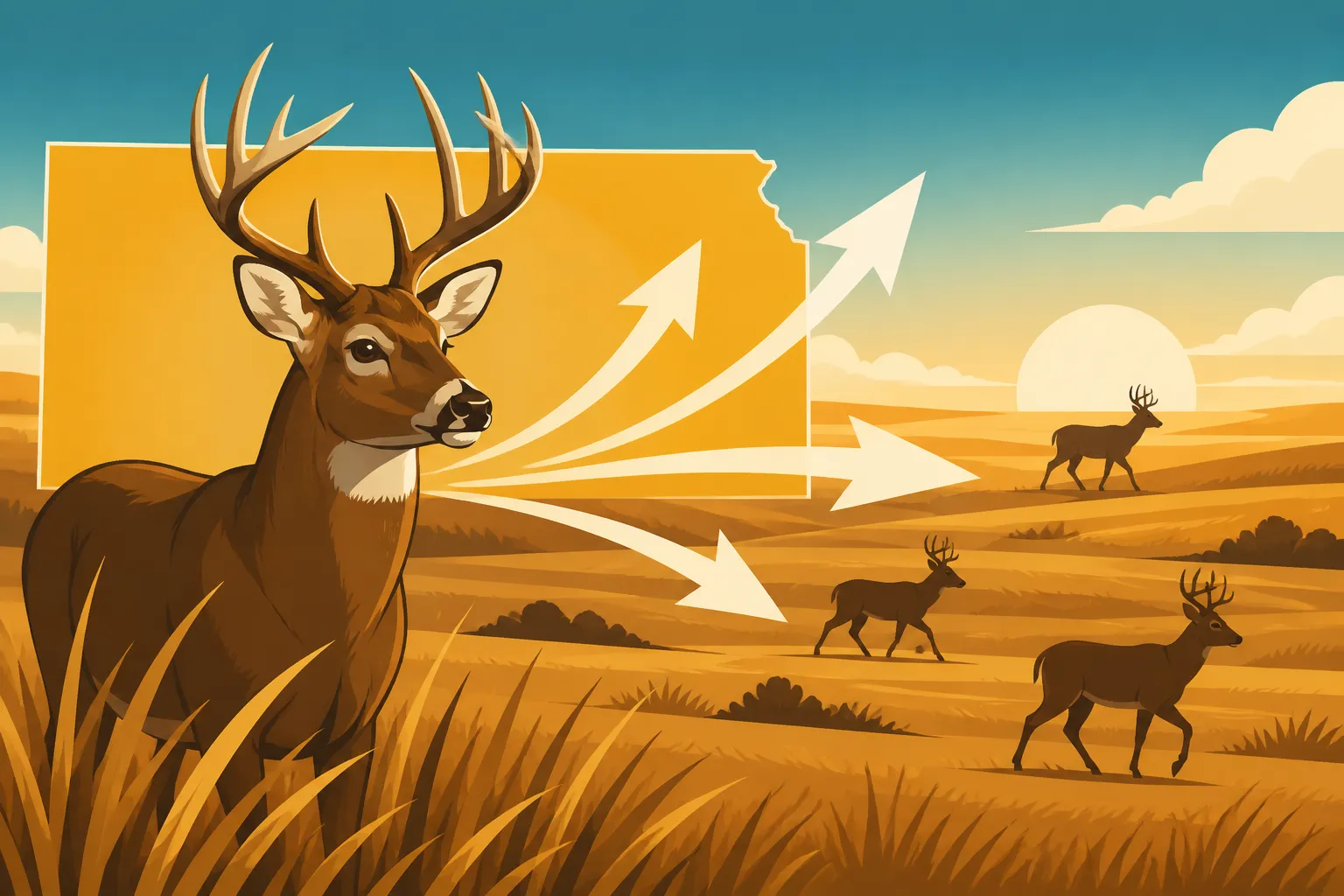
A mature buck might shift his core area by a mile or two depending on crop rotations or hunting pressure, but he typically won't abandon his entire familiar territory unless absolutely forced by extreme habitat loss or persistent harassment. A dispersing yearling, on the other hand, is deliberately severing ties with his birth area, often traveling significant distances, sometimes 10, 20, or even 50 miles, to find a new place to call home. This is why a buck you consistently saw on your trail camera as a velvet-antlered youngster suddenly vanishes come archery season – he's likely dispersed and is now making a life in a completely different zip code. This distinction is crucial for hunters because it informs how we interpret missing deer and where we might expect new deer to show up.
Factors Influencing Dispersal in Open Kansas Country
Kansas isn't known for vast, unbroken wilderness; it's a patchwork of agricultural fields, river bottoms, shelterbelts, and smaller timber tracts. This unique open country significantly shapes how and where bucks disperse, making it different from dispersal patterns in heavily forested regions.
Habitat Fragmentation and Availability
In Kansas, deer often navigate a landscape dominated by agriculture, where timbered creek draws and shelterbelts are critical arteries of movement and cover. This habitat fragmentation means that dispersing bucks don't have endless woods to wander through. Instead, they must move from one pocket of cover to the next, often crossing large, open fields. The availability of suitable, unpressured habitat in these fragmented landscapes plays a huge role in how far and in what direction a buck will disperse. A young buck might travel further if his natal area is already saturated with other deer or if the adjacent cover is heavily disturbed.
Conversely, if a prime, underutilized creek bottom or an expansive CRP field with good bedding cover is just a few miles away, he might settle there much sooner. This creates a pattern where some bucks might only move a few miles to an adjacent property with better cover, while others may push across multiple sections of open farmland to find a truly novel environment. Understanding these "habitat stepping stones" is critical for predicting where a dispersing buck might end up. When you're Reading a Kansas Creek Bottom for Deer Sign, consider it not just as a travel corridor, but as a potential destination for a dispersing buck.
Buck-to-Doe Ratios and Social Pressure
The social dynamics within a deer herd also exert considerable influence on dispersal. Specifically, the local buck-to-doe ratio can be a significant driver. In areas with a balanced buck-to-doe ratio and a healthy age structure (meaning there are older, more dominant bucks), young bucks are often pushed out more strongly. Older bucks are more territorial and less tolerant of competition from younger males, especially as the rut approaches. This dominance hierarchy creates pressure that encourages yearlings to seek out less competitive environments.
If an area has a skewed buck-to-doe ratio, with very few mature bucks, young bucks might not feel the same intense social pressure to leave. However, if the overall deer density is high, even with fewer dominant bucks, sheer numbers can still prompt dispersal simply due to competition for resources and space. This is part of Why Kansas Produces Big Whitetail Bucks; a well-managed herd with good age structure creates the conditions for robust dispersal and stronger genetics.
Hunting Pressure and Human Disturbance
It’s no secret that hunting pressure plays a massive role in deer movement, and dispersal is no exception. Areas with consistently high hunting pressure can influence not only the timing but also the direction and distance of buck dispersal. A young buck might be inclined to disperse earlier or travel further if he experiences significant human disturbance – whether from hunters, agricultural activity, or general human presence – in his natal home range.
This pressure can come from neighboring properties, public land use, or simply the presence of feeders or concentrated hunting efforts. In areas like Kansas where Public Land Deer Hunting in Kansas is popular, understanding how Hunting Pressure Patterns on Kansas Public Land affect deer is key. A yearling buck who has learned to associate his birth area with constant human scent, ATV noise, or frequent encounters with hunters might be more motivated to seek a quieter, safer haven, even if it means crossing vast, open terrain. This is a critical factor for hunters to consider, as managing local pressure can sometimes encourage bucks to stay, or at least influence where they might disperse to.
Tracking Dispersing Bucks and Adjusting Your Strategy
The uncertainty of buck dispersal can feel like a curveball every season. Just when you think you've got a handle on the local deer, new faces show up, and familiar ones vanish. But with modern tools and smart scouting, you can absolutely adapt.
E-Scouting for New Core Areas
Gone are the days when scouting was purely a boots-on-the-ground affair. While that's still vital, the first step in tracking potentially dispersing bucks or understanding where new bucks might come from is thorough e-scouting. Utilizing satellite imagery and topographic maps from home is an absolute game-changer, especially in flat, open country like Kansas. You're looking for those subtle features that offer cover and travel routes: isolated timber stands, fingers of trees extending into crop fields, brushy creek bottoms, old homesteads with thick vegetation, and even large areas of CRP Grass and Where Bucks Bed.
Pay close attention to changes in agriculture year-over-year. A field that was beans last year might be corn this year, offering entirely new cover and food sources. Look for pinch points, funnels, and natural barriers that could direct deer movement across otherwise open expanses. Tools like GoHunt's mapping features can overlay public land boundaries, habitat types, and even topographical changes, giving you a much clearer picture of potential dispersal routes and new core areas. This allows you to identify potential new havens for a dispersing buck before you ever step foot on the ground. For more on this, check out E-Scouting Kansas Farm Country From Home.
Using Technology for Real-Time Insights
Once you've done your preliminary e-scouting, trail cameras become your eyes and ears in the field. Strategically placing cellular trail cameras in areas identified through e-scouting as potential dispersal corridors or new bedding areas can give you real-time intelligence. Imagine getting a picture of a new-to-you buck, perhaps a yearling with a promising rack, that you've never seen before on your property. That could very well be a dispersed buck settling into his new digs.
While cell cameras won't tell you where he came from, they confirm his presence and allow you to begin patterning his movements in his new home range. This is where applications like GoHunt come in handy, allowing you to manage your camera photos, tag individual deer, and track their appearance patterns on a map. This data, accumulated over weeks and months, helps you understand where new deer are showing up and how they're using the landscape. It's about being proactive, not reactive, to the movements of these dynamic animals.
Boots-on-the-Ground Scouting for Sign
No amount of technology can replace actual boots on the ground. Once your e-scouting and trail camera data start to paint a picture, it's time to hit the field. This is particularly important for Scouting Kansas Walk-In Tracts Before the Opener or newly accessible private ground. You're looking for fresh rubs, scrapes, distinctive tracks, and bedding areas. These physical signs confirm that deer are not just passing through, but actively living in an area.
When you're searching for evidence of new bucks, focus on areas that offer excellent security cover adjacent to food sources. In open country, these might be tighter, thicker stands of timber in a river bottom, dense plum thickets, or substantial patches of undisturbed CRP. A dispersing buck, having just established a new home, will likely prioritize security and readily available sustenance. He's learning the lay of the land, figuring out safe travel routes, and identifying his preferred bedding and feeding locations. Finding these new "hot spots" can lead you directly to where a dispersed buck has chosen to make his new life.
The Implications of Dispersal for Kansas Hunters
Buck dispersal isn't just a biological curiosity; it has tangible impacts on how we approach hunting in Kansas, affecting everything from herd management to our personal hunting strategies.
Understanding Antlerless Hunting and its Role
While the focus of dispersal is on bucks, it's important to understand how managing the doe population can indirectly influence these patterns. In some ways, strategic antlerless hunting helps balance the herd, which can reduce overall deer density and potentially alleviate some of the social pressure that drives dispersal. A healthy buck-to-doe ratio, partly achieved through antlerless harvest, means less competition during the rut and potentially more stable buck populations in localized areas, as there might be less incentive for young bucks to wander so far.
However, dispersal is still a natural process. The primary drivers are genetic diversity and the push from older bucks. So, while antlerless hunting is crucial for herd health and managing populations within Kansas Deer Herd Numbers by Unit, it won't entirely stop dispersal. What it can do is ensure that the quality of the habitat and the social dynamics are as healthy as possible for those bucks that do choose to settle in your area. For more insights on this aspect, consider reading up on Kansas Antlerless Hunts and Filling the Freezer.
The Challenge of Consistency Year-to-Year
One of the biggest frustrations for hunters, especially those with limited ground or in areas prone to high dispersal rates, is the lack of consistency. That promising two-year-old buck you passed last year might simply disappear. This is the reality of buck dispersal. What was once "your" buck is now someone else's, miles away. This makes it challenging to manage specific deer on a small property or to predict which bucks will be present from one season to the next.
This unpredictability means that hunters in open country need to be less reliant on individual deer and more focused on understanding habitat, travel corridors, and overall deer movement patterns. Instead of targeting "that specific ten-point," you're often better served by focusing on "the type of cover that holds mature bucks" or "the pinch points that funnel deer from multiple properties." It shifts the mindset from individual deer management to landscape-level deer understanding.
Strategic Planning for Success
Given the dynamic nature of buck dispersal in open Kansas country, successful hunting requires a flexible and well-informed strategy. You can't just hunt the same spots the same way every year and expect consistent results if your bucks are always rotating.
Here are some key adjustments:
- Embrace the "New Blood": Instead of mourning the loss of a dispersed buck, get excited about the potential for new, mature bucks to move into your area. Stay vigilant with your scouting, especially for new sign and new deer on camera.
- Focus on Habitat, Not Just Individuals: Invest time in understanding the habitat features that attract and hold mature bucks in open country – whether it’s a thick cedar patch, a secluded creek bend, or a transition line between different crop fields. These features are more consistent than individual deer. For instance, knowing how deer use Shelterbelts and Timber Points in Kansas Farm Country will always be valuable, regardless of which particular buck is using them.
- Widen Your Net: If you're hunting public land or smaller private tracts, expand your scouting efforts beyond just your immediate hunting area. Dispersal means bucks are coming from somewhere, and understanding the broader landscape can help you anticipate movement.
- Use Data to Your Advantage: Tools like GoHunt and your own trail camera history are invaluable. They help you identify trends – when new deer typically show up, what kind of habitat they prefer, and how they react to changes in crop rotation or hunting pressure. This data-driven approach allows you to make more informed decisions about stand placement, timing, and areas to focus your efforts.
- Be Adaptable: The best hunters in open country are constantly scouting, observing, and willing to change their game plan based on fresh information. If a spot that produced last year is dead this year, a dispersed buck might have moved in or out. Be ready to move stands, change tactics (like focusing on Rattling and Grunting During the Kansas Rut during specific times), and explore new areas.
By recognizing buck dispersal as a fundamental reality of hunting in open country like Kansas, you can transform it from a source of frustration into an opportunity to learn, adapt, and ultimately, find success in a dynamic environment. It encourages a broader understanding of the deer herd and the landscape, making you a more knowledgeable and effective hunter.
| Dispersal Factor | Description | Impact on Kansas Hunters |
|---|---|---|
| Genetic Diversity | Primary biological drive for young bucks to leave natal range. | Encourages healthy herd, but means "your" young buck might vanish. |
| Social Pressure | Dominant bucks and high deer density push yearlings out. | Stronger in areas with good buck age structure. Can be influenced by herd balance. |
| Habitat Fragmentation | Interrupted travel corridors (fields, small timber). | Dictates travel routes and potential settling areas in open country. |
| Hunting Pressure | Consistent disturbance from hunters. | Can accelerate dispersal or push bucks to new, less pressured areas. |
| Food & Water Availability | Young bucks seek areas with ample resources. | New areas with desirable food/water can become new homes. |
| Age of Dispersal | Primarily 1.5-year-old bucks, usually late spring/early summer. | Explains why young bucks disappear after summer scouting. |
Disclaimer
This article is for general informational purposes only and does not constitute professional advice. Laws, prices and regulations vary by location and change over time. Consult a qualified professional for guidance on your specific situation.