Cimarron National Grassland Hunting
Hunting the vast, open spaces of the Cimarron National Grassland in Kansas presents a unique set of challenges and incredibly rewarding opportunities. This isn't your typical farm country hunt with timber blocks and crop fields; it's an expansive, often unforgiving landscape that demands thorough preparation, keen navigation, and a deep understanding of its subtle nuances. This guide will walk you through everything you need to know to plan a successful and safe hunting adventure on this remarkable public land.
Understanding the Cimarron National Grassland Landscape
When you first lay eyes on the Cimarron National Grassland, it’s easy to feel overwhelmed by its sheer scale. It's a place where the horizon stretches seemingly forever, and the land often appears flat to the untrained eye. But beneath that vast surface lies a complex and diverse landscape that holds surprising amounts of game.
A Sea of Grass and Rolling Sandhills
Imagine driving for miles, and all you see is an undulating sea of native grasses, punctuated by the occasional yucca plant or a sparse cluster of cottonwoods and hackberry in the deeper draws. That's the Cimarron National Grassland in Morton County, far out in the southwest corner of Kansas. It’s a truly wild, rugged landscape, fundamentally different from the agricultural mosaics found in most of the state. These aren’t the manicured fields and woodlots that many Kansas hunters are accustomed to; this is shortgrass prairie, often broken up by rolling sandhills, steep-sided arroyos, and wide, shallow drainages that eventually feed into the Cimarron River.
The sheer size of the Grassland, encompassing over 100,000 acres of publicly accessible land, means you can literally walk for miles without crossing a fence line or seeing another human being. This remoteness is a double-edged sword: it offers incredible solitude and a true wilderness hunting experience, but it also amplifies the consequences of getting lost or breaking down. The vegetation, primarily various species of native grasses like buffalo grass and blue grama, rarely offers much concealment for a hunter on foot, making successful stalks a testament to patience and skill. However, these grasses provide excellent cover for game animals, allowing them to disappear quickly. Understanding how to read the subtle changes in elevation, the direction of a prevailing wind across the open plains, and the scattered, precious pockets of denser vegetation is paramount to finding success here.
Access and Permitted Areas
While the Cimarron National Grassland is federally owned and managed by the U.S. Forest Service, the hunting regulations are primarily set by the Kansas Department of Wildlife and Parks (KDWP). This means you'll need the appropriate Kansas hunting licenses and permits, just like anywhere else in the state. Confirming that an area is open to hunting is usually straightforward for the main body of the Grassland, but always consult the current KDWP regulations and maps. It's important to remember that while the Cimarron is vast, it's not one continuous block. It's interspersed with private land, creating a checkerboard pattern in many places. Respecting these private boundaries is not just good etiquette; it's the law.
Accessing the Grassland is generally done via a network of county roads, many of which are unpaved gravel or dirt. During dry conditions, these roads are usually fine for most vehicles, though some areas might be sandy. However, a significant rain can quickly turn dirt roads into impassable mud pits, trapping even four-wheel-drive vehicles. It’s crucial to have a reliable vehicle, ideally with good ground clearance, and to pay close attention to recent weather and road conditions. While there are a few established camping areas, much of the Grassland allows dispersed camping, meaning you can often pull off a two-track and set up a primitive camp. Just be sure to check current fire restrictions, especially during dry seasons. Always know exactly where you are and where the private land begins and ends, especially when parking or venturing off established roads. Tools like onX Hunt become indispensable for confirming public/private boundaries.
Game Species and Hunting Seasons
The Cimarron National Grassland supports a diverse array of game, offering everything from challenging big game pursuits to unique upland bird experiences. Understanding what animals inhabit this region and when to hunt them is key to planning your trip.
Deer Hunting Opportunities
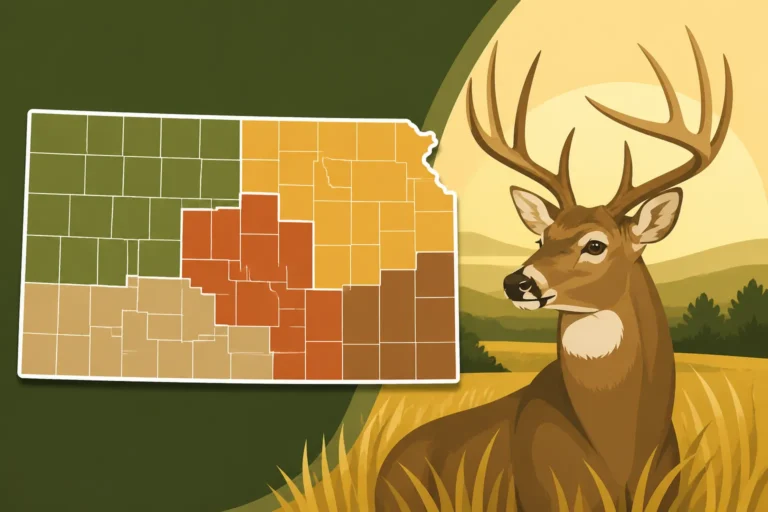
For deer hunters, the Cimarron National Grassland primarily offers opportunities for both whitetail deer and, uniquely for Kansas, mule deer. While whitetails are found across the entire state, their presence on the Cimarron is often concentrated in the draws, creek bottoms, and any areas with slightly more cover or brush. Mule deer, on the other hand, are more at home in the expansive, open plains and rolling sandhills, using the subtle contours of the land for concealment. There is an overlap zone where you might encounter both species, especially in the larger drainages. Hunters will need to be prepared for the distinctive behaviors of both species: whitetails are masters of evasion in cover, while mule deer often rely on their eyesight and superior ability to navigate open country. This is one of the few places in Kansas where you might have a shot at a legitimate "mulie," making it a highly sought-after hunt. If you're specifically targeting mule deer, you'll need to understand the Mule Deer in Western Kansas population dynamics.
Drawing a non-resident deer tag for the unit that encompasses the Cimarron (Deer Management Unit 1) can be challenging, often requiring preference points, especially for the coveted firearm season. The application period usually occurs in April, and it's essential to understand the intricacies of the Kansas Deer Permits and the Nonresident Draw process. Once drawn, you'll find that archery season offers the longest window, providing plenty of time to scout and hunt. Muzzleloader season provides another opportunity, though it's typically earlier in the fall when temperatures can still be warm. The firearm season in December often coincides with colder weather, which can make deer more active, but also brings increased hunting pressure. Remember, a general deer permit in this unit is "either-species, white-tailed deer, mule deer, or antlerless deer," meaning you have a chance at either of the primary species.
Antelope Hunting on the High Plains
Perhaps the most iconic big game species on the Cimarron National Grassland is the pronghorn antelope. Kansas has a very limited antelope population, primarily concentrated in the extreme western counties, and the Cimarron is a prime location to pursue them. However, securing an antelope permit is incredibly difficult. They are allocated through a very restrictive lottery draw, and most hunters will accumulate many preference points before having a realistic chance at drawing a tag. This is not a hunt you can typically plan for year after year unless you are exceptionally lucky or a resident with accumulated points. Information regarding Kansas Antelope Permits and Seasons is crucial for anyone considering this hunt.
Antelope are built for speed and survival in open country. Their incredible eyesight, often compared to that of an 8x binocular, makes stalking them in the open grasslands a true test of skill and patience. They can spot movement from incredibly far distances, and their natural curiosity can be both a hunter's advantage and disadvantage. Hunting typically involves extensive glassing from elevated positions (even subtle rises can offer a commanding view) to locate animals, followed by long, careful stalks using every available piece of terrain for concealment. The season dates are usually quite short, often just a few days for firearm hunters, making every moment critical. Archery antelope seasons exist, offering a much more challenging endeavor that requires getting within close range of these hyper-vigilant animals.
Upland Birds and Small Game
Beyond big game, the Cimarron National Grassland offers excellent opportunities for upland bird hunting, particularly for the iconic Greater Prairie Chicken. These fascinating birds are a major draw, providing a unique experience for bird hunters. Hunting prairie chickens typically requires a special permit in addition to your Kansas hunting license, and season dates are usually segmented, often with an early September opener and then a later season. Locating booming grounds (leks) where the males display in the spring can be a huge advantage for fall hunting, as these areas often concentrate birds. Greater Prairie Chickens of the Kansas Flint Hills provides more context, though the Cimarron environment is distinct from the Flint Hills. Understanding the Kansas Prairie Chicken Permit Requirement is a non-negotiable.
While the Cimarron isn't primarily known as a pheasant or quail mecca compared to other parts of Kansas, opportunities exist, especially along field edges bordering private land, in areas with more brushy cover, or where taller grasses provide adequate habitat. Hunters with good bird dogs can often find success, but even Working Pheasant Fields Without a Dog is possible with strategic walking. For hunters looking for additional action, rabbit and coyote populations are healthy across the Grassland. Coyotes, in particular, offer a challenging pursuit for predator callers, and their numbers are such that opportunities are usually abundant.
Essential Scouting and Navigation Strategies
The sheer scale of the Cimarron National Grassland makes proper scouting and navigation not just helpful, but absolutely essential. Without a plan, you risk wasting precious hunting time or, worse, getting lost in the vast expanse.
E-Scouting the Vast Expanse
Before you ever set foot on the Cimarron, your journey should begin behind a screen. E-scouting is your most powerful tool for dissecting this immense landscape. Forget about simply glancing at a map; you need to immerse yourself in the digital terrain. Start by pulling up high-resolution satellite imagery on mapping applications like onX Hunt or GoHunt. These tools allow you to zoom in and identify subtle features that might be invisible from the ground or a less detailed map. Look for the faint lines of draws and drainages – even a slight depression can offer crucial concealment for both you and the game. Identify areas where the vegetation appears different, perhaps taller grasses, scattered brush, or the tell-tale green line of trees indicating a deeper water source or perennial creek. These are potential bedding areas, travel corridors, or ambush points.
Pay close attention to public land boundaries. As mentioned, the Grassland is interspersed with private property. Using the public/private land layers on your mapping app is non-negotiable. You need to know exactly where you can legally hunt and where you cannot. Map out potential access roads, parking spots, and long walking routes. Consider prevailing wind directions for your planned stalks. Even if you've done E-Scouting Kansas Farm Country From Home, the Cimarron requires a different mindset; think in terms of miles, not hundreds of yards. Mark potential water sources, even small ephemeral ponds, as these can be magnets for game, especially during dry periods. Identify any fences or gates, as these can impact your travel. Having a digital map downloaded for offline use is crucial, as cell service can be non-existent in many parts of the Grassland.
On-the-Ground Reconnaissance
If at all possible, a pre-season scouting trip to the Cimarron National Grassland is invaluable. Pictures and satellite images are helpful, but nothing compares to seeing the terrain with your own eyes. However, for many hunters, especially non-residents traveling long distances, a dedicated scouting trip isn't feasible. In that case, your first day or two of hunting will largely double as your scouting mission. When you are on the ground, whether pre-season or during the hunt, focus on covering ground and observing. Look for actual game trails, which might be subtle paths through the grass, leading from bedding areas to water or feeding grounds. Droppings, rubs (if deer are present), and shed antlers can confirm the presence and habits of animals.
Water sources, even tiny ones, are critical, so make a point to check them. Be aware of signs of other hunters, such as boot tracks, tire marks, or spent casings; this can give you an idea of hunting pressure, which often pushes animals into more remote areas. When walking, constantly orient yourself. The open, monotonous landscape makes it incredibly easy to become disoriented. Pick out distant landmarks – a unique hill, a cluster of trees, even a distinct oil pumpjack – and regularly check your position against your GPS or mapping app. Mark your vehicle's location as a waypoint the moment you park. Consider carrying a compass and knowing how to use it as a backup to electronic devices. Remember that what looks like a small rise on a map can be a significant hill in person, and what looks flat can have enough undulation to hide a herd of antelope.
Hunting Tactics for Open Grassland
Hunting the Cimarron National Grassland demands a unique set of tactics, vastly different from timber hunting or sitting over food plots. The open environment dictates strategies focused on observation, stealth, and long-range precision.
Spot-and-Stalk for Deer and Antelope
The spot-and-stalk method is king on the Cimarron National Grassland for both deer and antelope. Due to the lack of dense cover, sitting in a treestand or ground blind often isn't a viable primary tactic, unless you're targeting a very specific feature like a waterhole. Instead, your strategy will revolve around finding animals from a distance and then carefully closing the gap. This means investing in high-quality optics – good binoculars (10x-12x) are essential, and a spotting scope (20x-60x) is highly recommended. Find the highest vantage point available, even a slight rise can be enough, and settle in to glass methodically. Spend long periods scanning the landscape, paying attention to any unnatural shapes, colors, or movements. Early morning and late evening are prime times, but animals can be active throughout the day, especially if weather conditions are mild.
Once an animal or group of animals is spotted, the true challenge begins: the stalk. This is where your knowledge of the terrain and wind becomes critical. Plan your approach using every dip, swell, and piece of sparse cover to your advantage. Mule deer and antelope have incredible eyesight, so staying out of their line of sight is paramount. Whitetails in the draws are more reliant on scent, so playing the wind correctly is crucial. This often means taking a circuitous route, adding significant distance to your stalk. Move slowly, deliberately, and be prepared to freeze for long periods if the animal looks your way. Judging distance in wide-open country can be deceiving, so a rangefinder is indispensable. Expect longer shot opportunities, so practicing ethical shooting at extended ranges is a must. Remember, patience is your best friend; a hasty move will often send your quarry bolting across the prairie.
Utilizing Terrain Features
Even in a seemingly flat landscape, the Cimarron is full of subtle terrain features that animals utilize heavily and hunters can exploit. Draws, ravines, and the gentle undulations of the sandhills become critical travel corridors, bedding areas, and escape routes. Instead of looking for thick timber, focus on these natural depressions. Deer will often bed in the bottom of a draw, protected from the wind and out of sight, and use the draw's contours to travel undetected. Antelope, while preferring open spaces, will also use these features to dip out of sight when feeling pressured or simply traveling between feeding areas. Understanding Hunting Terrain Funnels in Flat Country can be applied here, even if the "funnels" are more subtle undulations in the earth than defined hills and valleys.
As a hunter, your goal is to identify these features during your e-scouting phase and confirm them on the ground. When stalking, these draws become your lifeline for concealment. You might drop down into a shallow ravine and walk it for hundreds of yards, completely hidden, until you pop up for a quick peek at your target. Remember to approach these features strategically. Never silhouette yourself on a ridgeline. Instead, creep up to the edge, stay low, and slowly peer over. Wind direction is always a factor, and understanding how air currents move through these depressions is just as important as on a river bottom. The sparse vegetation within these draws can also offer crucial concealment for a final approach.
Blind Hunting and Decoys Limited Use
While spot-and-stalk is the dominant tactic, blind hunting can have limited, specialized applications on the Cimarron National Grassland. The primary use for a ground blind would be set up over a known water source, especially during dry conditions. Animals need water, and if you can identify a reliable pond or spring that sees consistent activity, a well-brushed-in ground blind can be effective. However, the lack of natural cover on the Grassland means you'll need to put in significant effort to brush in your blind weeks, if not months, in advance to allow animals to get accustomed to it. This takes planning and potentially multiple trips.
Decoys can also play a role, particularly during the rut for deer or for curious antelope. A buck or doe decoy can sometimes draw in a cruising buck, while an antelope decoy, especially one that allows for "fanning" (holding the decoy while staying concealed behind it and approaching animals), can be highly effective on antelope. However, decoy placement and wind direction are absolutely critical. You want the decoy to be visible, but you also need to be downwind and concealed, ready for a shot. In such open country, any slight movement or misplacement of the decoy can spook wary animals. Be prepared for animals to circle downwind to get a scent, meaning you need to be set up to cover that approach. Decoy Placement and Wind Direction is an article that could provide some additional insights for this scenario.
Upland Bird Strategies
For upland bird hunters, particularly those targeting Greater Prairie Chickens, tactics differ. The most common approach involves locating active leks (booming grounds) through pre-season scouting or local intelligence. During the hunting season, you can often find birds feeding near these leks in the early morning or late afternoon. Pass shooting as birds fly to and from feeding areas or roosts can be productive, but requires patience and knowing flight patterns. Walk-up hunting for prairie chickens usually means covering a lot of ground in large groups, trying to flush birds.
For pheasants and quail, which are less numerous and more scattered than in prime Kansas farm country, focusing on areas with slightly denser cover is key. Look for plum thickets, brushy draws, or areas with taller, thicker grass, especially near the edges of the Grassland where it transitions into private crop fields. Walking these edges with a good bird dog is often the most effective method. Without a dog, you'll need to walk slowly and deliberately, pausing frequently to try and spook birds into flushing. Working Pheasant Fields Without a Dog offers some valuable strategies that can be adapted to the varied cover of the Cimarron. Remember that for all upland hunting, comfortable boots and plenty of water are non-negotiable for covering the extensive ground.
Navigating the Challenges of Cimarron
Hunting the Cimarron National Grassland offers incredible rewards, but it also comes with significant challenges that can quickly turn a dream hunt into a survival situation if you're not prepared.
Weather Extremes and Dehydration Risk
The weather on the Cimarron National Grassland can be brutally unpredictable and extreme, often changing rapidly within a single day. Summers are scorchingly hot, with intense sun and often little shade, leading to a serious risk of dehydration and heatstroke. Carrying far more water than you think you’ll need is critical, even for what seems like a short walk. Fall and winter can bring sudden, dramatic drops in temperature, fierce winds that cut through layers, and even unexpected snowstorms. A warm, sunny morning can quickly turn into a freezing, blustery afternoon. Layering your clothing is essential, allowing you to adapt to changing conditions. A waterproof and windproof outer shell is a must, regardless of the forecast.
Beyond the cold, the constant wind can be a significant factor. It desiccates the land and can make even moderate temperatures feel much colder. It also makes hearing game difficult and can be incredibly tiring over a full day of hunting. Sun protection, even in cooler months, is important due to the lack of tree cover. Wide-brimmed hats, sunglasses, and sunscreen are crucial. Always check the weather forecast before heading out, but understand that conditions can shift quickly. Have emergency supplies in your vehicle – extra blankets, water, food, and a shovel – because you might be miles from the nearest town or paved road if conditions deteriorate.
Getting Lost and Communication
The vast, often monotonous landscape of the Cimarron National Grassland makes it incredibly easy to become disoriented, even for experienced woodsmen. Without prominent landmarks like mountains or dense timber blocks, everything can start to look the same after a few miles. This is where robust navigation skills and tools are paramount. Relying solely on a smartphone can be risky due to inconsistent cell service. A dedicated handheld GPS unit or a high-quality mapping app like onX Hunt, with downloaded offline maps, is an absolute necessity. Learn how to use it proficiently before your hunt. Understand how to mark waypoints, track your path, and navigate back to your starting point. A traditional compass and paper map (even if just for backup) are also wise additions to your pack, along with the knowledge of how to use them.
Cell service is spotty at best, and often non-existent across large swaths of the Grassland. This means you cannot rely on your phone for emergency calls or even simple communication with hunting partners. Consider carrying a satellite messenger or a two-way radio system if hunting with a group. More importantly, always let someone know your detailed hunting plan: where you’re going, your expected route, and when you anticipate being back. This provides a safety net in case you don't return as planned. Staying together with hunting partners, especially in unfamiliar terrain, is also a good practice, or at least having a clear rendezvous point and communication plan.
Vehicle Access and Recovery
The roads on the Cimarron National Grassland range from well-maintained gravel to barely-there two-track dirt paths that can quickly become treacherous. Many roads are primarily dirt or sand, and while passable in dry weather, they can become completely impassable after even a moderate rain. Clay soils turn into sticky, hub-deep mud, and sandy sections can become soft and boggy. A four-wheel-drive vehicle with good tires and decent ground clearance is highly recommended, if not essential, for exploring beyond the main gravel arteries. Even with a 4×4, exercising caution is important.
Always carry basic recovery gear: a shovel, a tow strap, and jumper cables. An air compressor to air down tires in sandy conditions (and air them back up later) can also be a lifesaver. Ensure your vehicle is in good mechanical condition, as breakdowns in remote areas can be costly and dangerous. Carry extra fuel, as towns with gas stations are few and far between. Drive slowly and be aware of the road conditions; don't assume a road will remain passable simply because it looked fine at the start. If in doubt about a road, park and walk, or find an alternative route. Attempting to drive through deep mud or sand without proper preparation can lead to being stranded for hours, or even overnight, far from any help.
Respecting the Land and Other Users
Hunting on public land like the Cimarron National Grassland is a privilege that comes with significant responsibilities. Upholding ethical conduct and demonstrating respect for both the land and other users ensures these opportunities remain available for everyone.
Leave No Trace Principles
The "Leave No Trace" philosophy is paramount on the Cimarron National Grassland. This is a wild place, and it's up to every user to keep it that way. The golden rule is simple: pack out everything you pack in. This includes all trash, spent ammunition casings, food wrappers, and anything else you bring with you. Do not bury trash; it will eventually be dug up or uncovered. Strive to minimize your impact on the vegetation. Avoid driving off established roads and two-tracks, and if you must walk through sensitive areas, do so carefully to avoid trampling plants or disturbing fragile ecosystems.
When field dressing game, move well away from roads, trails, and especially water sources. Dispose of entrails responsibly, scattering them to break down naturally without creating an unsightly mess for others. Field Dressing in Warm Kansas Weather offers good advice that applies to proper carcass handling here. If camping, use established sites when possible, or choose a durable surface. Always ensure campfires are completely extinguished and cold to the touch before leaving, as wildfires are a serious threat on the Grassland. The goal is for the next person to experience the same pristine environment you did, with no evidence of your visit. Leaving No Trace on Walk-In Ground is a good philosophy to carry with you.
Sharing the Resource
Public lands, by their very nature, are shared resources. On the Cimarron, you might encounter a variety of other users: other hunters (deer hunters, bird hunters, predator callers), hikers, birdwatchers, photographers, or even scientists conducting research. Maintaining a courteous and respectful attitude towards everyone you encounter is crucial. Give other hunters ample space, especially if they were there first. If you arrive at a popular spot and see another vehicle, consider moving to a different area to avoid crowding. A friendly wave and a brief, polite interaction can go a long way in fostering good relationships.
For non-hunting users, remember that they have just as much right to enjoy the Grassland as you do. Avoid shooting near developed areas, camping sites, or clearly marked recreational trails. Be mindful of noise, especially early in the morning or late in the evening. Understand that safety is paramount when sharing the landscape. Always be aware of your surroundings, your backstop, and the direction of your shot. Hunter orange requirements during firearm seasons are in place for a reason, and even outside of those seasons, wearing visible clothing can enhance safety. Shared success on public land often means shared responsibility and mutual respect.
Regulations and Reporting
Ignorance of the law is never an excuse. Before hunting the Cimarron National Grassland, thoroughly familiarize yourself with all applicable Kansas hunting regulations, as well as any specific rules or restrictions put in place by the U.S. Forest Service for the Grassland itself. This includes season dates, bag limits, weapon restrictions, tagging requirements, and any special permits needed for certain species like prairie chickens. Always carry your valid hunting license and any required permits (like your Kansas Hunter Education and Licensing Basics card, if applicable) with you while in the field. Digital copies on your phone are often acceptable, but a physical copy can be a good backup.
The KDWP website and printed regulations digest are your primary resources. Also, check the Cimarron National Grassland's official Forest Service website for any specific local rules, such as temporary closures, fire bans, or vehicle restrictions that might not be in the KDWP book. Understanding your Kansas Public Land Deer Hunting in Kansas rights and responsibilities is key to avoiding violations. If you witness any poaching, illegal dumping, or other wildlife violations, it is your responsibility to report it to a KDWP game warden or Forest Service law enforcement. Taking photos, noting vehicle descriptions, license plates, and locations can be incredibly helpful for authorities. By being a vigilant and responsible hunter, you contribute to the conservation and ethical management of this special place.
| Game Species | Primary Season Type | Key Hunting Tactic | Primary Challenge |
|---|---|---|---|
| Whitetail Deer | Archery, Firearm | Spot-and-Stalk in Draws | Sparse cover, playing the wind |
| Mule Deer | Archery, Firearm | Spot-and-Stalk on Plains | Keen eyesight, long stalks |
| Pronghorn Antelope | Limited Firearm | Spot-and-Stalk, Decoying | Exceptional eyesight, challenging draw |
| Greater Prairie Chicken | Shotgun (Upland) | Walk-up, Pass Shooting | Locating leks, unpredictable flushes |
| Pheasant/Quail | Shotgun (Upland) | Walk-up with/without dog | Scattered populations, limited cover |
| Coyote | Year-round (Predator) | Calling, Spot-and-Stalk | Wary nature, identifying distant animals |
Disclaimer
This article is for general informational purposes only and does not constitute professional advice. Laws, prices and regulations vary by location and change over time. Consult a qualified professional for guidance on your specific situation.