Winter Weather and Quail Survival
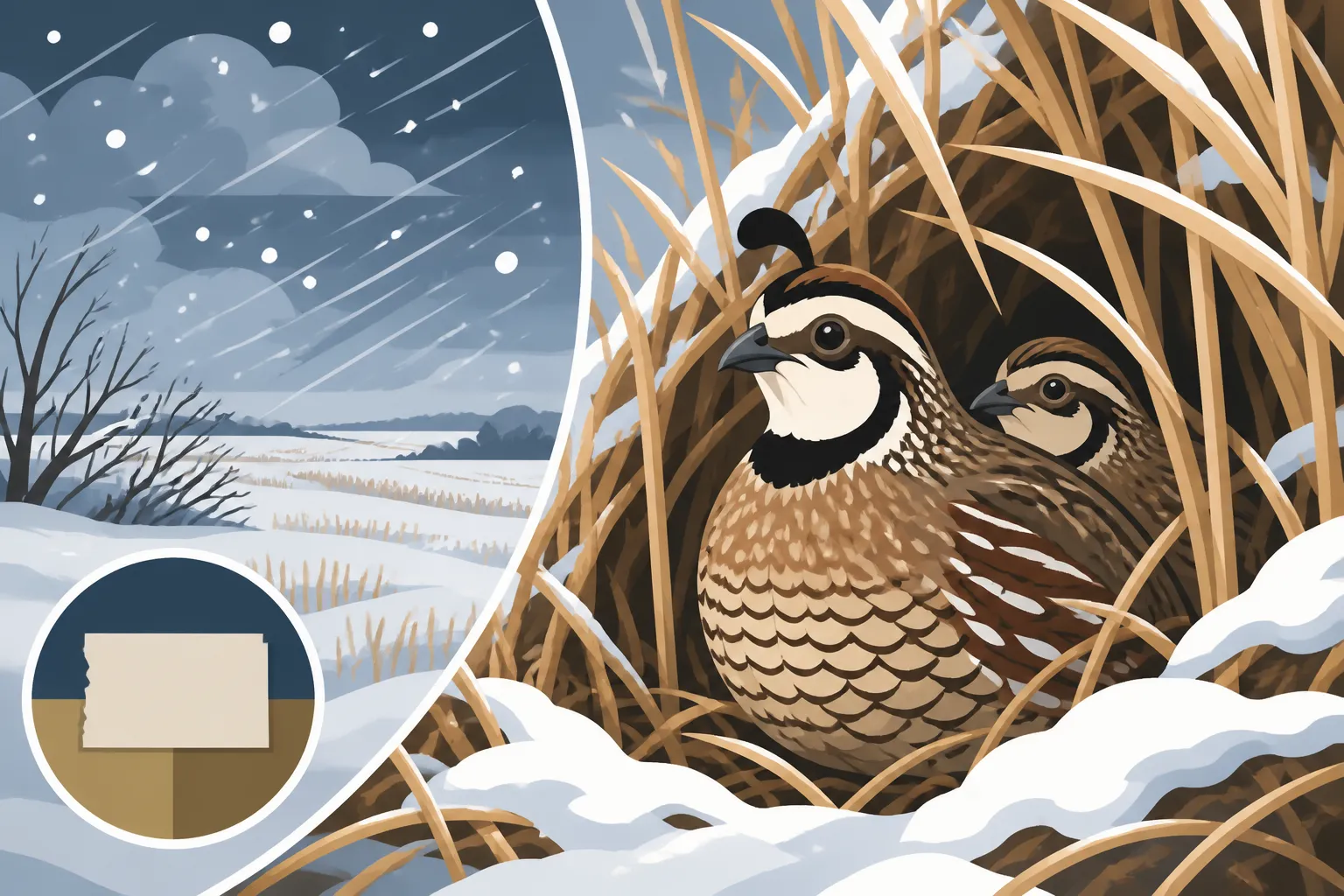
There’s a unique dread that washes over a Kansas quail hunter when the thermometer plummets, the wind howls, and the snow starts to pile up, sometimes followed by that dreaded glaze of ice. We all know that a truly brutal winter can decimate bobwhite quail populations, undoing years of recovery or leaving those vibrant coveys we've scouted reduced to a fraction of their former size. This guide is dedicated to understanding exactly how winter weather impacts quail survival in our state, breaking down the factors that make the difference between a tough season and a catastrophic one, and equipping you with knowledge to better appreciate and protect these incredible birds.
The Harsh Reality of a Kansas Winter for Quail
Kansas winters can be a fickle beast, swinging from mild, open stretches to blizzards and ice storms that seem to cling for weeks. For our bobwhite quail, these conditions aren't just uncomfortable; they're a life-or-death struggle against the elements and dwindling resources. It’s not simply the cold that kills them, but a deadly combination of factors that compound the stress on these small birds.
Understanding the Physiological Strain of Cold
When temperatures drop significantly, a quail's tiny body has to work overtime just to stay warm. Their metabolism kicks into high gear, burning through energy reserves at an accelerated rate. Think about how much more you eat and how much more tired you feel when you're exerting yourself in the cold – it's the same principle for a quail, but with far higher stakes. If they can’t find enough high-energy food to fuel this internal furnace, they begin to lose body mass, making them even more susceptible to the cold. Prolonged periods of extreme cold can simply cause them to freeze, especially if they are already weakened or don't have adequate shelter. It's a constant battle to maintain core body temperature, and every calorie counts.
The Lethal Impact of Snow and Ice Accumulation
While snow can provide some insulation on milder days, deep or crusted snow becomes a death sentence. Bobwhites are ground-dwelling birds, and their primary food sources – seeds, insects, and berries – are found on or near the ground. A thick blanket of snow makes these crucial food items inaccessible. If the snow is powdery, they might be able to scratch through it for a day or two, but a heavy, wet snowfall that freezes into a crust is impenetrable. Imagine trying to eat your dinner when it's locked under a layer of concrete. Furthermore, ice storms are particularly devastating. They not only coat vegetation and food sources, making them impossible to reach, but they also weigh down essential cover, collapsing it and leaving birds exposed. An ice storm can turn prime winter habitat into a barren, exposed landscape overnight, robbing quail of both food and shelter simultaneously. This is often when we see the most significant population drops, leading to dramatically reduced Kansas Bobwhite Quail Numbers the following spring.
The Critical Role of Cover in Winter Survival
In the face of relentless winter weather, robust and diverse cover isn't just a nice-to-have for quail; it’s their absolute lifeline. Without adequate protection, all the food in the world won't save them from a harsh Kansas blizzard. Think of it as their emergency shelter, their thermal blanket, and their escape route all rolled into one. The quality and proximity of different cover types can literally dictate whether a covey makes it through the winter.
Thermal Cover: The Winter Blanket
Thermal cover is perhaps the most critical component for quail survival when the temperatures really drop. This isn't just any brush; it's dense, tangled vegetation that can trap warmth and shield birds from bitter winds and blowing snow. Think of an old plum thicket, a dense cedar stand, or a brushy hedgerow that’s grown into an impenetrable fortress. These thickets provide insulation, creating a microclimate within their depths that can be significantly warmer than the ambient air temperature. Quail will huddle together, often in a tight circle with tails inward, in these spots to conserve body heat. Without these natural windbreaks and insulating pockets, the wind chill alone can quickly exhaust a quail's energy reserves. We often look for these sanctuaries when we're Finding Plum Thickets That Hold Quail during hunting season, but their true value shines in the dead of winter. It’s important to remember that not all cover is equal; a sparse fencerow offers little protection compared to a multi-layered thicket.
Escape Cover: Dodging Predators in the Snow
Winter doesn't just bring cold; it often brings hunger to predators, too. With less foliage on trees and shrubs, quail are more exposed to aerial predators like hawks and owls, as well as ground predators like coyotes and bobcats. This is where escape cover becomes vital. Dense, thorny patches of multiflora rose, osage orange, or even tangles of blackberry brambles offer places for quail to dive into and evade immediate threats. Snow can also reveal tracks, making coveys easier for predators to locate. The thicker and more intertwined the escape cover, the better. It needs to be dense enough to physically deter predators or at least slow them down, giving the quail a critical few seconds to disappear. A good piece of quail habitat will have a network of these escape routes, allowing coveys to move between feeding areas and thermal cover without crossing wide, exposed areas.
Loafing Cover and Proximity to Food
Beyond thermal and escape cover, quail also need what we call "loafing cover." These are areas where coveys can rest, dust bathe, or simply sit out the day safely, ideally located very close to their primary food sources. This reduces the amount of time they have to spend in the open, exposed to both the elements and predators. Imagine a brushy draw adjacent to a milo field, or a shaggy fencerow bordering a picked cornfield. The closer the loafing cover is to accessible food, the less energy quail expend moving to and from feeding sites. In winter, every bit of energy conserved is a victory. If they have to fly long distances across open, snowy fields to reach food, they're not only using up precious calories but also risking predation. This concept is crucial when designing or evaluating habitat, as even the best food plots are useless if not within a short flight of solid cover. A great resource like GoHunt can sometimes help identify key habitat features from aerial views, aiding in understanding these proximity needs.
Food Availability When the Snow Flies
Even with the best thermal and escape cover, bobwhite quail won't survive a protracted winter if they can't access enough food. Their high metabolism, especially in cold weather, demands a constant intake of high-energy calories. When food sources become scarce or inaccessible, it's a slow, agonizing decline.
The Impact of Deep Snow on Foraging
As mentioned, deep snow is a major culprit in winter quail mortality. A quail's short legs and inability to dig through hard-packed or crusted snow mean that many crucial seeds – from ragweed to sunflower, lespedeza to grain waste – are simply out of reach. We often see quail scratching around the edges of fields or under dense cedars where snow might be thinner, but these are often insufficient for an entire covey. If snow lingers for weeks on end, even robust coveys can starve. This is why late-season food sources like standing corn or milo can be so valuable, as their stalks elevate some of the grain above the snow line, offering a lifeline. However, even these can become problematic if the snow is too deep or ice-coated, pushing the birds into more vulnerable positions searching for any accessible morsel.
Critical Food Sources That Endure Winter
Certain plants and agricultural practices are far more beneficial for quail in winter than others. Native grasses and forbs that retain seeds high on their stalks, like certain sunflowers or partridge pea, can provide food above shallow snow. Think about a field that wasn't "cleaned up" too aggressively – the waste grain from corn, milo, or soybeans can be a godsend. These residual grains are packed with calories and can be the primary energy source for quail through the coldest months. Additionally, certain wild fruits and berries, such as those found on sumac or hackberry, can persist through winter and offer crucial energy when other ground-level options are buried. A diverse habitat, rich in both native seed-producing plants and well-managed agricultural fields, provides a buffet of options, increasing the odds that at least some food will remain accessible, regardless of snow depth. Understanding Milo and Corn Stubble Deer Patterns can also provide insights, as deer often knock down grains, making them more accessible for quail.
Starvation vs. Predation: A Vicious Cycle
It's a common misconception that quail simply freeze to death in winter. More often, a combination of cold and lack of food leads to a weakened state, making them highly susceptible to predation. A bird that is constantly battling starvation has less energy to evade a hawk, less strength to burst from cover, and is less alert to danger. They might spend more time in open areas desperately searching for food, increasing their exposure. So, while cold and snow directly kill some birds, the indirect mortality from starvation-induced predation is often far greater. A healthy, well-fed quail can withstand a lot of cold, especially when tucked into good thermal cover. But a hungry, emaciated bird is fighting a losing battle, and predators are always keen to capitalize on weakness.
Understanding the "Perfect Storm" Scenario
When we talk about devastating winter quail losses, it's rarely one factor alone that causes the crash. Instead, it's usually a combination of compounding issues that create a "perfect storm," pushing quail populations past their breaking point. Knowing what these conditions are can help us understand why some winters are merely tough, while others are catastrophic.
The Unholy Trinity: Cold, Snow, and Wind
The most lethal combination for quail in Kansas is prolonged periods of extreme cold, accompanied by deep, crusted snow, and unrelenting strong winds. Each of these elements individually is challenging, but together, they create an almost insurmountable obstacle. The cold demands high energy expenditure. Deep, crusted snow cuts off food access. And the wind, especially in open country, amplifies the cold's effect, stripping away any insulation a bird might have and forcing them to burn even more calories to stay warm. A covey might survive a few days of one or two of these conditions, but weeks of all three can wipe out entire local populations. This is particularly true in areas with less robust Bobwhite Quail Habitat in Kansas, where cover might be marginal and food sources limited, leaving birds with fewer options to escape the onslaught.
Prior Habitat Conditions as a Precursor
The health of a quail population going into winter is a massive determinant of their survival through it. A covey that started the fall strong, with a high number of healthy birds, good habitat that provided ample food and cover throughout the growing season, and minimal disease pressure, has a much better chance of enduring a tough winter. Conversely, a population that was already stressed due to a dry summer (impacting insect populations and seed production), fragmented habitat, or high predator numbers, will be far more vulnerable when winter hits. They simply don't have the energy reserves or the numbers to weather the storm. Think of it like sending someone into a fight when they're already exhausted and injured – their chances of coming out on top are slim. This is why year-round habitat management is so critical; it’s not just about what happens in December, but what happens from January to November that sets the stage for winter survival.
Spring and Summer Carryover Impacts
The effects of a harsh winter aren't just confined to the season itself. Significant winter mortality can have profound impacts on the following spring and summer breeding seasons. Fewer birds mean less breeding potential, smaller clutches, and potentially less successful nesting attempts overall. It can take several mild winters and productive breeding seasons for a population to recover from a major winter hit. This cyclical nature is a key part of Quail Population Cycles Explained. If you have a poor breeding season following a bad winter, the recovery can be even slower, demonstrating just how impactful a "perfect storm" winter can be on the long-term health of our Kansas quail.
| Winter Condition | Direct Impact on Quail | How it Kills | Mitigation Factors |
|---|---|---|---|
| Extreme Cold | High energy demand, hypothermia | Burns fat reserves; eventual freezing | Dense thermal cover, high-energy food |
| Deep Snow | Inaccessible food sources | Starvation, weakened state | Elevated food (standing grain), snow-free patches |
| Ice Storms | Coats food and cover, collapses cover | Starvation, exposure, lack of escape | Thorny, rigid cover (e.g., Osage orange), elevated food |
| Strong Winds | Increases chill factor, reduces insulation | Accelerates hypothermia, burns energy faster | Dense, multi-layered windbreaks (cedars, plum thickets) |
| Lack of Food | Inadequate energy for warmth and survival | Starvation, vulnerability to predators | Waste grain, native seed-producing plants |
| Poor Cover | Exposure to cold, wind, and predators | Hypothermia, predation | Diverse, dense habitat patches, escape cover |
What Hunters and Landowners Can Do to Help Quail
While we can't control the weather, we absolutely have agency when it comes to influencing quail survival. Hunters and landowners, working together, can implement strategies that significantly buffer quail populations against the worst effects of winter, ensuring that we continue to have healthy coveys to pursue and enjoy.
Habitat Management: The Long-Term Solution
The single most impactful thing we can do for quail is to focus on year-round habitat management that specifically addresses winter needs. This means creating and maintaining diverse stands of native grasses and forbs that provide both nesting cover and seed production. Crucially, it means protecting and enhancing those thick, gnarly plum thickets, cedar rows, and other dense brushy areas that serve as irreplaceable thermal and escape cover. When considering what to plant or where to leave things untouched, always ask: "Will this still provide cover and food when there's a foot of snow on the ground and the wind is blowing forty miles an hour?" Sometimes, it's less about planting and more about not doing something, like not mowing down a critical fencerow or not burning an entire pasture every year. Tools like GoHunt can be invaluable here, allowing you to examine aerial imagery for potential habitat improvements or identifying areas lacking critical cover types. Consider enrolling eligible acres in conservation programs that focus on upland bird habitat, ensuring a future for Bobwhite Quail Across Kansas.
Providing Emergency Food Sources
In some severe cases, landowners might consider supplemental feeding, though this is often debated and comes with its own set of challenges, including concentrating birds and making them more vulnerable to predation or disease spread. A more sustainable and generally recommended approach is to ensure standing food sources are available. This means leaving strips of unharvested corn or milo, especially adjacent to good winter cover. These standing grains provide crucial elevated food above the snowpack. Another strategy is planting food plots specifically designed for quail, using plants that hold seeds throughout the winter. Lespedeza, sunflowers, and certain varieties of sorghum are excellent choices. Don't forget the power of natural food sources too – managing your land to promote native seed-producing weeds and forbs can provide a continuous buffet through the coldest months.
Responsible Hunting Practices
As hunters, we also have a role to play. Ethical and responsible hunting means recognizing when a population might be vulnerable. In the aftermath of a truly brutal winter, it might be prudent to reduce hunting pressure or even consider not hunting a particular covey or area to allow for maximum recovery. Understanding Kansas Quail Bag and Possession Limits is important, but sometimes self-regulation beyond the legal limits can be a true act of conservation. We want to ensure that enough healthy birds survive to replenish the population in the spring. Supporting organizations that focus on habitat restoration and advocating for sound wildlife management policies are also ways hunters can contribute. Ultimately, our passion for chasing these feathered rockets should be paired with a deep commitment to their long-term well-being, especially when winter tests their resilience to the absolute limit.
Disclaimer
This article is for general informational purposes only and does not constitute professional advice. Laws, prices and regulations vary by location and change over time. Consult a qualified professional for guidance on your specific situation.