Plum Thickets and Quail Cover
Hunters often overlook specific features in the Kansas landscape that are absolute magnets for bobwhite quail. If you've ever walked miles of seemingly good cover only to come up empty-handed, you might be missing the critical role that plum thickets play. This guide will walk you through why these thorny havens are so vital for quail survival and how you can effectively hunt them.
The Indispensable Role of Plum Thickets in Kansas Quail Habitat
Hunters in Kansas often feel like they're searching for a needle in a haystack when it comes to bobwhite quail, especially in vast, open farm country. But these elusive birds, with their iconic "bob-white!" call, aren't randomly scattered. They seek out very specific types of cover that offer everything they need to survive, and amongst the most critical of these are plum thickets. These aren't just patches of thorny bushes; they're intricate fortresses that provide a vital sanctuary in a landscape that can often be unforgiving. Understanding their importance is the first step to unlocking consistent quail success.
Providing Multi-Layered Protection from Predators
Think about a bobwhite quail: small, ground-dwelling, and incredibly vulnerable to a host of predators, both from above and on the ground. A wide-open field, or even sparse grass, offers little defense. This is where plum thickets shine. The dense, interwoven branches of wild plums create an almost impenetrable barrier. From a hawk circling overhead, the thicket appears as an opaque, thorny mass, making it incredibly difficult to spot a camouflaged covey underneath. It's like a natural stealth bomber cloaking system for our feathered friends.
On the ground, coyotes, foxes, and bobcats face a formidable challenge trying to penetrate the dense tangle of thorns. Imagine trying to push through a wall of barbed wire; that's what a thicket feels like to a larger predator. The sheer physical barrier deters most ground threats, forcing them to find easier prey or to expend an unreasonable amount of energy for a potential meal. This layered defense allows quail to rest, feed, and roost with a significant degree of safety. They can literally disappear into the thorny depths, knowing that few predators will risk the scratches and pain to pursue them. This security is paramount for a species that spends its entire life at ground level. The denser the thicket, the more secure the birds feel, allowing them to conserve energy and reduce stress, which directly impacts their survival rates and helps maintain healthy Kansas Bobwhite Quail Numbers.
Critical Food Sources and Essential Winter Shelter
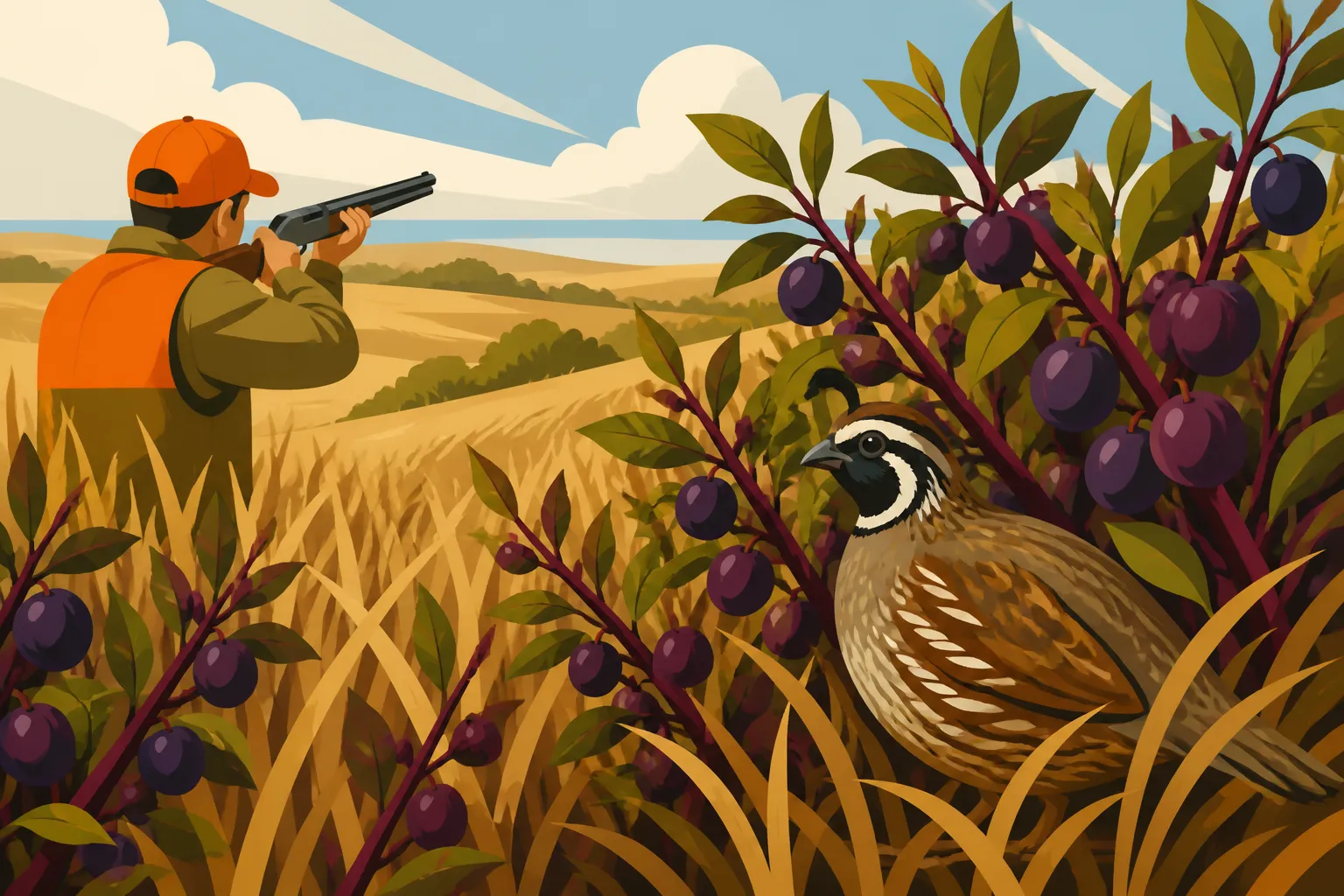
Beyond protection, plum thickets are a pantry and a warm blanket for quail. The wild plums themselves, while small, produce abundant fruit that ripens in late summer and can persist into the fall and early winter. These fruits and their seeds are a valuable food source, providing energy and nutrients when other food sources might be scarce. For a quail, finding enough high-energy food is critical for maintaining body weight, especially as temperatures drop. Furthermore, the thickets attract a wealth of insect life – spiders, beetles, and other invertebrates – which are a crucial protein source, especially for young quail and during the breeding season. This insect bounty helps poults grow rapidly and ensures adults have the necessary energy for reproduction.
Perhaps even more critical, particularly in the unforgiving Kansas winters, is the thermal cover these thickets provide. When bitter cold winds howl and snow blankets the prairie, a dense plum thicket acts like a natural windbreak and insulation. The tight network of branches traps air, creating a microclimate within the thicket that can be significantly warmer than the ambient air temperature outside. This allows Quail Covey Size and Behaviour to huddle together, conserving body heat and expending less energy trying to stay warm. A few degrees difference can be the deciding factor between life and death for a covey in a blizzard. Without such shelter, coveys can quickly succumb to exposure during prolonged cold snaps, highlighting just how essential these habitats are for overwinter survival and the overall health of the quail population. These thickets are literally life-savers when the Kansas wind really starts to bite.
Pinpointing Prime Plum Thicket Locations for Bobwhite Quail
Knowing why plum thickets are important is one thing, but knowing where to find the best ones is the key to successful quail hunting. Kansas is a big state, and while wild plums are scattered across it, not every thicket is created equal in the eyes of a bobwhite. You need to learn to read the landscape, both from your couch with a map and with boots on the ground, to identify those spots that are most likely to be holding birds. This blend of remote and on-the-ground scouting is what separates consistently successful hunters from those who just wander.
Strategic Placement: Where to Find Them in the Landscape
Plum thickets don't just spring up anywhere; they tend to favor certain locations that offer an advantage for their own growth and, by extension, for the wildlife that uses them. You'll often find them along the edges of agricultural fields, forming a natural buffer between crops and grass. These "edge habitats" are goldmines because they connect food sources (like waste grain in crop fields) with escape cover. Quail can feed in the open and quickly dive into the dense thicket when danger approaches. Fencerows are another prime location, often providing the initial disturbance and a linear path for plum growth, creating long, narrow strips of cover that quail absolutely love. These linear features provide secure travel corridors for quail moving between larger patches of habitat.
Creek bottoms and draws are also fantastic places to find robust plum thickets. These low-lying areas often have richer soil and retain more moisture, allowing plums to thrive and grow into dense, mature cover. They also act as natural travel corridors and Hunting Terrain Funnels in Flat Country for many species, including quail, linking different habitat types. As you're doing your E-Scouting Kansas Farm Country From Home, look for these distinct green patches that stand out against the grays and browns of winter fields. Utilizing platforms like GoHunt can help you overlay different habitat maps and identify these key features before you even step foot in the field, saving you countless hours of walking. Don't overlook old farmsteads or abandoned properties either; these areas, often left untended, can develop incredible thicket complexes that provide decades of undisturbed cover.
The Anatomy of an Ideal Quail-Holding Thicket
Not all plum thickets are created equal for quail. A small, isolated clump of plums, barely big enough to hide a rabbit, might offer temporary cover but isn't likely to hold a covey consistently. These tiny thickets can be used as a quick escape, but don't provide the long-term security a covey needs. Conversely, a thicket so vast and impenetrable that you can't even walk into it effectively might offer great security but makes for a frustrating hunt. The "ideal" thicket often has a particular anatomy that balances security with accessibility for both the birds and the hunters.
Look for thickets that are at least a quarter-acre in size, but perhaps no more than a few acres unless they have natural breaks or more open fringes. The best ones will have a dense, thorny core where birds feel utterly safe, but also a slightly more open perimeter or internal lanes that allow quail to move within it and allow hunters (or dogs) to penetrate. These thickets are often surrounded by other essential quail habitat, such as native grasses like CRP, or fields of milo and corn stubble. This mosaic of cover and food allows quail to utilize the thicket for roosting and protection, then quickly move into adjacent areas for feeding. A thicket that offers diverse cover, from head-high dense growth to shorter, grassier edges, will be more attractive to quail throughout the year. Remember, quail are creatures of the edge; they thrive where different habitat types meet, and a well-placed plum thicket at one of these junctures is a magnet for birds, providing ideal Bobwhite Quail Habitat in Kansas.
Masterful Tactics for Hunting Quail in Plum Thickets
Now that you know why and where to find plum thickets, it's time to talk about how to effectively hunt them. Plum thickets can be challenging cover to navigate, whether you're working with a seasoned bird dog or going it solo. Success often hinges on a combination of strategic approach, careful planning, and a deep respect for safety. There’s a certain art to flushing quail from these thorny fortresses, and a little forethought goes a long way.
Working Thickets With and Without Canine Companions
Hunting plum thickets truly highlights the value of a good bird dog. A well-trained pointer or flusher can be invaluable in this dense cover. With a dog, the strategy typically involves working the edges of the thicket first, allowing your dog to catch scent and naturally pull into the densest cover where the quail are likely holding tight. Your dog's ability to scent game in thick cover is unparalleled, and they'll often lock up on point, giving you precious seconds to get into position for the flush. Once the birds are flushed, the dog is also critical for retrieving downed birds that fall deep into the thorny mess. Without a dog, retrieval can be incredibly difficult, often resulting in lost birds and frustrating searches. Make sure your dog is wearing protective gear, like a vest, to prevent cuts and scratches from the thorns—their safety is paramount too.
If you're hunting without a dog, don't despair! You can still be successful, but it requires a more methodical and often multi-person approach. One common tactic is to form a line of hunters and slowly, deliberately, walk through the thicket. Think of it like a mini-drive. The goal isn't to blast through, but to move at a pace that pushes the birds without blowing them out prematurely. If the thicket is long and narrow, or has a clear escape route, consider having one or two hunters "block" the end of the thicket while others push through. This can funnel the flushing birds into a manageable shooting lane. When going it solo, focus on the edges and any more open pockets within the thicket. You might have to kick brush, stomp your feet, and make noise to get those tight-holding birds to flush. This is similar to Dogless Quail Hunting Tactics used in other dense covers and often relies on identifying the most likely escape routes a covey will take.
| Thicket Characteristic | Ideal for Quail Hunting | Less Ideal for Quail Hunting |
|---|---|---|
| Size | 0.25 – 2 acres | Less than 0.25 acre, or > 5 acres of pure impenetrable growth |
| Density | Dense core with accessible fringes/lanes | Completely impenetrable, or too sparse |
| Surrounding Habitat | Adjacent to crop fields, native grass, water | Isolated in monoculture (e.g., vast wheat field only) |
| Shape | Irregular, providing multiple escape routes | Long, narrow, easily flanked |
| Connectivity | Part of a larger habitat complex (e.g., fencerow extending to creek) | Stands alone with no connecting cover |
| Hunting Strategy | Allows for methodical push, dog work, or blocking | Frustrating for dogs, difficult to flush without losing birds |
Prioritizing Safety and Ethical Conduct in Dense Cover
Hunting in plum thickets presents unique safety challenges due to the reduced visibility and dense nature of the cover. Your number one priority, above all else, must be safety. Always know where your hunting partners are. Maintain clear communication, whether through verbal calls, whistles, or even just regular checks to ensure everyone knows each other's position. When a bird flushes, your immediate thought should be "Is my shot safe?" before even thinking about aiming. Be acutely aware of your muzzle direction and your firing lane. Shooting into dense cover where you can't clearly see a backdrop is an absolute no-go. The dense foliage can easily obscure a hunting partner or an unintended target beyond the bird.
Ethical considerations also come into play. While it's tempting to want to take every bird, passing on a questionable shot in heavy cover is often the right choice, especially if it means avoiding a lost bird. Retrieval in plum thickets can be tough, and minimizing unrecovered game is part of being a responsible hunter. Furthermore, many of the best plum thickets might be on or near private property. Always ensure you have explicit permission if you are hunting private land, and be mindful of property lines, especially if birds flush across them. Even on public land like Kansas Walk-In Hunting Access Explained (WIHA) tracts, respect other users and leave no trace behind. Take out what you bring in, including spent shotgun shells. This not only ensures your safety but also helps preserve access and a positive image for all hunters, ensuring we can continue to hunt Kansas Quail Season Dates for generations to come. After all, the joy of hunting Quail Coveys in Plum Thickets comes from the challenge and the experience, not just the harvest.
Disclaimer
This article is for general informational purposes only and does not constitute professional advice. Laws, prices and regulations vary by location and change over time. Consult a qualified professional for guidance on your specific situation.