Prairie Dog Towns in Western Kansas
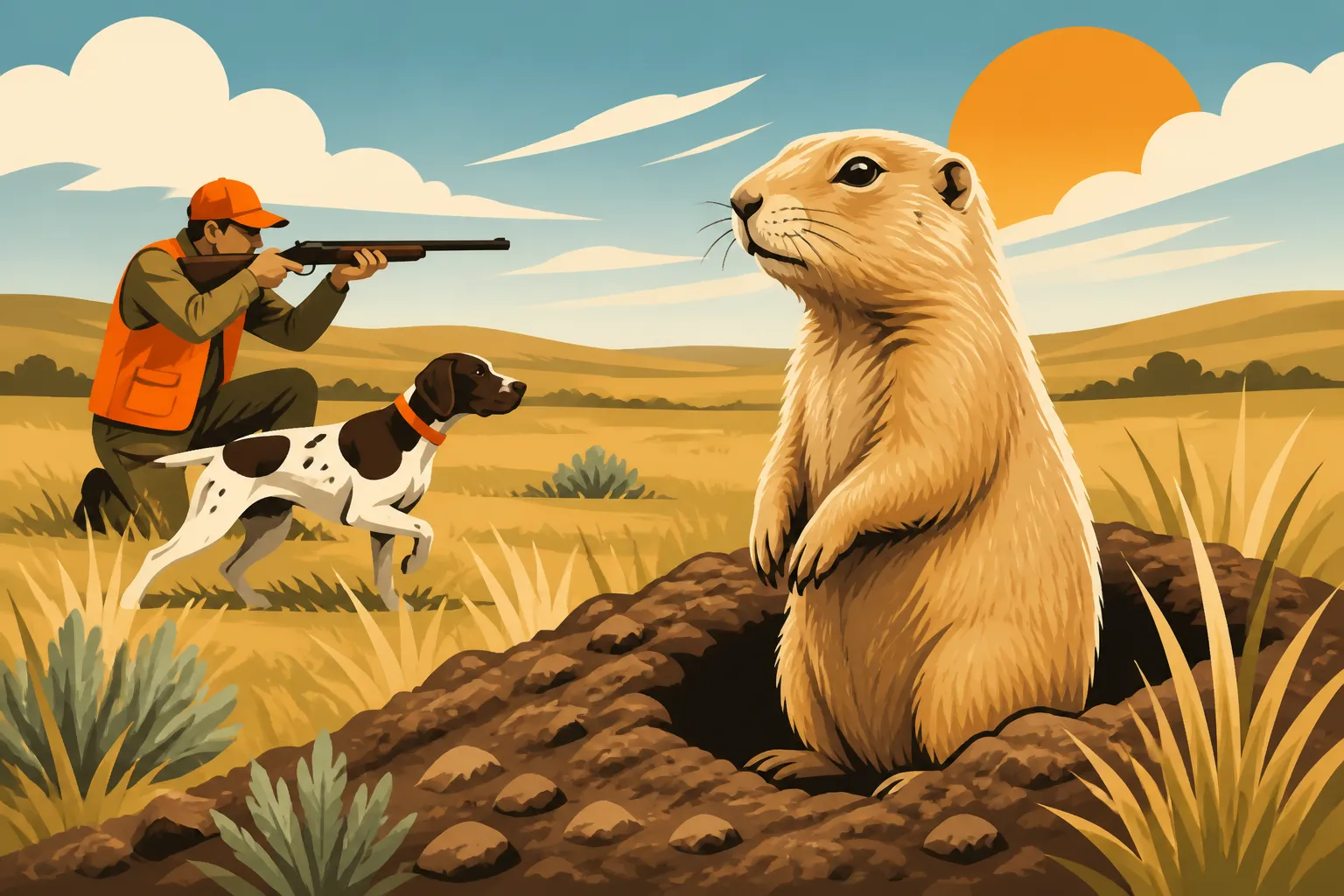
Many hunters head to Kansas with visions of giant whitetails or bustling coveys of pheasants, but there's an entirely different kind of hunting experience awaiting out on the expansive, sun-baked plains of western Kansas. If you've ever driven through that country and seen what looks like miles of disturbed earth, dotted with tiny, yipping sentinels, you've witnessed a prairie dog town in full swing. These colonies are a unique ecological feature and can offer an incredibly engaging way to hone your marksmanship, spend time outdoors, and even contribute to local land management. This guide will walk you through everything you need to know about these fascinating ecosystems and how to responsibly pursue them.
Understanding Prairie Dog Towns in Western Kansas
Prairie dog towns are much more than just holes in the ground; they are vibrant, complex communities that play a crucial role in the shortgrass prairie ecosystem. In Kansas, these communities are predominantly made up of the black-tailed prairie dog (Cynomys ludovicianus), a fascinating rodent known for its elaborate burrow systems and highly social behavior.
The Black-tailed Prairie Dog: A Keystone Species
The black-tailed prairie dog is considered a keystone species, meaning its presence (or absence) significantly impacts the entire ecosystem around it. These aren't just burrowing critters; they're ecosystem engineers. Their constant digging and tunneling aerates the soil, improves water infiltration, and brings nutrients to the surface. This activity fosters a unique mix of plants that thrive in disturbed soil, which in turn attracts different herbivores.
Prairie dogs live in large, intricate colonies that can span hundreds of acres. Within these "towns," they form family groups called "coteries," each with its own network of burrows. This communal living provides safety in numbers, as constant vigilance means many eyes are scanning for predators. Their alarm calls—a distinctive series of barks—alert the entire town to danger, sending them scurrying into their underground bunkers. Without them, the entire biodiversity of the prairie shifts dramatically, losing a critical piece of its foundation.
Historical Range and Modern Distribution in Kansas
Historically, black-tailed prairie dog towns stretched across vast swathes of the Great Plains, from Canada all the way down into Mexico. Kansas was once home to immense colonies, with records of towns covering thousands upon thousands of acres, supporting millions of animals. These were truly spectacular natural phenomena, shaping the landscape and its wildlife.
However, with the expansion of agriculture and ranching in the late 19th and 20th centuries, prairie dogs were widely considered pests. They consumed forage, their burrows created hazards for livestock, and as such, extensive eradication programs were implemented across their range. Poisoning, shooting, and habitat conversion drastically reduced their numbers and fragmented their populations. Today, in Kansas, their stronghold is primarily in the western third of the state, particularly in the arid, sparsely populated counties like Morton, Hamilton, Greeley, Wallace, Logan, Wichita, and Kearny. While still present in these areas, their expansive historical range is a distant memory, making their remaining populations all the more ecologically significant.
Why Western Kansas is Ideal Habitat
The landscape of western Kansas, characterized by its high plains and shortgrass prairie, provides the perfect conditions for black-tailed prairie dog colonies to thrive. Unlike the more fertile, timbered regions of eastern Kansas, the western part of the state offers vast, unbroken expanses of grassland. This open environment is crucial for prairie dog survival.
First, the flat, treeless terrain provides excellent visibility. Prairie dogs rely on their keen eyesight and sentinel behavior to detect predators from a distance, giving them ample time to retreat into their burrows. A rise in the ground or a lone bush often serves as a lookout post for a watchful "dog." Second, the soil composition, generally loamy and well-drained, is ideal for excavating their complex and extensive burrow systems. These burrows can extend many feet underground, providing protection from extreme weather, fires, and predators. Finally, the dominant vegetation of shortgrasses and forbs provides their primary food source. While their grazing can be intensive, it also promotes new, nutritious growth in the areas they "mow," creating a cyclical benefit for their diet. This combination of visibility, soil structure, and forage makes western Kansas the perfect remaining bastion for these unique creatures.
Finding and Identifying Prairie Dog Towns
Locating a prairie dog town, especially if you’re new to the area or trying to find new hunting grounds, requires a bit of an educated eye and some good mapping skills. It’s not always as simple as spotting them from the highway, although sometimes it is!
Reading the Landscape for Signs
When you're out scouting, or even just driving through western Kansas, start training your eye for subtle cues that hint at a prairie dog town. The most obvious sign, of course, is seeing the animals themselves, standing upright near their mounds, barking their distinct alarm calls. But even before you see them, look for patches of ground that appear unusually disturbed. Prairie dog towns often have areas of bare earth around the burrow entrances, interspersed with very short, clipped vegetation. They keep the grass around their burrows short, partly for food and partly to maintain clear lines of sight against predators.
Another key indicator is the distinct mounds of excavated dirt at the entrance of each burrow. These mounds act as elevated lookout points and also help to prevent water from flooding the tunnels. If you're walking or driving through likely habitat, listen carefully for their characteristic yip-bark. This sound carries surprisingly far on a still day across the open plains and is an unmistakable sign of an active colony. Look for networks of well-worn trails crisscrossing between the burrows, indicating frequent travel by the inhabitants.
Using Mapping Tools for Prairie Dog Locations
In today's hunting world, digital mapping tools are your best friend, and they are incredibly helpful for locating prairie dog towns. Services like GoHunt provide satellite imagery and land ownership overlays that can save you countless hours of driving around aimlessly. Start by looking for large, contiguous blocks of open rangeland or pasture in the western Kansas counties known for prairie dogs. On satellite view, active prairie dog towns often appear as lighter, more disturbed patches of ground compared to the surrounding, denser grassland. You might see the characteristic bare earth and closely cropped vegetation patterns.
Once you’ve identified potential areas on your map, cross-reference them with public land designations, or better yet, identify adjacent private landowners for whom you can seek permission. Remember, even if a map shows public land, always verify the specific access rules for that area. E-Scouting Kansas Farm Country From Home can be a great starting point, allowing you to narrow down your search before you even put boots on the ground. Once you have a few promising spots, it's time to physically scout them. Also, don't forget to check out areas like the Cimarron National Grassland Hunting as these larger federal lands often contain significant prairie dog populations and are open to public hunting.
Distinguishing Active from Abandoned Towns
Knowing the difference between an active and an abandoned prairie dog town is crucial for both hunting success and respecting the land. There's no point in setting up your shooting bench only to find you're targeting empty burrows! An active town will be bustling with life. You'll see prairie dogs popping up and down, hear their barks, and observe fresh mounds of dirt around the burrow entrances. The vegetation around these active burrows will be noticeably short and well-maintained by their grazing.
In contrast, an abandoned town will have collapsed burrows, often overgrown with taller grasses or weeds. There won't be any fresh dirt, and you certainly won't see any prairie dogs. Sometimes, you might find signs of other animals using the old burrows, like snakes or rabbits, but the tell-tale signs of prairie dog activity will be absent. It’s important to identify active towns because that's where you'll find the most target-rich environment and where your efforts can contribute to local population management if that's your goal. Old towns are just historical markers, telling a story of where they once were.
Hunting Prairie Dogs in Kansas
Hunting prairie dogs is a fantastic way to improve your long-range shooting skills and enjoy a unique outdoor experience. It's often a more relaxed, social form of hunting, but still requires adherence to ethical practices and local regulations.
Regulations and Seasons in Kansas
One of the big draws for prairie dog hunting in Kansas is the relatively simple regulatory framework. Prairie dogs are generally considered an unclassified species by the Kansas Department of Wildlife and Parks (KDWP). This means there's no closed season and no bag limit. You can hunt them year-round, which makes them an excellent option for off-season shooting practice when other game species are out of season.
However, don't mistake "unclassified" for "unregulated." You must possess a valid Kansas hunting license to hunt prairie dogs, just as you would for any other game animal. You can find information on costs and requirements through Kansas Hunting Licence and Permit Costs. If you're hunting on private land—which is where most of the best opportunities lie—you absolutely need to secure permission from the landowner beforehand. This is non-negotiable and failure to do so is trespassing. Familiarize yourself with Kansas Landowner Permission Basics to ensure you're always on the right side of the law. Public land opportunities exist, but they often require careful scouting and awareness of specific local rules. Always confirm your access before you head out.
Ethical Hunting Practices and Safety
Even though prairie dogs are not a game animal often consumed, ethical hunting practices are paramount. This means making clean, humane shots. Always know your backdrop and beyond, as bullets can travel significant distances, especially with the high-velocity calibers often used for prairie dogs. In the open plains of Kansas, a bullet can travel for miles, so be acutely aware of roads, buildings, livestock, or other hunters in the area. Safety is always the first concern.
Minimize disturbance to non-target species. While prairie dog towns are busy places, they're also home to burrowing owls, snakes, and other wildlife. Aim for clear shots at your intended target. When hunting with a group, establish clear fields of fire and communicate constantly. Eye and ear protection are a must. Regarding carcass disposal, always follow the landowner's wishes. Some prefer carcasses to be left, others may have specific instructions. It’s also wise to be mindful of the potential for disease, like plague, though it is rare. In all hunting situations, the principle of respect for wildlife, landowners, and other outdoor users should guide your actions. Always leave the area cleaner than you found it. Ignoring these principles could lead to Kansas Wildlife Violation Penalties.
Equipment and Calibers for Prairie Dogs
Prairie dog hunting is often a long-range endeavor, making precision equipment essential. A flat-shooting rifle and quality optics are your best friends. Here’s a breakdown of common equipment:
- Rifles: High-velocity, accurate rifles are preferred. Popular calibers include:
- .223 Remington: Versatile, widely available, and good for shots out to 300+ yards.
- .204 Ruger: Known for its blistering speed and flat trajectory, making it excellent for longer shots with minimal bullet drop.
- .22-250 Remington: Another high-velocity option, capable of reaching out to 400-500 yards or more.
- .17 HMR or .22 WMR: Good for closer shots (under 150 yards) with less noise, making them suitable for smaller towns or areas where noise might be a concern.
- .22LR: While possible for very close shots, generally too limited in range and wind bucking ability for typical prairie dog hunting.
- Optics: A high-magnification riflescope (e.g., 6-24x or higher) is critical for precise aiming at small targets over long distances. A quality spotting scope (20-60x) is also invaluable for spotting animals, confirming misses or hits, and observing activity across the town.
- Rests: Since you'll often be shooting from a prone or seated position, a stable shooting rest is essential. Bipods, front and rear sandbags, or a dedicated shooting bench setup will greatly improve your accuracy.
- Other Gear:
- Rangefinder: Absolutely vital for accurately judging distances, which can be deceiving in open country.
- Ammunition: Bring plenty! You'll likely shoot more rounds than you expect.
- Hydration and Sun Protection: Western Kansas can be brutally hot and sunny. Water, hats, sunscreen, and long sleeves are a must.
- Ear and Eye Protection: Always.
- Wind Flag: Small flags placed downrange can help you read the wind, which is a significant factor in open country. Remember, Reading a Kansas Wind for Waterfowl principles apply to all open country shooting!
Here's a quick comparison of common calibers for prairie dog hunting:
| Caliber | Typical Effective Range (Yards) | Key Advantage | Considerations |
|---|---|---|---|
| .22LR | 25-75 | Very low cost, minimal noise | Limited range, struggles with wind, less humane at distance |
| .17 HMR | 50-150 | Flat trajectory, low recoil | Small bullet easily affected by wind |
| .223 Remington | 100-300+ | Versatile, great accuracy | Louder, more recoil than rimfires |
| .204 Ruger | 150-400+ | Extremely flat, fast bullet | Specialized, can be harder to find ammo |
| .22-250 Rem | 200-500+ | High velocity, excellent reach | Significant muzzle blast, more expensive ammo, barrel heat |
Prairie Dog Towns: Ecosystem Impact and Management
Beyond their role as a challenging target for shooters, prairie dog towns are complex ecosystems with far-reaching impacts on the environment, often serving as critical hubs of biodiversity.
Habitat for Other Wildlife Species
Prairie dog burrows are truly a gift to the prairie. These extensive underground networks provide shelter and homes for a diverse array of other wildlife. Perhaps the most famous beneficiary is the burrowing owl, a charming diurnal raptor that often nests and roosts within abandoned or even active prairie dog tunnels. These birds rely almost entirely on prairie dog activity for their habitat.
Snakes, lizards, toads, and various insects also find refuge from predators and extreme weather within the burrows. Even larger animals, like the swift fox (an endangered species in some areas), badgers, and coyotes, utilize the burrows for denning or as sources of prey. The very existence of prairie dogs supports a rich food web, acting as a crucial food source for predators such as Kansas Predators and Furbearers, various hawks, and eagles. In fact, the endangered black-footed ferret is almost entirely dependent on prairie dogs for both food and habitat, highlighting their critical ecological role. Other game animals, like Kansas Antelope on the High Plains or deer, might even utilize the unique vegetation composition and cleared areas around the towns for grazing or travel lanes.
Challenges for Ranchers and Agriculture
Despite their ecological benefits, prairie dogs have historically—and often still do—present significant challenges for ranchers and agricultural producers. Their intensive grazing habits can consume vast amounts of forage that would otherwise be available for livestock. On a large, active town, the impact on cattle grazing capacity can be substantial, leading to economic losses for ranchers who rely on healthy pastures.
Furthermore, the countless burrow holes pose a serious hazard to livestock. A cow or horse can easily step into a burrow, resulting in a broken leg or other injury, which can be devastating for a rancher. The disturbed soil, while beneficial for certain plants, can also be seen as a nuisance or detrimental to pasture health by those trying to maintain specific forage types. This direct conflict between prairie dog populations and agricultural interests is the primary reason for historical eradication efforts and remains a core challenge in their management today. Balancing these economic concerns with the ecological importance of prairie dogs is a delicate tightrope walk for wildlife managers and landowners alike.
Conservation Efforts and Management
In light of the broader understanding of prairie dogs' ecological significance, management strategies have shifted from widespread eradication to more nuanced conservation and control efforts. The goal now is often to maintain healthy, viable prairie dog populations in suitable habitats, while also addressing and mitigating conflicts with private landowners. This often involves targeted control measures in areas where towns expand into cultivated fields or high-value grazing lands, rather than blanket poisoning campaigns.
Conservation efforts frequently focus on protecting and restoring large tracts of suitable shortgrass prairie habitat. Agencies like KDWP often work with private landowners, sometimes providing technical assistance or offering cost-share programs for land management practices that can benefit both ranching and wildlife. Regulated hunting, like the type discussed here, can also play a role as a management tool, helping to control local populations in specific areas without harming the overall species viability. It’s a complex issue, requiring collaboration between conservationists, government agencies, and the agricultural community to find sustainable solutions that respect both the ecological value of prairie dogs and the economic realities of rural Kansas.
Disclaimer
This article is for general informational purposes only and does not constitute professional advice. Laws, prices and regulations vary by location and change over time. Consult a qualified professional for guidance on your specific situation.