Elk in Morton County
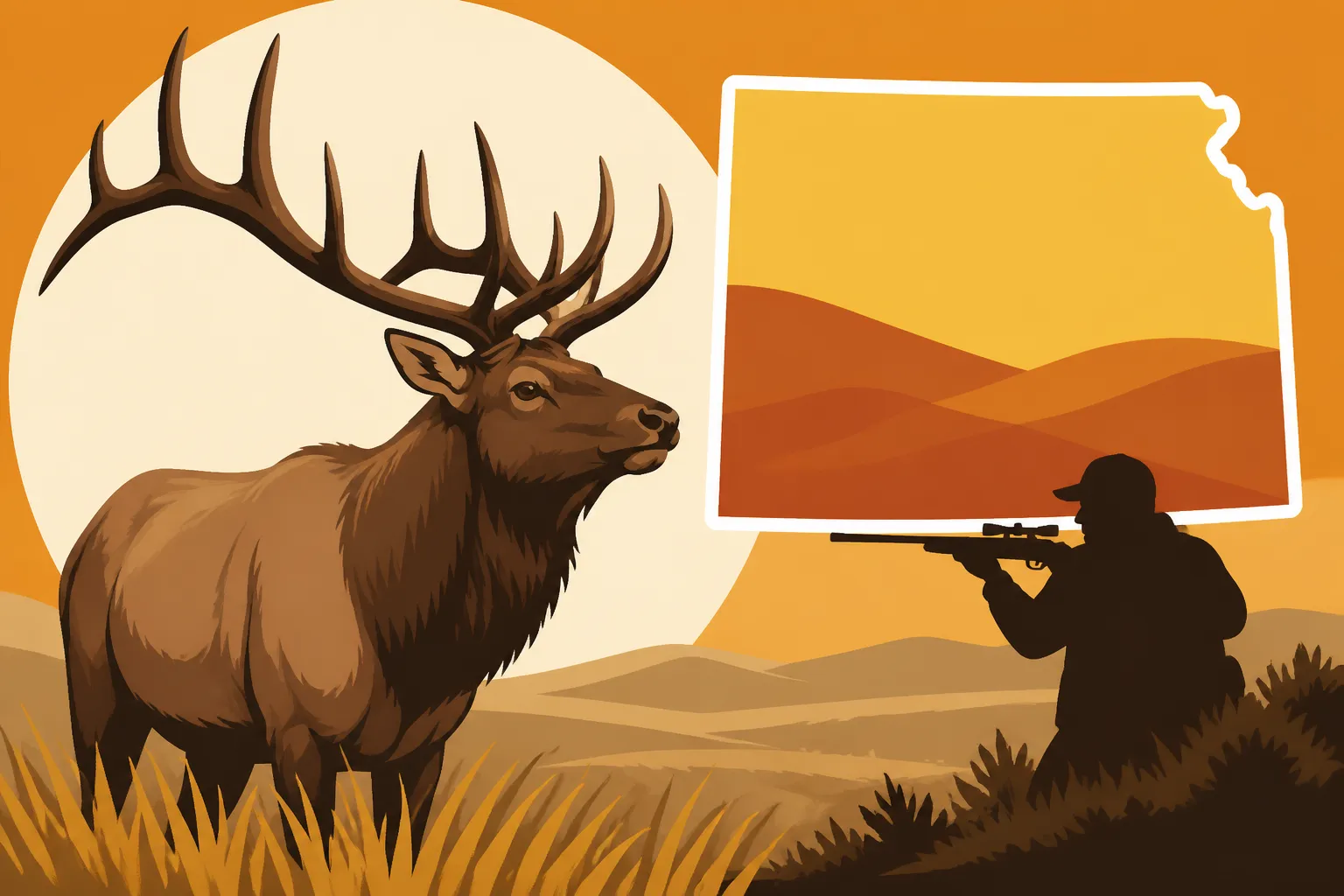
The thought of encountering an elk in the vast, open country of Kansas might sound like something out of a tall tale, especially in the far western reaches of the state. Many hunters have heard whispers of elk populations, even specific counties like Morton, and it's easy to get excited about the possibility. However, the reality of elk in Morton County, and indeed most of western Kansas, is often far more complex and fleeting than those exciting rumors suggest. This guide will meticulously explore the truth about elk in this region, setting clear expectations and helping you understand where these magnificent animals truly fit into the Kansas hunting landscape.
The Elusive Presence of Elk in Western Kansas
Kansas isn't exactly renowned for its elk herds, and for good reason. While native elk once roamed these plains, they were extirpated by the late 1800s. Any elk you hear about today are either part of a managed population, like the herd at Fort Riley, or they are transient animals, often wandering in from neighboring states. The idea of a consistent, huntable population of free-ranging elk outside of very specific circumstances is largely a misconception, especially in counties like Morton.
Historical Sightings and Transient Herds
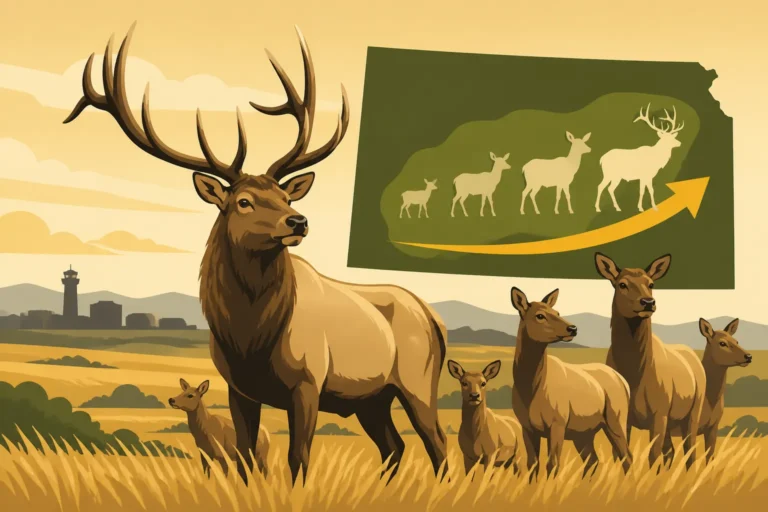
Historically, elk were a natural part of the Kansas ecosystem, thriving in the mixed-grass prairies and timbered river bottoms. As settlement pushed west, habitat loss and unregulated hunting led to their disappearance. Over the last few decades, however, sporadic sightings have become more common, particularly in the westernmost counties. These are typically not signs of an established, breeding herd taking root. Instead, they're often individual bulls, sometimes a small group of cows and calves, that have dispersed from larger herds in states like Colorado, New Mexico, or even the Oklahoma panhandle. These animals are usually on the move, exploring new territory, or pushed by hunting pressure or drought in their home ranges. They might linger for a few days or weeks if they find suitable forage and cover, but they rarely settle permanently. It’s more of a brief visit than a residency.
The key to understanding these sightings is recognizing their transient nature. These elk aren't establishing traditional migratory patterns within Kansas; they're simply passing through or temporarily seeking refuge. They often cover vast distances, making their presence unpredictable and their numbers highly unstable. For hunters hoping to pinpoint their movements, it’s like trying to track a ghost – here today, miles away tomorrow, driven by instinct and opportunity rather than a defined home range in the Kansas high plains. This ephemeral quality is what makes drawing a distinction between a "sighting" and a "population" so critical when discussing elk in Morton County.
Morton County's Unique Position
Morton County, located in the far southwest corner of Kansas, borders Colorado to the west and the Oklahoma panhandle to the south. This geographical position makes it one of the few areas in Kansas where you might hear legitimate reports of free-ranging elk. Its proximity to established elk herds in these neighboring states means that wandering individuals are more likely to cross into Morton County than, say, a county in central or eastern Kansas. The landscape here is characterized by vast stretches of agricultural land, primarily wheat, milo, and corn, interspersed with rangeland, breaks, and the occasional timbered creek bottom. This mix, while not ideal prime elk habitat in the traditional sense, can provide temporary forage and cover for a transient animal.
The terrain here is often open, making any large animal highly visible, but also exposing them to potential disturbance. The Cimarron National Grassland, a significant parcel of public land, lies partly within Morton County, offering one of the larger contiguous blocks of potential cover and less disturbed habitat for any animals venturing into the state. While it’s primarily shortgrass prairie, the draws and occasional thicker cover could offer a temporary sanctuary. Still, even with these factors, Morton County does not boast a self-sustaining, breeding elk population. Any elk present are likely lone explorers or small, non-breeding groups, making their presence a rare and exciting anomaly rather than a predictable occurrence. Hunters considering this region for any large game pursuits should also consider Mule Deer in Western Kansas, as their presence is far more common.
Understanding Elk Movements and Habitat in the High Plains
The perception of "elk habitat" often conjures images of towering mountains, dense forests, and expansive wilderness. While these are indeed classic elk environments, the Kansas high plains, including Morton County, present a very different, and much more challenging, picture for these majestic animals. Their movements here are largely dictated by instinctual needs for food, water, and cover, often against a backdrop of intensely managed agricultural lands.
Why Elk Migrate to Kansas
Elk that venture into Kansas, particularly the western counties like Morton, typically do so for a few primary reasons, all of which stem from their innate drive for survival and reproduction. First, resource seeking is a major factor. Drought conditions in eastern Colorado or the Oklahoma panhandle can push animals eastward in search of more abundant water or greener forage. The irrigated crop fields of western Kansas, while offering little in terms of traditional elk cover, can present a significant draw in terms of food, especially during dry periods. Second, dispersal by young bulls is common. As they mature, young bull elk often leave their natal herds to seek out new territories and potential breeding opportunities, pushing the boundaries of their species' typical range. This natural dispersal is a key mechanism for genetic diversity and population expansion, albeit often unsuccessful for individual elk that stray too far from established herds.
Finally, hunting pressure in neighboring states can certainly influence elk movements. During hunting seasons in Colorado or Oklahoma, pressured elk might seek refuge by crossing state lines into areas where hunting pressure is lower or non-existent. For an animal that is constantly aware of threats, a perceived safe haven, even if temporary, can be a powerful motivator. These factors, combined, create the infrequent and unpredictable phenomenon of elk sightings in places like Morton County. It's less about Kansas being a prime destination and more about external factors nudging these animals into unfamiliar territory.
What Little Habitat Morton County Offers Them
While Morton County isn't exactly prime elk country, it does offer a scattering of features that can temporarily support these transient animals. The most significant elements are the drainages and river systems, however small they may be, that cut through the plains. The Cimarron River, for instance, along with its associated tributaries and smaller creek draws, can provide crucial cover in the form of brush, cottonwoods, and other riparian vegetation. These narrow ribbons of timber and thickets offer concealment from the open plains, a place to bed down, and access to water. For a large animal like an elk, this cover is essential for feeling secure, even if it's not expansive. The Cimarron National Grassland, a substantial chunk of public acreage, provides a larger, albeit mostly treeless, area where an elk might roam with less human disturbance, particularly in the more remote sections. This area, alongside Western Kansas Plains Hunting Country at large, is more typically known for antelope and mule deer.
Beyond natural features, agricultural lands can paradoxically play a role. While not offering ideal long-term habitat, standing crops like corn or milo can provide both food and surprisingly good short-term cover for a large animal during certain times of the year. An elk can disappear into a dense cornfield with ease. However, this is usually temporary; once crops are harvested, the cover vanishes, forcing the animal to move on. CRP (Conservation Reserve Program) lands, with their tall, dense grasses, can also offer bedding cover. The challenge for elk in Morton County is the lack of connected and extensive patches of suitable habitat. They are often forced to move across large, exposed areas of private land to get from one pocket of cover to another, increasing their vulnerability and making any prolonged stay unlikely. Using tools like GoHunt can help identify these isolated pockets of cover, though finding elk specifically there is like finding a needle in a haystack.
The Reality of Hunting Elk in Kansas: A Near Impossibility in Morton County
It's natural for a hunter hearing about elk in Kansas to wonder about the hunting opportunities. The allure of harvesting such a magnificent animal, especially in a non-traditional state, is powerful. However, when it comes to free-ranging elk in Morton County, the dream is far more likely to remain just that – a dream. Kansas does have an elk hunt, but it's structured in a way that makes opportunities in areas like Morton County virtually non-existent for the vast majority of hunters.
The Permit System and Its Focus on Fort Riley
Kansas offers elk hunting, but it's a highly controlled and limited opportunity primarily centered around the managed herd at the Fort Riley military installation. This herd, which numbers in the hundreds, is managed to control population growth and provide hunting opportunities within specific boundaries. Each year, a very small number of permits are allocated through a highly competitive draw for these Fort Riley hunts. These permits are typically species-specific (bull or antlerless) and often weapon-specific (e.g., archery, muzzleloader, firearm). For anyone interested in pursuing elk in Kansas, the overwhelming focus of their efforts should be on understanding Kansas Elk Permits and Fort Riley Hunts.
Outside of Fort Riley, "any-elk" permits for free-ranging animals are exceedingly rare – often just a handful, if any, are issued statewide for areas outside the fort, and these are typically designated for units where a verified, established presence might occasionally occur, but these units rarely, if ever, include Morton County. The Kansas Department of Wildlife, Parks and Tourism (KDWP) carefully monitors these populations, and the number of permits reflects the extremely limited nature of free-ranging elk. Applying for a free-ranging elk tag in a county like Morton would be akin to winning the lottery multiple times; the odds are astronomically stacked against you, simply because there isn't a resident, huntable population to allocate permits for. You might be better off applying for Kansas Antelope Permits and Seasons if you want to hunt a large, open-country animal in the area.
Managing Expectations for Elk Hunting in Morton County
Given the extremely rare nature of free-ranging elk in Morton County and the strict permit allocation, managing your expectations is paramount. It’s important to distinguish between the occasional sighting of a transient animal and a viable hunting opportunity. While it’s certainly exciting to hear reports of an elk in the area, these sporadic appearances do not translate into huntable numbers or consistent opportunities. For all intents and purposes, pursuing elk in Morton County with the expectation of a huntable population is not realistic. A table comparing the two primary elk scenarios in Kansas helps illustrate this stark difference:
| Feature | Fort Riley Elk Hunt | Free-Ranging Elk (e.g., Morton County) |
|---|---|---|
| Population Status | Managed, established, huntable herd (hundreds of animals) | Transient, sporadic individuals; no established breeding herd |
| Permit Availability | Limited, highly competitive draw; specific permits for Fort Riley units | Extremely rare, often 0-few permits statewide, not typically designated for specific counties like Morton |
| Success Rates | Moderate to high opportunity and harvest success for drawn hunters | Virtually non-existent; success would be a monumental stroke of luck |
| Habitat | Mixed woodlands, open fields within military reservation | Primarily agricultural with isolated creek bottoms/grasslands |
| Public vs. Private Land | Primarily on military installation (requires access permit) | Mostly on private land, very limited public land access to elk |
| Effort to Locate | Guides and KDWP knowledge help focus efforts | Entirely self-reliant, relying on chance encounters and local reports |
If your primary goal is to hunt elk in Kansas, the Fort Riley draw is your only realistic avenue. For Morton County, your best bet is to enjoy the rare privilege of seeing one of these magnificent animals if you're lucky enough to encounter a transient one while pursuing other species. Rather than focusing on elk, a hunter's time in Morton County is far better spent on Public Land Deer Hunting in Kansas or Kansas Antlerless Hunts and Filling the Freezer on private land. Using scouting tools like GoHunt can help you understand public land boundaries and terrain features, which is invaluable for any hunting pursuit in western Kansas, but it won't magically reveal a hidden elk herd in Morton.
Resources for Tracking and Learning More About Kansas Elk
Even if direct hunting opportunities for elk in Morton County are nearly nonexistent, the presence of these animals is still a fascinating aspect of Kansas wildlife. Understanding their movements and contributing to their monitoring can be a rewarding experience for any wildlife enthusiast or hunter. It’s about more than just pulling a trigger; it’s about appreciating the wildness of these animals and their surprising resilience.
KDWP's Role and Reporting Sightings
The Kansas Department of Wildlife, Parks and Tourism (KDWP) plays a crucial role in monitoring all wildlife populations across the state, including transient elk. While the Fort Riley herd is well-documented and actively managed, KDWP relies heavily on public reports to track the movements of free-ranging elk. Every credible sighting reported helps the department build a clearer picture of where these animals are coming from, what routes they might be taking, and how long they might be staying. If you are fortunate enough to spot an elk in Morton County or any other non-traditional area, it is highly encouraged that you report your sighting to KDWP. Providing details such as the date, time, specific location (GPS coordinates are ideal), number of animals, and any observed behavior can be incredibly valuable data for wildlife biologists.
This reporting system isn't just about curiosity; it's about informed wildlife management. By understanding these movements, KDWP can better assess potential conflicts with landowners, monitor for disease, and, in the rare instance that a population might show signs of establishing, make informed decisions about future management strategies. Your observation, even if it feels small, contributes to a much larger effort to understand Kansas's diverse and sometimes surprising wildlife. Learning about Kansas Elk Herd History can give you even more context about these animals.
Utilizing Modern Scouting Tools
While finding a free-ranging elk in Morton County for a hunt is largely a matter of pure chance, modern mapping and e-scouting tools can still be incredibly useful for understanding the landscape where these animals might temporarily exist, or for any other hunting you plan in the region. Platforms like GoHunt offer satellite imagery, topographic maps, and public/private land ownership overlays that can help you identify potential travel corridors, isolated pockets of cover, and water sources – all features an elk would prioritize, even if only for a short stay. You can use these tools to scout for areas with thicker timber along creek draws or larger blocks of CRP that might offer temporary refuge. This kind of e-scouting is fundamental for Scouting Kansas Walk-In Tracts Before the Opener for deer or E-Scouting Kansas Farm Country From Home for any species.
Even if you aren't actively hunting elk, understanding the terrain with these tools can enhance your overall outdoor experience. If you hear reports of a local elk sighting, you can quickly pull up a map on GoHunt to visualize the reported location, analyze surrounding cover, and even estimate potential movement patterns. This data-driven approach, while not guaranteeing an elk encounter, provides a deeper appreciation for the landscape and the challenges and opportunities it presents for all wildlife. For any hunting endeavor in Kansas, having a solid grasp of land access and terrain is vital, whether you're chasing pheasants or simply hoping for a glimpse of an elusive elk. Using a Kansas Deer Unit Map in conjunction with property boundary layers is crucial for responsible hunting in areas with mixed public and private land.
Disclaimer
This article is for general informational purposes only and does not constitute professional advice. Laws, prices and regulations vary by location and change over time. Consult a qualified professional for guidance on your specific situation.