Free-Ranging Elk in Kansas
When you think about elk in Kansas, most folks immediately picture the managed herd roaming within the confines of Fort Riley, where a controlled draw offers some incredible hunting opportunities. But did you know there's another, far more elusive population of elk out there? These truly wild, free-ranging elk are a testament to nature's resilience, scattered in small, often transient groups across the vast plains and timbered river bottoms of the state. This guide will delve into the mysterious world of Kansas's free-ranging elk, exploring where they come from, why they're so rare, and what it means to encounter one of these magnificent animals far from any military base.
The Elusive Nature of Free-Ranging Elk in Kansas
Unlike many Western states where elk herds thrive and are central to the wildlife landscape, Kansas presents a unique and challenging environment for these majestic animals. The concept of "free-ranging" elk here isn't about large, established populations but rather small, often transient groups or even lone individuals. It's a truly special experience to catch a glimpse of one, precisely because they are so few and far between.
Historical Context and Modern Resurgence
Elk were once native to Kansas, roaming freely across the prairies for centuries before European settlement. However, by the late 1800s, unchecked hunting and habitat destruction led to their complete extirpation from the state. For decades, Kansas had no wild elk. The herds we see today, particularly the free-ranging ones, are primarily a result of natural expansion from neighboring states like Colorado and Oklahoma, where managed populations have grown and pushed individuals outward. Think of it like a slow, natural re-colonization, rather than a deliberate reintroduction program for these wild populations.
These animals are survivors, having navigated fences, highways, and vast agricultural landscapes to establish a foothold, however tenuous. They aren't part of any specific reintroduction; they're simply following their instincts, seeking out new territories and suitable habitats. It's a slow process, and their numbers remain incredibly low, making every sighting a significant event. While the Fort Riley herd was a deliberate management effort, these wild elk symbolize a natural comeback, showcasing the resilience of wildlife when given even the smallest opportunity. You can learn more about the history of these animals in Kansas Elk Herd History.
Where to Find These Elusive Animals
When discussing free-ranging elk in Kansas, we're talking about extremely localized and often temporary sightings. The most consistent—though still very rare—occurrences tend to be in the far western and southwestern parts of the state. Morton County, bordering Colorado, is frequently cited as a key area where these animals occasionally wander in from established herds across the state line. These are often small bachelor groups of bulls or cows with calves, trying to find new grounds. They are highly nomadic and don't typically stay put for long, constantly moving across vast distances.
Beyond Morton County, sporadic sightings have been reported along major river drainages like the Arkansas River or in expansive grassland areas that offer a modicum of cover and forage. The Cimarron National Grassland, for instance, provides a significant block of public land that could conceivably support transient elk, much like it does antelope and deer. Cimarron National Grassland Hunting offers insights into the landscape of this area. However, it's crucial to understand that these aren't areas where you can reliably go and expect to see elk. Think of it more like finding a needle in a haystack; you need immense patience, a lot of luck, and a good understanding of their potential travel corridors. Utilizing tools like GoHunt can sometimes help in identifying potential habitat types or historical sighting patterns, though specific data on truly free-ranging elk in Kansas is scarce even there due to their rarity.
Differentiating from Fort Riley Elk
It's vital to distinguish between the truly free-ranging elk and the much more well-known, managed herd at Fort Riley. The Fort Riley elk are a semi-captive, carefully managed population that resides almost entirely within the military post's boundaries. They are the result of a deliberate reintroduction program and are managed through a specific, limited draw hunt. Their numbers are monitored, and their movements are relatively predictable within their range. You can get more information on this population in Elk Numbers Around Fort Riley.
Free-ranging elk, on the other hand, are completely wild. They are not managed by the Kansas Department of Wildlife and Parks (KDWP) in the same way, nor are there dedicated hunting permits for them outside of the Fort Riley system. These animals are typically less habituated to humans, making them incredibly wary and difficult to spot. Their presence is often a surprise, a fleeting moment of wonder for those lucky enough to witness it. They aren't confined by fences or property lines in the same way, though they certainly face them. While Kansas Elk Unit Boundaries exist for managed hunting, free-ranging elk don't adhere to these maps.
To really grasp the difference, consider the table below. It highlights the key distinctions that set these two groups of Kansas elk apart:
| Feature | Free-Ranging Elk (Wild) | Fort Riley Elk (Managed) |
|---|---|---|
| Origin | Natural immigration from neighboring states | Deliberate reintroduction program for the post |
| Population Size | Very small, sporadic, transient individuals/small groups | Larger, established, and actively managed herd |
| Location | Primarily far western/southwestern Kansas (e.g., Morton Co.), other sporadic sightings | Restricted almost entirely to Fort Riley military post |
| Management | No specific management; treated as general wildlife | Actively managed herd by KDWP and Army; monitored |
| Hunting Opportunities | Extremely rare/none, usually require special circumstance or general deer tag (check regulations) | Limited draw permits issued annually; dedicated season |
| Elusiveness | Highly elusive, wary, difficult to spot | More habituated, relatively predictable within post |
Challenges and Conservation for Wild Elk Herds
The existence of free-ranging elk in Kansas is a double-edged sword: a symbol of wildness and natural comeback, but also a stark reminder of the challenges wildlife faces in a highly agricultural and populated landscape. Their survival hinges on overcoming numerous obstacles, from limited habitat to the sheer rarity of their numbers.
Low Population Numbers and Fragmentation
The most significant challenge for Kansas's free-ranging elk is simply their extremely low population density. We're not talking about hundreds or thousands of animals; it's likely just a handful of individuals or very small, isolated groups. This makes them highly vulnerable to various threats. Low numbers mean limited genetic diversity, which can weaken a population over time. If a small group is wiped out by disease, severe weather, or an accident, there's little chance for quick recovery through natural reproduction. Kansas Wildlife Disease Monitoring is always a concern for any game species.
Habitat fragmentation is another huge hurdle. Kansas is largely agricultural, dominated by crop fields, pastures, and human infrastructure. Large, contiguous blocks of suitable elk habitat—dense timber for cover, ample forage, and secure bedding areas—are scarce outside of specific river bottoms or the few remaining extensive grasslands. This forces elk to traverse open, exposed areas, increasing their risk of vehicle collisions, conflicts with landowners, and generally making it harder for them to find adequate resources year-round. Even when they find suitable pockets, these are often isolated, preventing easy movement and genetic exchange between potential sub-populations.
The Scarcity of Hunting Opportunities
If you're dreaming of hunting a free-ranging elk in Kansas, it's important to set realistic expectations: opportunities are virtually non-existent. KDWP's primary elk management and hunting program revolves almost exclusively around the Fort Riley herd, which is regulated by a specific draw system for Kansas Elk Permits and Fort Riley Hunts. These permits are incredibly difficult to obtain, even for the managed herd, let alone a truly wild animal.
While general hunting regulations in Kansas state that elk permits are required, and nonresidents cannot obtain one outside of Fort Riley, the question of free-ranging elk is a complex one. If a free-ranging elk were to wander into a deer unit, for example, it would still be illegal to harvest without an elk permit. The reality is that KDWP is highly protective of these rare, wild individuals. Their focus is on monitoring and occasional intervention if an animal becomes a nuisance or is injured, rather than offering hunting opportunities. For the overwhelming majority of hunters, pursuing free-ranging elk in Kansas simply isn't an option.
Impact on Landowners and Wildlife Management
The presence of free-ranging elk, however rare, can sometimes create challenges for landowners. A small group of elk can cause significant damage to crops, fences, or feed supplies, especially on smaller agricultural properties. This can lead to understandable frustrations for farmers and ranchers who are simply trying to make a living. KDWP is aware of these potential conflicts and works with landowners when elk cause damage, sometimes issuing special permits for removal or employing hazing tactics to move animals away.
From a wildlife management perspective, free-ranging elk represent both an exciting phenomenon and a complex challenge. KDWP typically wants to see healthy, self-sustaining wild populations, but when numbers are this low and animals are so spread out, active management is difficult. The focus shifts to monitoring sightings, educating the public, and managing human-wildlife conflicts on a case-by-case basis. They rely heavily on reports from the public, so if you happen to spot a free-ranging elk, reporting it to KDWP is a valuable contribution to their understanding of these elusive animals. Learning about Reporting a Sick Deer in Kansas gives you a good idea of how to communicate with wildlife officials.
The Experience of Encountering Free-Ranging Elk
Coming across a truly wild, free-ranging elk in Kansas isn't just a sighting; it's an experience that borders on myth for many. It's a moment that connects you deeply with the untamed spirit of the plains, reminding us that even in heavily modified landscapes, wildness persists.
A Rare and Memorable Sight
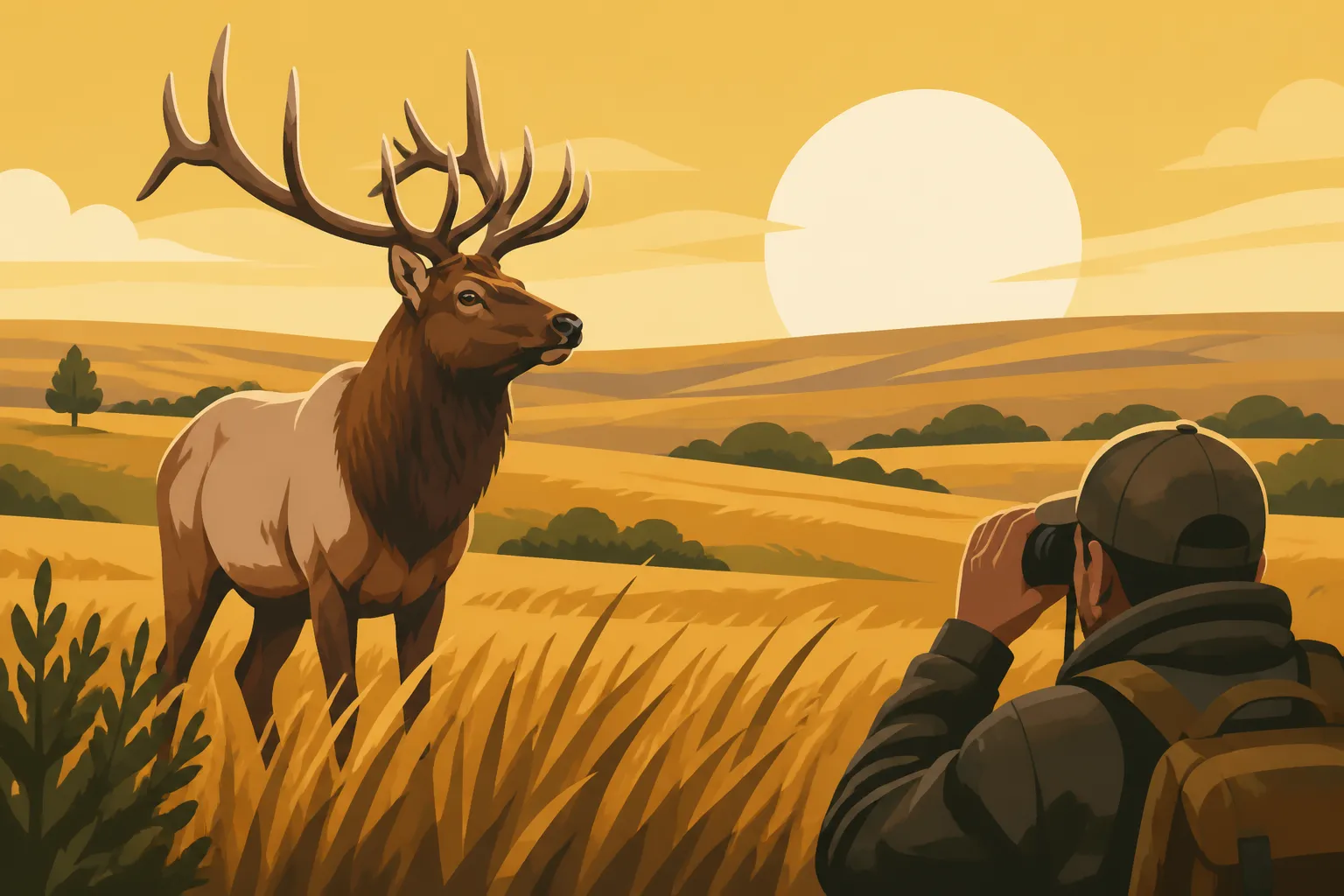
Imagine you're driving down a county road in western Kansas, scanning a distant tree line or a CRP field, when suddenly, a massive animal with a towering set of antlers steps into view. It's not a whitetail, and it's certainly not a domestic cow. That immediate rush of adrenaline, the disbelief, and then the profound appreciation for witnessing something so utterly unexpected and grand—that's the essence of a free-ranging elk encounter in Kansas. These aren't common occurrences, not by a long shot. Most dedicated Kansas outdoorsmen will go their entire lives without seeing one outside of Fort Riley.
The sheer scale of an elk, especially a mature bull, is breathtaking. Their presence commands attention, and their wildness is palpable. It's a powerful reminder of what Kansas was once like and what it could potentially become again, given enough time and suitable habitat. For those who prioritize the experience of wild places and animals, seeing a free-ranging elk is like finding a hidden treasure, a moment to be savored and remembered. It speaks to the enduring magic of the natural world, even in unexpected places.
Tips for Spotting Them (If You're Lucky)
While there's no guaranteed method for spotting free-ranging elk in Kansas, certain strategies can improve your (still very slim) odds. Your best bet is to focus on areas where they are known to occasionally roam, particularly in the westernmost counties, near the Colorado border, and around large blocks of unfragmented habitat like the Cimarron National Grassland. Reading Aerial Imagery for Bedding Cover can give you an edge by identifying potential escape cover or travel corridors in otherwise open country.
Timing is also crucial. Elk are typically most active during dawn and dusk, when they move from bedding areas to feeding grounds. Spending time glassing vast landscapes with high-quality optics during these low-light periods can increase your chances. Look for subtle signs like fresh tracks in muddy creek bottoms or disturbed vegetation, though these can be easily confused with deer sign. Think big when you're scouting: open pastures, large wheat fields, and hidden draws that offer both food and cover. GoHunt's mapping features, while not having specific elk data for these wild populations, can still be invaluable for identifying remote, low-pressure areas with diverse habitat that might attract a transient elk. Patience and persistence are your greatest allies, coupled with an understanding that success is far from guaranteed.
Contributing to Their Understanding
Given the rarity of free-ranging elk in Kansas, every confirmed sighting is valuable information for wildlife biologists and managers. If you are fortunate enough to spot one of these incredible animals, consider reporting it to the Kansas Department of Wildlife and Parks (KDWP). This isn't about giving up your secret spot; it's about contributing to the scientific understanding of these populations.
When reporting, try to gather as much detail as possible: the exact location (GPS coordinates if you have them), the date and time, the number of animals, their sex and age class (if you can tell), and any observations about their behavior or condition. Taking a photo or video, if safe and possible without disturbing the animal, can also be extremely helpful for confirmation. Your observations can help KDWP track their movements, understand potential migration corridors, and assess their overall health. This collaborative effort helps ensure that these rare, wild elk continue to have a place, however small, in the Kansas landscape. This also ties into the general principles of Kansas Hunter Education and Licensing Basics, emphasizing responsible interactions with wildlife.
Disclaimer
This article is for general informational purposes only and does not constitute professional advice. Laws, prices and regulations vary by location and change over time. Consult a qualified professional for guidance on your specific situation.