Whooping Cranes and Hunter Caution
Imagine you're out in a Kansas field, the morning sun just kissing the horizon, your heart pounding with anticipation for migrating waterfowl. You hear a distinctive call, look up, and see large, white birds. Your mind races – ducks, geese, maybe even sandhill cranes – but then a flicker of doubt hits you. What if it's something rarer, something you absolutely cannot afford to mistake? That moment of uncertainty, that fear of making a critical error, is a very real and valid concern for any ethical hunter. This guide is here to help you navigate those exact situations, ensuring you can confidently identify and avoid any accidental encounters with one of North America's most endangered and protected birds: the whooping crane.
Understanding the Whooping Crane: A Rare Sight in Kansas
For many Kansas hunters, the whooping crane feels like a ghost, a whisper in the wind. You might hunt for decades and never see one, yet their presence, however infrequent, demands our utmost respect and caution. These magnificent birds represent a conservation success story, albeit a fragile one, and their journey through our state is a testament to ongoing efforts to save them from extinction. Understanding their importance helps us appreciate why we, as hunters, must be extra vigilant.
The Endangered Status and Conservation Efforts
Whooping cranes are the tallest birds in North America, and tragically, they once teetered on the brink of extinction. At one point, their wild population plummeted to fewer than two dozen individuals. Think about that for a moment – twenty-something birds left in the entire world! Intensive conservation efforts, including captive breeding programs and reintroduction projects, have slowly brought their numbers back up. We're talking about a species that has literally been pulled back from the edge. Every single wild whooping crane is incredibly valuable to this recovery, which is why protecting them is not just a legal obligation, but a moral one for anyone who respects wildlife. Their very existence is a miracle, and we, as outdoor enthusiasts, play a crucial role in ensuring their continued survival.
Why Kansas is a Crucial Migration Corridor
Kansas sits squarely in the Central Flyway, a superhighway for migratory birds heading north to their breeding grounds or south to their wintering areas. While the largest breeding populations of whooping cranes are far to the north in places like Wood Buffalo National Park in Canada, and their main wintering grounds are along the Texas Gulf Coast, they absolutely do pass through Kansas. Sometimes they stop to rest and refuel at large wetlands, reservoirs, or even flooded agricultural fields. This means that hunters targeting waterfowl, sandhill cranes, or even upland birds near water sources in Kansas could potentially encounter them. Kansas Waterfowl Hunting Kansas Reservoirs and Playas are prime examples of areas where these magnificent birds might make a temporary stop. Knowing that these rare visitors might be present during certain times of the year, especially during the spring and fall migration, should always be in the back of a hunter's mind. Their journey is long and arduous, and Kansas offers vital rest stops along the way.
How to Identify a Whooping Crane in the Field
The biggest challenge for hunters isn't malice, it's mistaken identity. In the low light of dawn or dusk, or at a distance, it can be incredibly difficult to tell one large white bird from another. But whooping cranes have very distinct characteristics that, once you know them, can help you make a positive identification and avoid a potentially devastating mistake.
Distinguishing Features: Size, Color, and Markings
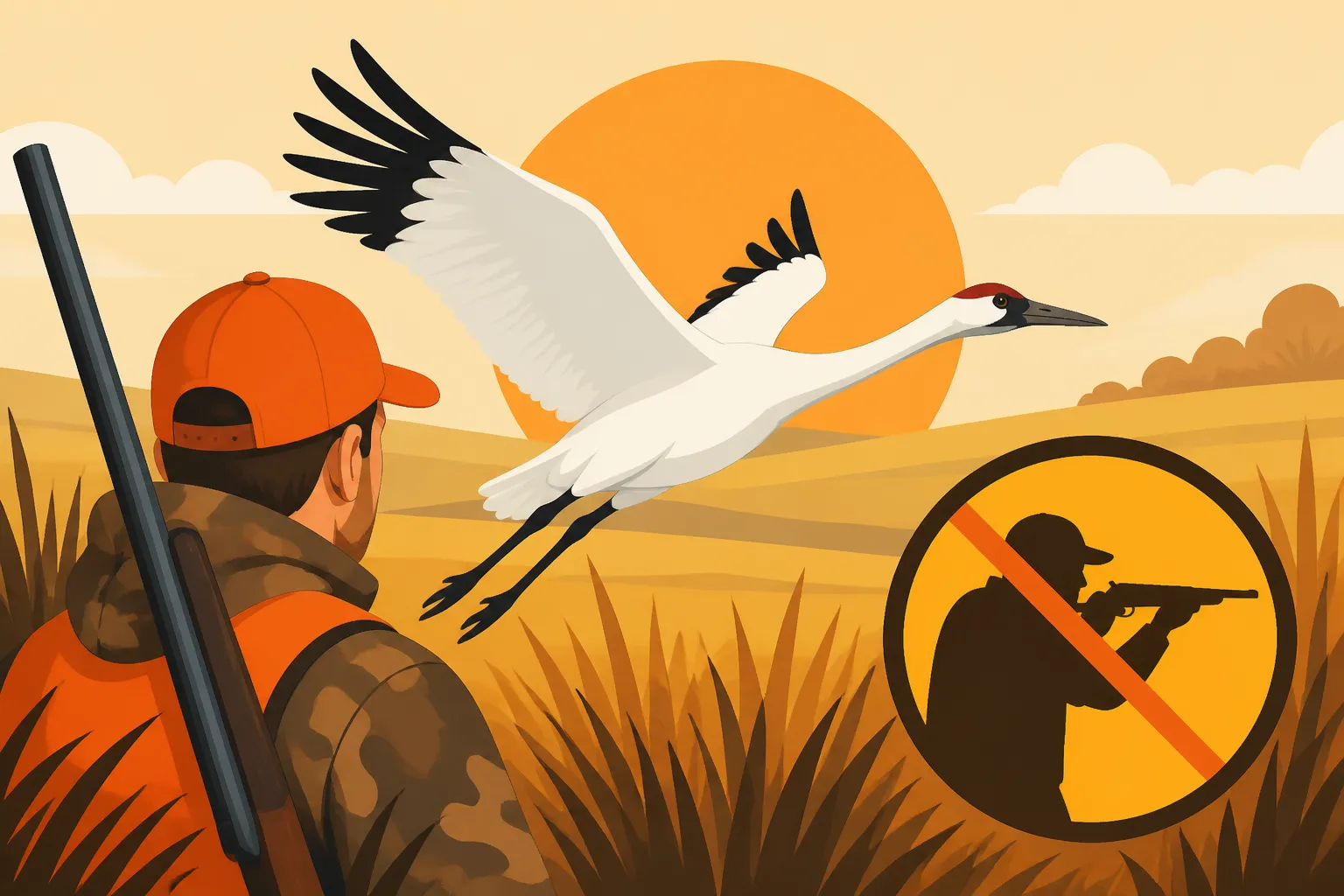
Let's break down what makes a whooping crane unmistakable. First, their size. They are HUGE, standing nearly five feet tall with an impressive wingspan that can reach seven to eight feet. When they're standing in a field, they dwarf even large geese or sandhill cranes. Their body plumage is almost entirely pure white, which is a key indicator. Look for that stark, bright white against the landscape. Unlike most other large white birds, whooping cranes have black primary feathers on their wingtips, which are very noticeable in flight. Imagine a white bird with jet-black "fingertips" at the end of its wings. On their head, they have a distinctive red crown and a small patch of black feathers on their face, though this can be hard to see at a distance. Their legs are long and black, and their bill is dark. These are not subtle birds if you know what you're looking for.
Flight Patterns and Vocalizations
In flight, whooping cranes are majestic. They fly with their long necks and long legs fully extended, often in V-formations or straight lines, much like geese or sandhill cranes. However, their sheer size and the distinct black wingtips mentioned earlier are key identifiers. Their wingbeats are powerful and deliberate. Their vocalizations are also unique. They produce a loud, bugle-like call that sounds somewhat like "ker-loo ker-lee-loo," which can be heard over long distances. It's a deep, resonant sound, quite different from the rattling call of a sandhill crane or the honk of a goose. Learning to recognize this call, perhaps by listening to recordings online before your hunt, can be a crucial tool in your identification arsenal. Knowing the Kansas Duck Migration Timing and other bird movements can also help you predict what you might encounter.
Differentiating From Sandhill Cranes and Other Large Birds
This is where many hunters face a genuine challenge. Sandhill cranes are also large, often gray-bodied birds that migrate through Kansas in huge numbers and are a legal game bird. They are frequently confused with whooping cranes. Here's how to tell them apart:
| Feature | Whooping Crane | Sandhill Crane | Snow Goose | White Pelican |
|---|---|---|---|---|
| Size | Very large (5 ft tall, 7-8 ft wingspan) | Large (3-4 ft tall, 5-6 ft wingspan) | Medium-large (2.5 ft tall, 5.5 ft wingspan) | Very large (4-5 ft tall, 8-10 ft wingspan) |
| Body Color | Pure white | Gray/Brownish-gray | White (adults), dusky/grayish (juveniles) | Pure white |
| Wingtips | Black primary feathers (prominent in flight) | Gray/Brownish (no black wingtips) | Black primary feathers (less prominent than crane) | Black secondary feathers (prominent in flight) |
| Head | Red crown, small black facial patch, dark bill | Red patch on forehead, yellowish bill | Pink bill with "grinning patch," black eyes | Large yellow/orange pouch, long bill |
| Legs | Long, black | Long, black | Pinkish-red | Short, orange/yellow |
| Flight | Neck and legs extended, deliberate wingbeats | Neck and legs extended, deliberate wingbeats | Neck shorter, rapid wingbeats | Soaring, neck tucked, slow, powerful wingbeats |
| Vocalization | Loud, bugle-like "ker-loo ker-lee-loo" | Rattling "gar-oo-oo" | High-pitched honks or yelps | Generally silent, occasional grunts |
| Habitat (Kansas) | Wetlands, shallow water, agricultural fields | Wetlands, grasslands, agricultural fields | Agricultural fields, open water | Large open water, rivers, reservoirs |
Pay close attention to the pure white body and the black wingtips of the whooping crane. Snow geese are also white with black wingtips, but they are smaller, have a shorter neck, and a different bill structure (pink with a "grinning patch"). White pelicans are huge and white with black wingtips, but they have enormous bills with a pouch and often fly with their necks tucked, soaring more than flapping. The key is to look for that unique combination of characteristics. If you're struggling to make a positive ID, it's always better to err on the side of caution.
The Serious Consequences of Mistaken Identity
This isn't just about a potential fine; it's about making a mistake that could have a lasting negative impact on a species that has fought so hard to survive. The legal ramifications for harming a whooping crane are severe, reflecting their highly protected status. As hunters, we have a responsibility to know the law and abide by it.
Federal and State Laws Protecting Whooping Cranes
Whooping cranes are protected under both federal and state laws, making any take, possession, or harassment of these birds illegal. Federally, they are listed as an endangered species under the Endangered Species Act. This is one of the strongest conservation laws in the nation, and violating it carries very stiff penalties. In Kansas, the Department of Wildlife and Parks also classifies whooping cranes as an endangered species, providing additional layers of protection. These laws aren't designed to make hunting difficult; they are designed to prevent the accidental or intentional harm of a critically vulnerable species. Ignorance of the law is never an excuse, especially when the species is as well-publicized as the whooping crane. It's vital for hunters to review the Kansas Regulation Summary Release Date annually to stay current.
Penalties and Ethical Responsibilities
The penalties for shooting a whooping crane are far-reaching and can be devastating for an individual. They can include significant fines, potentially tens of thousands of dollars, federal prison time, and the permanent loss of hunting privileges across state lines. Beyond the legal consequences, there's the profound ethical breach. As hunters, we pride ourselves on being conservationists, on understanding and respecting the wildlife we pursue. Accidentally shooting a whooping crane goes against the very core of those ethics. It damages the reputation of all hunters and undermines the conservation efforts that we collectively support. The ethical responsibility extends to ensuring you have a positive identification before you even think about raising your firearm or bow. No bird is worth the risk of harming such a rare and iconic species. Kansas Wildlife Violation Penalties are no joke, and they exist for a reason.
Reporting Sightings or Incidents
If you are fortunate enough to spot a whooping crane, or God forbid, you witness an accidental shooting or find an injured or deceased crane, it is absolutely critical to report it immediately. Do not hesitate. Contact the Kansas Department of Wildlife and Parks (KDWP) or your local game warden. Provide as much detail as possible: the exact location, time, number of birds, and any other relevant observations. If you find an injured bird, do not attempt to help it yourself unless instructed by KDWP; these are wild animals and can be dangerous, plus you could inadvertently cause more harm. Prompt reporting can be vital for the bird's survival, for law enforcement, and for ongoing research into their migration patterns and health. This active participation in reporting is part of our shared responsibility as stewards of the land and its wildlife. If you suspect poaching or any illegal activity, remember to Reporting Poaching in Kansas immediately.
Best Practices for Hunters in Whooping Crane Territory
So, how do we, as responsible hunters, navigate areas where whooping cranes might be present? It comes down to preparation, vigilance in the field, and a commitment to positive identification before taking any shot. These practices aren't just about avoiding trouble; they're about demonstrating the highest standards of ethical hunting.
Pre-Hunt Preparation and Awareness
Before you even step foot in the field, do your homework. Check the KDWP website for any advisories regarding whooping crane sightings in your hunting unit or area. Utilize mapping and scouting tools like GoHunt, which can help you identify large wetland complexes, federal refuges, or expansive agricultural fields that might attract migrating cranes. These tools are invaluable for understanding the terrain and potential wildlife patterns, even if they don't explicitly mark crane sightings. Familiarize yourself with the migration timing for sandhill cranes and waterfowl, and understand that whooping cranes might be passing through during those same windows. Knowing the Kansas Waterfowl Season Zones will give you an idea of when to be most alert. Talk to other hunters, listen to local reports, and always keep an eye on environmental factors like recent rains that might create temporary water sources. The more you know before you go, the better equipped you'll be.
Field Deciding: "When in Doubt, Don't Shoot"
This phrase should be etched into every hunter's mind, especially when dealing with large white birds. In the field, lighting conditions can be tricky, distance can be deceiving, and adrenaline can cloud judgment. If you are even a tiny bit unsure of what you're seeing, do not take the shot. It's far better to let a legal bird fly away than to make a mistake that could cost you dearly and harm a protected species. Use your binoculars or spotting scope, wait for better light, and observe the bird's behavior, size, and markings carefully. Pay particular attention to those black wingtips and the pure white body. If you can't clearly identify it as a legal game bird, keep your firearm shouldered and your finger off the trigger. This is not a time for "close enough." Your hunting experience and reputation depend on this critical decision.
Using Technology for Identification and Location
Modern technology offers incredible advantages for today's hunter, beyond just finding your way back to the truck. While no app will identify a bird for you in real-time with perfect accuracy, tools like GoHunt can be incredibly helpful for pre-scouting and in-field navigation. You can use GoHunt's mapping features to mark potential roosting or feeding areas that might attract various bird species, including cranes. This helps you understand sensitive zones and plan your approach and setup accordingly. Furthermore, many hunters use their smartphones to quickly pull up images of whooping cranes and sandhill cranes for on-the-spot comparison if they have a momentary lapse in memory. Take photos or videos (from a safe, legal distance, of course) for later review or to send to KDWP if you need to report a sighting. Always ensure your device is charged and protected from the elements, as it can be a valuable aid in exercising caution and making informed decisions in the field. Having a solid understanding of Kansas Hunter Education and Licensing Basics also means understanding how to use all available resources responsibly.
Disclaimer
This article is for general informational purposes only and does not constitute professional advice. Laws, prices and regulations vary by location and change over time. Consult a qualified professional for guidance on your specific situation.