Pomona Wildlife Area Access
Navigating public hunting ground in Kansas can sometimes feel like solving a complex puzzle, especially when you're trying to figure out the best way to access a specific area and what you can expect to find there. Many hunters feel the frustration of pulling up to a promising tract only to realize they've missed a key access point or misunderstood a crucial regulation. This guide aims to clear up some of that confusion by focusing specifically on the Pomona Wildlife Area, helping you understand how to access it, what species you can pursue, and how to make the most of your time on this fantastic public land resource.
Understanding Pomona Wildlife Area's Lay of the Land
The Pomona Wildlife Area is a real gem for Kansas hunters, offering a diverse landscape that supports a variety of game species. It's not just one big block of land, but rather a collection of interconnected tracts managed by the Kansas Department of Wildlife and Parks (KDWP) primarily for wildlife habitat and public recreation. The area surrounds Pomona Lake, a U.S. Army Corps of Engineers flood control reservoir, which significantly influences the types of habitat available and, consequently, the wildlife found there.
For hunters looking to explore new public ground, understanding the general layout is the first step. Pomona isn't just timber; it's a dynamic mix that changes with elevation, proximity to the lake, and past land use. You'll find everything from dense river bottom timber to open grasslands, and understanding these nuances will greatly enhance your hunting strategy. This multi-faceted environment means you can pivot your hunting approach based on species, weather, and time of year, making it a truly versatile destination.
Geographical Overview and Key Features
Pomona Wildlife Area is situated in east-central Kansas, primarily in Osage County, with portions extending into Shawnee County. The core of the area wraps around Pomona Lake, which dictates much of the topography and vegetation. Along the lake's edges, you'll encounter numerous coves and fingers of water, leading into drainages that often feature mature timber. Further from the lake, the terrain transitions into more rolling uplands. These uplands are typically a mosaic of native grasses, cool-season grasses, and agricultural fields (often managed through cooperative agreements with local farmers).
The creeks and small rivers feeding into Pomona Lake, like the Dragoon Creek, create natural travel corridors and provide excellent cover. These riparian zones are often choked with mature hardwoods like oaks, walnuts, and hackberry, mixed with dense underbrush. These areas are critical for deer and turkey, offering both food and sanctuary. You might also find old farmsteads or remnants of past agricultural activity that create subtle changes in the landscape, leading to unique micro-habitats. It’s a good idea to bring detailed maps, perhaps from a service like onX Hunt, to really grasp these finer points before you even step foot on the property.
Habitat Types and What They Offer Hunters
The diverse habitat at Pomona Wildlife Area is one of its biggest draws. You have several distinct types, each appealing to different game species:
- Timber and Riparian Corridors: These areas, particularly along Dragoon Creek and the myriad smaller drainages feeding the lake, are prime for Kansas Whitetail Deer and Why They Grow Big and wild turkeys. The mature trees provide mast crops (acorns, walnuts) for food, while the thick understory offers excellent bedding and thermal cover. These wooded strips act as highways for deer movement, especially during the rut. Hunters often focus on pinch points, creek crossings, and areas where timber transitions into open fields.
- Grasslands and Old Fields: Further from the immediate lake shore, you'll find extensive areas of native tallgrass prairie, managed cool-season grass plots, and abandoned agricultural fields. These spots are fantastic for Upland Bird Hunting Kansas Grass and Milo Edges, specifically pheasants and bobwhite quail. The mix of grasses provides nesting cover and foraging opportunities, while brushy draws and plum thickets within these areas serve as crucial escape cover and thermal protection for upland birds. These areas are also important bedding locations for deer, particularly during archery season when crops are still standing.
- Agricultural Land: Interspersed throughout the wildlife area are active agricultural fields, often planted with corn, soybeans, milo, or winter wheat. These fields, managed in cooperation with local farmers, are vital food sources for deer, turkeys, and upland birds, especially during the colder months. During the early archery season, standing corn can be an incredible draw for deer, offering both food and sanctuary. As the season progresses and crops are harvested, the waste grain becomes a crucial late-season food source.
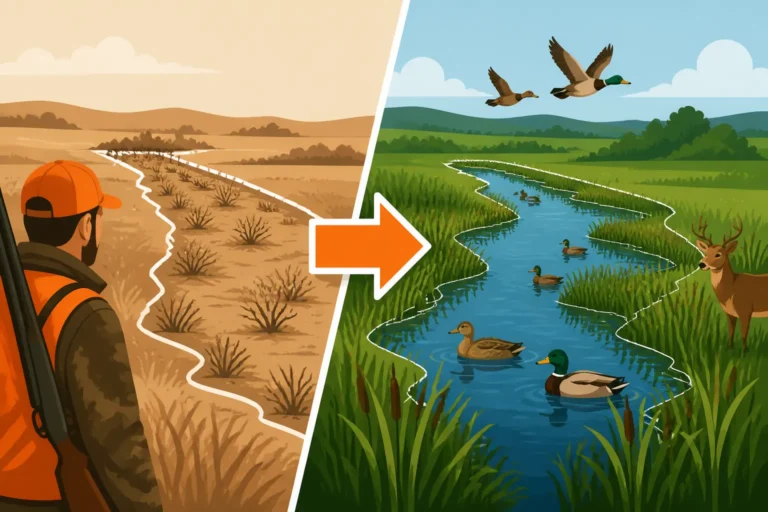
- Wetlands and Lake Shoreline: Given its proximity to Pomona Lake, there are numerous wetlands, shallow water areas, and shoreline habitats that attract waterfowl. Hunters often find ducks and geese utilizing the lake itself, as well as smaller ponds and flooded timber areas within the wildlife area. Understanding Kansas Waterfowl on the Central Flyway can give you an edge, as migrations bring a variety of species through the region. Early season, these areas might also hold doves, offering additional opportunities.
Understanding this mosaic of habitats allows a hunter to truly tailor their approach. A morning spent still-hunting timber for deer could easily transition into an afternoon walk-up hunt for pheasants in a nearby grass field, offering a diverse and exciting hunting experience.
Navigating Access Points and Regulations
Accessing public land like Pomona Wildlife Area requires a little homework, but it’s entirely doable. Kansas is generally very hunter-friendly, but specific rules exist for managed areas to ensure safety, fair chase, and sustainable wildlife populations. Knowing where you can park, what permits you need, and what activities are allowed will save you a lot of headaches and ensure a legal, enjoyable hunt.
A common pitfall is assuming all land within the visible boundary of a wildlife area is open to all activities. This isn't always the case. Some sections might be refuges, others might have specific weapon restrictions, and parking is almost always confined to designated areas. Planning your approach using up-to-date maps is crucial, and it’s always wise to check the KDWP website for the most current regulations specific to Pomona.
Public Access Points and Parking Considerations
Pomona Wildlife Area has numerous designated public access points and parking areas, which are typically marked with KDWP signage. These can range from large gravel lots to smaller pull-offs along county roads. It’s absolutely critical to only park in these designated areas. Parking on private property, blocking gates, or parking on unapproved road shoulders can lead to trespassing violations or vehicle towing.
When planning your hunt, especially during peak seasons like the firearm deer season, arrive early. Parking spots can fill up quickly, particularly near prime hunting spots or easy access points. Using an app like onX Hunt can show you these designated parking areas, often with satellite imagery that reveals trails leading from them into the hunting ground. Some access points might be boat ramps, which are great for accessing lake-side areas but may not have direct foot access to upland habitats.
It's also worth noting that some parts of the wildlife area are managed by the U.S. Army Corps of Engineers, while others are directly KDWP property. While hunting rules are generally consistent, knowing the managing agency can sometimes help with understanding specific access quirks, though KDWP usually consolidates these rules. Always look for official signage at the entry points of specific tracts; these signs provide vital information about current regulations, open seasons, and any temporary closures.
Permitted Activities and General Rules
Hunting at Pomona Wildlife Area is generally permitted during statewide seasons for specific game animals, but with some key caveats and additional regulations that hunters must understand. Always consult the current Kansas Hunting and Trapping Regulations Summary, as rules can change annually.
Here’s a general overview of common rules you'll encounter:
- Hunting Licenses and Permits: You must possess all required state hunting licenses and species-specific permits (e.g., deer permits, turkey permits, HIP registration for migratory birds) for the species you are pursuing. For deer, your permit must be valid for the unit Pomona Wildlife Area is located within (Units 11 and 14 are relevant for parts of Pomona). Check out Kansas Hunting Licence and Permit Costs for more details on what you'll need.
- Weapons and Ammunition: Legal weapons generally follow statewide regulations for each season (archery, muzzleloader, firearm). However, some specific areas within Pomona might have additional restrictions, such as "archery-only" zones or limits on firearm types. Always double-check signs at the specific entrance you use.
- Blinds and Stands: Portable stands and blinds are typically allowed, but they must be removed daily unless specific regulations for that area state otherwise. Screw-in steps or permanent stands are almost universally prohibited on public land to prevent damage to trees and ensure fair access. Remember to practice Hanging Stands on Public Land Without Getting Burned to avoid issues.
- Vehicles and ATVs: Vehicle access is generally restricted to designated roads and parking areas. Off-road vehicle use, including ATVs, is almost always prohibited unless explicitly permitted for game retrieval on specific tracts (which is rare). Walking or using non-motorized means of transport (like game carts) is the norm once you leave the parking lot.
- Camping: Camping may be permitted in designated areas, often managed by the Corps of Engineers near Pomona Lake, but it is typically not allowed directly within the wildlife area hunting units themselves. Check with the Corps of Engineers or KDWP for specific camping regulations.
- Leaving No Trace: As with all public land, hunters are expected to leave no trace. Pack out all trash, including spent shell casings. Do not litter, vandalize property, or disturb non-game wildlife. This ethic ensures that these resources remain available and enjoyable for everyone.
- Safety: Hunter orange requirements during firearm seasons must be strictly followed. Always be aware of other users, including hikers, birdwatchers, and other hunters. Safety is paramount, especially on multi-use public land.
This table provides a quick reference for general hunting rules at Pomona Wildlife Area:
| Rule Category | General Guideline | Important Exception/Detail |
|---|---|---|
| Licenses/Permits | Statewide hunting license, valid permits for species pursued (e.g., deer, turkey). | HIP registration for migratory birds. |
| Weapon Choice | Follows statewide season regulations (archery, muzzleloader, firearm). | Specific zones may be archery-only; check local signage. |
| Stands/Blinds | Portable stands/blinds allowed; must be removed daily. | No screw-in steps, permanent stands, or damage to vegetation. |
| Vehicle Access | Restricted to designated roads and parking areas. | No off-road vehicle use (ATVs, dirt bikes) in hunting areas. |
| Camping | Generally not allowed within hunting units; check designated areas near lake. | Corps of Engineers managed campgrounds may be available nearby. |
| Trash/Litter | Pack it in, pack it out. Leave no trace. | Includes spent casings, food wrappers, target debris. |
| Hunter Orange | Required during all firearm seasons for deer. | Specific requirements vary by season/weapon; consult regulations summary. |
| Baiting | Prohibited on all public lands, including Pomona Wildlife Area. | Attracting game with feed, mineral, or bait is illegal. |
Species Specific Hunting Opportunities at Pomona
Pomona Wildlife Area truly shines in the diversity of its hunting opportunities. From the thrill of deer hunting in the timber to the fast-paced action of chasing upland birds, there's something for almost every hunter. Knowing which species thrive in which habitats, and how to best approach them, is key to success on this public ground.
It's tempting to try and hunt everything at once, but focusing on one or two species per outing, or at least per general area within Pomona, will usually yield better results. The techniques for still-hunting a timbered draw for a whitetail are vastly different from working a grassy field with a shotgun for pheasants.
Whitetail Deer Hunting Strategies
Whitetail deer are undoubtedly the most popular game animal at Pomona Wildlife Area. The mix of mature timber, brushy draws, and agricultural fields provides ideal conditions for healthy deer populations. Success here often comes down to scouting, understanding deer movement, and adapting to pressure.
- Early Season (Archery): During the September Kansas Archery Deer Season Dates, focus on food sources. Deer will be heavily reliant on standing crops (corn, beans), alfalfa, and early mast crops if available. Look for trails leading from dense bedding cover (thick timber or CRP grasslands) to these food sources. Setting up near water sources can also be productive, especially during warm early-season weather. Early-Season Bowhunting Over Water can be a real game-changer.
- Pre-Rut and Rut (Archery/Muzzleloader): Late October and November are prime for deer activity. The pre-rut sees bucks beginning to cruise, scent-checking scrapes and rubs. The peak rut in mid-November is all about does. Focus on traditional travel corridors, creek bottoms, and timber edges where bucks will be searching. Using calls like rattling antlers or a grunt tube can be effective, particularly on those cruising bucks. Rattling and Grunting During the Kansas Rut requires patience but can produce results.
- Firearm Season: The December firearm season brings a different dynamic. Deer are often more pressured, and hunting tends to be more about finding secure bedding cover and ambushing deer as they move between these areas and late-season food sources (waste grain, winter wheat). Small timber blocks within or adjacent to harvested fields can be excellent. Consider drives on smaller woodlots if hunting with a group, focusing on funneling deer to standers.
- Late Season (Archery/Extended Antlerless): Post-firearm season, deer often revert to nocturnal patterns and heavily utilize remaining food sources. Waste grain, late-dropping acorns, and any winter greens become crucial. Hunting during cold fronts can be very effective, as deer need to feed more. Late-Season Food Source Hunting is the key here. Also, consider the Kansas Antlerless Hunts and Filling the Freezer opportunities, which are often less pressured and a great way to put meat in the freezer.
Remember, public land deer often adapt to pressure quickly. Look for overlooked pockets of cover, steep creek banks, or dense cedar thickets that other hunters might avoid. Scouting Kansas River Bottoms and Creek Draws can reveal hidden gems.
Upland Bird and Waterfowl Pursuits
Pomona Wildlife Area is also a fantastic destination for upland bird hunters and can offer good waterfowl opportunities.
- Pheasants and Quail: The diverse grasslands, old field habitats, and brushy edges at Pomona make it excellent for pursuing Kansas Ring-Necked Pheasants and Bobwhite Quail Across Kansas.
- Pheasants: Look for tall grass, especially switchgrass or native prairie, interspersed with agricultural fields. They often hold tight in dense cover, so walking them up is a common tactic. Focus on edges where different habitat types meet, like a grass field bordering a milo stubble field or a fencerow. Knowing Working Pheasant Fields Without a Dog can be useful if you're hunting solo.
- Quail: Quail love edge habitat – plum thickets, brushy draws, fencerows, and the transition areas between timber and grass. They are typically found in coveys, and when flushed, will scatter into nearby cover. Hunting with a good bird dog is ideal, but careful scouting for sign and understanding their preferred cover can lead to success. Quail Coveys in Plum Thickets are a classic sight at Pomona.
- Seasons: Both Kansas Pheasant Season Dates and Kansas Quail Season Dates generally run from early November through January, providing ample opportunity.
- Waterfowl: Given its proximity to Pomona Lake, the wildlife area can be a hotspot for ducks and geese, especially during migration.
- Ducks: Look for flooded timber, shallow wetland impoundments, and the smaller pockets of water away from the main lake body. Early season, teal and wood ducks might be prevalent. Later, mallards, gadwalls, and other dabblers will use these areas. Understanding Decoying Ducks on a Kansas Reservoir can be useful, though specific regulations might restrict decoy spreads or permanent blinds on certain parts of the area.
- Geese: Canada geese often utilize the larger lake body for resting and will fly out to feed in nearby agricultural fields (including those within the wildlife area). Field hunting can be productive, especially for Field Hunting Geese in Stubble.
- Timing: Waterfowl hunting success is highly dependent on migration patterns and weather. Cold fronts pushing birds south typically improve hunting. Always check the current Kansas Waterfowl Season Zones for specific dates and bag limits.
Remember, when pursuing upland birds or waterfowl, wear appropriate blaze orange for safety, especially during overlapping firearm deer seasons.
Utilizing Technology for a Better Hunt
In today's hunting world, technology can be your best friend, especially when navigating large, diverse public lands like Pomona Wildlife Area. Gone are the days of relying solely on paper maps, though a physical map is still a great backup. Digital tools can provide incredible insights into terrain, property lines, and even real-time hunter pressure, giving you a significant edge.
The beauty of modern hunting technology is its ability to centralize information. Instead of juggling multiple maps, regulation pamphlets, and mental notes, you can have a powerful, interactive tool right in your pocket. This efficiency translates to more informed decisions in the field, better safety, and ultimately, more enjoyable and productive hunts.
Digital Mapping Tools for Pomona
Digital mapping applications have revolutionized how hunters scout and navigate public land. Services like onX Hunt are invaluable for areas like Pomona.
- Satellite and Topographic Views: onX Hunt provides detailed satellite imagery that helps you identify different habitat types (timber, grass, crops), creek beds, and potential funnels. The topographic layer is crucial for understanding elevation changes, even subtle ones in relatively flat Kansas, which can influence deer movement. You can mark potential stand locations, bedding areas, and water sources before you even leave home.
- Public/Private Land Boundaries: This is arguably the most important feature for public land hunting. onX Hunt clearly delineates public land (like Pomona Wildlife Area) from surrounding private parcels. This ensures you stay on legal ground and avoid accidental trespassing, which is a major concern when Hunting Kansas Walk-In Land Without Burning It Out. It also shows Walk-In Hunting Access (WIHA) properties, although Pomona is a KDWP-managed area.
- GPS Tracking and Waypoints: In the field, the GPS functionality allows you to track your movement, mark points of interest (scrapes, rubs, game sightings), and navigate confidently, even in dense cover or low light. You can find your way back to your vehicle or a stand with ease. This is particularly useful when Leaving No Trace on Walk-In Ground.
- Offline Maps: Crucially, onX Hunt allows you to download maps for offline use, meaning you won't lose functionality even in areas with no cell service – a common occurrence in many rural Kansas hunting spots.
- Other Features: Many apps also offer parcel ownership information, historical fire data, and various overlays that can further inform your scouting and hunting strategy. For understanding the broader landscape and planning trips, these tools are indispensable.
Using these tools doesn't replace boots-on-the-ground scouting, but it certainly makes it more efficient and effective. You can arrive at Pomona with a strong understanding of the terrain and a game plan already in mind.
Staying Informed with Current Regulations
Beyond mapping, digital platforms and official websites are your best sources for current regulations, season dates, and any special restrictions specific to Pomona Wildlife Area.
- KDWP Website and Hunting Atlas: The Kansas Department of Wildlife and Parks (KDWP) website is the official source for all regulations, season dates, and information about public lands. They often have specific pages or brochures for individual wildlife areas. The Kansas Online Hunting Atlas is an interactive map that shows all public hunting lands, including Pomona, and often links to area-specific rules.
- GoHunt: While GoHunt is often more focused on western big game draws, it does provide comprehensive state-by-state information on regulations, tag applications, and often has dedicated sections for each state. Hunters can use platforms like GoHunt to stay updated on critical deadlines and any changes in Kansas hunting laws. While it may not have minute-by-minute updates for every small regulation change, it provides an excellent overview and links to official KDWP resources.
- Check-In Systems (iWIHA): While Pomona Wildlife Area is a traditional KDWP Wildlife Area, it's worth noting that some public access properties in Kansas operate under the iWIHA (internet Walk-In Hunting Access) system, which requires hunters to check in and out daily via a mobile app or website. While Pomona typically does not use this system for its main tracts, always check the KDWP Hunting Atlas for any specific tract you intend to hunt. This system helps manage hunter density and can be important for ensuring access on certain properties.
- Seasonal Updates: Pay close attention to any press releases or news updates from KDWP. Sometimes, emergency season changes or specific area closures (e.g., due to flooding, high fire danger, or management activities) are announced. Subscribing to KDWP newsletters or following their social media can help you stay current.
Being well-informed about the rules is not just about avoiding fines; it's about being a responsible, ethical hunter and contributing to the conservation efforts that make places like Pomona Wildlife Area available to everyone. Always double-check information, especially if planning a hunt far in advance, as regulations can and do change.
Disclaimer
This article is for general informational purposes only and does not constitute professional advice. Laws, prices and regulations vary by location and change over time. Consult a qualified professional for guidance on your specific situation.