Melvern Wildlife Area Hunting
Finding quality public hunting ground, especially in the more timbered and agricultural eastern parts of Kansas, can feel like a constant puzzle, requiring endless hours of scouting and map-gazing. This guide will take a deep dive into Melvern Wildlife Area, offering a comprehensive look at what this often-overlooked public gem has to offer hunters, from its diverse habitats to the specific game species you can pursue.
Melvern Wildlife Area Overview and Habitat
Melvern Wildlife Area, encompassing thousands of acres around Melvern Lake, offers a diverse landscape that attracts a variety of game. It's not just open fields; you'll find a rich tapestry of timber, grasslands, and wetland components that provide ample opportunities if you know where to look.
Location and General Characteristics
Melvern Wildlife Area is tucked away in Osage County, south of Topeka and east of Emporia, making it a manageable drive for many hunters in the eastern half of the state. The core of the area wraps around Melvern Lake, a U.S. Army Corps of Engineers flood control reservoir. This gives it a unique character compared to some of the more exclusively agricultural or grassland-dominated public lands in Kansas. You'll find a mix of management strategies in place here, from maintaining prime timber stands to rotating native grass plantings and enhancing wetlands, all designed to support robust wildlife populations. It's a place where the landscape changes frequently, rewarding those who are willing to explore and adapt their tactics.
The terrain around Melvern isn't dramatically hilly, but it's far from flat. You'll encounter rolling uplands, steep creek banks leading down to the lake, and expansive bottomlands. This variety creates numerous Hunting Terrain Funnels in Flat Country and natural pinch points for deer and other game. Understanding the lay of the land, even subtle elevation changes, is crucial here. The sheer size of the area can be daunting at first glance, but breaking it down into smaller, manageable sections, perhaps using a digital mapping tool like onX Hunt, can help you identify promising sections before you even step foot on the ground.
Dominant Habitat Types and Wildlife Focus
The habitat diversity at Melvern is truly its strong suit. Hunters can expect to find significant stands of mature timber, primarily oak and hickory, especially along the many creeks and draws feeding into the lake. These timbered areas provide crucial cover and food sources for deer and turkeys. Beyond the hardwoods, there are managed grasslands, a mix of native warm-season grasses and cool-season fescue fields, which are vital for upland birds like pheasants and quail, as well as providing bedding for deer.
Furthermore, Melvern is known for its wetland units and shallow water impoundments, specifically managed for waterfowl. These areas often feature stands of smartweed, millet, and other moist-soil plants, attracting migrating ducks and geese. The Kansas Department of Wildlife, Parks and Tourism (KDWP) actively manages these different habitat types through controlled burns, timber stand improvement, and agricultural plantings. This intentional management creates a mosaic of food, water, and cover that supports a healthy ecosystem, offering diverse hunting experiences throughout the fall and winter seasons. Don't underestimate the small, brushy thickets and plum groves you'll find scattered throughout; these often act as magnets for quail coveys.
Species to Hunt and Best Seasons
Melvern Wildlife Area truly offers something for almost every hunter, from the big game enthusiast to the upland bird chaser. Knowing which species thrive here and when to target them is key to a successful outing.
Deer Hunting Opportunities
Melvern is a popular destination for deer hunters, particularly those seeking whitetails. The combination of dense timber, agricultural fields, and thick creek bottoms provides ideal habitat for deer. Both archery and firearm seasons can be productive, though the strategies will differ. During the archery season, particularly in September and October, focusing on early-season food sources like standing beans or acorns in the timber, or even Early-Season Bowhunting Over Water if it's dry, can be highly effective. As the rut approaches in late October and November, deer movement increases dramatically, and targeting travel corridors between bedding and feeding areas becomes paramount. Kansas Whitetail Hunting Tactics Through the Rut are often highly applicable here, focusing on the timbered fringes and creek crossings.
The December firearm season at Melvern also draws a crowd, and hunters often find success employing small drives in the timber blocks or still-hunting through the thicker cover. It’s a good spot for antlerless permits too, helping to fill the freezer. Hunters should always check the most current regulations for antlerless-only opportunities, as these can vary by unit and season segment. Knowing the specific unit boundaries for Melvern can also be helpful when applying for your tag, especially if you're targeting other species alongside deer.
Upland Bird and Waterfowl Prospects
For those who love chasing birds, Melvern presents excellent opportunities. Pheasants and quail can be found in the managed grasslands and brushy edges, particularly in areas where native grasses meet crop fields or timber fringes. Upland Bird Hunting Kansas Grass and Milo Edges tactics work well here, focusing on finding those transition zones where birds seek both cover and food. The early part of the season, when vegetation is still thick, might require more effort, but as winter progresses and cover thins, birds tend to concentrate in more accessible areas. Using a good hunting dog is a huge advantage, but it's certainly possible to have success by methodically working cover without one.
Waterfowl hunting is another major draw, with various wetland units designed to hold ducks and geese. These areas are actively managed and sometimes require special access permits or have specific shooting hours, so always consult the KDWP regulations for the Melvern area. Mallards, teal, and wood ducks are common, with geese passing through during migration. Scouting for active feeding areas or flight paths, especially in the mornings, can significantly increase your success. Setting up near one of the designated wetland units, especially on a windy day, can yield some fast-paced action. Think about areas with good cover like cattails or buttonbush, or even using layout blinds in cut fields nearby. Waterfowl Hunting Kansas Reservoirs and Playas provides broader context for this type of hunting.
Turkey and Small Game
Spring turkey season at Melvern can be fantastic, offering a good chance at Rio Grande gobblers that thrive in the timbered creek bottoms and adjacent fields. Roosting birds the night before or listening for gobblers at dawn is a classic strategy that often pays off. Knowing how to Calling a Gobbler Off the Roost can be the key to bringing a wary tom within range. The river breaks and timbered fingers that extend into agricultural fields are prime areas to find turkeys.
Beyond deer, birds, and turkeys, Melvern also offers opportunities for small game hunting. Squirrels are abundant in the extensive timber, providing a fun and accessible hunt, especially for new hunters. Rabbits can be found in the brushy draws and grassland edges. These species offer a great way to introduce young hunters to the outdoors or simply enjoy a relaxing day in the field without the intensity of big game pursuits.
Here's a quick overview of primary game species and when to generally target them at Melvern:
| Species | Primary Habitat | Best Seasons/Months | Key Tactics |
|---|---|---|---|
| Whitetail Deer | Timber, creek bottoms, crop edges | Archery (Sept-Dec), Firearm (Dec), Muzzleloader (Sept) | Stand hunting, still-hunting, small drives |
| Wild Turkey | Timbered creek bottoms, field edges | Spring (April-May) | Calling, roosting, run-and-gun |
| Pheasant | Grasslands, crop stubble, brush | Fall/Winter (Nov-Jan) | Walking cover, working edges with/without dog |
| Bobwhite Quail | Brushy draws, plum thickets, CRP | Fall/Winter (Nov-Jan) | Working covey-holding cover with/without dog |
| Waterfowl | Wetlands, lake shorelines, crop fields | Fall/Winter (Oct-Feb) | Decoying, jump shooting |
| Squirrel | Mature timber, oak/hickory stands | Fall (Sept-Dec) | Still-hunting, stalking, small caliber rifles |
| Rabbit | Brush piles, tall grass, thickets | Fall/Winter (Sept-Mar) | Beating brush, walking ditches |
Access, Regulations, and Scouting Tips
Successfully hunting a public area like Melvern requires more than just knowing what game lives there. Understanding access points, adherence to specific regulations, and effective scouting are paramount.
Navigating the Area and Specific Access Points
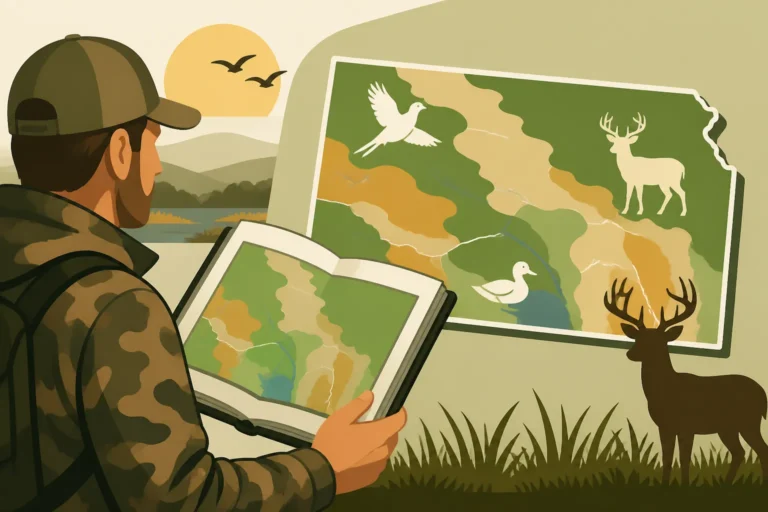
Accessing Melvern Wildlife Area is generally straightforward, with numerous parking lots and designated access points scattered around the lake and along county roads. However, not all land within the general Melvern vicinity is public hunting ground. It's absolutely crucial to distinguish between KDWP managed areas, Corps of Engineers land, and private property. Digital mapping applications, like onX Hunt, become invaluable tools here, allowing you to clearly see property boundaries and identify public access routes. You can overlay aerial imagery with public/private land ownership to pinpoint your exact location and ensure you're on legal hunting ground. Don't rely solely on paper maps, as boundaries can be subtle and confusing on the ground.
Many of the timbered draws and creek bottoms that hold deer and turkeys might be a significant walk from a designated parking area. Planning your Access Routes That Do Not Bump Deer is vital, especially when hunting popular sections. Consider parking further away and walking in, or using less obvious entry points to avoid disturbing game or encountering other hunters. Some areas might be designated as "Walk-In Hunting Access" (WIHA) and have specific regulations. Always check the current Kansas Walk-In Hunting Access Explained atlas or the KDWP website for the most up-to-date information on any special access rules.
Key Regulations and Considerations
Like all public hunting land in Kansas, Melvern Wildlife Area operates under specific regulations beyond statewide hunting laws. These can include restrictions on vehicle access, camping, blind placement, and even specific weapon types in certain areas. For example, some wetland units might prohibit lead shot for waterfowl. It is your responsibility to know these rules. The annual Kansas Hunting & Trapping Regulations Summary is your bible, and it's always a good idea to check for any area-specific regulations posted at the wildlife area headquarters or on the KDWP website.
Portable stands and ground blinds are generally permitted on public land, but there might be rules regarding how long they can be left unattended or if they need to be clearly marked with your name and KDWP number. Are Portable Stand Rules on Kansas Public Land uniform across the state? Not always, so a quick check for Melvern-specific nuances is a smart move. Leaving no trace is also critical, packing out everything you pack in, and respecting the resource for other users. Always be aware of other hunters, especially during busy seasons like the firearm deer opener or the pheasant opener. Hunter orange requirements are always in effect during any firearm season.
Effective Scouting Strategies
Scouting Melvern effectively means leveraging both remote resources and boots-on-the-ground exploration. Begin your scouting at home using online mapping tools. Look for natural funnels, potential bedding areas (often dense cedar thickets or thick CRP grass), and distinct changes in habitat. River oxbows and creek crossings are always worth noting, as deer frequently use them. You can use platforms like GoHunt to research harvest data for the broader unit Melvern is in, giving you an idea of deer density and success rates.
Once you have a few promising spots identified on a map, it's time for some old-fashioned legwork. Walk the areas, looking for deer sign like tracks, rubs, scrapes, and droppings. Identify active feeding areas and potential travel corridors. Pay attention to water sources, especially during dry periods. For upland birds, focus on finding those edge habitats where tall grass meets brush or timber. For turkeys, look for roosting trees along creek banks and sign in agricultural fields. Scouting Kansas Walk-In Tracts Before the Opener outlines many practical steps that translate perfectly to Melvern. The more time you spend scouting, the better your understanding of how game uses the different sections of this expansive wildlife area will be.
Maximizing Your Hunt at Melvern
Public land hunting often comes with unique challenges, but with the right mindset and strategies, you can significantly increase your chances of success at Melvern Wildlife Area.
Dealing with Hunting Pressure
Let's be realistic: Melvern is public land, and during peak seasons, you're likely to encounter other hunters. This isn't a bad thing, but it means you need a strategy to deal with hunting pressure. One of the best ways is to simply walk further than most other hunters. Many individuals will stick close to parking areas or easily accessible trails. By pushing deeper into the timber, traversing a creek, or hiking to a more secluded section of grassland, you significantly increase your chances of finding undisturbed game. Hunting Pressure Patterns on Kansas Public Land often show that game will seek refuge in the hardest-to-reach spots.
Consider hunting during weekdays if your schedule allows, as weekends typically see the highest traffic. Also, don't be afraid to try midday hunts, especially for deer, when many other hunters have returned to camp for lunch. Deer often move more freely during these "quiet" periods. For upland birds, if a field has been walked hard, consider moving to an adjacent brushy draw or plum thicket; birds that have been pressured often run to the densest cover. Being flexible and willing to adapt your plans based on what you observe is a critical skill here.
Integrating Technology for Better Planning
In today's hunting world, technology can be a game-changer, even on public land. As mentioned earlier, digital mapping apps like onX Hunt are indispensable. They allow you to mark waypoints for deer sign, potential stand locations, and even track your path to avoid getting disoriented in dense timber. You can use the app to measure distances, understand elevation changes, and pinpoint precise property lines, preventing accidental trespass.
Beyond mapping, consider using weather apps that provide wind direction and speed, which are crucial for scent control, especially when deer hunting. Knowing where the wind will carry your scent allows you to set up intelligently. Another valuable piece of tech is a good pair of binoculars or a spotting scope, particularly for scouting large tracts of grassland for upland birds or spotting deer from a distance without disturbing them. While not essential, these tools, when used thoughtfully, can significantly enhance your safety, efficiency, and overall success at Melvern Wildlife Area.
Disclaimer
This article is for general informational purposes only and does not constitute professional advice. Laws, prices and regulations vary by location and change over time. Consult a qualified professional for guidance on your specific situation.