Kansas Road Right-of-Way Hunting Rules
Ah, the good old Kansas road right-of-way. It sounds simple enough, doesn't it? Just that strip of grass alongside the pavement. But for us hunters, this seemingly innocuous stretch of ground can be a minefield of confusion and potential legal trouble if we're not absolutely clear on the rules. This guide is going to strip away all the ambiguity, tackle those frustrating misconceptions, and lay out exactly what you can and cannot do when hunting near Kansas roads, ensuring you stay legal, ethical, and safe.
Understanding "Right-of-Way" in Kansas Hunting
When you’re driving down a county road in Kansas, it’s easy to think of the paved surface as the road and everything else as, well, just "the side of the road." But from a legal and hunting perspective, the "right-of-way" is much more expansive and critical to understand. It encompasses a specific width of land that includes the traveled portion, shoulders, and usually the adjacent ditches and utility easements. This distinction is paramount for hunters, as treating it simply as public property can lead to serious legal missteps.
What Constitutes a Road Right-of-Way
In Kansas, a road right-of-way isn't just the blacktop or gravel you drive on. It typically extends a certain distance from the center of the road, encompassing the ditches, shoulders, and sometimes even a strip of land beyond the ditch. The exact width can vary depending on whether it's a state highway, a county road, or a township road, but it's always more than just the driving surface. This means that a deer standing in a ditch, while seemingly "off the road," is often still within the legal right-of-way.
This broad definition is put in place for infrastructure purposes – think utilities, future road expansion, and maintaining clear lines of sight. For a hunter, this means that even when you're standing in what feels like a field edge or timber line, you might still be within the legally defined right-of-way. It's not always obvious where that line truly is, especially in areas without clear fencing or signage, which is where the confusion often begins.
The implications for hunting are significant. While the right-of-way itself is generally considered public for travel purposes, its public nature does not automatically extend to hunting. Many hunters mistakenly believe that if they are standing in a ditch that's part of the public right-of-way, they are free to hunt, but this is often not the case. The rules for discharging a firearm or bow from this area are typically very restrictive.
The Legal Boundaries You Need to Know
The core issue for hunters is that while the road right-of-way is publicly accessible for passage, it is not public land for the purpose of hunting or discharging a weapon. Kansas law explicitly prohibits shooting from or across a public road or its right-of-way. This distinction is critical and often trips up even seasoned hunters who are unfamiliar with Kansas regulations. It's a fundamental safety measure, designed to protect motorists, pedestrians, and properties adjacent to the roadway.
Imagine you're driving down a rural county road and you spot a magnificent buck in a field next to the road. Even if you pull over onto the shoulder, get out of your vehicle, and position yourself in the ditch, you are still considered to be within the road right-of-way. Discharging your firearm or bow from this position would be a violation of Kansas law. The intention behind the law is to prevent projectiles from traveling over or near the road, minimizing risk to the public.
Furthermore, the prohibition against shooting across a public road means you cannot set up on one side of the road and shoot at an animal on the other side, even if both points are on private land where you have permission. This rule is particularly important in flat, open Kansas farm country where distances can be deceiving and a projectile can travel a long way. This isn't just about safety; it's about maintaining public trust and ensuring hunting remains a privilege enjoyed responsibly.
Common Misconceptions About Road Ditches
One of the most persistent myths among hunters in Kansas, and elsewhere, is that "road ditches are public land, so I can hunt there." This simply isn't true when it comes to the act of hunting itself. While you might be able to walk or park in a ditch as part of the public right-of-way, this access does not grant you permission to set up a stand, pursue game, or shoot from that location. The public's right to passage is not the same as a hunter's right to hunt.
Another common misconception is that if the adjacent private property is unposted, the ditch is fair game. This ignores the explicit prohibition against hunting from the right-of-way, regardless of the status of the neighboring land. Moreover, even if you could legally stand in the ditch, you would still need permission to shoot onto private land that extends right up to the edge of that ditch. This is where Kansas Trespass Law and Posted Land becomes a very real consideration.
The truth is, while road ditches are part of the right-of-way, which is publicly managed, they are almost universally treated as extensions of the private property they border when it comes to hunting. The adjacent landowner typically maintains ownership of the land beneath the right-of-way, even if the state or county has an easement for road purposes. This means that a ditch isn't automatically a free-for-all hunting spot; it's a regulated corridor that requires careful attention to the law.
General Rules for Hunting from Public Roadsides
Kansas has very clear, strict rules about hunting in proximity to public roads. These regulations are designed first and foremost for public safety, preventing accidents involving vehicles, pedestrians, and nearby residences. It's not just about what you can do, but what you absolutely must avoid to ensure everyone's safety and avoid hefty fines or loss of hunting privileges. Understanding these prohibitions is fundamental to responsible hunting in the Sunflower State.
Prohibitions on Shooting from a Public Road or Right-of-Way
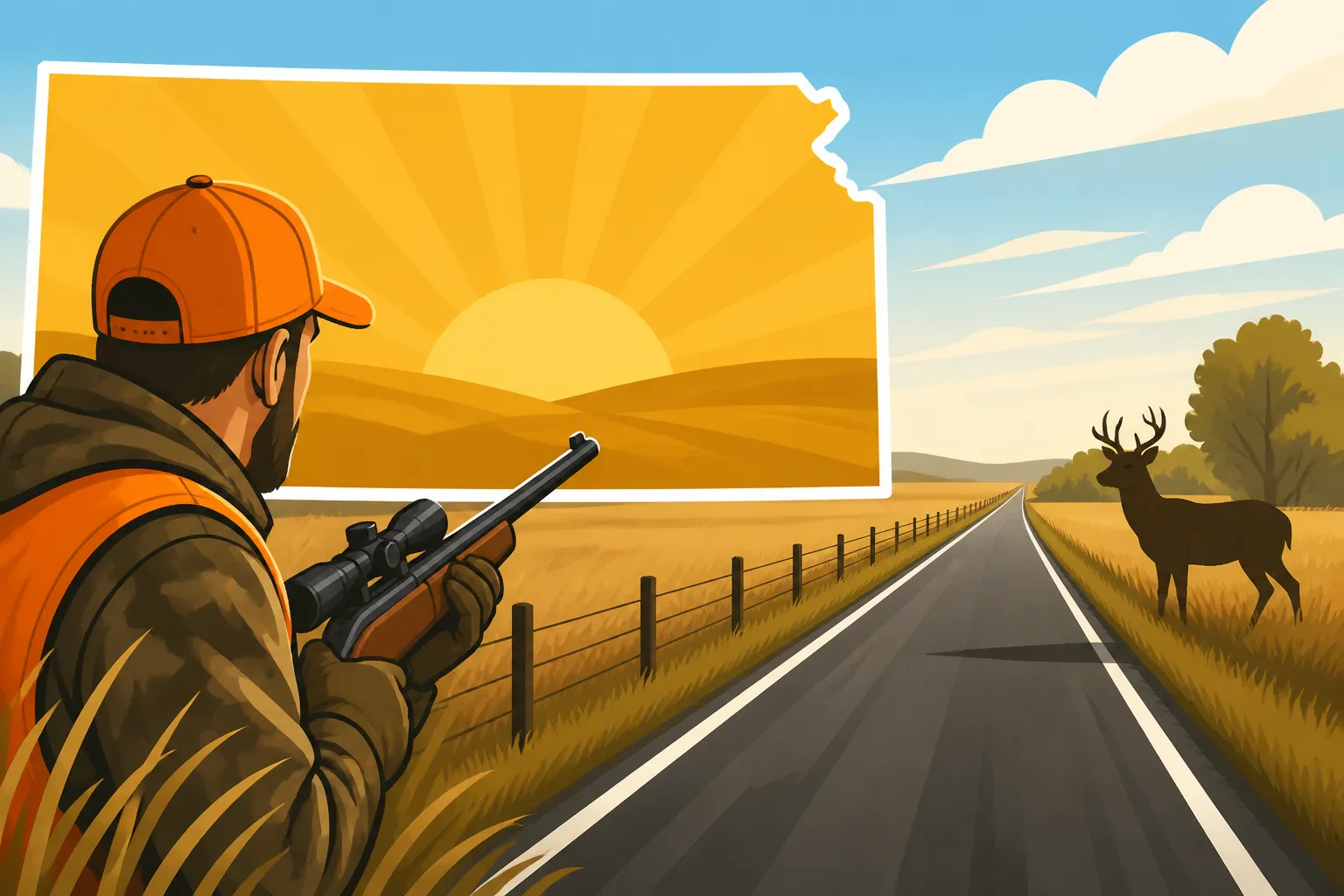
Let's cut right to the chase: in Kansas, it is illegal to discharge a firearm or bow from a public road or its right-of-way. This is a non-negotiable rule. It doesn't matter if you're targeting a pheasant in a field, a coyote, or a deer — if your feet are on the pavement, the gravel, the shoulder, or in the ditch that constitutes the right-of-way, you cannot shoot. This regulation is a cornerstone of safe hunting practices and is rigorously enforced by Kansas wildlife enforcement officers.
This rule exists for a very good reason: to prevent accidental injuries or property damage. Imagine a scenario where a hunter takes a shot from the roadside, and the projectile ricochets, misses its target, or travels further than intended. The potential for hitting a passing vehicle, a nearby home, or an innocent bystander is simply too high. Hunting, by its very nature, involves projectiles that can travel significant distances, and roadsides are typically high-traffic or populated corridors.
Even if you believe you have a clear, safe shot with a proper backstop, the law doesn't make exceptions based on individual judgment in this particular instance. The prohibition is blanket: no shooting from the right-of-way. This means that scouting from your vehicle is fine, observing game is fine, but as soon as you consider deploying a weapon, you must be entirely off the legal road right-of-way and on land where you have explicit permission to hunt. It truly simplifies the decision-making process in the field, eliminating any grey areas.
Discharging Firearms Across a Roadway
Beyond shooting from a right-of-way, Kansas law also prohibits discharging a firearm across a public road. This is another critical safety regulation that can sometimes be overlooked by hunters, especially in wide-open country. It means that even if you're standing on private land, with permission to hunt, you cannot take a shot that sends your bullet or arrow over a public road to hit an animal on the other side, even if that too is private land where you have permission.
The danger here is similar to shooting from the right-of-way, but with an added layer of complexity. Projectiles can lose elevation quickly or be affected by wind, and judging distance and trajectory accurately across a roadway, especially one with even minor elevation changes, is incredibly difficult. What appears to be a safe shot could easily become a hazard if a vehicle or person unexpectedly enters the line of fire. It's a rule designed to create a buffer zone around active transportation corridors.
This rule particularly impacts hunters in units where narrow timber strips or isolated cover on opposite sides of a road might hold game. You might have a stand set on private land on one side, and see a buck on private land across the road. Despite having permission on both parcels, you cannot take that shot. It forces hunters to be thoughtful about their stand placement and to avoid setting up in positions that would necessitate shooting over a road. Always think about your shot trajectory and what lies between you and your target, and well beyond it.
Vehicle Use and Hunting Laws
The regulations surrounding vehicles and hunting in Kansas are also quite stringent, reinforcing the idea that roads are for travel, not for active hunting. It is generally illegal to hunt from a motor vehicle, or even to use a motor vehicle to pursue or harass game. This includes shooting from inside a vehicle, or even using a vehicle as a rest for your weapon, whether it's parked on the road or the shoulder. The spirit of the law is to promote fair chase and prevent dangerous situations.
This isn't just about the act of shooting. It also means you can't drive alongside a field trying to flush pheasants or deer, or use your truck to push game towards another hunter. The vehicle must be used solely for transportation to and from your hunting area. Once you are in your hunting area, the vehicle needs to be parked in a legal and safe location, and you must exit it to engage in hunting activities.
There are, of course, very specific exceptions, such as for individuals with disabilities who possess the appropriate permits, allowing them to hunt from a stationary vehicle under certain conditions. However, for the vast majority of hunters, the rule is clear: vehicles and active hunting do not mix on or near public roads. Always ensure your vehicle is completely off the traveled portion of the road, and that you are out of the vehicle and away from the right-of-way before preparing to hunt. For more on safe access, consider Access Routes That Do Not Bump Deer.
Navigating Private Land Boundaries Along Roads
The real challenge for Kansas hunters when it comes to roadsides is the intricate dance between public access and private property. While a road right-of-way may feel like public ground, the adjacent land is almost certainly private, and its boundaries often extend right up to, or even under, the road. Understanding how these property lines interact with the right-of-way is absolutely crucial to avoiding trespass and staying within legal and ethical bounds. This isn't always intuitive, especially in rural areas where property lines can be invisible to the naked eye.
Identifying Property Lines Along Roadsides
One of the biggest headaches for hunters is knowing exactly where the private property line ends and the truly "public" domain (for hunting purposes) begins, or more accurately, where the right-of-way begins to overlay private property. In many cases in Kansas, the landowner owns the land all the way to the center of the road, even though the public has an easement for travel. This means that much of what you perceive as the "ditch" or "shoulder" is actually private land, subject to a public utility or road easement.
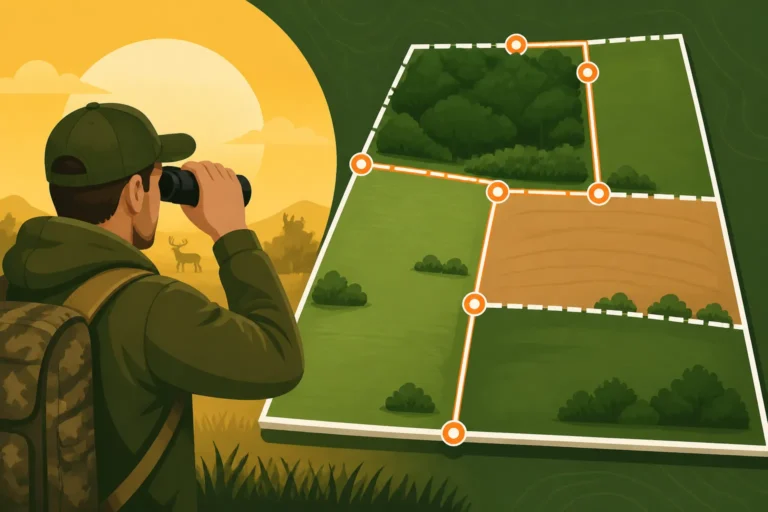
Without visible fences or clear markers, it's virtually impossible to tell with certainty where these lines are by sight alone. You might be standing in a seemingly innocuous ditch, assuming it's public, when in reality you are technically on private property, even if it's within the road's easement. This is a prime example of where modern technology becomes indispensable. Using digital mapping tools with property ownership overlays, like onX Hunt, can show you precisely where property lines run in relation to the road, removing all guesswork.
These mapping applications display parcel boundaries directly on a satellite image, often with landowner names, allowing you to clearly see if the ditch, a small treeline, or even a field edge is truly public or part of an adjacent private parcel. This foresight is invaluable, helping you scout locations from home or in the field without fear of inadvertently trespassing. To gain a better understanding of how these tools can assist, check out E-Scouting Kansas Farm Country From Home.
The Role of Consent and Trespass Laws
Even if you understand the boundary lines, the issue of consent is paramount. In Kansas, you must have permission from the landowner to hunt on private property. This applies whether the property is posted with "No Hunting" signs or not. The absence of a sign does not grant implied permission. This rule is especially critical when dealing with land adjacent to a road right-of-way. While you cannot shoot from the right-of-way, you might want to hunt a small finger of timber or a plum thicket right next to the road that is clearly private.
Let's imagine you've identified a promising small timber patch right off a county road using your mapping app. You see that it's private land, but it looks like excellent cover. Even if you want to stand just a few feet off the road, technically on the private parcel, you absolutely need to secure permission from the landowner first. This isn't just about avoiding a ticket; it's about respecting property rights and maintaining positive hunter-landowner relations, which are crucial in a state like Kansas where so much land is privately owned.
Failure to obtain permission before entering or hunting on private land, even a small strip near a public road, constitutes trespass. This can result in fines, the loss of hunting privileges, and, perhaps more damagingly, the loss of trust from landowners, making it harder for all hunters to gain access in the future. Always err on the side of caution: if you're not 100% sure, get permission, or don't go. This goes for any piece of private land, no matter how small or seemingly insignificant it appears from the road.
Hunting Road Ditches Adjacent to WIHA or Public Land
Here's a specific scenario where the rules can feel a little different: hunting a road ditch that is adjacent to a Walk-In Hunting Access (WIHA) tract or another piece of dedicated public hunting land, such as a State Wildlife Area. In these instances, the land next to the road right-of-way is legitimately open for public hunting. This can create a situation where hunters wonder if the general prohibition on shooting from the right-of-way still applies. The answer is generally yes.
Even when hunting next to a WIHA tract, the rule about not discharging a firearm or bow from or across a public road or its right-of-way typically still holds. You need to ensure you are entirely off the road right-of-way and fully onto the WIHA or public land before you even think about setting up your shot. This means stepping completely out of the ditch and onto the designated hunting area. Always consult the specific regulations for the WIHA tract or public land you are hunting, as some areas may have additional restrictions near roads or boundaries. Kansas Walk-In Hunting Access Explained provides a good overview of how these programs operate.
The key takeaway is that the "public" nature of the right-of-way for travel doesn't override the hunting regulations designed for safety. So, while you might have legal access to the adjacent land, you still need to conduct your hunt from a position that respects the boundaries of the road right-of-way. Using a tool like GoHunt or onX Hunt to precisely identify where the WIHA boundary begins relative to the road can prevent any accidental violations and ensure you're hunting legally.
| Scenario | Is it Legal? | Explanation |
|---|---|---|
| Shooting from the road | No | Explicitly illegal to discharge a weapon while standing on the pavement, gravel, shoulder, or in the ditch of a public road right-of-way. |
| Shooting across the road | No | Illegal to shoot a projectile over a public road, even if your target and your position are on private land where you have permission. |
| Hunting from a vehicle | No | Generally illegal to pursue or shoot game from any motor vehicle. Specific exceptions for disabled hunters with permits apply. |
| Retrieving game from the ditch | Yes (with care) | If an animal legally shot runs into the road ditch, you can usually retrieve it, but ensure no weapon is loaded and you are not obstructing traffic. Safety is paramount. |
| Hunting adjacent to WIHA | Yes (off ROW) | You can hunt adjacent WIHA land, but you must be fully off the road right-of-way and onto the designated public hunting ground before discharging a weapon. |
| Entering private land from ROW | No (without permission) | The road right-of-way does not grant permission to enter or hunt on adjacent private property. Always secure explicit landowner consent. |
Specific Weapon Restrictions and Considerations
While the general rules against shooting from or across a road right-of-way apply universally to all hunting weapons in Kansas, there are subtle differences in how these rules are perceived or enforced based on the weapon type. The range, trajectory, and inherent characteristics of archery equipment versus modern firearms mean that hunters often face different considerations for safety and ethical shot selection, even if the legal prohibition remains the same. Understanding these nuances can help you make better decisions in the field.
Archery Hunting and Roadways
For bowhunters, the rules about not shooting from or across a public road right-of-way are just as binding as for firearm hunters. An arrow, while having a shorter effective range than a rifle bullet, is still a lethal projectile that can travel a considerable distance, injure unintended targets, or damage property. Therefore, the same principle of being completely off the right-of-way and onto legal hunting ground applies before drawing your bow.
However, bowhunting around roadsides sometimes brings a different kind of pressure. Often, prime deer movement corridors, like creek crossings or pinch points, can be very close to roads. A bowhunter might see a buck just a few yards into private timber next to a road, and the temptation to quickly slip into position can be strong. This is precisely where detailed mapping tools and an understanding of Creek Crossings Worth Hanging a Stand On become vital. You need to ensure not only that you have permission for the land but also that your stand location is far enough from the right-of-way to allow for a safe, ethical shot that won't carry over the road or put anyone in danger.
One common scenario involves a deer moving parallel to a road in a thick fencerow or timber strip. A bowhunter, trying to get ahead of the animal, might inadvertently cross into the road's right-of-way. Maintaining situational awareness of your precise location relative to the road and its legal boundaries is paramount. While the noise factor of a bow shot is minimal, the safety implications for broadheads, especially in populated areas or near busy roads, are still very real and must be respected.
Firearm Use in Proximity to Roads
Firearm hunting, especially with high-powered rifles common during the December firearm season, necessitates an even higher degree of caution and adherence to road right-of-way rules. The extended range and immense kinetic energy of rifle bullets mean that a missed shot or a ricochet can travel for miles, posing a significant threat far beyond your intended target. This inherent danger is precisely why the "no shooting from or across a road" rule is so strictly applied to firearms.
Consider a scenario in flat, open Kansas farm country. A hunter might be on private land with permission, but their target is in an adjacent field relatively close to a county road. Even if they are legally positioned, they must carefully evaluate the shot angle and what lies beyond the target. Is there a hill for a safe backstop? Is the trajectory clear of the road itself and any potential traffic? The "safety zone" around public roads and residences becomes much larger and more critical when dealing with firearms. Kansas Firearm Deer Season in December involves many hunters, increasing the importance of these safety rules.
Furthermore, hunters must be aware of local ordinances that might have additional restrictions on discharging firearms within a certain distance of residences or municipal boundaries, which often run right up to roads. These local rules can add another layer of complexity beyond state regulations. Always check local laws in addition to state hunting regulations to ensure you're fully compliant, as violating these can carry significant penalties.
Muzzleloader Hunting Specifics
Muzzleloader hunting in Kansas, particularly during the September season, also falls under the general firearm rules when it comes to road rights-of-way. While muzzleloaders typically have a shorter effective range than modern centerfire rifles, they are still considered firearms, and their projectiles can travel a substantial distance. Therefore, all prohibitions against shooting from or across a public road or its right-of-way apply equally.
One unique aspect of muzzleloading is the visible smoke signature after a shot. While this doesn't directly relate to legality, it does draw attention, and can quickly identify a hunter's position if they are inadvertently too close to a road or within the right-of-way. This can lead to increased scrutiny from concerned citizens or law enforcement, even if the shot itself was technically legal from private land. It reinforces the idea of being well clear of any public thoroughfare.
The focus for muzzleloader hunters, much like rifle hunters, should be on secure backstops and understanding projectile travel. Given the often dense vegetation during the early September season, ensuring a clear shooting lane that doesn't inadvertently lead over a road or into a dangerous zone is critical. Always double-check your position using mapping tools to confirm you are completely off the right-of-way and on legally accessible hunting ground before taking a shot during Muzzleloader Deer Hunting in Kansas's September Season.
Game Recovery and Legal Obligations
The moment of truth arrives: you've made a great shot, and your deer is down. But what if it's not where you expected it to be? What if it's in the road ditch, or worse, has jumped a fence onto private land where you don't have permission? These scenarios are incredibly common, and how you handle them determines whether you stay legal, ethical, and maintain good relations with landowners. Knowing your obligations and options before you're in the moment of high adrenaline is absolutely key.
Retrieving Game From a Right-of-Way
If you've made a legal shot from an approved hunting location (i.e., not the road right-of-way itself), and your deer expires within the road's ditch or shoulder, you generally can retrieve it. However, this must be done with extreme caution and with respect for public safety. Your primary concern should be the safety of yourself and any passing motorists. Never obstruct traffic, and be highly visible, especially if it's dim light or dark.
Before approaching the downed animal, ensure your firearm is unloaded and secured, or your bow is unstrung or cased. The goal is to be a retriever, not a hunter, at this point. If you need to spend more than a few minutes, or if the situation is dangerous due to traffic, consider calling local law enforcement or the Kansas Department of Wildlife and Parks (KDWP) for assistance. They can often provide traffic control or guidance, ensuring everyone's safety during the recovery.
Remember that while you can retrieve legally harvested game, the road right-of-way is not a place for field dressing, quartering, or prolonged activities. Get the animal secured and removed from the right-of-way as quickly and safely as possible. Respect for the public's right to safe passage always takes precedence, even over the excitement of a successful harvest. For tips on dealing with the animal once you have it, review Field Dressing in Warm Kansas Weather.
Crossing Private Land for Game Recovery
This is arguably one of the most stressful situations a hunter can face: your deer, legally shot, crosses a fence onto private property where you do not have permission. In Kansas, the law is clear: you must obtain permission from the landowner before entering their property to recover game, regardless of whether the land is posted or not. There is no automatic right to trespass, even for game recovery.
Approaching the landowner can be intimidating, especially in the heat of the moment. It's best to be calm, polite, and respectful. Explain the situation clearly, show them where the deer ran, and ask for permission to track and retrieve it. Offer to leave your weapon behind at the fence line to show good faith. Being prepared with a satellite map on your phone (like onX Hunt) to show them exactly where you believe the deer is located can also build trust.
If the landowner denies permission, your options become extremely limited. You cannot legally force the issue. In some rare cases, law enforcement or a game warden might intercede to help facilitate the recovery, but they cannot compel a landowner to grant access. This underscores the importance of thoughtful shot placement and understanding property lines before taking a shot, especially near boundaries. While heartbreaking, sometimes a deer on private property without permission is simply lost.
Legal Recourse for Game on Private Property
If you've diligently tried to contact the landowner and permission is unequivocally denied, what legal recourse do you have? Unfortunately, in Kansas, your legal options are very few. The right of private property takes precedence. There is no state law that allows you to force access to retrieve game. The deer, once on private land and without the landowner's consent to retrieve, effectively becomes inaccessible.
This can be incredibly frustrating and disheartening. You've done everything right in the hunt, but the recovery is out of your hands. While you can always report the situation to KDWP, their role is primarily to ensure laws are followed, not to adjudicate property disputes or force access. They can offer advice, and in specific scenarios, might contact the landowner on your behalf, but they cannot compel access.
This highlights the ethical responsibility of a hunter to do everything within their power to prevent such situations. This includes thoughtful stand placement that minimizes the chance of a deer running onto inaccessible land, and choosing shots with a high probability of immediate incapacitation. It's a tough lesson to learn, but one that every responsible hunter must internalize. Preparation can go a long way; knowing the property owners around your hunting spot in advance can save a lot of heartache.
Modern Tools for Roadside Navigational Safety
In today's hunting world, guesswork about property lines and road rights-of-way is largely a thing of the past, thanks to incredible advancements in digital mapping technology. These tools don't just show you where to go; they actively help you stay legal and safe, especially when hunting in the complex landscape of Kansas's rural roads. Embracing these resources is no longer a luxury; it's an essential part of responsible hunting strategy.
Benefits of Digital Mapping for Road Rights-of-Way
Digital mapping applications, such as onX Hunt and GoHunt, have revolutionized how hunters interact with the landscape. When it comes to road rights-of-way, their benefits are immense. Instead of relying on vague assumptions or physical markers that might not exist, these apps provide precise, real-time information about property boundaries, public land designations, and, crucially, the often-unseen lines that define road easements. This information is displayed directly on your smartphone or GPS device, giving you an unparalleled understanding of your surroundings.
Imagine you're scouting a new area from The Kansas Online Hunting Atlas for potential deer sign along a timber edge that parallels a county road. With a mapping app, you can zoom in and immediately see if that timber is part of a WIHA tract, a state wildlife area, or private land. More importantly, you can see if the very edge of the timber, or the ditch in front of it, is within the legal road right-of-way. This instantly informs your decision on where you can legally access, park, and set up a stand, eliminating the stress of not knowing where you stand (literally!).
These apps also help prevent accidental trespass. How many times have you wondered if that small sliver of grass between a fence and the road was truly public or part of the private parcel? Digital maps remove that ambiguity entirely. They allow you to plan your approach and exit routes, ensuring you stay within legal boundaries from the moment you leave your vehicle until you return. This proactive approach to boundary awareness is critical for maintaining good landowner relations and avoiding legal trouble.
Layering Public and Private Land Data
One of the most powerful features of these advanced mapping tools is the ability to layer different types of land data. This means you can view not only the topographical features and satellite imagery but also overlays that show parcel boundaries, landowner information, and, critically, different categories of public land. This is incredibly useful in Kansas, where hunting opportunities can be a patchwork of private leases, WIHA tracts, state land, and federal properties like the Cimarron National Grassland.
For example, when you're targeting pheasants, you might want to identify CRP Grass and Where Bucks Bed or where different crop fields meet various types of public access. By layering the WIHA data over private land parcels, you can easily identify public hunting strips that run parallel to roads, or public sections that are landlocked by private ground but accessible via a road. This level of detail helps you maximize your hunting time by focusing on legally accessible areas and avoiding potential conflicts.
GoHunt, for instance, focuses heavily on draw odds and permit strategy but also provides mapping resources that help you visualize game unit boundaries and public land. When combined with the detailed parcel data from onX Hunt, you have a comprehensive picture of land ownership. This layered approach allows you to identify not just where a road right-of-way is, but what kind of land it borders, fundamentally changing how you interpret and plan your hunts in Kansas.
Planning Access and Shot Angles with Precision
Beyond simply identifying boundaries, modern mapping tools empower hunters to plan their entire hunt with unprecedented precision, especially in relation to roads. Before you even leave home, you can scout potential stand locations, map out silent Access Routes That Do Not Bump Deer from parking areas, and visualize potential shot angles. This pre-planning is invaluable for minimizing disturbances, ensuring safety, and staying legal.
When setting up a stand, for instance, you can use the app to verify that your tree stand or ground blind is well outside the road right-of-way and positioned on legal hunting ground. You can also simulate shot angles, ensuring that any potential shot you might take has a safe backstop and won't endanger the road or adjacent properties. This is particularly important for firearm hunters, where the extended range of bullets demands careful consideration of what lies beyond the target.
Furthermore, these tools can assist with planning for game recovery. By understanding where private property lines fall in relation to your hunting spot and nearby roads, you can anticipate potential recovery challenges. If a deer runs towards a property line you don't have permission for, you might adjust your shot selection or hunting strategy accordingly. This level of informed decision-making, facilitated by detailed digital maps, is a hallmark of responsible, successful, and legal hunting in Kansas.
Disclaimer
This article is for general informational purposes only and does not constitute professional advice. Laws, prices and regulations vary by location and change over time. Consult a qualified professional for guidance on your specific situation.