Kansas Trespass Law and Posted Land
Finding quality hunting ground in Kansas can sometimes feel like an endless puzzle, especially with so much private land dominating the landscape. One of the biggest fears for any ethical hunter is inadvertently stepping onto private property without permission, a mistake that can lead to serious legal headaches and damage your reputation. This guide is here to untangle the complexities of Kansas trespass law and posted land, offering clear, actionable advice to help you navigate private boundaries with confidence and respect.
The Foundation of Kansas Trespass Law
Understanding the bedrock principles of trespass in Kansas is absolutely critical for any hunter. It’s not just about avoiding trouble; it’s about upholding the unwritten code of respect for landowners and the integrity of hunting itself. Many assume that if land isn't explicitly marked, it's fair game, but that's a dangerous misconception that can lead you into deep legal waters.
What Constitutes Trespass in Kansas
At its core, trespass in Kansas refers to entering or remaining on someone else's property without their express or implied permission. For hunters, this isn't just a polite suggestion; it's a legal obligation. The law distinguishes between criminal trespass, which typically involves a knowing or intentional act, and simpler trespass, which might be more akin to an inadvertent error, though both can carry penalties. Think about it: a farmer works hard all year cultivating his fields, or a rancher dedicates years to managing his pasture. Their land is their livelihood, their home, and their sanctuary. Entering it uninvited is a violation of that space and trust. Even if you believe you’re just tracking a wounded deer, if you cross that property line without permission, you’re technically trespassing. The legal system in Kansas takes this seriously, recognizing the property rights of citizens.
The law often differentiates between cultivated and uncultivated land, although the requirement for permission generally applies across the board for hunting activities. Cultivated land might include crop fields, orchards, or managed pastures. Uncultivated land could be timber blocks, CRP (Conservation Reserve Program) ground, or undeveloped acreage. Regardless of the land type, the onus is always on the hunter to know exactly where they are and to have explicit permission before setting foot on private ground for hunting purposes. This isn't a minor detail; it's the first step in being a responsible hunter.
Understanding "Posted" Land Requirements
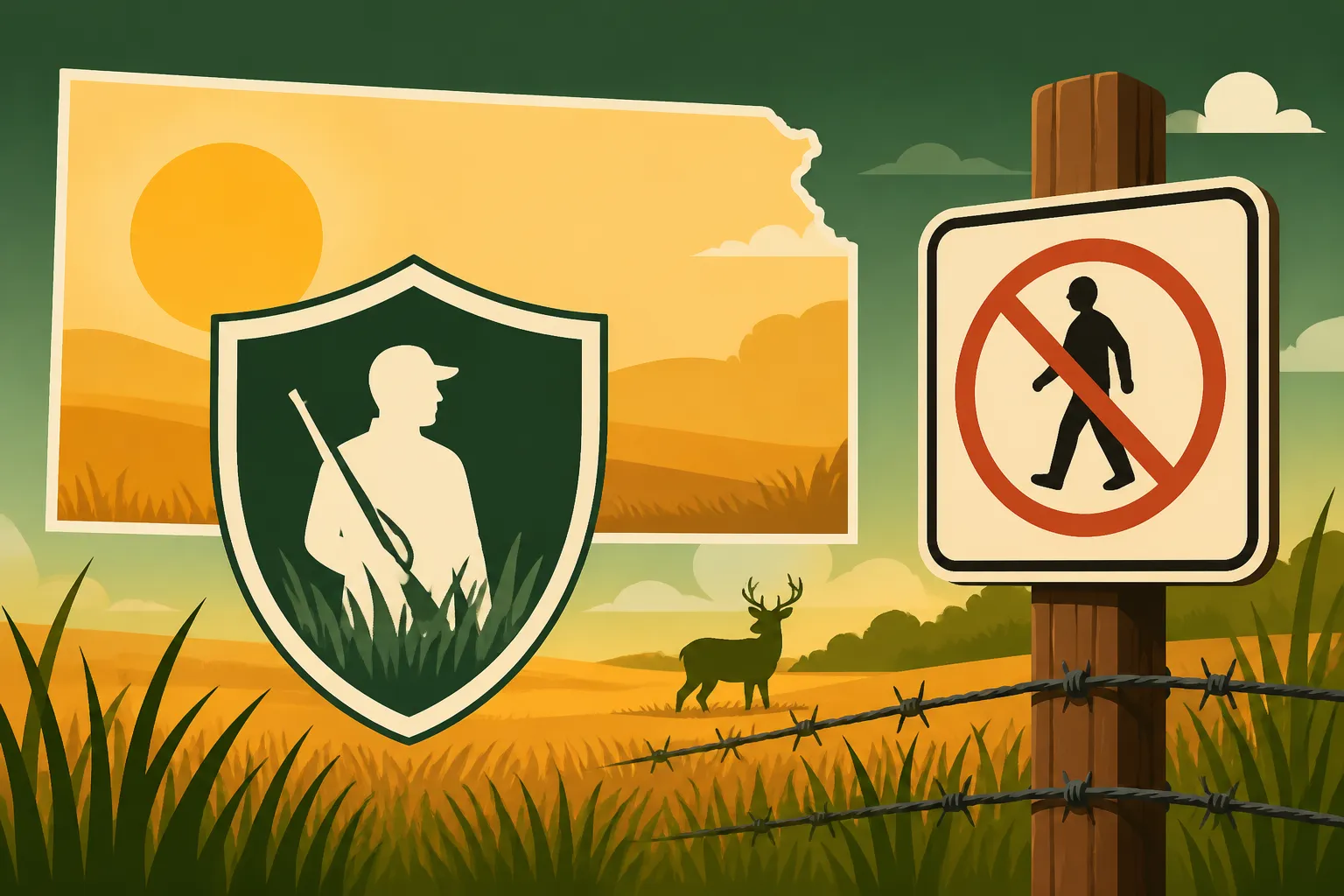
Many hunters think "posted land" solely means encountering signs every 50 feet. While traditional signs are certainly one way landowners mark their property, Kansas also has a "purple paint law" that serves the same legal purpose. This means that if you see vertical purple marks on trees or posts at regular intervals along a property boundary, that land is legally considered posted, even without a single "No Trespassing" sign. It's an often-missed detail that can catch unsuspecting hunters off guard.
The purple paint marks typically need to be at least eight inches long and one inch wide, visible at all times, and placed no more than 100 feet apart. They're usually found on trees, fence posts, or other objects near the boundary. The idea is to provide clear and unambiguous notice to anyone approaching the property line that it is private and entry without permission is forbidden. This method is often preferred by landowners as it's more durable and less prone to vandalism than traditional signs, which can blow away or be torn down. Hunters are expected to recognize and respect these markings just as they would a physical sign. For more specifics on these rules, you might find Kansas Posted Land and Purple Paint a helpful resource.
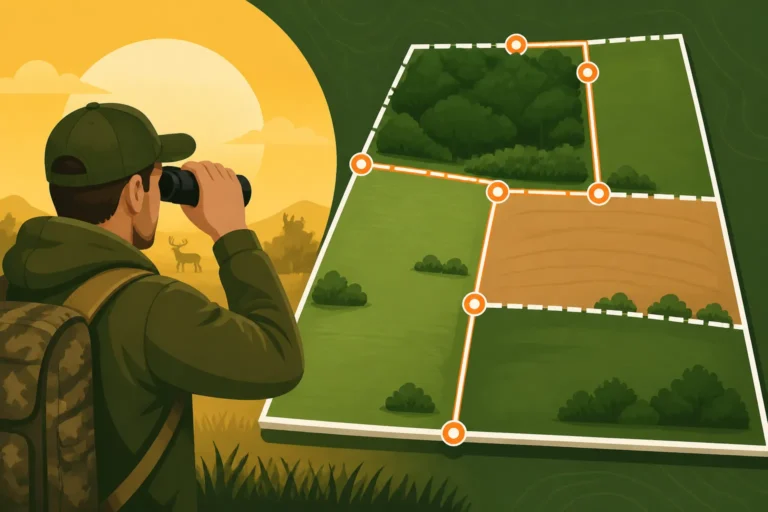
The legal standard for "notice" is key here. The purple paint or signs are designed to make it abundantly clear that the property is private. If you enter land marked in this way, there's little room to argue that you didn't know you were trespassing. It shifts the burden of proof to you, implying you knowingly ignored the visual warnings. This is why thorough scouting, especially reviewing boundary maps on apps like onX Hunt, becomes so important before you ever step into the field. Knowing these visual cues—whether it’s a well-placed sign or a discreet purple stripe—is fundamental to hunting legally and ethically in Kansas.
Navigating Private Land Permission for Hunters
Securing permission to hunt on private land is often the biggest hurdle for hunters in Kansas, but it’s a non-negotiable step. Without it, you're not just risking a fine; you're risking your hunting privileges and the reputation of all hunters. There are proactive steps you can take to make this process smoother and more successful.
The Importance of Express Permission
Let me be blunt: never assume permission. Ever. Even if a field looks unkempt, or you've hunted adjacent public land for years and never seen anyone on the private side, you must have express permission. "Express" means it's clearly stated, either verbally or, ideally, in writing. Verbal permission is legally binding, but it can be hard to prove in a dispute. Imagine a scenario where you've been given verbal permission by an older landowner, only to have his son confront you in the field, unaware of your agreement. A simple piece of paper can save a lot of heartache and legal wrangling.
Many seasoned hunters recommend getting written permission whenever possible. A simple note with the landowner's name, your name, the dates you're allowed to hunt, the type of game you're pursuing, and a description of the property is often sufficient. Some hunters even create small permission slips that they carry, offering to have landowners sign them. This small act shows respect and professionalism and provides a clear record if there's ever a question. It also helps clarify any specific restrictions the landowner might have, such as areas where they don't want you, or specific times of day they prefer you not be on the property. Learning how to properly approach landowners for hunting access is a critical skill, and you can find more guidance in Kansas Landowner Permission Basics.
The benefits of obtaining express permission extend beyond legal protection. It builds trust. When a landowner grants you permission, they are extending a privilege. By respecting their property, their wishes, and leaving no trace, you reinforce that trust. This often leads to future opportunities, not just for you but potentially for other responsible hunters. Ignoring this fundamental step, however, can quickly sour relationships and make it harder for anyone to gain access to private land in the future, perpetuating the struggle for hunting access.
How to Legally Access Adjoining Public Land
Kansas has a good amount of public hunting ground, from Walk-In Hunting Access (WIHA) areas to State Wildlife Areas and Corps of Engineers land. However, sometimes these public parcels can be "landlocked" by private property, meaning there's no direct public road or access point. This presents a frustrating dilemma for hunters who legitimately want to access public resources. Understanding the rules around this is vital to avoid unintended trespass.
One of the most contentious issues is "corner crossing," where a hunter steps from one parcel of public land, over the corner of a private parcel, to another public parcel, without physically touching the private land beyond the corner itself. While some argue this is not trespass because no significant ground is covered on private property, the legal interpretation in Kansas, as in many states, generally holds that entering the airspace above private land without permission can still constitute trespass. This is a complex legal area, and it's best to err on the side of caution. Unless there's a clear, established legal easement or a specific agreement with the landowner for corner access, treating such corners as private property is the safest bet.
Another common scenario involves accessing public land via a private road or driveway. Even if the public land is technically accessible, if the only practical route goes through private property, you need specific permission from the landowner for ingress and egress. Don't assume that because the destination is public, the journey automatically is too. Always scout your access routes carefully, preferably using detailed mapping tools. If you're struggling to find truly accessible public land, resources like Finding Public Access in Kansas can be invaluable. This diligent approach helps maintain good relations and ensures you stay on the right side of the law while pursuing your passion.
The Role of Technology in Identifying Land Ownership
In today's hunting world, digital mapping tools are absolute game-changers, especially when you're trying to navigate the patchwork of private and public land in Kansas. Gone are the days of relying solely on paper plat books or guessing where property lines truly lie. Modern apps have revolutionized how we prepare for a hunt and ensure we stay legal.
One of the most prominent and widely used tools is onX Hunt. This app is incredibly powerful, overlaying property boundaries, landowner names, and land ownership types (private, public, WIHA, etc.) directly onto satellite imagery and topographic maps on your phone or GPS device. Imagine scouting a new area or approaching a piece of public land: with onX Hunt, you can zoom in and see precisely where the public land ends and private property begins, often down to the foot. This level of detail is invaluable for planning your approach, identifying potential access points, and avoiding accidental trespass. Many landowners themselves use these apps, so having the same information demonstrates your diligence. This is particularly helpful when planning routes that adhere to Access Routes That Do Not Bump Deer or when figuring out where to legally set up a ground blind.
Another excellent resource, particularly for general western states hunting but often useful for broader research, is GoHunt. While its primary focus is on drawing tags and applying for hunts, some of its mapping features can supplement your research. However, for pinpoint, on-the-ground property boundary information in Kansas, onX Hunt remains the leader. These tools take the guesswork out of property lines, making it far easier to respect boundaries and obtain permission proactively. They empower you to be a more informed and responsible hunter, drastically reducing the chances of an honest mistake turning into a legal problem.
Common Scenarios and Misconceptions for Kansas Hunters
Kansas offers a diverse hunting landscape, but with that diversity comes a unique set of challenges and commonly misunderstood rules, especially concerning private property. It's easy to fall into traps if you're not fully aware of the specifics.
Unposted Land and Implied Permission
This is perhaps the biggest misconception out there: "If it's not posted, it's open game." Absolutely not. In Kansas, the absence of "No Trespassing" signs or purple paint does not automatically grant you permission to hunt. You still need to obtain explicit permission from the landowner for hunting. Think of it this way: if you walk into someone's backyard that isn't fenced, does that mean you have permission to host a barbecue? No, of course not. The same principle applies to hunting.
Even for activities like shed hunting, which many consider less impactful than actual hunting, landowner permission is still required on private property. The law protects the landowner's right to control access to their property regardless of how it's marked or what activity you intend to pursue. This is where a little old-fashioned courtesy goes a long way. Knocking on doors and asking permission is a cornerstone of Finding Private Land Access in Kansas. If you fail to do so, you're not only risking legal trouble, but you're also fostering a negative image for all hunters, potentially leading more landowners to strictly post their land or deny future requests.
Furthermore, there's often confusion about roadside ditches and railway rights-of-way. While certain sections of public road rights-of-way might allow limited hunting activities in Kansas, this is not a blanket rule, and it never extends onto adjacent private property without permission. Railway rights-of-way are generally private property, and hunting or even walking along them can lead to significant penalties, not just for trespass but for railway safety violations. Always consult Kansas Road Right-of-Way Hunting Rules before considering hunting near a road or railway to understand the very specific legal boundaries and restrictions.
Retrieving Game from Private Land
It's every hunter's worst nightmare: you make a great shot, but the animal crosses onto private property you don't have permission to access. Your ethical obligation is to recover that animal, but your legal obligation is to respect private land. This creates a deeply frustrating and often heart-wrenching situation.
In Kansas, you absolutely cannot pursue or retrieve wounded game onto private land without the landowner's permission. Period. Even if you saw the animal drop just over the fence, crossing that boundary without prior consent constitutes trespass. The first, and only, step should be to contact the landowner immediately. Explain the situation calmly and respectfully, emphasizing your desire to recover the animal and your commitment to doing so without causing any disturbance. Many landowners, when approached with respect and honesty, will grant permission for retrieval, especially if you offer to have them accompany you. This is an area where having pre-established relationships with landowners near your hunting spots can be a lifesaver.
If you cannot contact the landowner or they deny permission, the situation becomes incredibly difficult. While the ethical hunter's instinct is to recover the animal, you cannot break the law to do so. In such rare and unfortunate cases, you might need to contact the Kansas Department of Wildlife and Parks (KDWP) game warden for assistance. They may be able to contact the landowner on your behalf or advise on the best legal course of action, which could unfortunately mean losing the animal. This is a tough pill to swallow, but adhering to the law and respecting property rights ultimately benefits all hunters. For further details, you can refer to Retrieving Game From Private Land in Kansas.
Accidental Trespass and How to Handle It
Even the most diligent hunter can sometimes make an honest mistake. Perhaps a property line isn't clearly marked, or you misread your map, or you simply get disoriented in thick cover. Accidental trespass can happen, and how you handle it can make all the difference between a minor misunderstanding and a serious legal issue.
If you realize you've accidentally crossed onto private property without permission, the absolute first thing to do is stop hunting immediately. Unload your weapon, if applicable, and begin to exit the property the same way you came in, or to the nearest, safest exit point. Do not continue hunting, scouting, or doing anything that could be perceived as intentional violation. Your priority is to rectify the mistake as quickly and respectfully as possible. Making yourself visible and approachable, rather than trying to sneak out, can also go a long way in demonstrating your good intentions should you encounter the landowner or their representatives.
If you encounter a landowner, their agent, or law enforcement while on their property, be polite, apologetic, and cooperative. Explain that you believe you made an honest mistake, indicate where you thought the boundary was, and show them your mapping tools if you have them. Do not argue or become defensive. Own the error, even if it was unintentional. Showing genuine remorse and a willingness to comply can often defuse a tense situation and prevent it from escalating to a citation or more serious legal action. While ignorance of the law is generally not a valid defense, demonstrating good faith and immediate corrective action can certainly work in your favor.
Consequences of Trespassing While Hunting
The risks associated with trespassing while hunting in Kansas extend far beyond a mere slap on the wrist. Depending on the specifics of the situation, the repercussions can be severe, impacting your wallet, your freedom, and your ability to hunt in the future.
Legal Penalties for Hunters
In Kansas, criminal trespass is typically a misdemeanor offense, but the specific class (A, B, or C) depends on the circumstances. For instance, if you're caught hunting on posted or cultivated land without permission, or if you refuse to leave after being asked, the penalties are usually more stringent. This can involve significant fines, potentially reaching hundreds or even thousands of dollars. Nobody wants to end their hunting trip with a costly ticket, let alone legal fees.
Beyond the fines, a conviction for criminal trespass can sometimes carry the possibility of jail time, particularly for repeat offenders or in cases involving aggravating factors, such as property damage or aggressive behavior. While this isn't the most common outcome for a first-time, non-violent trespass, it's a stark reminder of the seriousness of the law. Perhaps even more impactful for a hunter, a trespass conviction can lead to the suspension or revocation of your hunting privileges. This means losing your ability to purchase licenses and permits for a period, or even permanently, which can be devastating for someone who lives for the outdoors. Imagine not being able to participate in Kansas Whitetail Hunting Tactics Through the Rut or Kansas Spring Turkey Permits and Units because of a preventable error.
Finally, a trespass conviction creates a criminal record. This can have unforeseen consequences for future employment, housing, or other aspects of your life. It's a permanent mark that can follow you. The seemingly minor act of stepping over a property line without permission can snowball into a truly life-altering event. This is why vigilance, respect, and proactive communication with landowners are paramount.
Damage to Hunter-Landowner Relationships
Beyond the legal ramifications, perhaps the most insidious consequence of trespassing is the irreparable damage it inflicts on hunter-landowner relationships. Every time a hunter trespasses, it erodes trust and makes it harder for every other ethical hunter to gain permission. Landowners talk, and a negative experience with one hunter can quickly spread through a community, closing off vast tracts of land to everyone.
Many landowners in Kansas are already wary of hunters, often due to past negative experiences like littering, property damage, leaving gates open, or simply ignoring boundaries. A single act of trespass reinforces these fears and justifies their decision to "post" all their land, regardless of how courteous 99% of hunters might be. This is a frustrating reality for those who do things by the book. It’s a collective problem that requires a collective solution: every hunter acting as a steward not just of the land, but of the hunting tradition itself.
When landowners feel their property rights are being violated, they're less likely to be receptive to future requests for permission. This means fewer opportunities for everyone, including future generations. Our actions in the field have ripple effects that extend far beyond our individual hunt. By being respectful, always obtaining permission, and actively working to build positive relationships, we can help reverse this trend and foster a more open and cooperative environment for hunting in Kansas. Consider the importance of good stewardship discussed in Hunting Kansas Walk-In Land Without Burning It Out, but apply that same principle to private land as well.
| Category | Unposted Land (for Hunting) | Posted Land (Signs or Purple Paint) |
|---|---|---|
| Permission Req. | ALWAYS required for hunting (express or implied). | ALWAYS required for entry (express permission only). |
| Notice Standard | No explicit physical notice, but landowner's consent is assumed absent for hunting. | Clear physical notice (signs, purple paint). Intentional entry without permission is clear trespass. |
| Legal Risk (Trespass) | Moderate to High, if caught hunting without permission. Can be difficult to prove implied permission. | High. Clear legal violation due to visible notice. |
| Legal Penalties | Fines, potential hunting privilege suspension, possible jail (depending on circumstances). | Higher likelihood of fines, hunting privilege suspension/revocation, greater risk of jail time. |
| Common Misconception | "If it's not posted, it's open for hunting." (INCORRECT) | "Only traditional signs count as posted." (INCORRECT – Purple paint also applies.) |
| Best Practice | Always seek and obtain explicit permission before hunting. | Always seek and obtain explicit permission before entering for any reason. |
Best Practices for Respecting Private Land in Kansas
Ultimately, being a responsible hunter means being a respectful land user. This involves more than just avoiding a citation; it means contributing positively to the perception of hunters and ensuring access for future generations.
Building Positive Landowner Relationships
The golden rule of hunting private land in Kansas is simple: ask permission, and once granted, treat that land better than your own. This isn't just a courtesy; it's a strategic move that pays dividends. Landowners are far more likely to grant access to someone who demonstrates respect, reliability, and responsibility. Think about offering to help with a small chore, like fixing a fence post, clearing some brush, or even just offering a portion of your harvest as a thank you. These small gestures can forge a strong, lasting relationship.
When you approach a landowner, introduce yourself clearly and state your intentions. Be upfront about what you want to hunt, when you want to hunt, and for how long. Provide your contact information and offer to share your hunting plan. A truly responsible hunter will also offer to let the landowner know when they are on the property and when they leave. This communication builds trust and gives the landowner peace of mind. It also makes them more comfortable with the idea of allowing others to hunt on their property in the future. Remember, it's not just about your hunt; it's about the entire hunting community's reputation.
Finally, always leave the property exactly as you found it, or better. Pick up any trash, close all gates, avoid driving off established trails unless specifically permitted, and be mindful of livestock and crops. If you happen to notice anything amiss on their property—like a downed fence or suspicious activity—politely notify the landowner. This shows you care and are invested in the stewardship of their land, which can turn a one-time permission into a long-term hunting opportunity.
Utilizing Public Land Resources
While private land offers incredible opportunities, Kansas also boasts a fantastic network of public hunting areas that can provide excellent hunting without the need for private permission. These resources are designed for public use and are a vital part of the hunting landscape. Understanding and utilizing them can reduce the pressure on private landowners and provide diverse hunting experiences.
The Kansas Department of Wildlife and Parks (KDWP) manages a significant amount of public land, including State Wildlife Areas, which are specifically designated for wildlife management and public recreation. These areas often have unique rules and seasons, so it's crucial to check local regulations before heading out. Beyond state-managed lands, federal lands like those managed by the U.S. Army Corps of Engineers around many of Kansas's reservoirs also offer hunting opportunities. Knowing What Corps Land Is Open to Hunting can unlock vast tracts of accessible land for you.
Perhaps the most well-known public access program in Kansas is the Walk-In Hunting Access (WIHA) program. This incredible initiative leases private land from landowners specifically for public hunting during certain seasons. It opens up hundreds of thousands of acres that would otherwise be inaccessible. Checking the KDWP's WIHA atlas or using a mapping app to identify WIHA tracts is a must-do for any hunter. These lands are clearly marked in the field with large signs, removing the ambiguity of private boundaries. Exploring these options, as detailed in Kansas Walk-In Hunting Access Explained, is a proactive way to find new hunting spots and alleviate the burden of constantly seeking private permission. Utilizing Public Hunting Land in Kansas effectively is part of being a well-rounded hunter in the state.
Thorough Scouting and Preparation
Prevention is always the best medicine, and in hunting, that means thorough scouting and preparation before you ever step foot into the field. This is your first line of defense against accidental trespass and ensures a more enjoyable and legal hunt.
Start your preparation well before the season by thoroughly studying maps. Digital mapping apps like onX Hunt are indispensable here. Use them to identify property boundaries, public land boundaries, and potential access points. Take the time to mark these boundaries clearly on your maps and understand the terrain features that might indicate a change in ownership, such as fences, changes in crop types, or distinct tree lines. This digital scouting, covered in detail in E-Scouting Kansas Farm Country From Home, can save you a lot of headache in the field. Don't just look at the land you plan to hunt; understand the adjacent parcels as well. This way, you'll know what to expect if an animal leads you near a boundary.
Once you have a general understanding from your digital maps, try to conduct in-person scouting, if possible. Walking the perimeter of a property you have permission for, or walking the boundaries of public land, can give you a much better feel for the actual landscape. Look for survey markers, fence lines, and, crucially, any "No Trespassing" signs or purple paint. Take note of any features that could cause confusion, such as indistinct boundaries in dense timber or brush. This hands-on approach helps cement the boundary lines in your mind and makes it less likely you'll stray unintentionally. Coupled with understanding Reading a Kansas Creek Bottom for Deer Sign, this comprehensive preparation will make you a more confident and responsible hunter.
Disclaimer
This article is for general informational purposes only and does not constitute professional advice. Laws, prices and regulations vary by location and change over time. Consult a qualified professional for guidance on your specific situation.