Vehicles on Kansas Walk-In Tracts
One of the most common frustrations for hunters hitting Kansas Walk-In Hunting Access (WIHA) properties is figuring out exactly where you can and cannot take your vehicle. It’s a completely valid concern; you want to follow the rules, but sometimes the lines aren't as clear as we'd like when you're staring down a muddy two-track. This guide is here to untangle the complexities of vehicle use on Kansas WIHA tracts, helping you understand the regulations, avoid fines, and ensure you're a respectful guest on these crucial hunting lands.
Understanding the "Foot Traffic Only" Rule on Kansas WIHA
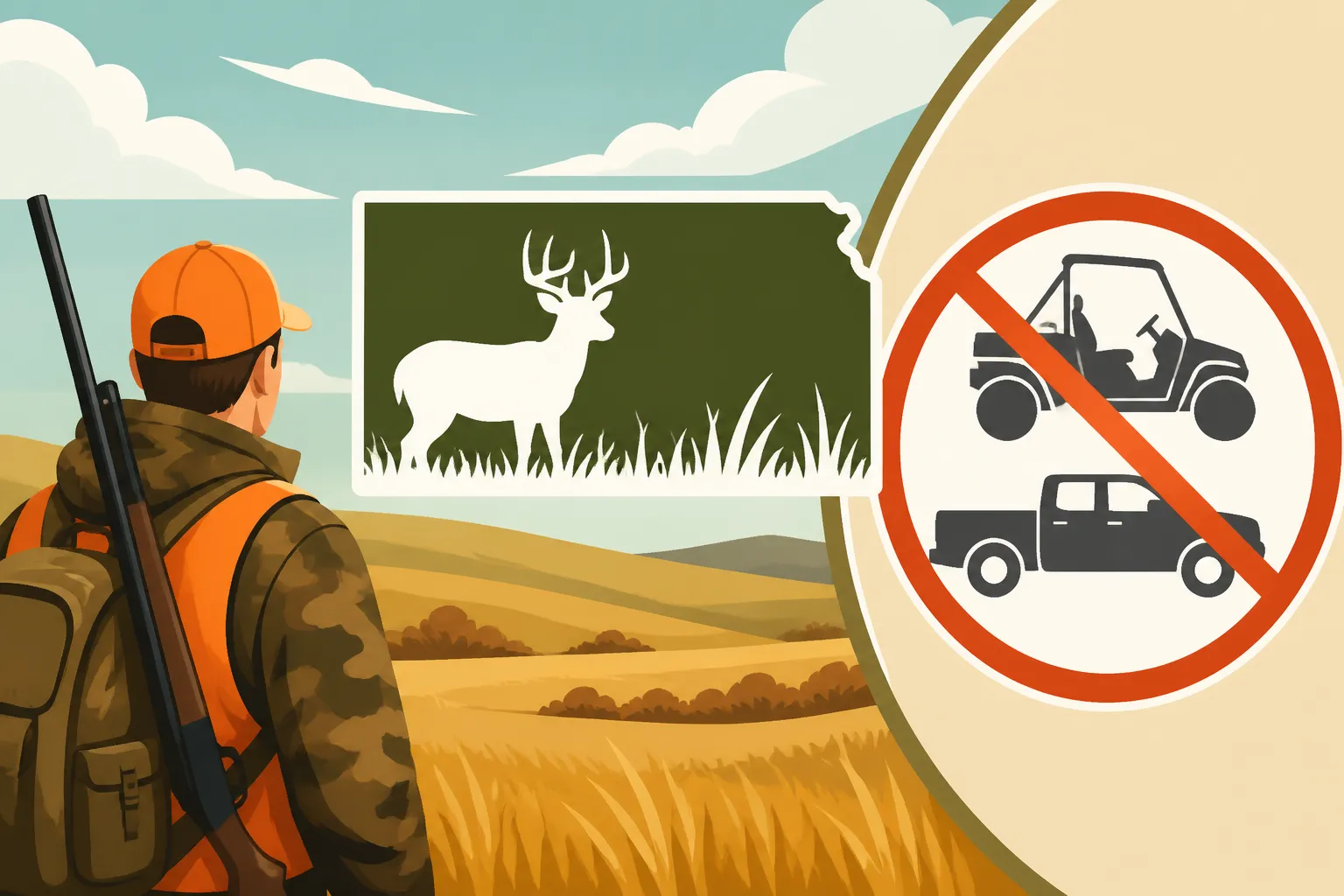
Let's get this out of the way upfront: most Kansas WIHA properties are designated as "foot traffic only." This isn't just a suggestion; it's a fundamental condition of the program and a non-negotiable rule. Many hunters, especially those new to the WIHA system or accustomed to hunting private land where they might drive closer to their setup, find this frustrating. You pull up to a promising looking tract, see a field road winding back into a timber edge, and your first thought is, "Man, I wish I could just drive back there." Believe me, we've all been there. The feeling of lugging a treestand, a pack full of gear, and a decoy spread across a quarter-mile of CRP grass is a familiar ache. But it’s crucial to remember that this "foot traffic only" stipulation is what often makes these leases available to us in the first place.
Why the Strict Vehicle Rules?
The reasons behind these strict vehicle rules are multi-faceted and rooted in the very nature of the WIHA program. First and foremost, WIHA is a partnership between the Kansas Department of Wildlife, Parks and Tourism (KDWP) and private landowners. Many landowners are hesitant to allow vehicle traffic on their property due to concerns about rutting up fields, damaging crops, creating new trails, or simply increasing liability. By agreeing to "foot traffic only," hunters provide a level of assurance to these landowners that their property will be respected and maintained. It's a key ingredient in keeping these agreements in place year after year.
Secondly, limiting vehicle access helps preserve the quality of the hunting experience for everyone. Imagine if everyone could drive wherever they pleased; it would quickly turn into a free-for-all, with vehicles parked willy-nilly, creating noise, disturbing game, and diminishing the wildness of the hunt. The intent of WIHA is to provide a semi-wilderness experience, even in agricultural settings. The "foot traffic only" rule helps maintain that. Lastly, it's a matter of resource protection. Unrestricted vehicle use can lead to soil erosion, damage to sensitive habitats, and spread invasive plant species. These rules are in place to safeguard the land itself.
Interpreting the WIHA Atlas and On-Site Signage
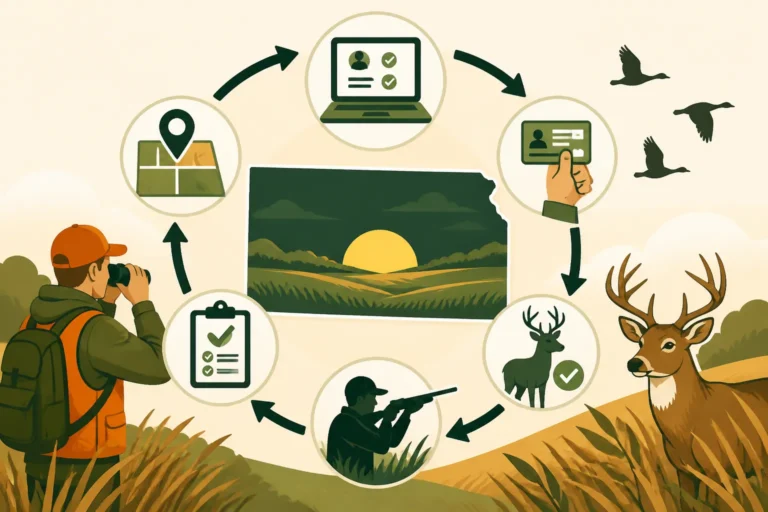
When you're preparing for a hunt on WIHA ground, your primary resource is the official Kansas WIHA Atlas. This isn't just a nice-to-have; it's absolutely essential. You can grab a paper copy or, better yet, use digital versions on apps like onX Hunt. On these maps, WIHA tracts are clearly marked, and often, so are the designated parking areas. If a tract is "foot traffic only," that means exactly what it says: park your vehicle in a designated spot, and proceed on foot. There are no gray areas here.
Beyond the atlas, pay close attention to on-site signage. Landowners often post additional signs, sometimes in conjunction with KDWP signs, specifying parking locations or reiterating rules. If you arrive at a tract and see a "No Vehicles Beyond This Point" sign, even if you thought an old track looked drivable on your map, defer to the physical sign. Landowner rules and KDWP regulations always take precedence. I can't stress this enough: assume no vehicles unless explicitly stated otherwise for a specific access point or type of WIHA. Taking the time to study Reading a Kansas Creek Bottom for Deer Sign or Hunting Terrain Funnels in Flat Country is more productive than trying to find a shortcut with your truck.
Where Vehicles Are Permitted: Designated Areas and Special Circumstances
While the general rule for WIHA is foot traffic only, there are specific, limited situations where vehicles are permitted. Knowing these exceptions is just as important as knowing the general rule, so you can plan your hunt effectively and legally. These aren't loopholes; they're clearly defined allowances designed to facilitate access where appropriate.
Designated Parking Areas
This is the most common and important exception. Every WIHA tract, regardless of its "foot traffic only" status, will have designated parking areas. These are typically marked by signs and indicated on the WIHA Atlas. You are absolutely expected to park your vehicle in these areas. Do not park on private land adjacent to the WIHA without permission, do not block gates, and do not park in a way that obstructs public roads. These parking areas are your gateway to the hunting grounds. Sometimes, it feels like these parking spots are a mile from where you want to hunt, and you’re just shaking your head. But that’s the reality of it.
Think of it as the starting line. Once your vehicle is safely and legally parked, then and only then do you transition to foot traffic. Utilizing apps like onX Hunt can be incredibly helpful here, as they often show WIHA boundaries and designated parking areas with great clarity, helping you plan your approach before you even leave home. This pre-scouting, even from your couch, can make a huge difference, particularly if you are trying to understand Access Routes That Do Not Bump Deer.
Retrieving Game: A Conditional Exception
This is where things can sometimes get a little fuzzy, and it's essential to be absolutely clear. In many cases, hunters may be allowed to use a vehicle to retrieve legally harvested game from a WIHA tract only after receiving explicit permission from the landowner or KDWP staff. This is not a blanket right. You cannot just decide to drive your truck onto a field to pick up your deer.
Here's the critical process:
- Harvest your animal.
- Contact the landowner. The WIHA sign for each tract often includes the landowner's contact information. If it doesn't, KDWP regional offices can assist.
- Explain your situation. Be polite, courteous, and respectful of their property.
- Await permission. The landowner has the right to refuse, or to dictate the terms of access (e.g., "drive only on the field edge," "use this specific trail," "wait until after dark").
- If permission is granted, follow their instructions precisely. If permission is not granted, you'll be dragging that deer out the old-fashioned way. This is where a good Deer Carts on Walk-In Ground comes in handy.
Never assume you have permission. Driving onto a WIHA tract without explicit consent for game retrieval is a violation and can jeopardize the entire WIHA program.
iWIHA Tracts: A Limited Variation
Kansas also has an "iWIHA" program (interactive Walk-in Hunting Access), which sometimes has slightly different rules, particularly regarding hunter capacity. While still predominantly "foot traffic only," the iWIHA system allows KDWP to manage hunter numbers on certain tracts, and in some rare instances, there might be specific areas designated for limited vehicle access for specific purposes, though this is uncommon for general hunting access. You will be required to check in and out digitally for iWIHA tracts, and they often have daily hunter limits. Checking In and Out on iWIHA Ground is a good read if you're planning on hunting one of these specialized tracts. Again, consult the specific tract information and any posted signs. When in doubt, default to foot traffic.
Practical Strategies for Navigating WIHA Vehicle Rules
Hunting WIHA ground, especially if it’s distant from home, means you need to be prepared. Understanding the vehicle rules is just one piece of the puzzle. Being strategic in your approach can save you a lot of grief and ensure a more successful, and legal, hunt.
Scouting is Your Best Friend
You wouldn't buy a house sight unseen, and you shouldn't hunt a new WIHA tract without some form of scouting. This is doubly true when it comes to vehicle access. Before you ever leave your driveway, use online mapping tools like onX Hunt or GoHunt to virtually scout the area. Look for designated parking spots, potential access roads, and the overall lay of the land.
When you can, perform physical scouting trips. Drive the roads surrounding the WIHA tract. Identify actual parking areas. Walk the perimeter if possible. This will give you a real-world understanding of the terrain, the condition of the access points, and where you'll be leaving your vehicle. This is especially vital for understanding Scouting Kansas Walk-In Tracts Before the Opener and making informed decisions. Don't rely solely on what you see from a satellite image, as conditions on the ground can change rapidly, especially after heavy rains that might make a dirt parking area unusable.
Gear Up for Foot Travel
Since most of your hunting on WIHA will be on foot after parking, you need to adjust your gear strategy. This isn't the time to bring every single gadget you own. Think lightweight, packable, and efficient.
- Backpacks and Hauling Systems: Invest in a good quality hunting pack that can comfortably carry your stand, sticks, and other essentials. If you're using a saddle, that's already a huge advantage for mobility.
- Deer Carts: For deer retrieval, a robust deer cart can be a lifesaver. Even if you get permission to drive on for retrieval, a cart might be necessary to get the animal from where it fell to the vehicle.
- Mobile Stands: If you're a treestand hunter, consider a lightweight, mobile setup. The less bulk and weight you have to carry, the further and more comfortably you can go. For tips on this, check out Mobile Hunting With a Saddle in Kansas.
- Layered Clothing: You'll be walking more, so dress in layers to avoid overheating during your trek in and getting cold once you sit down.
Leveraging Digital Tools for Compliance
Modern technology makes adherence to WIHA rules much easier. Your smartphone, loaded with the right apps, can be an invaluable asset.
- onX Hunt: This app, a leader in hunting GPS, overlays public and private land boundaries directly onto detailed maps. WIHA tracts are clearly marked, and often, so are the designated parking areas. You can use it to track your precise location relative to the WIHA boundary, ensuring you don't inadvertently wander onto private property with your vehicle or on foot. It’s also incredibly useful for Finding Property Lines in Kansas which is critical for staying legal.
- GoHunt: Similar to onX, GoHunt also provides detailed mapping features that can help you understand the terrain, identify potential access points, and ensure you're always within legal hunting areas. These tools are far more accurate than generic map apps and are specifically designed for hunters.
- Offline Maps: Always download offline maps for your hunting area. Cell service in rural Kansas can be spotty at best, and you don't want to get lost or violate a rule because your phone lost signal.
| Aspect | General WIHA Rule | Specific Exceptions/Considerations |
|---|---|---|
| Primary Access | Foot traffic only | Always. Park in designated areas. |
| Parking | Designated areas only | Clearly marked on maps/signs. Do not block gates or private access. |
| Game Retrieval | Foot traffic or cart/drag | ONLY with explicit landowner/KDWP permission for vehicle access. |
| Off-road Driving | Strictly prohibited | Never, unless expressly indicated for a specific, rare administrative purpose. |
| iWIHA Tracts | Generally foot traffic only | Always check specific iWIHA rules for that tract; sometimes capacity limits apply. |
| Mapping Tools | Essential for planning & compliance | onX Hunt, GoHunt, official WIHA Atlas are critical resources. |
The Consequences of Ignoring Vehicle Regulations
While it might seem like a minor infraction to just "scoot the truck" a little further down a muddy two-track, violating WIHA vehicle rules carries significant consequences, not just for you, but for the future of the entire program. KDWP and participating landowners take these rules very seriously.
Fines and Citations
The most immediate consequence is a potential fine and citation. Driving a vehicle where it's not permitted is a violation of Kansas hunting regulations and trespass laws. Wildlife conservation officers patrol these areas, and they are well-versed in the rules. A ticket can put a significant dent in your hunting budget, and nobody wants that. Repeat offenses or severe damage could lead to much more serious penalties, impacting your ability to hunt in the state in the future. Ignorance of the rules is not a valid excuse. Understanding Kansas Wildlife Violation Penalties helps put the severity into perspective.
Damaging Landowner Relationships
This is perhaps the most critical long-term consequence. The WIHA program relies entirely on the goodwill and cooperation of private landowners. When hunters disregard rules, drive where they shouldn't, or damage property, it erodes that trust. A landowner who has a bad experience with hunters driving off-road might decide not to renew their WIHA contract. When that happens, access is lost for everyone.
Think about the bigger picture: that single tract of land might provide critical access for dozens or even hundreds of hunters each season. One person's disregard can spoil it for the entire hunting community. Respecting the landowner's property and their wishes, even when it means a longer walk, is paramount to the program's success and longevity. This goes hand-in-hand with Leaving No Trace on Walk-In Ground.
Loss of Hunting Privileges
In severe cases, or with repeat offenses, violating hunting regulations can lead to the suspension or revocation of your hunting privileges. Imagine not being able to hunt in Kansas for a season or more, all because of a moment of impatience with your vehicle. It’s simply not worth the risk. The privilege of hunting on these private lands, generously opened to the public, comes with a responsibility to uphold the rules. Always err on the side of caution when it comes to vehicles on WIHA ground. If there's any doubt about whether you can drive somewhere, assume you cannot.
This article is for general informational purposes only and does not constitute professional advice. Laws, prices and regulations vary by location and change over time. Consult a qualified professional for guidance on your specific situation.